
Enabling the Cycle of Operational Excellence in Manufacturing

.avif)
Table of contents

Share:


Operational Excellence is a process and a result.
Operational Excellence (OpEx) is a management framework for organizations to focus on growth and streamline productivity.
It involves creating standard operating procedures (SOPs) that are clear and followed consistently by staff.
These SOPS are easy to execute and staff feel enabled to complete them efficiently. The net result is a team that is composed of motivated employees that all understand what they are doing, feel engaged in the process and can recognize and correct issues quickly.

Many organizations fail to achieve a positive ROI for OpEx, however, because they fail to motivate staff to positively contribute to the organization's goals.
To enable Operational Excellence, manufacturers need to monitor what is occurring on the factory floor, create and manage improvement projects and enable an efficient process of change.
This requires additional work and focus. If it's hard to participate, if staff don't feel recognized, and if they are not rewarded, both intrinsically and extrinsically, for making the additional effort, they will ultimately not put in the extra effort. Ultimately, successful systems are easy to use, automate administrative tasks, and drive the inherent cycle of Operational Excellence.
THE CYCLE OF OPERATIONAL EXCELLENCE
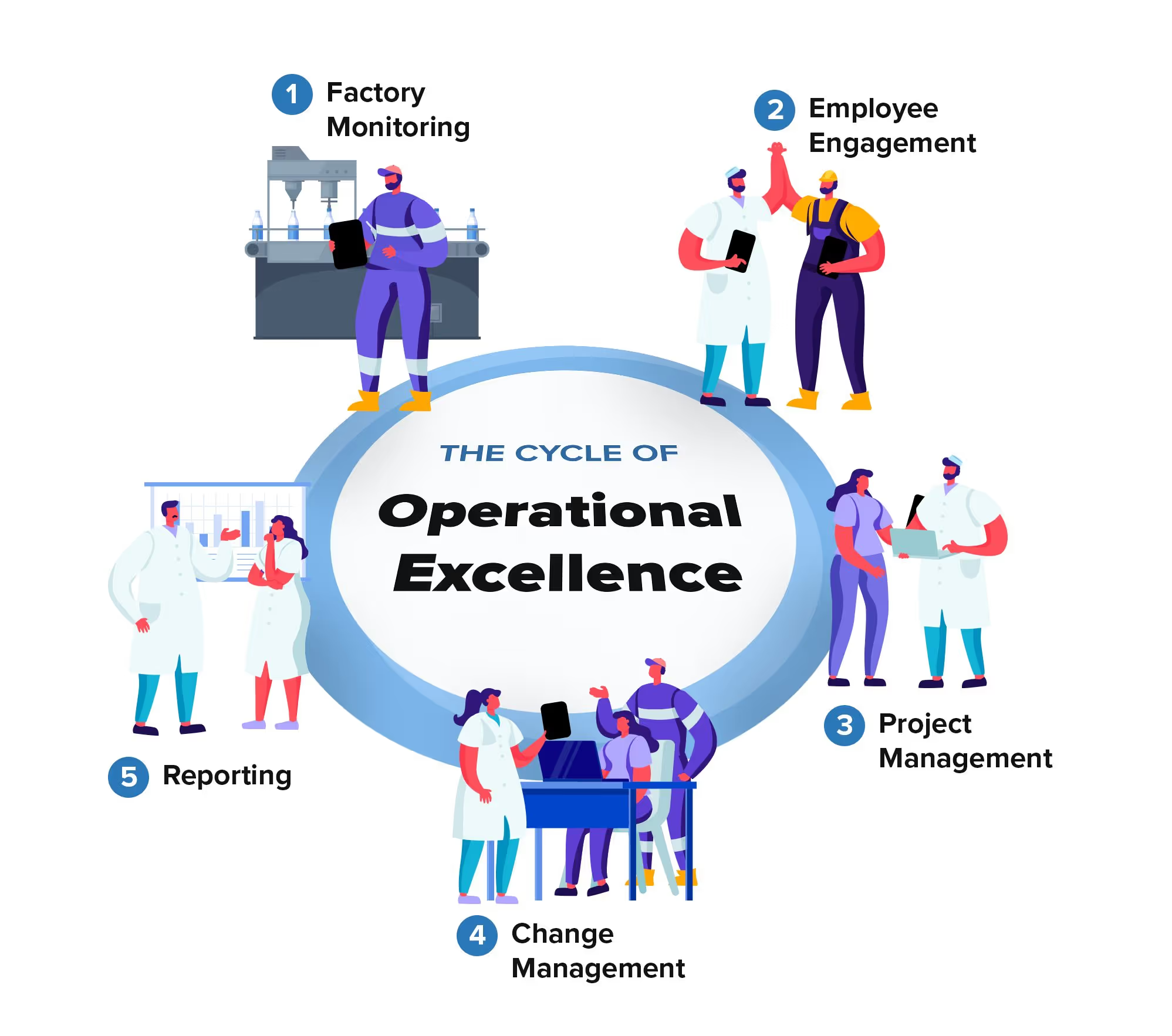

1. Factory Monitoring

2. Employee Engagement

3. Project Management
Whether top-down or bottom-up, managers require meaningful visibility into project status and timelines so that they can effectively manage their entire organizational improvement project "ecosystem".
Project managers also need the ability to project manage, which includes the ability to assign projects and tasks, manage timelines, capture data and generate reports. Learn more about Project Management here: https://weeverapps.com/project-management/
4. Change Management
When a project is completed successfully, a change to a process generally needs to be managed. The change needs to be documented and approved by managers. Then the affected staff need to be made aware of the change to the process before it's effective date. Finally, in many cases, the factory monitoring process needs to be updated to ensure the process is compliant to the new documentation.

5. Reporting

Don’t miss what’s next
Stay updated with the latest insights, deep dives, and expert perspectives.


Spend Less Time on Admin. More Time Improving Operations.
See how Weever automates data entry, reporting, and action items so you can focus on improvement not admin.