

Essential Autonomous Maintenance Checklist Components

.avif)
Table of contents

Share:


Autonomous maintenance is a game-changer for modern manufacturing. At Weever, we've seen firsthand how it empowers operators to take ownership of equipment care, reducing downtime and boosting productivity.
This blog post breaks down the key components of an effective autonomous maintenance checklist. Whether you're looking to create an autonomous maintenance checklist PDF or improve your existing processes, these essential elements will set you on the path to operational excellence.
How to Conduct Effective Equipment Inspections and Cleaning
The Power of Visual Inspections
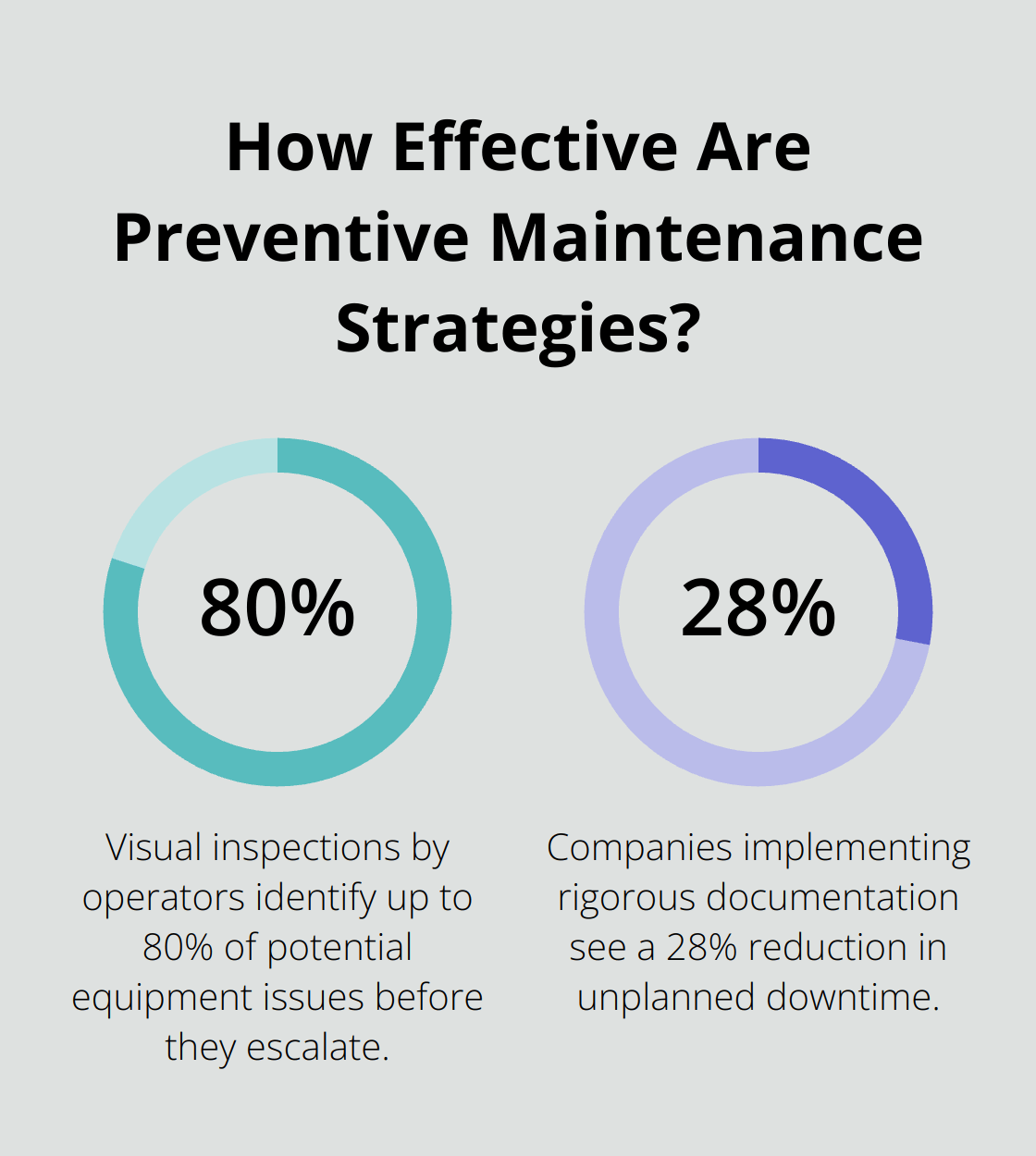
Visual inspections are crucial for quality assessment in industrial applications, often performed or supported by human domain experts. Operators who perform regular visual checks identify up to 80% of potential equipment issues before they escalate. Train your team to spot common abnormalities such as unusual noises, vibrations, or leaks. Create a standardized checklist that guides operators through each inspection point, which ensures consistency across shifts.
Tailoring Cleaning Procedures to Equipment Types
Different machines require specific cleaning approaches. CNC machines need careful removal of metal shavings and coolant residue, while food processing equipment demands sanitization to meet strict hygiene standards. Develop detailed, equipment-specific cleaning protocols and make them easily accessible through digital platforms. This ensures that every operator follows the same high standards, regardless of experience level.
The Critical Role of Documentation
Proper documentation transforms good maintenance practices into great ones. A study by Plant Engineering found that companies which implement rigorous documentation see a 28% reduction in unplanned downtime. Use digital forms to capture inspection results (including photos of potential issues). This creates a searchable database of equipment history, which enables trend analysis and predictive maintenance.
Leveraging Technology for Efficiency
Digital tools streamline the inspection and cleaning process. Mobile apps allow operators to access checklists, submit reports, and receive real-time guidance on the shop floor. These platforms (such as Weever Apps) make the documentation process seamless, allow for real-time reporting, and provide instant notification of critical issues to maintenance teams.
Training and Continuous Improvement
Effective equipment inspection and cleaning require ongoing training and refinement. Implement regular training sessions to keep operators up-to-date on best practices. Encourage feedback from your team to continuously improve your inspection and cleaning procedures. This proactive approach creates a culture where every operator feels responsible for equipment health.
As we move forward, let's explore how proper lubrication and tightening practices complement these inspection and cleaning procedures to further enhance equipment reliability.
How to Master Lubrication and Tightening
Map Your Lubrication Points
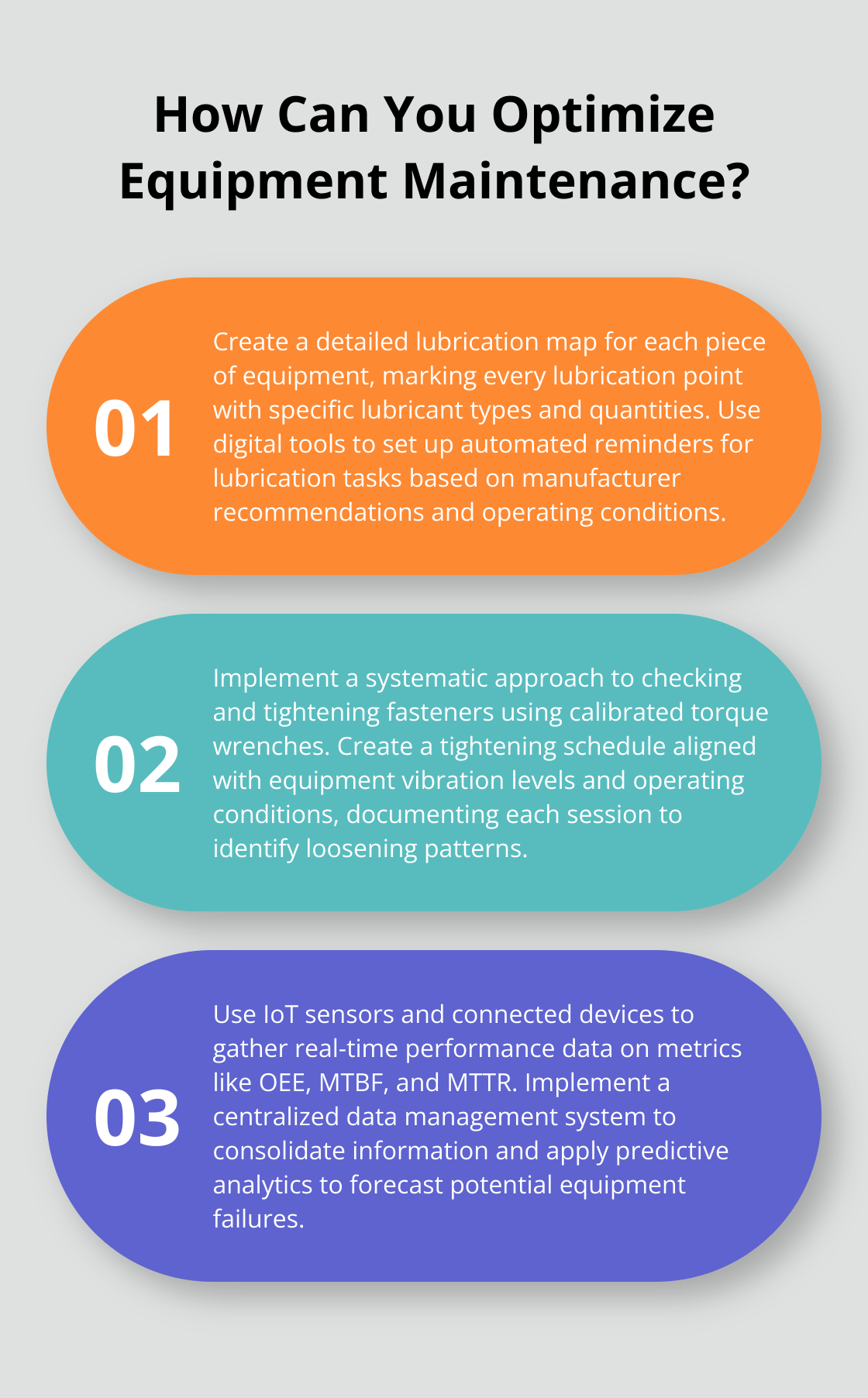
Create a comprehensive lubrication map for each piece of equipment. This visual guide should clearly mark every lubrication point, specifying the type and quantity of lubricant required. A well-designed map reduces errors and ensures no critical points are missed during maintenance rounds.
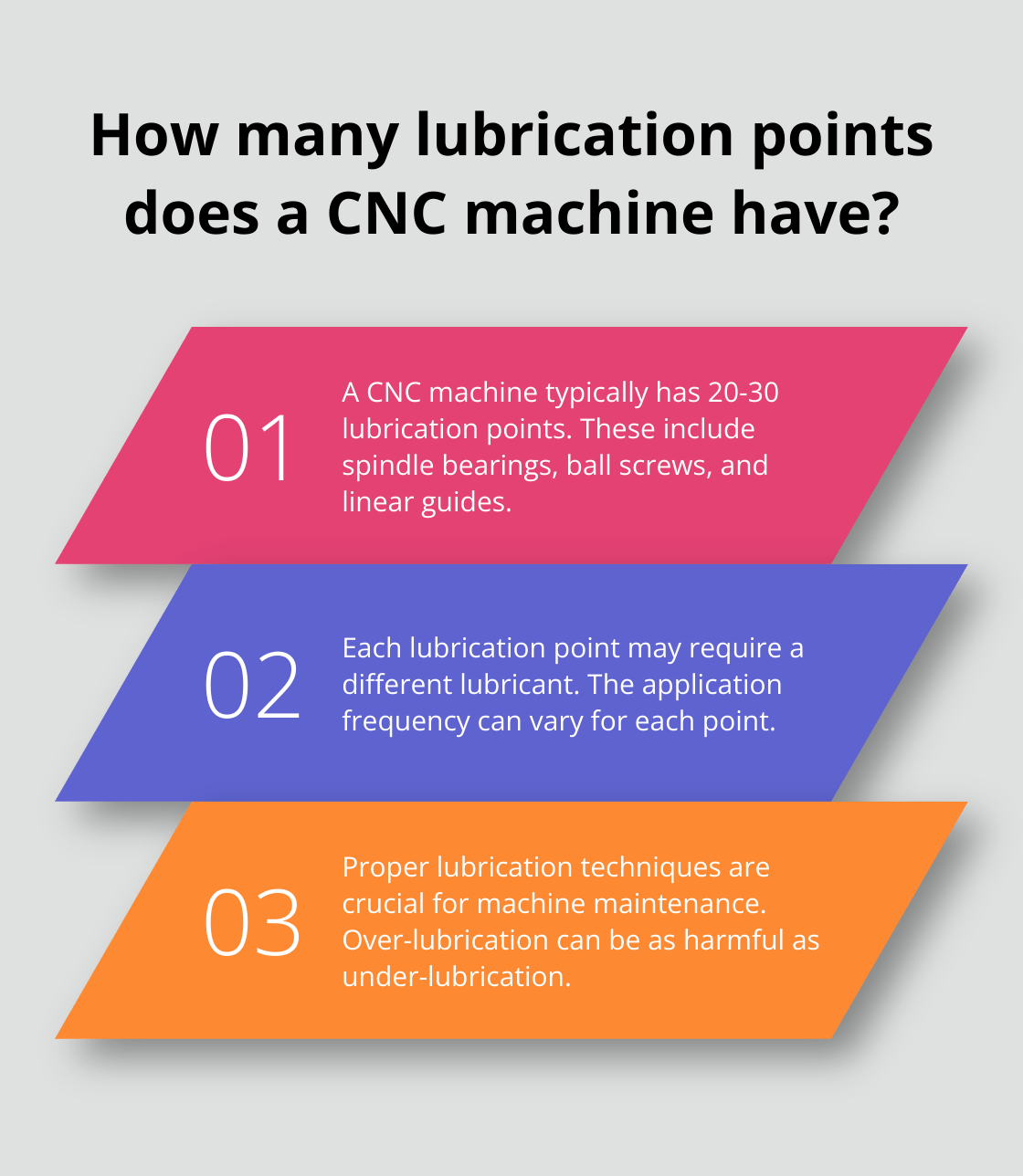
A CNC machine typically has 20-30 lubrication points (including spindle bearings, ball screws, and linear guides). Each point may require a different lubricant and application frequency. Your map should detail these specifics, making it easy for operators to follow.
Optimize Lubrication Techniques and Schedules
Develop a lubrication schedule based on manufacturer recommendations and your specific operating conditions. Factors like temperature, humidity, and production volume can all impact lubrication needs. Use digital tools to set up automated reminders for lubrication tasks, ensuring nothing falls through the cracks.
Precision is key when it comes to application techniques. Over-lubrication can be just as harmful as under-lubrication. Train your operators on proper methods, such as using grease guns with metered output for consistent application. For hard-to-reach areas, consider installing automatic lubrication systems, which can reduce labor costs and improve accuracy.
Master the Art of Tightening
Loose fasteners are a leading cause of equipment failure. Implement a systematic approach to checking and tightening bolts, nuts, and other fasteners. Use torque wrenches calibrated to manufacturer specifications to ensure proper tightening without damaging components.
Create a tightening schedule that aligns with your equipment's vibration levels and operating conditions. High-vibration environments may require more frequent checks. Document each tightening session, noting any patterns of loosening that could indicate underlying issues.
Leverage Technology for Precision
Modern technology offers powerful tools to enhance lubrication and tightening practices. Ultrasonic sensors can monitor bearings during lubrication until they sound normal, eliminating guesswork. Similarly, electronic torque wrenches with data logging capabilities ensure precise tightening and create an auditable trail of maintenance activities.
Digital platforms streamline these processes further. For instance, connected worker platforms (such as Weever Apps) allow operators to access lubrication maps and tightening specifications directly from their mobile devices. This instant access to critical information reduces errors and improves efficiency.
The next step in your autonomous maintenance journey involves effective performance monitoring and data collection. These practices will help you identify trends, predict potential issues, and continuously improve your maintenance strategies.
How to Measure and Improve Equipment Performance
Select the Right Performance Indicators
Choose KPIs that align with your operational goals. Overall Equipment Effectiveness (OEE) combines availability, performance, and quality. Top-performing manufacturers achieve an average OEE of 89%, compared to 69% for laggards (according to a study by Aberdeen Group). Other important metrics include Mean Time Between Failures (MTBF) and Mean Time To Repair (MTTR).

Track energy consumption per unit produced to identify efficiency opportunities. The U.S. Department of Energy reports that implementing energy management systems can reduce industrial energy costs by 3-10% annually.
Implement Effective Data Collection Methods
Use IoT sensors and connected devices to gather real-time performance data. These tools monitor vibration, temperature, and other critical parameters 24/7. A survey by PwC revealed that 35% of U.S. manufacturers already collect and use data from smart sensors to enhance manufacturing and operating processes.
Employ digital forms and mobile apps for operator-driven data collection. This approach ensures that human observations complement machine-generated data. Platforms like Weever Apps allow operators to easily log inspections, maintenance activities, and equipment issues on the go.
Turn Data into Action
Set up a centralized data management system to consolidate information from various sources. This enables comprehensive analysis and trend identification. Companies that extensively use employee-driven, real-time data collection see productivity improvements of 25% or more (according to McKinsey).
Apply predictive analytics to forecast potential equipment failures. Machine learning algorithms analyze historical data to identify patterns that precede breakdowns. A study by Deloitte found that predictive maintenance can reduce breakdowns by 70% and lower maintenance costs by 25%.
Establish a regular review process to analyze performance data and adjust maintenance strategies. This could involve weekly team meetings to discuss trends and brainstorm improvements. Encourage operators to contribute insights, as they often have valuable hands-on experience with the equipment.
Leverage Technology for Data-Driven Decisions
Invest in software solutions that integrate data collection, analysis, and reporting. Connected Worker platforms (such as Weever Apps) offer real-time dashboards and automated alerts, enabling quick responses to emerging issues. These tools also support the creation of custom reports, which help identify long-term trends and opportunities for improvement.
Try to implement mobile solutions that allow technicians to access and input data directly from the shop floor. This real-time data flow ensures that decision-makers always have the most up-to-date information (improving response times and overall equipment effectiveness).
Wrapping Up
Implementing a robust autonomous maintenance program transforms manufacturing efficiency. Companies that adopt these practices often experience a 30-50% reduction in equipment breakdowns and a 20-30% increase in machine availability. These improvements translate directly to enhanced operational efficiency and substantial cost savings over time.
Regular use of comprehensive autonomous maintenance checklists (which can be distributed as PDFs) yields tangible benefits. Organizations should focus on ongoing training and engagement, encouraging operators to provide feedback and suggestions for improvement. Consistent review and updates of checklists ensure they remain relevant and effective in driving long-term success and operational excellence.
Weever's Connected Worker platform offers a powerful solution for streamlining autonomous maintenance workflows. With features like digital forms for easy data capture and real-time dashboards for instant visibility, Weever helps organizations transform their maintenance operations. This platform supports the creation of digital checklists, which can replace traditional autonomous maintenance checklist PDFs, further enhancing accessibility and efficiency.

.webp)

Spend Less Time on Admin. More Time Improving Operations.
See how Weever automates data entry, reporting, and action items so you can focus on improvement not admin.