
Implementing Step 2 of Autonomous Maintenance
.avif)
Table of contents

Share:


At Weever Apps, we understand the critical role of Autonomous Maintenance in optimizing manufacturing processes. Step 2 of Autonomous Maintenance focuses on implementing thorough cleaning and inspection routines.
This phase is essential for identifying and addressing equipment abnormalities before they escalate into major issues. In this blog post, we'll explore the key components of Autonomous Maintenance Step 2 and how they contribute to improved equipment reliability and performance.
How to Conduct Initial Cleaning and Inspection
The Power of Thorough Cleaning
Initial cleaning and inspection form the foundation of effective Autonomous Maintenance. This critical step involves a deep clean of equipment, which allows operators to spot and address abnormalities that might otherwise remain hidden.
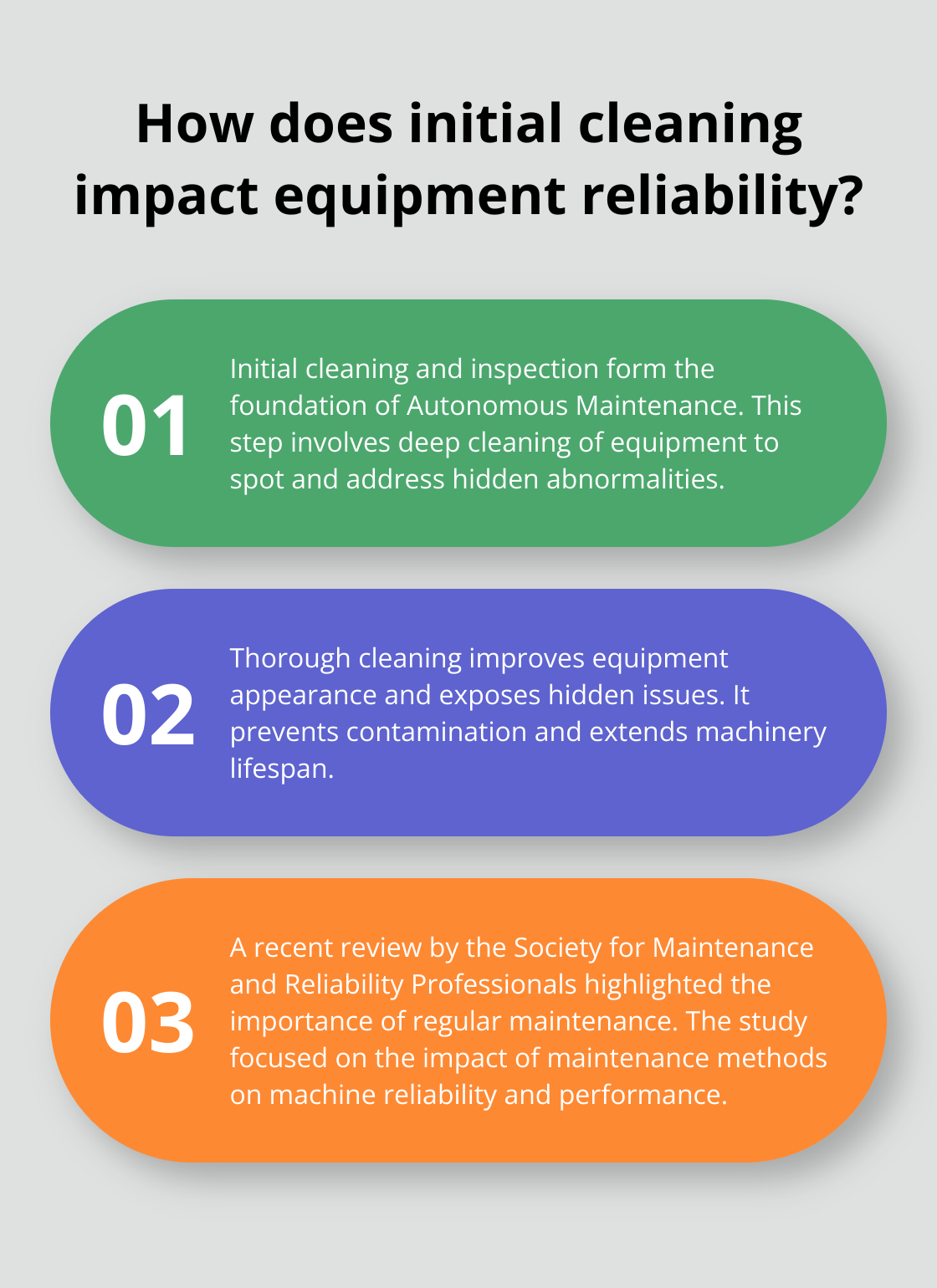
A thorough cleaning process does more than improve equipment appearance. It exposes hidden issues, prevents contamination, and extends machinery lifespan. A recent review by the Society for Maintenance and Reliability Professionals investigated the impact of maintenance methods on machine reliability, focusing on their relationship with overall performance and durability. This research highlights the importance of regular maintenance practices in improving equipment reliability.
When cleaning, operators should focus on hard-to-reach areas, as these often become hotspots for contamination and wear. The use of appropriate cleaning tools and techniques for each part of the equipment is essential. For example, compressed air suits dust removal from electrical components, while degreasing agents work best for oily surfaces.
Spotting and Addressing Abnormalities
The cleaning process often reveals various abnormalities. These range from loose bolts and worn belts to oil leaks and unusual noises. Operators need training on what to look for and how to distinguish between normal wear and potential problems.
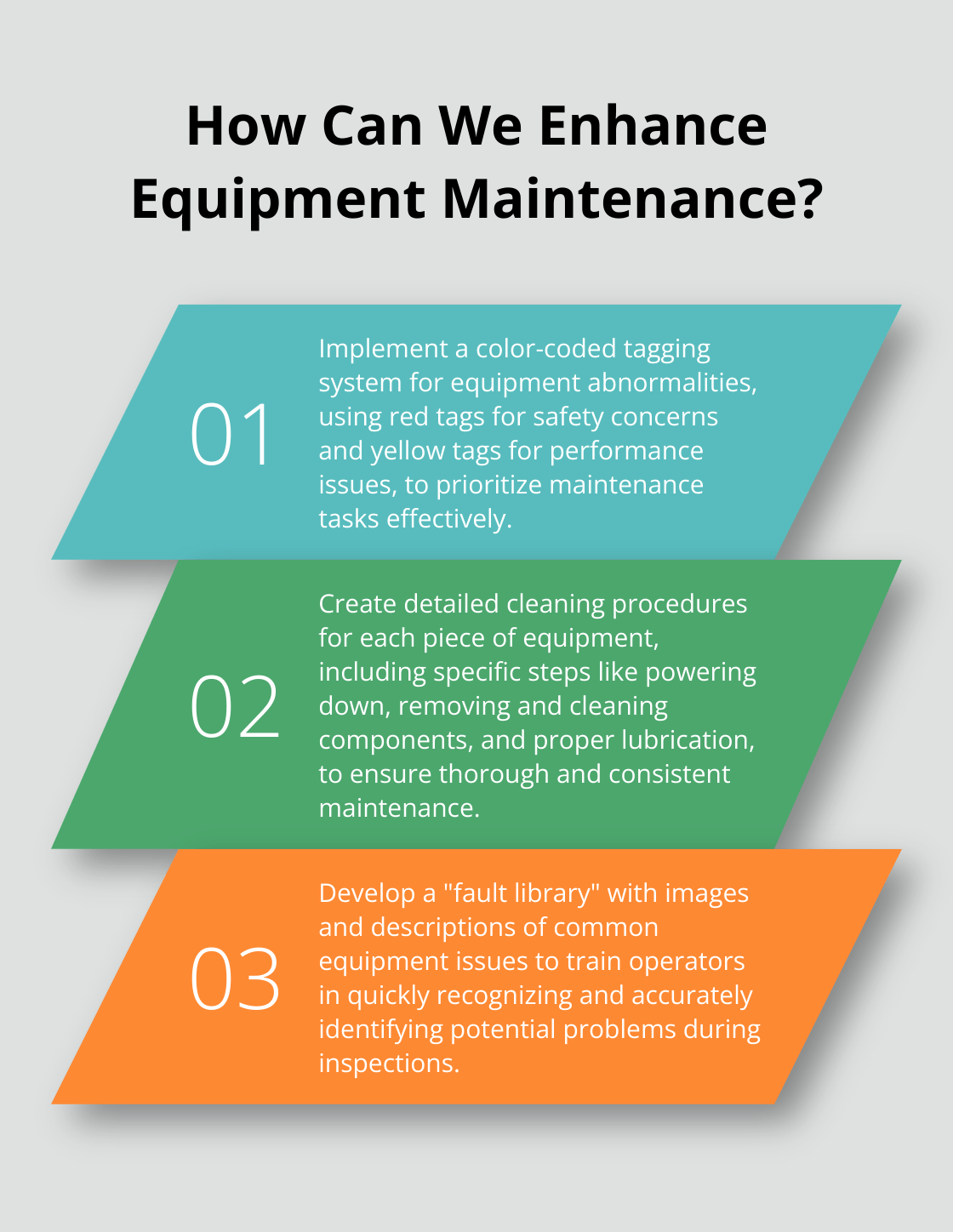
A "tagging" system proves effective for this purpose. When an operator identifies an issue, they attach a color-coded tag to the specific area. For instance, red tags could indicate safety concerns, while yellow tags might signify performance issues. This visual system helps prioritize maintenance tasks and ensures that no problem goes unaddressed.
Creating Actionable Documentation
Documentation of findings is essential for tracking equipment health over time and creating effective action plans. Digital tools work best for this purpose, as they allow for real-time updates and easy access to historical data.
When documenting, operators should include:
- Detailed descriptions of abnormalities
- Photos or videos of the issues
- Date and time of discovery
- Severity assessment
- Recommended actions
This comprehensive approach enables maintenance teams to prioritize tasks, allocate resources efficiently, and track the effectiveness of their interventions over time.
Many organizations use specialized software to streamline this process. For instance, connected worker platforms (like Weever) offer intuitive digital forms for easy data capture and real-time dashboards for cross-team visibility. This ensures that all stakeholders have access to up-to-date information, which facilitates quick decision-making and proactive maintenance.
The implementation of thorough cleaning and inspection routines sets the stage for the next crucial step in Autonomous Maintenance: the development of cleaning and inspection standards. These standards will build upon the insights gained during the initial cleaning process, creating a systematic approach to equipment maintenance.
How to Develop Effective Cleaning and Inspection Standards
Create Detailed Cleaning Procedures
Detailed cleaning procedures form the backbone of effective Autonomous Maintenance. These procedures should outline specific steps for each piece of equipment.
To create these procedures:
- Increase worker knowledge and skills
- Perform preliminary cleanup and examination of equipment
- Get rid of contamination sources
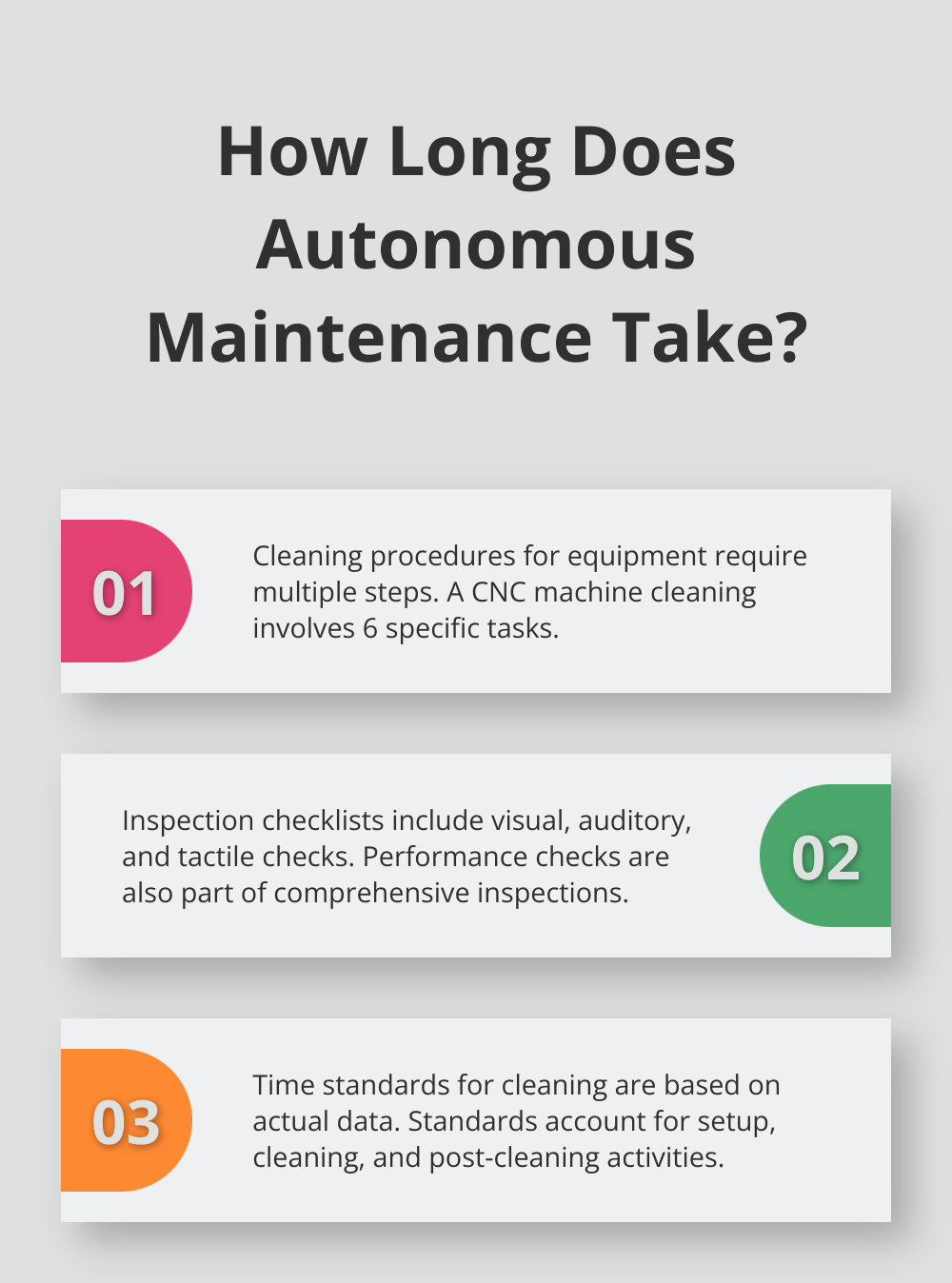
For example, a cleaning procedure for a CNC machine might include:
- Power down and lock out the machine
- Remove and clean chip conveyors
- Clean coolant tanks and filters
- Wipe down external surfaces with appropriate cleaning agents
- Clean and lubricate guide ways and ball screws
- Inspect and clean electrical cabinets (if qualified)
Establish Comprehensive Inspection Checklists
Inspection checklists complement cleaning procedures by guiding operators on what to look for during routine checks.
Effective checklists should include:
- Visual inspections (checking for wear, leaks, or damage)
- Auditory inspections (listening for unusual noises)
- Tactile inspections (feeling for excessive vibrations or heat)
- Performance checks (verifying proper operation of controls and displays)
Customize checklists for different equipment types and include clear pass/fail criteria for each item. This approach helps operators quickly identify when intervention is needed.
Set Realistic Time Standards
Time standards for cleaning activities are essential for scheduling and resource allocation. These standards should be realistic and based on actual data.
To set effective time standards:
- Time several operators performing the cleaning tasks
- Account for variations in equipment condition and operator skill
- Include time for setup, actual cleaning, and post-cleaning activities
- Review and adjust standards regularly based on feedback and changing conditions
The goal is to set achievable standards that maintain equipment cleanliness without compromising production schedules.
Implement Digital Tools for Standard Management
Robust systems for tracking and managing maintenance activities are essential. Digital platforms offer intuitive tools for creating, distributing, and monitoring cleaning and inspection standards across organizations. With real-time data capture and analysis capabilities, such platforms enable continuous improvement of Autonomous Maintenance programs.
When selecting a digital tool, consider features like:
- User-friendly interfaces for easy adoption
- Real-time data synchronization across devices
- Customizable forms and checklists
- Analytics and reporting capabilities
The next step in the Autonomous Maintenance journey involves training operators on these newly developed standards and procedures. This training ensures that all team members understand and can effectively implement the cleaning and inspection routines.
How to Train Operators for Effective Cleaning and Inspection
Master Cleaning Tools and Techniques
Effective training starts with operator familiarity of the right cleaning tools and materials for each equipment piece. This includes an understanding of which solvents or cleaning agents are safe for different surfaces and components. For instance, harsh chemicals can damage sensitive electronic parts, while mild cleaners might prove ineffective on heavily soiled mechanical components.
Hands-on practice sessions are essential. The program should combine classroom sessions with hands-on practice. Operators must learn to conduct thorough equipment inspections. This practical approach allows operators to experience the proper techniques for cleaning various equipment parts firsthand.
Develop a Keen Eye for Abnormalities
Training operators to detect equipment abnormalities prevents major breakdowns. This involves teaching them to use their senses – sight, sound, smell, and touch – to detect abnormalities during inspections. Visual inspections can reveal issues like cracks, corrosion, or misalignments. Auditory checks help identify unusual noises that might indicate bearing wear or loose components. Tactile inspections can detect excessive vibrations or heat, which often precede equipment failure.
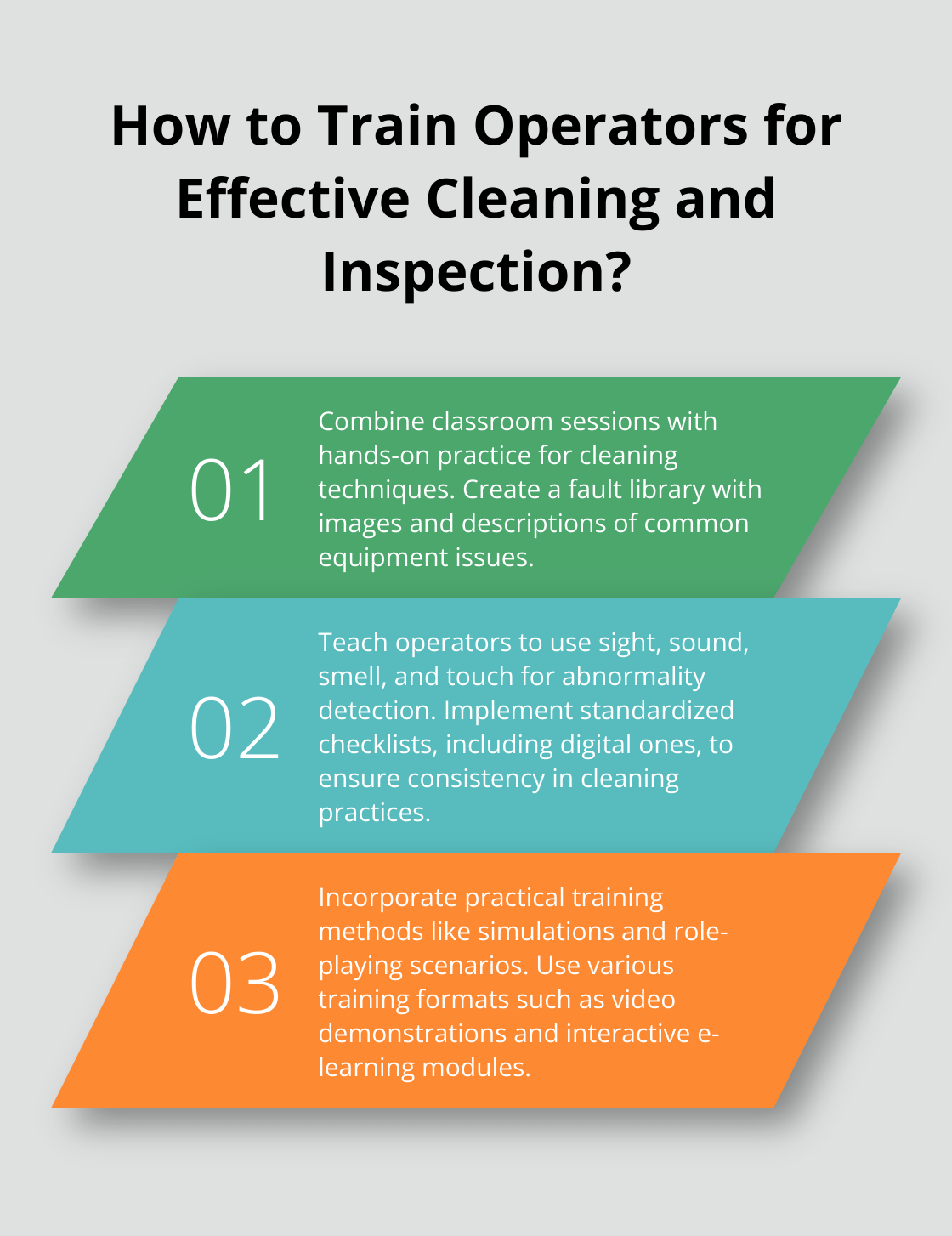
One effective training method involves the creation of a "fault library" - a collection of images and descriptions of common equipment issues. This resource helps operators recognize problems quickly and accurately. For instance, a fault library for a hydraulic system might include images of oil leaks, worn seals, and contaminated fluid samples.
Ensure Consistency in Cleaning Practices
Consistency in cleaning practices is key to the success of Autonomous Maintenance. Training should emphasize the importance of following established procedures every time. This not only ensures thorough cleaning but also helps in early detection of developing issues.
One way to promote consistency is through the use of standardized checklists. These guides ensure that operators don't miss steps during the cleaning and inspection process. Digital checklists can be particularly effective (available through platforms like Weever). They allow for real-time tracking of completed tasks and can include embedded photos or videos demonstrating proper techniques.
Regular refresher training sessions address any new challenges that have arisen and reinforce best practices. These sessions also provide an opportunity for operators to share their experiences and insights, fostering a culture of continuous improvement.
Implement Practical Training Methods
Try to incorporate practical, hands-on training methods to reinforce learning. This can include simulations of common equipment issues, role-playing scenarios for troubleshooting, and supervised practice sessions on actual equipment (when safe and feasible).
Use a mix of training formats to cater to different learning styles. This might include video demonstrations, interactive e-learning modules, and small group workshops. The variety helps maintain engagement and improves retention of important information.
Measure and Improve Training Effectiveness
Regularly assess the effectiveness of your training program. Use practical tests and on-the-job observations to evaluate how well operators apply their training in real-world situations. Collect feedback from both trainers and trainees to identify areas for improvement.
Track key performance indicators (KPIs) related to equipment reliability and maintenance efficiency. These metrics can help you gauge the impact of your training efforts and make data-driven decisions about future training needs.
Wrapping Up
Autonomous Maintenance Step 2 establishes a robust foundation for equipment reliability and longevity. Organizations uncover hidden issues, prevent contamination, and extend machinery lifespan through thorough cleaning and inspection routines. The development of detailed procedures, checklists, and time standards ensures consistency and efficiency in maintenance activities.
Operator training on proper cleaning techniques and abnormality detection empowers staff to take ownership of equipment health. This shift in responsibility improves equipment performance and fosters a culture of proactive maintenance throughout the organization. The benefits include reduced downtime, improved product quality, and significant cost savings through early detection and prevention of equipment failures.
Many organizations streamline the implementation of Autonomous Maintenance Step 2 with digital solutions. Connected Worker platforms offer intuitive tools for creating digital checklists, capturing real-time data, and providing cross-team visibility. These platforms support comprehensive programs (such as 5S Audits and Autonomous Maintenance), making them valuable assets in the journey towards operational excellence.
.webp)

Spend Less Time on Admin. More Time Improving Operations.
See how Weever automates data entry, reporting, and action items so you can focus on improvement not admin.