
Real Savings in Real Time: Transforming Quality, Maintenance & Production with Digital Workflows
.avif)
Table of contents

Share:


Real Savings in Real Time: Transforming Quality, Maintenance & Production with Digital Workflows
If you're a factory or operations manager, you've seen it all: clipboards lining workstations, spreadsheets piled high in offices, forms that get filled out and filed away and only looked at when someone finally notices a quality or maintenance issue that's been ignored. The reality is that the ongoing use of paper and spreadsheets on the factory floor creates delays and blind-spots and can contribute to costly errors or process breakdowns.
Weever Software empowers operational visibility, collaboration, and productivity by moving you away from the analog world and into a real-time digital environment. Replace paper, whiteboards, and spreadsheets with digital tools built for the plant floor. Capture real-time data, trigger alerts automatically, and give your team members the visibility they need to stay aligned and act fast.
Why Digitization Matters
Paper has its uses, for quick note-taking, brainstorming, and even filling out the A3 report that structures your team's thinking through a continuous improvement process. But when you're competing globally and pursuing perfection in manufacturing, the limitations of paper become clear.
Many manufacturers have implemented enterprise resource planning (ERP) systems, office productivity suites, and logistics digitization. Often, the biggest payoff from digitization is often on the shop floor itself, where production actually happens.
When you digitize factory-floor operations, five core benefits emerge:
Cost savings: Manual, paper-and-spreadsheet-based processes tie up people, time, and space. A survey by PwC found that companies can expect cost reductions of nearly 4% per year on average by applying digital technologies in industrial sectors. Another study indicates that digitized supply-chains can reduce operating costs by up to 30% and notes, "Digitization has become a crucial factor for manufacturers seeking to stay competitive, enhance efficiency, and grow their operations."
When you examine document handling alone, one estimate placed the cost of maintaining a paper document at as much as 206 times that of a digital one when you factor in labor, storage, retrieval, and error-correction costs for paper. In addition, digitizing your operations means less time wasted filling out forms, driving approvals by hand, chasing signatures, and surfacing issues only after damage is done.
Real-time visibility: With digitization of your forms, you capture data at the source and have immediate, real-time visibility into your operations. One Weever client was gathering information from its production lines via paper and pencil. Production logging and centreline data was being entered onto forms where the data was stagnating, rather than being analyzed for insights on how to improve overall equipment effectiveness (OEE) or productivity.
As noted by one of their process engineers, "…[T]he big opportunity was the ability to manipulate and trend data that we were collecting but was incredibly work intensive to go back and review. Whenever we were trying to do technically based troubleshooting, understand how the process or equipment is running, or how a particular abnormality was generated, it was very hard to get the information from our paper system."
The data was there, but it just wasn't accessible. That changed when digital forms were introduced via Weever that captured and fed data into a central repository that was easily accessed. Managers and engineers had the ability to analyze and manipulate data to generate the insights that would make the plant more productive, trouble-shoot issues, and spot trends. When you can intervene instantly when a quality threshold is violated, or a machine shows early signs of trouble, you reduce waste, shorten stop-time, and gain more consistent output.
Automation: Paper means manual work, either for one person or many: forms must be completed, logged, tabulated, and filed. Digitization allows for conditional logic, alert routing, and automated dashboards, among other time-saving benefits. Many manufacturers note they can go from "floor submission to bar graph" in minutes rather than days. That drives faster decisions, allows for fewer mistakes, and requires fewer employees who must spend time data wrangling.
Simplicity & structure: A digital form can guide your staff in their work, by showing only relevant fields, alerting them when numbers are outside expected ranges, and help them avoid misrouting (and wasted time and money). That means fewer errors, quicker training for new staff, consistent processes across shifts and plants, and a firmer foundation for continuous improvement.
Compliance: Paper forms leave you vulnerable to issues like missing signatures, falsified entries ("pencil-whipping"), lost files and audit failures. This means you're vulnerable to regulatory scrutiny and compliance failures. Digital workflows allow for time stamps, photo capture, required fields, audit trails, and automated checks. This means less risk for your company, faster audit readiness, fewer fines, and production line work stoppages.
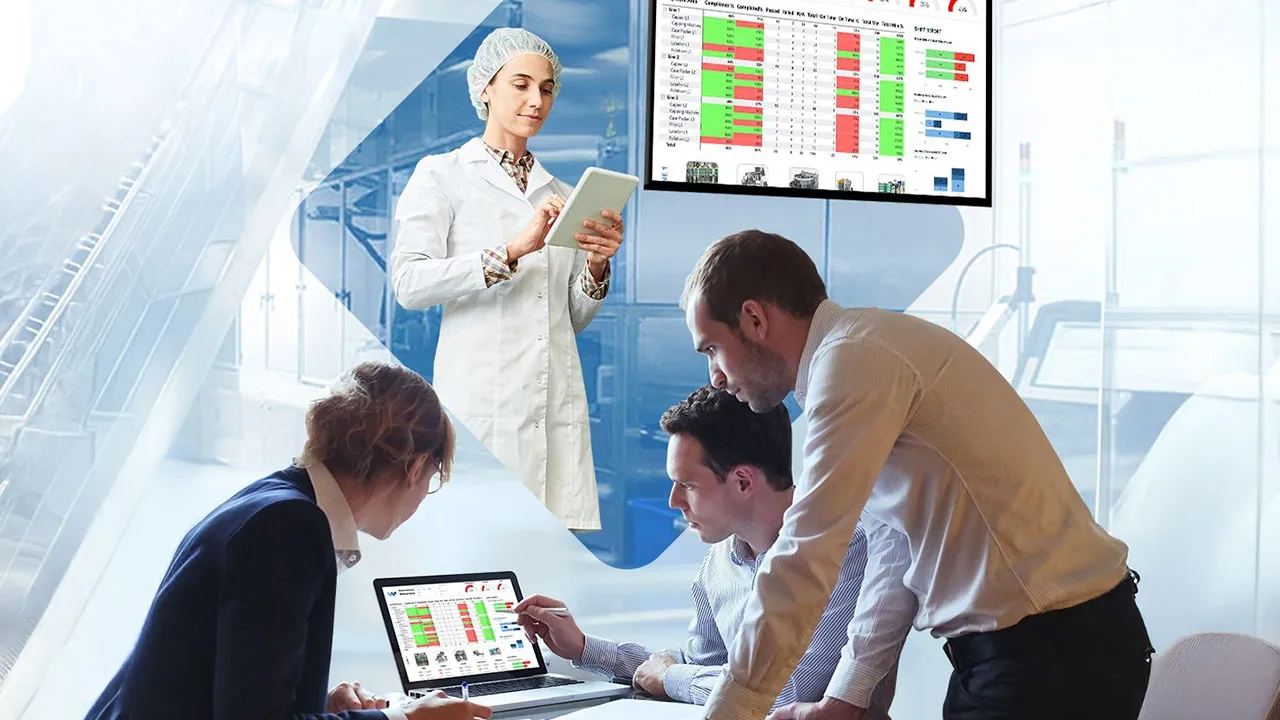
So how does this play out on the plant floor? Imagine a technician finishing a shift and instead of filling out handwritten maintenance logs, he or she uses a tablet and submits a digital form. As a result, the system immediately sends a notice to maintenance because a machine's variables exceed a threshold. Or perhaps the quality team gets alerted because the operator logged a defect rate above plan. The technician's supervisors are able to view dashboards in real time that combine data across shifts, machines, and plants, allowing them to dispatch resources where needed.
Contrast that with paper: A spreadsheet waits until someone enters data manually, summary reports are delayed, issues are discovered after the fact, corrective action comes late, and as a result, costs mount.
Making the Transition to Digital
To be successful, you need more than software. You need clarity on the current state of your operations, including process mapping to help your teams identify bottlenecks, inefficiencies, and areas for improvement. You need a process to manage the changes digitization will bring to your facility and a way to communicate the digitization process and benefits to workers to ensure their engagement. Start by identifying key forms and workflows that currently generate delays, errors, or blind spots, then roll out digital versions, train staff, enforce structure, and measure results.
Digitization doesn't mean you ban paper from your facility forever. It's about replacing the heavy lifting around forms, reports, and approval flows so that you and your teams are freed up for more value-added work.
Weever's cloud-based software is designed for this kind of transformation: bringing visibility, collaboration, and productivity to quality, maintenance, safety, and production.
As an operations leader, you face pressure on cost, margin, quality, safety, and delivery. Digitizing your factory floor processes isn't just a technology play, it's a strategic play. Every minute saved, every error prevented, and every compliance risk avoided contributes to your bottom line.
The question isn't whether you should digitize it's how soon can you do it?
Ready to Transform Your Operations?
Discover how the Smart Connected Worker Platform can revolutionize your manufacturing operations. Our team of experts is ready to help you implement intelligent solutions that drive safety, efficiency, and operational excellence. Schedule A Demo Download Whitepaper
.webp)

Spend Less Time on Admin. More Time Improving Operations.
See how Weever automates data entry, reporting, and action items so you can focus on improvement not admin.