
The Power of Observation: Reducing Risk and Elevating Safety Where It Matters Most

.avif)
Table of contents

Share:


Many traditional safety programs often focus on checklists, incident logs, and reactive measures. In other words, they focus on what went wrong, not on why it happened in the first place. But organizations looking to reduce risk at the source are shifting toward behavior-based safety programs, which is an approach grounded in observation, data, and proactive culture-building.
Behavior-based safety (BBS) observations are not about policing workers or catching mistakes. They're about identifying high-impact behaviors, understanding their root causes, and reinforcing safe practices through structured, collaborative engagement. When implemented effectively, BBS creates a transparent, empowered safety culture; one where accountability is shared, improvements are continuous, and outcomes are measurable.
What Sets Behavior-Based Safety Apart?
Behavior-based safety represents a shift in how organizations manage risk. Instead of focusing solely on rules, procedures, or lagging indicators like incident rates, BBS emphasizes what people do, and why they do it.
The goal is straightforward: observe work in real time, gather objective data about safe and unsafe behaviors, and use that insight to reduce risk at its root.
At the operational level, trained observers conduct structured evaluations of job tasks. They track behaviors against specific safety criteria, recording both positive practices and deviations. These observations are used to identify trends, uncover systemic gaps, and shape targeted interventions.
But this isn't just about data collection. It's about building an organization-wide dialogue around safety that is grounded in accountability, not punishment.
The Value of Behavior-Based Observation Programs
Organizations that implement BBS observation programs consistently see measurable improvements in both safety outcomes and employee engagement. One of the most significant advantages is the ability to proactively identify risks. By observing behaviors in real time, organizations can detect unsafe actions before they result in incidents, shifting from reactive investigations to a more preventive, forward-looking approach.
Beyond risk reduction, BBS programs help cultivate a stronger, more resilient safety culture. Integrating observation into everyday operations encourages shared responsibility, fosters transparency, and supports continuous learning across teams. When safety is viewed as a collective value rather than a top-down mandate, cultural transformation follows.
Another key benefit is the generation of actionable safety intelligence. Observational data reveals patterns, exposes blind spots, and uncovers systemic risks that traditional reporting methods often miss. These insights allow leaders to make more informed decisions, target interventions more precisely, and drive meaningful, lasting improvements.
Perhaps most importantly, BBS programs deepen employee involvement. When frontline workers are invited to participate in observations and contribute feedback, they become more invested in creating a safer work environment. This engagement not only enhances safety practices but also strengthens morale and accountability across the organization.
A Proven Framework: The ABC Model
A key component of BBS is the ABC framework, which stands for antecedent, behavior, and consequence. The ABC framework helps organizations understand the drivers behind workplace actions.
- Antecedent is the condition, trigger, or environment that precedes a behavior.
Example: A cluttered workstation may lead to improper lifting techniques. - Behavior is the observable action taken in response to that trigger.
Example: An employee bends improperly to move a heavy object. - Consequence is the outcome of the behavior, which can reinforce or discourage it.
Example: No immediate injury may falsely signal that the behavior is acceptable.
Analyzing incidents through this lens helps organizations go beyond surface-level corrections and instead address the deeper systems and habits that shape safety outcomes.
Implementing a BBS Program: Best Practices
Launching a successful Behavior-Based Safety (BBS) initiative requires more than assigning a handful of observers to spread out over the shop floor. It demands a strategic, organization-wide approach anchored by five critical success factors.
First, it's essential to establish a clear framework. This means aligning on the objectives of the program, clearly defining which behaviors will be observed, and ensuring that those standards are applied consistently across all teams, shifts, and locations. Without this foundation, observation data can become fragmented or unreliable.
Second, observers must be trained not only to follow checklists but also to document behaviors objectively, provide constructive feedback, and build trust with the workforce. The credibility and consistency of observations are vital to the integrity of the program and its long-term success.
Third, the data collected through observations must be analyzed and acted upon. Safety leaders should schedule regular reviews to identify patterns, diagnose root causes, and adapt interventions based on what the data reveals. Without this feedback loop, the value of BBS data remains unrealized.
Reinforcing positive behavior is another essential component. Recognizing and celebrating safe practices helps embed them into the culture. Over time, this focus on positive reinforcement creates momentum and encourages broader adoption of safe habits throughout the workforce.
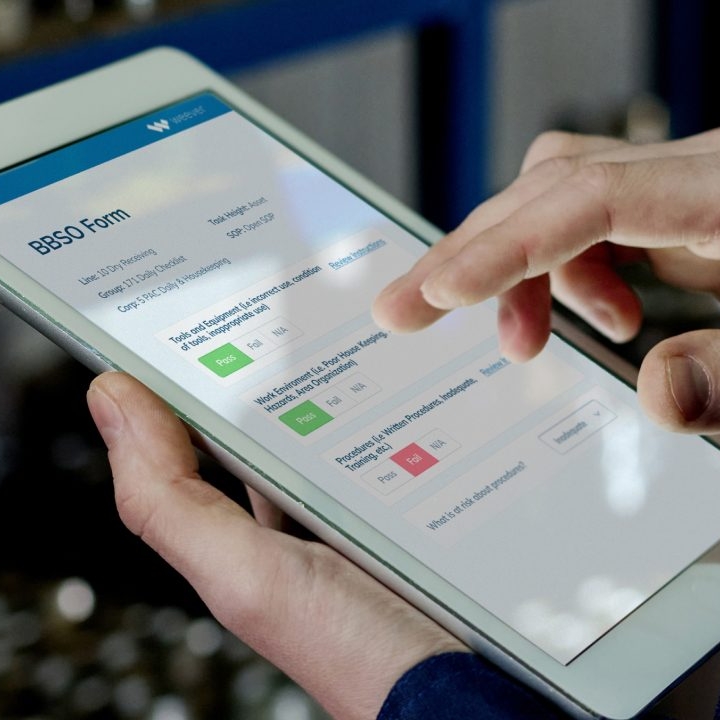
Finally, technology can play a powerful role in driving accountability. Digital platforms make it easier to standardize data collection, track participation, and generate real-time dashboards that highlight trends and progress. When integrated thoughtfully, technology becomes a key enabler of consistency, transparency, and continuous improvement across the BBS program.
The Bottom Line of BBS
Behavior-based safety observations are more than a tool. They're a strategic approach to cultivating a culture of safety excellence. When rooted in data, driven by purpose, and supported by leadership, BBS transforms safety from a compliance task into a core organizational capability.
In an era when operational resilience and workforce well-being are non-negotiable, companies that prioritize behavior-based safety position themselves for long-term success.
Used by organizations worldwide to manage Behavior-Based Safety Observation programs, Weever is a highly intuitive connected worker platform that simplifies data capture, workflow automation and reporting and ensures compliance.
Still not sure where to start. Behavior-Based Safety in Action, Ask Us!
Also, here are some safety observations sample questions and our BBSO Scorecard Template
Contact Weever for a demo and discover how our software helps you manage defects.
Request more information Preview modal-
Request more information
Please tell us a bit about yourself so we can tailor our response and get you the information you need.
Continue Reading
Boost Your Manufacturing safety with Proactive Measures

How Proactive Measures Can Lead to Cost Savings in Manufacturing

How to be more proactive about safety

How to implement a proactive safety program into your facility

Proactive Measures for Ensuring Compliance in Regulated Industries

Proactive Measures in Manufacturing: Leveraging Weever Software for a Safer Workplace

The Importance of Proactive Measures in Manufacturing Operations
The Power of Proactive Measures in Preventing Equipment Failure

"Having cloud-based forms on devices around the facility makes them so much more accessible, which makes it painless for operators to quickly provide a report."
Johanna Velez, VP Quality Assurance


"Weever is really user friendly and will have a massive positive impact on our operations and training team."
Mel Cadle - Op Ex Lead Process Engineer



.webp)

Spend Less Time on Admin. More Time Improving Operations.
See how Weever automates data entry, reporting, and action items so you can focus on improvement not admin.