
Unlocking Efficiency and Cutting Quality Check Time by 400%
400%
Faster Quality Checks
0
PCQI Holds
1.5–2 hours/day
Time Saved
Challenge
Paper-based quality checks took 5-7 minutes each, nearly 50 hours a day across shifts. Illegible handwriting, missed checks, and years of required document storage created compliance risk and rising costs.
Solution
Weever digitized the facility's quality forms with photo capture, digital signatures, and automated calculations, piloting on one line before scaling plant-wide to cut check time to 1-2 minutes and eliminate PCQI holds.
Customer Snapshot
- Industry: Food manufacturing (name withheld at customer's request)
- Process digitized: Quality checks (Weever Process)
- Result: 400% faster quality checks and zero PCQI holds since go-live
The Challenge
Paper Quality Checks Were Costing 50 Hours a Day
Before implementing Weever Process, the facility faced several issues with their paper-based quality checks:
- Time-Consuming Checks: Each quality check took 5-7 minutes, leading to an average of 50 hours spent daily across all shifts.
- Missed or Delayed Checks: There were no safeguards to ensure checks were completed on time, which could impact compliance and continuous improvement.
- Document Management Costs: Quality records required storage for up to six years, leading to significant expenses.
- Legibility and Accuracy Issues: Handwritten forms often contained errors, leading to additional review time and potential compliance risks.
- Resistance to Digitization: While other Weever products were in use, associates were initially hesitant about transitioning to digital forms for continuous data capture.
The Solution
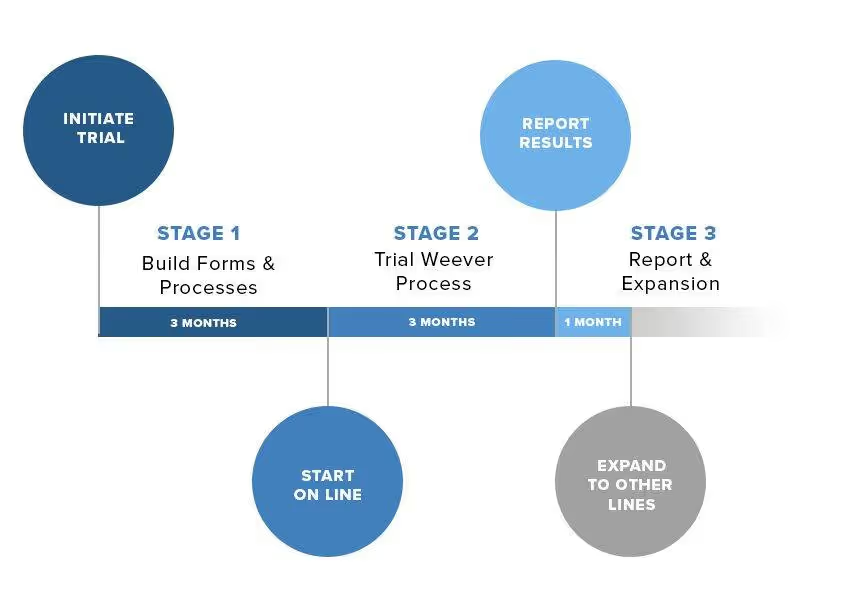
A Phased Rollout of Weever
The facility took a structured approach to the rollout of Weever:
- Building a Business Case: Stakeholders collaborated on a proposal outlining resource needs, timeline, and expected outcomes.
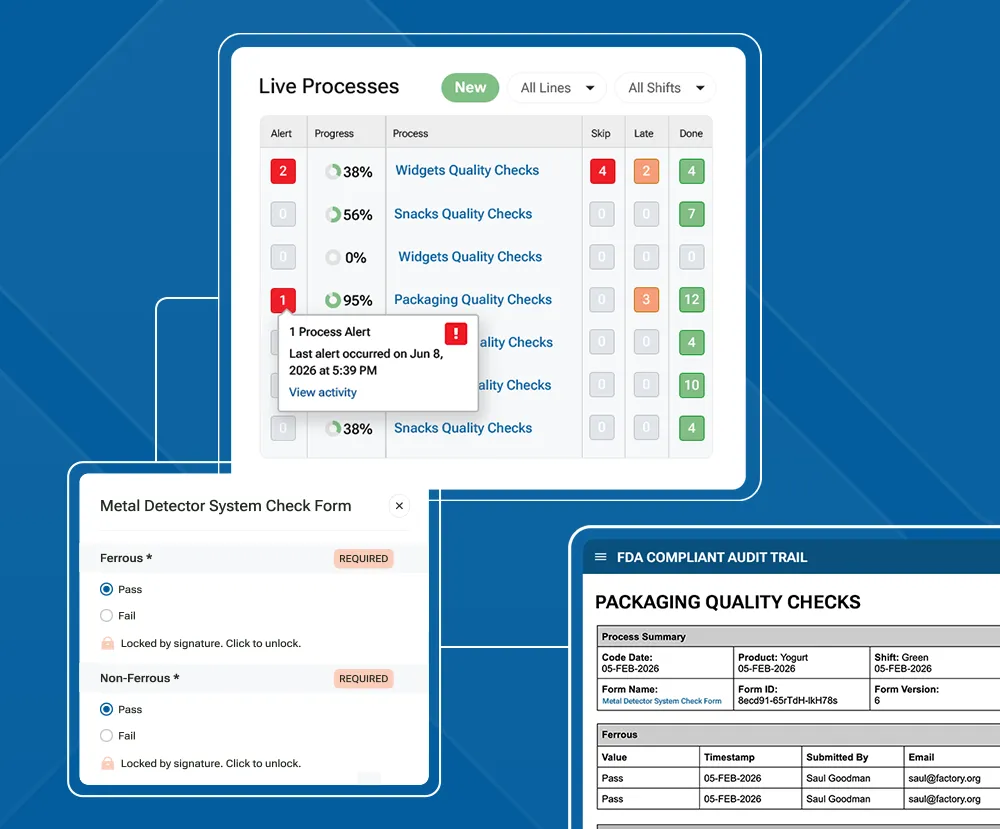
- Digitizing Forms and Processes: The team created digital versions of their quality forms, incorporating features such as:
- Photo capture for streamlined data entry
- Digital signatures for FDA compliance
- Automated calculations to reduce errors
- Trial and Feedback Loop: The team initially ran both paper and digital checks in parallel for two weeks to ensure accuracy.
- During this phase, improvements were made based on associate feedback.
- Scaling the Implementation: Following a successful trial, the facility expanded Weever Process across multiple production lines.
The Results
The digital transformation delivered measurable benefits, including:
- 400% Faster Quality Checks: Time per check reduced from 5-7 minutes to 1-2 minutes, saving 4-5 hours per line per day.
- Zero PCQI Holds: Previously, 1-2 PCQI Holds occurred per period, potentially costing over $200K annually. Since implementation, there have been none.
- Improved Quality Team Efficiency: Paperwork review time was reduced by 30-40 minutes per shift, freeing up 1.5-2 hours daily for value-added activities.
- Enhanced Data Accuracy & Compliance: The facility eliminated issues with illegible or incomplete records, ensuring all documentation met regulatory standards.
- Streamlined Audit Readiness: Quality managers could instantly access accurate historical records, reducing audit preparation time.
Key Learnings
- Start Small and Iterate: Beginning with a single production line allowed for process optimization before scaling.
- Stakeholder Involvement is Critical: Engaging Continuous Improvement and Quality teams early helped ensure a smooth transition.
- Associate Champions Drive Adoption: Identifying an influential team member to advocate for the new system was key to overcoming resistance.
After successfully rolling out Weever Process on an initial production line, the facility is expanding adoption across additional lines and products. With increased efficiency, cost savings, and improved compliance, this digital transformation has proven to be a significant advancement for Our Customer’s operations.
Related Posts


.avif)
Spend Less Time on Admin. More Time Improving Operations.
See how Weever automates data entry, reporting, and action items so you can focus on improvement not admin.