
10 Connected Worker Use Cases in Manufacturing (and Which One to Digitize First)
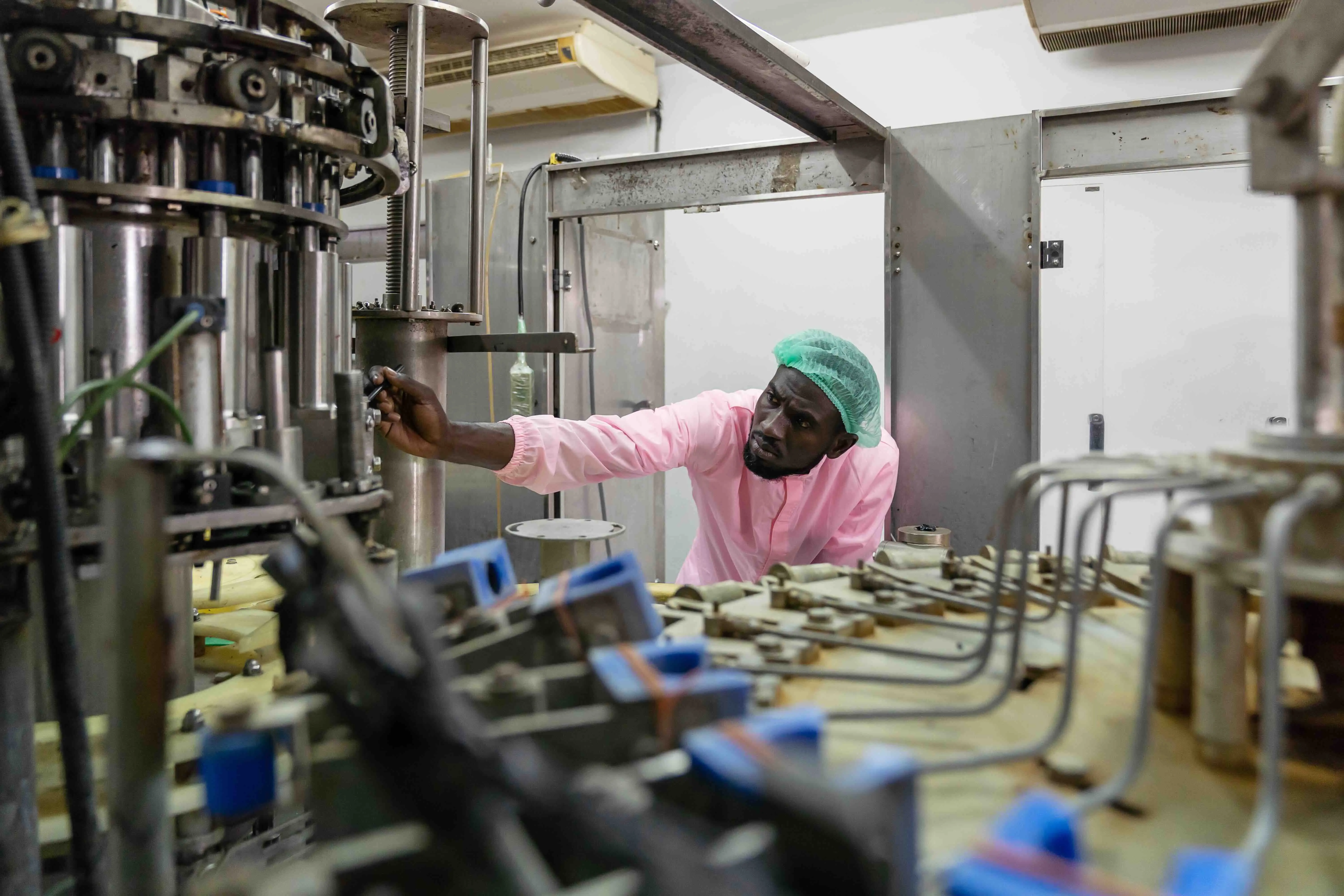
Table of contents

Share:


Most plants do not buy a connected worker platform for ten programs. They buy it for one, it works, and eighteen months later it is running six. As a result, where you start is very important. Start with the wrong program and you spend 3 months configuring something nobody was asking for. Start with the right program and the second one gets approved on the strength of the first.
This article covers the ten programs that belong on a connected worker platform, and then gives you a method for choosing where to start that is not "whichever one is easiest to configure."
Which programs belong on a connected worker platform?
There are 3 factors to consider when determining if your program should be included within the score of your Connected Worker platform.
Programs meeting all 3 are where the return is. Programs meeting 2 are worth doing second.
1. Autonomous maintenance, CILs, and centerlines
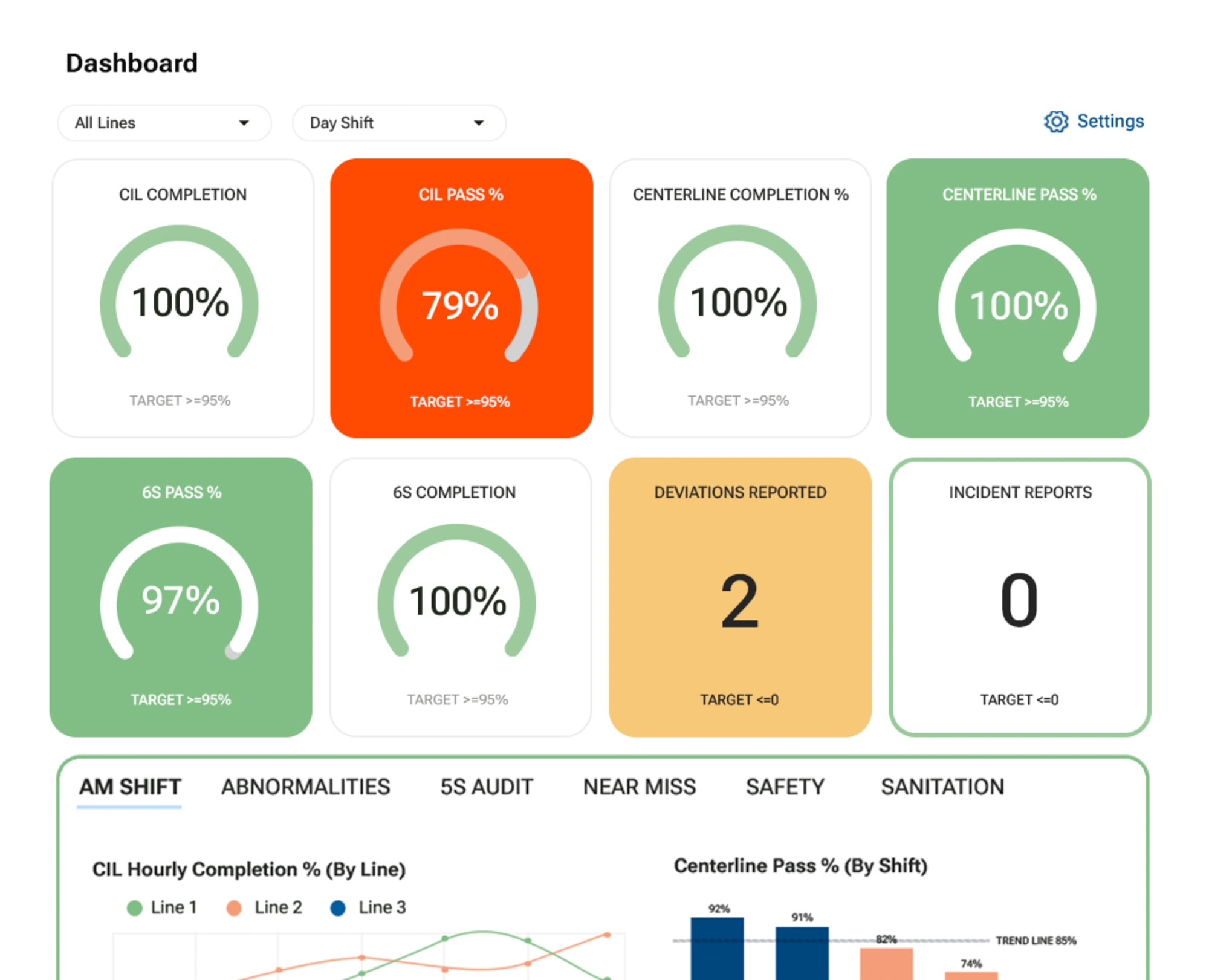
Operator-performed CIL (clean, inspect and lubricate) work, plus centerline verification, is the largest single use case in most manufacturing plants.
It is also the one that most obviously cannot live in a CMMS. Autonomous maintenance is by definition performed by people whose job title is not maintenance. They will not be given CMMS licenses and would not use the interface if they were, which is why AM rounds sit on paper in plants with fully digital maintenance functions.
What changes: the round is completed at the machine, abnormalities create owned actions immediately, and the fourth occurrence of the same abnormality on the same asset becomes visible as a pattern instead of a fourth separate note.
Solutions page: Autonomous Maintenance
2. Master sanitation schedules and SSOPs
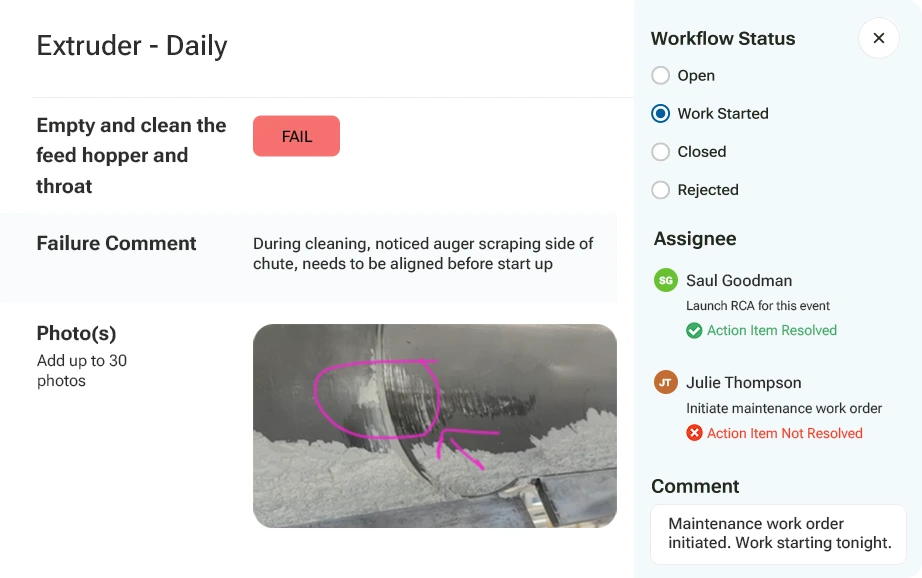
Sanitation is scheduled, evidenced, and audited, which makes it close to a perfect fit.
The paper version fails in a specific way: the schedule lives in one place, the completion records in another, and the corrective actions from a failed pre-op in a third. Proving that a specific clean happened on a specific date to a specific standard means assembling three sources, which is exactly what an auditor asks you to do under time pressure.
Digitized, the schedule generates the task, the task captures photo evidence at the step, and a failed pre-op creates an action before start-up rather than a note that gets read on Thursday.
Solutions page: Master Sanitation Schedule
3. Quality and in-process defect checks
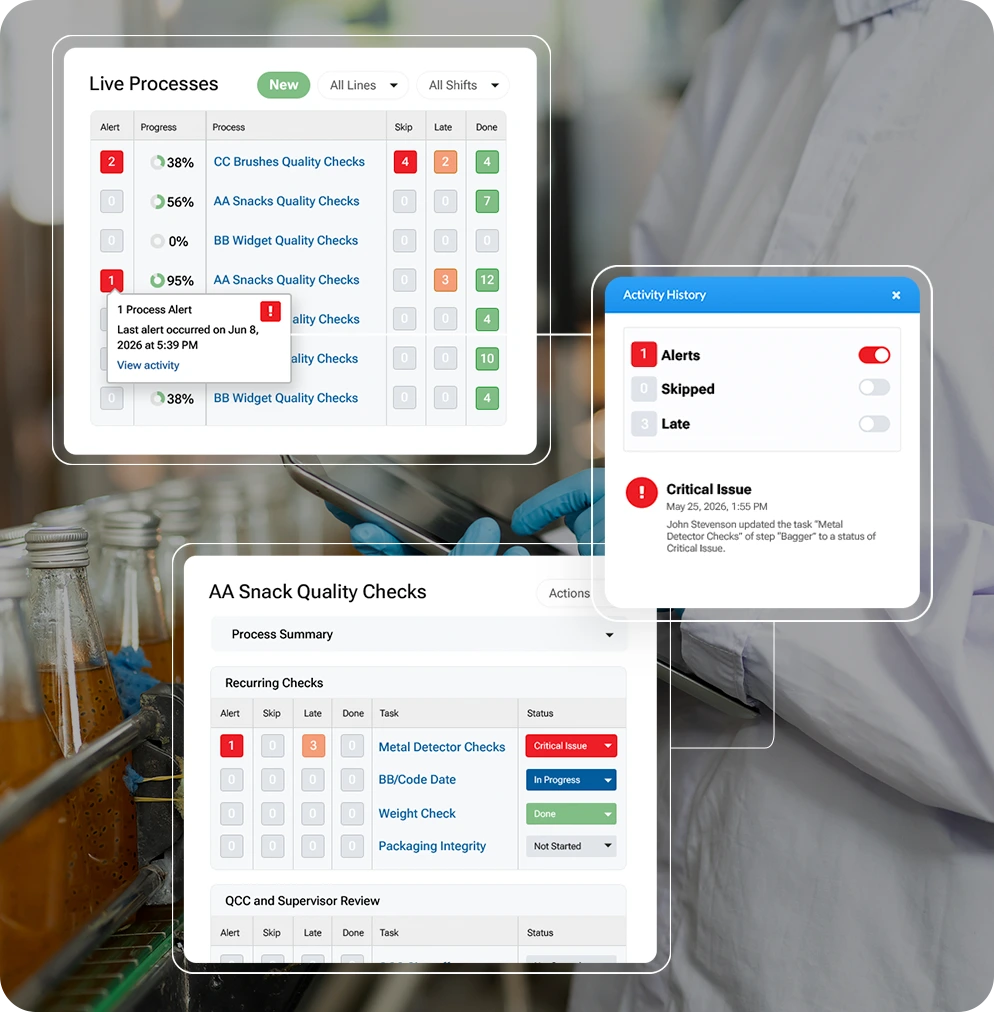
Hourly checks, start-up and changeover verification, net weight and fill checks, date code and label verification, CCP (Critical Control Point) monitoring, and sensory checks.
These are high-frequency and low-ceremony, dozens per shift, which is exactly why they do not belong in an eQMS. Putting a 10:00 net weight reading through quality management workflows is like filing a change request to adjust a torque setting.
Mars Yorkville runs quality checks 400% faster and freed up 13 hours a day previously spent administering them. [attach case study link]
Solutions page: Quality Checks
4. Safety observations, near misses, and hazard reporting
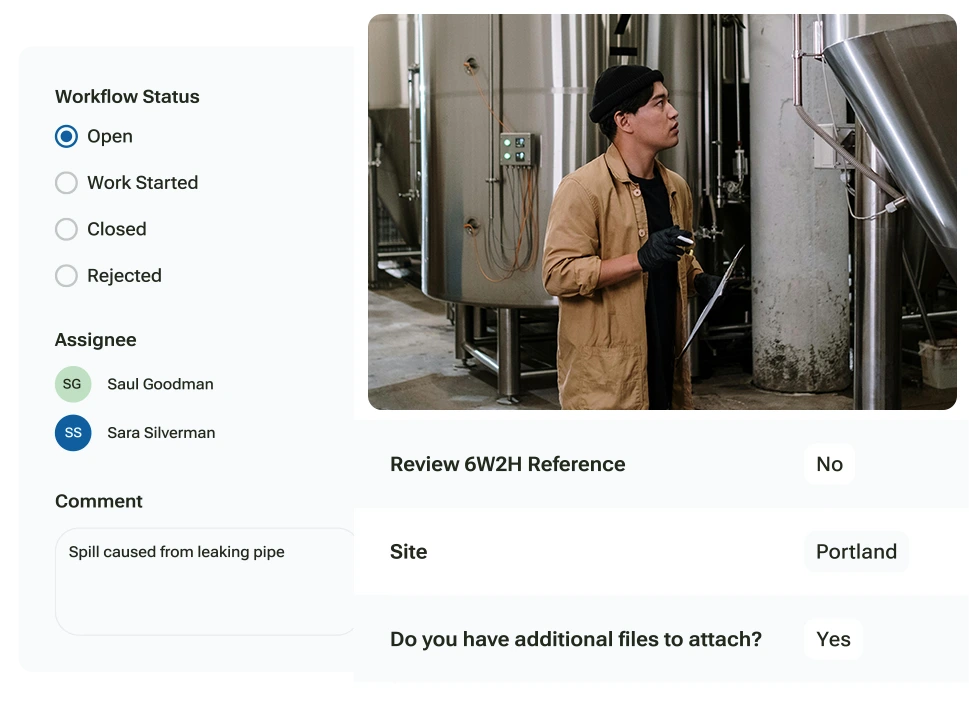
Behaviour-based safety observations and near miss reporting are leading indicators, and their entire value depends on volume.
That makes friction the enemy. If submitting a near miss takes four minutes and a login, you will capture a small fraction of the near misses that actually occur, and your leading indicator data becomes a measurement of who has time to fill in forms rather than what is happening in the plant.
This is also the clearest case against per-seat licensing. Charge for participation and plants ration it, usually starting with the people furthest from the office.
Solutions page: Safety
5. 5S and 6S audits
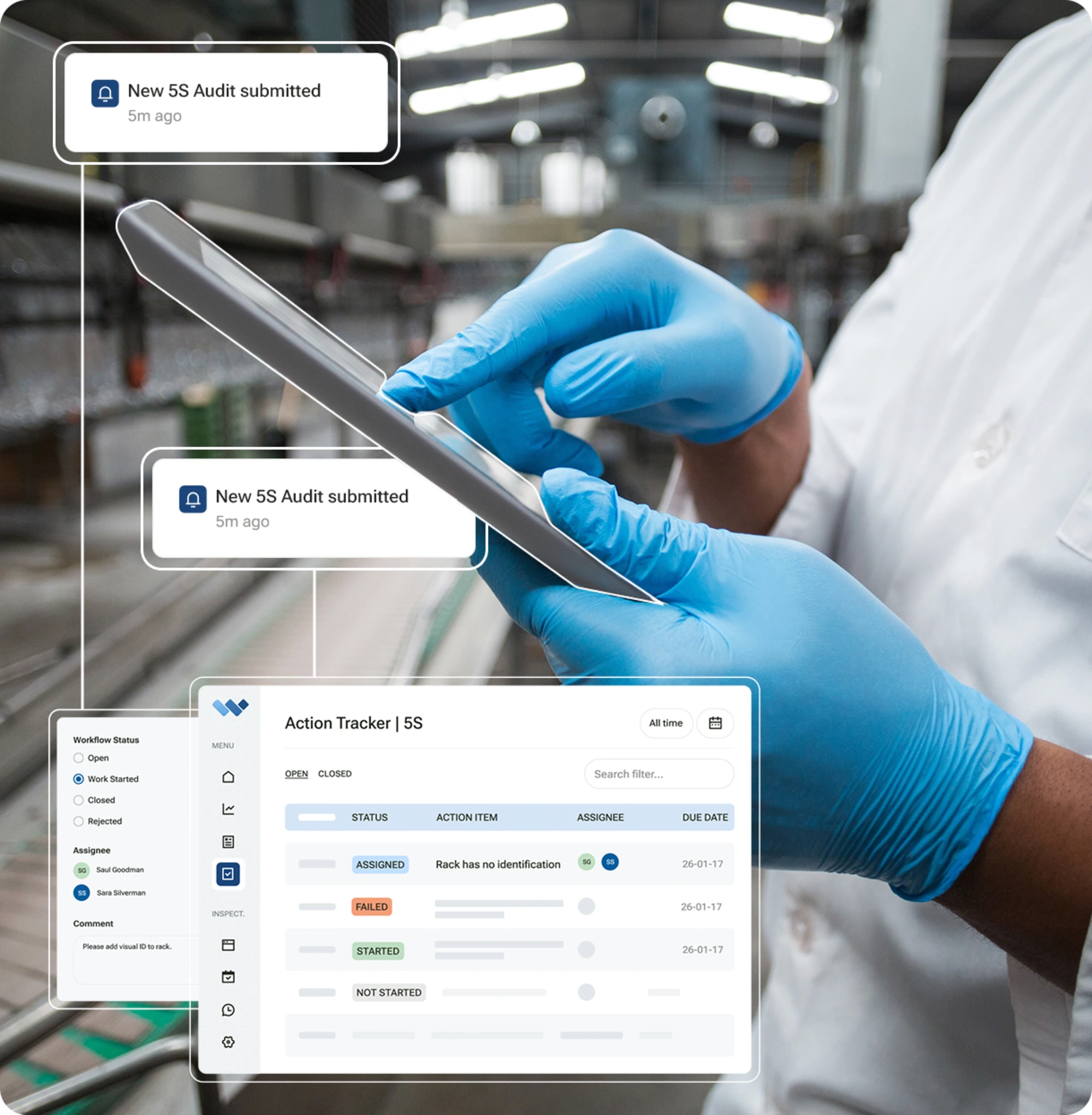
Scored audits with photo evidence and tracked findings, which is a workflow paper handles badly and spreadsheets handle worse.
The failure mode is consistent scoring. When three auditors score the same zone from a paper rubric, you get three different numbers and no way to tell whether a change over time is real improvement or a different auditor. Structured scoring with photo evidence removes most of that variance.
Adient lifted its 5S score from 85% to 97% and cut open monthly issues from more than 60 to fewer than 5, going fully paperless in under three months. [attach case study link] The score is the headline. The drop in open issues is the mechanism.
Solutions page: 5S / 6S
6. Work instructions and standard work
Delivering the current revision of a procedure to the person performing it, with the confidence that it is the current revision.
Paper work instructions have a version control problem that nobody notices until an audit. The binder at the line holds revision 4. Revision 6 was issued in March. Nobody can say with certainty which one was followed in April.
The connected worker version also captures what was found while following the instruction, which is the part standalone work instruction tools tend to leave out.
Related reading: the 10 best work instruction software for manufacturing
7. Skills matrices and training verification
Proving the person performing a task was qualified to perform it, on the version of the procedure in force at the time.
This is the pairing an auditor increasingly asks for: not just the completed check, but evidence that whoever completed it was trained on the current revision. A training certificate from fourteen months ago does not evidence that.
Ajinomoto Toluca uses Weever Documents for skills matrix training. [attach case study link]
Solutions page: Skill Development
8. Shift handover and production logs
The handover is where more operational knowledge is lost than anywhere else in the plant.
A verbal handover transfers what the outgoing operator remembers to what the incoming operator retains, and nothing survives to the following week. A handover note in a book is slightly better and equally unsearchable.
This matters more than it looks. 62% of leaders in Weever's 2026 State of Data Capture in Manufacturing research, a survey of 167 manufacturing leaders at companies with more than 500 employees, said important operational knowledge frequently or very frequently stays only in the experience of operators and inspectors. The handover is the moment that knowledge either gets recorded or evaporates.
9. Lockout tagout execution and verification
Worth being precise about the boundary here, because this is a crowded space with a clear dividing line.
Procedure authoring, the writing and maintenance of machine-specific lockout procedures, is served by dedicated tools like Brady LINK360 and Master Lock cLOTO. A connected worker platform is not competing for that job.
Execution and verification is a different layer. Did the isolation actually get performed, by whom, in what sequence, with photo evidence at each energy source, and was the group lockout verified before restart. That is a frontline task with evidence requirements, and it belongs on the same platform as your other frontline tasks.
Most plants have the procedures documented and cannot prove the executions.
10. Internal and customer audit preparation
Less a program than an outcome of the other nine, but worth naming separately because it is frequently what unlocks the budget.
The audit prep cost of a paper plant is not the audit week. It is the week before, spent pulling records, discovering that two months of one log are missing, and reconstructing what happened from memory and half-legible handwriting.
When the nine programs above are captured digitally, audit prep becomes a filter and an export.
Which program should you digitize first?
Not the easiest one. The one with the most paper and the highest consequence, because that is where the return is largest and the internal case for expansion gets made.
The Weever research gives a useful starting point on where paper still dominates:
Weever, State of Data Capture in Manufacturing, 2026. n=166. Respondents could select multiple programs.
Two thirds of respondents run at least two frontline programs this way. Only 10% run none.
Quality and safety sit at the top, and they are also the two programs most likely to be audited and most likely to trigger a recall or a recordable. For most food and beverage plants that makes quality the obvious first candidate, with sanitation close behind on recall exposure even though fewer plants run it on paper.
Three questions to settle it for your plant:
- Which program would cost you most in an audit tomorrow? Start where the exposure is.
- Which one generates the most paper per shift? That is where the capacity recovery is.
- Which one has a supervisor who wants this? The first program needs an internal champion more than it needs a perfect business case.
If two of those three point at the same program, that is your answer.
What changes when programs share one platform
Running all of these in one system is not just a procurement convenience.
When quality, safety, sanitation, and autonomous maintenance each run in a different tool with a different set of fields, the same failure gets described four different ways depending on which program caught it. 51% of leaders in the Weever research said the same issue is frequently recorded differently depending on who logs it. Separate tools per program guarantee it.
One set of field conventions across programs is what lets you see that a sanitation miss on line 3, a quality hold two shifts later, and a maintenance abnormality the week before are one root cause rather than three unrelated records.
That cross-program view is the thing paper cannot produce at any level of diligence, and it is the reason plants that start with one program rarely stop there.
Start with one program, go slow, expand quickly
Pick the program with the most paper and the highest audit exposure, digitize the process you already run rather than an improved version of it, and expand once it is working.
Ultimately, you can start one of these programs at your facility this quarter. Monin rolled out across its entire North American operation in five months. [attach case study link]
Why manufacturers choose Weever
Ten programs, one configuration
Adding the second program is a configuration decision, not a contract negotiation, and it shares the field conventions of the first.
Site-based pricing, unlimited users
Every operator and sanitor can participate, which is what makes observation and near-miss programs actually work.
Built around your existing process
Your frequencies, your zones, your scoring criteria. Digitize what you run today, improve it later with data behind you.
Findings that close
Every failed step becomes an owned action with a due date, tracked to closure, across every program on the platform.
Want to talk through which program to start with? Book a demo.
Frequently Asked Questions
What are the main use cases for connected worker software?
Autonomous maintenance, master sanitation schedules, quality and in-process checks, safety observations and near misses, 5S and 6S audits, work instructions, shift handover, lockout tagout execution, skills matrices, and audit preparation. Any recurring frontline task currently on paper is a candidate.
Which program should a plant digitize first?
The one with the most paper and the highest audit exposure, not the easiest to configure. In food and beverage that is usually quality or sanitation. Weever research found 66% of quality programs and 63% of safety programs still run primarily on paper, spreadsheets, or homegrown tools.
Can one platform really run all these programs?
Yes, and there is a reason to insist on it. When each program runs in a separate tool with separate fields, the same failure is described differently depending on which program caught it, which makes cross-program patterns impossible to see.
Is connected worker software suitable for lockout tagout?
For execution and verification, yes: proving the isolation was performed, in sequence, with evidence at each energy source. Procedure authoring is a different job served by dedicated LOTO tools. Most plants have documented procedures and cannot evidence the executions.
How many programs do plants typically run on one platform?
Most start with one and expand. Adding programs is straightforward when pricing is site-based and the platform shares one configuration model. It is a contract negotiation when pricing is per module.
Does connected worker software replace our CMMS for maintenance?
No. A CMMS runs the maintenance department: work orders, spares, PM scheduling. Connected worker software runs operator-performed maintenance, and escalates into the CMMS when a finding needs a technician, a part, or a scheduled window.
How long does it take to add a second program?
Considerably less than the first, because the field conventions, the corrective action workflow, and the reporting are already configured. The main work is the form design session with the people who run that task.
.webp)

Spend Less Time on Admin. More Time Improving Operations.
See how Weever automates data entry, reporting, and action items so you can focus on improvement not admin.