
What Is a Daily Management System (DMS) in Manufacturing?

Table of contents

Share:


Most plants have a version of this moment: a shift supervisor calls a quick huddle, someone points at a whiteboard with yesterday's numbers, a few issues get mentioned out loud, and everyone heads back to the floor. It feels like alignment. But by next shift, half of what got flagged is already forgotten, because nobody owned it and nothing was tracked.
A Daily Management System (DMS), also called Daily Direction Setting (DDS), is what turns that loose daily habit into a structured one. It's the operating rhythm that keeps a plant's continuous improvement efforts from fading the same way every other "we'll get to it" initiative does.
Here's what a DMS actually involves, why it matters, and how to run one that survives past the whiteboard stage.
What is a Daily Management System (DMS)?
A DMS is a structured framework for managing day-to-day operational performance in manufacturing, built around continuous improvement and waste reduction. Rather than relying on ad hoc conversations, it gives a plant a consistent daily rhythm for reviewing performance, surfacing problems, and acting on them before they compound.
A typical DMS is built on five core elements:
- Daily meetings. Short, regular meetings where teams review performance metrics and flag issues that need attention, keeping everyone aligned and problems moving instead of sitting until someone remembers.
- Standard work procedures. Documented, consistent procedures that keep quality and output predictable across shifts and operators.
- Visual management. Charts, dashboards, and boards that make key performance indicators visible at a glance, so status doesn't require asking around to find out.
- Structured problem-solving. A repeatable process for tracing an issue back to its root cause, instead of patching the symptom and waiting for it to resurface.
- Continuous improvement. A standing expectation that teams identify and act on small improvements daily, rather than saving change for a quarterly initiative.
What are the benefits of a DMS framework?
- Better communication. Daily meetings and visual boards mean issues surface the same day they happen, not whenever someone happens to notice.
- A clearer focus on results. Performance metrics stay front and center instead of getting buried in a spreadsheet nobody opens between monthly reviews.
- Less waste. Standard work and structured problem-solving give teams a consistent way to catch and eliminate waste in the process, not just in the finished product.
- A real culture of continuous improvement. When small daily improvements are expected and visible, continuous improvement stops being a program and starts being how the plant actually runs.
A daily meeting without a way to track what was said is just a conversation. A DMS is what turns that conversation into follow-through.
Why DMS programs stall on paper and whiteboards
The elements above are straightforward on their own. What's hard is sustaining them.
A whiteboard gets erased before an issue is closed. A paper tracker gets updated inconsistently across shifts. A metric gets discussed in the meeting but never makes it into a report leadership actually reviews. The DMS framework isn't the problem, the follow-through is.
How Weever supports a Daily Management System
Weever is the Connected Worker Platform built for food, beverage, and CPG manufacturers, and a DMS is exactly the kind of daily operating rhythm it's built to run.
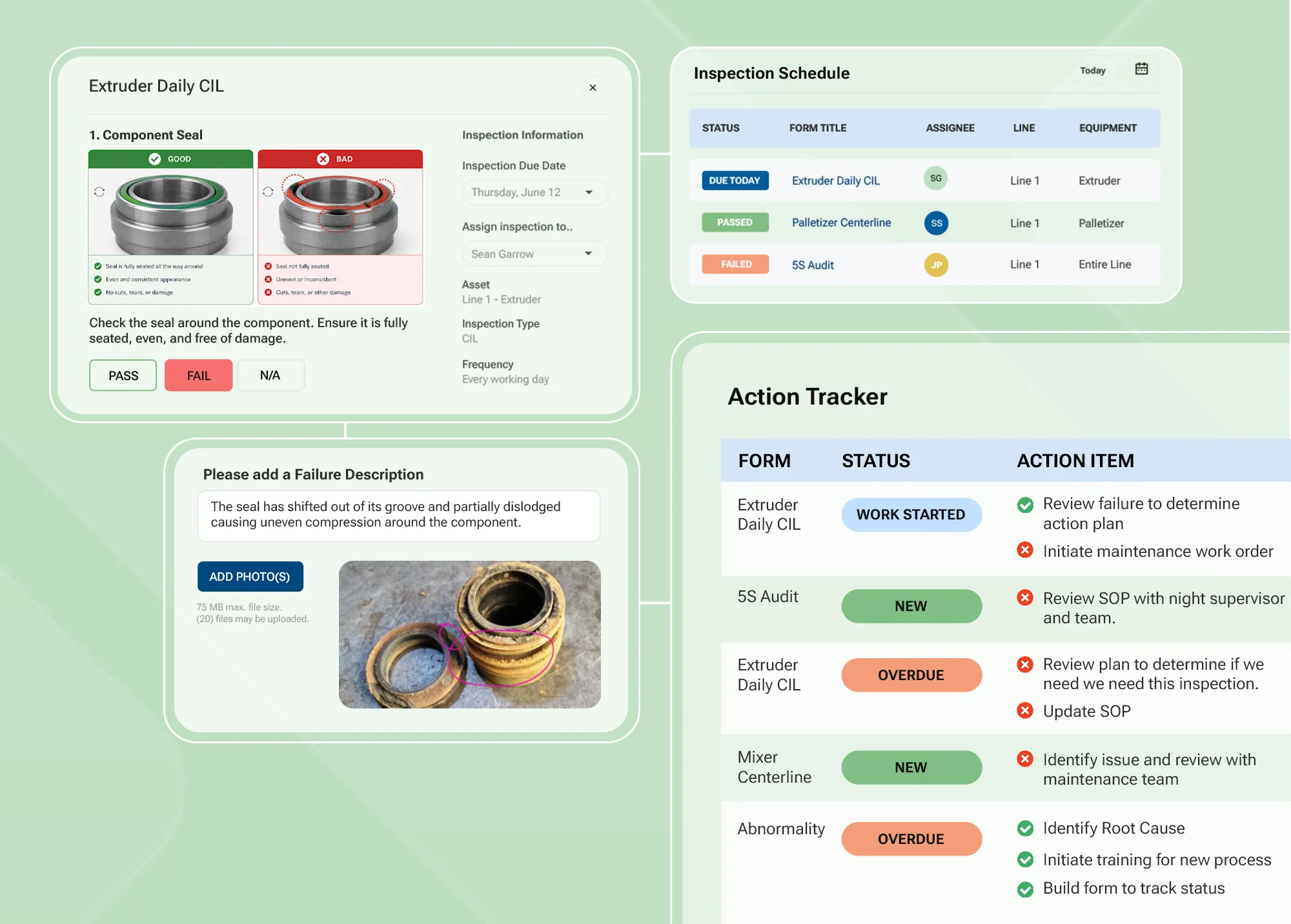
The idea behind Weever is simple: engage your team, unlock your data, improve your plant. A DMS depends on all three working together, and that's the loop Weever is built to close.
- Capture. Instead of a whiteboard that gets wiped clean at the next shift change, the right check, observation, or metric reaches the right person and gets captured at the source, with evidence, so the data behind your daily meeting is trustworthy from the start.
- Act. Every issue raised in a daily meeting gets an owner, a due date, and a status you can follow to closure, so nothing quietly drops between shifts the way it does on a paper tracker.
- Analyze. Frontline data usually ends up fragmented across separate logs, boards, and spreadsheets, with the context behind it, the why, missing entirely. Weever connects that data across every program, line, shift, and site into one real-time picture, so your daily meeting is grounded in what's actually happening, not a partial view.
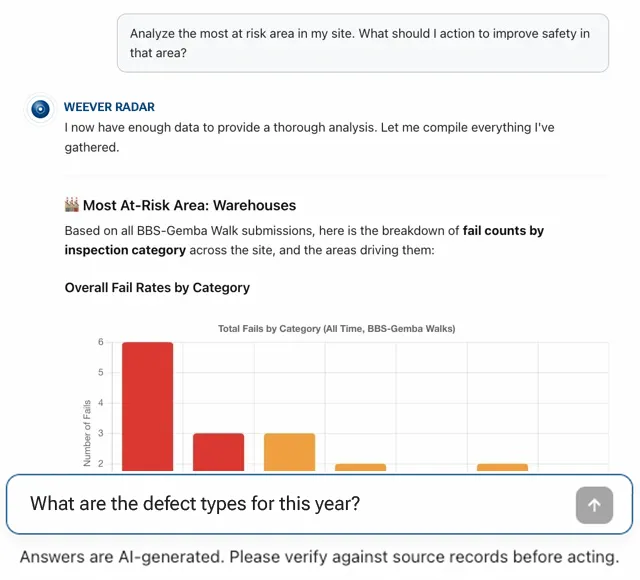
That connected, structured data is also what feeds Weever Radar, the operational intelligence built into Weever. Instead of a dashboard you have to interpret yourself, Radar surfaces what's happening, what it means, and what to do next, across every line, shift, and site, which is exactly the kind of standing visibility a mature DMS program depends on.
Want to see how Weever runs your daily management rhythm, from the huddle to the follow-through? Book a demo and we'll show you.
.webp)

Spend Less Time on Admin. More Time Improving Operations.
See how Weever automates data entry, reporting, and action items so you can focus on improvement not admin.