
How Often Should You Run GMP Audits? A Sample Operational Audit Schedule for Food Manufacturers

Table of contents

Share:


Every food manufacturer knows audits are mandatory. Far fewer have a clear answer for how often each type should actually happen. That gap isn't a compliance failure so much as a planning one: between daily pre-production checks, hygiene audits, internal GMP reviews, and full HACCP system audits, it's easy to either over-audit low-risk areas or, worse, under-audit the ones that actually carry risk.
Regional legislation sets the baseline requirement to audit food safety processes and equipment. On top of that baseline, most processors also maintain additional audit schedules to stay compliant with certification bodies like SQF (Safe Quality Food) and ISO, since that membership opens doors to more sales and distribution opportunities. Food retailers have also been pushing for more rigorous auditing requirements in their supply chains, most of it grounded in HACCP (Hazard Analysis and Critical Control Points) principles: identify the major risk areas, build SOPs to control them, and audit periodically to confirm those controls are holding.
With that many overlapping requirements, the real question isn't whether to audit, it's how to build a schedule that matches audit frequency to actual risk. Here's a practical breakdown of the audit types most food manufacturers should have on their calendar, and how often each one typically runs.
Note: this is intended as general educational guidance. Consult a food safety compliance expert to build or validate the audit schedule for your specific facility and regulatory requirements.
The general rule: audit frequency should follow risk
Before getting into specific audit types, the principle that should drive your whole schedule is simple: the higher the risk of contamination or failure at a given control point, the more frequently it needs to be audited.
A control point tied to a known allergen risk or a Critical Control Point in your HACCP plan warrants a tighter audit cadence than a lower-risk area like dry storage. Build the schedule around that logic first, then layer in the specific audit types below.
Pre-Production Checks: daily or per batch/shift
Pre-production checks confirm equipment cleanliness and basic hygiene standards before a run starts, and they're typically completed by the operator at the beginning of each production run or shift.
To make these checks stick, keep them owned by the people actually running the process, not a separate QA function that checks in after the fact. Keep each item straightforward, clearly measurable, and tied directly to a specific Critical Control Point you're tracking, rather than a general hygiene impression.
Digitizing pre-production checks makes them faster to complete and richer in the data they capture. A digital check can be scheduled automatically, prompt the operator through exactly what needs verifying, and feed straight into a real-time report instead of a paper log that gets reviewed days later.
Hygiene Audits: weekly or monthly, based on risk
Hygiene audits verify that the practices and procedures governing personal and equipment hygiene are actually being followed, not just documented. Frequency should scale with risk, weekly for higher-risk areas, monthly where the risk profile is lower, and audits should be conducted by trained staff working from a defined schedule rather than an ad hoc basis.
A scheduling system that automatically alerts the right staff member when a hygiene audit is due removes the reliance on someone remembering to run it. Staggering audits across shifts, lines, and areas also matters: sampling only the day shift or only one line gives an incomplete picture of hygiene practices across the site.
Internal PRP / GMP Audits: monthly, based on risk
Internal Prerequisite Program (PRP) and GMP audits confirm that your regulatory compliance points, processes, HACCP requirements, and employee practices (SOPs) are actually being followed, including whether required cleaning and sanitation records are being kept. These audits should be conducted by someone trained specifically in GMP and PRP auditing, typically on a monthly cadence adjusted for risk, with photos and comments captured to document findings.
Conditional logic makes these audits sharper without making them longer. When an auditor marks an element as failed, a risk assessment section can appear automatically to capture more detail on that specific failure. From there, the risk assessment score can trigger the required next steps and corrective action plan, so escalation happens as part of the audit itself instead of as a separate step afterward.
HACCP & System Compliance Audits: every 6 to 12 months, based on risk
HACCP audits go back to the original hazard assessments and conclusions that shaped your HACCP plan, to confirm they still hold. That means reviewing every identified hazard and Critical Control Point to check whether it's still genuinely critical, and whether the controls in place are still valid given any changes to your process, ingredients, or equipment.
A System Compliance audit runs alongside this at the same cadence, but takes a wider view: your entire food safety system, including legal requirements, certification-body regulations, and internal SOPs and controls, not just the HACCP plan itself.
Why a well-run audit schedule matters more than the paperwork suggests
An audit schedule isn't just a compliance requirement to satisfy. It's prevention economics in action. A food safety issue caught during a routine internal audit costs a fraction of what the same issue costs once it escapes to a customer or triggers a recall: industry estimates put the average direct cost of a food recall at roughly $10 million, and over half of major recalls exceed that figure once total impact is accounted for (FMI/GMA).
Nearly half of 2024 U.S. food recalls traced back to labeling errors alone, with the large majority involving undeclared allergens (Loftware/FDA), the exact kind of failure a well-run hygiene and GMP audit schedule is built to catch early.
A missed control point doesn't announce itself. The audit schedule is what catches it before a customer does.
Building this into a system that actually runs itself
A schedule on a calendar is only useful if the right person is reminded to run the right audit at the right time, and if the results roll up into something a QA manager can actually act on.
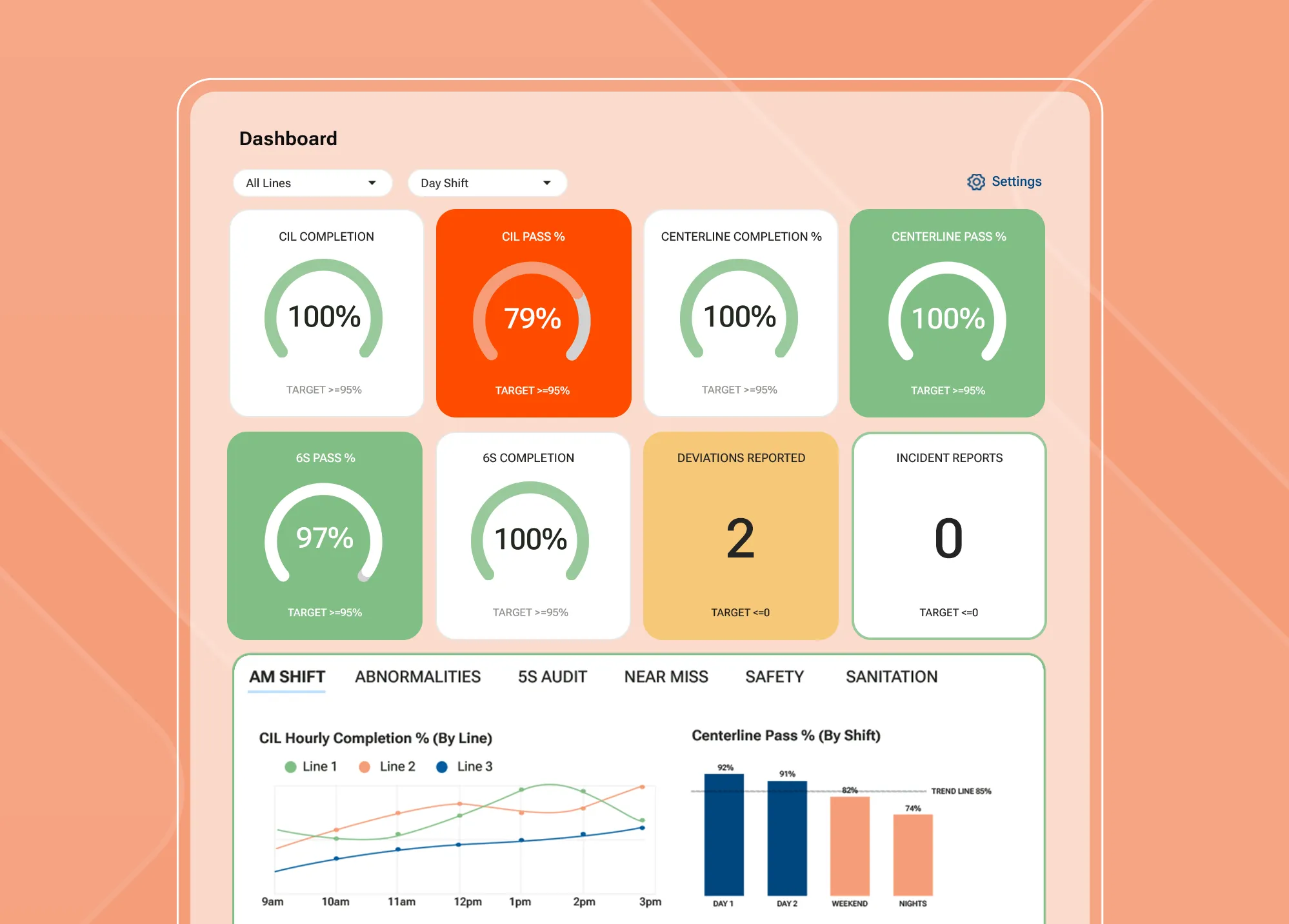
Weever digitizes each of these audit types, pre-production checks, hygiene audits, PRP/GMP reviews, and HACCP system audits, on one platform, with automated scheduling, conditional logic for risk assessments and corrective actions, and real-time reporting that shows where risk is trending before it becomes a finding.
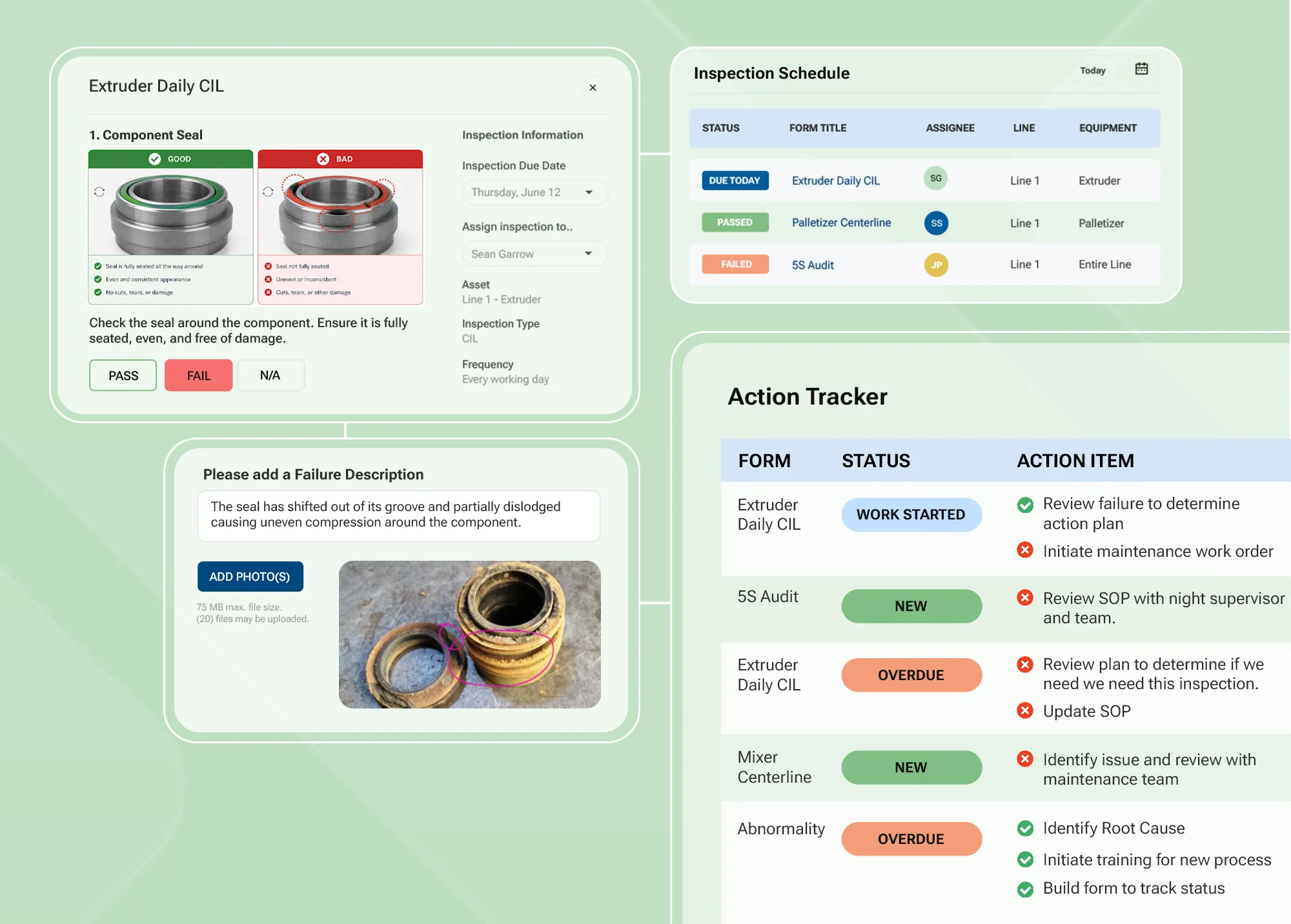
Want to see how Weever schedules and automates a GMP audit program across your facility? Book a demo and we'll show you.

.webp)

Spend Less Time on Admin. More Time Improving Operations.
See how Weever automates data entry, reporting, and action items so you can focus on improvement not admin.