
What are the 7 steps of autonomous maintenance?
Table of contents

Share:


Seven steps. That is what you get when you look up how to run Autonomous Maintenance, and it is the part that makes plant leaders quietly close the tab.
Because you are not starting from zero. You have operators who already run the machines, a maintenance team that is already stretched thin, and a downtime number somebody upstairs wants improved this quarter. Seven sequential steps, each one supposed to be embedded before the next begins, does not sound like a plan. It sounds like a project you do not have time for.
Here is what the seven steps actually are: a sequence for building operator capability before you hand over responsibility. Follow the order and operators end up genuinely owning the condition of their equipment, catching problems weeks before a technician would have. Skip ahead, which is what almost every struggling program did, and you get checklists nobody trusts, filled in by people who were never taught what they are looking at.
The steps are not the hard part. Knowing what each one actually requires, and what breaks downstream when you rush it, is the hard part.
So that is what this article covers. We walk through all seven steps in order, what each one demands of your operators and your maintenance team, and where programs most often go off the rails.
What is Autonomous Maintenance?
Autonomous maintenance (AM) is an operations management practice that transfers the responsibility of basic maintenance tasks to machine operators so that technicians have more time to focus on more strategic and preventive maintenance deliverables. These basic maintenance tasks usually include machine and equipment cleaning, inspection and lubrication jobs.

Autonomous maintenance is a practice included in maintenance management methodologies like Total Productive Maintenance (TPM) and World Class Manufacturing (WCM). Autonomous maintenance empowers machine operators with the right training so they can independently identify quality issues and be able to take immediate action to correct them.
There are 7 steps involved in activating an Autonomous Maintenance program, which are designed to be incremental, so that you can slowly increase the skills and abilities of operators and ultimately arrive at truly autonomous maintenance.
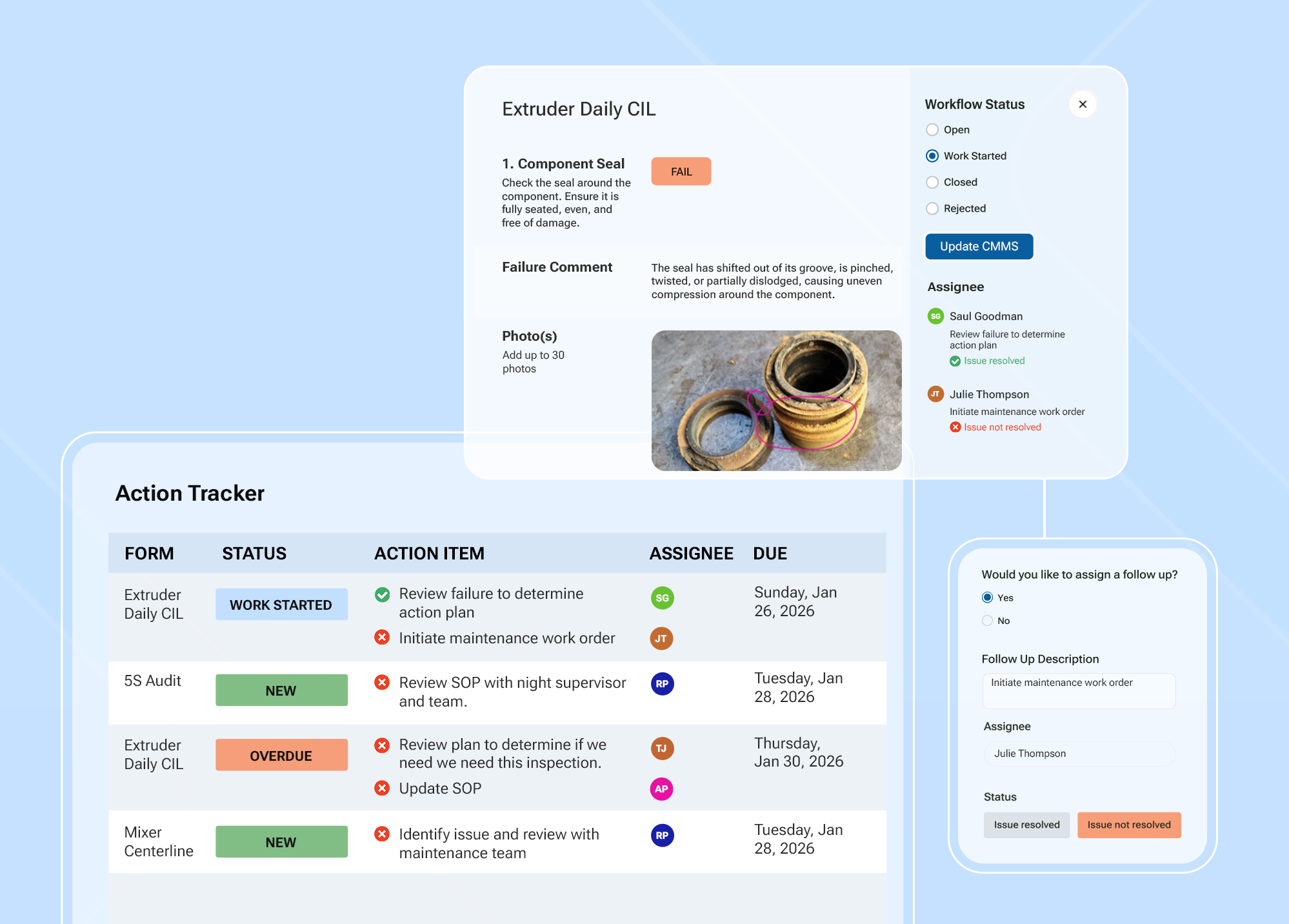
Using the Weever Platform will help to accelerate this process by providing real-time, interactive instructions, easy to follow "pass/fail" forms, automated maintenance ticket workflows, providing documentation and OPL (One Point Lessons) for SOP updates and, ultimately, maintaining a schedule for CILs.
What Are the Benefits of Autonomous Maintenance?
- Prevent issues from becoming major problems - Operators work closely and daily with machines and equipment. As a result, some simple training can provide them with the tools to recognize issues and take action quickly to prevent catastrophic problems.
- Free up maintenance personnel, so they can tend to more critical issues - They can plan and prioritize their specialized skills to higher-level and more complex equipment related issues.
- Improve team collaboration - Foster a more collaborative and less combative culture between production and maintenance staff.
- Improve Accountability - By making operators more accountable for the general performance of their machines and equipment, you increase accountability, which can have cascading effects on safety, quality, maintenance, continuous improvement and employee engagement.
- Verify equipment is properly cleaned and lubricated - When a maintenance technician is overseeing a big repair, simple tasks like cleaning and lubrication are often overlooked. But with autonomous maintenance, operators ensure these simple tasks are carried out.
- Lower labor costs - Reduce reliance on highly trained maintenance staff to do relatively simple cleaning, lubrication and inspection tasks.
Step 1: Start with Initial Cleaning
- Task: Thoroughly clean equipment to remove contaminants such as dust, dirt, oil, and grease.
- Purpose: This “deep clean” serves two functions. First, it exposes hidden issues such as leaks, cracks, and loose fittings, that operators might miss otherwise. Second, it builds familiarity. Operators who clean equipment thoroughly often notice subtle changes in condition before they turn into breakdowns.
- Weever’s Role: Weever makes this stage easy to manage by standardizing cleaning protocols and scheduling reminders. Operators know exactly what’s expected, while managers gain visibility into when and how thoroughly each task is completed. Consistency is no longer dependent on a worker’s memory or paper checklists; it’s baked into the system, providing consistency and reliability.
Step 2: Eliminate Sources of Contamination
- Task: Identify and remove what causes recontamination. That might mean fixing oil leaks, sealing gaps, or improving shop-floor cleanliness.
- Purpose: Cleaning is only effective if it lasts. Tackling root causes extends the life of equipment and reduces wasted time on repeated cleanings.
- Weever’s Role: Automated workflows in Weever assign corrective actions and send reminders so that contamination sources aren’t just observed but acted upon. By embedding accountability into the process, issues are addressed proactively, long before they degrade performance. The result: savings of time and money.
Step 3: Establish CIL Standards (Clean, Inspect, Lubricate)
- Task: Define standardized procedures for cleaning, inspecting, and lubricating each piece of equipment. Include the right tools, materials, and frequency.
- Purpose: Standardization reduces variability. Without it, maintenance quality depends on who’s on shift that day. Clear standards ensure reliability and repeatability.
- Weever’s Role: With Weever, businesses can digitize and continuously refine their CIL standards. Updating and sharing a digital checklist takes minutes, ensuring that new best practices and technologies are incorporated seamlessly across teams and facilities.
Step 4: Conduct General Inspections
- Task: Schedule regular inspections to spot abnormalities such as strange vibrations, odd noises, overheating, or unusual smells.
- Purpose: These simple checks catch small problems before they spiral into costly failures. Early detection is one of the most powerful tools in preventive maintenance.
- Weever’s Role: Weever automates scheduling and logs every completed inspection. Missed checks trigger real-time alerts, while anomalies are tracked, assigned, and resolved within the same system. Nothing is allowed to slip through the cracks.
Step 5: Empower Autonomous Inspections
- Task: Train operators to conduct detailed inspections using specialized tools and techniques.
- Purpose: Operators are closest to the equipment. When they have both knowledge and responsibility, they’re more likely to notice misalignments, wear, or small defects before anyone else. This strengthens ownership and keeps machines running longer.
- Weever’s Role: Weever provides mobile digital checklists and inspection guides that operators can access on the floor. It also integrates with IoT devices to capture real-time data (temperature, vibration, pressure) automatically. That means less paperwork, more accuracy, and quicker insights.
Step 6: Standardize and Share Best Practices
- Task: Document every procedure, inspection, and maintenance task so that the best way becomes the only way.
- Purpose: Consistency across shifts, teams, and plants ensures that everyone follows the same high standards. Standardization also reduces training time and makes onboarding smoother.
- Weever’s Role: Weever becomes a living knowledge base and the cornerstone of your autonomous maintenance program. Best practices are stored digitally, updated instantly, and shared across the organization. As equipment, technologies, and regulations evolve, the documentation evolves with them.
Step 7: Commit to Continuous Improvement
- Task: Review performance data, operator feedback, and industry trends to refine checklists regularly.
- Purpose: Autonomous maintenance isn’t static. It should evolve alongside advances in sensors, lubricants, or safety standards. Continuous improvement ensures your checklist remains relevant and effective.
- Weever’s Role: This is where Weever shines. Its analytics and reporting tools uncover inefficiencies and improvement opportunities. Managers can see which tasks prevent downtime most effectively, where bottlenecks exist that slow operators, and which emerging best practices should be adopted.
The steps are a sequence, not a checklist
Every AM program that fails follows the same pattern. Someone builds the forms first and the capability second. Operators get handed a checklist for equipment nobody taught them to read, the data comes back at 100 percent, and no one in the plant believes it.
Get the order right and the payoff compounds. Well-run AM programs cut breakdown frequency by 30 to 50 percent in the first year, and the operator who once waited for maintenance becomes the person who catches the problem first.
Start with step one and one line. Not the whole plant, and not step five.
How Weever Helps Businesses Stay Ahead
Building a checklist is the foundation of your autonomous maintenance program. Keeping it relevant is the real challenge. Industrial maintenance is evolving fast, with IoT sensors, AI-driven analytics, and predictive maintenance models changing how companies operate. Here’s how Weever ensures your checklist never falls behind.
- Ease of Use - Weever’s intuitive design allows both managers and operators to make updates quickly. When new trends or methods emerge, they can be folded into existing workflows without confusion or downtime.
- Automated Workflows - Routine tasks no longer clog schedules. Weever automates reminders, follow-ups, and escalations. That means operators spend less time managing paperwork and more time executing tasks that matter.
- Actionable Insights - Weever’s data analytics give businesses real-time knowledge of equipment health. Instead of waiting for something to break, companies can predict and prevent failures by spotting trends in inspection data. And you know what that means? Less downtime?
- Real-Time Reporting -Maintenance leaders can see the current state of every checklist across sites. If a task is overdue or a new standard isn’t being followed, they’ll know instantly. This agility keeps operations running smoothly.
- Smooth Rollouts - When it’s time to adopt a new trend such as vibration sensors or a novel lubrication method, Weever provides a structured rollout. Tasks, training, and documentation are integrated into existing workflows without disruption.
Historically, paper checklists were a static “to-do” list. An autonomous maintenance checklist is a living system that changes with your equipment and processes, extending equipment life, empowering operators, and keeping businesses competitive in a landscape where downtime is unacceptable. Emerging technologies and industry best practices evolve constantly. With Weever, you aren’t just building a checklist. You are building a framework that adapts, improves, and scales to fit your needs.
Want to see what steps four through seven look like when the standards, schedules, and abnormality reports all live on one system? Book a demo and bring your current CIL form. We will show you where your program actually sits in the seven steps.


Spend Less Time on Admin. More Time Improving Operations.
See how Weever automates data entry, reporting, and action items so you can focus on improvement not admin.