
What is Jishu Hozen Autonomous Maintenance?
.avif)
Table of contents

Share:


At Weever Apps, we're always exploring ways to enhance manufacturing efficiency. Jishu Hozen autonomous maintenance is a powerful approach that puts equipment care directly in the hands of operators.
This method, originating from Japan's Total Productive Maintenance philosophy, transforms how organizations manage their machinery and production processes.
In this post, we'll break down the principles of Jishu Hozen, its implementation, and the significant benefits it brings to businesses.
What is Jishu Hozen?
The Essence of Autonomous Maintenance
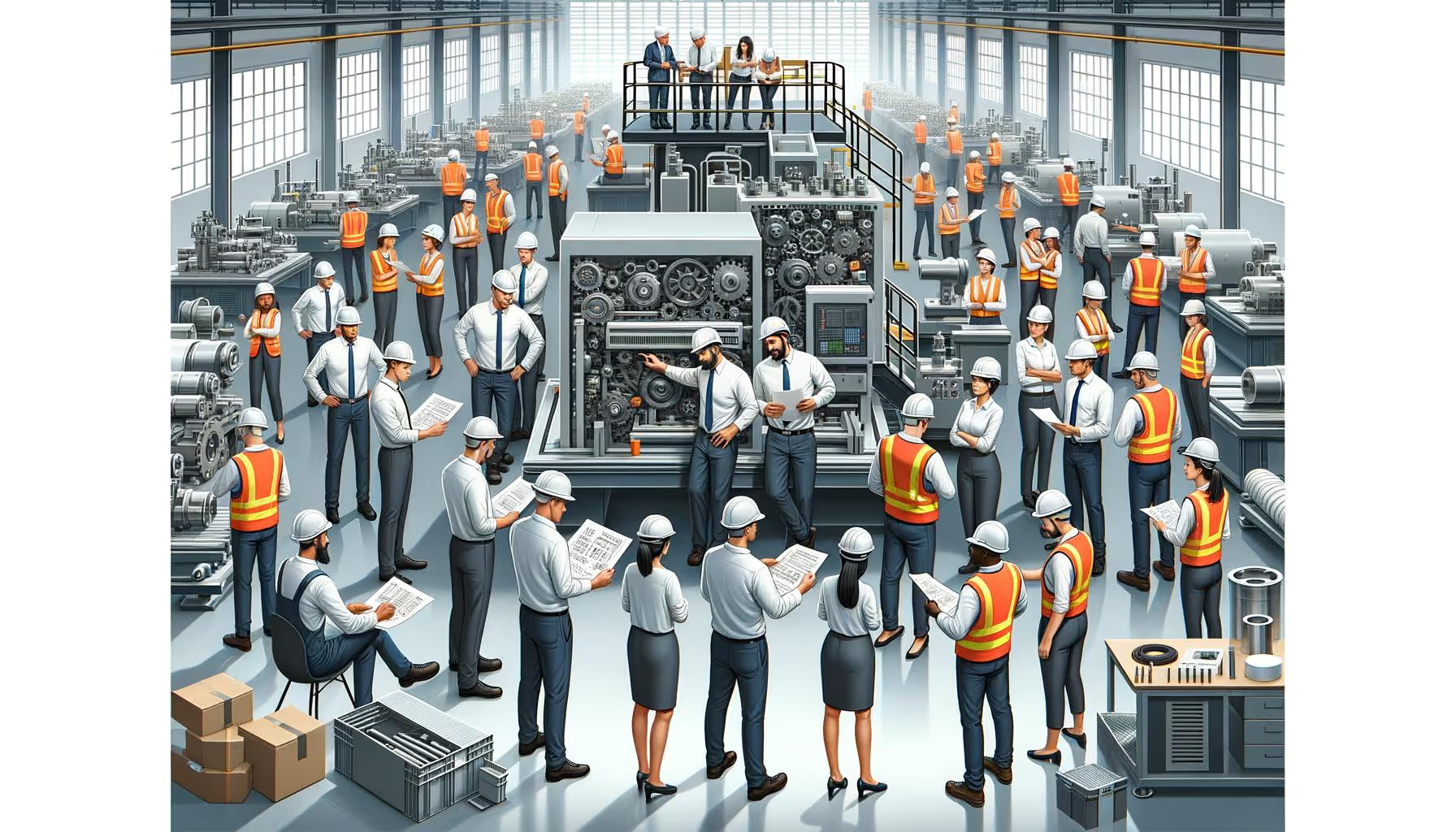
Jishu Hozen, a cornerstone of Total Productive Maintenance (TPM), empowers machine operators to take charge of their equipment's well-being. This Japanese concept (which translates to "autonomous maintenance") revolutionizes traditional maintenance approaches by shifting basic upkeep responsibilities to the frontline workers who interact with the machinery daily.

At its core, Jishu Hozen involves operators performing routine tasks such as cleaning, lubricating, and conducting basic inspections. This proactive approach allows for early detection of potential issues, reducing the likelihood of unexpected breakdowns.
From TPM to Global Standard
Jishu Hozen emerged from the Total Productive Maintenance philosophy developed in Japan during the 1970s. It addresses the growing complexity of manufacturing equipment and the need for more efficient maintenance strategies. Today, it stands as a global standard for manufacturing excellence.
Measurable Operational Impact
The objectives of Jishu Hozen extend beyond mere equipment care. This translates to tangible benefits such as reduced downtime, increased productivity, and significant cost savings.
Workforce Empowerment and Engagement
One of the most profound impacts of Jishu Hozen is on employee engagement and skill development. Operators trained in autonomous maintenance report higher job satisfaction and a stronger sense of ownership over their work. This cultural shift often results in improved quality control, as operators become more attuned to the nuances of their equipment's performance.
Digital Solutions for Enhanced Implementation
To fully leverage the benefits of Jishu Hozen, many organizations turn to digital solutions. Platforms like Weever offer tools that streamline the implementation of autonomous maintenance programs, providing real-time data capture, automated workflows, and comprehensive dashboards for tracking progress and identifying areas for improvement.
As we move forward, we'll explore the practical steps to introduce Jishu Hozen in the workplace, including the necessary training and skill development required for successful implementation.
How to Implement Jishu Hozen
Start with a Pilot Program
Select a specific area or piece of equipment for your pilot program. This approach allows you to test and refine your strategy before a company-wide rollout. Choose a critical machine that frequently experiences issues or one that significantly impacts production when it's down.
Train Your Operators
Comprehensive training forms the foundation of successful implementation. Begin with the basics of equipment operation and maintenance. Teach operators to identify abnormalities, perform basic cleaning and lubrication tasks, and conduct simple inspections. Use hands-on training methods and provide clear, visual guides for each task.

A strong training and development program can have numerous short- and long-term benefits, including increasing employee engagement and retention rates.
Establish Clear Standards and Procedures
Develop detailed, step-by-step procedures for each maintenance task. Create visual aids (such as photographs or diagrams) to illustrate proper techniques. Standardize these procedures across all shifts to ensure consistency.
Leverage Technology for Efficiency
Digital tools can significantly enhance your Jishu Hozen program. Mobile apps and tablets allow operators to access maintenance checklists, report issues, and document their work in real-time. For instance, Connected Worker platforms offer digital forms and automated workflows that streamline the entire process, from task assignment to completion tracking.
Monitor and Measure Progress
Set clear, measurable goals for your Jishu Hozen program. Track key performance indicators (KPIs) such as equipment uptime, mean time between failures (MTBF), and maintenance costs. Use this data to identify areas for improvement and to demonstrate the program's value to stakeholders.
The success of your Jishu Hozen implementation depends on continuous improvement and feedback. Regular reviews and refinements of your processes will ensure that your program remains effective and adapts to changing needs. In the next section, we'll explore the tangible benefits that organizations can expect from a well-executed Jishu Hozen program.
How Does Jishu Hozen Boost Organizational Performance?
Reduction in Equipment Failures
Organizations that adopt Jishu Hozen experience significant decreases in unexpected breakdowns. Companies empower operators to take ownership of their equipment, which leads to improved maintenance practices and reduced failures.
Increase in Overall Equipment Effectiveness
Overall Equipment Effectiveness (OEE) is a key metric for manufacturing efficiency. Companies implementing Jishu Hozen often see improvements in OEE. This boost stems from increased equipment availability, improved performance, and higher quality output.
Cost Savings Through Preventive Action
The financial impact of Jishu Hozen can be substantial. Preventive maintenance techniques, enhanced by autonomous maintenance, can lead to cost savings by avoiding costly breakdowns, extending equipment life, and optimizing maintenance schedules.
Enhanced Product Quality and Customer Satisfaction
Operators who are more in tune with their equipment can spot quality issues early. This improvement in quality can directly translate to higher customer satisfaction and fewer returns or complaints.
Improved Safety Records
Safety is paramount in any industrial setting. Companies that embrace Jishu Hozen often report improvements in safety. This improvement is attributed to operators' increased awareness of their work environment and equipment conditions.
Accelerated Problem-Solving and Innovation
Empowering operators with maintenance responsibilities often leads to unexpected innovations. When frontline workers understand their equipment intimately, they are more likely to suggest improvements, which can lead to significant efficiency gains.

Many organizations turn to digital solutions to fully capitalize on these benefits. Platforms like Weever offer tools that streamline Jishu Hozen implementation, providing real-time data capture, automated workflows, and comprehensive dashboards. These digital aids ensure that the benefits of autonomous maintenance are fully realized and easily quantifiable.
Final Thoughts
Jishu Hozen autonomous maintenance transforms modern manufacturing. It empowers operators to take ownership of their equipment, which leads to remarkable improvements in efficiency, quality, and overall performance. The long-term impact extends beyond the shop floor, fostering a culture of continuous improvement and innovation that drives competitive advantage.

The benefits of Jishu Hozen include reduced downtime, increased equipment longevity, improved product quality, and significant cost savings. It also transforms the workforce, making operators more engaged, skilled, and proactive. This results in a more resilient and adaptable organization.
Implementing Jishu Hozen requires commitment, training, and the right tools. Digital solutions play a key role in streamlining this process. Connected Worker platforms offer powerful features that support Jishu Hozen implementation, from digital checklists to real-time data capture and analysis.

.webp)

Spend Less Time on Admin. More Time Improving Operations.
See how Weever automates data entry, reporting, and action items so you can focus on improvement not admin.