
Autonomous vs Preventive Maintenance: Key Differences

Table of contents

Share:


Your maintenance team already runs a preventive maintenance schedule. Now someone wants operators doing maintenance too, and the obvious question is whether that's a replacement, a duplicate, or a recipe for two teams checking the same bearing.
It's none of those, if you split the work properly. Preventive maintenance (PM) handles the scheduled, skilled work. Autonomous maintenance (AM) handles the daily care and early detection that PM's calendar can't catch. Run them together and each makes the other cheaper. Run them separately and you get gaps between PM intervals and duplicate checks in between.
Here's how the two compare, side by side, and how to split the work between operators and technicians.
Autonomous vs preventive maintenance at a glance
| Item | Autonomous maintenance | Preventive maintenance |
|---|---|---|
| Done by | Trained machine operators | Maintenance technicians |
| Schedule | Every shift, day or week, during production | Fixed intervals by calendar or running hours |
| Typical tasks | Cleaning, visual and sensory inspection, lubrication, tightening, centerline checks | Part replacement, overhauls, calibration, detailed inspection |
| Catches | Early signs of deterioration between PM visits | Wear on known, predictable cycles |
| Main cost | Operator training and shift time | Technician hours, parts and planned downtime |
| Where it’s tracked | CIL checklists and abnormality reports | Work orders, usually in a CMMS |
| Main risk | Pencil-whipped checks if nobody responds to findings | Over-maintenance, and failures between intervals |
What is autonomous maintenance?
Autonomous maintenance is one of the core pillars of Total Productive Maintenance (TPM). It trains operators to handle routine care (cleaning, inspection, lubrication and abnormality reporting) on the equipment they run every day. Because they're at the machine every shift, operators catch deterioration that a monthly technician visit would miss. See the 7 steps of autonomous maintenance for how a program is built.
What is preventive maintenance?
Preventive maintenance is scheduled maintenance done before failure, by technicians. It comes in two forms. Time-based PM runs on the calendar (quarterly gearbox oil changes). Usage-based PM runs on operating hours or cycles (bearing replacement every 5,000 running hours). Intervals usually come from manufacturer recommendations and your own failure history.
The key differences
- Who does the work - AM belongs to operators; PM belongs to technicians. That's the difference everything else follows from.
- How often - AM happens every shift or day, in small pieces. PM happens on longer intervals, in bigger jobs, often with planned downtime.
- What it catches - PM handles wear you can predict. AM catches what you can't: the bolt that loosened last Tuesday, the leak that started after a changeover. PM's main weakness is failures that happen between intervals; AM fills that gap.
- Cost profile - AM's upfront cost is training and shift time. PM's ongoing cost is technician hours, parts, and sometimes replacing parts that still had life left.
- Skills - AM builds operator skill and ownership. PM depends on specialist skills, and needs AM to free up the hours to use them.
They're not alternatives: how AM and PM work together
The best programs give each task to whoever is best placed to do it, and write that split down.
Autonomous maintenance
Operators, every shift
- Cleaning and visual checks
- Lubricating marked points
- Centerline and gauge checks
- Tightening approved fasteners
- Reporting abnormalities with a photo
Preventive maintenance
Technicians, on planned intervals
- Part replacement and overhauls
- Calibration
- Electrical and hydraulic work
- Detailed condition inspections
- Acting on what operators report
AM feeds PM. Operator findings show which PM intervals to stretch and which to shorten.
AM also makes PM smarter. Operators' inspection data shows which machines and components actually fail, so PM intervals can be lengthened where nothing is found and shortened where problems keep showing up.
How to decide the split on your lines
- Can the task be done safely without specialist tools or qualifications? If yes, it's a candidate for AM.
- Does it need to happen more often than a technician can visit? AM.
- Does it need disassembly, calibration or a lockout an operator isn't trained for? PM.
- Is there a legal or company qualification requirement? PM, always.
Start with one line, list every current PM and inspection task, and move only the clear AM candidates. Record who's approved for what in a skills matrix.
How Weever supports both
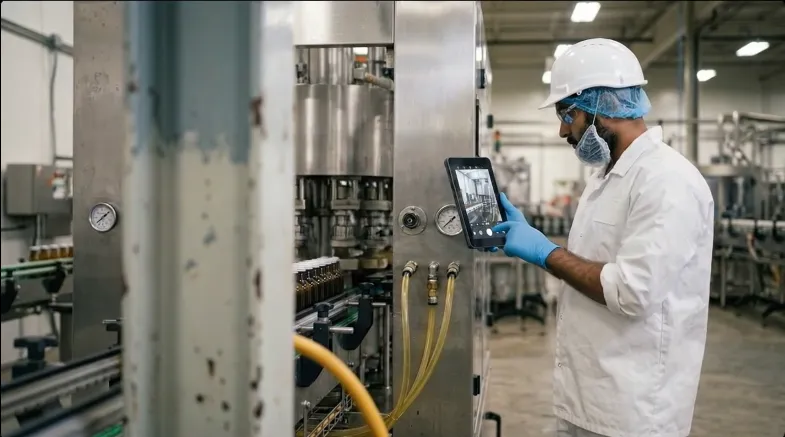
Weever runs operator CIL checklists and technician inspection schedules on the same system. Operators log findings with photos, which route to maintenance automatically and can flow into your CMMS as work orders. Reports by line, shift and equipment show where findings cluster, so you can adjust PM intervals with data instead of guesswork.
See AM and PM on one system
Book a demo and bring a list of your current inspection and PM tasks. We’ll show you how operator checks and technician work feed each other.
Book a demo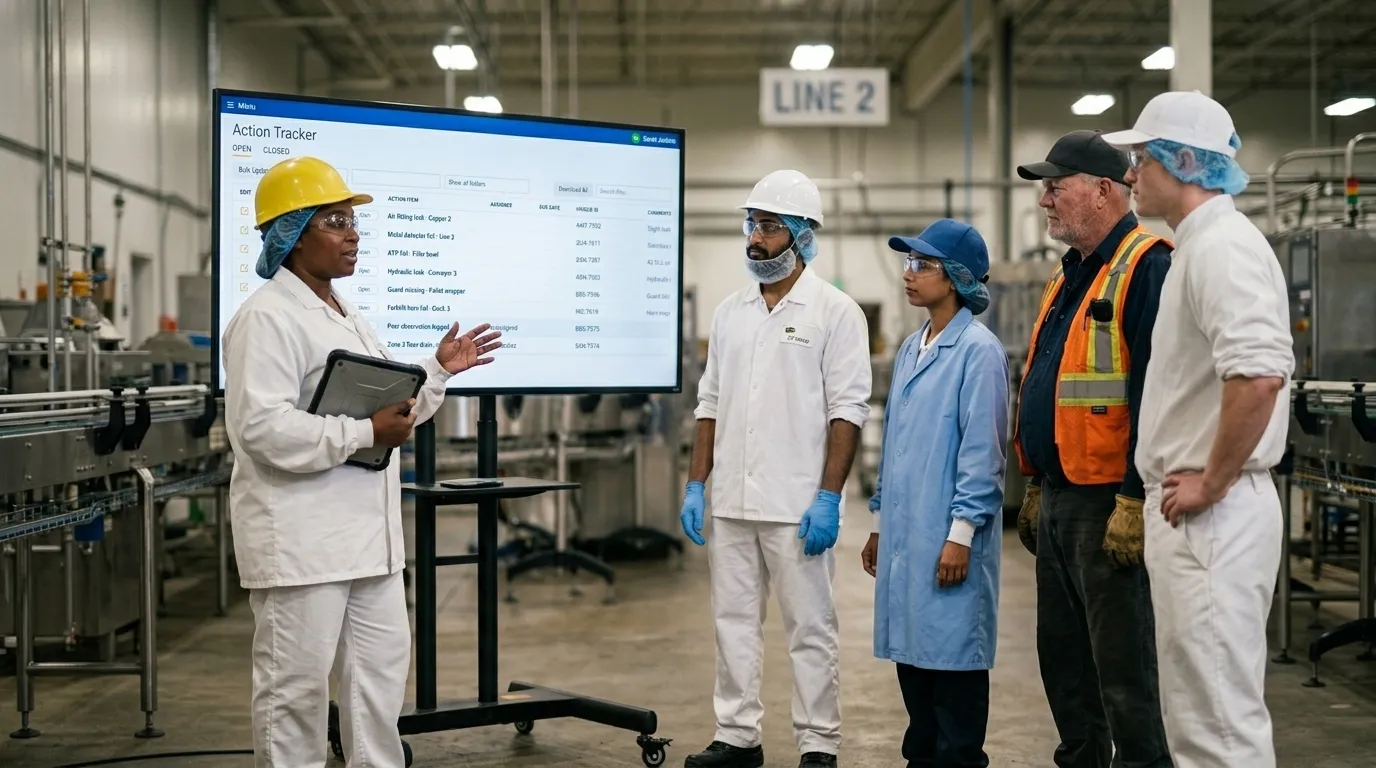

Spend Less Time on Admin. More Time Improving Operations.
See how Weever automates data entry, reporting, and action items so you can focus on improvement not admin.