
How to Build a GMP Audit Schedule and Program That Actually Works
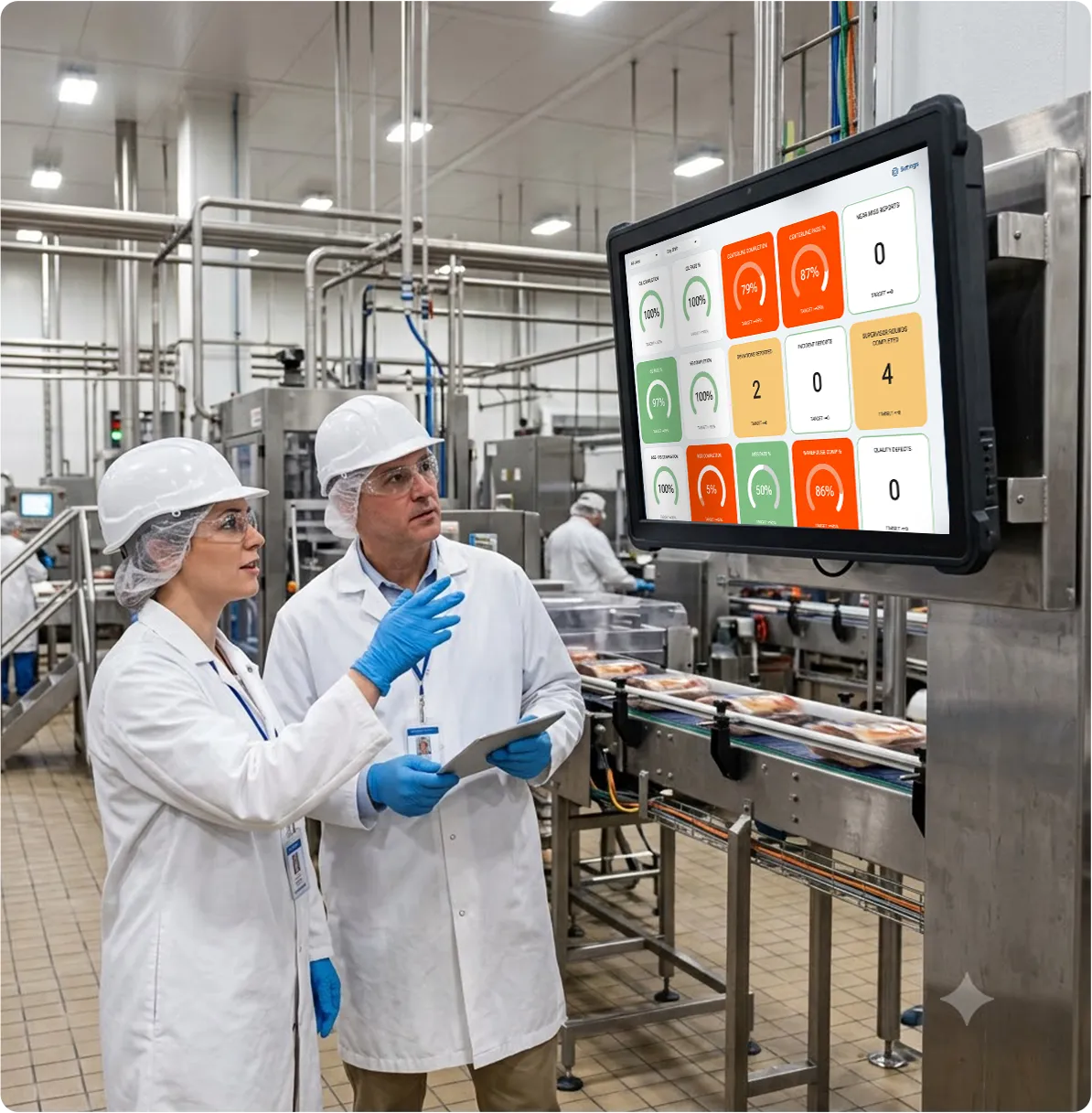
Table of contents

Share:


A GMP audit that just checks a box protects you from a citation. A GMP audit built the right way protects your product, your brand, and the trust customers put in what leaves your plant. Both versions are legal. Only one is actually worth running.
If you're reading this, you're probably past the "check the box" stage. You already know Good Manufacturing Practice audits are a legal requirement in food manufacturing, and you're looking to get more out of them than the minimum: better product quality, stronger operational efficiency, and a team that actually engages with the process instead of resenting it.
Here's what a GMP audit typically covers, how to think about scheduling one, and four best practices for building a program that holds up under real scrutiny, not just a paper trail.
What does a GMP audit typically cover?
A GMP audit is a structured review of the conditions and practices behind the product, not the finished product itself. Depending on your facility, a typical audit covers:
- Environmental hygiene and housekeeping, visual checks of the plant floor, equipment, and common areas.
- PPE and hand-washing practices, confirming staff are following required protocols.
- Process parameter checks, verifying critical steps stay within specification.
- Allergen controls and swabbing, testing for cross-contact and residue on shared equipment and surfaces.
GMP audits are required by law, but the frequency and depth of the audit schedule is largely up to your organization to define, based on risk, product type, and your HACCP study.
How often should you run GMP audits?
There's no single mandated cadence that applies to every food manufacturer. Instead, most operational audit schedules are built around risk: high-risk areas (allergen-handling zones, open-product lines, high-touch equipment) get audited more frequently than lower-risk areas like dry storage or administrative spaces. A well-built schedule ties audit frequency directly to what your HACCP study identifies as a Critical Control Point, so the areas with the most at stake get the most attention.
The goal of the schedule isn't just compliance coverage. It's making sure drift, a hand-washing station that's slipped out of habit, a housekeeping standard that's quietly eroded, gets caught while it's still a quick fix, not a finding during a third-party audit.
Best Practice 1: Trim the fat and optimize your audit forms
An effective GMP audit form asks exactly what your HACCP study and GMP requirements call for, and nothing more. Every extra question adds time to the audit and dilutes attention on the ones that actually matter.
- Remove questions that don't tie directly to a documented requirement.
- Review your audit forms on a regular, formal cadence, not just when something goes wrong, to keep the form aligned with current requirements.
- Add photo capture to fields where a picture gives more useful context than a written description.
- Use conditional logic to hide fields that don't apply, so staff aren't reviewing irrelevant questions on every single audit.
Best Practice 2: Build in scoring and escalation
A simple scoring system turns a subjective walk-through into something staff can act on immediately. Assign a score to each answer option, and have the system total the audit score automatically as questions are answered. From there, you can set escalation rules on individual questions, so a critical failure triggers next steps immediately instead of waiting for someone to review the completed form.
Weever's digital form builder scores multiple-choice fields automatically, calculates the total audit score in real time, and can trigger range-based next steps based on the final score, so staff know exactly what to do the moment the audit is complete.
Best Practice 3: Require comments only where they add value
Comments give a failed audit item the context a score alone can't provide. But requiring a comment on every single field adds time to an audit that's already competing with production schedules, and most of that added time goes toward fields that passed with nothing meaningful to say.
The fix is conditional: require a comment only when an item actually fails inspection. That keeps the audit fast for the items that are fine, while still capturing the detail that matters most, the explanation behind a failure, exactly when you need it.
Best Practice 4: Trend your audit data over time
A single audit is a snapshot. The real value comes from trending results over time, since some issues (a slowly drifting process parameter, a housekeeping standard that erodes gradually) don't show up as a clear failure until you can see the pattern across multiple audits.
Capturing failure outcomes consistently and correlating them against audit history lets you spot a developing issue before it becomes a finding, a hold, or a recall. This kind of prevention pays for itself: a quality defect typically costs about $1 to prevent, roughly $10 to correct once it's caught in-house, and around $100 if it escapes all the way to a customer (Crosby / ASQ). Catching drift through trend data, rather than waiting for a hard failure, is what keeps a defect on the cheap end of that curve.
An audit tells you what's true today. Trend data tells you what's about to become true next month.
Why manufacturers digitize GMP audits with Weever
Paper forms and spreadsheets can get a GMP audit program off the ground, but they make trending, escalation, and reporting slower than they need to be, right when speed matters most.
Faster, more focused audits. Conditional logic and photo capture keep GMP checks quick without losing the detail an auditor or a recall investigation would need.
Escalation that happens automatically. Scored fields and range-based rules mean a failing result routes to the right person immediately, not after someone reviews a stack of completed forms.
Reporting that shows drift before it's a finding. Weever automates KPI reporting in real time, so trend visibility replaces guesswork.
Mars Yorkville used this same approach to cut quality check time by 400% (from 5 to 7 minutes down to 1 to 2) and save 13 hours a day in review time across nine lines, while eliminating costly holds entirely.
Want to see how Weever builds scoring, escalation, and trend reporting into your GMP audits? Book a demo and we'll show you.



Spend Less Time on Admin. More Time Improving Operations.
See how Weever automates data entry, reporting, and action items so you can focus on improvement not admin.