
8 best behavior-based safety observation software for manufacturing in 2026

Table of contents

Share:


Quick summary
Behavior-based safety (BBS) software helps manufacturers capture floor observations and manage them beyond paper, spreadsheets, and emails. The biggest differences are how easily frontline workers can participate and what happens after an at-risk behavior is reported. Stronger tools turn flagged observations into assigned, tracked actions instead of leaving them as data points. Frontline access, corrective action tracking, pricing, and cross-site reporting are the main areas for comparison.
Here are our top 3 picks at a glance:
Why safety teams need better visibility into shop-floor behavior
In manufacturing, safety data can pile up without telling you much. You may have hundreds of behavioral observations across shifts and teams, but still struggle to see which habits are improving and which risks keep recurring.
Behavior-based safety software helps make those observations easier to use. It can standardize how behaviors are recorded, track safe and at-risk actions, and reveal patterns across shifts or facilities. That matters in a sector with more than 330,000 nonfatal injuries and illnesses reported in a single year.
In this guide, we compare the 8 best behavior-based safety software based on how well each platform supports practical BBS work on the shop floor.
Why listen to us?
Weever is a connected worker platform used by manufacturers to run BBSO alongside programs like 5S, quality checks, and safety audits. Our view of BBSO comes from working directly with the plants running these programs, seeing where participation drops off, why observations get missed, and what actually helps corrective actions reach closure.
That experience gives us real results against which to judge BBSO software. Baywater Pipeline increased monthly observations by 230% and reached a 92% follow-up completion rate after digitizing its process with Weever. We also support BBSO programs at Walmart and manufacturers across CPG and process manufacturing, giving us a practical basis for evaluating the tools on this list.

What is behavior-based safety software?
Behavior-based safety software helps organizations record and analyze workplace behaviors that affect safety. Unlike incident reporting, BBSO focuses on observing work before an injury or near miss occurs. Teams record specific safe and at-risk behaviors, such as PPE use, lockout procedures, lifting technique, or equipment handling.
Behavior-Based Safety Observations with Weever
On a manufacturing floor, a basic BBSO process looks as follows:
- An employee or supervisor observes a task being performed.
- They record whether predefined behaviors were safe or at risk.
- The observation is categorized by task, behavior, work area, or other relevant criteria.
- Safety teams review the observations and decide which findings need follow-up.
- Observation data is reviewed over time to identify recurring behaviors and trends.
More advanced BBSO platforms go further by connecting observations with corrective actions, follow-up workflows, and broader safety data. Some also reduce barriers to frontline access with shared-device or no-login reporting and provide analytics across multiple sites.
The goal is to find patterns before they contribute to incidents. Repeated lockout errors, for example, may point to a training, procedure, or equipment issue that needs further investigation.
Why do manufacturers need behavior-based safety software?
BBSO software matters most when observation programs start creating more admin than insight. Here’s where it makes the biggest difference:
1. You involve more of the workforce: Supervisor-driven programs cap out quickly. BBSO software makes it easier for operators and frontline employees across shifts and sites to participate too
2. You spot risk before it becomes an incident: Near misses and injuries show risk after something has already gone wrong. Behavior observations can surface repeated unsafe practices while there is still time to act
3. You get out from under the inbox: Paper forms, Office tools, email, and Excel may collect observations, but someone still has to sort and consolidate them. BBSO software keeps the records structured as submission volume grows
4. You keep follow-up visible: An observation has limited value if nobody knows what happened next. Better tracking helps safety teams see which findings still need attention and which have been resolved
5. You see the whole program: Separate spreadsheets and homegrown processes make plants difficult to compare. A centralized system gives leadership a clearer view of participation, recurring behaviors, and performance across locations
Behavior-based safety software for manufacturing compared
1. Weever - Best for proactive, peer-to-peer BBSO across multi-site process manufacturing
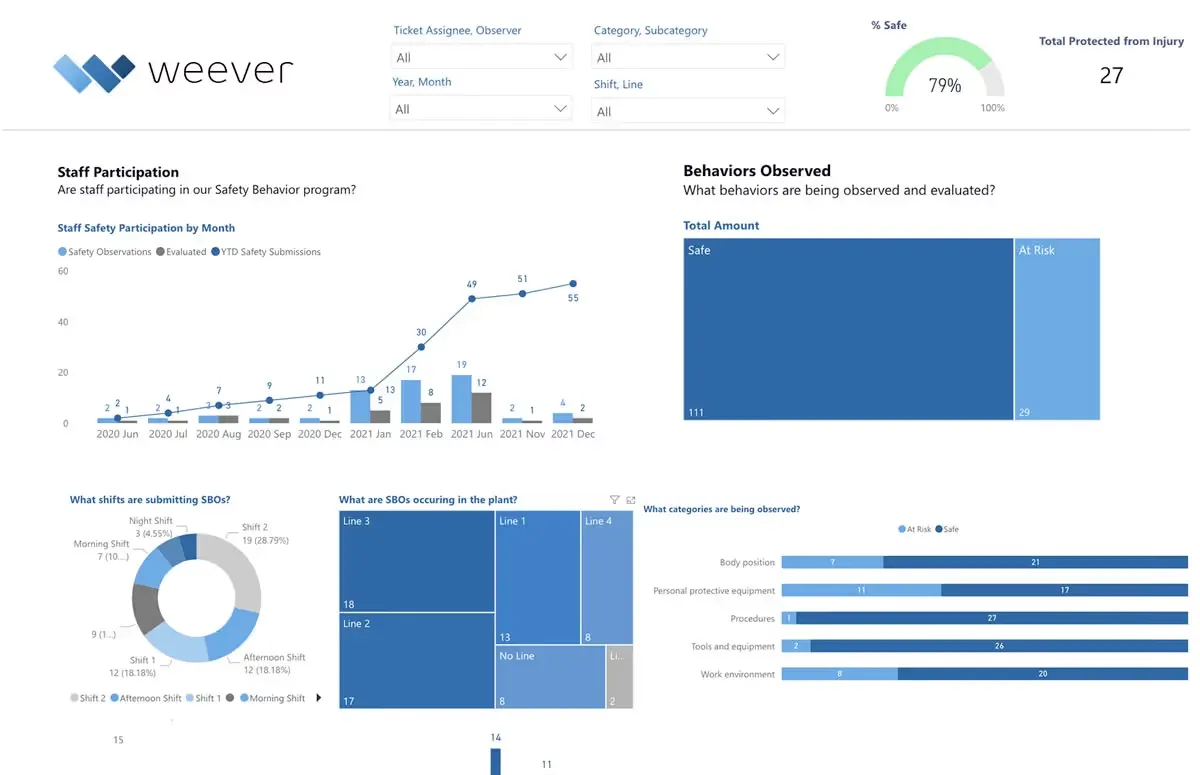
Many BBSO programs still rely heavily on supervisors to complete observations. Peer-to-peer BBSO means every worker, not just supervisors, can observe and report, which is what drives coverage no supervisor-only program can match.
Weever is a strong fit if your goal is to expand participation across the workforce, from single plants with a few hundred employees to multi-site programs with over a thousand users.
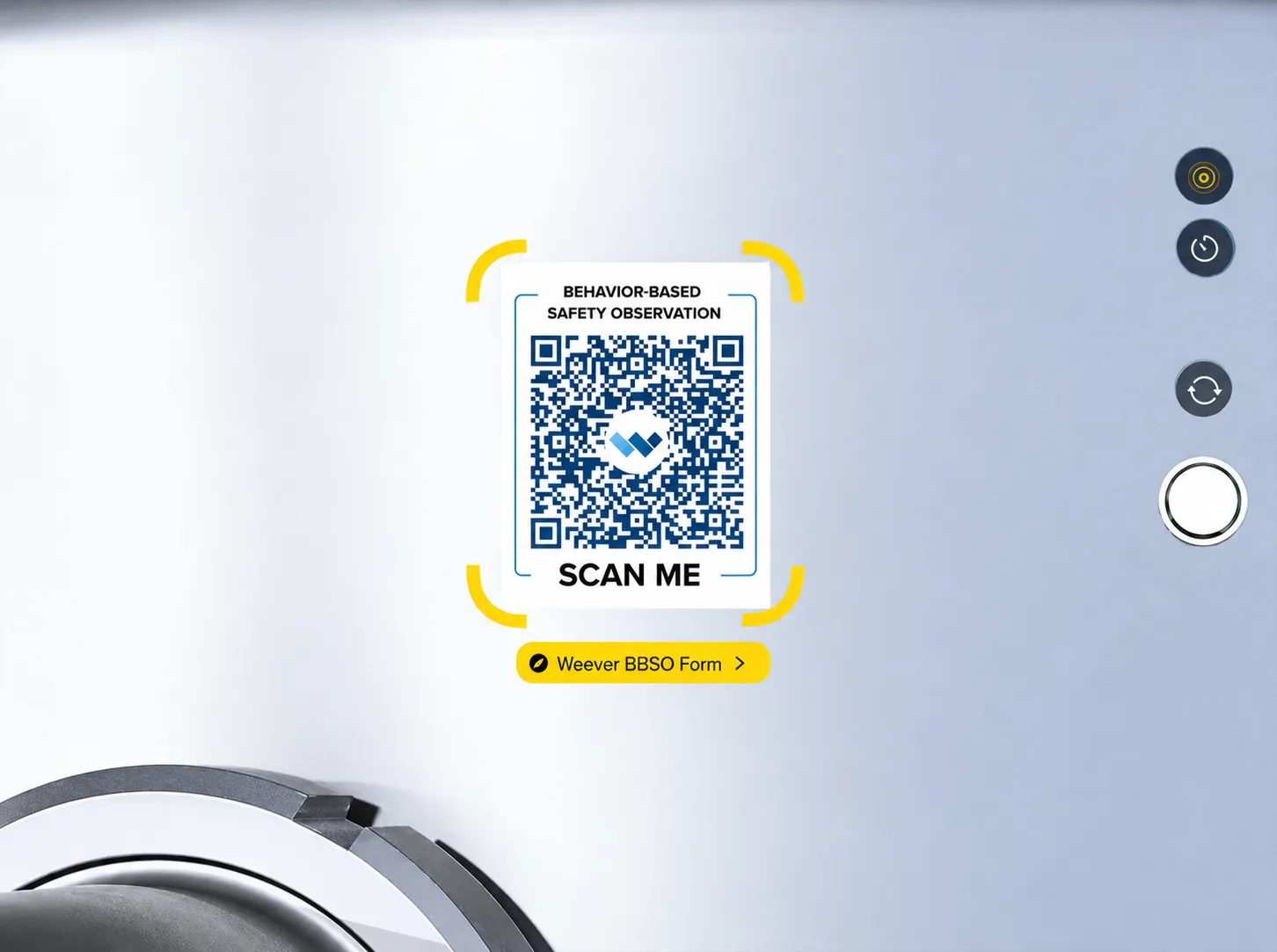
What stands out is how little friction Weever creates for frontline workers. Teams can schedule observations by line, shift, or staff member, while employees can also submit one in the moment from a shared phone, tablet, or workstation. A QR code opens the right form, and no app installation, personal email, or separate login is required.
That access model matters if not all of your frontline operators have company devices or software accounts. It is why most BBSO programs stay supervisor-only. Not because people don't want to observe, but because only supervisors have a login to do it.
Once your team is past that first step, they can add photos, videos, or voice-to-text notes right from the form, so a flagged behavior comes with more context than a checkbox.
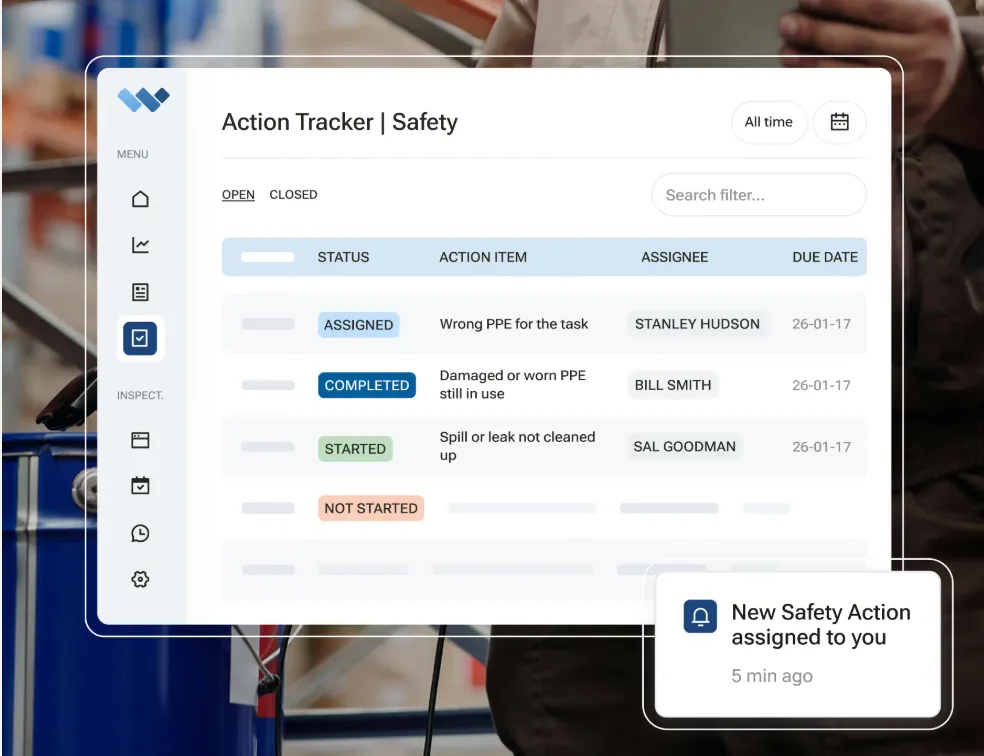
Weever also handles the follow-up workflows well with the Action Tracker section. If someone flags an at-risk behavior, the platform can create a corrective action with an owner, due date, reminders, and stakeholder notifications. The original observer can receive an update when the issue is resolved, so reporting does not feel like information disappearing into a safety inbox.
If an observation indicates a more serious issue, teams can keep the next steps within the same system. Near-miss workflows and root-cause processes, including Why-Why Analysis, can sit alongside the original observation rather than forcing safety teams into a separate tool.
For multi-site manufacturers, the reporting is another strong point. Dashboards can break observation data down by site, shift, area, and hazard or behavior type. Local teams can still configure forms, categories, and languages to align with their own risk profiles, while corporate safety leaders maintain a consistent program across locations.
Weever Radar™ adds an optional AI layer on top of that safety data. It reviews observations, near misses, and hazard reports to surface recurring patterns, such as an at-risk behavior increasing on a certain shift or the same task generating repeated near misses. This helps safety teams spot emerging risks without having to manually dig through individual reports. It makes your BBSO program proactive, not just better documented.
The pricing model also fits the use case well. Weever charges by site, with unlimited users, so a plant does not have to limit BBSO participation, since each additional frontline employee requires a paid seat.
Key features
- Shared-device access: Observation forms can be opened from shared tablets, phones, or workstations without requiring each worker to have a personal account
- Cross-program continuity: The same platform also runs work instructions, 5S audits, and autonomous maintenance, and a lot more, alongside BBSO
- Completion monitoring: Safety teams can see which scheduled observations are complete, due, or missed across lines and shifts
- Configurable escalation rules: Flagged observations can trigger notifications, reminders, and follow-up based on the severity or workflow configured
- Cross-site rollups: Corporate teams can compare participation, recurring behaviors, open actions, and trends across multiple plants
- Localized program setup with multi-language support: Forms, languages, categories, and workflows can be adapted by site (and workforce) while keeping a common corporate structure
- Why-Why Analysis: Teams can document repeated “why” steps inside the same workflow when a behavior needs deeper root-cause analysis
- Weever Radar™: An optional AI layer that reviews observations, near misses, and hazard reports to surface recurring patterns and emerging risks
- Enterprise integrations: Supports SSO and connections with wider business systems for organizations running BBSO at scale
- Fast, phased rollout: Goes live with one high-impact process in weeks, then expands, rather than a multi-month, developer-led implementation
How Weever performs in real plant environments
One global manufacturer used Weever to relaunch its peer-to-peer safety behavior observation program after its existing system struggled with frontline participation. Within a year, 500+ employees were participating and submitting 400+ observations per month. The site also surpassed 6 million accident-free work hours and earned a European safety award.
The safety leader pointed to ease of access as a big reason the program gained traction:
“To make something work, you don't want them to take 3 or more clicks to get in... You want them to be able to drop in their observation and get out.”
Value props
- Recurring at-risk patterns surface early, so safety teams can intervene before a near miss becomes an incident
- Near-miss and root-cause analysis live inside the same observation and action workflow, not a separate system
- No personal login or app install removes the biggest access barrier for frontline workers without a company device
- Unlimited users per site means participation isn't rationed by seat count, from a single-site pilot to an enterprise rollout with 1,300+ users
- Configurable forms let each site reflect its own hazards while still rolling up to one consistent corporate view
- Stakeholder notifications and loop-back alerts keep both the safety team and the original observer in the loop
Why we picked this
Peer-to-peer facilitation is what separates Weever from most BBSO tools on this list. Instead of relying on a handful of supervisors to carry the observation load, unlimited seats and no-login access mean every worker can observe and report, turning BBSO into a program the whole floor runs.
The platform also supports quick follow-up. Automatic corrective actions, stakeholder notifications, and loopback alerts keep reports moving. If repeated observations indicate unclear procedures, digital work instructions can help reinforce the correct way to perform the task.
Finally, Weever answers the 'we tried a tool before, and it didn't stick' concern most plants have quite well. Teams can go live with their BBSO program in weeks, not months. Adoption happens before the flavor-of-the-month skepticism sets in.
What customers are saying
Weever’s strongest safety evidence comes from Walmart’s Pennsylvania Distribution Center, where the team used the platform to conduct behavior-based safety observations. The case study shows how Weever helped the site move from reactive reporting toward more proactive safety management.
“We are finding out that a certain area has an issue with ‘pinch gripping,’ so we are setting up more observations in those work areas to stay ahead of it and inform associates that this type of lifting leads to injury.” - Kody Crossen, Operations Manager of EHS, Walmart
The team also said the platform changed how employees approached safety on the floor:
“It's shifted our safety culture because now we are much more focused on what we should be looking at... It's creating a lot more conversation, and I think it's making the associates much more mindful of their actions.” - Kody Crossen, Operations Manager of EHS, Walmart
Weever reports that the site became 60 to 70% more proactive in safety management after adopting the platform.
Pricing
Weever pricing depends on your site count, the programs you want to run, and the level of configuration required. You can start with one program and add more later as your needs expand. Book a demo to get a custom quote.
2. Mitti (formerly SafetyCulture)
Best for: Smaller plants testing BBSO on a capped free plan
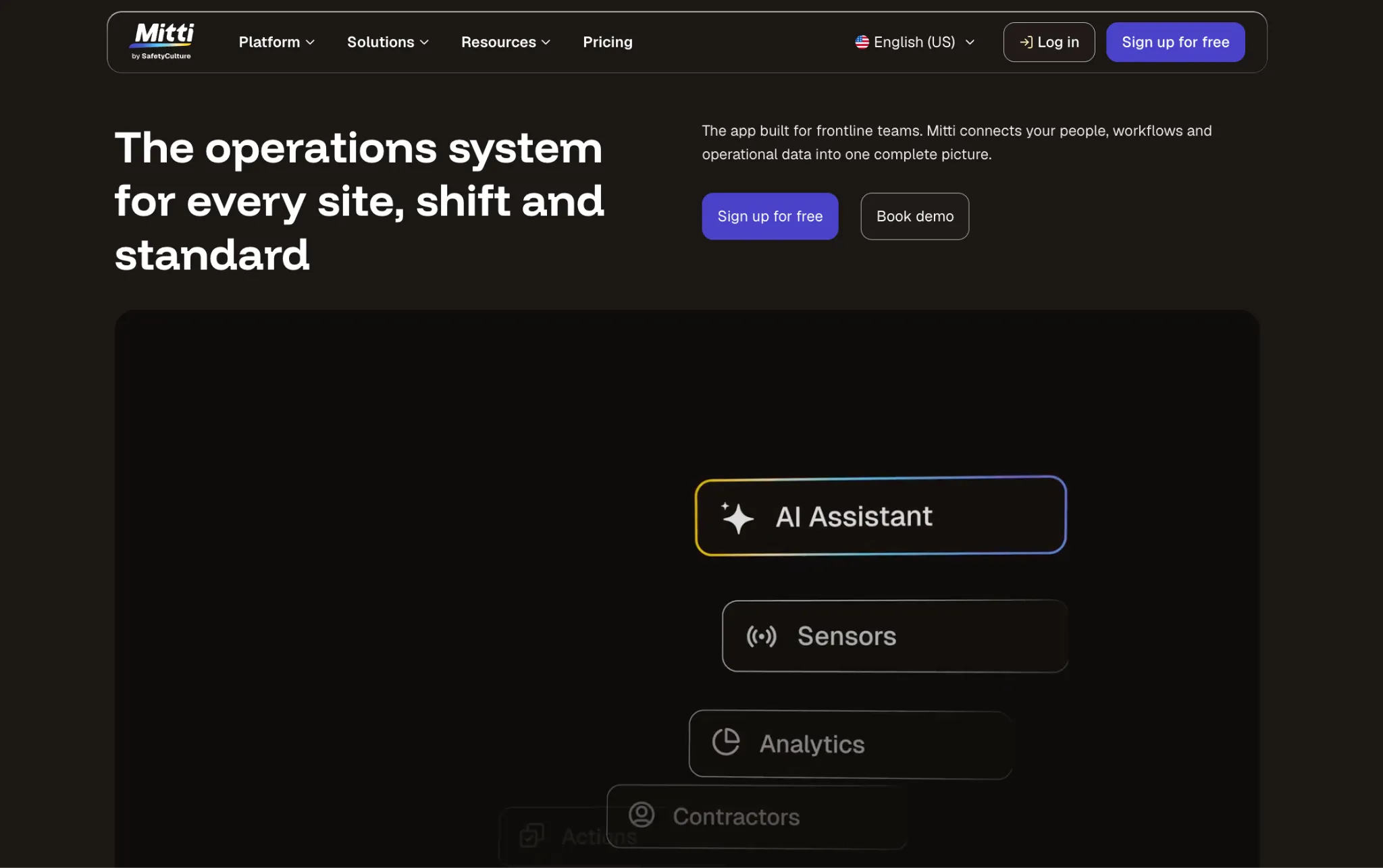
Mitti, formerly known as SafetyCulture, is a general operations platform with a large public template library, including behavior-based safety observation checklists built for construction sites, general facilities, and manufacturing floors. So while it does support manufacturing plants, it’s not a dedicated operational solution like Weever. Plants can pull existing BBS templates, adjust the categories to match their own hazards, and start logging observations without having to build forms from scratch.
Its main strength is its breadth. The same platform a plant uses for BBSO can also run general safety audits, quality checks, and equipment inspections. This means a smaller team doesn't have to manage five separate tools.
Worth noting: While Mitti's template depth covers many needs at once, that depth still starts from predefined templates. They are editable, but don’t allow you to fully configure a workflow around your processes. That job is best left to platforms like Weever.
Key features
- Public template library: Pull from thousands of pre-built BBS and safety observation checklists, created and shared by the SafetyCulture/Mitti community, editable to match a plant's own hazard categories
- AI-generated checklists: Create a new observation form by prompting the platform directly, or by converting an existing PDF, Word, or Excel document, rather than building one field by field
- Custom report layouts: Choose what content and structure shows in a completed observation report, depending on who's reading it, a safety manager versus a plant director
Value props
- Ready-made BBSO templates reduce the setup work for plants starting their first digital observation program
- Offline mobile inspections are useful in production areas where Wi-Fi or mobile connectivity is inconsistent.
- One platform covers BBSO alongside general safety, quality, and equipment inspections
Why we picked this
Mitti earns its place because it gives smaller plants a relatively low-risk way to start digitizing BBSO. The combination of ready-made safety templates and a free plan for up to 10 active users means teams can build and test an observation workflow without committing to enterprise-level software from day one.
Pricing
Free for up to 10 users, capped at 5 active templates and basic analytics. Premium plan starts at $24/user/month billed annually ($29 monthly), with custom Enterprise pricing.
3. Benchmark Gensuite
Best for: Safety teams incorporating HOP principles into behavior observations
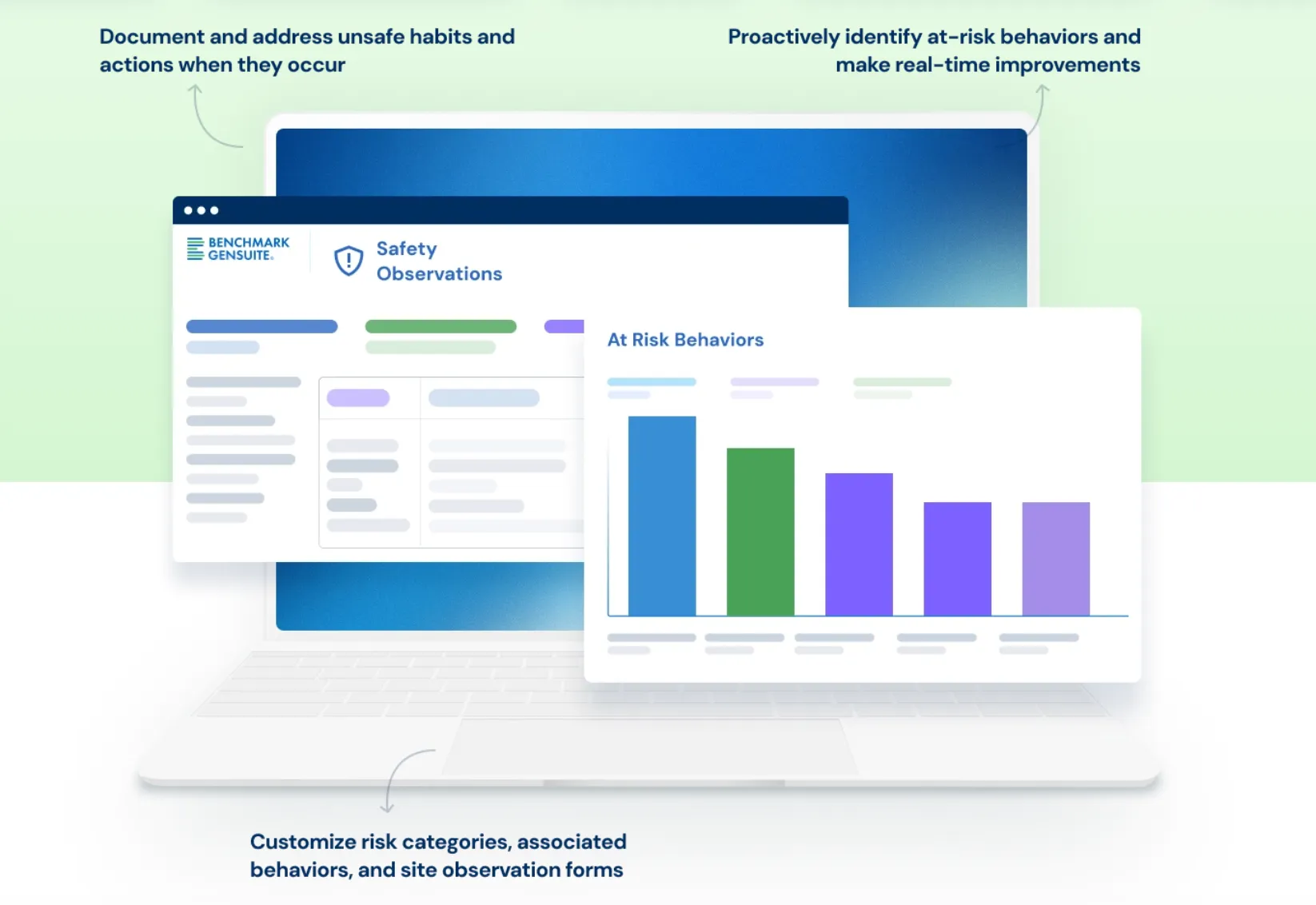
Benchmark Gensuite includes behavior-based safety observations as part of its broader EHS and sustainability platform. It also supports Human Organizational Performance (HOP), which looks beyond individual behavior to the systems and conditions shaping it.
Teams can record safe and at-risk behaviors, as well as barriers, operating conditions, and other contributing factors. Those observations can then be reviewed for recurring patterns, rather than treated as isolated worker mistakes.
The platform also has an AI wing, called Genny AI. The tech reacts the moment an at-risk behavior gets logged, suggesting a corrective action based on similar past entries and live context. That puts Genny AI to work at the observation level, right when a behavior is flagged.
How does it compare to Weever’s Radar, another AI supported platform on this list? The latter reviews observations across an entire program to surface recurring patterns and emerging risks. Both use AI, but they answer different questions. One helps you respond to what just happened. The other helps you see what keeps happening.
Key features
- Genny AI corrective action suggestions: AI recommends a corrective action based on similar past entries and live context when an at-risk behavior is logged
- Weekly observation goals: Assign individual observation targets to designated observers across sites
- Multilingual forms: Configure observation workflows in multiple languages for distributed teams
Value props
- Genny AI is embedded across the platform, helping teams review large volumes of safety data and surface relevant patterns
- Weekly observer goals give teams a structured way to keep observation programs active.
- Site-specific forms let local teams reflect their own equipment and operating risks without abandoning a wider program framework
Why we picked this
Benchmark Gensuite earns its spot for safety teams building their BBSO program specifically around Human Organizational Performance.
Pricing
Custom pricing
4. VelocityEHS
Best for: BBSO paired with chemical, ergonomics, and ESG risk data in one platform
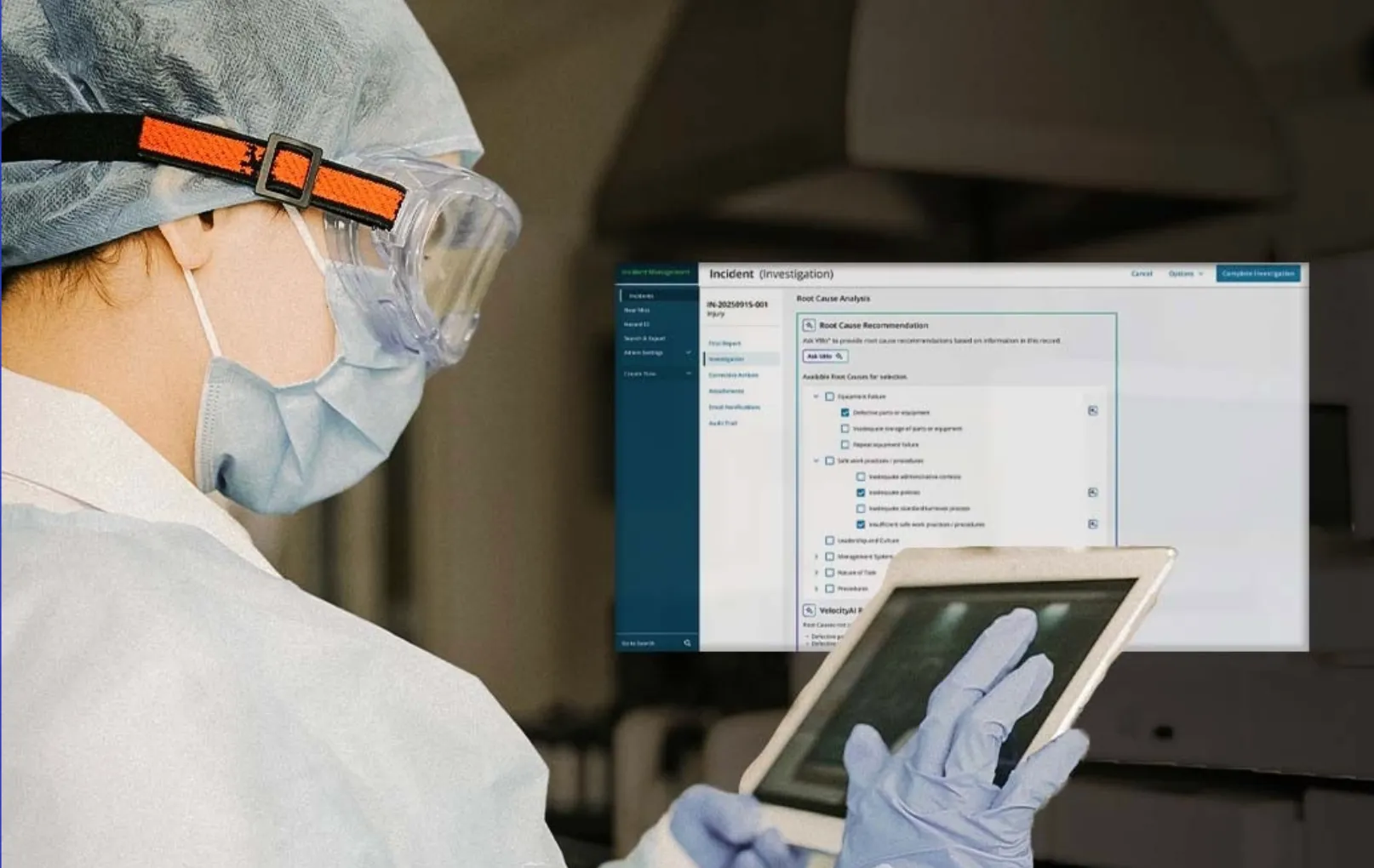
VelocityEHS runs behavior-based safety observations as a module within a much larger EHS and sustainability platform that spans 24+ products, including chemical and SDS management, ergonomics, operational risk, and ESG reporting.
A plant already tracking chemical inventories or ergonomics risk through VelocityEHS can add BBSO to the same login instead of standing up a separate tool.
Observations can be built from pre-existing checklists or customized by site, then automatically assigned to the right people for completion.
Key features
- 24+ integrated EHS and sustainability products: BBSO sits alongside chemical, ergonomics, and ESG tools on one platform
- Chemical and SDS management: Pull up safety data sheets and chemical inventory info without leaving the platform
- Ergonomics module: Track strain and lifting risk alongside behavior observations
Value Props
- Structured observation programs give leaders a consistent way to discuss safe and at-risk behaviors with employees
- One login covers BBSO alongside chemical, ergonomics, and broader EHS data
- Backed by Enhesa and STP ComplianceEHS regulatory intelligence
Why we picked this
VelocityEHS earns its spot for manufacturers that already run chemical, ergonomics, or ESG tracking and want BBSO added to that same system, rather than managing it separately.
Pricing
Custom pricing based on the VelocityEHS products and implementation requirements
5. Sphera
Best for: Anonymous reporting for sensitive or high-blame-risk observations
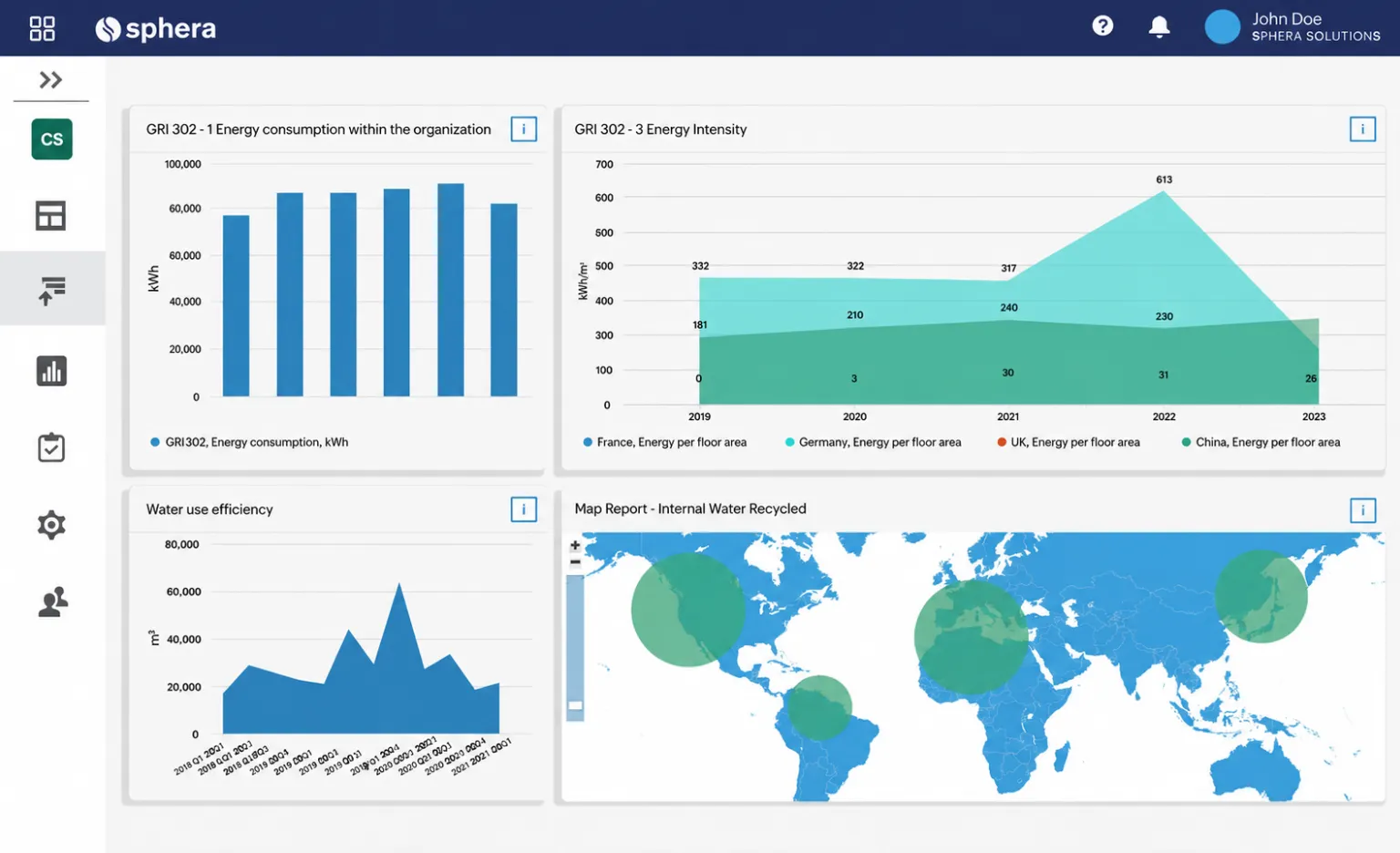
Sphera runs behavior-based safety through SpheraCloud, where employees can record observations directly in the field. Its First Report portal supports anonymous submissions and does not require a specific user account. That makes it useful when employees hesitate to report sensitive behavior if their identity is attached.
The workflow also goes beyond the initial report. Teams can review observations, investigate what happened, document learning, and analyze patterns across locations or business units. Sphera also connects BBSO to incident, action, audit, and broader health and safety workflows within the same platform.
Key features
- First Report portal: Workers can report observations, near misses, and incidents without needing a specific user account
- Site-specific observation forms: Tailor the data collected per site instead of using one fixed form organization-wide
- Standard investigation procedures: Documented, repeatable investigation workflows once an observation is flagged
Value props
- No-account reporting reduces one barrier to access for workers who do not regularly use the EHS system
- Anonymous entry can widen participation in situations where a named report feels uncomfortable
- Mobile, touchscreen, and kiosk access options make it easier for workers without a personal device
Why we picked this
Sphera earns its spot for the anonymous entry option specifically, a genuinely distinct way to widen who's willing to report a risky behavior in the first place. However, it’s worth noting that anonymity comes with a trade-off. You can’t tie back the reports to the observer (like you can do in Weever), affecting the overall feedback loop.
Pricing
Sphera doesn’t publish pricing.
6. Intelex
Best for: Organizations already running BBSO within an existing Intelex EHSQ environment
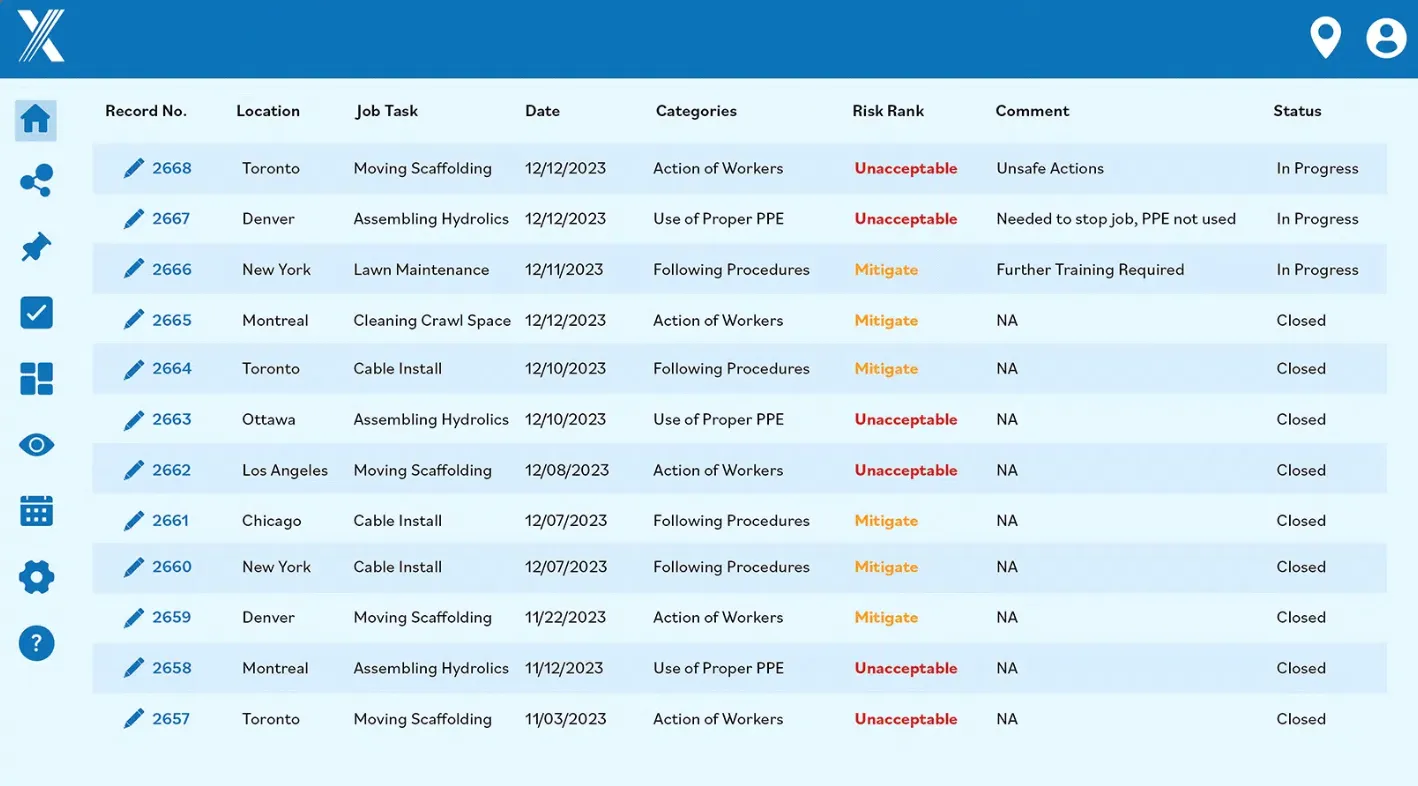
Intelex runs behavior-based safety as one application inside its broader EHSQ platform, alongside job hazard analysis, near-miss reporting, and incident management. Observers record safe and at-risk behaviors from any device, online or offline.
What stands out is how high-risk behaviors move into the wider safety workflow. Instead of remaining as standalone BBS records, they can be reclassified as near misses and managed through the same reporting process. Behavior trends can then be broken down by employee, task, location, department, business unit, or shift.
Key features
- Custom forms: Start with out-of-the-box observation forms or import and customize your own
- JHA-linked risk rankings: BBS tasks can pull risk rankings from Job Hazard Analyses, giving observed behaviors context around the task’s existing risk level
- Open API and BI integrations: Connect behavior and near-miss data to Power BI or Tableau for cross-functional analysis outside the platform
Value props
- High-risk behaviors get the same reporting structure as a witnessed near-miss
- Sits inside a broader EHSQ platform trusted by over 1,400 enterprise clients globally
- AI-assisted data scoring catches incomplete or low-quality observations before they slip through
Why we picked this
We picked Intelex for organizations that already use its EHSQ platform and want BBSO in the same system. Observations can connect with JHA, near-miss, incident, and CAPA workflows without adding another tool.
Pricing
Intelex offers three pricing tiers: Safety Essentials, Advanced, and Enterprise. Safety Essentials starts at $44, while the higher-tier plans use custom pricing.
7. EcoOnline
Best for: Manufacturers combining BBSO with chemical safety management
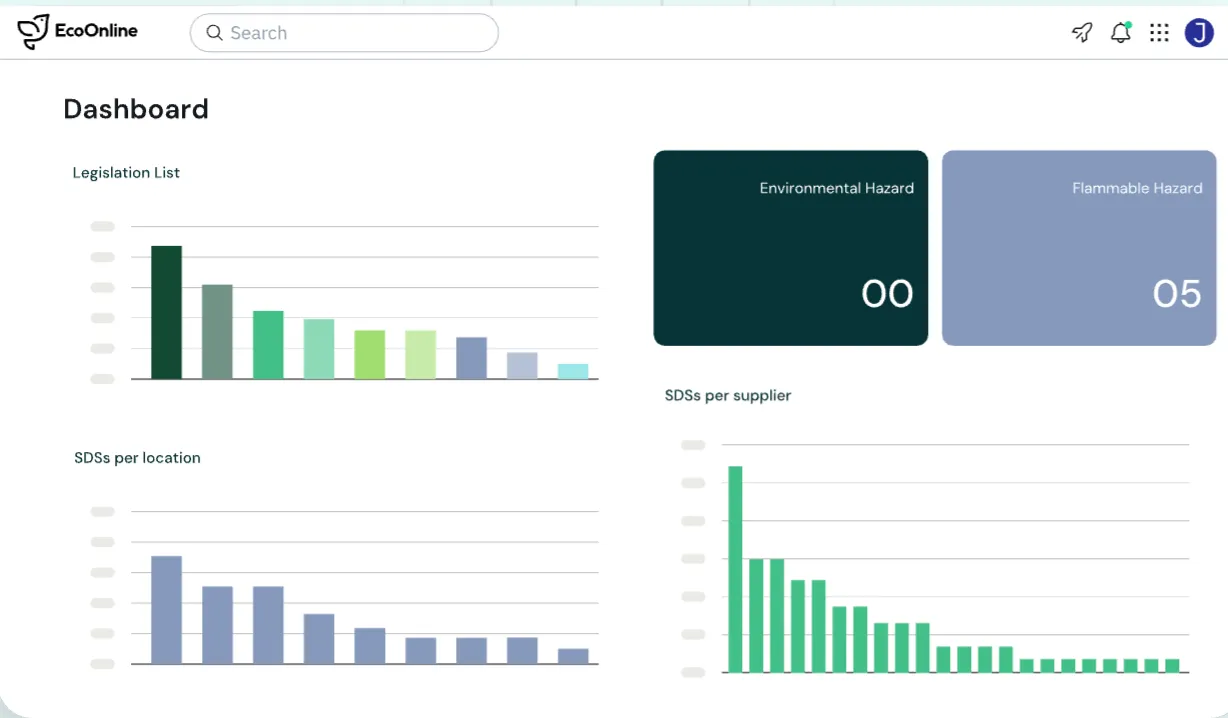
EcoOnline includes behavior-based safety observations as part of a broader EHS suite that covers incidents, audits, inspections, risk assessments, and contractor management. A plant logging behavior observations in EcoOnline can manage them in the same system as its wider safety program.
Where it stands out is chemical safety. EcoOnline is a comprehensive SDS management solution that provides point-of-use access to safety data, chemical inventory management, and regulatory support across multiple jurisdictions. For manufacturers handling hazardous materials, this gives BBSO a stronger connection to the chemical risks employees face every day.
Key features
- SDS access at the point of use: Workers pull up the right safety data sheet on the floor, tied to the chemical inventory itself
- Multi-region chemical compliance: Chemical tracking adjusts to the regulations of wherever a plant operates
- Contractor management integration: Extend safety observation and compliance requirements to contractors working on-site, not just employees
Value props
- Chemical safety depth that's hard to match with a bolted-on module from another platform
- One system covers observations alongside incidents, audits, inspections, and contractor management
- ISO 27001-accredited and built for multilingual
Why we picked this
EcoOnline earns its spot for manufacturers that need chemical safety and behavior observations in the same system, with a level of chemical management depth most general EHS platforms don't match.
Pricing
Custom pricing.
8. Vector Solutions
Best for: Manufacturers already using Vector Solutions’ LMS for safety training
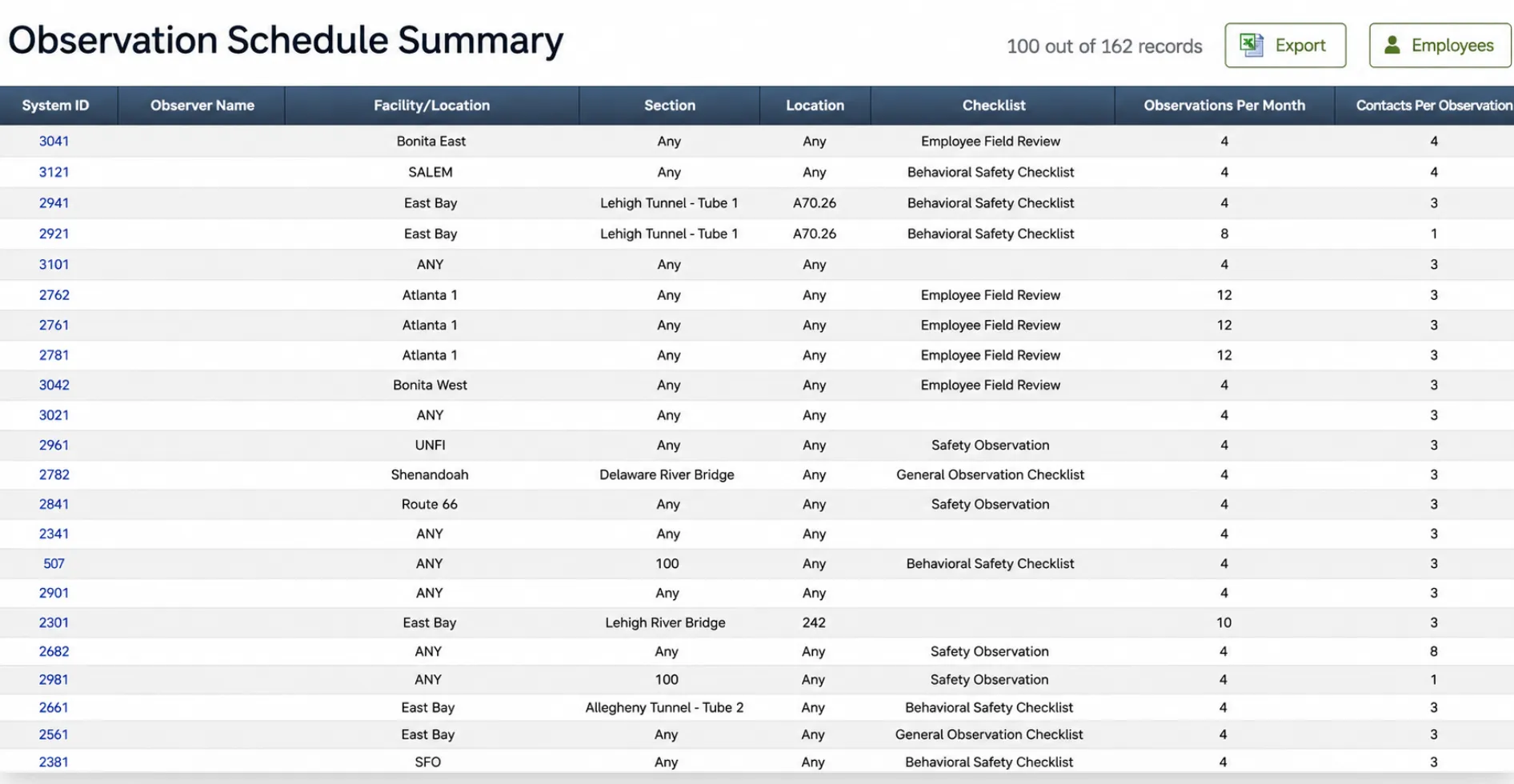
Vector Solutions combines BBS observations with its EHS platform and a manufacturing-focused LMS. That makes it a practical fit for plants already managing safety training through Vector and wanting observations in the same ecosystem.
Teams can schedule observations, configure BBS checklists, and track behavior data in Vector EHS. The bigger advantage is the connection to training, since observation findings can sit alongside role-based learning, safety courses, and competency development.
Key features
- Manufacturing training library: Access 1,000+ courses covering safety, compliance, maintenance, operations, and industrial skills
- Competency assessments: Evaluate worker readiness and identify skill gaps alongside formal training programs
- AI safety training recommendations: Vector can recommend corrective training from incident data through its EHS-LMS integration
Value props
- A large industrial course library makes it easier to connect safety findings with relevant learning content
- Role-based learning and competency tools help manufacturers address behavior gaps as part of wider workforce readiness
- Reported 30% fewer incident rates among customers
Why we picked this
We picked Vector Solutions for manufacturers already using its LMS and safety training ecosystem. Its BBSO module sits alongside role-based learning, competency assessments, and industrial safety courses. That makes observations easier to connect with existing workforce training programs.
Pricing
Custom quote based on the products, organization size, licenses, and integrations.
How to choose the right safety observation software for manufacturing
Choosing the right safety observation platform should be based on how you actually run your BBSO program on the factory floor, and not on how polished the demo looks. The main areas to compare are participation, follow-up, multi-site control, and how well the system fits your existing environment.
1. Define what needs to improve
Start with the gaps in your current program. Common issues manufacturers raise include supervisor-heavy participation, scattered observation data, weak action closure, limited cross-site reporting, and inconsistent processes between plants.
Use those gaps as your evaluation criteria. A platform that solves your biggest operational problem is more useful than one with the longest feature list.
2. Match the platform to your workforce
Consider who will actually submit observations and how they work. Frontline employees may share devices, lack company email accounts, work in low-connectivity areas, or face restrictions on personal phone use.
Also compare pricing at the participation level you eventually want. A model that works for 20 supervisors may become expensive or difficult to manage when applied to hundreds of frontline workers.
3. Test the full observation workflow
Don’t evaluate the platform only on form submission. Run one observation from capture through review and follow-up.
Check how clearly the system handles ownership, due dates, reminders, progress, and closure. Manufacturers frequently cite weak assignment and follow-up as a major reason their existing BBSO process breaks down.
4. Check multi-site control
For organizations with several plants, look at both standardization and local flexibility. Corporate teams need comparable data, while individual sites may have different hazards, languages, and operating conditions.
Check whether forms and categories can vary by site without breaking the wider reporting structure. Multi-site manufacturers also need dashboards that enable comparable participation and safety trends across locations.
5. Test reporting with real questions
Do not judge analytics by how the dashboard looks. Use pilot data to answer practical questions such as:
- Which shifts have the highest number of at-risk behaviors?
- Which areas have low participation?
- Which behaviors keep recurring?
- Which findings are still open?
- Which sites are improving or falling behind?
If the platform cannot answer the questions your safety team already asks, the reporting will have limited value.
6. Check enterprise requirements early
For larger deployments, confirm SSO, integrations, security documentation, and how the platform connects to systems such as HRIS, ERP, or an existing connected worker platform that already runs other frontline programs.
These requirements often become rollout blockers later in the buying process. This is where a platform like Weever can fit into the existing stack rather than operate as a separate system.
Choose BBSO software that drives participation and follow-through
Most BBSO tools can collect observations. The bigger challenge is getting frontline workers to participate consistently and making sure flagged behaviors lead to follow-up.
Weever is built around both. Site-wide licensing and no-login access make it easier for more employees to take part, while corrective-action, feedback, and cross-site reporting workflows keep observations connected to what happens next.
For multi-site process manufacturers, that creates a more active BBSO program with broader participation and clearer accountability across plants.
Ready to move BBSO beyond a supervisor-led program? Book a demo to see how Weever supports company-wide participation and action tracking across your sites.
FAQs
1. How much does behavior-based safety software cost?
Most BBSO platforms do not publish full pricing and ask you to request a custom quote. The pricing model also varies by vendor. Some charge per user, some price by module, and others use site-wide pricing.
For example, Weever uses site-wide pricing with unlimited users, while broader EHS platforms may price BBSO as a single module within a larger package. When comparing costs, look at how pricing changes as more frontline workers join the program.
2. What should behavior-based safety software track?
Behavior-based safety software should track safe and at-risk behaviors, participation, recurring patterns, and follow-up activity. More advanced platforms may also connect behavior observations with corrective actions, near misses, or root-cause workflows.
3. How often should BBS observations be completed?
BBS observations should be completed consistently enough to give safety teams a reliable view of behavior across the workforce. The right frequency depends on workforce size, the type of work, and how often employees are exposed to risk.
The goal is to collect useful observations regularly, not simply hit a high submission count.


Spend Less Time on Admin. More Time Improving Operations.
See how Weever automates data entry, reporting, and action items so you can focus on improvement not admin.