
Clean, Compliant, and Confident: Master Sanitation Made Easy with Weever
.jpeg)
.avif)
Table of contents

Share:


Unlocking Efficiency in Your Workplace: 8 Tips to Ensure Successful 5S Audits
July 2025
In today's fast-paced manufacturing and industrial environments, clarity and consistency are key to maximizing productivity and reducing waste. That's where 5S, a simple but powerful workplace organization methodology that has helped companies worldwide dramatically improve safety, efficiency, and team morale, comes in.
5S helps teams create clean, efficient, and safe work environments by focusing on five foundational steps:
Sort (Seiri 整理)
Set in Order (Seiton 整頓)
Shine (Seisō 清掃)
Standardize (Seiketsu 清洁)
Sustain (Shitsuke 蹾).
Originating from Japanese manufacturing practices, 5S aims to reduce waste, improve productivity, and enhance consistency by removing unnecessary items, organizing tools and materials, cleaning regularly, setting clear standards, and building daily habits that keep improvements in place. It's often the first step in Lean transformations and serves as a foundation for continuous improvement.
These principles form the foundation of a system that organizes the workplace, eliminates unnecessary items, and standardizes processes to keep things running smoothly.
As Hiroyuki Hirano, the father of the 5S methodology and author of 5 Pillars of the Visual Workplace, famously said: "5S is the foundation of all improvements."
Many large organizations have embedded 5S into their daily routines, logging improvements in quality control, reduced downtime, and even higher employee satisfaction.
But 5S isn't a one-and-done event. Sustaining improvements requires regular auditing to ensure standards are maintained and to spot areas for improvement. Here's how to do it right:
8 Tips to Ensure Successful 5S Audits
TIP 1. Schedule Audits Consistently
The best systems are only as strong as their follow-through. Once a workstation is optimized using 5S, regular audits help ensure it stays that way. A good rule of thumb is to conduct audits at least once per month. These aren't punitive check-ins, they're proactive opportunities to catch slippage early and support continuous improvement.
TIP 2. Choose the Right Auditors
Who conducts your audits matters. While supervisors typically lead the process, some organizations have found success with peer-to-peer evaluations, with oversight from a manager. This approach encourages ownership, strengthens team accountability, and provides a more dynamic view of workplace standards.
TIP 3. Use Structured 5S Audit Forms
A reliable 5S audit form, often referred to as a 5S Scorecard, is essential. These forms usually assess each "S" on a 3-point scale:
1 = Not completed
2 = Partially completed
3 = Fully completed
In addition to scoring, good forms offer space for comments and recommendations. Starting with paper is fine, but many teams quickly outgrow manual methods due to their limitations in consistency, data tracking, and visibility and will turn to digital tools.
TIP 4. Embrace Digital Tools for Better Feedback
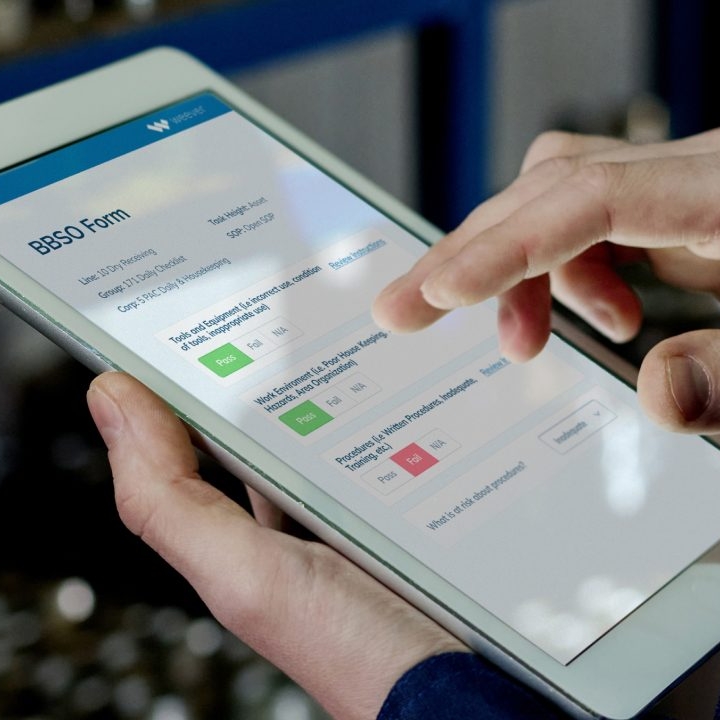
Digital 5S forms open the door to smarter audits. Features like photo capture, conditional logic, and mobile accessibility let teams document conditions more clearly and streamline the feedback loop. For example, if an area fails the "Shine" category, the form can prompt users to upload a photo and note the issue, thereby improving both accuracy and actionability.
TIP 5. Always Compare to the Optimal State
Audits should assess not just the current condition, but how closely it aligns with the ideal setup determined at the start of the 5S implementation. Having a reference photo of the optimal state embedded in your audit form can reduce ambiguity and help maintain a clear visual standard and support quality and standardization.
TIP 6. Use the 30-Second Rule as a KPI
Can your operators find the tool they need in under 30 seconds? If not, something's off. This simple metric, called the 30-Second Rule, is a quick way to assess workspace efficiency and identify where reorganization might be needed. It's a practical KPI to gauge real-world functionality across stations.
TIP 7. Analyze Audit Results with Targeted Reporting
A robust 5S audit system doesn't stop at scoring. It analyzes trends. Radar charts and dashboards can highlight patterns across departments, shifts, or individuals. This makes it easier for continuous improvement managers to target retraining, adjust standard operating procedures (SOPs), and boost underperforming areas. Reporting should break down results by workstation, team member, and each of the five S's.
TOP 8. Involve Operators in the Audit Process
One of the most effective ways to embed 5S into your culture is to involve the people who work on the frontlines every day. When operators participate in audits, either by self-assessing or auditing peer workstations, they gain a stronger sense of ownership over the process and outcomes. This approach also uncovers practical insights that top-down audits might miss. To ensure consistency, pair this with simple training and clear scoring guidelines. Empowered operators become champions of 5S, helping shift it from a compliance task to a shared team value.
Using 5S to Transform the Approach to Work
5S is much more than a tidy-up job. It's a philosophy of workplace excellence that, when supported with smart audits and continuous feedback, can transform how your organization operates. By implementing these 8 audit tips and investing in a structured (ideally digital) approach, your team can keep momentum high and chaos low.
Paul Akers is an entrepreneur who founded a multimillion-dollar company in his garage. Years later, he's an internationally renowned lean thinker, educator, and practitioner as well as the author of the influential book, 2-Second Lean. In his book, Akers connects 5S with daily habit-building and celebrates the long-term behavioral change it instills across teams.
"The magic of 5S is in doing it every day. It becomes the muscle memory of improvement," says Akers.
If you're looking to kickstart or level up your 5S efforts, start with your audit process and the 8 tips offered here. Because sustained success isn't just about doing things right once; it's about doing them right every day.
Contact Weever for a demo and discover how our software can help you with your 5S Program.
Request more information Preview modal-
Request more information
Please tell us a bit about yourself so we can tailor our response and get you the information you need.
Continue Reading
Boost Your Manufacturing safety with Proactive Measures

How Proactive Measures Can Lead to Cost Savings in Manufacturing

How to be more proactive about safety

How to implement a proactive safety program into your facility

Proactive Measures for Ensuring Compliance in Regulated Industries

Proactive Measures in Manufacturing: Leveraging Weever Software for a Safer Workplace

The Importance of Proactive Measures in Manufacturing Operations
The Power of Proactive Measures in Preventing Equipment Failure

"Having cloud-based forms on devices around the facility makes them so much more accessible, which makes it painless for operators to quickly provide a report."
Johanna Velez, VP Quality Assurance


"Weever is really user friendly and will have a massive positive impact on our operations and training team."
Mel Cadle - Op Ex Lead Process Engineer



.webp)

Spend Less Time on Admin. More Time Improving Operations.
See how Weever automates data entry, reporting, and action items so you can focus on improvement not admin.