
Training Your Team in Autonomous Maintenance

Table of contents

Share:


Handing an operator a CIL checklist is easy. Getting that operator to the point where they can hear a bearing starting to go, know why the chain needs exactly two pumps of grease, and explain it to the next new hire takes training, and most autonomous maintenance programs underinvest in it.
You see the result on the floor. Checks get completed but not understood. Readings get recorded without anyone noticing they're drifting. And every time an experienced operator leaves, the program loses a little more of what it knew. Train well and operators become your earliest warning system. Train badly, or once, and the checklist becomes paperwork.
This guide lays out a practical autonomous maintenance training plan: the skills operators need, how to find the gaps, a curriculum that follows the 7 steps of autonomous maintenance, the methods that work on a production floor, and how to prove the training worked.
What autonomous maintenance training needs to achieve
The goal isn't operators who have attended training. It's operators who can do five things on their own:
- Run their equipment safely, including lockout/tagout for every task that needs it.
- Explain how it works, system by system, and what normal looks, sounds and feels like.
- Do every CIL check to the standard, the same way on every shift.
- Spot and report abnormalities clearly enough for maintenance to act without a second visit.
- Help improve the standard, suggesting changes and eventually teaching others.
Every module in your program should build toward one of those.
Start with a skills baseline
Before you train anyone, find out where your team is. A skills matrix does this in one view: operators down the side, AM skills across the top, and a level for each person on each skill.
| Operator | LOTO | Line 2 CIL | Lubrication | Centerlines | Abnormality reporting |
|---|---|---|---|---|---|
| Operator A | Can teach | Can teach | Works alone | Works alone | Works alone |
| Operator B | Works alone | Works alone | With support | Trained | Works alone |
| Operator C (new) | Trained | With support | Not trained | Not trained | Trained |
Not trainedTrainedWith supportWorks aloneCan teach
A common scale runs from not trained, to trained, to can do it with support, to works alone, to can teach others. Build the baseline by watching operators do the tasks, not just asking them, and talk to them one on one about what they're unsure of. The gaps you find become your training plan. For a full walkthrough, see what a skills matrix is and how to create one.
Build the curriculum around the 7 steps
AM training works best in layers that follow the program. Operators learn each skill just before they need it, not months earlier in a classroom.
Before operators take over checks
Alongside steps 1 to 3
- 1
Foundations
What AM and TPM are, what changes for operators, LOTO and 5S.
- 2
Know your machine
Main components and what normal looks and sounds like, taught at the machine.
- 3
The CIL standard
Hands-on on every check: method, tools, lubricants, time. Signed off check by check.
As operators take ownership
Alongside steps 4 to 7
- 4
General inspection by system
One system at a time: fasteners, lubrication, pneumatics, hydraulics, drives, electrics.
- 5
Reporting and problem solving
What a good report includes, severity levels, and PDCA for repeat problems.
- 6
Teaching and minor repairs
Experienced operators run One Point Lessons and approved minor repairs.
Training methods that work on a production floor
Train the trainer (relay teaching). Maintenance trains team leaders or lead operators on one topic; they train their crews at the machine. It spreads knowledge faster than one technician can, and people learn a topic better when they have to teach it.
One Point Lessons. An OPL is a single-page lesson on one topic, mostly pictures, that takes 5 to 10 minutes to deliver at the machine. It's the workhorse of AM training because it's quick to make, quick to teach and easy to update.
One Point Lesson · Basic knowledge · Line 2 conveyor
Greasing the conveyor head bearing
Wrong: grease forced past the seal
Right: two pumps, seal clean
- Lock out the conveyor and verify zero energy.
- Wipe the grease fitting clean.
- Give two pumps from the blue-marked gun, then wipe off any excess.
Key point: more grease is not better. Excess grease blows out the seal and lets contamination in.
Trainer
Trainee
Date
One topic, mostly pictures, 5 to 10 minutes to deliver at the machine, signed by trainer and trainee. Example content only; follow your own lockout and lubrication standards.
Hands-on, at the real equipment. Short sessions on the actual machine stick far better than slides. Where a task can't be practised safely while running, use planned downtime or changeovers.
A fault library. Collect photos of real failures from your own equipment: the cracked belt, the weeping seal, the scored shaft. Operators learn to recognize problems from what they'll actually see.
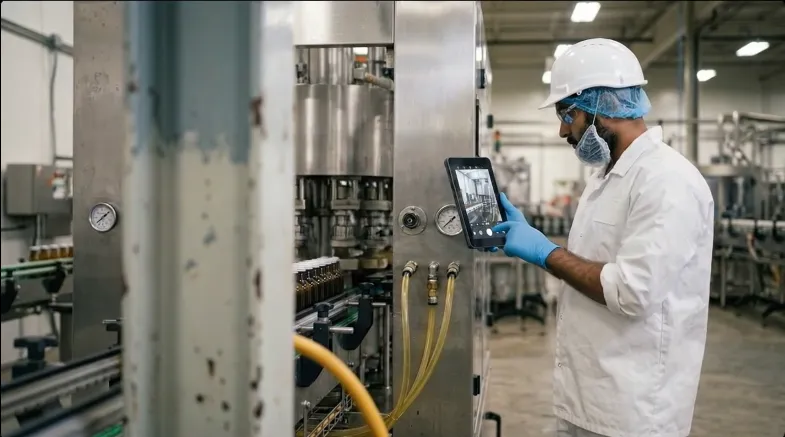
Learning at the point of use. Put the OPL, photo or short video where the work happens, linked from the checklist or a QR code on the machine. An operator doing a check for the first time shouldn't have to remember a session from three weeks ago.
Buddy up new hires. Pair new operators with an experienced one for their first weeks of checks. It passes on the things nobody writes down.
Fitting training around production
The most common objection is time. Plan training in 10 to 15 minute blocks at shift start, during changeovers or planned downtime, and put those blocks on the production schedule so they aren't the first thing dropped. A train-the-trainer model also means training can happen on every shift without waiting for one technician to be available.
How to check competence
Sign-off should be based on observation, not a written test. A trainer watches the operator do the check, asks them to explain what they're looking for, and signs them off on that task. Re-check when the standard changes, and periodically for critical tasks such as lockout.
Common training obstacles, and how to clear them
- "It's not my job." Explain why the plant is doing AM and what's in it for operators: fewer breakdowns mid-shift, more say over their equipment, new skills. Involve them in writing the standards they'll be trained on.
- Turnover. If training lives in one person's head, it leaves with them. Written standards, OPLs and video make each new hire's training repeatable.
- Multilingual crews. Lean on photos, video and short text, and offer instructions in operators' first languages.
- Drift. Standards change; training records often don't. Tie every standard change to a re-training task for the people affected.
How to measure training effectiveness
Track whether training is changing what happens on the floor:
- Coverage: the share of operators signed off on each CIL check, by line and shift.
- Time to competence: how long new hires take to work alone on their line's checks.
- Reporting quality: abnormalities reported per operator, and how many maintenance can act on without asking for more detail.
- Outcomes: repeat failures on components operators have been trained to inspect.
Review these monthly alongside your AM results. If coverage is high but reporting is low, training may be teaching the steps without the judgement.
How Weever supports AM training
Weever puts the training where the work is. Every check can carry its reference photo, short video and One Point Lesson, so operators get guidance at the machine on a shared device, with no app or login, in 11 languages. Weever's skill development tools track who is trained on what, so the skills matrix stays current without a spreadsheet.
High turnover was exactly the problem for the maintenance manager at a global CPG manufacturer we worked with. He was spending time training part-time staff who left soon after, so he needed instructions that did the teaching in real time.
“Weever made it really easy to digitize inspection schedules and build forms that included videos and images that helped to guide my staff through the inspections process.”
Mark, Maintenance Manager, Global CPG Manufacturer
Read the case studyMap your team’s AM skills in one view
Download Weever’s free skills matrix template to record who is trained on each task, spot the gaps, and plan your next round of training.
Get the free template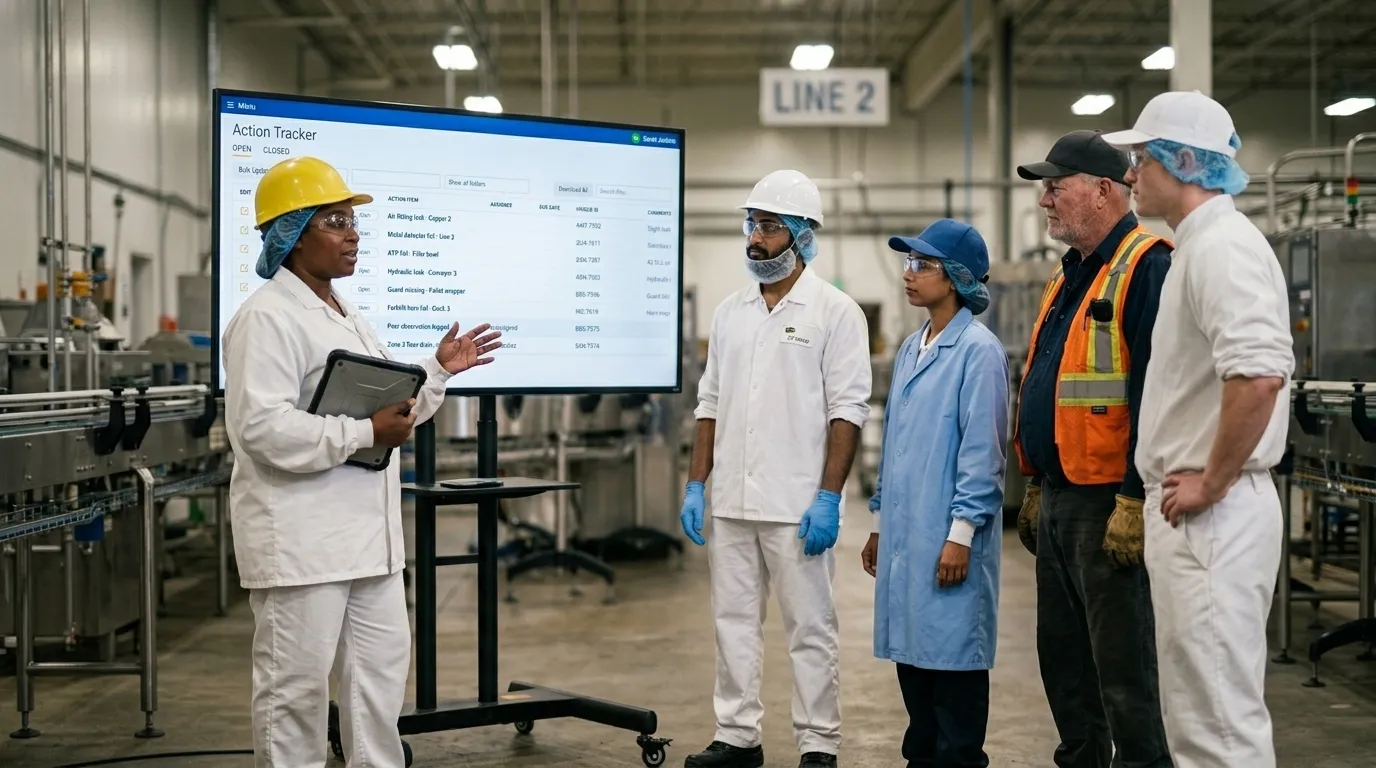
Spend Less Time on Admin. More Time Improving Operations.
See how Weever automates data entry, reporting, and action items so you can focus on improvement not admin.