
-%20smaller.webp)
.webp)
Explore More Blogs

Essential Elements of an Effective Audit Checklist for Manufacturers
In the manufacturing industry, audits are crucial. They help ensure that processes run smoothly, products meet quality standards, and regulations are followed. Regular audits can prevent costly mistakes, improve efficiency, and maintain a company's reputation for reliability.
Weever is dedicated to making these audits easier and more effective. Our solutions are designed to help manufacturers create clear, easy-to-use audit checklists that cover all important areas. By using Weever, companies can ensure their audits are thorough, consistent, and up-to-date with the latest standards.
Weever’s tools are configurable, allowing manufacturers to tailor checklists to their specific needs. Weever’s digital platform supports real-time data collection and analysis, making the audit process faster, more accurate, and more accessible. With Weever, manufacturing companies can focus on what they do best, knowing their audit processes are in good hands.
Some of the most important elements to be included in audit checklists are summarized below. Request more information about how Weever can elevate your audit processes today!
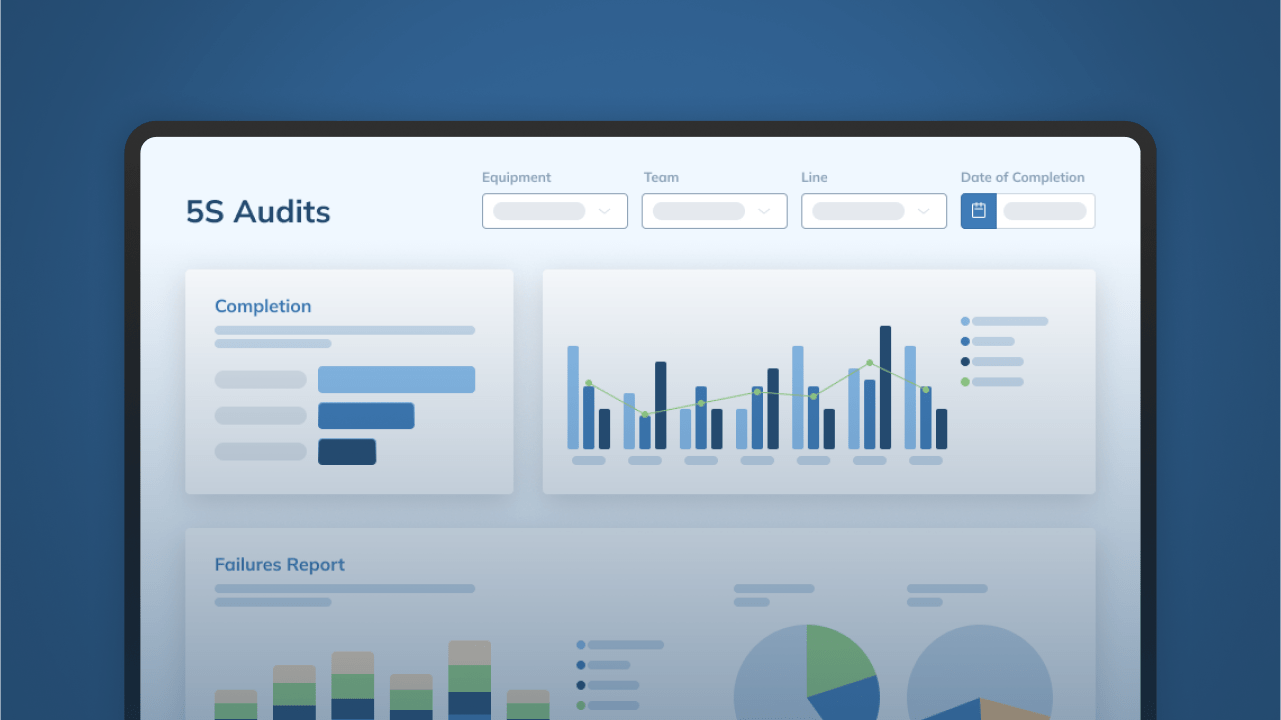
Elements to Include in Your Audit Checklist
Clarity and Simplicity
- Clear, concise questions that are easy to understand.
- Avoid team/departmental jargon to ensure all team members across an organization can comprehend and use the checklist effectively.
Relevance and Specificity
- Tailor the audit checklist to cover specific processes and areas within each manufacturing environment. Overly standardized audit checklists become ineffective in highly specialized work areas;
- Verify the checklist addresses relevant regulatory, compliance, and industry standards;
- Weever’s configurable checklists ensure accuracy to specific manufacturing processes and standards.
Consistency and Standardization
In the early phases of designing audit checklists, or as new work areas are introduced, begin with standardized formats and configure them accordingly. Once a specific audit checklist is ready, work to standardize it once more to ensure uniformity across different audits.
Ensure repeatability adds strength to collected data, making the comparisons and trend analysis of results over time more powerful. Weever’s configurable audit checklists maintain consistency across audits with standardized templates. Book a demo with Weever to learn more about this in only 30-minutes or less.
Comprehensive and Configurable Manufacturing Coverage
Include all critical aspects of the manufacturing process, covering equipment, procedures, employee practices, and environmental conditions. Allow adjustments and updates as processes and regulations change, and ensure the checklist remains current and relevant over time.
Weever offers configurable solutions, allowing manufacturers to adjust audit checklists as needs evolve without compromising on quality or compliance.
Actionable Manufacturing Insights and Integration with Business Systems
Provide space for auditors to note observations and recommended actions, ensuring findings lead to actionable steps for improvement. Weever’s checklist templates enable auditors to document findings and recommended actions clearly, eliminating paperwork by utilizing digital platforms for real-time data collection and analysis. Enhancing accessibility and ease of use through mobile devices and cloud-based solutions, Weever’s digital platform offers these solutions, enhancing audit efficiency and effectiveness, while allowing integration with other popular business systems, such as Microsoft SharePoint, Tableau, MicroStrategy, and more.
Effective audits are essential for maintaining high standards in manufacturing. By incorporating elements like clarity, relevance, consistency, comprehensive coverage, and actionable insights, audits can significantly improve operations. Weever's configurable digital solutions ensure that your audit processes are efficient, thorough, and adaptable to changing needs. Elevate your manufacturing audits with Weever's innovative tools, and keep your operations running smoothly and compliantly. Contact Weever today to learn how Weever can transform your audit processes.
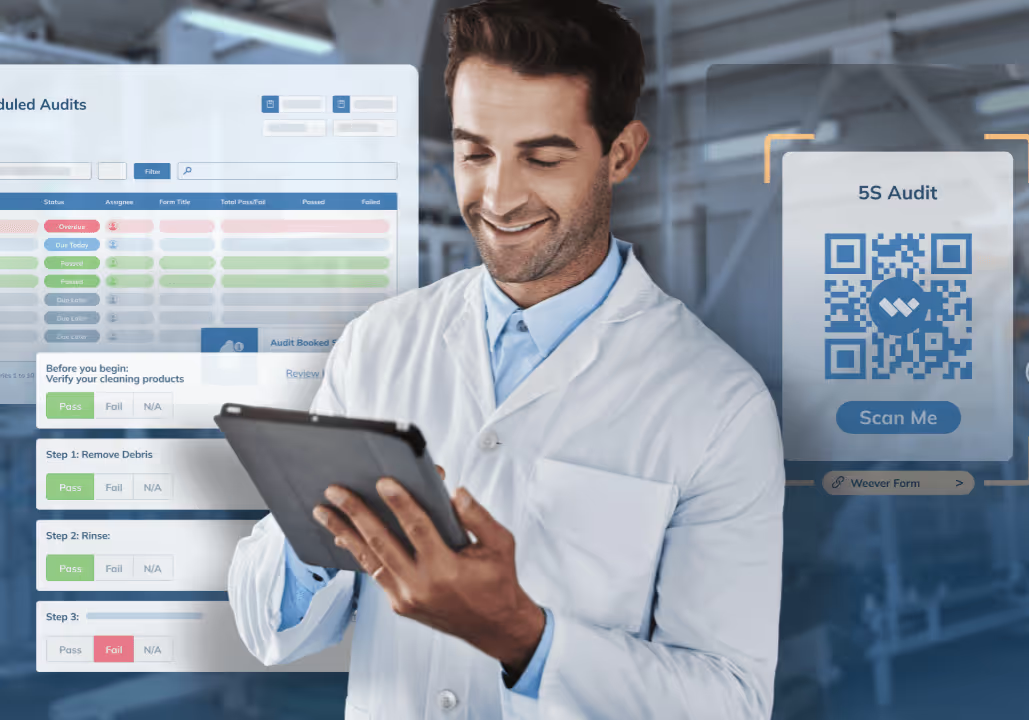
Transforming Manufacturing with Integrated Work Systems: Benefits and Best Practices
Integrated work systems are a powerful tool in the manufacturing industry, combining various processes, tasks, and technologies into one seamless system. These systems help manufacturers streamline operations, improve communication, and manage resources more efficiently. In manufacturing, efficiency is key. Integrated work systems play a crucial role in ensuring that every part of the production process works together smoothly. They reduce errors, enhance productivity, and enable better decision-making by providing real-time information across departments.
Weever’s software platform excels at integrating manufacturing operations. With Weever, you can connect different processes, automate workflows, and manage resources more effectively. Our configurable solutions ensure that the system adapts to your specific needs, making it easier to scale and adjust as your operations grow. By using Weever's integrated work systems, manufacturers can achieve higher efficiency, reduce downtime, and boost overall productivity.
Improved Communication
- Streamlined Communication Channels: Integrated work systems provide a unified platform for all communication, ensuring that everyone is on the same page and reducing the chances of miscommunication.
- Real-Time Information Sharing Across Departments: With real-time data sharing, people in different roles and departments can access up-to-date information instantly, enabling quicker decision-making and better coordination.
Reduced Errors
- Less Manual Data Entry Errors: Automated data entry processes eliminate the risk of human error, ensuring that the information is accurate and consistent across Weever’s platform.
- Enhanced Accuracy Through Automated Processes: By automating repetitive tasks, integrated work systems ensure that processes are carried out with precision, reducing the likelihood of mistakes and rework.
Better Resource Management
- Optimal Utilization of Workforce and Materials: Integrated work systems help allocate resources more efficiently, ensuring that the right people and materials are available when needed, leading to increased productivity and reduced waste.
- Improved Inventory Management and Forecasting: These systems provide better visibility into inventory levels and usage patterns, enabling more accurate forecasting and reducing the risk of stockouts or overstocking.
Best Practices for Implementing Integrated Work Systems in Manufacturing
Assess Current Processes
- Conducting a Thorough Analysis of Existing Workflows: Start by examining and documenting your current processes in detail to understand how they function and where they may be falling short.
- Identifying Areas for Improvement: Pinpoint specific aspects of your workflows that could benefit from greater efficiency or accuracy to focus your efforts on the most impactful changes.
Choosing the Right System
- Evaluating Different Integrated Work System Solutions: Research and compare various systems to find one that best suits your operational needs and industry requirements.
- Ensuring the Chosen System is Configurable and User-Friendly: Select a system that can be tailored to your specific processes and is easy for employees to use, to maximize adoption and effectiveness.
Training and Support
- Providing Comprehensive Training for Employees: Equip your team with the knowledge and skills they need to use the new system effectively through detailed training sessions. Weever forms can be used as a skills development platform for new systems.
- Ensuring Ongoing Support and Resources for System Adoption: Offer continuous support and resources to help employees overcome any challenges and fully integrate the system into their daily routines.
Continuous Improvement
- Regularly Reviewing and Updating the System: Continuously monitor the system’s performance and make necessary updates to keep it aligned with evolving operational needs.
- Gathering Feedback From Employees for Further Enhancements: Actively seek input from employees to identify potential improvements and ensure the system continues to meet their needs effectively.
Weever Software for a Manufacturing Integrated Work System Solution
With Weever's software platform, manufacturers can connect workflows, automate tasks, and manage resources more efficiently. Our configurable solutions ensure that the system adapts to your specific needs, enabling you to scale and adjust as operations grow. By implementing integrated work systems, you can achieve higher efficiency, reduce downtime, and boost overall productivity. Embrace Weever's solutions to transform your manufacturing operations and stay ahead in a competitive industry.
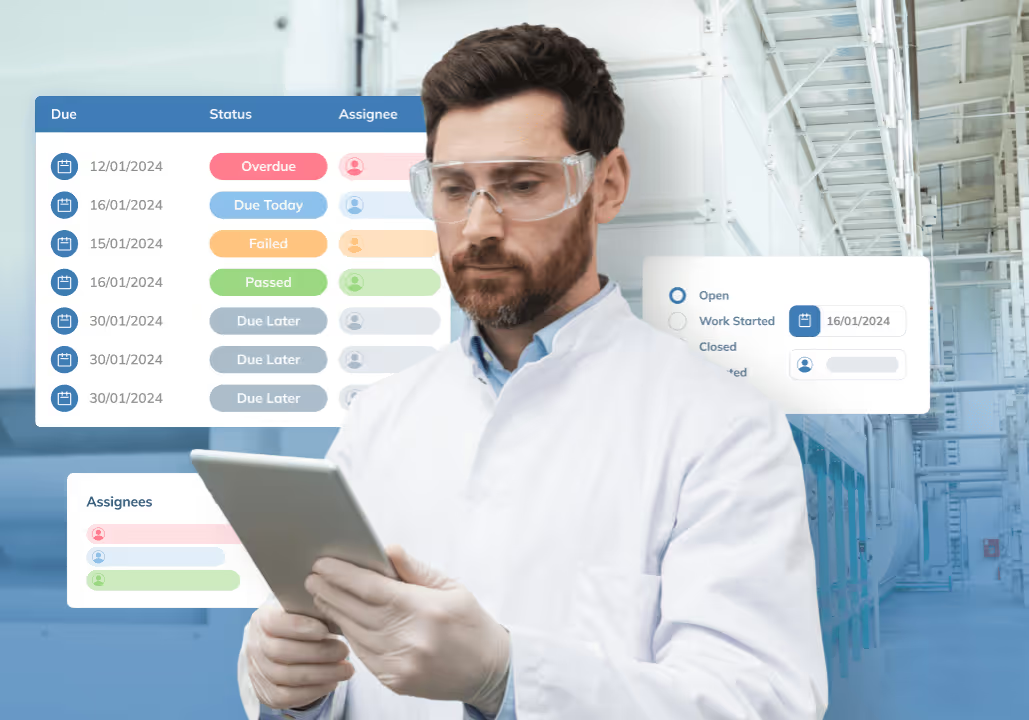
The Role of Integrated Work Systems in Modern Manufacturing
Modernizing your manufacturing practices is vital for staying competitive, as they enhance efficiency, quality, and flexibility. Integrated work systems (IWS) play a crucial role in this landscape by seamlessly connecting various technologies like IoT, AI, and robotics. Thanks to Industry 4.0, manufacturing is evolving. Industry 4.0, also known as the Fourth Industrial Revolution, revolves around increasingly smarter factories where machines and systems are connected and communicate with each other.
These systems help create a cohesive and efficient manufacturing environment, enabling companies to produce better products faster and more efficiently. These strategies help achieve IWS goals of zero loss via reduced sources of waste.
At Weever, we provide software solutions to help manufacturers integrate these advanced systems easily and effectively.
Understanding Integrated Work Systems and Industry 4.0 in Manufacturing
Integrated work systems represent a broad strategy for manufacturers organized around lean principles, loss minimization, and total employee ownership. Various technologies are emerging to further streamline and enhance manufacturing processes. Industry 4.0 is characterized by the integration of digital technologies into manufacturing. A quick summary of the core technologies include:
Internet of Things (IoT): Sensors and devices that collect and exchange large amounts of data about and between manufacturing machinery, allowing for smart and convenient control.
Artificial Intelligence (AI) and Machine Learning: Smart algorithms that optimize operations and predict maintenance needs, enabling concepts like predictive maintenance. Enhance decision-making and operational efficiency.
Cyber-Physical Systems (CPS) and Robotics: Automated machines that perform repetitive tasks with precision become even more efficient as IoT sensors and AI models allow them to be networked and highly coordinated. CPS seeks to combine physical production with digital technologies like never before.
Cloud Computing, Big Data, and Analytics: Transfer all of the data from IoT sensors into the Cloud, which facilitates data storage and accessibility from anywhere. Provide instant insights at a supervisory and strategic level to improve productivity and quality.
Integrated Work System Benefits to Manufacturing
Integrated work systems (IWS) bring numerous benefits to modern manufacturing. These systems seamlessly connect various advanced technologies to create more efficient and productive environments.
Internet of Things (IoT) for Manufacturing
IoT plays a vital role in connected manufacturing environments by linking devices and machines. This connectivity allows for real-time monitoring and control of production processes, leading to greater efficiency and less downtime.
Artificial Intelligence (AI) in Manufacturing
AI is used for predictive maintenance and quality control. By analyzing data from machines and sensors, AI can predict when maintenance is needed before a breakdown occurs. This helps prevent costly downtime and ensures machines run smoothly. AI also enhances quality control by identifying defects early in the production process, ensuring consistent product quality.
Seamless Integration of Manufacturing Technologies
Integrated work systems connect IoT and AI seamlessly. These systems allow different technologies to work together, sharing data and insights to optimize manufacturing processes. This integration leads to smoother operations and quicker problem-solving. By connecting and optimizing different parts of the manufacturing process, IWS significantly enhances operational efficiency. Machines and systems work in harmony, reducing delays and increasing productivity.
Real-Time Manufacturing Data Collection and Analytics
Software like Weever's platform enables real-time data collection and analytics. This data provides valuable insights into the production process, helping manufacturers make informed decisions. With real-time data, companies can quickly identify and address issues, improving overall performance.
Reduced Manufacturing Waste and Improved Quality
Integrated work systems improve product quality and consistency by reducing defects and waste. By using AI for quality control and predictive maintenance, manufacturers can ensure that each product meets high standards, leading to greater customer satisfaction.
Get Integrated in your Manufacturing Operation with Weever
Integrated work systems (IWS) are transforming manufacturing by connecting technologies like IoT, AI, and robotics, embodying the principles of Industry 4.0. These systems enhance efficiency, product quality, and flexibility, helping manufacturers stay competitive in a rapidly evolving market. With real-time data collection and analytics, IWS enables informed decision-making and quick problem-solving, reducing waste and defects.
At Weever, we offer software solutions that simplify the integration of these advanced systems, making it easier for manufacturers to modernize and achieve their goals. Embrace IWS with Weever to stay ahead in the Fourth Industrial Revolution.

Top Features in Near Miss Reporting Software for Manufacturing
Top Features in Near Miss Reporting Software for Manufacturing
Discover top features in near miss reporting software for manufacturing. Learn how Weever's solutions improve safety, streamline reporting, and boost efficiency.
In manufacturing, near miss reporting software is crucial for preventing accidents and enhancing safety. By capturing and analyzing incidents that almost led to accidents, manufacturers can identify and address potential hazards before they cause harm. Effective Near Miss Reporting software ensures timely and accurate data collection, allowing for quick action and continuous improvement.
Weever's Near Miss Reporting software offers digital data capture, workflow automation, real-time reporting, and integration with other business systems. These features help manufacturers streamline the reporting process, improve safety, and reduce downtime, leading to a safer and more efficient workplace.
Learn more about Weever's Near Miss Reporting software here.
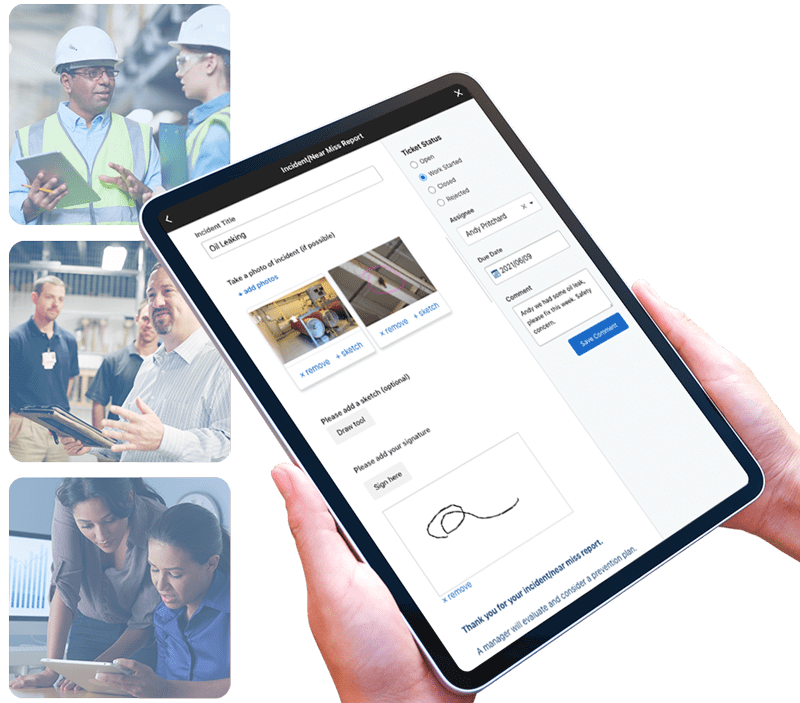
Capture Digital Data of Manufacturing Operations on Configurable Forms
Capturing digital data in manufacturing operations is vital for accuracy and efficiency. Weever's configurable forms enable tailored data collection to meet specific manufacturing needs. Examples of data that can be captured include photos, videos, sketches, and digital signatures. This comprehensive data collection helps manufacturers assess risks, automate real-time instructions, and generate actionable items with assigned responsibilities and due dates. By utilizing digital data capture, manufacturers can streamline processes, enhance safety, and ensure precise record-keeping, leading to improved operational efficiency and reduced errors.
Manufacturing Workflow Automation
Near Miss Reporting software enables a variety of workflow automations. By automating notifications and task assignments, issues are quickly directed to the right staff for immediate action. This reduces delays and ensures timely responses. Workflow automation also fosters collaboration by keeping everyone informed and on the same page. It improves task status monitoring, allowing managers to track progress and ensure tasks are completed efficiently. Overall, automation enhances productivity, reduces errors, and helps maintain smooth operations in manufacturing environments.
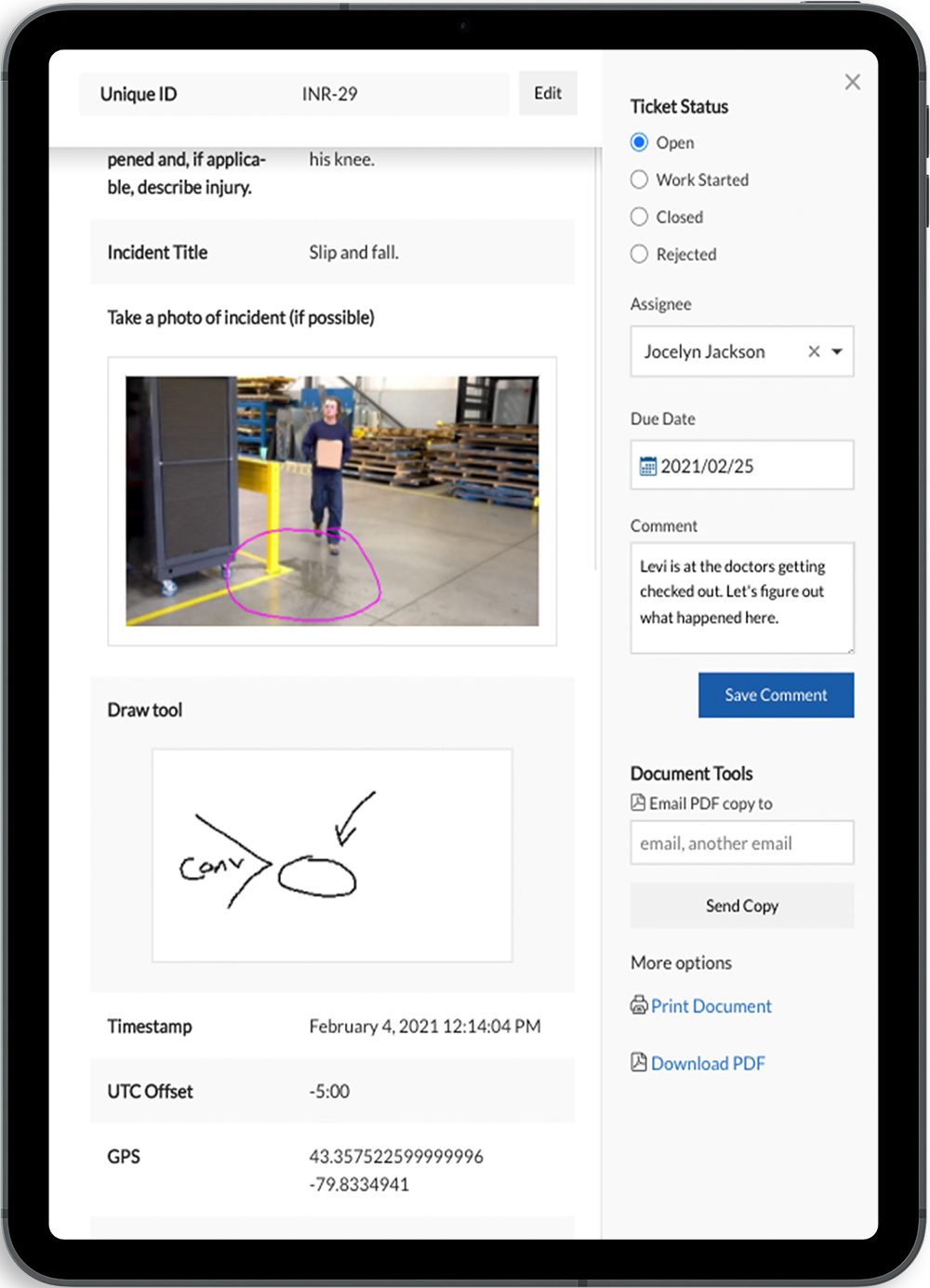
Real-Time Manufacturing Data Reports with Configurable Dashboards
Real-time data reporting is essential for maintaining safety and efficiency. Weever's Near Miss Reporting software platform provides configurable dashboards that deliver tailored insights for different roles, including frontline staff, supervisors, and managers. These dashboards enable immediate data visualization, allowing users to monitor operations and make quick, strategic decisions. By seeing live data, teams can identify trends, address issues promptly, and improve overall safety.
Real-time data visualization helps in analyzing patterns, which aids in proactive problem-solving and continuous improvement. For example, frontline staff supervisors can report incidents, while managers can track the greater safety picture and respond accordingly. This level of visibility ensures that everyone stays informed and responsive to changes in the manufacturing environment.
Additionally, Weever's software integrates seamlessly with other business systems, such as Microsoft SharePoint and Power BI, Tableau, Looker, Salesforce, and more. This integration enhances data management, providing a comprehensive view of operations and supporting better decision-making. By combining real-time reporting with robust integration capabilities, Weever helps manufacturers optimize their processes, reduce downtime, and increase overall efficiency.
Elevate Manufacturing Safety with Weever's Near Miss Reporting Software
Near Miss Reporting software doesn't just increase efficiencies or reduce costs, it can also save lives. Weever's Near Miss Reporting software offers essential features like digital data capture, workflow automation, real-time reporting, and integration with other business systems. These capabilities help stop safety incidents before they ever occur, streamline the reporting process, and improve operational efficiency. By implementing Weever's solutions, manufacturers can proactively address potential hazards, reduce downtime, and create a safer, more efficient workplace. Learn more about Weever's Near Miss Reporting software to start enhancing your manufacturing safety today.
Interested in learning more about how configurable program templates can revolutionize your manufacturing operations?
Request more information Preview modal-
Request more information
Please tell us a bit about yourself so we can tailor our response and get you the information you need.
"Having cloud-based forms on devices around the facility makes them so much more accessible, which makes it painless for operators to quickly provide a report."
Johanna Velez, VP Quality Assurance


"Weever is really user friendly and will have a massive positive impact on our operations and training team."
Mel Cadle - Op Ex Lead Process Engineer



Best Practices for creating a 5S Audit Checklist
5S Overview
5S is a workplace organization methodology that uses a list of five Japanese words:
seiri (整理) = sort
seiton (整頓) = set in order
seisō (清掃) = shine
seiketsu (清潔) = standardize
shitsuke (躾) = sustain
5S is a framework that helps workers organize a work space for efficiency and effectiveness by identifying and storing the items used, maintaining the area and items, and sustaining the new organizational system.
The decision-making process usually comes from discussions about standardization, a cornerstone of lean, which builds understanding among employees of how they should do the work.
The steps involve the worker going through everything in a space, deciding what's necessary and what isn't, putting things in order, cleaning, and setting up procedures for performing these tasks on a regular basis.
5S Auditing Best Practices
Schedule Audits
Once the workstation is optimized, the best practice is to schedule audits to ensure the workstation continues to be kept in optimal conditions. Most of our customers audit each workstation at least once per month.
The purpose of these audits is not to get staff in trouble - they are to provide feedback about the state of a workstation.
Who conducts 5S audits?
Usually a supervisor will assess each operators workstations, however, some customers use peer-to-peer evaluations with supervisor oversight to ensure they are auditing each other correctly.
5S Audit Forms (Scorecards)
5S Audit forms (or 5S Audit Sheets) are used to complete the 5S audits. 5S Audit Forms typically include a ranking system that provides feedback to operators and supervisors about the state of each “S” and suggestions as to how to correct any issues. Scores are usually from 1 to 3:
1 = Not completed
2 = Partially completed
3 = Completed
There are several free 5S Checklist Templates on the internet that you can use to move forward. Paper forms are a great place to start but there are inherent limitations to paper and excel processes that you may encounter.
Also, there are many benefits to digitizing a 5S auditing process.
One benefit of a digital 5S audit form is capturing photos to provide more information and context for your feedback. You can also use conditional logic to request additional information only if an S fails inspection.
Digitized 5S processes also more accessible to staff who can use their own phone (BYOD) or use the tablet on the line.
Comparing to Original Photo
The original 5S process is completed when staff arrive at an optimal state for the workstation. The point of the audit is to rate the current state of each S as compared to the optimal state. As a result, photos of the optimal state can be very helpful.
With a digital solution, you can simply add the photos to the form so they are available for reference each and every time.
The 30-second rule
The “30-second” rule is a simple exercise that allows managers to access and compare optimization between workstations. The idea is simple - simply measure how long it takes for an operator to find a tool. If they find the tool within 30 seconds then it is registered as a pass. If they do not, it is registered as a failure. This video provides a great quick overview of the process. This serves as a good KPI for the success of 5S across all workstations in your facility.
Total 5S Audit Score
To find the total 5S audit score, simply divide sum of the audit by 5, the number of “S” standards being evaluated. For example, if you scored each “S” a 3 (perfect score), the total score of the audit will be 3 ((3+3+3+3+3) / 5).
5S Audit Reporting
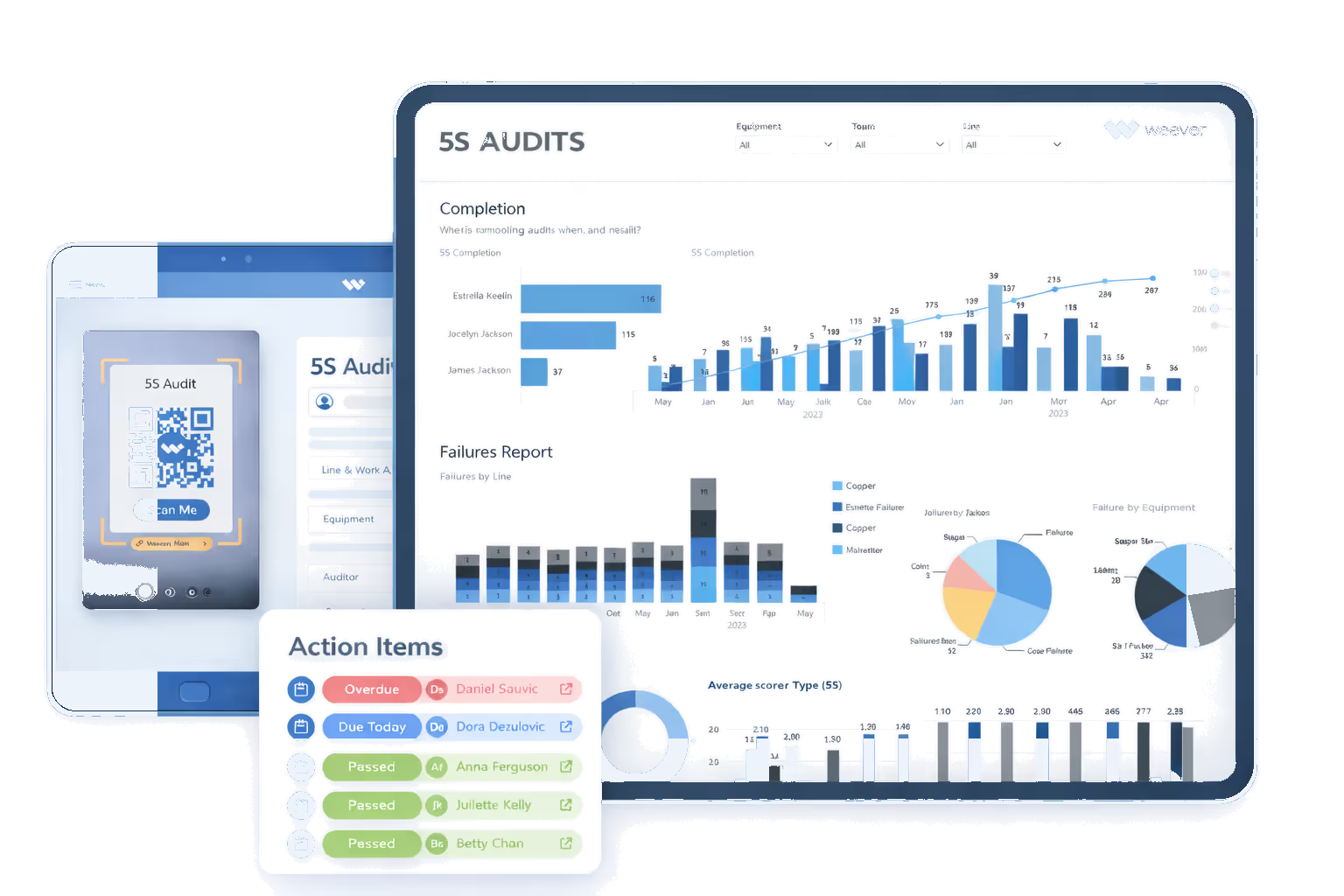
Good 5S Audit Reporting provides insights into performance broken down by workstation, staff members, lines, and the “5S” framework itself so that Continuous Improvement managers can retrain on specific items. Radar charts are invaluable to understand what is underperforming so that trainers can create programs and improve performance in certain areas.

Best Practices for Manufacturers Developing Your Audit Checklist
Manufacturing is dynamic; thus, operational excellence is essential for competitiveness and quality. Audit checklists, which assess compliance, monitor procedures, and identify opportunities for improvement, are essential to this endeavor. These checklists help ensure that every aspect of production meets strict standards and no detail is ignored. They are crucial to promoting excellence and improvement.
Weever's software digitizes audit checklists, revolutionizing manufacturers' auditing. Weever streamlines paper audits into digital ones. This change saves time, lowers errors, and improves audit protocol adaptability. Manufacturers can quickly build and update their digital checklists to address new issues and regulatory changes using Weever, ensuring audits are always current and complete. In an ever-changing sector, manufacturers need this auditing agility to maintain and improve operational excellence.
To learn more about Weever's digital solutions, including 5S auditing software, refer to here.

What is an Audit Checklist Good For? Absolutely Manufacturing!
An audit checklist is a structured tool used to evaluate and assess a workspace's adherence to your workplace methodologies, be they 5S or other lean methodologies, safety audits, and more. An audit checklist serves as a comprehensive guide for auditors to systematically inspect various areas, processes, or departments within an organization to ensure they align with the standards and practices dictated by management.
Consider a 5S audit checklist. A 5S audit checklist evaluates a workspace's 5S principles: Sort, Set in Order, Shine, Standardize, and Sustain. The checklist usually has sections for each 5S concept with particular items or requirements. These items use "Pass/Fail" scoring to describe 5S principle compliance or non-compliance. The checklist's Set in Order section may read:
- Locations for tools, equipment, paperwork, furniture, and materials are clearly marked and labeled and stowed properly when not in use
- Are there required tools or equipment that are NOT in their specified location? Check for inventory and equipment that are out of place/location.
- Abnormal or NOT OKAY conditions are easily identified from OKAY flow, process, and conditions. Stop switches, breakers, and emergency equipment are highly visible and located for easy access in case of emergency
The checklist acts as a roadmap for auditors during assessments, guiding them through specific criteria to evaluate, document findings, and identify areas for improvement or commendation. It aids in ensuring consistency, objectivity, and thoroughness in evaluating the workspace against 5S principles. Weever offers a free 5S audit template, which can be downloaded here.
Another example is a workplace safety audit checklist. A safety audit checklist for manufacturing is an organized tool designed to review and enhance safety protocols within manufacturing environments. It acts as a comprehensive reference for either internal or external auditors to spot potential safety risks, evaluate the effectiveness of risk management practices, and confirm adherence to local, national, and international safety regulations.
A safety audit checklist encompasses a wide range of areas within a manufacturing facility, but may include:
- Housekeeping and Organization: This part of the checklist ensures that work areas are clean and uncluttered. It includes checks for prompt cleaning of spills and debris and verifies proper storage of tools and equipment.
- Stored Materials: The checklist requires auditors to check that materials are stacked and spaced correctly to avoid incidents involving falling objects or improper storage.
- Electrical Equipment: It includes the examination of electrical devices to ensure they are regularly inspected, tested, and compliant with both company policies and safety standards.
- Job Design: This section assesses job roles to identify potential sources of injury and suggests job designs that reduce repetitive motion injuries.
- Compliance Gaps: The checklist highlights safety requirements to bridge compliance gaps and proposes measures to boost overall safety.
- Safety Standards: It verifies that workspaces meet established industry health and safety norms.
Learn more about Weever's safety audits and inspections here.
Manufacturing the Perfect Audit Checklist: Audit Criteria
Clear audit criteria must be established before creating audit checklists for each manufacturing workstation. Each workstation is evaluated against these requirements. Criteria must be tailored to different job areas and departments. The work done in one area may determine its criticality.
Good audit criteria are essential to creating quality audit checklists that increase industrial safety and efficiency. These criteria are rules, standards, or quantitative features used to evaluate and measure workplace approach effectiveness.
Here are some guidelines for developing audit criteria:
Define Specific Standards for Your Manufacturing Operation
Define clear guidelines or standards for organizing and maintaining workspaces. For example, outline what distinguishes necessary from unnecessary items in your manufacturing operations strategy.
Be Clear and Precise
Ensure that the auditing criteria are clear, precise, and easily understood by auditors. Remove ambiguity to prevent varying interpretations during audits.
Incorporate Diverse Metrics
Utilize both numerical and descriptive metrics in the criteria. Numerical metrics might include counts (e.g., expected number of items per workspace), while descriptive metrics could assess the state of cleanliness or organization visually.
Set Documentation Standards
Define any necessary documentation protocols. For example, establish guidelines for labeling items, arranging workstations, maintaining cleaning schedules, and how written documentation is created, updated, and accessed.
Alignment with Manufacturing Objectives
Ensure that the audit guidelines are in line with your operation's broader goals. These criteria should support desired outcomes such as improved manufacturing efficiency, enhanced safety, and better workspace organization.
Adapting to Change
Build flexibility into your guidelines to allow for adjustments and enhancements over time. Auditing guidelines should adapt as the organization evolves and should continuously reflect industry best practices.
Education and Communication
Communicate the audit criteria effectively to auditors through training and clear documentation. Ensure they comprehend and can apply these guidelines uniformly during audits.
Leverage Digitized Audit Checklists for Manufacturing with Weever
Creating detailed audit criteria for each manufacturing workstation might be challenging. Given the size of today's manufacturing environments, paper-based systems may be too complicated or expensive to establish or maintain. Precision and efficiency in audit processes are crucial to operational performance. Technology-based audit checklist management platforms like Weever improve accuracy, save time, and ensure consistency. Weever's software digitizes checklists to reduce human error and standardize processes across departments, ensuring all teams meet high standards. Real-time updates and automated alerts assist correct deviations, improving audit dependability.
Weever's flexible solutions allow audit checklist adaptation to meet operational needs without the complexity of traditional configurable. As your industrial environment changes, your auditing processes can adjust quickly to meet current legislation and internal standards.

Leveraging Your 5S Audit Scorecard for Continuous Improvement in Manufacturing with Weever
Fostering an environment of continuous improvement and innovation is vital for staying competitive in today's manufacturing industry. One of the most effective frameworks for fostering this environment is the 5S methodology-Sort, Set in order, Shine, Standardize, and Sustain. These steps help organizations optimize their workspaces, leading to increased efficiency, reduced waste, and a more agile production process.
Weever's flexible tools are made to get the most out of your 5S audit scorecards, turning them from simple checklists into active tools for change. With Weever, manufacturers can take data in a way that fits their needs, making sure that all of the feedback is useful and in line with their long-term goals. Our easy-to-use dashboards show real-time data visualizations that give you insights that help you make better decisions and speed up changes. Weever makes sure that deviations are quickly fixed by setting automated alerts based on scorecard results. This helps them maintain the high standards needed for operational success. Weever doesn't just back the 5S method; it makes it more effective, which helps manufacturers reach and maintain peak operational performance.
Weever's 5S audit form template can be downloaded for free here.

What is a 5S Audit Scorecard, and Why is it Important for Manufacturing Operations?
As you look at how well your company is using 5S, the 5S audit report is an important tool to have. It lets you give each of the 5S steps a score, which helps you see how well they're working and find places where they can be improved.
In addition to individual scores, the scorer also figures out the median score for the whole group, which gives a full picture of how efficient the whole thing is. This tool is especially useful for the industrial and factory sectors because it encourages strong quality and organizational practices that often lead to better results and products. You can start improving your 5S strategies right away and get better results by adding this report to your processes right now.
Below is an example of a generic manufacturing 5S audit and its "Pass/Fail" elements for each individual 5S step. A proper form template can be downloaded here.
Sort (Seiri): Declutter
- Is the area free of unnecessary or aged clutter or debris?
- Is there any obsolete or unneeded paperwork in the Work Area? Expired quality alerts, outdated data.
Set in Order (Seiton): A Place for Everything
- Locations for tools, equipment, paperwork, furniture, and materials are clearly marked and labeled and stowed properly when not in use.
- Are there required things that are NOT in their specified location? Check for stock / trolleys and equipment that are out of footprint / location.
- Abnormal or NOT OKAY conditions are easily identified from OKAY flow, process, and conditions. Stop switches, breakers, and emergency equipment are highly visible and located for easy access in case of emergency.
Shine (Seiso): Cleanliness Breeds Productivity
- Is the overall area clean and tidy? Check the machinery for contamination (dust / dirt). Are the floors clear of debris? Is the general appearance of the area acceptable?
- Trash and cardboard bins being used properly, no trash laying around, cardboard being put in cardboard bins.
- Are painted areas in good condition? Check: walls / floors / machinery / equipment.
- All cleaning materials and supplies are properly stored and readily available. Cleaning schedule including frequency and responsibilities displayed and maintained in the work area.
Standardize (Seiketsu): Consistency is Key
- All improvement actions from previous audit are addressed.
- Is the Visual Standard of ideal condition up to date? Check when the standard was last reviewed. Has there been any changes to an area that would impact the standard?
- All charts and metrics in the area are current and complete - Example: Safety/Quality / Scrap/Production/Output.
Sustain (Shitsuke): Cultivate a Habit of Excellence
- 5S activities are resourced with time and materials needed.
- Is there progress being made in the area? Or are the standards in the area being maintained? Progress should be seen in areas that have had open issues raised in previous audits. If the area is consistently at the required score, are they maintained?
- Recognition is given to teams that demonstrate 6S excellence, compliance, or improvement.
Keep It Simple: Avoid 5S Audit Template Overload
Manufacturing operations and workstations can be incredibly complex. So it's no surprise that 5S audit scorecards can also become overly complex as more and more templates are created to specialize for each area of a manufacturing operation.
We advise adopting a single standard audit template, enhanced with documents or information relevant to the particular workstation being evaluated. Each audit employs the same set of questions, which the auditor marks as "Passed" or "Failed." This approach streamlines the auditing process and facilitates easier reporting.
Can Anyone Perform 5S Audits with a Scorecard?
A certified lean practitioner is the best person to do a 5S audit, but peer-to-peer evaluation methods can also be used. Certified lean practitioners usually do more thorough audits because they have more experience finding chances and getting rid of things that get in the way of efficiency.
With peer-to-peer auditing, on the other hand, frontline workers and managers are more directly involved in the 5S auditing process. This increases engagement and increases the program's chances of long-term success. As a general rule, it's best to have experienced auditors do the first ones. These people can also train new employees on the job. A peer-to-peer method can take over when the first one is ready.
Learn more about training 5S Auditors with Weever here.

A Photo is Worth a Thousand Workstations
We suggest capturing photos of the workstation once the initial optimization process, covering the first three 5S steps, is complete.
At the start of each audit, auditors should review these photos to understand the expected appearance and functionality of the workstation.
Taking recent pictures of the computer is another good way to quickly show how it looks, which is especially helpful if there are problems with the audit.
It's easy for auditors to add pictures and videos to their reports with Weever's 5S audit software. Text data can be captured with Optical Character Recognition (OCR), which makes the collection of content and context faster and more complete. Click here to find out more about Weever's picture, OCR, and video capture.
Scoring the Perfect 5S
To give a 5S task a good score, you should look at the workplace using each of the five S's separately and then add up the scores to get a final score. But the score process is more than just checking things off a list; it's really about finding places where things could be better.
When you do a 5S check, you have to do more than just try to be perfect in each "S." It includes coming up with a complete and game-changing plan for planning and improving the culture of the workplace. Adopting the 5S method will not only set your company up for success, but it will also encourage a mindset of constant improvement and new ideas.
Weever's software automatically grades 5S audits and offers next steps that can be taken, based on rules set by the program administrator.
Learn more about Weever's digital 5S auditing software solutions here.

Streamlining Data Collection with Digital Observation Forms
Efficiently collecting, analyzing, and responding to data is vital in today's manufacturing industry. As manufacturers aim to enhance their production lines and minimize interruptions, the importance of efficient data collection systems becomes clear. Weever is a frontrunner in offering configurable digital observation forms tailored for the manufacturing landscape. These digital alternatives replace archaic paper forms and cumbersome manual processes, empowering companies to gather essential data with enhanced precision and speed.
Weever's observation forms are more than just ways to collect data; they're also ways to get better practical insights and make decisions right away. Because they're easy to use and integrate, these forms help manufacturers quickly gather data from the production setting and turn it into strategic information.
The Limitations of Traditional Data Collection Methods in Manufacturing
Paper forms, manual entry, and non-digital tracking have long been used for data collection. However, these systems have drawbacks that reduce productivity and accuracy. Paper forms might be lost or destroyed and require storage space. Manual entry is slow and error-prone, resulting in production process-wide errors.
Tracking methods that aren't digital also make it harder to analyze and make decisions in real-time. Delays can be lengthy because it takes time to gather, process, and present data. This delay not only makes it harder to quickly fix problems on the production floor, but it also makes it harder to make strategic choices that could boost output and efficiency.
These challenges underscore the necessity for manufacturing sectors to move away from outdated methods and adopt more modern, efficient data collection technologies. By transitioning to digital solutions, manufacturers can overcome these obstacles, ensuring more accurate, timely, and reliable data management.
Going Digital: Why Digital Observation Forms Are Good For Manufacturers
In order for producers to improve their processes, using digital observation forms is a huge step forward because it makes data handling faster, more accurate, and more widespread. These digital tools are very important for reducing the need for physical data entry, which can be error-prone and inefficient. Weever's observation forms make sure that information is recorded correctly and consistently by automating data collection and getting more staff to fill them out. This lowers the chance of mistakes that could slow down the manufacturing process.
One big benefit of digital observation tools is that they're easier to use. Through the Weever platform, digitally collected data is quickly available on a wide range of devices. This lets team members get access to important data, whether they are on the production line or working from afar. This ease of access is especially important in places where quick access to data is needed for operations to run smoothly. Managers and technicians can look at real-time data, evaluate production metrics, and quickly make choices based on accurate information, no matter where they are located.
Also, one of the biggest benefits of digital forms is that they let you analyze data in real-time. With this feature, manufacturers can look at and handle data as soon as it comes into the system. Analyzing data right away helps people make decisions more quickly, which lets them make quick changes to work methods or processes in response to new problems or inefficiencies. This kind of quick flexibility can lead to big gains in both productivity and cost management, because decision-makers have the key information they need to quickly improve operations.
Ultimately, the switch to digital observation forms is a major step forward in managing production data. By using these new ideas, manufacturers can create a more effective, precise, and flexible way to collect data, which will eventually make their operations run more smoothly and give them an edge over their competitors.

Weever's Configurable Digital Observation Forms in Manufacturing
In the manufacturing sector, Weever's digital observation forms that can be changed to fit different needs are changing how data is gathered and examined. These forms are a flexible way to meet the needs of different operations without having to make a lot of changes. This flexibility means that companies can change their data collection tools to fit different processes and needs. This makes the collected data more useful and relevant.
One of the best things about Weever's shapes is how well they can be integrated. After being set up, these forms can be easily shared on Weever's cloud platform, which acts as a central location for gathering and analyzing data. This unified method not only makes it easier to handle data across different manufacturing processes, but it also makes operational insights easier to see. Weever's digital forms are also made to work with other business software, like Microsoft Power BI, Salesforce, and more. This interoperability lets data be synced across platforms, which makes sure that data moves easily between systems like inventory management, production, and quality control.
The user-friendly design of Weever's digital observation forms is another cornerstone of their effectiveness. With an intuitive interface, these forms are accessible to users of all technical skill levels, encouraging widespread adoption within the manufacturing environment. The simplicity of the design minimizes training requirements and reduces resistance to technological change, facilitating a smoother transition from traditional methods to advanced digital solutions. Switching from paper to digital may seem like a daunting task that critical manufacturing operations can't pause to accommodate, but the switch is possible in as little as a week or two!
To sum up, Weever's digital observation forms that can be changed to fit different needs are a useful tool for makers because they are flexible, easy to use, and integrate with other systems without any problems. Together, these features make data handling more efficient, which leads to better decisions and, in the end, operational excellence in the manufacturing industry.
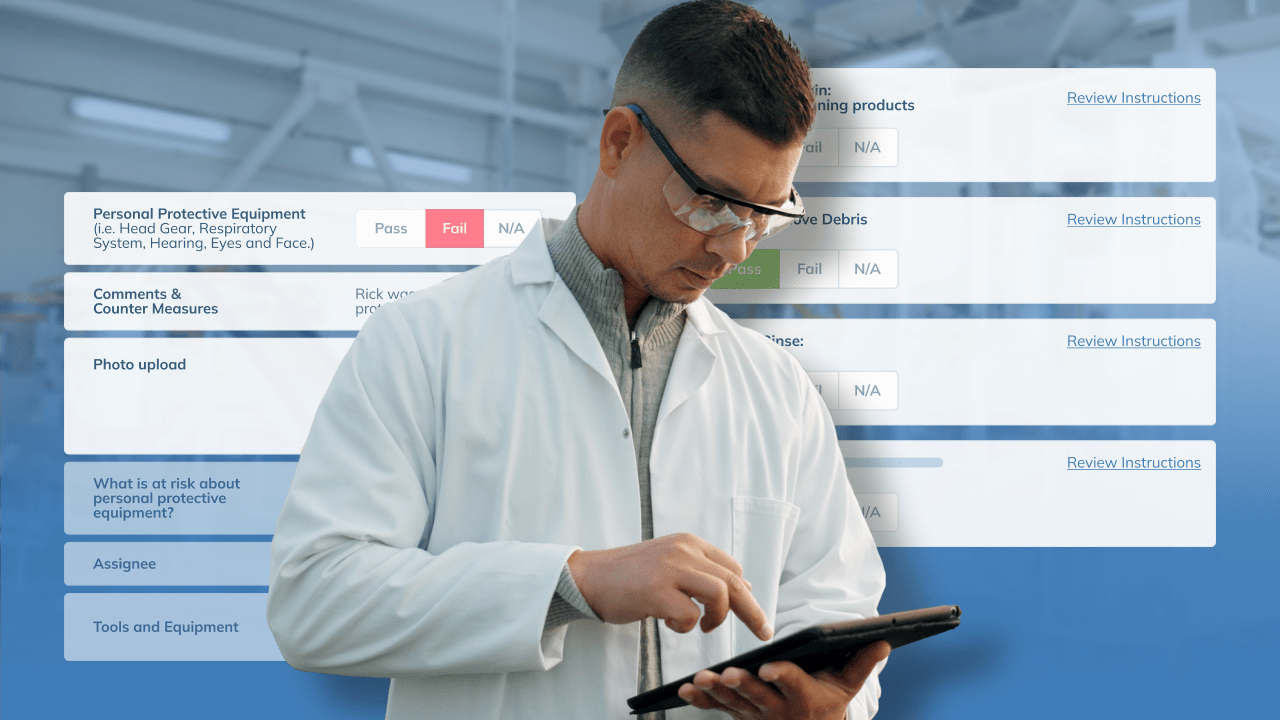
Embrace Manufacturing Efficiency Gains with Weever's Digital Tools
Weever's flexible digital observation forms are driving the manufacturing data collection revolution. These observation forms simplify data collection, improve quality and accessibility, and enable real-time analysis, helping decision-makers respond to changes and stay competitive. Weever's cloud platform integrates with business processes to provide accurate and effective data handling. User-friendly forms promote collaboration and informed work across all skill levels. Weever's digital solutions replace obsolete systems and empower manufacturers to acquire, analyze, and use data more efficiently, improving operational efficiency and competitiveness.

The Benefits of Automated Audit Checklists in Manufacturing
In the realm of manufacturing, efficiency and organization are paramount. One methodology that stands out for its effectiveness is 5S, a systematic approach to workplace organization derived from five Japanese words: Seiri (Sort), Seiton (Set in order), Seiso (Shine), Seiketsu (Standardize), and Shitsuke (Sustain). 5S enhances productivity and creates a safer, cleaner work environment by eliminating waste, improving process flow, and reducing operational costs.
Traditional 5S audits, often managed through paper-based systems, present several challenges in manufacturing. Primarily, they are time-consuming, diverting valuable resources from production to paperwork. Such manual entries are prone to inaccuracies due to human error, compromising the reliability of audit results. Moreover, paper-based audits cannot provide data collected in real-time, delaying critical insights needed for immediate decision-making and improvement. This lag can hinder the dynamic response required to maintain high operational efficiency and compliance standards in fast-paced manufacturing environments.
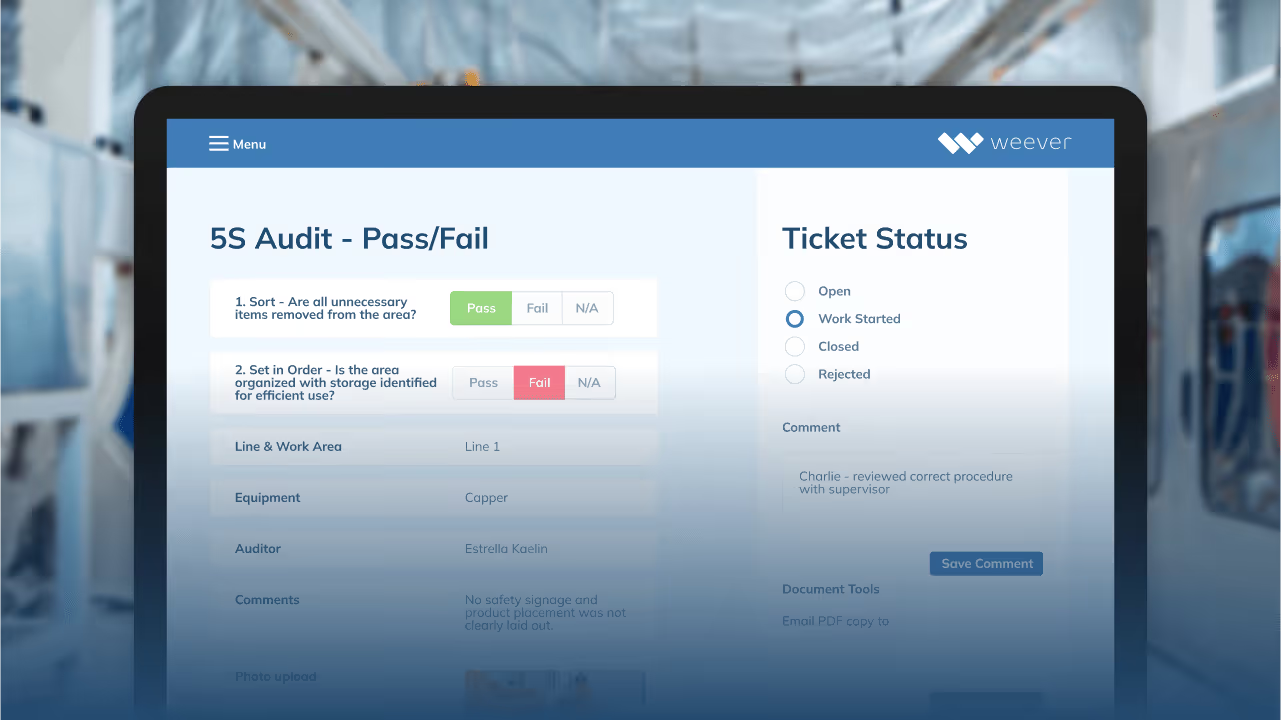
Weever's Automated Audit Checklists Elevate 5S Implementation in Manufacturing
Transitioning from traditional manual processes, Weever’s automated audit checklists transform how manufacturers uphold 5S principles. Weever’s platform offers significant advantages:
- Consistency and Accuracy: Automation ensures that each step of your audit process is performed consistently and correctly, reducing human error and increasing reliability.
- Efficiency: Weever’s configurable audit templates streamline the setup process, making it easier and quicker to conduct regular audits.
By integrating Weever’s automated solutions, manufacturers can effectively apply 5S principles, enhancing both productivity and compliance, leading to a more organized and efficient workplace.
Weever’s Digital Solutions for 5S Audits in Manufacturing
Configurable Audit Checklists for Manufacturing Operations
Weever transforms 5S audits with its digital solutions, offering configurable audit checklists tailored to the unique needs of each manufacturing environment. Unlike rigid paper-based systems, Weever’s audit checklists can be easily adjusted to address specific operational requirements, regulatory standards, and industry practices. This adaptability ensures that manufacturers can maintain a consistent audit process that truly reflects their operational landscape.
The benefits of using Weever’s configurable checklists are manifold. They enhance consistency across audits, ensuring all areas of the manufacturing process are regularly reviewed against uniform standards. This not only supports compliance with industry regulations but also bolsters overall operational efficiency. With Weever, manufacturers gain the flexibility to adapt their audit protocols as their business evolves, maintaining high standards of quality and compliance.
Optimize Manufacturing with Improved Error Reduction and Process Standardization
Automated audit checklists are a game-changer in the manufacturing sector, significantly enhancing the standardization and reliability of the 5S audit process. Companies can ensure that 5S or other methodologies are uniformly applied across different teams and shifts, eliminating variations that arise from manual handling and individual discrepancies.
Standardization is key to reducing errors in the audit process; with Weever’s automated checklists, every team member follows the same precise protocol, leading to consistent data collection and analysis. Consistency in standardization of processes minimizes the likelihood of errors, but also bolsters the overall reliability of manufacturing processes. As a result, companies experience fewer operational disruptions and can maintain a high level of quality control, enhancing both productivity and compliance in their manufacturing operations.
Access to Manufacturing Operations Data
The ability to respond quickly to operational inefficiencies is crucial. Data collected in real-time is essential for identifying issues as they occur and implementing immediate corrective actions. Weever’s digital audit tools are designed to facilitate this need by providing instant data capture and access during 5S audits.
With Weever, data from audits is collected and made available, allowing for prompt analysis and action. This capability enables manufacturing supervisors and managers to quickly address any deviations from standards, update procedures, and communicate changes across teams without delay. The result is a more agile manufacturing process where continuous improvement is driven by immediate insights and operational transparency. Weever’s solutions ensure that manufacturers can maintain high standards of quality and efficiency, adapting swiftly to new challenges as they arise.
Manufacturing Insights on the Go
In the fast-paced world of manufacturing, mobile accessibility is crucial. Weever leverages mobile technology to enable staff to perform and log audits directly from their handheld devices, anywhere on the factory floor. This streamlined capability ensures audits are conducted efficiently and with minimal disruption to daily operations. Weever's automated audit checklists not only revolutionize data collection, but also transform this data into actionable insights that drive continuous improvement. Advanced analytics capabilities allow manufacturers to integrate audit data into reporting dashboards, quickly identifying trends, pinpointing inefficiencies, and suggesting actionable enhancements.
Moreover, the platform’s dashboards track the effectiveness of these improvements over time, providing evidence-based feedback on their impact. This continuous feedback loop fosters a culture of relentless refinement and optimization, ensuring manufacturing processes remain competitive and compliant with industry standards. By integrating seamlessly with key business systems like Microsoft Power BI or Tableau, Weever eliminates data silos, promotes interdepartmental communication, and ensures a cohesive flow of information across systems.
Weever's commitment to mobile accessibility and robust integration capabilities make it an essential tool for modern manufacturing environments, empowering efficiency, fostering continuous improvement, and turning routine data into a strategic blueprint for operational excellence.
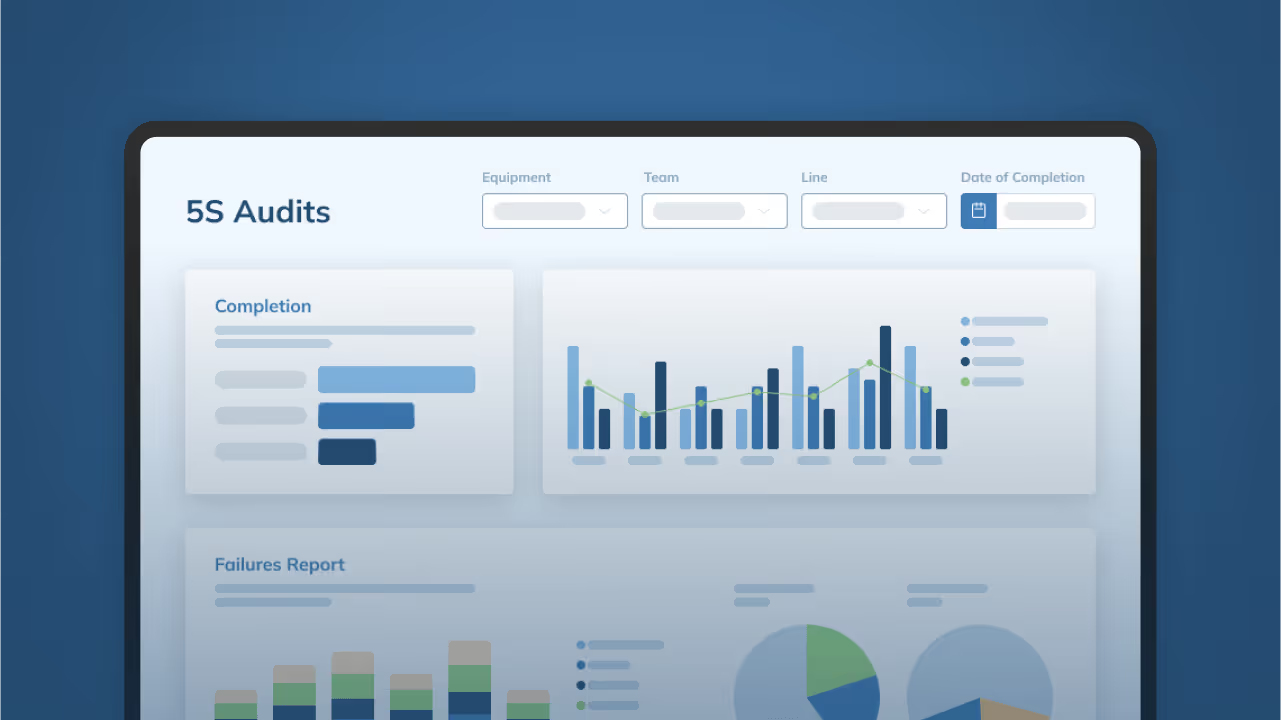
Future-Proofed Manufacturing with Weever Automation
Weever’s automated audit checklists offer a powerful solution to enhance operational efficiency, standardize processes across teams and shifts, and significantly reduce errors. By transforming data into actionable insights, Weever helps drive continuous improvement, ensuring your operations are efficient and compliant.
Explore how Weever can transform your audit strategies and operational efficiencies by visiting our website. Schedule a demo today to see our tools in action and discover firsthand the difference Weever can make in your manufacturing environment.

Optimizing Your Manufacturing 5S Audit Process with Weever's Digital Tools
The 5S methodology is a cornerstone of manufacturing efficiency, designed to optimize the physical workspace for enhanced productivity and safety. Originating from five Japanese terms translated into English — Sort, Set in Order, Shine, Standardize, and Sustain — 5S helps manufacturers reduce waste, streamline operations, and create a disciplined work environment. Each step is crucial, from eliminating unnecessary items (Sort) to maintaining discipline through regular audits (Sustain).
Weever's digital tools bring these traditional practices into the modern age. With configurable digital solutions, Weever transforms the 5S audit process, making it more adaptable to the specific needs of manufacturing environments. Our software replaces cumbersome paperwork with intuitive, easy-to-navigate digital interfaces, allowing for real-time data capture and immediate feedback. This seamless integration ensures that all levels of the manufacturing process are aligned, significantly reducing errors and enhancing compliance. By adopting Weever’s digital tools, manufacturers can expect a streamlined audit process that not only supports sustained operational excellence but also fosters a culture of continuous improvement.
You may think traditional paper-based 5S audit processes work great. After all, they have helped grow and sustain manufacturing operations for decades. Let’s consider some of the challenges these older methods confront in modern manufacturing.
Challenges in Traditional 5S Audit Processes in Manufacturing
Traditional 5S audits in manufacturing often rely on paper-based systems that are prone to significant challenges. These manual processes consume excessive time, as data must be collected, recorded, and analyzed by hand, diverting valuable resources away from core manufacturing activities. Paper records are not only cumbersome to manage but also susceptible to human errors, leading to inaccuracies that can compromise the integrity of your 5S audits. Moreover, the lack of real-time data means that issues can go unnoticed until they escalate, preventing timely corrective action. Paper records can also be lost, damaged, or destroyed, and redundancy processes to safeguard them can become costly and complicated.
Weever's digital tools address these pain points by automating and streamlining the 5S audit process. Your manufacturing operation can eliminate paper, reduce errors, and access crucial data instantly on the Cloud—enhancing the efficiency, accuracy, and integrity of your audits.
Weever’s Digital Solutions for 5S Audits in Manufacturing
1. Configurable Digital Checklists
Weever's configurable digital checklists can be tailored to your specific needs as a manufacturer, empowering your 5S audits. These configurable checklists ensure that every audit is relevant and effective, addressing the precise criteria essential for your environment. The adaptability of Weever's software guarantees consistency across all audits, establishing a standard benchmark for order and efficiency that is vital for maintaining compliance with both industry regulations and internal standards. Weever’s user-friendly platform allows for quick updates, keeping your processes agile and responsive.
2. Real-Time Data Collection and Access
In the fast-paced world of manufacturing, real-time data is a game-changer. Weever’s digital tools empower you with instant data capture and access directly on the factory floor, enabling immediate corrective actions and timely updates. This immediacy ensures that any deviations from 5S standards are addressed swiftly, preventing small issues from becoming costly problems. With Weever's intuitive interface, team members can easily record and retrieve data without disrupting their workflow, enhancing overall efficiency. By incorporating Weever's solutions into your 5S audits, you can maintain a consistently high standard of operational excellence, ensuring that your manufacturing processes run smoothly and efficiently at all times.
3. Error Reduction and Process Standardization
Weever's digital solutions are key to standardizing the 5S audit process across various teams and shifts in your manufacturing settings. Our tools ensure that every participant, regardless of their role or time of work, follows the same procedures and criteria, fostering a unified approach to operational excellence. This standardization significantly reduces errors by eliminating the inconsistencies that often arise from manual processes. Moreover, it enhances process reliability as all team members have clear, consistent guidelines and expectations. With Weever, you can maintain a high level of precision and efficiency in your 5S audits, boosting overall productivity and quality.
4. Analytics and Insights for Continuous Improvement
Weever’s software does more than streamline your 5S audits; it transforms audit data into actionable insights that drive best practice sharing in manufacturing operations. Supervisors can deep dive into 5S audit results, highlighting trends, pinpointing inefficiencies, and suggesting areas for enhancement. Managers and business analysts can use this robust data to make informed decisions, continuously refining processes and increasing productivity from a strategic level. For example, insights from Weever can reveal recurring bottlenecks at a particular workstation, allowing you to implement targeted improvements in that specific area.
5. Mobile Accessibility and Integration
In today’s dynamic manufacturing environments, mobile accessibility is crucial. Weever’s digital solutions are designed for on-the-go access, enabling teams to conduct 5S audits directly from mobile devices. This flexibility allows for immediate data entry and retrieval anywhere on the factory floor, streamlining communication and ensuring timely updates.
Moreover, Weever’s digital tools seamlessly integrate with other business software, such as Microsoft Power BI, Tableau, Looker, and much more, enhancing data consistency and workflow efficiency. This integration capability means information flows smoothly between systems, reducing manual data entry errors and providing a comprehensive overview of operations. Adopting Weever’s mobile and integrated solutions not only boosts operational agility but also strengthens decision-making, ultimately leading to a more responsive and productive manufacturing process.
Transformation Towards Manufacturing Excellence with Weever
Embracing Weever’s digital tools for your 5S audits is more than an upgrade—it's a transformative step towards manufacturing excellence. By replacing outdated, paper-based systems with our sophisticated, user-friendly digital solutions, you empower your team to perform more effectively and efficiently. Weever not only simplifies the audit process but elevates it, enabling you to harness the full potential of real-time data and analytics for continuous improvement.
With features like configurable digital checklists, instant data access, and seamless system integration, Weever ensures that your manufacturing operations can meet the demands of modern challenges and future opportunities. By standardizing processes, reducing errors, and providing actionable insights, our software helps secure a competitive edge in a rapidly evolving industry.
Join the multitude of successful manufacturers who have enhanced their operational efficiency with Weever. Invest in your future today and build a foundation for sustained success. Let Weever take your 5S audits to the next level and watch as your manufacturing processes thrive.

Why Digital Observation Forms Are the Future of Quality Assurance
Quality assurance (QA) practices have evolved significantly over the decades, transitioning from manual inspections and paper-based reporting to sophisticated digital systems. Traditionally, QA involved extensive paperwork where data was manually recorded, filed, and stored, making the process cumbersome and prone to errors. This method was not only time-consuming but also made data retrieval and analysis a challenging task.
The shift to digital observation forms represents a major advancement in QA practices. These digital tools streamline data collection, allowing for real-time entry and access. This transition not only eliminates the physical limitations of paper - such as storage and wear - but also enhances accuracy and efficiency. Digital forms can be easily updated, shared, and analyzed, providing a more dynamic, accessible, and reliable way to manage quality assurance processes.
Weever's solutions further enhance this shift by offering customizable digital observation forms that integrate seamlessly with existing QA systems. These forms are designed to capture precise data effortlessly, enable instant sharing and analysis, and support proactive quality management.
The Limitations of Traditional QA Methods
Traditional QA methods largely relied on paper-based forms and manual data entries, which formed the backbone of quality control in various industries for decades. These practices involved physically filling out forms during inspections and audits, subsequently storing these documents in filing systems for future reference. Such methods, however, presented several challenges:
- Data Inaccuracy: Manual data entry is prone to human errors such as misinterpretations, omissions, and transcription mistakes, which can compromise the integrity of the data and, consequently, the quality assurance process.
- Time Consumption: The manual process of filling out, filing, and managing paper documents is highly time-consuming. It diverts valuable resources away from core operational activities, reducing overall efficiency.
- Difficulty in Tracking and Retrieving Information: Paper-based systems make it challenging to quickly locate specific data when needed. Searching through physical files is laborious and time-intensive, hindering the ability to respond swiftly to quality issues or audit requests.
These challenges underscore the limitations of traditional QA methods and highlight the need for more sophisticated, digital solutions to enhance accuracy, efficiency, and responsiveness in quality assurance practices.
The Rise of Digital Observation Forms
Digital observation forms are electronic versions of traditional paper forms, designed to capture and record data directly through digital devices such as tablets, smartphones, or computers. These forms are typically customizable, allowing various industries to tailor the fields and data types according to specific quality assurance needs.
The adoption of digital observation forms across industries is on the rise due to their significant advantages over paper-based systems. Firstly, they enhance efficiency by allowing real-time data entry and instant access to information from anywhere, reducing the time spent on data collection and reporting. Secondly, digital forms ensure higher data integrity; they minimize human errors associated with manual entries and provide secure, tamper-proof storage. These features not only streamline QA processes but also improve the accuracy and reliability of the data, making digital observation forms a preferred choice for modernizing quality assurance practices.
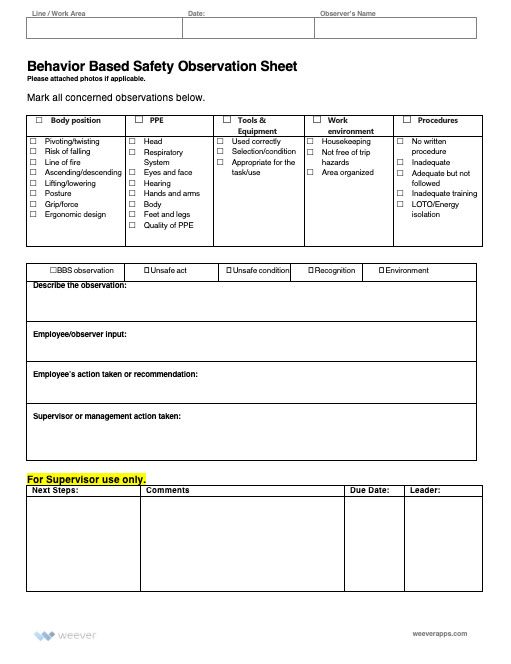
A great example includes Weever's Behavior-Based Safety Observation Forms, which allow inspectors to efficiently identify and mitigate safety risks to ensure a safe and productive work environment. Unlike traditional QA forms, Weever's observation forms mandate the completion of each task, are easily configurable to your unique business needs, allow for the creation and assignment of follow-up action items, and data collected from the observation forms automatically populates KPI reports and other analytics on the Weever platform.

Advantages of Digital Observation Forms
Digital observation forms offer significant advantages that revolutionize QA processes, such as precision in data collection, real-time accessibility, and ease of data analysis.
Precision Data Collection
Weever observation forms can be engineered to minimize human error and enhance data accuracy. They include features like dropdown menus, checkboxes, and validation rules that reduce misentries and ensure consistency in data input. This precision is critical in maintaining high-quality standards and compliance across industries, where even small errors can lead to significant issues. Weever observation forms are entirely configurable, so you can run your checks your way.
Real-Time Data Accessibility
One of the standout benefits of digital observation forms is their ability to provide immediate access to data. When data is uploaded to the Weever analytics platform, it can be accessed instantly from any device with internet connectivity, whether on a factory floor, in a field location, or in an office. This accessibility ensures that decision-makers can review and act on information without delay, enhancing responsiveness and operational agility.
Ease of Data Analysis
Digital forms streamline the analysis process through integration with other software tools and automated analysis features. The data collected can be automatically fed into analytics platforms that generate insights through dashboards and reports. This integration allows for real-time monitoring and trend analysis, making it easier to identify areas for improvement, predict potential problems, and make data-driven decisions quickly. These capabilities significantly reduce the time traditionally required for data processing and analysis, boosting efficiency and effectiveness in quality assurance tasks.
Next-Generation Observation Forms with Weever
Weever plays a pivotal role in transforming QA processes with its advanced digital observation forms tailored to meet the diverse needs of various industries. Weever's software solutions are designed specifically to enhance the efficiency, accuracy, and compliance of QA practices.
Customizable Fields
Weever's digital observation forms are highly customizable, allowing businesses to configure fields according to their specific QA requirements. This flexibility ensures that the forms are relevant and fully adapted to unique industry standards, practices, and compliance requirements.
Automatic Data Synchronization
With Weever, data entered into observation forms is automatically synchronized across all connected systems. This feature ensures that all team members have access to the most up-to-date information, facilitating better communication and faster decision-making processes.
Integration Capabilities
Weever's forms seamlessly integrate with a wide range of other QA tools and software systems. This interoperability allows for a unified approach to data management and analysis, enhancing the overall effectiveness of QA strategies. Integration also means that data can be easily aggregated and analyzed across platforms, providing comprehensive insights and enabling continuous improvement.
These features make Weever's solutions indispensable for industries aiming to enhance their quality standards and compliance. By providing tools that are both adaptable and easy to integrate, Weever ensures that organizations can maintain high-quality outputs and meet stringent regulatory demands effectively.
How to Implement Digital Observation Forms with Weever
Implementing Weever's software is a straightforward process that can significantly streamline your QA operations:
- Assessment and Planning: Start by assessing your current QA processes to identify areas that would benefit most from digitization. Plan how Weever's forms can be integrated, considering existing workflows and compliance requirements.
- Customization and Setup: Customize the digital forms to match your specific QA needs, using Weever's flexible form builder to add relevant fields, checklists, and compliance criteria. Set up user access and permissions to ensure data security and integrity.
- Training and Onboarding: Weever provides comprehensive training and support to ensure all users are confident in using the new system. Training sessions can be tailored to different user levels, from frontline workers to managers, ensuring everyone understands how to maximize the platform's capabilities.
- Go Live and Monitor: Deploy the digital forms and monitor the transition closely. Gather feedback from users to identify any challenges or additional needs.
- Continuous Support and Optimization: Take advantage of Weever's ongoing support options and regular updates. Use the insights gained from the digital forms to continuously refine and enhance your QA processes.
Unlock greater efficiency and accuracy in your QA efforts by making the digital QA transition, utilizing Weever software, training, and support.
From Paper Trails to QA Triumphs
Transitioning from traditional paper-based QA methods to Weever's digital observation forms represents a significant leap forward in enhancing QA processes. The shift to digital forms not only addresses the limitations of manual entries-such as data inaccuracies and mountains of paperwork-but also introduces a new level of precision, accessibility, and efficiency.
Embrace the future of quality assurance with Weever's innovative digital solutions. To see firsthand how our observation forms can transform your QA operations, we invite you to contact Weever for a demo. Discover how easy it is to integrate digital forms into your processes and start reaping the benefits of superior quality assurance today.
Behavior-Based Safety in Action
Dive in and start making your workplace safer, one behavior at a time. To get you going you can use this .
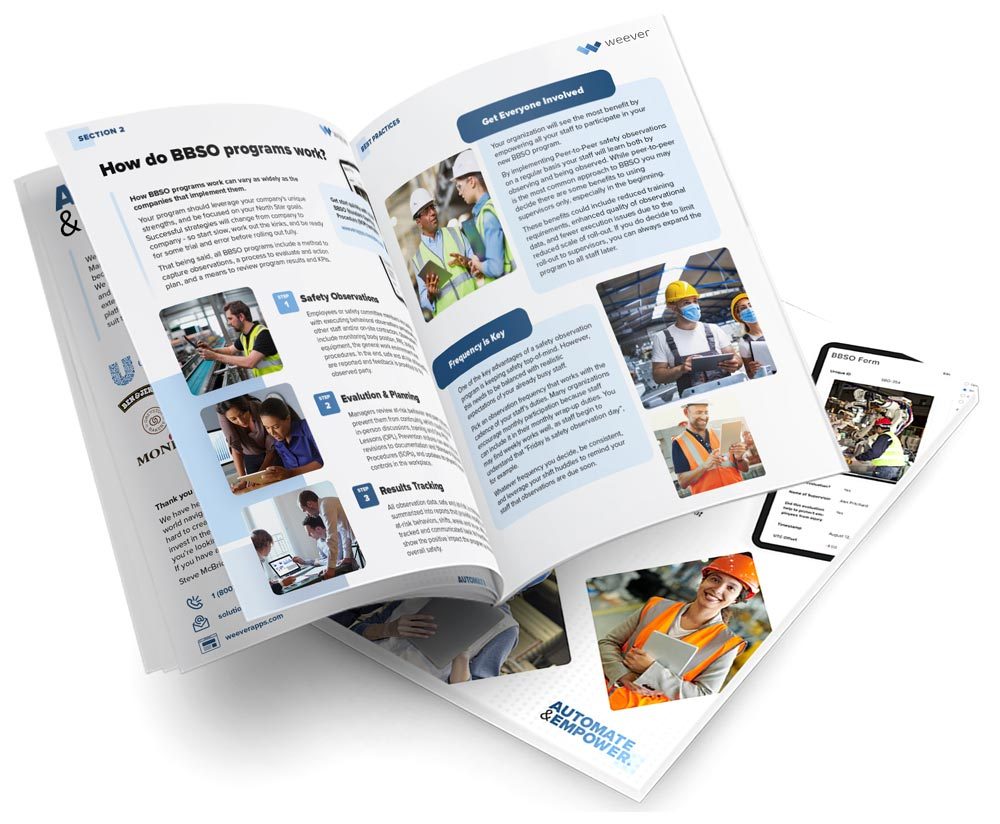
Learn about best practices and key pitfalls from our experience implementing programs for large and small organizations over the past 10 years.

Checklist for a Successful Audit: What Every Manager Needs to Know
In the dynamic landscape of modern business, efficiency isn't just desirable—it's essential. Companies across industries are constantly seeking ways to streamline processes, maximize productivity, and optimize resources. One methodology that has gained significant traction in this pursuit of efficiency is the 5S system. Originating from Japan and rooted in Lean manufacturing principles, 5S is a methodology that aims to organize the workplace for efficiency and effectiveness through the systematic arrangement and maintenance of workplace cleanliness and order.
Central to the successful implementation of 5S is the regular auditing of its principles. These audits serve as crucial checkpoints to ensure that the 5S methodology is being properly implemented and sustained. However, conducting a 5S audit is not merely a matter of ticking boxes—it requires careful planning, thorough execution, and proactive management.
Weever’s 5S Auditing software can supercharge your 5S auditing program with automated scheduling, action items, and reporting. Capture richer information to enhance visibility and accountability for employees at all levels, and create your ideal 5S Audit checklist.

Understand the 5S Principles
Before embarking on a 5S audit, it's imperative for managers to have a solid grasp of the five fundamental principles that underpin the methodology.
Sort (整理 Seiri)
Organize, label, and then eliminate unnecessary items from a workplace to ensure that only essential items are retained.
Set in Order (整頓 Seiton)
Organize, label, and then eliminate unnecessary items from a workplace to ensure that only essential items are retained.
Shine (清掃 Seisou)
Regularly clean and maintain the workplace to uphold high standards of hygiene and safety.
Standardize (清洁 Seiketsu)
Establish standardized procedures and protocols to sustain the gains achieved through sorting, setting in order, and shining.
Sustain (蹾 Shitsuke)
Foster a culture of continuous improvement and discipline to ensure that the 5S principles are upheld over the long term.
Sustaining 5S Success: A Manager’s Audit Checklist
One of the most crucial aspects of the Sustain step of your 5S Action Plan is performing routine 5S Audits. Audits help you maintain all of the positive gains acquired in Sort, Set in Order, and Shine steps.
Weever offers several free 5S Audit Form templates, or you can digitize your 5S auditing with Weever software solutions.
1. Preparing for the 5S Audit
- Assign Responsibilities: Designate specific individuals or teams responsible for overseeing the 5S audit process, including scheduling, documentation, and follow-up actions.
- Gather Resources: Ensure that necessary resources, such as Weever’s 5S audit software, audit checklists, and training materials are readily available to facilitate the audit process.
- Communicate Expectations: Clearly communicate the objectives, scope, and expectations of the 5S audit to all relevant stakeholders, including employees, supervisors, and department heads.
2. Conducting the 5S Audit
- Schedule Regular Audits: Establish a regular schedule for conducting 5S audits to maintain consistency and track progress over time.
- Use a Structured Checklist: Utilize a comprehensive checklist tailored to your organization's specific needs and objectives to guide the audit process systematically.
- Observe and Document: Thoroughly observe the workplace environment, documenting any deviations from the established 5S standards and identifying areas for improvement.
- Encourage Participation: Foster a culture of employee involvement and participation by soliciting feedback, suggestions, and observations during the audit process.
3. Audit Post-Mortem
- Identify Root Causes: Analyze audit findings to identify underlying root causes of non-compliance or inefficiencies within the workplace.
- Prioritize Improvement Opportunities: Prioritize improvement opportunities based on their potential impact on productivity, safety, and overall organizational performance.
- Develop Action Plans: Collaborate with relevant stakeholders to develop action plans aimed at addressing identified deficiencies and implementing sustainable solutions.
- Track Progress: Implement mechanisms for tracking the progress of improvement initiatives, monitoring key performance indicators, and ensuring accountability for results.
4. Continuous Improvement
- Promote a Culture of Continuous Improvement: Emphasize the importance of ongoing refinement and enhancement of 5S practices through regular training, coaching, and reinforcement.
- Celebrate Successes: Recognize and celebrate achievements and milestones in 5S implementation to reinforce positive behaviors and motivate continued engagement.
- Adapt and Evolve: Remain flexible and adaptive in response to changing organizational needs, market dynamics, and technological advancements, continuously refining and evolving 5S practices to stay ahead of the curve.
- Align with Strategic Goals: Ensure that 5S initiatives are aligned with broader organizational objectives, such as cost reduction, quality improvement, and customer satisfaction.
Turbocharge 5S Auditing Checklists with Weever
In today’s business world, staying competitive means a continuous push for automation and digitization. Thankfully, resources like 5S Audit Checklists can be modernized. There are many benefits to upgrading your company’s audit processes with solutions such as Weever 5S Auditing software.
- Streamline the 5S Audit Process: Leverage the power of Weever software to streamline the audit process, enhance data accuracy, and provide real-time visibility into performance metrics.
- Harness Data Analytics: Harness the capabilities of data analytics to derive actionable insights from audit data, identify trends, and make informed decisions to drive continuous improvement. Gain real-time visibility into performance metrics, enabling proactive decision-making and continuous improvement efforts.
- Administrative Time Savings: Save administrative time by automating scheduling, action items, and reporting tasks.
- Simplified Interface: Reap the benefits of a simplified interface that makes navigation and data entry intuitive and efficient, no matter your role at the company.
- Enhanced Accountability: Improve accountability by capturing richer information and tracking compliance with greater precision.
Conducting a successful 5S audit requires careful planning, diligent execution, and a commitment to continuous improvement. By following the 5S Audit Checklist outlined above, managers can ensure that their organization not only achieves compliance with 5S principles but also reaps the full benefits of improved efficiency, productivity, and workplace satisfaction. As the saying goes, "A place for everything, and everything in its place."
Make 5S Digital. Not Difficult
5S Programs Don't Fail Because of Effort. They Fail Because the Tools Can't Keep Up.
Every audit cycle is the same. 5S audits are completed on paper. Action items disappear between shifts. The communication board gets updated by hand, if it gets updated at all. And next month, the same issues show up again.
Weever breaks the cycle. Digitize your audits, track every action to closure, and finally spend your time improving the plant — not chasing paperwork.
Run 5S the Way It Should Work
Weever turns 5S from a clipboard-and-spreadsheet exercise into a digital system your team will actually use. Operators can scan a QR code, capture photo evidence, and record scores in seconds. When something fails, an action item is created automatically with an owner, a due date, and reminders until it's closed.
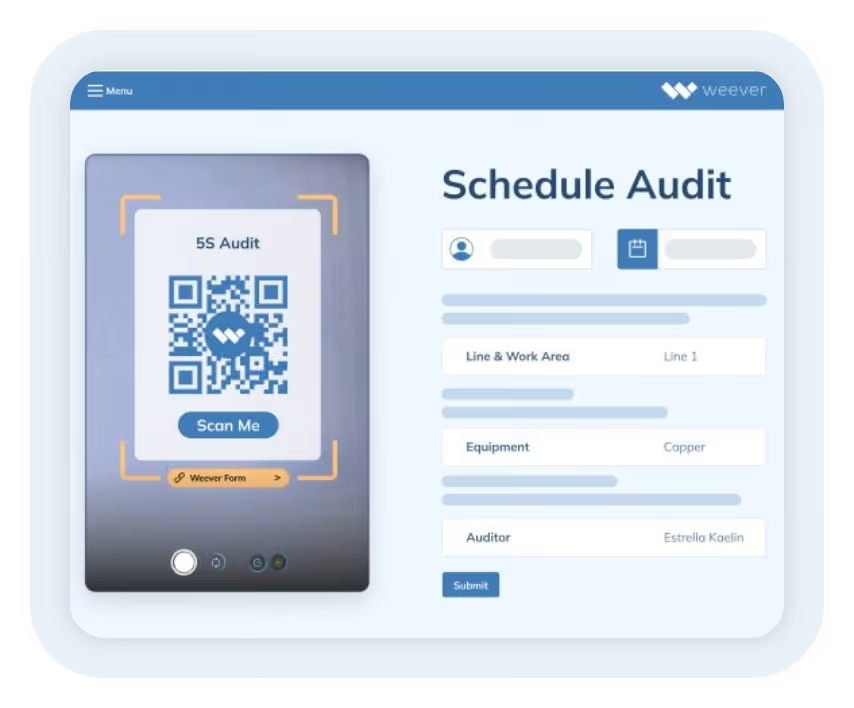
Schedule Audits
Auto-generated forms delivered right to the floor.
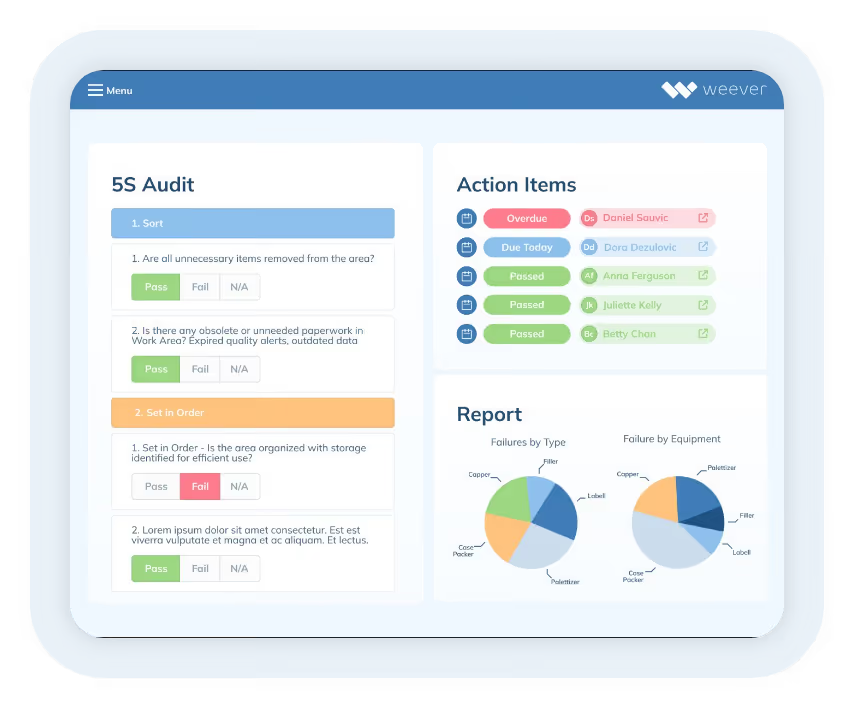
Run the Audit
Digital checklists and scoring built for operators.
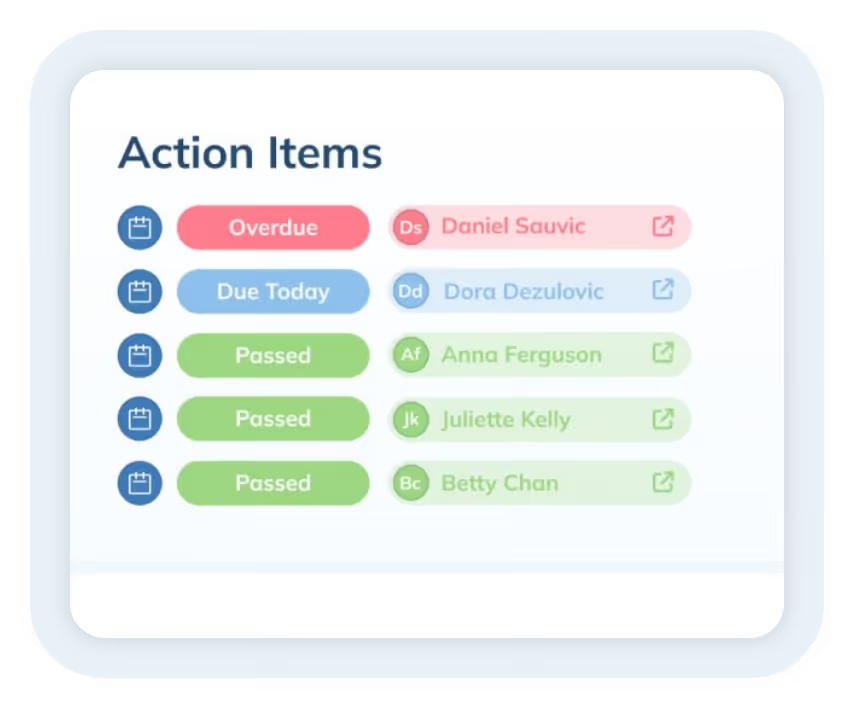
Close the Loop
Assign corrective actions directly from results.
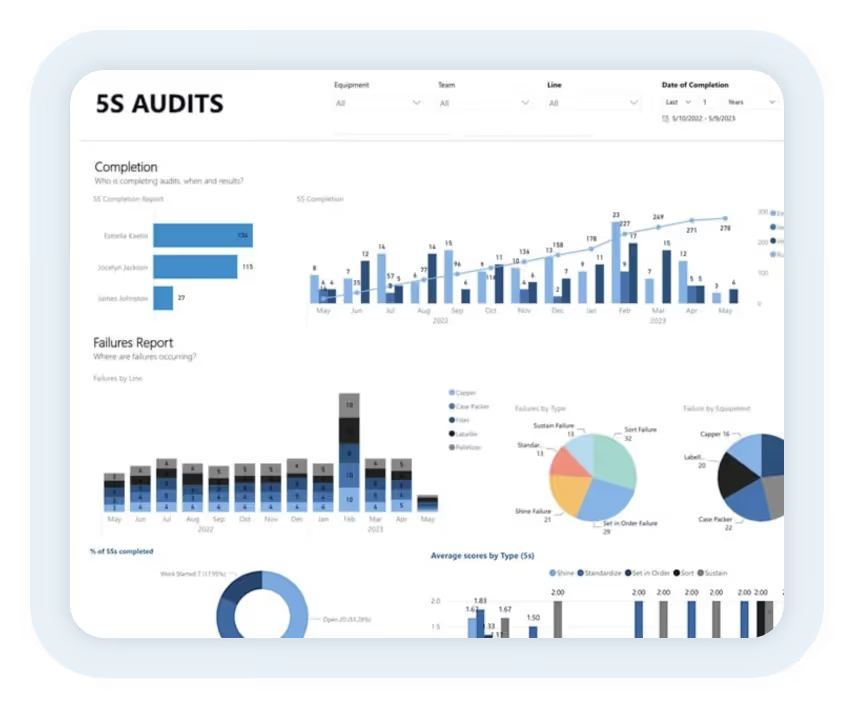
View Dashboard
Real-time insights on scores and issue trends.
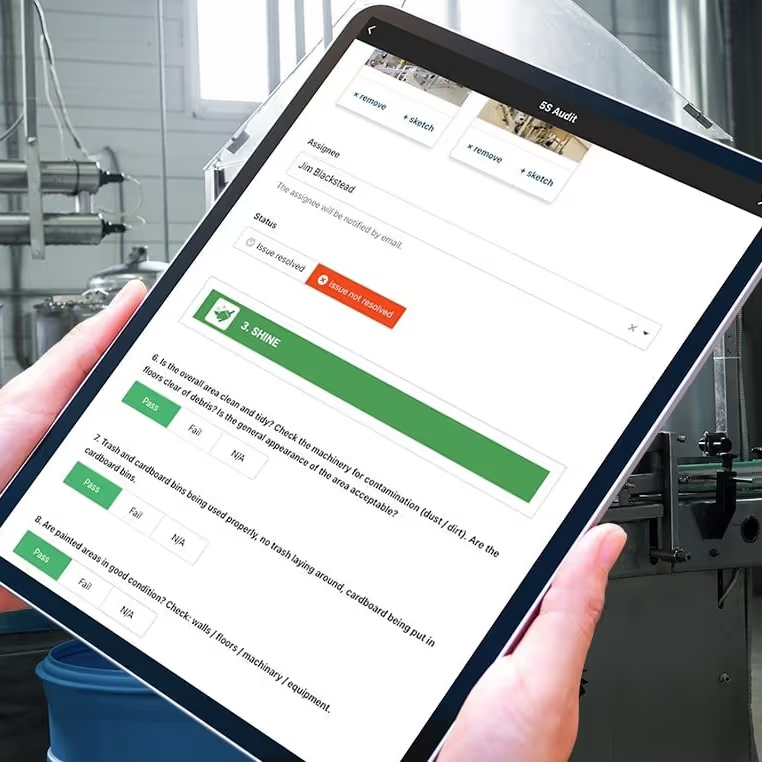
How to establish 5S Audit Criteria
Before creating audit checklists for each of your workstations, it is important to understand your audit criteria, which serves as the guidelines or standards against which each workspace will be evaluated.
The audit criteria defines standards for each 5S principle. For instance, under "Sort," define what constitutes necessary versus unnecessary items.
The criteria should be tailored to fit the unique needs and functions of different work areas or departments. What may be essential in one area might differ in another based on the nature of the work conducted.
What is a 5S Audit?
A 5S audit is a structured evaluation process conducted within a workspace or organization to assess the implementation and adherence to the principles of 5S methodology. Rooted in the concepts of Sort, Set in Order, Shine, Standardize, and Sustain, 5S aims to optimize workplace organization, cleanliness, and efficiency. The audit involves a systematic examination of various areas, processes, or departments to gauge their alignment with 5S standards and practices, seeking to identify strengths, weaknesses, and opportunities for improvement.
During a 5S audit, auditors utilize predefined checklists or criteria tailored to each aspect of the 5S methodology. These checklists outline specific criteria under each principle, guiding auditors through the assessment process.
Audits typically involve detailed documentation of observations, findings, and areas requiring corrective actions or enhancements. The 5S audit serves as a diagnostic tool, driving continuous improvement by highlighting areas where 5S principles are effectively applied and areas that require attention for better organization, cleanliness, and workflow efficiency within the workspace.
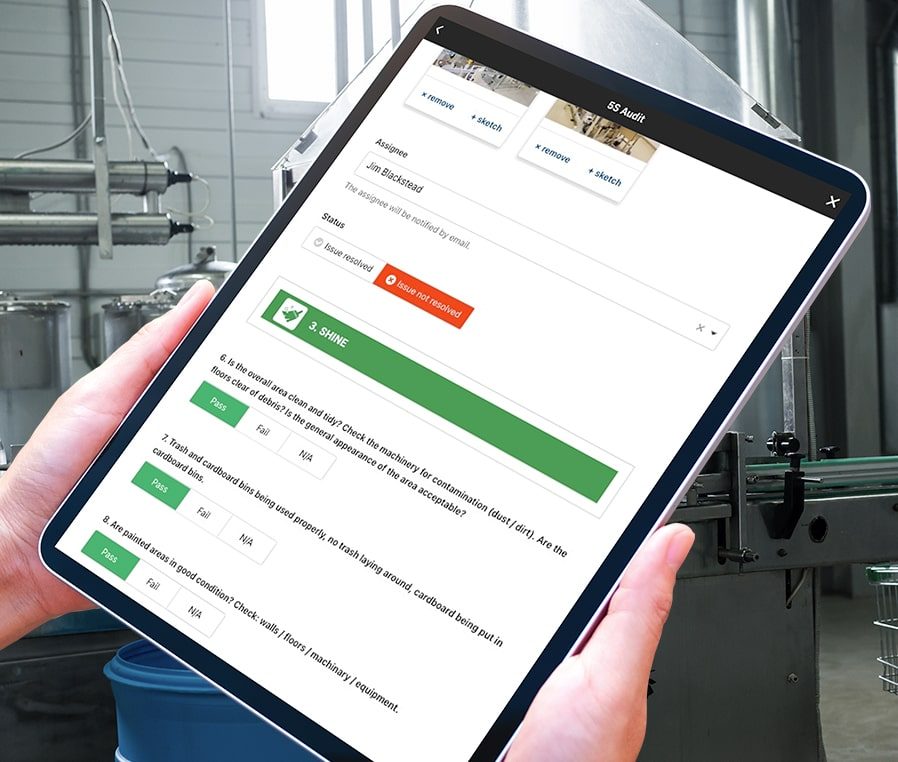
How to create your 5S Audit Criteria for Each Workstation
5S audit criteria form the foundation of a systematic evaluation process aimed at assessing the adherence to 5S principles within a workspace or organization. These criteria consist of specific guidelines, standards, or measurable attributes used to evaluate and measure the effectiveness of 5S implementation. To create effective 5S audit criteria, start by thoroughly understanding the fundamental principles of Sort, Set in Order, Shine, Standardize, and Sustain. This understanding serves as the basis for defining detailed and relevant criteria for each principle that aligns with the organization's goals and the specific requirements of the workspace.
Creating robust 5S audit criteria involves a structured approach. Begin by categorizing criteria under each principle, ensuring clarity, objectivity, and measurability. For instance, under "Sort," criteria might involve evaluating the presence of unnecessary items and the efficiency of item identification methods. Similarly, under "Shine," criteria could encompass the regularity of cleaning schedules and the cleanliness of workspaces. These criteria need to be clear, specific, and actionable, enabling auditors to conduct thorough assessments.
A collaborative approach involving stakeholders, department heads, and employees familiar with the workspace is vital. Gather input and insights from those directly involved in the daily operations to ensure that the audit criteria capture the nuances and practical requirements of the workspace. Regular reviews and refinements of the audit criteria based on feedback, evolving needs, or identified improvements ensure the checklist remains relevant, adaptable, and effective in driving continuous improvement aligned with 5S principles within the workspace.
Define Specific Standards
Determine the specific standards or expectations for each of the 5S principles (Sort, Set in Order, Shine, Standardize, Sustain) within your organization or workspace. For instance, under "Sort," define what constitutes necessary versus unnecessary items.
Clarity and Objectivity
Ensure that the criteria are clear, objective, and easily understood by auditors. Avoid ambiguity to prevent differing interpretations during audits.
Quantitative and Qualitative Measures
Incorporate both quantitative and qualitative measures into the criteria. Quantitative measures might include specific counts (e.g., number of items in a workspace), while qualitative measures could involve visual inspections for cleanliness or organization.
Documentation Standards
If applicable, establish documentation standards. For instance, set expectations for how items should be labeled, how workstations should be arranged, or how cleaning schedules should be documented.
Alignment with Goals
Ensure that the audit criteria align with the overall goals and objectives of implementing 5S in your organization. The criteria should reflect the desired outcomes of increased efficiency, safety, and workplace organization.
Flexibility and Adaptability
Allow for flexibility in the criteria to accommodate changes or improvements over time. Auditing criteria should evolve with the organization's needs and continuously align with best practices.
Training and Communication
Communicate the established audit criteria clearly to auditors through training and documentation. Ensure they understand how to apply the criteria consistently during audits.

How to Sustain with 5S Auditing
Although Sustain is only one of the 5 principles of the 5S methodology, it encompasses 90% of the work. Sustain is the long-tail of 5S. And it is where the real results lie. It is also, conversely, the stage in which most 5S programs fail.
In order to realize the benefits of 5S, you must ensure principles are sustained using an efficient and effective 5S auditing program. This article outlines what sustain means, the benefits of an efficient auditing program and a simple and practical way to ensure success.
What does "5S" & "Sustain" mean?
The 5S methodology is a system for organizing a workspace to improve efficiency, safety, and productivity. It consists of five principles, each starting with the letter "S": Sort, Set in Order, Shine, Standardize, and Sustain.
"Sustain" in the context of the 5S methodology refers to the fifth principle, emphasizing the need to maintain and continuously reinforce the standards established through the first four principles (Sort, Set in Order, Shine, Standardize). It involves developing a culture of discipline, adherence, and ongoing commitment to the 5S principles to ensure that improvements made in organizing the workspace are sustained over the long term.
"Normalizing" 5S with Audits
In another post, we overview the 3 phases of 5S implementation, including Planning, Optimizing and Normalizing.
The Normalizing phase is comprised of the "Sustain" and "Standardize" steps because they are interconnected steps ensuring standards are met and improvement opportunities are captured and implemented.
Once you have planned your 5S program and optimized the workstations, you will build materials that help you standardize the process.
- Standardization creates uniformity and consistency in work practices, processes, and visual controls across the organization, leading to increased efficiency, safety, and sustained improvements.
- Sustain is how you put your standardization work into action.
Sustain entails creating habits, routines, and practices that uphold the established standards of cleanliness, organization, and efficiency. It involves fostering a mindset among employees to consistently follow the 5S principles, making it a part of the organizational culture. Sustaining the 5S principles requires regular reinforcement, training, monitoring, and continuous improvement efforts to prevent regression and ensure lasting positive changes within the workspace.
By far, the most crucial factor in sustaining 5S is scheduled audits.
5S Auditing
5S audits are critical because they are the vehicle through which standards are maintained. 5S audits also provide a means for frontline staff to provide feedback that drive continuous improvement and productivity gains. The benefits of 5S audits are vast, including:
Maintenance of Standards
Ensure established 5S standards are maintained. Prevent regression into disorganization. Provide a structured way to measure how effectively the 5S principles are being applied.
Identify Improvements
Capture issues in the 5S implementation as well as other challenges affecting productivity in general and create an action plan to overcome them.
Employee Engagement
Foster a sense of ownership and responsibility and encourage team members to take an active role in maintaining the workspace's cleanliness and organization.
Data-Driven Decision Making
Audit results provide rich data and insights to drive strategic decisions around resource allocation, OEE, employee engagement and so forth.
5S auditing is valuable because it serves as a tool for ongoing assessment, improvement, and maintenance of an organized and efficient workspace, contributing to enhanced productivity, safety, and employee satisfaction.
5S Auditing: A step-by-step guide
If you have completed the first 4 steps in 5S, the auditing program is essentially about normalizing that work on an ongoing basis. Implementing a 5S auditing program involves several practical steps to ensure a comprehensive assessment of the workspace.
1. Establish Audit Criteria and Checklists
Establishing audit criteria is a crucial step in conducting effective 5S audits. These criteria serve as the guidelines or standards against which the workspace will be evaluated during the audit process.
Use the criteria to develop a checklist outlining specific items or areas to be evaluated under each of the 5S categories. This checklist helps auditors systematically assess the workspace.
Learn more about creating audit checklists ⇒
2. Train Auditors
Ensure that the individuals conducting the audit are trained in the 5S principles, the audit process, and using the audit checklist effectively. Communicate the established audit criteria clearly and ensure they understand how to apply the criteria consistently during audits. They should understand what to look for and how to assess compliance.
Also, train auditors on how to use the checklists effectively and communicate its purpose and importance to all involved stakeholders.
If you have digitized your 5S audit process using digital forms, you will need to train your auditors on how to access and use the system.
Learn more about best practice for training auditors ⇒
3. Schedule Audits
Establish a regular schedule for conducting audits. Scheduling audits in a systematic and consistent manner ensures that the workspace's adherence to 5S principles is regularly assessed, providing opportunities for improvement and sustaining the desired standards over time.
Decide on the frequency of audits based on the nature of the workspace, its size, complexity, and the organization's needs. Audits can occur daily, weekly, monthly, quarterly, or even semi-annually.
Learn how to set up 5S Audit Schedules ⇒
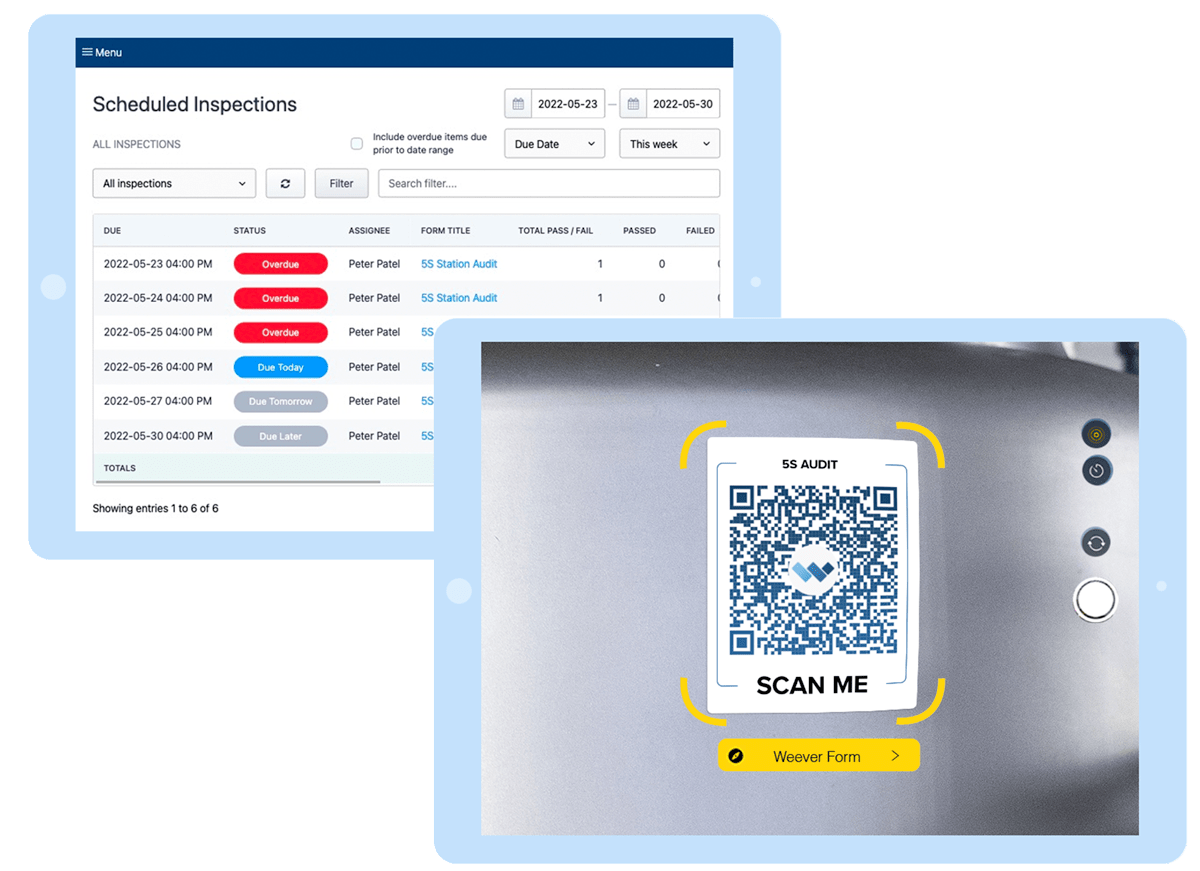
4. Conduct Audits
Perform the audits using the established checklist. Evaluate each area against the defined criteria for Sort, Set in Order, Shine, Standardize, and Sustain. Document findings, noting areas of compliance and areas needing improvement.
5. Generate & Review Reports
Compile audit findings into comprehensive reports. These reports should include observations, areas of non-compliance, improvement recommendations, and any notable successes.
Review the audit reports with relevant stakeholders, including employees working in the audited areas. Discuss findings, celebrate successes, and identify action items for improvement.
6. Implement Corrective Actions & Follow up Audits
Develop action plans to address areas identified for improvement. Assign responsibilities, set deadlines, and track progress on implementing necessary changes.
Conduct follow-up audits to assess the effectiveness of implemented changes and to track progress. Continuous monitoring ensures sustained adherence to 5S principles.
7. Celebrate Success and Recognition
Recognize and celebrate achievements and improvements resulting from the auditing process. Acknowledge the efforts of individuals and teams in maintaining an organized and efficient workspace.
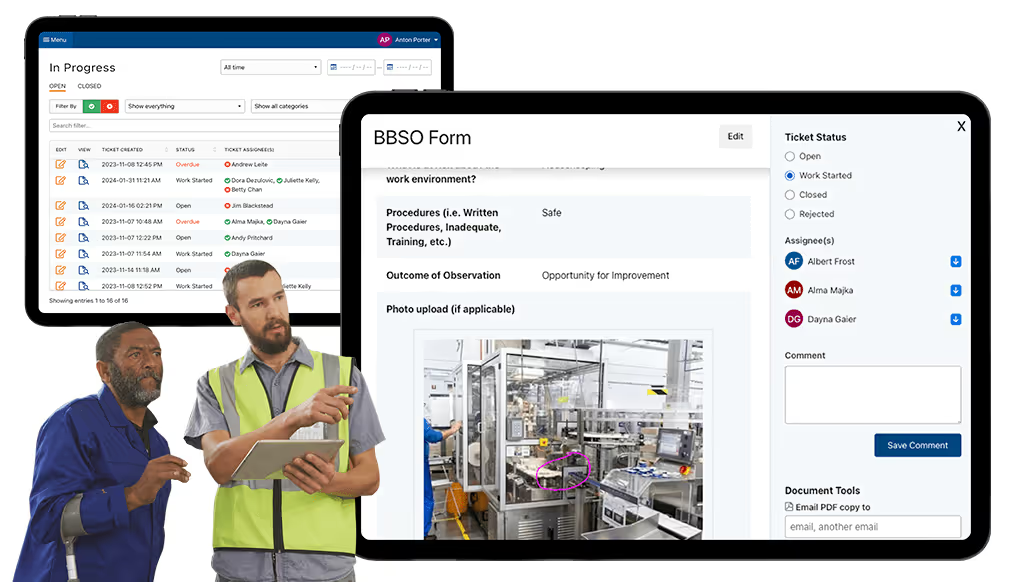
The 7 Principles of Behavior-Based Safety Observations
Dr. E. Scott Geller is a distinguished psychologist renowned for his pioneering work in the field of applied behavior analysis, particularly in the realm of safety behavior. As a professor at Virginia Tech and the founder of the Safety Performance Solutions consulting firm, Geller has dedicated his career to studying human behavior and its impact on workplace safety. His research and insights have informed the development of Behavior-Based Safety (BBS) programs worldwide, with a focus on fostering proactive safety cultures and preventing accidents through behavioral interventions.
Geller's 7 principles serve as a foundational framework for implementing effective Behavior-Based Safety Observation programs. These principles emphasize the importance of understanding human behavior, both at the individual and organizational levels, and leveraging behavioral insights to improve safety outcomes. By adhering to these principles, organizations can create safer work environments, reduce accidents, and cultivate a culture where safety is prioritized by all.
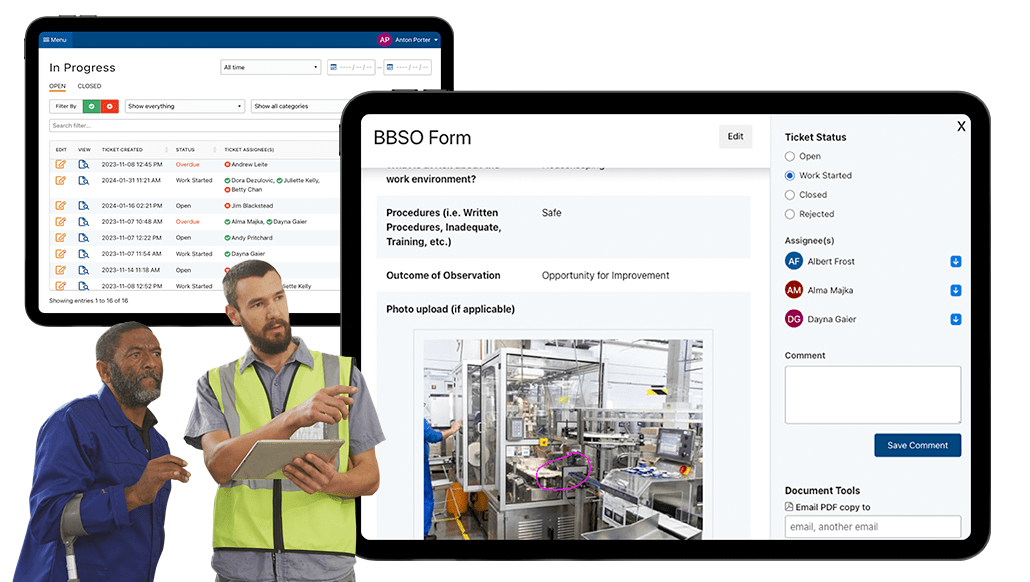
The 7 Principles of Behavior-Based Safety Observations
Principle 1: Observable Behavior
- Safety interventions should focus on observable behaviors rather than subjective interpretations or assumptions. Observable behaviors are tangible actions that can be seen, measured, and analyzed.
- For example, an observable behavior could be wearing appropriate personal protective equipment (PPE) while operating machinery. By observing whether employees consistently adhere to PPE guidelines, supervisors can assess compliance and identify opportunities for reinforcement or corrective action.
Principle 2: External Focus
- To understand and improve behaviors, it's essential to consider external factors that influence individual actions. External factors may include environmental conditions, task demands, organizational policies, and social influences.
- For example, external factors such as inadequate lighting or poorly maintained equipment may contribute to unsafe behaviors. By addressing these external factors through improved workplace design, equipment maintenance, or training, organizations can mitigate risks and promote safer work practices.
Principle 3: Antecedents and Consequences
- As discussed above, behavior is influenced by antecedents (events that precede behavior) and consequences (events that follow behavior). Antecedents set the occasion for behavior, while consequences determine its likelihood of recurrence.
- For example, providing clear instructions and training (antecedents) on proper lifting techniques can reduce the risk of back injuries. Additionally, reinforcing safe lifting practices with positive feedback or rewards (consequences) encourages employees to continue following correct procedures.
Principle 4: Positive Reinforcement
- Positive reinforcement involves providing favorable consequences for desired behaviors, increasing the likelihood of their recurrence. Positive reinforcement can take various forms, including praise, recognition, rewards, or privileges.
- For example, supervisors may implement a reward system to recognize employees who consistently demonstrate safe behaviors, such as wearing proper PPE and following safety protocols. By publicly acknowledging and rewarding safe practices, organizations reinforce a culture of safety and motivate employees to prioritize safety in their daily tasks.
Principle 5: Measurement and Objectivity
- Effective BBSO programs rely on objective measurement and analysis of behavior-related data to track progress, identify trends, and evaluate program effectiveness. Objective measurement ensures accuracy, consistency, and accountability in assessing safety performance.
- For example, safety observations may be conducted using standardized checklists or electronic monitoring systems to record behaviors such as equipment usage, adherence to safety procedures, and near misses. By quantifying these observations and analyzing trends over time, organizations can identify areas for improvement and measure the impact of safety interventions.
Principle 6: Hypothesis Testing
- BBSO programs should encourage curiosity and creativity by generating hypotheses about the causes of unsafe behaviors and testing them through systematic observation and analysis. Hypothesis testing involves formulating educated guesses about behavior patterns and validating them through empirical evidence.
- For example, supervisors may hypothesize that excessive production targets contribute to rushed work practices and increased risk of accidents. To test this hypothesis, they could conduct observations and gather data on production rates, safety incidents, and employee perceptions. Based on the findings, adjustments can be made to production schedules or workload distribution to reduce safety risks.
Principle 7: Consideration of Feelings and Attitudes
- Effective safety interventions acknowledge the influence of emotions, attitudes, and perceptions on behavior. Feelings of motivation, satisfaction, fear, or complacency can impact individuals' willingness to engage in safe practices.
- For example, addressing employees' feelings and attitudes toward safety may involve conducting surveys or focus groups to assess their perceptions of safety culture, leadership support, and communication effectiveness. By actively involving employees in safety initiatives and addressing their concerns, organizations can foster a positive safety climate and enhance employee engagement and commitment to safety.
___
Geller's 7 principles provide a comprehensive framework for understanding and improving safety behaviors in the workplace. By applying these principles, organizations can create safer environments, prevent accidents, and cultivate a culture where safety is everyone's responsibility.

What is Behavior-Based Safety and how does it work?
Ever wondered how to turn your workplace into a safety powerhouse while keeping things friendly and fun? Look no further than Behavior-Based Safety Observations (BBSO). It's not just another safety acronym-it's a proactive, people-centered approach that can transform the safety culture of any organization.
At its core, BBS is about fostering a culture where safety isn't just a priority-it's a way of life. By focusing on the behaviors of individuals and their consequences, BBS helps identify and eliminate risks before they turn into accidents.
But it's not just about ticking boxes and following rules; it's about building trust, collaboration, and accountability between leaders and employees.
What are Behavior-Based Safety Observations?
At its essence, Behavior-Based Safety is a systematic approach that focuses on observable behaviors to prevent accidents and promote a culture of safety.
Instead of merely reacting to incidents, BBSO programs seek to identify and address the root causes of unsafe actions before they lead to harm.
In BBSO, trained observers conduct regular observations of workers as they perform their tasks, focusing on identifying both safe and unsafe behaviors. These observations are typically guided by predefined checklists or criteria tailored to specific job tasks and safety concerns. Observers document their findings, noting instances of adherence to safety protocols as well as deviations or at-risk behaviors.
The primary goal of BBSO is to elevate safety culture within an organization by promoting awareness, accountability, and continuous improvement. By systematically evaluating worker behavior, BBSO provides meaningful insights into the underlying causes of safety incidents and near misses.
These insights allow organizations to implement targeted interventions and preventive measures to mitigate risks and prevent future incidents from occurring.
Key benefits of Behavior-Based Safety Observations include:
- Proactive Risk Identification: BBSO allows organizations to identify and address potential safety hazards and at-risk behaviors before they lead to accidents or injuries.
- Cultural Transformation: By engaging employees in safety observations and discussions, BBSO fosters a culture of safety awareness, accountability, and continuous improvement throughout the organization.
- Data-Driven Decision Making: The data collected through BBSO provides valuable insights into safety performance trends, enabling organizations to make informed decisions and prioritize interventions effectively.
- Employee Engagement: Involving frontline workers in safety observations empowers them to take ownership of safety and contribute to creating a safer work environment.
Click here for more information on BBSO benefits.
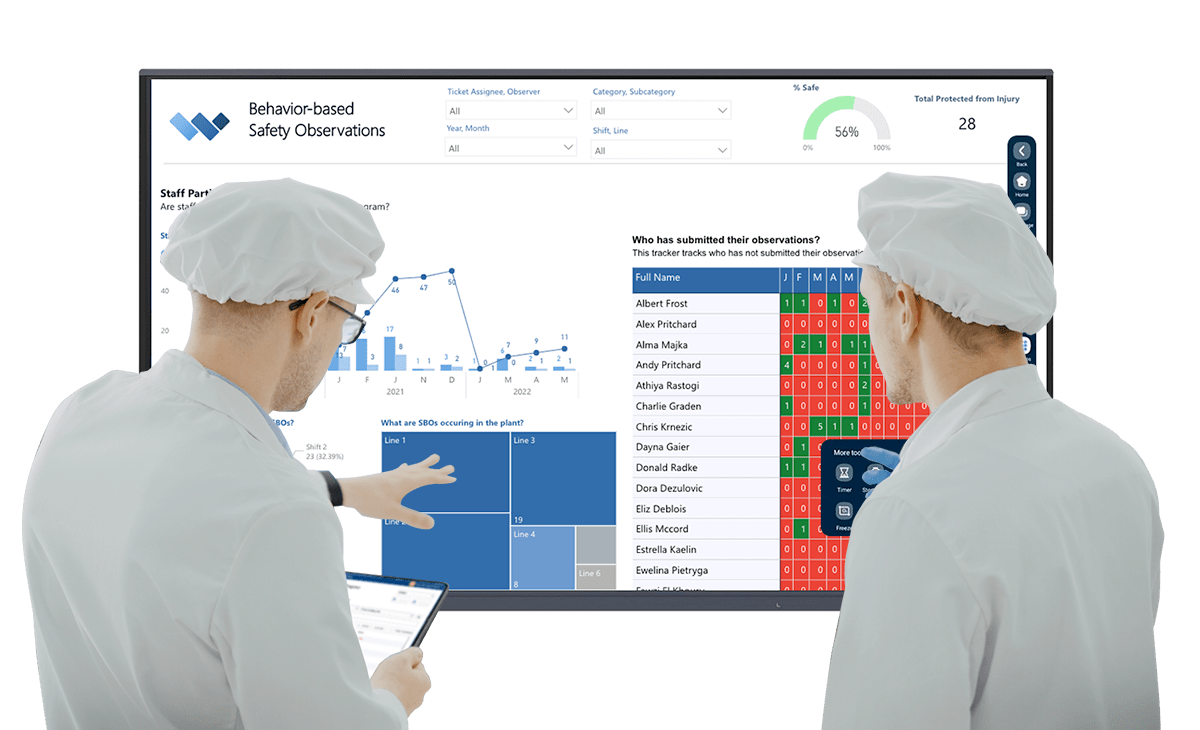
The ABC Methodology: Antecedent, Behavior, Consequence
Central to this approach is the ABC methodology-a structured framework for analyzing behavior and its consequences. Picture this: A worker in a manufacturing facility neglects to wear appropriate personal protective equipment (PPE) while operating machinery.
In the world of BBSO, this scenario unfolds through the lens of the ABC methodology:
Antecedent
- This component serves as the trigger or precursor to the observed behavior. It encompasses the situational factors or environmental cues that influence an individual's actions.
- Understanding these antecedents is crucial for identifying the root causes of unsafe behaviors and implementing targeted interventions.
Behavior
- The behavior component represents the action or conduct exhibited by the individual in response to the antecedent.
- By focusing on observable behaviors, BBSO practitioners gain valuable insights into the actions that contribute to workplace safety-or lack thereof.
Consequence
- As the name suggests, the consequence component encapsulates the outcomes or results that follow from the observed behavior.
- By understanding the consequences of unsafe actions, organizations can assess the severity of risks and prioritize interventions accordingly.
By dissecting behaviors into these three components, BBS practitioners gain valuable insights into the underlying causes of unsafe actions. Armed with this knowledge, organizations can implement targeted interventions to reinforce safe behaviors and eliminate hazards.
___
Whether it's enhancing training programs, improving communication protocols, or optimizing safety procedures, the insights gleaned from BBSO pave the way for continuous improvement and risk mitigation.
The Two Main Approaches to BBSO
In Behavior-Based Safety Observations (BBSO), two primary approaches stand out: peer-to-peer and management-led. The peer-to-peer method empowers frontline workers to actively engage in safety observations, fostering collaboration, real-time feedback, and meaningful insights. On the other hand, the management-led approach places responsibility on supervisors and managers to drive the BBSO program, ensuring structured schedules, comprehensive training, timely feedback, and effective documentation.
Both approaches aim to enhance safety culture and prevent incidents by harnessing the collective wisdom of workers. Through collaboration, feedback, and shared knowledge, BBSO drives positive changes in behavior and safety practices, paving the way for a safer, more resilient workforce.
Peer-to-Peer Approach
Now, let's turn our attention to the heartbeat of BBSO programs-peer-to-peer observations. Unlike traditional safety inspections conducted by management, peer-to-peer observations empower frontline workers to actively participate in the safety process. Here's how it works:
- Collaboration: Peer-to-peer observations foster a culture of collaboration and accountability, where colleagues look out for each other's safety.
- Real-Time Feedback: By providing immediate feedback on observed behaviors, peers can intervene to prevent incidents from occurring or escalating.
- Meaningful Insights: Frontline workers possess firsthand knowledge of the challenges and risks inherent in their tasks. Peer-to-peer observations tap into this expertise, yielding actionable insights to improve safety practices.
Imagine a scenario where a warehouse employee notices a coworker lifting heavy boxes using improper lifting techniques. Through a peer-to-peer observation, they provide constructive feedback and demonstrate the correct method. This simple intervention not only prevents potential injuries but also reinforces a culture of safety awareness and mutual support.
In essence, peer-to-peer observations serve as a catalyst for continuous improvement, driving positive changes in behavior and safety practices across the organization. By harnessing the collective wisdom of frontline workers, BBS transcends mere compliance and fosters a genuine commitment to safety excellence.
Management-led Approach
While the peer-to-peer approach empowers frontline workers to actively engage in safety observations, the management-led approach places responsibility on supervisors and managers to drive the BBSO program.
Supervisors and managers take the lead in conducting safety observations and providing feedback to employees. They set the tone for safety culture within their teams and demonstrate a commitment to prioritizing safety in the workplace.
Although the 2 approaches have the same goal, the execution of your BBSO program can be different depending on the approach you chose. Here are some factors that are impacted by the Management-led approach:
Structured Schedules
Although schedules are recommended in general, peer-to-peer observations can be more informal in nature, while management-led observations benefit from following a more structured process. Supervisors and managers follow a schedule to conduct regular inspections of work areas, equipment, and procedures to identify potential hazards and unsafe behaviors.
Training and Guidance
The Management-led approach typically requires a less robust training program because there are fewer people involved and managers are usually more adept to training processes.
Prior to conducting safety observations, supervisors and managers receive comprehensive training on BBSO principles, observation techniques, and feedback delivery. They are equipped with the knowledge and skills needed to effectively identify, assess, and address safety risks in the workplace.
Feedback Timeline
Manager-led programs typically provide more direct feedback quickly to the frontline staff because they are the ones who are executing the observations. Following safety observations, supervisors and managers provide timely feedback to employees on their observed behaviors. They highlight both safe practices and areas for improvement, offering constructive guidance and reinforcement to promote a culture of safety awareness.
Documentation and Analysis
Although both approaches involve documenting findings and analyzing trends over time to identify recurring safety issues and areas for improvement, typically Management-led approach is more successful at this component because they are capturing data with the insights in mind.
Employee Engagement
While supervisors and managers lead the BBSO program, employee involvement remains essential. Employees are encouraged to actively participate by reporting safety concerns, suggesting improvements, and adhering to established safety protocols.
Behavior-Based Safety, rooted in the ABC methodology represents a paradigm shift in workplace safety. By understanding the antecedents, behaviors, and consequences of actions, organizations can proactively mitigate risks and cultivate a culture where safety is everyone's responsibility.
Through collaboration, feedback, and shared knowledge, BBS paves the way for a safer, more resilient workforce-one behavior at a time.
The 7 Principles of Behavior-Based Safety Observations
Dr. E. Scott Geller is a distinguished psychologist renowned for his pioneering work in the field of applied behavior analysis, particularly in the realm of safety behavior.
- Observable Behavior
- External Focus
- Antecedents and Consequences
- Positive Reinforcement
- Measurement and Objectivity
- Hypothesis Testing
- Consideration of Feelings and Attitudes
Geller's 7 principles provide a comprehensive framework for understanding and improving safety behaviors in the workplace. By applying these principles, organizations can create safer environments, prevent accidents, and cultivate a culture where safety is everyone's responsibility.
Learn more about Geller's 7 Principles here.
How to Implement Behavior-Based Safety program at your facility
Implementing a Behavior-Based Safety (BBS) program is not just about ticking off boxes; it's about fostering a culture of safety that permeates every aspect of your organization. By following these steps and incorporating best practices, you can implement a robust BBS program that elevates safety culture, prevents incidents, and protects the well-being of your workforce.
Step 1: Leadership Commitment
Before you implement your BBSO safety program, you need to ensure you have alignment from your senior leadership. To get their attention it is a good idea to have an understanding of their objectives and show how your BBSO program is going to achieve them. As discussed above, BBSO programs have a wide range of benefits that can be tied to corporate objectives. Obviously, if there are safety-oriented corporate objectives, you can make your case around how BBSO will enhance proactive safety by recognizing potential incidents before they occur. Enhanced Employee Engagement engagement offers a litany of potential benefits to the company, including increased productivity and OEE, enhanced product quality, and improved employee retention rates. We wrote a whole "ultimate guide" on employee engagement as well, which you can download from our Guides page.
- Timeline: 1-2 weeks
- Goal: Obtain senior management buy-in to support and prioritize the BBSO program.
- Tasks:
- Prepare a presentation or proposal outlining the benefits of BBSO and its potential impact on safety performance.
- Schedule meetings with senior management to present the proposal and address any concerns or questions they may have.
- Emphasize the importance of leadership involvement and commitment to fostering a culture of safety.
Step 2: Establish Clear Objectives
Once you have corporate alignment, you can move forward with establishing the objectives of the program. Work with your team and other department managers to assess what they would like to see as the key outcomes of the program. It is valuable to review the performance of current safety KPI metrics, such as incident and near miss rates. Also, ensure your objective is aligned with the corporate objectives you used to "sell" the program internally. This exercise will help you ensure internal alignment and it will also help you make decisions as you implement the program, such as whether you will opt for the Peer-to-Peer or Management-led approach.
- Timeline: 1-2 weeks
- Goal: Define specific goals and objectives for the BBSO program to guide its implementation and measurement.
- Tasks:
- Conduct a thorough assessment of current safety performance metrics, incident rates, and organizational safety culture.
- Engage key stakeholders, including safety committees, frontline supervisors, and employees, to gather input on desired outcomes and priorities.
- Develop SMART (Specific, Measurable, Achievable, Relevant, Time-bound) objectives that align with organizational safety goals.
Step 3: Develop Observation Tools
Once you have gained internal support and identified the key objectives of your program, you can now get into the details of how the program will work. The first thing to consider is what you will use to capture and analyze the data. We would (obviously) recommend software purpose-built to manage BBSO programs, but if you are a smaller organization with a smaller group spreadsheets might do the trick. The next step is to identify the data you will capture. We recommend for this part of the process building "from the report back", which means start with what insights and metrics you want to track and then design a form that will help you capture the information you need most efficiently. Usually, staff are mandated to submit at least 1 safety observation per month. Some organizations use reward points to promote submissions and reduce "nagging" or negative motivation. The BBSO practice requires staff to observe other workers and provide a report on the general safety of their work including, but not limited to:
- Body Position: Are they pivoting or twisting? Is there a risk of falling? How is their posture?
- PPE: Are they wearing the appropriate protective equipment for the job?
- Tools & Equipment: Were the tools appropriate for the job? Are they in good condition and used appropriately?
- Work Environment: Was the area clear of hazards or unorganized? Sanitation or Housekeeping issues?
- Procedures: Were required procedures followed as outlined by your documentation?
Finally you can pilot the program with a small group to work out the kinks.
- Timeline: 2-3 weeks
- Goal: Create standardized tools and documentation for conducting safety observations.
- Tasks:
- Collaborate with safety professionals, supervisors, and frontline workers to identify critical behaviors and hazards relevant to your facility.
- Design observation forms or checklists that capture key behaviors, actions, and conditions to be observed during routine tasks.
- Pilot test the observation tools with a small group of employees to gather feedback and make adjustments as necessary.
- Finalize and distribute the observation tools along with clear instructions for their use.
Step 4: Training and Education
Once you have developed the form and report you can now train your staff. The scope of your training program will depend on the approach you select. The Peer-to-Peer approach requires a more robust training program than the Manager-led approach. The training should cover the objectives of the program, how to conduct an observation, how to use the software (if applicable) and how to manage follow ups. If you are not executing a Peer-to-Peer program we still recommend providing some training to frontline staff so they are not surprised by the new attention and they feel involved in the process.
- Timeline: 2-4 weeks
- Goal: Equip employees and supervisors with the knowledge and skills needed to effectively participate in the BBSO program.
- Tasks:
- Identify training needs and topics relevant to safety observations, feedback delivery, and hazard identification.
- Develop or customize training materials and resources, including presentations, manuals, and practical exercises.
- Schedule training sessions and workshops for different employee groups, ensuring adequate coverage across all shifts and departments.
- Provide ongoing support and refresher training as needed to reinforce key concepts and skills.
Step 5: Implement Observation Process
So now you have created your program, worked out the wrinkles and trained the stakeholders. It's time to roll it out. It is best practice at the beginning of the implementation to ensure everyone is aware of the new program, how it works, the expectations and the schedule. You can feel free to start slow and ease the observers (and the observed) into it.
- Timeline: 4-6 weeks
- Goal: Roll out the BBSO program and establish a systematic process for conducting safety observations.
- Tasks:
- Develop a schedule or rotation system for conducting safety observations, ensuring coverage across all shifts and work areas.
- Train supervisors and designated observers on the proper procedures for conducting observations, providing feedback, and documenting findings.
- Launch the BBSO program with clear communication to all employees, emphasizing the purpose, expectations, and benefits of participation.
- Monitor the implementation process and address any challenges or barriers that arise, providing additional support and guidance as needed.
Step 6: Feedback and Recognition
Once the program is rolling it is a good best practice to establish a feedback loop and a way to recognize positive behaviors. Ensure your observers are providing constructive feedback on the process and how it can be improved. Beyond individual rewards, you can also broadcast a dashboard that showcases the improvement of safety KPIs to reinforce the impact of the program.
- Timeline: Ongoing
- Goal: Foster a culture of continuous improvement and recognition for safety contributions.
- Tasks:
- Establish mechanisms for supervisors to provide timely and constructive feedback to employees following safety observations.
- Implement a recognition program to acknowledge individuals or teams who demonstrate exemplary safety behaviors or contribute to improving safety outcomes.
- Regularly communicate successes and achievements related to the BBSO program to reinforce its importance and impact on safety culture.
- Solicit feedback from employees on the feedback and recognition process, making adjustments as needed to ensure effectiveness and fairness.
Step 7: Continuous Improvement Action Plans
Congratulations! At this point you have a working BBSO program that is providing reams of data points that you can transform into insights and proactive safety action plans. The observation in itself elevates safety and offers real-time feedback to staff. But the real juice of the program is understanding trends and predicting issues before they occur. If you are planning to use the data for continuous improvement, it is highly recommended to use software that can automatically transform captured data into reporting dashboards. This saves you countless hours of battling spreadsheets that you can use to do the real work of preventing incidents.
- Timeline: Ongoing
- Goal: Maximize the program's effectiveness and sustainability through preventive safety measures.
- Tasks:
- Collect and analyze observation data on a regular basis to identify trends, patterns, and areas for improvement.
- Conduct periodic reviews and evaluations of the BBSO program's performance against established objectives and targets.
- Engage employees and stakeholders in discussions to identify new opportunities for enhancing safety practices and addressing emerging risks.
- Implement changes and updates to the BBSO program based on feedback, lessons learned, and best practices in safety management.
Ready to roll up your sleeves and put BBS into action? Here are some quick best practices to ensure success in your BBSO program.
- Know Your ABCs: Understand the Antecedent-Behavior-Consequence model like the back of your hand.
- Learn from the Past: Dive deep into past incidents and near misses to uncover hidden insights.
- Accentuate the Positive: Focus on recognizing and reinforcing safe behavior rather than playing the blame game.
- Empower Your People: Encourage everyone to take an active role in safety by fostering open communication and continuous improvement.
- Go High-Tech: Streamline your BBS program with cutting-edge technology to track progress and drive accountability.
Behavior-Based Safety in Action
Still not sure where to start. To get you going you can use this handy and free MS Word (.docx) template here.
With a little bit of know-how and a whole lot of heart, implementing a Behavior-Based Safety program is within reach for any organization. So why wait? Dive in and start making your workplace safer, one behavior at a time.

What is 5S Auditing?
What is 5S Auditing?
5S auditing plays a pivotal role in the sustained success of a 5S program, particularly in its "Sustain" phase. This phase, the fifth principle of the 5S methodology, underscores the importance of continually reinforcing the standards established through the initial four principles: Sort, Set in Order, Shine, and Standardize.
Sustain involves instilling a culture of consistency, discipline, and ongoing dedication to these principles, ensuring that the improvements achieved in workspace organization endure over time. It necessitates the establishment of habits, routines, and practices that uphold the prescribed standards of cleanliness, organization, and efficiency, thereby integrating the 5S principles into the fabric of the organization.
Sustaining the 5S principles demands regular reinforcement, training, monitoring, and a commitment to continuous improvement to safeguard against regression and facilitate lasting positive changes within the workspace. Despite being just one of the five principles, Sustain embodies the bulk of the work, holding the key to realizing tangible results. Conversely, it's also the stage where many 5S initiatives falter.
To fully harness the benefits of the 5S methodology, it is imperative to implement a robust 5S auditing program that efficiently and effectively ensures the sustained adherence to these principles.
6 Steps to Implementing a Successful 5S Auditing Program
If you have completed the first 4 "S" steps in the 5S methodology, the auditing program is essentially about normalizing that work on an ongoing basis.
Implementing a 5S auditing program involves 6 practical steps:
1. Establish Audit Criteria and Checklists
Establishing audit criteria that serve as the guidelines or standards against which the workspace will be evaluated during the audit process.
Use the criteria to develop checklists outlining specific items or areas to be evaluated under each of the 5S categories. This checklist helps auditors systematically assess the workspace.
Learn more about creating audit checklists ⇒
2. Train Auditors
Ensure that the individuals conducting the audit are trained in the 5S principles, the audit process, and using the audit checklist effectively.
Communicate the established audit criteria clearly and ensure they understand how to apply the criteria consistently during audits. They should understand what to look for and how to assess compliance.
Also, train auditors on how to use the checklists effectively and communicate its purpose and importance to all involved stakeholders.
If you have digitized your 5S audit process using digital forms, you will need to train your auditors on how to access and use the system.
Learn more about best practice for training auditors ⇒
3. Schedule Audits
Establish a regular schedule for conducting audits. Scheduling audits in a systematic and consistent manner ensures that the workspace's adherence to 5S principles is regularly assessed, providing opportunities for improvement and sustaining the desired standards over time.
Decide on the frequency of audits based on the nature of the workspace, its size, complexity, and the organization's needs. Audits can occur daily, weekly, monthly, quarterly, or even semi-annually.
Learn how to set up 5S Audit Schedules ⇒
4. Conduct Audits
Perform the audits using the established checklist. Evaluate each area against the defined criteria for Sort, Set in Order, Shine, Standardize, and Sustain. Document findings, noting areas of compliance and areas needing improvement.
Learn more about Audit best practices ⇒
5. Generate & Review Reports
Compile audit findings into comprehensive reports. These reports should include observations, areas of non-compliance, improvement recommendations, and any notable successes.
Review the audit reports with relevant stakeholders, including employees working in the audited areas. Discuss findings, celebrate successes, and identify action items for improvement.
Learn more about 5S Audit Reports ⇒
6. Implement Corrective Actions & Follow up Audits
Develop action plans to address areas identified for improvement. Assign responsibilities, set deadlines, and track progress on implementing necessary changes.
Conduct follow-up audits to assess the effectiveness of implemented changes and to track progress. Continuous monitoring ensures sustained adherence to 5S principles.
Learn more about 5S Action Plans ⇒
7. Celebrate Success and Recognition
Recognize and celebrate achievements and improvements resulting from the auditing process. Acknowledge the efforts of individuals and teams in maintaining an organized and efficient workspace.
Learn more about how rewards & recognition works ⇒
Benefits of 5S Auditing
5S audits are critical because they are the vehicle through which standards are maintained. 5S audits also provide a means for frontline staff to provide feedback that drive continuous improvement and productivity gains. The benefits of 5S audits are vast, including:
Maintenance of Standards
Ensure established 5S standards are maintained. Prevent regression into disorganization. Provide a structured way to measure how effectively the 5S principles are being applied.
Identify Improvements
Capture issues in the 5S implementation as well as other challenges affecting productivity in general and create an action plan to overcome them.
Employee Engagement
Foster a sense of ownership and responsibility and encourage team members to take an active role in maintaining the workspace's cleanliness and organization.
Data-Driven Decision Making
Audit results provide rich data and insights to drive strategic decisions around resource allocation, OEE, employee engagement and so forth.

Step-by-Step Facility-wide Implementation Roadmap
The successful implementation of 5S digitization in manufacturing and warehouses requires a thoughtful and strategic approach. This step-by-step guide outlines key considerations and actions to ensure a smooth transition to digital auditing processes.
We will outline the phases of implementation and rollout, detailing the objectives, step-by-step execution strategies, resource necessities, and timeline estimations for each phase.
What is the 5S Methodology?
The 5S methodology embodies a structured approach to workplace organization and efficiency. It entails the systematic arrangement, cleanliness, and standardization of workspaces to optimize productivity, safety, and quality.
Planning within the 5S context plays a pivotal role, setting the stage for successful implementation, adherence to principles, and continuous improvement.
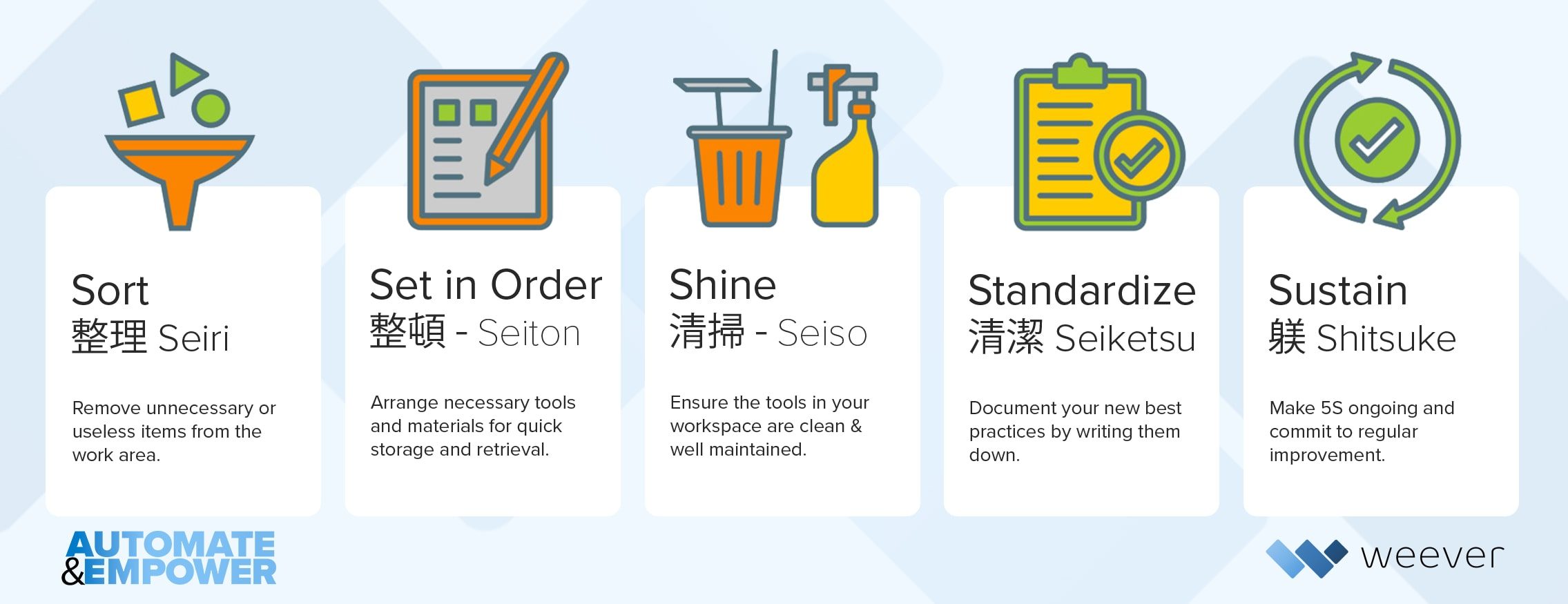
Step-by-Step Facility-wide Implementation Roadmap
At this point in your journey, you should have a very good understanding of your digitization plan and the software you are going to use. Now it is time to dig into the exciting part: the implementation.
Step 1: Digitizing Forms and Schedules
Estimated Timeline: 1-2 months
Resource Requirements: Staff experienced in 5S auditing and adept at digital technologies for creating digital forms and schedules.
Overview: The goal of this phase is to transform your paper-based 5S auditing forms and schedules into digital formats. This phase involves the conversion of existing 5S documentation and schedules into digital formats compatible with the chosen software.
Steps:
- Collect Forms: Identify all existing 5S forms and schedules that need digitization.
- Make Updates: Discuss and make changes to the forms as you consider how they will be optimized to a digital platform. For example, you may not need to capture dates and times, because submissions may be date/time stamped. Perhaps the submitting user is automatically captured as well. You can consider using “conditional logic” to optimize the flow of the forms to increase efficiency and compliance.
- Assign Digitization Team: Assign internal or external resources to digitize the forms and schedules using the software you selected.
- Collaborate with Vendor: Work closely with the software provider to understand the best format and structure for digital forms.
- Comprehensive Testing: Test the digital forms for user-friendliness and comprehensiveness.
Best Practices for Digitization Step
- Standardize Before Digitization: Before digitizing, standardize the format and content of all 5S forms and schedules. This will ensure consistency across the digital platform and make it easier for users to transition to and navigate the new system.
- Involve End-Users in the Design Process: Include feedback from the actual users of the forms—such as auditors and frontline staff—in the design process. Their insights can lead to a more intuitive user interface and ensure that the digital forms meet practical, on-the-ground needs.
- Ensure Data Integrity and Security: As you digitize sensitive information, implement strict protocols to maintain data integrity and security. Consider role-based access controls to ensure that only authorized personnel can view or edit certain documents.
- Plan for Change Management: Prepare a change management strategy to help users adapt to the new digital forms. This should include clear communication, training, and support to address any resistance and ensure smooth adoption.
Step 2: Pilot Program
Estimated Timeline: 1-2 months
Resource Requirements: Training team for the pilot, frontline and auditing Staff to execute pilot, Staff to collect and process feedback.
Overview: In this phase of the project, you will optimize the digital solution in a controlled environment before a full-scale rollout. A pilot program helps in identifying potential challenges and gathering user feedback in a more manageable, controlled setting.
Steps:
- Identify Stakeholders: Identify key stakeholders and involve them early in the process. This includes representatives from different departments, IT professionals, and end-users. Collaborative decision-making ensures a more comprehensive and successful implementation.
- Select Appropriate WorkArea: Select a representative section of your organization to implement the pilot program.
- Articulate Goals: Before launch, articulate specific goals you aim to achieve. These might include assessing user adoption rates, testing system performance under real-world conditions, or identifying any training gaps.
- Pilot Training: Train the participants thoroughly on using the new digital system.
- Monitor: Actively monitor the pilot and be ready to provide support when needed. Quick responses to any issues will not only keep the pilot on track but also show participants that their input is valued.
- Capture Feedback: Collect feedback rigorously and make necessary adjustments to the system.
- Present Results: Review pilot outcomes with leaders to gather feedback and buy-in for facility-wide roll out.
Best Practices for Pilot Program
- Engage with IT Early: Involve your IT department from the outset. Their insights can help preempt technical issues and ensure the infrastructure is in place to support the new system.
- Identify your “Champion”: In larger organizations it can be beneficial to determine a frontline staff “champion” that can work directly with the team and capture feedback from other frontline staff.
- Reiterate your Success Metrics: Determine what success looks like for the pilot. Establish metrics that will help you measure the effectiveness of the system, such as the number of completed audits, time taken to complete an audit, or the number of issues reported.
- Create a Feedback Loop: Set up a structured process for gathering and reviewing feedback. This might involve regular meetings, surveys, or a dedicated channel for discussion. Ensure that feedback is not only collected but also acknowledged and acted upon.
- Document Everything: Keep detailed records of how the system is used and any feedback received. Documentation will be vital when analyzing the pilot's outcomes and planning the full rollout.
- Small-Scale Iterations: Be prepared to make small-scale changes during the pilot phase. Iterative improvements can help in refining the system before the full-scale implementation.
Step 3: Staff Training
Estimated Timeline: 1 month
Resource Requirements: Training personnel and environment
Overview: The goal of this phase is to ensure all stakeholders are proficient in using the digital platform. The Staff Training phase focuses on educating and training the entire staff to be comfortable and efficient in using the new digital system to execute 5S audits.
The scale of your staff training is relative to the amount of employees you are training, how much training you plan to provide and how complex the training content is. For example, if you are only training a few auditors on how to use a relatively simple platform, then the time and effort to train them will be less than if you are training dozens of auditors on a more complex system.
Operator training in most cases will only need to be an overview of the new auditing process and what to do when they are assigned an Action Item.
A comprehensive training plan is listed below. Feel free to pull out of this the steps you want to activate for your training program.
Steps:
- Assessment of Training Needs: Conduct a skills gap analysis to tailor the training program to the specific needs of different user groups within the organization.
- Segmented Training Approach: Group staff by their roles and the functionality they will use on the digital platform to provide more focused and relevant training.
- Interactive Training Methods: Utilize interactive methods such as hands-on sessions, simulations, and role-playing exercises that mimic actual 5S auditing scenarios.
- Training the Trainers: Identify and train internal 'super users' who can subsequently train other employees, ensuring a sustainable and scalable training model.
- Integration of Feedback: Regularly solicit feedback during training sessions to adjust the training approach and materials in real-time.
Best Practices for Staff Training
- Customized Learning Paths: Create customized learning paths for different departments or roles to ensure the training is relevant and effective for each group of users.
- Reinforcement Through Repetition: Repeat key concepts and tasks across multiple training sessions to reinforce learning and increase retention.
- Accessible Training Materials: Make training materials easily accessible for future reference, including quick-help guides for common tasks and troubleshooting tips.
- Post-Training Support: Establish a support system for post-training inquiries, which could include a helpdesk, dedicated email support, or a chat system.
- Monitor Training Effectiveness: Monitor and evaluate the effectiveness of the training program using surveys, quizzes, and practical tests.
Refresher Training: Schedule periodic refresher courses to maintain proficiency, especially when updates to the platform are released.
Step 4: Facility-wide Rollout
Estimated Timeline: 2-3 months
Resource Requirements: Implementation team for overseeing the rollout and support staff for ongoing user assistance.
Overview: The Facility-wide rollout phase, the fourth step in a 5-phase 5S digitization implementation project, marks a pivotal moment in the journey towards a more efficient and organized workplace. With an estimated timeline of 2-3 months, this phase involves the full-scale deployment of the digital solution across the entire organization. It is a critical stage where careful monitoring, clear communication, and post-rollout assessments play essential roles in ensuring the successful adoption of the new system. During this phase, it's vital to have a dedicated implementation team overseeing the rollout and support staff readily available to assist users as they transition to the digital platform.
Steps:
- Monitor: Monitor the rollout closely and be prepared to address any technical issues or user concerns immediately.
- Communicate: Communicate transparently with all stakeholders about progress and any upcoming changes.
- Post-Rollout Review: After the rollout, conduct a thorough review to assess what went well and what could be improved.
- Continuous Improvement: Use the rollout phase as an opportunity to identify areas for continuous improvement.
Best Practices for the Roll Out
- Go-Live Support: Have IT and support staff on standby during the go-live phase to address any technical issues promptly.
- Clear Communication: Use clear and consistent messaging to explain the reasons for the change, the benefits it brings, and how it will affect everyone's work.
- Celebrate Milestones: Acknowledge and celebrate the successful completion of each stage of the rollout.
- Accessible Documentation: Update all relevant documentation to reflect the new system and processes. Ensure that all users have easy access to updated manuals, FAQs, and training resources.
Step 5: Measuring Results
Estimated Timeline: 3 months & ongoing
Resource Requirements: Data analysts and staff familiar with 5S practices for in-depth analysis.
Overview: The goal of this step is to measure the impact of digitization on 5S practices and overall operational efficiency. The initial measuring results phase should be completed and reviewed with company leadership within 2-3 months of the rollout implementation. However, monitoring and evaluation of the digital 5S auditing system's performance is recommended.
Steps:
- Define the KPIs you want to measure: Define clear metrics and KPIs to measure the effectiveness of the digital 5S system.
- Collect Data: Regularly collect and analyze data to assess performance.
- Feedback Loop: Establish a feedback loop that involves auditors and employees. Encourage them to provide input on the digital system's usability, effectiveness, and any potential issues they encounter during audits.
- Data-Driven Insights: Use insights gained from the data to make informed decisions and continuous improvements.
Best Practices for Measurement
- Select Relevant Metrics: Choose specific and relevant metrics that directly relate to the impact of digitization on 5S practices and operational efficiency. Examples include time savings, audit completion rates, compliance rates, and employee engagement scores.
- Regular Data Collection and Analysis: Implement a systematic data collection process that captures relevant information on an ongoing basis. This may involve automated data capture through the digital audit system, ensuring that real-time data is readily available.
- Set Periodic Review Milestones: Establish regular review milestones, ideally every 2-3 months, to assess the initial impact of digitization. These reviews should be conducted in collaboration with company leadership to ensure alignment with organizational goals.
- Continuous Improvement Focus: Use the insights gained from data analysis to drive informed decision-making and continuous improvement efforts. Identify areas where the digital 5S system has made a positive impact and areas that require further attention or adjustment.
- Benchmarking and Comparisons: Compare current KPIs with baseline data and industry benchmarks, if available. Benchmarking can provide context for understanding the effectiveness of your digital 5S system compared to industry standards.
- Document Success Stories: Collect and document success stories and case studies that highlight how the digital 5S system has positively impacted specific aspects of your organization. These stories can be valuable for internal communication and motivation.
- Adjust and Iterate: Be prepared to adjust the digital 5S system and measurement approach based on the insights and feedback received. Continuous refinement is key to optimizing the system's impact over time.
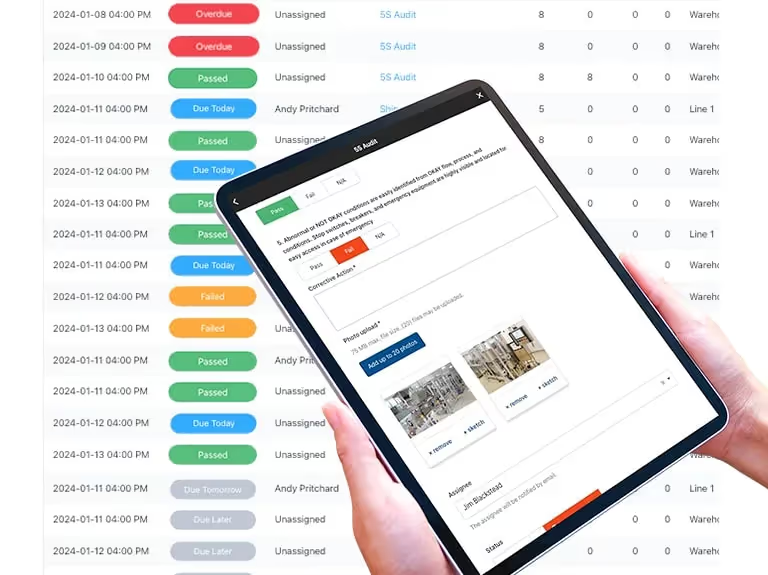
5S Auditing More Info
check your email
Thank you for requesting more information about Weever. A representative will be in touch.
In the mean time, please tell us a bit more about your project so we can have a more informed conversation.
tell us more

Everything you need to know to successfully digitize your 5S auditing program.
Download the guide to understand best practices and easy-to-follow implementation plans from our 10 years of experience helping organizations digitally transform.
How to Choose the Right Software for 5S Auditing
Selecting the appropriate digital platform for 5S auditing is a critical decision that significantly influences the success of the digitization initiative. This section provides an overview to navigate through the process of choosing the right digital platform.
What is 5S Auditing?
5S auditing is a structured and systematic approach to workplace organization and cleanliness, designed to improve efficiency, safety, and overall productivity within a manufacturing or operational setting.
Standardize and sustain are the final two steps in the 5S methodology and play a pivotal role in ensuring the lasting success of the implemented changes. Part of what we refer to as the "Normalize" phase, Standardize and Sustain are implemented after the original "Optimization" phase to ensure 5S efficiency gains are not lost moving forward.
Standardization involves creating and adhering to a set of guidelines, checklists, and protocols that ensure consistency in the application of the first three S's across the entire organization. This step establishes a uniform approach to organization and cleanliness, reducing variability and promoting a standardized work environment.
Sustain is perhaps the most critical element, focusing on creating a culture of continuous improvement. It involves the ongoing commitment to maintaining the established standards and encouraging a proactive mindset among employees.
Sustainment ensures that the principles of 5S become ingrained in the organizational culture, transforming them from a one-time initiative into a sustainable and habitual way of working. Together, standardize and sustain form the foundation for a workplace that not only achieves 5S goals but sustains them for long-term operational excellence.
You can learn more about the 5S Normalize Phase here ⇒
How to choose the right 5S Auditing Software
For 5S Auditing software to provide value, it needs to provide a great user experience that makes it easy for users to engage. It also needs to automate time-consuming manual functions, thus saving time and money.
Finally, it needs to be scalable and ensure your data is secure. Here are more details about what you should consider when selecting software for 5S auditing.
1. Feature Comparison
Consider each platform based on the following criteria.
- Ease of Use: Emphasize selecting a platform with an intuitive interface that promotes ease of use, fostering acceptance and regular use among auditors and frontline workers. Ensure that conducting audits and submitting comprehensive data is a straightforward process. Incorporate QR code functionality to directly link staff to their schedules through visual prompts at each workstation.
- Audit Scheduling: Unscheduled audits tend to be overlooked. Opt for software with robust scheduling features to guarantee consistent audit performance.
- Scalability: Select a solution that grows with your organization. While in-house solutions may suffice initially, consider their long-term maintenance. Evaluate the software's ability to handle growing data volumes, more users, and evolving business requirements. Remember: Spreadsheets are not scalable databases and may become inefficient with extensive data.
- Integration Capabilities: Ensure the platform integrates smoothly with your current systems and software, promoting a unified digital ecosystem. Look for platforms supporting REST APIs, a standard for data exchange between business systems.
- Mobile Accessibility: Choose a solution that supports mobile access, allowing auditors to perform inspections on-site using smartphones or tablets, enhancing flexibility and productivity.
- Data Security: Prioritize a platform offering robust data protection, including strong encryption, secure access protocols, and adherence to industry-specific data security standards.
- Reporting and Analytics: Seek capabilities that facilitate comprehensive reporting and analytics, turning audit data into actionable insights for informed decision-making and continuous enhancement.
- Recognition & Engagement: Consider if it's relevant to acknowledge and incentivize positive contributions. Explore platforms that offer features to reward and engage your team.
2. Additional Considerations
By comparing features, you can evaluate which platform best aligns with your requirements. There are other considerations that you should take into account before making your decision.
- Cost Efficiency: Examine and compare the pricing models of various platforms.Factor in not just the initial setup costs but also ongoing fees, potential costs for customizations, and any additional expenses for support or updates.
- Customization Flexibility: Choose a platform that allows for customization, ensuring the digital tools are in sync with your industry's unique requirements and specific operational procedures.
- Vendor Credibility: Investigate and compare the credibility and reliability of various vendors. Utilize customer reviews, testimonials, and case studies to assess the satisfaction level of organizations that have previously implemented the software.
- Prioritization of Needs: While comparing software, consider assigning a "weight" to each feature and aspect based on its importance to your organization. For instance, if data security and reporting are crucial but cost is a lesser concern, weighting each criterion helps you better understand which platform aligns with your organizational needs.

5S Auditing Case Study Validation
Customer story
5S Audit Digitization
Thank you for taking the time to let the world know about your experience with Weever!
Please complete the below ROI calculator and customer story form to provide your case study to Weever to be published on the website as a customer case study.
Please let us know if you have any questions.
Complete a Review on Capterra.
Please take a moment to complete a review of Weever on Capterra at the below link. We work extremely hard to help our customers find success. Let other's in your line of work know about your experience with Weever.
What software can do for you to enable 5S Auditing
Maximizing Efficiency: The Power of Software in 5S Auditing
In the ever-evolving landscape of manufacturing, efficiency is the cornerstone of success. One proven method that has stood the test of time in promoting efficiency and organization is the 5S methodology. Originating from Japan, the 5S framework—Sort, Set in order, Shine, Standardize, and Sustain—provides a systematic approach to workplace organization and cleanliness.
Integral to the longevity and success of the 5S methodology is the implementation of a regular auditing schedule. 5S audits help organizations ensure that the principles and standards of 5S are consistently applied, leading to sustained improvements in productivity, safety, engagement, and overall work environment.
However, the traditional approach to 5S audits, often reliant on paper-based systems and manual tracking for data capture and reporting, can be time-consuming and prone to errors. Enter the era of digitization, where software solutions play a pivotal role in enhancing the efficiency of sustaining 5S gains.
What is the 5S "Normalizing" Phase?
5S auditing is a structured and systematic approach to workplace organization and cleanliness, designed to improve efficiency, safety, and overall productivity within a manufacturing or operational setting.
Standardize and sustain are the final two steps in the 5S methodology and play a pivotal role in ensuring the lasting success of the implemented changes. Part of what we refer to as the "Normalize" phase, Standardize and Sustain are implemented after the original "Optimization" phase to ensure 5S efficiency gains are not lost moving forward.
Standardization involves creating and adhering to a set of guidelines, checklists, and protocols that ensure consistency in the application of the first three S's across the entire organization. This step establishes a uniform approach to organization and cleanliness, reducing variability and promoting a standardized work environment.
Sustain is perhaps the most critical element, focusing on creating a culture of continuous improvement. It involves the ongoing commitment to maintaining the established standards and encouraging a proactive mindset among employees.
Sustainment ensures that the principles of 5S become ingrained in the organizational culture, transforming them from a one-time initiative into a sustainable and habitual way of working. Together, standardize and sustain form the foundation for a workplace that not only achieves 5S goals but sustains them for long-term operational excellence.
You can learn more about the 5S Normalize Phase here ⇒
The Role of Software in 5S Auditing: A Digital Revolution
In the fast-paced world of manufacturing, where every second counts, the integration of software in 5S auditing is not just a technological upgrade; it's a strategic imperative. The benefits of real-time visibility, standardized processes, comprehensive data analysis, enhanced collaboration, and increased accountability are indispensable in sustaining the gains achieved through the 5S methodology.
As manufacturing organizations continue to seek ways to optimize their operations, embracing the digital future of 5S auditing is a step towards not just efficiency, but excellence. The power of software is not just in its ability to streamline processes but in its capacity to transform the very nature of how organizations approach and sustain improvement initiatives. Embrace the digital revolution, and watch as your 5S gains reach new heights of efficiency and excellence.
Embracing digitization in 5S auditing can revolutionize the way organizations uphold the principles of the 5S methodology. Let's delve into the core ways in which software can benefit manufacturing organizations:
1. Real-Time Visibility and Accessibility
One of the primary advantages of 5S audit software is the ability to provide real-time visibility into the audit process.
Digitized systems allow auditors to input data directly from the shop floor, eliminating the lag time associated with manual data entry.
This real-time accessibility enhances the accuracy and timeliness of audit information, enabling quick corrective actions and fostering a proactive approach to continuous improvement.
2. Standardization of Audit Processes
5S audit software facilitates the standardization of audit processes across different areas of the organization.
Through customizable digital checklist forms, organizations can ensure that audits are conducted consistently, following predefined criteria. This standardization not only streamlines the auditing process but also establishes a baseline for comparison and benchmarking over time.
Learn more about Digital Auditing Checklist Best Practices ⇒
3. Comprehensive Data Analysis
Software solutions enable the collection and analysis of vast amounts of rich data generated during 5S audits.
By leveraging analytics tools, organizations can gain valuable insights into trends, identify recurring issues, and make data-driven decisions to optimize their 5S initiatives.
This level of comprehensive analysis goes beyond the capabilities of manual audits, providing a holistic view of the organization's adherence to 5S principles.
4. Enhanced Collaboration and Communication
Digitized 5S audits foster improved collaboration and communication among team members.
With centralized databases and communication channels, stakeholders can easily share audit results, track progress, and collaborate on corrective actions.
This interconnected approach enhances teamwork and ensures that everyone is aligned towards the common goal of sustaining 5S gains.
5. Increased Accountability and Traceability
Accountability is a key factor in the success of any organizational initiative. 5S audit software allows for the establishment of clear accountability structures by assigning tasks and responsibilities directly within the digital platform.
This not only increases accountability but also provides traceability, allowing organizations to track the progression of corrective actions and monitor the impact on overall 5S compliance.
Spend Less Time on Admin. Get More Insights by Email.
Subscribe to receive practical tips, updates, and ideas to improve operations without the extra admin work.