
-%20smaller.webp)
.webp)
Explore More Blogs
How Is Autonomous Maintenance Evolving, and What Role Does Weever Play in Helping Businesses Stay Ahead?
Autonomous maintenance, a critical pillar of Total Productive Maintenance (TPM), is rapidly evolving as businesses strive to increase operational efficiency, reduce downtime, and extend the lifespan of their equipment. Autonomous maintenance occurs when operators are trained and empowered to perform basic maintenance tasks, ensuring that machinery remains in optimal condition. As the concept of autonomous maintenance continues to grow, businesses must understand its definition, meaning, and implementation steps to stay competitive. This article explores how Weever, a leading productivity software tool, supports businesses by simplifying the adoption of autonomous maintenance through ease of use, automated workflows, actionable insights, real-time reporting, and a structured rollout methodology.
Facilitating a Smooth Transition to Autonomous Maintenance
Understanding what autonomous maintenance is and how to implement it is crucial for any organization. Autonomous maintenance, by definition, involves operators taking responsibility for the upkeep of their equipment through routine inspections, cleaning, and minor repairs. However, adopting autonomous maintenance practices, including the 7 steps of autonomous maintenance, can be challenging without the right tools.
Weever provides a user-friendly interface that simplifies the transition to autonomous maintenance, enabling teams to adapt to new practices with ease. The platform is designed to make autonomous maintenance training accessible to all levels of users, from frontline operators to maintenance managers. By offering an intuitive design, Weever reduces the learning curve, allowing businesses to implement autonomous maintenance steps without extensive retraining. This ease of use ensures that businesses can stay ahead of industry trends and effectively integrate autonomous maintenance into their operations.
Moreover, Weever's interface supports the creation and management of autonomous maintenance checklists, making it easier for operators to follow the necessary steps and ensure that maintenance tasks are completed consistently. This feature is particularly beneficial when implementing the seven steps of autonomous maintenance, a structured approach to sustaining equipment efficiency on the shop floor.
Streamlining Autonomous Maintenance Processes
The meaning of autonomous maintenance extends beyond simple upkeep; it involves automating routine tasks to improve efficiency and reduce the burden on maintenance teams. Weever's software enhances this aspect by automating workflows and action items, allowing businesses to quickly implement and adhere to the latest autonomous maintenance trends without relying solely on manual management.
Weever enables businesses to create automated workflows that guide maintenance teams through the essential steps of autonomous maintenance. These workflows can be customized to align with the specific needs of the organization, incorporating TPM autonomous maintenance principles and examples of best practices. For instance, Weever can automate routine inspections, cleaning schedules, and minor repairs, ensuring that these tasks are performed consistently and efficiently.
By automating these processes, Weever helps businesses maintain compliance with autonomous maintenance standards and reduces the likelihood of errors. This automation also allows for the inclusion of an autonomous maintenance checklist in each workflow, ensuring that operators follow the correct procedures. As a result, businesses can implement the steps of autonomous maintenance more effectively, minimizing downtime and optimizing equipment performance.
Leveraging Data for Strategic Advantage in Autonomous Maintenance
Understanding trends in autonomous maintenance is essential for staying competitive. Weever's data analytics tools provide businesses with deep insights into their maintenance operations, helping them forecast and prepare for industry changes. These insights are crucial for understanding what autonomous maintenance is in TPM and how it can be optimized.
Weever collects and analyzes data from various sources, including equipment performance metrics, maintenance logs, and historical data to provide a comprehensive view of maintenance operations. This data-driven approach helps businesses identify patterns and trends that may indicate emerging issues or opportunities for improvement, which is critical for staying ahead of the curve in autonomous maintenance.
For example, Weever's analytics tools can highlight areas where the implementation of the seven steps of autonomous maintenance could be improved, allowing businesses to make informed decisions that enhance their TPM strategies. By leveraging Weever's insights, businesses can better understand the impact of autonomous maintenance on their operations and identify opportunities to optimize their processes.
Moreover, Weever's data analytics tools support benchmarking against industry standards, providing businesses with a clear picture of how their autonomous maintenance efforts compare to others. This benchmarking is especially valuable when implementing autonomous maintenance in seven steps, as it allows businesses to track their progress and identify areas for further improvement.
Staying Updated on the Effectiveness of Autonomous Maintenance Strategies
Real-time reporting is a critical component of successful autonomous maintenance, as it allows businesses to monitor the effectiveness of their maintenance strategies continuously. Weever's real-time reporting features provide businesses with up-to-the-minute information on their maintenance operations, ensuring that they can quickly pivot and adapt to new trends as they emerge.
Weever's real-time reporting capabilities include live dashboards that display key performance indicators (KPIs) related to autonomous maintenance activities. These dashboards can be customized to reflect the specific needs of the business, ensuring that the most relevant information is always at hand. With Weever, businesses can monitor the status of their autonomous maintenance tasks, track equipment performance, and identify potential issues before they escalate.
This real-time visibility is particularly important for businesses following the autonomous maintenance pillar of TPM, as it ensures that operators can stay on top of maintenance tasks and respond to changes in equipment performance as they occur. By keeping teams informed in real-time, Weever helps businesses maintain the effectiveness of their autonomous maintenance strategies and stay ahead of industry changes.
Efficiently Implementing New Trends in Autonomous Maintenance
Implementing autonomous maintenance requires a structured approach to ensure that new practices are integrated into existing workflows efficiently. Weever's rollout methodology ensures that businesses can incorporate the latest trends in autonomous maintenance with minimal disruption to their operations.
Weever's rollout methodology begins with a thorough assessment of the business's current maintenance processes, including a review of their autonomous maintenance steps. This assessment allows Weever to identify areas where new trends can be integrated and determine the best approach for implementation. By tailoring the rollout plan to the specific needs of the business, Weever ensures that the transition to new autonomous maintenance practices is smooth and efficient.
One of the key elements of Weever's rollout methodology is its phased approach to implementation. Rather than overwhelming the business with a complete overhaul of its maintenance processes, Weever introduces new practices in stages, allowing teams to adapt gradually. This approach is particularly effective for businesses looking to implement TPM autonomous maintenance, as it ensures that operators have the time and support needed to adopt new practices.
Weever also provides ongoing support throughout the rollout process, including training and resources to help teams adapt to the new autonomous maintenance steps. This support is crucial for ensuring that the implementation is successful and that the business can fully realize the benefits of the latest trends in autonomous maintenance.
In addition to its phased approach, Weever's rollout methodology includes continuous monitoring and optimization. After the new practices have been implemented, Weever tracks their performance and makes adjustments as needed to ensure that the business continues to stay ahead of industry trends. This commitment to continuous improvement helps businesses maintain their competitive edge in an ever-evolving landscape.
Adapt and Stay Ahead of the Competition with Autonomous Maintenance
Weever plays a pivotal role in this process by providing tools and technologies that make it easy for businesses to adopt the latest trends in autonomous maintenance. Through its user-friendly interface, automated workflows, actionable insights, real-time reporting, and structured rollout methodology, Weever ensures that businesses can efficiently implement new maintenance practices and maintain their competitive edge. By understanding and applying the autonomous maintenance definition, meaning, and steps, businesses can use Weever to not only keep up with industry changes but also lead the way in autonomous maintenance innovation.
Ready to stay ahead in autonomous maintenance? Discover how Weever can transform your maintenance strategies and keep your business at the forefront of industry trends. Contact us today to learn more and schedule a demo!

Autonomous Maintenance in World Class Manufacturing
At Weever Apps, we've seen firsthand how Autonomous Maintenance in World Class Manufacturing (WCM) transforms production floors. This approach empowers operators to take ownership of their equipment, leading to improved efficiency and reliability.
Autonomous Maintenance WCM is more than just a buzzword; it's a game-changer for modern manufacturing. In this post, we'll explore its key components, implementation strategies, and the significant impact it can have on your operations.
What is Autonomous Maintenance?
Redefining Operator Roles
Autonomous Maintenance stands as a cornerstone of World Class Manufacturing, placing equipment care directly in operators' hands. This approach transforms traditional production floor roles, making operators the primary defense against equipment failures and inefficiencies.

Operators don't merely run machines; they develop an intimate familiarity with them. They perform daily cleaning, inspection, and basic maintenance tasks. This hands-on approach enables them to identify potential issues before they escalate into costly breakdowns.
A Manufacturing Enterprise Solutions Association (MESA) study revealed that companies implementing Autonomous Maintenance experienced a 12% increase in Overall Equipment Effectiveness (OEE) within the first year. This performance boost directly translates to improved productivity and reduced downtime.
Fostering Collaboration Between Operations and Maintenance
Autonomous Maintenance eliminates traditional silos between operations and maintenance departments. It creates a collaborative environment where operators and maintenance technicians unite to keep equipment running smoothly.
This collaboration proves crucial. The Aberdeen Group reports that top-performing manufacturers are 2.5 times more likely to implement cross-functional teams for equipment maintenance. These teams respond faster to issues and implement improvements more effectively.
Fueling Continuous Improvement
Autonomous Maintenance plays a powerful role in continuous improvement. As operators become more familiar with their equipment, they position themselves to suggest and implement enhancements.
A food processing plant in the Midwest implemented Autonomous Maintenance and achieved a 30% reduction in unplanned downtime within six months. The key to success? Empowering operators to make small, incremental improvements to their daily routines and equipment care practices.
Leveraging Digital Tools
Digital tools can supercharge Autonomous Maintenance programs. Modern platforms allow operators to easily log maintenance activities, report issues, and access critical equipment information - all from their mobile devices. This real-time data flow ensures that both operators and maintenance teams have the information they need to make quick, informed decisions.
Creating a Culture of Ownership
Autonomous Maintenance extends beyond keeping machines operational; it fosters a culture of ownership and continuous improvement on the shop floor. When implemented effectively, it leads to significant gains in productivity, equipment reliability, and overall operational excellence.
As we move forward, let's explore the key components that make Autonomous Maintenance a powerful force in World Class Manufacturing.
Mastering the Core Elements of Autonomous Maintenance
Empowering Operators as Equipment Experts
Autonomous Maintenance transforms operators into equipment experts. This shift extends beyond basic training; it cultivates a deep understanding of machinery. Manufacturers should continually reduce equipment downtime and increase availability through the establishment of a preventive/predictive maintenance program.

Manufacturers should:
- Provide comprehensive training on equipment functionality and common issues
- Encourage operators to document observations and insights
- Create mentorship programs pairing experienced operators with newcomers
- Recognize operators who demonstrate exceptional equipment knowledge
Establishing a Rigorous Cleaning and Inspection Routine
Regular cleaning and inspection form the foundation of Autonomous Maintenance. Plants that implement daily cleaning and inspection routines can significantly reduce unexpected breakdowns.
Effective routines include:
- Daily equipment cleaning to remove debris and contaminants
- Visual inspections to identify wear, loose parts, or abnormalities
- Basic lubrication tasks to maintain optimal equipment performance
- Immediate reporting of any detected issues or anomalies
Standardizing Procedures for Consistency and Efficiency
Standardization ensures consistent application of Autonomous Maintenance practices across the organization.
To standardize effectively:
- Develop clear, step-by-step procedures for each maintenance task
- Create visual aids and checklists to guide operators through processes
- Review and update procedures regularly based on feedback and results
- Use digital tools to ensure easy access to the latest procedures
Fostering a Culture of Continuous Improvement
Autonomous Maintenance thrives in an environment of continuous improvement.
To nurture this culture:
- Encourage operators to suggest improvements to equipment and processes
- Implement a system for tracking and evaluating improvement ideas
- Celebrate successful improvements and share lessons learned
- Provide resources and support for operators to implement their ideas
These core elements unlock the full potential of Autonomous Maintenance. Digital tools (such as those offered by Weever) support these efforts by providing platforms for procedure standardization, real-time issue reporting, and tracking improvement initiatives. The next chapter will explore the practical steps to implement Autonomous Maintenance in your organization, ensuring a smooth transition and maximum benefits.
How to Implement Autonomous Maintenance
Assess Current Practices
The first step to implement Autonomous Maintenance is to conduct a thorough assessment of current maintenance practices. This involves an analysis of equipment performance data, a review of existing maintenance procedures, and identification of areas where operator involvement can make the most significant impact.

A study by the Manufacturing Enterprise Solutions Association (MESA) found that companies who conducted comprehensive assessments before implementation saw a 15% higher success rate in their Autonomous Maintenance programs.
Secure Organizational Buy-In
To secure buy-in from both management and frontline workers, demonstrate the potential benefits of Autonomous Maintenance, such as reduced downtime and increased productivity. A study by Aberdeen Group, an IT research company, shows that businesses with strong leadership support for initiatives are more likely to meet their higher-level needs in Maslow's hierarchy.
Develop Comprehensive Training Programs
Effective training is essential for the success of Autonomous Maintenance. Create a comprehensive training program that covers equipment functionality, basic maintenance techniques, and problem-solving skills.
The Japan Institute of Plant Maintenance recommends a tiered training approach:
- Basic equipment knowledge and cleaning techniques
- Lubrication and inspection procedures
- Standards for maintenance and equipment care
- Root cause analysis and problem-solving methods
Companies that invest in structured, ongoing training programs report a 23% increase in equipment reliability within the first year of implementation (according to a survey by Plant Engineering magazine).
Integrate Digital Tools
Digital tools play a key role in modern Autonomous Maintenance implementations. Mobile applications and IoT sensors streamline data collection, automate work order generation, and provide real-time equipment performance insights.
Connected Worker platforms (such as Weever) allow operators to easily log maintenance activities, access equipment manuals, and report issues in real-time. This level of digital integration can reduce administrative work by up to 30% and improve response times to equipment issues by 40%.
Address Implementation Challenges
Resistance to change is a common hurdle in Autonomous Maintenance implementations. To address this, create a communication plan that clearly outlines the benefits of the new approach. Highlight early wins and success stories to build momentum.
A food processing plant in Ontario faced initial skepticism from operators when implementing Autonomous Maintenance. The plant involved operators in the planning process and recognized their contributions. As a result, they achieved a 90% adoption rate within six months and saw a 25% reduction in unplanned downtime.
To maintain consistency across shifts and departments, implement standardized procedures and regular audits. The Society for Maintenance and Reliability Professionals recommends quarterly audits to ensure adherence to Autonomous Maintenance practices.
Final Thoughts
Autonomous Maintenance in World Class Manufacturing (WCM) transforms modern production environments. Organizations empower operators to take ownership of their equipment, which leads to significant improvements in productivity and equipment reliability. Companies that implement this approach report Overall Equipment Effectiveness (OEE) increases of up to 15% within the first year.

The integration of digital technologies enhances the effectiveness of Autonomous Maintenance programs. These tools provide real-time data insights, streamline communication, and enable more proactive maintenance strategies. Our Connected Worker platform supports Autonomous Maintenance initiatives by enabling operators to log activities, access information, and report issues in real-time.
The future of Autonomous Maintenance WCM will become more data-driven and predictive. Machine learning algorithms will analyze equipment performance data to predict potential failures before they occur. This shift towards predictive maintenance will reduce unplanned downtime and extend equipment lifespan (a key goal of WCM).
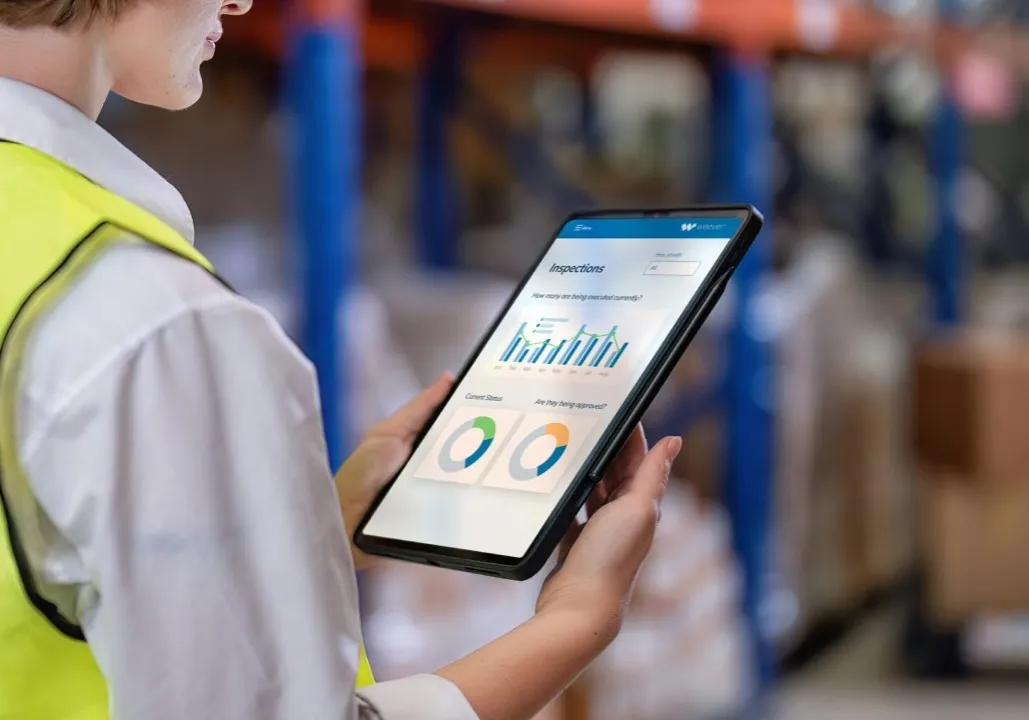
What are the Future Trends in Autonomous Maintenance, and How Can Weever Help Prepare Your Business?
The shift toward Autonomous Maintenance (AM) is transforming how businesses operate and maintain their equipment. AM, driven by advancements in technology, is increasingly becoming the cornerstone of modern maintenance strategies. This approach not only reduces downtime and enhances efficiency but also empowers teams to take proactive control of maintenance activities. As we look ahead, the trends shaping the future of AM promise even greater levels of innovation and effectiveness.
However, navigating these emerging trends can be challenging without the right tools and strategies in place. This is where Weever comes into play. As a leading platform designed to simplify and enhance maintenance processes, Weever helps businesses stay ahead of the curve. From simplifying the adoption of new trends to automating tasks, providing critical insights, and ensuring seamless implementation, Weever is an essential partner for businesses looking to thrive in the future of AM.
Simplifying Adoption with Ease of Use
User-Friendly Integration
One of the most significant challenges businesses face when adopting new technologies and practices is ensuring that these innovations are accessible to all team members. Weever addresses this challenge head-on with its intuitive interface, designed to simplify the integration of new AM trends into your operations.
Weever's platform is built with the user in mind, offering a clean, easy-to-navigate interface that requires minimal technical expertise. Whether your team is experienced with digital tools or new to such platforms, Weever makes it simple to incorporate advanced maintenance practices into daily routines. The platform guides users through each step of the process, ensuring that even the most complex tasks are broken down into manageable actions that can be easily followed.
Minimal Training Required
Adopting new trends often necessitates extensive training, which can be both time-consuming and costly. However, Weever's user-friendly design significantly reduces the need for prolonged training sessions. The platform's intuitive nature means that teams can quickly grasp new processes without the need for extensive instruction, allowing for a smoother and faster transition to new practices.
By minimizing the learning curve, Weever enables businesses to adopt cutting-edge AM trends without disrupting operations. This ease of use ensures that your team can focus on implementing new practices effectively, rather than struggling with the complexities of a new system.
Automating the Future with Workflows and Action Items
Efficient Implementation
As the field of AM continues to evolve, the ability to automate maintenance tasks becomes increasingly important. Weever excels in this area by offering robust automation capabilities that streamline the implementation of the latest maintenance workflows. The platform automatically generates workflows based on the latest trends, ensuring that your maintenance processes are up-to-date and aligned with industry best practices.
Automation not only reduces the manual workload on your team but also ensures that each task is completed systematically and accurately. By automating repetitive tasks, Weever frees up valuable time for your team to focus on more strategic activities, such as analyzing maintenance data and identifying areas for improvement.
Task Management Made Easy
In addition to automating workflows, Weever excels at task management by assigning action items to the appropriate team members. This feature ensures that every task is clearly defined and assigned, reducing the risk of oversight or errors. The platform tracks the progress of each task, providing real-time updates to ensure that all maintenance activities are completed on time and to the highest standard.
This level of organization and precision is crucial for businesses looking to stay ahead in the fast-paced world of AM. By ensuring that all tasks are managed efficiently, Weever helps businesses maintain the highest levels of operational performance.
Gaining Insights from Emerging Trends
Data-Driven Opportunities
One of the most significant benefits of AM is the wealth of data it generates. However, this data is only valuable if it can be effectively analyzed and used to drive decision-making. Weever empowers businesses to do just that by providing powerful data analytics tools that capture and analyze data from emerging AM trends.
With Weever, businesses can track key performance indicators (KPIs) related to maintenance activities, identify patterns, and gain insights into areas where improvements can be made. This data-driven approach allows businesses to stay ahead of the curve by continuously optimizing their maintenance practices in response to the latest trends and innovations.
Optimizing Innovation
By leveraging the insights gained from data analysis, businesses can identify opportunities for further optimization and innovation. Weever's platform provides the tools necessary to experiment with new approaches, track the results, and refine maintenance strategies accordingly. This iterative process is essential for businesses looking to maintain a competitive edge in a rapidly changing landscape.
Through continuous innovation, businesses can not only keep pace with industry developments but also position themselves as leaders in their field. Weever's data-driven capabilities make this possible by turning raw data into actionable insights that drive continuous improvement.
Staying Ahead with Real-Time Reporting
Instant Updates on Trends
In the world of AM, staying informed about the latest developments is critical. Weever's real-time reporting features ensure that managers have access to up-to-date information on all maintenance activities. This includes insights into the implementation of new trends, allowing businesses to monitor progress and make adjustments as needed.
Real-time reporting provides a comprehensive view of maintenance operations, making it easier to identify potential issues before they escalate. By staying informed, managers can ensure that their teams are always aligned with the latest best practices, leading to improved performance and reduced downtime.
Proactive Management
Real-time monitoring is essential for proactive management, allowing businesses to address issues before they impact operations. Weever's platform enables managers to track the implementation of new trends, ensuring that all tasks are completed on time and to the highest standard. If any issues arise, they can be quickly identified and resolved, minimizing disruption to operations.
This proactive approach to maintenance management is crucial for businesses looking to stay competitive in an increasingly automated world. By leveraging Weever's real-time reporting capabilities, businesses can ensure that they are always one step ahead, ready to adapt to new challenges and opportunities.
Seamless Integration with Rollout Methodology
Structured Implementation
Incorporating new AM trends into existing operations can be challenging without a clear plan in place. Weever addresses this challenge with a structured rollout methodology that guides businesses through the process of integrating new trends into their maintenance practices. This methodology ensures that all steps are followed systematically, reducing the risk of errors or oversights.
Weever's structured approach to implementation provides businesses with the confidence they need to adopt new trends without disrupting their operations. By following a clear, step-by-step process, businesses can ensure that new practices are integrated smoothly and effectively.
Configurable Solutions for All Industries
Every industry has its own unique challenges and requirements when it comes to maintenance. Weever recognizes this and offers configurable templates and best practice guidelines tailored to the specific needs of different industries. This flexibility ensures that businesses can adopt new AM trends in a way that aligns with their specific operational goals.
Whether you're in manufacturing, healthcare, energy, or any other industry, Weever's configurable solutions provide the tools you need to stay ahead. By offering a tailored approach to implementation, Weever ensures that your business can successfully integrate new trends and maintain a competitive edge.
Staying Competitive with Autonomous Maintenance and Weever
As the landscape of AM continues to evolve, businesses must be prepared to adapt and innovate. Weever offers the tools and support necessary to stay ahead of these trends, providing a user-friendly platform that simplifies adoption, automates tasks, offers valuable insights, and ensures seamless implementation. Staying competitive requires continuous innovation and adaptability. By leveraging Weever's tools, businesses can not only keep pace with industry developments but also position themselves as leaders in their field. Weever empowers businesses to take control of their maintenance practices, ensuring that they are always ready for the future.
Ready to prepare your business for the future of AM? Explore Weever's capabilities today and see how our platform can help you stay ahead of the curve. Request a demo or contact us for more information on how Weever can transform your maintenance practices and help your business thrive in a rapidly changing world.

How Can We Expand Autonomous Maintenance Practices Beyond Manufacturing, and How Does Weever Support Diverse Industries?
Manufacturing has gone digital across production, maintenance, and quality. Sanitation is the holdout. Most plants still run their daily sanitation, MSS, and PIC/PEC programs on printed packets, paper binders, and manual spreadsheets. The cost is not just inefficiency. It is on average a $10 million recall, 18+ hours per week of recoverable admin time, and a compliance risk that grows with every audit cycle. Switching to a digital platform with linked documents, automated data collection, and built-in reminders changes the equation.
In This Guide
- Why is sanitation the last program to get digitized
- How much time sanitation managers lose to paper-based administration
- What a food recall actually costs when paper is the documentation system
- What sanitation managers want most from technology
- How linked documents and automated reminders change MSS and PIC/PEC execution
- Why budget is the top barrier and how pricing models affect adoption
- FAQ
Why Is Sanitation Still Running on Paper When Everything Else Has Gone Digital?
The manufacturing industry has embraced digital tools across production, maintenance, and quality. ERP systems track inventory. CMMS platforms manage maintenance schedules. Quality management systems generate real-time dashboards. But walk into most food manufacturing plants and ask how the sanitation programs get managed, and the answer is the same: printed packets, paper binders, and spreadsheets that take hours to maintain.
All sanitation programs have been left behind. Most plants are running their daily sanitation, MSS, and PIC/PEC the same way they did 20 years ago.
The gap is wider than most leaders realize. Industry data shows that fewer than 10% of food and beverage manufacturers qualify as digital leaders. Meanwhile, 65% describe themselves as laggards who have stalled at the early stages of digital adoption. Sanitation is not just behind other departments. It is behind the industry’s own assessment of where it should be.
How Much Time Are Sanitation Leaders Losing to Paper-Based Processes?
When surveyed, over 90% of sanitation managers said their time is not well spent. The data shows where the hours are going:
- 9.2 hours per week on forecasting and managing schedules
- 4.75 hours per week on building reports for leadership and auditors
- 4 hours per week on managing issues from incorrectly executed tasks
That is nearly 18 hours per week, almost half a sanitation manager’s working hours, spent on administrative work that digital tools can reclaim. These are not edge cases. These are the hours that every sanitation leader running paper-based programs recognizes immediately.
At one plant, digitizing the sanitation program saved 3 to 4 hours per day on administration alone. That is time returned to the manager for actual program oversight, crew development, and continuous improvement, the work that moves programs forward instead of just keeping them running.
90%+ of sanitation managers say their time is NOT well spent
What Does a Food Recall Actually Cost When Paper Is the Documentation System?
The average direct cost of a food recall is approximately $10 million. That covers notifications, product retrieval, disposal, and labor. In 23% of cases, direct recall costs exceed $30 million.
Those figures do not include cancelled contracts, lost shelf space, retailer penalties, or brand damage that can take years to recover from.
The connection to paper documentation is direct. When sanitation records live in binders and spreadsheets, there is no real-time way to verify that procedures were followed correctly. A missed cleaning event, an improperly executed task, or a documentation gap only becomes visible after the fact, often during an audit or, worse, during a recall investigation.
In 2024, hospitalizations and deaths from foodborne illnesses doubled compared to 2023. There are 48 million foodborne illness cases in the U.S. every year. For sanitation leaders, these are not abstract statistics. They are the direct consequences of the programs they run every day.
$10M average direct cost of a food recall — 23% exceed $30 million
What Do Sanitation Managers Actually Want from Technology?
When surveyed about which automated reports would be most valuable, sanitation managers ranked their priorities clearly:
- Which lines, machines, or employees are taking the longest (25%)
- Who is completing assigned sanitation tasks on time and who is not (22.5%)
- Which issues have been resolved and which are outstanding (20%)
- Which lines, machines, or employees are producing the most task failures (20%)
But the most requested technology overall was not a report. It was on-demand instructions for operators: providing frontline teams with everything they need to do the job correctly the first time, without requiring a supervisor to step in.
That request reflects a fundamental truth about sanitation programs. The problem is not that managers lack data. It is that the data does not exist in a usable form, and operators lack real-time guidance near the point of work. Paper cannot provide either.
How Do Linked Documents and Automated Reminders Change Sanitation Execution?
Switching to a digital platform changes how daily sanitation, MSS, and PIC/PEC tasks are managed at the structural level. Instead of disconnected paper records, digital systems link schedules, SSOPs, completion records, and corrective actions together in one place.
Automated data collection means every task captures who completed it, when, how long it took, and whether it was done correctly, without the manager having to chase it down. Built-in reminders ensure MSS and PIC/PEC tasks are finished promptly and documented accurately, not discovered as missed three days later when someone checks the binder.
This is not about replacing paper for the sake of going digital. It is about eliminating the gaps paper creates: missed tasks, unlinked records, and documentation that cannot answer questions on demand.
Why Is Budget the Top Barrier, and Does Pricing Model Matter?
Nearly 70% of food manufacturers cite budget as their top challenge for digital adoption. That is not surprising given how most enterprise software is priced: per-user licensing that scales with headcount, implementation fees that rival the software cost, and multi-year contracts that lock plants in before they see results.
For sanitation programs, this pricing model is especially punishing. Daily sanitation, MSS, and PIC/PEC involve large crews across multiple shifts. Per-user pricing means the cost scales with exactly the people who need the tool most: frontline operators and sanitors.
Site-based pricing with unlimited users changes the calculation. It means every operator, supervisor, and manager on every shift can use the system without increasing costs. Adoption is not gated by budget approvals for each new user. That is a meaningful difference for programs where broad adoption is the entire point.
See how Weever’s site-based pricing works for sanitation teams → CLICK HERE
Frequently Asked Questions
How is a digital sanitation platform different from a generic form builder?
Generic form builders can digitize a checklist, but they cannot manage a complete sanitation system. A purpose-built connected worker platform handles task assignment, scheduling, real-time completion tracking, automatic escalation of missed tasks, linked documentation across daily sanitation, MSS, and PIC/PEC, and audit-ready reporting. It mirrors how sanitation programs actually run, not just how a form gets filled out.
What does 90% of time being poorly spent actually look like?
It looks like a sanitation manager spending Monday morning building last week’s completion report from paper logs, Tuesday chasing down which tasks were missed, and Wednesday updating the printed schedule for the week ahead. The cleaning routines are not the problem. The administration around them is.
Is the $10 million recall cost figure realistic for mid-size plants?
The $10 million figure is an industry average covering direct costs only. Mid-size plants may face lower absolute costs, but the relative impact can be larger: a single recall can represent a significant portion of annual revenue. The indirect costs, lost contracts, retailer penalties, and brand damage, hit smaller operations disproportionately hard.
How quickly can a plant go from paper to a digital sanitation system?
Plants using a connected worker platform that mirrors existing workflows typically go live within weeks. The key factor is that operators do not need to relearn their routines. The cleaning process stays the same. The documentation becomes digital, linked, and automatic. That is why adoption rates consistently exceed expectations.
What is site-based pricing, and why does it matter for sanitation?
Site-based pricing means one price per facility, with unlimited users. For sanitation programs that involve large crews across multiple shifts, this eliminates the per-user cost barrier that prevents broad adoption. Every operator and sanitor can use the system without driving up cost.
Conclusion
Sanitation programs have been left behind in the digital transformation that has already reached production, maintenance, and quality. The cost of that gap is not just inefficiency. It is measured in $10 million recalls, doubled hospitalization rates, 18 hours of recoverable admin time per week, and a growing compliance risk that paper cannot address.
Switching to a digital platform with linked documents, automated data collection, and built-in reminders changes the equation for daily sanitation, MSS, and PIC/PEC. The most commonly cited barrier for most plants is budget. But the cost of staying on paper is already real and measurable. And site-based pricing with unlimited users means the cost does not scale with the size of your crew.
Sanitation leaders are not asking for a transformation project. They are asking for tools that work the way their teams already work, give them the data they need, and take the administrative burden off their plate.
Ready to see what digital sanitation looks like for your plant? Talk to Weever → CLICK HERE
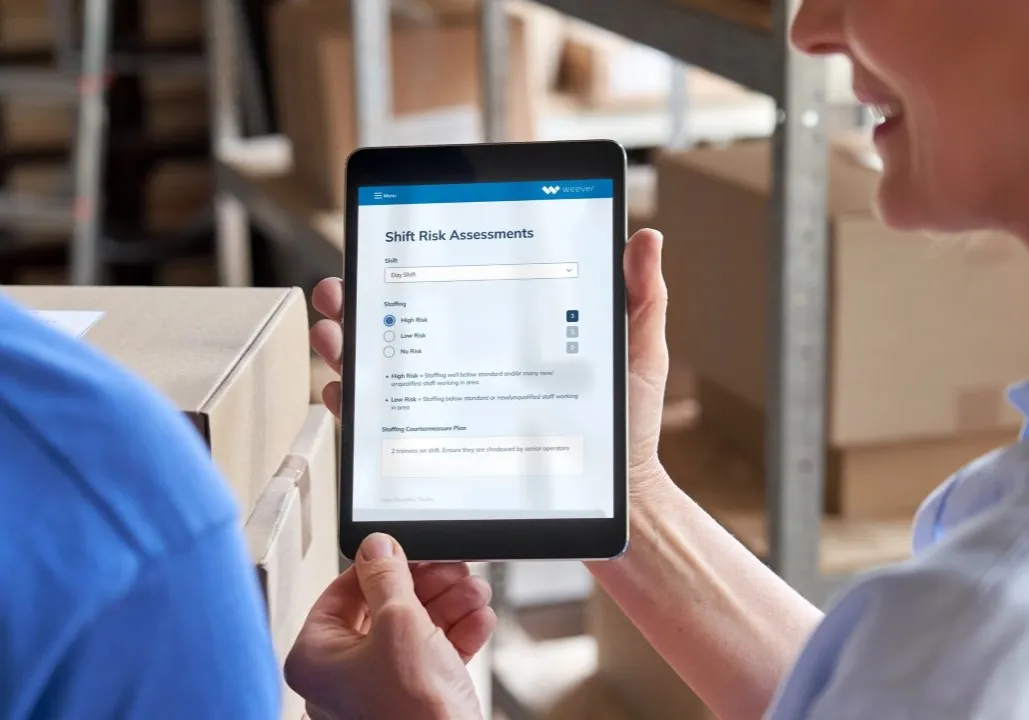
How Can We Enhance Warehouse Productivity Through Autonomous Maintenance with Weever?
Warehouse productivity optimization is of the utmost importance in the modern, fast-paced industrial world. The ability to keep operations running smoothly while minimizing downtime is key to maintaining competitive advantages.
One strategy that has proven effective in achieving these goals is Autonomous Maintenance (AM). By empowering employees to take responsibility for the routine maintenance of their equipment, AM reduces the reliance on specialized maintenance staff, thus streamlining operations. However, the success of AM depends heavily on the tools used to implement and manage it. This is where Weever comes into play, offering an integrated solution that enhances warehouse productivity through effective AM.
User-Centric Design
Adopting a new maintenance strategy can often seem daunting, especially when it involves a shift in responsibilities and the use of new technology. However, Weever's intuitive interface makes this transition seamless. The platform is designed with user experience in mind, ensuring that even those with limited technical skills can easily navigate and utilize its features.
Weever simplifies the adoption of AM by providing a clear and straightforward workflow for warehouse teams. This user-friendly design reduces the learning curve and limits the need for extensive training, allowing teams to focus more on their core tasks and less on figuring out how to use the software. The result is a faster and smoother implementation of AM practices, with minimal disruption to ongoing operations.
Consistent Workflow Automation
One of the most significant challenges in maintaining warehouse productivity is ensuring that maintenance tasks are completed systematically and efficiently. Weever addresses this challenge by automating maintenance workflows and assigning action items, ensuring that all necessary tasks are performed in a timely and organized manner.
With Weever, each maintenance task can be scheduled, tracked, and monitored, ensuring that nothing falls through the cracks. Automated reminders and notifications help keep teams on track, while action items can be assigned to specific individuals or groups, ensuring accountability and clarity in task execution. By reducing manual oversight and streamlining processes, Weever helps minimize downtime and enhance overall productivity in the warehouse.
Maintenance Performance Insights
Understanding the performance of maintenance activities is crucial for continuous improvement. Weever provides warehouses with the tools to gather and analyze data from all maintenance activities, offering valuable insights and identifying trends that can help optimize operations and reduce costs.
By leveraging Weever's analytics capabilities, warehouse managers can gain a deeper understanding of how equipment is performing and where improvements can be made. This data-driven approach allows for informed decision-making, enabling teams to identify potential issues before they become critical, thus avoiding costly downtime. Moreover, the ability to track and analyze trends over time helps in fine-tuning maintenance schedules and practices, leading to more efficient operations and prolonged equipment life.
Continuous Reporting
In the dynamic environment of a warehouse, having access to real-time information is essential. Weever's real-time reporting capabilities ensure that warehouse managers have up-to-date information on the status of maintenance tasks, allowing for immediate action when necessary.
With Weever, all maintenance activities are recorded and reported in real-time, providing a clear overview of what has been done and what still needs attention. This level of transparency enables managers to monitor progress continuously, address issues promptly, and make data-backed decisions that contribute to the overall efficiency of the warehouse. The ability to access real-time reports from any device also adds a layer of convenience, ensuring that the information is always available when needed.
Progressive Rollout Approach
Implementing AM across a warehouse is not just about adopting new practices; it also involves ensuring that these practices are consistently applied across all teams. Weever supports a structured rollout methodology, providing configurable templates and best practice guidelines to ensure a smooth and consistent adoption.
Weever's rollout methodology is designed to be flexible, catering to the unique needs and workflows of each warehouse. Whether rolling out AM practices in phases or across different teams simultaneously, Weever offers the tools needed to manage the process effectively. The platform also provides training materials and support, helping teams get up to speed quickly and ensuring that everyone is on the same page. This structured approach to implementation minimizes disruptions and ensures that AM practices are embedded effectively within the organization.
Enhancing Warehouse Productivity with Autonomous Maintenance: A Strategic Move
The success of AM largely depends on the tools used to implement and manage it. Weever offers a comprehensive solution that not only simplifies the adoption of AM practices but also enhances them through automation, real-time reporting, and data-driven insights.
By providing an intuitive, user-friendly platform, automating critical maintenance workflows, delivering actionable insights, and supporting a structured rollout, Weever empowers warehouses to implement AM effectively. This not only boosts productivity but also ensures that operations run smoothly, efficiently, and with minimal disruption.
For warehouses looking to enhance their productivity through Autonomous Maintenance, Weever offers the tools and support needed to make it happen. By leveraging Weever's capabilities, warehouses can streamline their maintenance processes, optimize operations, and ultimately achieve greater efficiency and productivity.
Ready to take your warehouse productivity to the next level with Autonomous Maintenance? Connect with us today and discover how Weever can streamline your operations and keep your business running smoothly. Let's start optimizing together!
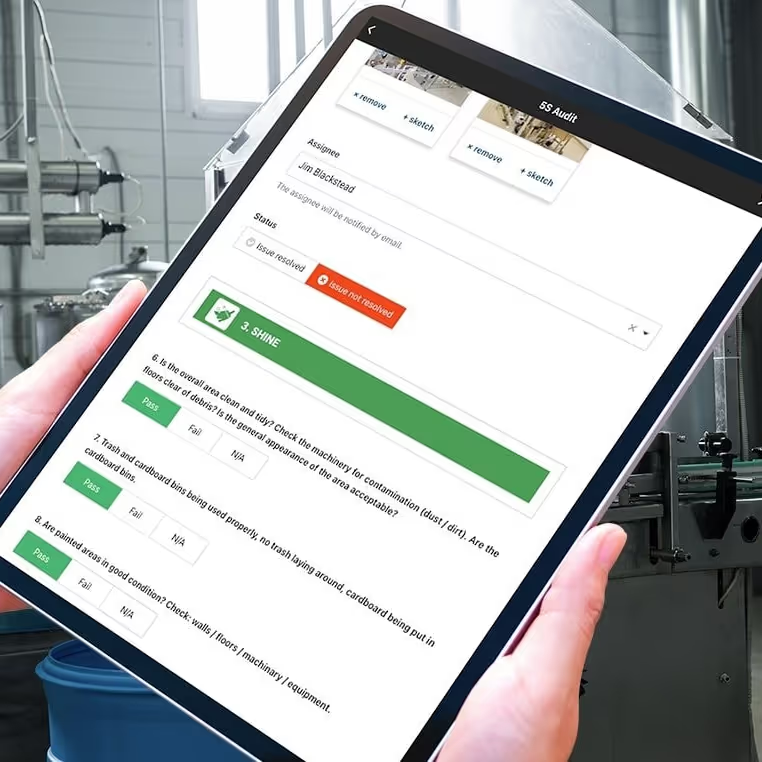
How Can We Maximize Efficiency in Food Industry Operations with Autonomous Maintenance, and How Can Weever's Help?
In an industry where precision, consistency, and efficiency are paramount, the food sector faces unique challenges in maintaining operational efficiency. Autonomous Maintenance (AM) offers a pathway to overcoming these challenges by empowering operators with maintenance responsibilities, freeing up technicians for more strategic tasks. This approach is not just a theoretical ideal; it has proven its value in real-world settings, as demonstrated by a recent case study involving a global Consumer Packaged Goods (CPG) manufacturer.
This article explores how AM can maximize efficiency in food industry operations and the critical role Weever plays in this transformation.
The Foundation of Autonomous Maintenance Success
At the heart of any successful AM program is the ease with which it can be adopted and implemented by the frontline workers. In the food industry, where operators are already juggling numerous responsibilities, adding maintenance tasks can be daunting. This is where Weever excels, providing a user-friendly interface that streamlines the process.
In the case of the CPG factory, the implementation of Weever's platform transformed the way operators engaged with their maintenance tasks. Mark, the Maintenance Manager, quickly realized the potential for increased efficiency by digitizing their Clean-Inspect-Lubricate (CIL) and Centerline forms. The transition from paper-based forms to digital workflows was seamless, allowing operators to complete over 3,000 reports in the first eight months alone.
Weever's interface was designed with the user in mind, offering intuitive navigation that doesn't require extensive training. This ease of use resulted in an over 500% increase in participation from operators, who now found the maintenance tasks more engaging and less burdensome. The platform's ability to integrate videos and images into the forms provided visual guidance, further simplifying the tasks and reducing errors.
Streamlining Operations for Maximum Efficiency
One of the most significant advantages of implementing AM with Weever is the automation of workflows and action items. For the CPG manufacturer, this meant a 30% time savings through automated reporting, which was a game-changer for Mark and his team.
Before Weever, Mark spent a considerable portion of his day manually inputting data from paper forms and managing spreadsheets. This was not only time-consuming but also prone to human error. With Weever, the reporting process was automated, seamlessly integrating with Microsoft Power BI to provide real-time insights without the need for manual data entry.
The automation extended beyond reporting. Weever's platform allowed Mark to set up inspection schedules and task assignments, ensuring that no maintenance activities were missed. The system automatically notified operators of their responsibilities and tracked the completion of tasks, allowing Mark to focus on more strategic maintenance planning rather than administrative follow-up.
This automation not only saved time but also increased the accuracy and reliability of the maintenance data collected. The ability to share this data directly with the factory's Computerized Maintenance Management System (CMMS) further streamlined operations, enabling a cohesive and integrated approach to maintenance management.
Driving Continuous Improvement
In any industry, data-driven decision-making is essential for continuous improvement. Weever's platform enabled the CPG manufacturer to gather and analyze frontline data, providing valuable insights that drove the success of their AM program.
The data collected through Weever was not just a record of completed tasks; it was a rich source of information that revealed trends and patterns in machine performance. By analyzing this data, Mark and his team could identify areas where maintenance efforts could be optimized, leading to more effective use of resources and improved Overall Equipment Effectiveness (OEE).
One of the key insights gained was the identification of inspections that could be eliminated without compromising the maintenance program's effectiveness. This streamlining of tasks not only reduced the workload for operators but also ensured that the remaining inspections were more focused and impactful.
Additionally, the data provided insights into operator engagement. The increase in participation and the quality of the reports submitted indicated heightened interest from operators in their roles. This was a clear sign that the AM program was not only improving machine performance but also contributing to a more engaged and motivated workforce.
Enhancing Responsiveness and Accountability
In a fast-paced industry like food manufacturing, real-time reporting is crucial for maintaining operational efficiency. Weever's platform delivered this capability, allowing the CPG manufacturer to monitor maintenance activities and progress in real time.
The real-time reporting feature provided Mark with instant access to the status of inspections, highlighting any missed or failed tasks. This visibility enabled him to address issues promptly, ensuring that maintenance activities were completed on schedule and to the required standard.
The ability to monitor maintenance activities in real-time also enhanced accountability. Operators knew that their contributions were being tracked and valued, which fostered a sense of ownership and responsibility for their tasks. This led to a significant reduction in unplanned maintenance, as potential issues were identified and addressed before they could escalate into major problems.
Moreover, the integration of real-time reporting with Microsoft Power BI provided a powerful tool for Mark to share insights with his leadership team. The automated reports generated through Weever allowed for data-driven discussions on maintenance strategies and operational improvements, positioning the factory as a leader in efficiency and innovation.
Weever's Role in Maximizing Efficiency in Food Industry Operations
Weever's role in maximizing efficiency in food industry operations extends beyond just providing a digital platform; it is about transforming the way maintenance is approached and executed. By enabling AM, Weever empowers operators, streamlines workflows, and provides the insights needed for continuous improvement.
The success of the CPG manufacturer's AM program is a testament to the power of Weever in driving operational efficiency. The platform's ease of use, automation capabilities, and real-time reporting have revolutionized the way maintenance is managed, leading to significant time savings, increased operator engagement, and improved machine performance.
For food industry operations looking to maximize efficiency, Weever offers a proven solution that not only addresses the challenges of today but also positions them for continued success in the future. By embracing AM with Weever, food manufacturers can unlock new levels of efficiency, productivity, and operational efficiency.
Maximizing Efficiency with Autonomous Maintenance: An Achievable Reality
Weever's platform provides the foundation for this transformation, enabling operators to take ownership of maintenance tasks, automating workflows, and delivering the insights needed to drive continuous improvement. The case study of the CPG manufacturer highlights the tangible benefits of this approach, from time savings and increased participation to improved OEE.
For food manufacturers seeking to enhance their operations, Weever offers a comprehensive solution that delivers results. By implementing AM with Weever, food industry operations can achieve greater efficiency, reduce unplanned maintenance, and build a more engaged and motivated workforce. In a sector where efficiency is critical, Weever is the partner that can help drive success.
Ready to take your food industry operations to the next level? Discover how Weever's Autonomous Maintenance solutions can transform your efficiency and drive continuous improvement. Connect with us today to see how Weever can become your go-to platform for streamlined workflows, real-time insights, and unmatched operational efficiency. Don't just manage maintenance-master it with Weever!

What are the Top Tips for Sustaining Autonomous Maintenance Practices with Weever?
Autonomous Maintenance (AM) is a fantastic strategy that lets operators handle routine maintenance tasks, keeping machines running smoothly and lowering the chance of unplanned downtime. However, sustaining these practices requires more than just an initial implementation; it demands continuous effort and strategic use of tools like Weever to maintain efficiency, consistency, and effectiveness. In this article, we'll explore top tips for sustaining AM practices and how Weever can play a pivotal role in ensuring long-term success.
Find out more about Autonomous Maintenance
Making Maintenance Simple and Accessible
Simplified Training with Weever
Sustaining AM begins with ensuring all team members are comfortable and proficient with the procedures. Weever's intuitive interface is designed to be user-friendly, making it easy for operators of all skill levels to navigate and perform maintenance tasks. This simplicity reduces the learning curve and allows for quicker onboarding, ensuring that new team members can contribute to maintenance activities without delay.
Engaging User Experience
Weever's design focuses on an engaging user experience, reducing the intimidation factor often associated with maintenance software. By incorporating visual aids, step-by-step guides, and easily accessible resources, Weever ensures that operators feel confident and capable when carrying out their AM responsibilities. This engagement is crucial in sustaining long-term commitment to AM practices.
Ensuring Consistency and Accuracy
Streamlining Maintenance Tasks with Automation
One of the key challenges in sustaining AM is ensuring that tasks are consistently and accurately completed. Weever's automated workflows are designed to take the guesswork out of maintenance scheduling and task management. By automating routine maintenance activities and assigning action items directly to team members, Weever ensures that nothing falls through the cracks.
Reducing Human Error
Automation in Weever reduces the reliance on manual input, which is often prone to human error. By automating the tracking, scheduling, and completion of maintenance tasks, Weever minimizes the chances of mistakes and ensures that maintenance activities are carried out with precision. This reliability is essential for maintaining the effectiveness of AM practices over time.
Leveraging Data for Continuous Improvement
Harnessing Data to Drive Maintenance Decisions
Sustaining AM is not just about keeping machines running-it's about continuously improving the processes that keep them operational. Weever's data collection and analysis features provide valuable insights into the performance of maintenance activities. By regularly reviewing this data, teams can identify trends, pinpoint areas for improvement, and make data-driven decisions that enhance overall maintenance efficiency.
Proactive Adjustments and Enhancements
The insights gained from Weever's data analysis allow teams to make proactive adjustments to their maintenance strategies. For example, if a particular machine is showing signs of increased wear, the data may suggest adjustments to the maintenance schedule to prevent future issues. This proactive approach ensures that AM practices evolve to meet the changing needs of the operation, sustaining their relevance and effectiveness.
Staying Ahead of Issues
Monitoring Maintenance Activities in Real-Time
Real-time reporting is a critical component of sustaining AM practices. Weever's real-time reporting capabilities allow teams to monitor the status of maintenance activities as they happen, providing immediate visibility into any issues that arise. This real-time feedback loop ensures that problems are addressed quickly before they escalate into more significant concerns.
Empowering Operators with Instant Feedback
Weever's real-time reporting also empowers operators by providing them with instant feedback on the maintenance tasks they perform. This immediate recognition of their efforts reinforces positive behaviors and encourages adherence to maintenance procedures. Over time, this feedback loop helps build a culture of accountability and pride in the work, which is essential for sustaining AM practices.
Ensuring a Smooth and Consistent Implementation
Structured Implementation with Weever
The success of AM practices hinges on how well they are implemented from the start. Weever's structured rollout methodology provides a clear and consistent framework for introducing AM practices into your organization. With customizable templates, guidelines, and support resources, Weever ensures that the implementation process is smooth and that all team members are aligned with the goals of the initiative.
Ongoing Support and Adaptation
Sustaining AM is not a one-time effort; it requires ongoing support and adaptation to changing circumstances. Weever's rollout methodology includes provisions for continuous support, helping teams adjust their practices as needed. Whether it's updating procedures, incorporating new technologies, or addressing unforeseen challenges, Weever's support ensures that AM practices remain effective and sustainable in the long term.
The Key to Long-Term Success
Sustaining AM practices is an ongoing journey that requires commitment, consistency, and the right tools. Weever provides the features and support necessary to maintain these practices effectively, from simplifying training and automating workflows to leveraging data for continuous improvement and ensuring real-time visibility. By following the tips outlined in this article and utilizing Weever's robust capabilities, your organization can ensure the long-term success of its AM initiatives, ultimately leading to enhanced operational efficiency and reduced downtime.
Continuous Commitment to Sustaining Autonomous Maintenance Practices
Remember, sustaining AM practices is not just about maintaining machinery-it's about fostering a culture of ownership, responsibility, and continuous improvement within your team. By making maintenance simple, automating where possible, analyzing data for insights, monitoring in real-time, and following a structured rollout methodology, you can keep your Autonomous Maintenance practices thriving. With Weever as your partner in this journey, you can rest assured that your maintenance practices are not only sustained but optimized for long-term success.
Ready to elevate your Autonomous Maintenance practices? Connect with Weever today and discover how our tools can help you sustain and optimize your maintenance strategy for long-term success.

What are the Benefits of Autonomous Maintenance, and How Does Weever Drive Results?
Autonomous Maintenance (AM) is a great strategy for businesses striving to improve operational efficiency, reduce downtime, and empower their workforce.
By giving operators the responsibility for routine maintenance tasks, companies can foster a culture of ownership and proactive problem-solving. This not only leads to quicker identification and resolution of potential issues but also helps employees take an active role in maintaining equipment, reducing dependency on specialized maintenance teams. As a result, organizations using AM experience smoother operations, fewer unexpected breakdowns, and a workforce that is more engaged and motivated to contribute to overall efficiency and success.
However, the success of AM hinges on the tools and systems in place to support it. This is where Weever comes into play, offering a platform that simplifies, automates, and enhances maintenance processes. Let's explore the benefits of AM and how Weever helps drive results.
Read more about Autonomous Maintenance
Streamlined User Experience
One of the most significant barriers to implementing AM is the complexity often associated with it. Traditional maintenance systems can be cumbersome, requiring extensive training and resources. Weever addresses this challenge by providing a user-friendly interface designed to simplify the adoption of AM.
Simplified Adoption
Weever's platform is intuitive, requiring minimal training for teams to get started. The user interface is designed with the end-user in mind, ensuring that even those with limited technical expertise can navigate the system with ease. This ease of use accelerates the adoption process, allowing organizations to implement AM without the usual hurdles.
Streamlined Procedures
Weever enables teams to follow maintenance procedures systematically. It breaks down complex tasks into manageable steps, providing clear instructions and visual aids where necessary. This structured approach reduces the risk of errors and ensures that maintenance activities are carried out consistently and effectively across all levels of the organization.
Automated Process Management
Automation is at the core of what makes AM effective. By automating routine tasks, organizations can free up valuable time and resources, allowing their teams to focus on more strategic activities. Weever excels in this area by automating workflows and action items, ensuring that maintenance tasks are completed systematically and efficiently.
Workflow Automation
Weever's platform allows for the creation of automated workflows tailored to the specific needs of your organization. These workflows guide operators through each step of the maintenance process, from initial inspections to task completion. By automating these processes, Weever ensures that nothing is overlooked and all necessary actions are taken promptly.
Action Item Assignment
In addition to automating workflows, Weever also automates the assignment of action items. When a maintenance task is identified, the platform automatically assigns it to the appropriate team members, ensuring that responsibilities are clear and that tasks are completed in a timely manner. This automation reduces the administrative burden on managers and ensures that maintenance activities are carried out efficiently.
Insightful Trend Identification
Data is a powerful tool in any maintenance strategy. By collecting and analyzing data from maintenance activities, organizations can gain valuable insights into their operations, identify trends, and make informed decisions that drive continuous improvement. Weever provides robust data collection and analysis tools that help organizations maximize the benefits of AM.
Data Collection and Analysis
Weever captures data from every maintenance activity, creating a comprehensive record of all tasks performed. This data is then analyzed to identify patterns and trends, such as recurring issues or areas where maintenance procedures could be optimized. By leveraging this data, organizations can proactively address potential problems before they escalate, reducing downtime and improving overall operational efficiency.
Continuous Improvement
The insights gained from Weever's data analysis enable organizations to continuously refine their maintenance practices. By identifying trends and areas for improvement, companies can implement targeted changes that enhance their maintenance processes and drive better results. This continuous improvement cycle is a key benefit of AM, and Weever provides the tools needed to make it a reality.
Live Performance Monitoring
Real-time reporting is crucial for effective maintenance management. It allows managers to monitor the status of maintenance tasks, track progress, and address issues as they arise. Weever's real-time reporting capabilities provide up-to-date information that empowers organizations to stay on top of their maintenance activities.
Up-to-Date Information
Weever's platform provides real-time updates on the status of maintenance tasks, ensuring that managers have the most current information at their fingertips. This real-time visibility allows for better decision-making, as managers can quickly identify and address any issues that may arise during the maintenance process.
Proactive Management
With real-time reporting, managers can take a proactive approach to maintenance management. Instead of waiting for problems to occur, they can monitor trends and indicators in real-time, allowing them to intervene before issues become critical. This proactive management style reduces downtime and keeps operations running smoothly.
Structured Deployment Plan
Implementing AM across an organization requires a structured approach to ensure consistency and effectiveness. Weever supports this process with a comprehensive rollout methodology that includes configurable templates and best practice guidelines.
Structured Implementation
Weever's rollout methodology is designed to provide a structured approach to implementing AM . The platform offers configurable templates that can be tailored to the specific needs of your organization, ensuring that the implementation process is aligned with your goals and objectives.
Best Practice Guidelines
In addition to configurable templates, Weever provides best practice guidelines that help organizations implement AM effectively. These guidelines are based on industry standards and proven practices, ensuring that your team is equipped with the knowledge and tools needed to succeed.
Consistency Across Teams
By following Weever's structured rollout methodology, organizations can ensure that AM is implemented consistently across all teams. This consistency is crucial for achieving the desired results, as it ensures that all team members are following the same procedures and working towards the same goals.
How Weever Drives Results
Weever's comprehensive approach to AM drives tangible results for organizations across various industries. By simplifying processes, automating tasks, providing actionable insights, and ensuring effective implementation, Weever helps organizations achieve the full benefits of AM.
- Improved Operational Efficiency
One of the most significant benefits of AM is improved operational efficiency. By empowering operators to take responsibility for routine maintenance tasks, organizations can reduce downtime and keep their equipment running at peak performance. Weever enhances this benefit by providing tools that streamline maintenance processes and ensure that tasks are completed efficiently.
- Reduced Downtime
Downtime is a costly issue for any organization. By implementing AM with Weever, organizations can reduce the frequency and duration of downtime. Weever's real-time reporting and data analysis tools allow organizations to identify and address potential issues before they cause significant disruptions, keeping operations running smoothly.
- Enhanced Workforce Empowerment
AM empowers operators to take an active role in maintaining their equipment, fostering a sense of ownership and accountability. Weever supports this empowerment by providing tools that make it easy for operators to carry out maintenance tasks and track their progress. This empowerment leads to a more engaged and motivated workforce, which in turn drives better results.
- Continuous Improvement
Continuous improvement is a key benefit of AM, and Weever provides the tools needed to make it a reality. By collecting and analyzing data from maintenance activities, Weever enables organizations to identify trends and areas for improvement, leading to ongoing refinements in their maintenance processes.
Key Takeaways for Autonomous Maintenance with Weever
Autonomous Maintenance offers numerous advantages for organizations looking to improve efficiency, reduce downtime, and empower their workforce. However, realizing these benefits requires the right tools and systems to support the process. Weever provides a comprehensive platform that simplifies, automates, and enhances AM, helping organizations achieve tangible results. By leveraging Weever's user-friendly interface, automated workflows, actionable insights, real-time reporting, and structured rollout methodology, organizations can unlock the full potential of AM and drive continuous improvement across their operations.
Ready to transform your maintenance strategy with the power of Autonomous Maintenance? Discover how Weever's innovative tools can streamline your processes, empower your team, and drive real results. Connect with us today to start your journey towards operational efficiency!

Autonomous vs. Preventive Maintenance: Which Strategy is Best?
Maintenance is a critical component of any successful manufacturing or industrial operation. Two prominent maintenance strategies-Autonomous Maintenance (AM) and Preventive Maintenance (PM)-offer distinct approaches to ensuring machinery and equipment run efficiently. Understanding the pros and cons of each can help organizations make informed decisions about which strategy aligns best with their operational goals. This article explores the benefits and drawbacks of AM and PM and illustrates how Weever's innovative platform can streamline the process of selecting and implementing the right maintenance strategy.
Understanding Autonomous Maintenance and Preventive Maintenance
AM empowers operators to manage routine equipment upkeep, reducing reliance on specialists by training them in basic tasks like cleaning, inspection, and minor repairs. This approach fosters ownership, enhances equipment understanding, and helps operators identify potential issues early. Read more about AM here.
PM is a scheduled strategy where maintenance activities occur at regular intervals to prevent breakdowns, addressing wear and tear through routine inspections. Dedicated teams typically carry out these tasks on a set schedule. Read more about PM here.
The Pros and Cons of Autonomous Maintenance
Pros of Autonomous Maintenance:
- Empowers Operators: AM places maintenance responsibilities in the hands of operators, leading to greater engagement and accountability. Operators develop a deeper understanding of the machinery they work with daily, enabling them to spot abnormalities early.
- Reduces Downtime: By addressing minor issues promptly, AM can prevent them from escalating into major problems that require extended downtime to fix. This proactive approach minimizes production interruptions.
- Improves Equipment Lifespan: Regular, hands-on care by operators can extend the life of equipment by preventing the accumulation of dirt, debris, and wear that could lead to more significant issues.
- Fosters a Culture of Continuous Improvement: AM encourages operators to suggest improvements to maintenance practices, leading to incremental enhancements in equipment performance and reliability.
Cons of Autonomous Maintenance:
- Requires Extensive Training: Successful AM implementation hinges on comprehensive training programs that equip operators with the necessary skills and knowledge. This training can be time-consuming and costly.
- Potential for Inconsistent Execution: Without proper oversight, there may be inconsistencies in how operators perform maintenance tasks. This variability can lead to uneven results and missed opportunities for early issue detection.
- Limited Scope: AM is most effective for routine maintenance tasks. More complex repairs and diagnostics typically still require the expertise of specialized maintenance teams.
- Risk of Overburdening Operators: In some cases, operators may feel overwhelmed by the additional responsibilities of AM, especially if their primary focus is on production rather than maintenance.
The Pros and Cons of Preventive Maintenance
Pros of Preventive Maintenance:
- Predictable Maintenance Schedule: PM follows a set schedule, allowing organizations to plan maintenance activities around production demands. This predictability helps minimize disruption to operations.
- Reduces the Likelihood of Catastrophic Failures: By regularly servicing equipment, PM can prevent significant failures that could result in costly repairs and prolonged downtime.
- Extends Equipment Lifespan: Routine maintenance tasks such as lubrication, calibration, and part replacement help to prolong the life of machinery and reduce the frequency of major overhauls.
- Provides Comprehensive Coverage: PM covers a wide range of maintenance activities, ensuring that all aspects of equipment are regularly checked and serviced by trained professionals.
Cons of Preventive Maintenance:
- Higher Initial Costs: Implementing a PM program requires an upfront investment in resources, including spare parts, maintenance personnel, and scheduling tools. These costs can be significant for organizations with large equipment fleets.
- Risk of Over-Maintenance: PM schedules are often based on manufacturer recommendations rather than actual equipment condition, which can lead to unnecessary maintenance tasks and wasted resources.
- Potential for Overlapping with AM: In organizations that also practice AM, there may be redundancies between the two strategies, leading to inefficiencies and potential confusion among staff.
- Downtime for Maintenance: Even though PM aims to prevent unexpected breakdowns, the scheduled maintenance activities themselves can result in planned downtime that affects production.
Weever's Role in Choosing the Right Maintenance Strategy
Choosing between AM and PM depends on factors like equipment, production demands, and workforce capabilities. Weever's platform simplifies this decision and supports successful implementation of either strategy.
Simplifying Strategy Implementation
Weever's intuitive platform is designed with user-friendliness in mind, making it easy for organizations to implement both AM and PM strategies. The platform's interface is accessible to users at all levels of technical proficiency, ensuring that operators and maintenance teams can quickly adapt to the chosen maintenance approach. By offering customizable templates and step-by-step guides, Weever helps streamline the setup process, reducing the time and effort required to get a maintenance program up and running.
Ensuring Systematic Execution
One of the key challenges in maintenance management is ensuring that tasks are carried out systematically and consistently. Weever addresses this challenge by automating workflows for both AM and PM strategies. The platform enables organizations to create task lists and assign action items to specific team members, ensuring that maintenance activities are completed on time and to the required standard.
For AM, Weever lets operators log tasks and flag issues, ensuring clear maintenance records. For PM, the platform automatically schedules routine tasks, reducing missed windows and preventing unexpected failures.
Data-Driven Optimization
One of Weever's most powerful features is its ability to gather and analyze data from both AM and PM practices. By collecting data on equipment performance, maintenance tasks, and issue resolution, Weever provides organizations with valuable insights into the effectiveness of their maintenance strategies.
For example, Weever can identify trends in equipment failures that may suggest the need for adjustments to the PM schedule or additional training for operators involved in AM. These insights enable organizations to make data-driven decisions that optimize their maintenance strategies, leading to improved operational efficiency and reduced costs.
Monitoring Progress and Addressing Issues
Real-time reporting is crucial for effective maintenance management, as it provides up-to-the-minute information on the status of maintenance tasks and equipment health. Weever's platform offers robust reporting capabilities that allow managers to monitor the progress of both AM and PM activities in real-time.
With Weever, managers can access detailed reports that highlight completed tasks, outstanding issues, and equipment performance metrics. This information is invaluable for identifying potential problems before they escalate, ensuring that maintenance teams can take proactive measures to maintain equipment reliability.
Supporting Smooth and Consistent Implementation
Implementing a new maintenance strategy can be a complex process, especially in large organizations with multiple teams and locations. Weever supports a structured rollout methodology for both AM and PM, offering customizable templates and best practice guidelines to ensure a smooth and consistent implementation.
The platform's rollout tools help organizations plan and execute the transition to a new maintenance strategy, whether it involves training operators for AM or scheduling routine tasks for PM. By providing clear instructions and tracking progress, Weever ensures that the rollout is efficient and effective, minimizing disruption to operations.
Choosing the Right Maintenance Strategy with Weever
The decision between AM and PM depends on the specific needs and goals of an organization. While AM offers the benefits of empowering operators and reducing downtime, it requires significant training and may not cover all maintenance needs. PM, on the other hand, provides comprehensive coverage and predictability but can be costly and may lead to over-maintenance.
Weever's platform simplifies the process of selecting and implementing the right maintenance strategy by offering tools that enhance ease of use, automate workflows, provide valuable insights, offer real-time reporting, and support a smooth rollout. Whether an organization chooses AM, PM, or a combination of both, Weever ensures that the chosen strategy is executed effectively, maximizing operational efficiency and performance.
Ready to optimize your maintenance strategy? Explore how Weever can help you implement Autonomous Maintenance, Proactive Maintenance, or both, tailored to your operational needs. Connect with us today to streamline your processes and enhance your equipment performance!

What are the Key Differences Between Total Productive Maintenance and Autonomous Maintenance, and How Does Weever Support Both?
Making sure that production lines function smoothly, with little downtime and maximum productivity, requires the use of maintenance strategies. Two commonly employed approaches are Total Productive Maintenance (TPM) and Autonomous Maintenance (AM). While both share the goal of enhancing equipment reliability and performance, they differ significantly in their methodologies and execution. This article explores the key differences between TPM and AM and illustrates how Weever effectively supports the implementation of both strategies by enhancing efficiency, consistency, and performance.
Understanding Total Productive Maintenance
TPM is a comprehensive maintenance strategy that aims to optimize the efficiency of equipment and processes. All employees, from operators to managers, are involved in proactive and preventive maintenance. The goal of TPM is to eliminate equipment breakdowns, defects, and accidents, thereby ensuring uninterrupted production and improved product quality.
Key Components of TPM:
- Preventive Maintenance involves scheduling maintenance activities in advance to prevent equipment failures before they can occur, ensuring smooth and uninterrupted operations.
- Focused improvement refers to continuous efforts aimed at targeting and addressing specific areas of weakness in equipment or processes, driving incremental and ongoing enhancements.
- Planned maintenance schedules maintenance activities based on the actual condition of the equipment rather than following a rigid calendar, allowing for more precise and effective upkeep.
- Quality maintenance ensures that equipment consistently operates within specified parameters, maintaining the expected high quality of output and reducing defects.
- Early Equipment Management incorporates maintenance considerations into the design and purchasing phases of equipment, aiming to minimize future breakdowns and operational issues.
TPM requires a cultural shift within an organization, where maintenance is viewed as a critical component of operational success rather than an afterthought. It relies on cross-functional teams to work together to maintain and improve equipment performance.
Understanding Autonomous Maintenance
AM is a part of TPM that focuses on giving machine operators the tools they need to do their own routine maintenance. The idea is to enable operators to handle simple maintenance activities, such as cleaning, lubrication, and inspection, thus freeing up specialized maintenance personnel to focus on more complex tasks.
Key Components of AM:
- Initial cleaning tasks require operators to keep their equipment clean, which not only maintains the machinery but also helps them detect any abnormalities early on.
- Inspection involves operators regularly checking equipment for signs of wear and tear, leaks, or other issues that could potentially lead to breakdowns, ensuring proactive maintenance.
- Lubrication is a routine responsibility where operators ensure the machinery is well-lubricated, promoting smooth operation and reducing friction-related issues.
- Tightening and adjustments are simple maintenance tasks, such as tightening bolts or adjusting settings, that operators can perform to prevent minor issues from escalating into significant problems.
- Visual management utilizes visual cues like tags and stickers to help operators quickly identify maintenance needs and potential issues, facilitating prompt action.
AM emphasizes the importance of training and developing operators to recognize and address potential issues, which can lead to increased equipment reliability and reduced downtime.
The Key Differences Between Total Productive Maintenance and Autonomous Maintenance
While TPM and AM are closely related, they differ in their scope, focus, and execution.
- Scope of Responsibility
- TPM: Involves the entire organization, with maintenance tasks spread across different teams, including operators, maintenance personnel, engineers, and managers.
- AM: Focuses on empowering operators to take responsibility for basic maintenance tasks, with specialized maintenance teams handling more complex issues.
- Approach to Maintenance
- TPM: Adopts a proactive approach, where maintenance activities are planned and executed based on data and condition monitoring to prevent failures.
- AM: Emphasizes the importance of routine tasks like cleaning, inspection, and lubrication, which are performed by operators to prevent minor issues from escalating.
- Level of Training Required
- TPM: Requires comprehensive training across all levels of the organization to ensure that everyone understands their role in maintaining equipment.
- AM: Focuses on training operators in basic maintenance tasks and problem detection, making it more accessible but requiring ongoing support.
- Cultural Impact
- TPM: Aims to create a culture of continuous improvement and shared responsibility for equipment performance.
- AM: Encourages a sense of ownership among operators, fostering a proactive mindset towards equipment care.
- Implementation Complexity
- TPM: Generally more complex to implement as it involves multiple facets of the organization and requires a shift in mindset and processes.
- AM: Simpler to implement within the framework of TPM, as it primarily focuses on the operator level.
How Weever Supports Both Total Productive Maintenance and Autonomous Maintenance
Implementing TPM and AM can be challenging, particularly for organizations that are new to these maintenance strategies. Weever provides a comprehensive software solution that simplifies the adoption and execution of both TPM and AM, ensuring that organizations can achieve their maintenance goals with greater efficiency and consistency.
Ease of Use
Weever's intuitive software interface makes it easy for teams to adopt and adhere to both TPM and AM strategies. The platform is designed to be user-friendly, minimizing the need for extensive training and reducing the learning curve for new users. This user-friendliness is crucial for the successful implementation of maintenance strategies, as it ensures that all team members, regardless of their technical expertise, can effectively use the tool.
For TPM, Weever allows teams to create and manage maintenance schedules, track equipment performance, and document improvement activities with ease. For AM, operators can quickly log routine tasks, report issues, and access training materials directly from the platform, empowering them to take charge of their maintenance responsibilities.
Automated Workflows and Action Items
One of the key benefits of Weever is its ability to automate workflows and generate action items for both TPM and AM activities. This automation ensures that all maintenance tasks are completed systematically and on time, reducing the risk of equipment failures and production downtime.
For TPM, Weever can automatically generate maintenance schedules based on equipment usage and condition data, assign tasks to the appropriate team members, and send reminders to ensure that activities are completed as planned. This automation helps to eliminate human error and ensures that maintenance activities are consistently carried out.
In the context of AM, Weever enables operators to receive automated reminders for routine tasks such as cleaning, inspection, and lubrication. The platform also allows operators to log any issues they encounter during these tasks, triggering notifications to maintenance personnel for further investigation. This seamless integration of automated workflows helps to ensure that both TPM and AM activities are conducted efficiently and effectively.
Insights and Trends
Data is a critical component of successful maintenance strategies, as it provides the insights needed to make informed decisions and drive continuous improvement. Weever excels in gathering and analyzing data from TPM and AM activities, offering organizations the ability to track key metrics, identify trends, and optimize their maintenance strategies.
For TPM, Weever's data analytics capabilities enable organizations to monitor equipment performance, track the effectiveness of maintenance activities, and identify areas for improvement. This data-driven approach allows teams to focus their efforts on the most critical issues, ensuring that maintenance resources are used effectively.
In AM, Weever provides operators and managers with insights into routine maintenance tasks, helping them identify patterns and potential issues before they escalate. By analyzing data from routine inspections and tasks, organizations can proactively address small problems, preventing them from leading to costly breakdowns.
Real-Time Reporting
Real-time reporting is essential for maintaining visibility into maintenance activities and ensuring that both TPM and AM tasks are carried out as planned. Weever offers robust real-time reporting features that provide immediate visibility into the status of maintenance activities, allowing managers to track progress, address issues promptly, and maintain high standards.
For TPM, real-time reporting enables teams to monitor the status of planned and preventive maintenance activities, ensuring that they are completed on time and without disruption to production. Managers can quickly access reports on equipment performance, maintenance history, and ongoing improvement initiatives, providing them with the information they need to make informed decisions.
In AM, Weever's real-time reporting features allow operators to quickly report issues and log completed tasks, giving managers instant visibility into the state of equipment and routine maintenance activities. This immediate access to information helps organizations maintain high levels of equipment reliability and performance.
Rollout
Implementing TPM and AM requires a structured rollout to ensure that these strategies are adopted consistently across the organization. Weever supports this process by offering customizable templates and best practice guidelines that streamline the rollout of maintenance programs.
For TPM, Weever provides templates for creating maintenance schedules, documenting improvement activities, and tracking equipment performance. These templates can be customized to fit the specific needs of the organization, ensuring that the TPM program is tailored to the unique requirements of the business.
In the case of AM, Weever offers guidelines and templates for training operators, establishing routine maintenance tasks, and setting up visual management systems. These resources help organizations implement AM in a structured and consistent manner, ensuring that operators are fully equipped to take on their maintenance responsibilities.
Maximizing Equipment Reliability: How Weever's Software Empowers Total Productive Maintenance and Autonomous Maintenance Strategies
Total Productive Maintenance and Autonomous Maintenance are powerful strategies that can significantly enhance equipment reliability and operational efficiency. While they differ in their scope and approach, both are essential components of a comprehensive maintenance program.
Weever's software solution is uniquely positioned to support the implementation of both TPM and AM by offering a user-friendly interface, automated workflows, data-driven insights, real-time reporting, and structured rollout methodologies. By leveraging Weever, organizations can achieve their maintenance goals more effectively, ensuring that their production lines run smoothly and efficiently with minimal downtime and maximized productivity.
Incorporating Weever into your maintenance strategy not only simplifies the adoption of TPM and AM but also ensures that these strategies are executed with precision, leading to sustained improvements in equipment performance and overall operational success.
To ensure your maintenance strategies are as effective as possible, start leveraging the power of Weever today. Experience how our platform can streamline your TPM and AM processes, boost productivity, and reduce downtime. Contact us now to schedule a demo and see how Weever can transform your maintenance operations.

How Does Clean Inspect Lubricate (CIL) Work: A Step-by-Step Guide with Weever
Why Clean Inspect Lubricate (CIL) is Essential
The Clean Inspect Lubricate (CIL) process maintains equipment efficiency and effectiveness in any industry. Regular cleaning removes contaminants that can cause wear and tear, while thorough inspections identify potential issues before they lead to costly breakdowns. Proper lubrication minimizes friction, ensuring smooth operation and extending the lifespan of machinery. Implementing a consistent CIL routine helps prevent unexpected downtime, enhances safety, and maximizes operational productivity. Understanding and executing the CIL process correctly is vital for maintaining peak performance and reliability of equipment, ultimately contributing to the overall success of an organization.
Weever’s Role in Clean Inspect Lubricate (CIL)
Weever significantly enhances the Clean Inspect Lubricate (CIL) process by streamlining and automating each step, boosting operational performance across various industries. Its user-friendly platform simplifies the setup and execution of CIL tasks, ensuring team members can easily follow procedures without extensive training. By automating workflows and assigning action items, Weever ensures all necessary tasks are completed systematically and efficiently. The platform’s real-time reporting capabilities allow managers to monitor progress and promptly address issues, maintaining high standards. Additionally, Weever’s data analysis tools provide valuable insights and identify trends, helping organizations optimize their maintenance practices. Overall, Weever transforms the CIL process, making it more efficient and effective.
Clean Inspect Lubricate (CIL) Step-by-Step
Step 1: Cleaning
Accumulated grime, residues, and other contaminants on the equipment or machines are eliminated using a variety of cleaning agents and tools.
Simplified Cleaning Steps
- User-Friendly Platform: Weever’s intuitive design simplifies the cleaning process, ensuring that team members can easily follow procedures without extensive training. The platform guides users through each task with clear instructions and visual aids, making it accessible to all team members, regardless of their technical expertise.
- Effortless Training: Weever ensures that training new team members on cleaning procedures is straightforward and quick. The platform’s simplicity reduces the learning curve, allowing employees to get up to speed with minimal effort. This efficiency in training helps maintain consistent application of the cleaning process, enhancing overall operational performance.
Step 2: Inspection
After cleaning, the equipment undergoes an inspection. This includes a visual examination for any signs of wear or damage. Additionally, each part is checked to ensure proper functionality. If any issues are identified during the inspection, they can be addressed promptly to prevent them from escalating into major problems.
Streamlined Automation with Workflows and Action Items for Faster Inspections
- Automated Precision: Weever automates the inspection process by generating workflows and assigning action items, ensuring that all necessary tasks are completed systematically and efficiently. Automation reduces the risk of human error, ensuring that each step of the process is executed precisely.
- Systematic Efficiency: The benefits of automation are clear: by ensuring all tasks are completed systematically, Weever enhances the efficiency of the inspection process. Automated workflows ensure no steps are missed, deadlines are met, and maintenance schedules are adhered to rigorously.
Gaining Insights and Identifying Trends during Inspections
- Data-Driven Decisions: Weever’s platform captures and analyzes data from the inspection process, providing valuable insights that help in making informed decisions. This data-driven approach allows maintenance teams to identify patterns and trends, facilitating proactive maintenance.
- Optimizing Maintenance Practices: Analyzing data from the inspection process helps in optimizing maintenance practices. By identifying recurring issues or areas that require frequent attention, organizations can refine their maintenance strategies to improve efficiency and effectiveness.
Step 3: Lubrication
In the final step of the CIL process, equipment or machinery is lubricated. This entails applying the appropriate lubricants, especially to moving parts, to minimize friction leading to degradation and ensure smooth and reliable operation.
Evaluating the CIL Process: Staying Informed with Real-Time Reporting
- Instant Updates: Weever’s real-time reporting features provide immediate visibility into the status of lubrication activities. This allows managers to stay informed about progress and quickly address any issues that arise.
- Proactive Monitoring: Real-time monitoring is crucial for maintaining high standards. It enables managers to proactively address deviations from protocols, ensuring that lubrication tasks are performed correctly and timely, thereby maintaining equipment reliability and performance.
Implementing the CIL Process
- Structured Integration: Weever’s structured rollout methodology ensures a smooth and consistent implementation of the lubrication process. The platform provides step-by-step guidance, making the adoption of new procedures straightforward.
- Configurable Solutions: Weever offers configurable templates and guidelines tailored to the specific needs of different teams and industries. This flexibility ensures that the lubrication process can be adapted to various operational requirements, facilitating a smooth and consistent adoption.
Enhance Efficiency and Boost Maintenance Practices with Weever
Understanding and implementing the CIL process with Weever significantly enhances operational efficiency and effectiveness. The platform simplifies each step, automates workflows, provides valuable insights, offers real-time reporting, and supports a structured rollout methodology.
Leveraging Weever's tools can transform your maintenance practices, reducing downtime and optimizing resource allocation. By streamlining the CIL process, Weever helps organizations maintain high standards of equipment performance and reliability.
Discover how Weever can revolutionize your CIL process. Explore Weever’s solutions and see the difference they can make for your organization. Request a demo or contact Weever for more information on how to enhance your operational efficiency and effectiveness through a streamlined CIL process.

What is the Comprehensive Guide to Clean Inspect Lubricate Tighten (CILT) for Autonomous Maintenance?
What is the Comprehensive Guide to Clean Inspect Lubricate Tighten (CILT) for Autonomous Maintenance?
Discover the comprehensive guide to Clean, Inspect, Lubricate, Tighten (CILT) in autonomous maintenance and how Weever enhances efficiency and reliability.
In autonomous maintenance (AM), Clean, Inspect, Lubricate, Tighten (CILT) is a vital process for maintaining equipment efficiency and reliability. CILT involves systematic procedures that ensure machinery is clean, inspected for wear and tear, properly lubricated, and all components are securely tightened. These steps are crucial for preventing breakdowns and extending the lifespan of equipment. Weever's platform simplifies and enhances the CILT process, making it accessible to all team members and reducing training time. By automating tasks, providing real-time reporting, and offering structured rollout methodologies, Weever supports seamless CILT implementation, boosting efficiency and consistency across various sectors.
Simplifying the Clean Inspect Lubricate Tighten (CILT) Process with Weever
Weever's user-friendly platform revolutionizes the Clean Inspect Lubricate Tighten (CILT) process by making it straightforward and accessible for all team members. Its intuitive interface allows even those with minimal technical skills to navigate and perform CILT tasks efficiently. This accessibility ensures that every team member can contribute to maintenance activities without extensive training. Moreover, Weever significantly reduces the time required to train staff on new procedures, allowing organizations to implement CILT processes swiftly and effectively. By simplifying complex tasks, Weever ensures consistency and reliability in maintenance operations, ultimately enhancing overall equipment efficiency.
Automation and Efficiency in Clean Inspect Lubricate Tighten (CILT) with Weever
Weever's platform excels in automating the CILT (Clean, Inspect, Lubricate, Tighten) process, streamlining maintenance activities and enhancing efficiency. By automating the assignment of specific tasks and action items to team members, Weever ensures that each step of the CILT process is executed accurately and promptly. This automation minimizes the risk of human error, as the platform provides clear instructions and reminders, reducing the chances of steps being missed or incorrectly performed. Additionally, Weever's automation capabilities enhance efficiency by eliminating manual scheduling and follow-ups, allowing maintenance teams to focus on executing tasks rather than managing them. The result is a more reliable and consistent CILT process that improves overall equipment performance and operational efficiency.
Data Gathering and Analysis for CILT with Weever
Weever provides organizations with robust tools to gather and analyze data from CILT (Clean, Inspect, Lubricate, Tighten) activities, offering valuable insights into maintenance operations. Through its platform, Weever collects data from each step of the CILT process, allowing organizations to monitor the status and outcomes of tasks comprehensively. By analyzing this data, organizations can identify trends, such as recurring issues or areas where equipment requires frequent attention. These trends offer critical insights that can inform and refine maintenance strategies, enabling teams to address root causes rather than symptoms. Furthermore, the insights gained from this data analysis help optimize operational performance, as organizations can make data-driven decisions to improve maintenance schedules, allocate resources more effectively, and enhance overall equipment reliability. Weever's data capabilities ultimately empower organizations to transition from reactive to proactive maintenance strategies, ensuring smoother and more efficient operations.
Real-Time Reporting for Immediate Visibility
Weever's real-time reporting features provide immediate visibility into the status of CILT (Clean, Inspect, Lubricate, Tighten) tasks, offering significant advantages for managers. These features allow managers to monitor the progress of maintenance activities in real time, ensuring they are always informed about the current state of CILT tasks. Immediate visibility helps track progress efficiently, making it easier to identify and address any issues or delays as they arise. This proactive approach ensures that maintenance schedules are adhered to, preventing potential disruptions and ensuring that all equipment remains in optimal condition. Real-time reporting also facilitates quick decision-making and timely interventions, enhancing overall maintenance efficiency and reliability. By providing up-to-date information, Weever empowers managers to maintain seamless operations and improve maintenance outcomes across the organization.
Weever's Structured Rollout
Weever's structured rollout methodology for CILT (Clean, Inspect, Lubricate, Tighten) implementation ensures a seamless and efficient transition for organizations. This methodology includes customizable templates and best practice guidelines, which are tailored to meet the specific needs of different sectors. These templates provide a solid foundation, allowing organizations to adapt the CILT process to their unique operational requirements while maintaining consistency. Weever's best practice guidelines offer step-by-step instructions and recommendations, ensuring that every aspect of the CILT process is covered comprehensively. By leveraging these resources, organizations can achieve a smooth and consistent application of CILT processes, reducing the risk of errors and enhancing overall maintenance effectiveness. Weever's support throughout the rollout phase helps organizations overcome potential challenges, ensuring that CILT implementation is efficient and effective, ultimately leading to improved operational performance and equipment reliability.
The Importance of Clean, Inspect, Lubricate, Tighten (CILT) Procedures for Maintaining Equipment
This guide to Clean, Inspect, Lubricate, Tighten (CILT) for autonomous maintenance underscores the importance of systematic procedures in maintaining equipment efficiency and reliability. Weever's platform enhances the CILT process by simplifying tasks, making it accessible to all team members, and reducing training time. Through automation, Weever ensures each CILT step is performed accurately, minimizing human error and improving efficiency. The platform's data-gathering capabilities provide valuable insights for refining maintenance strategies and transitioning from reactive to proactive maintenance. Real-time reporting offers immediate visibility, enabling managers to track progress and address issues promptly.
Weever's structured rollout methodology, with customizable templates and best practice guidelines, ensures a smooth and consistent implementation of CILT processes across various sectors, leading to improved operational performance and equipment reliability. Contact us today to schedule a demo and see the difference Weever can make for your business.
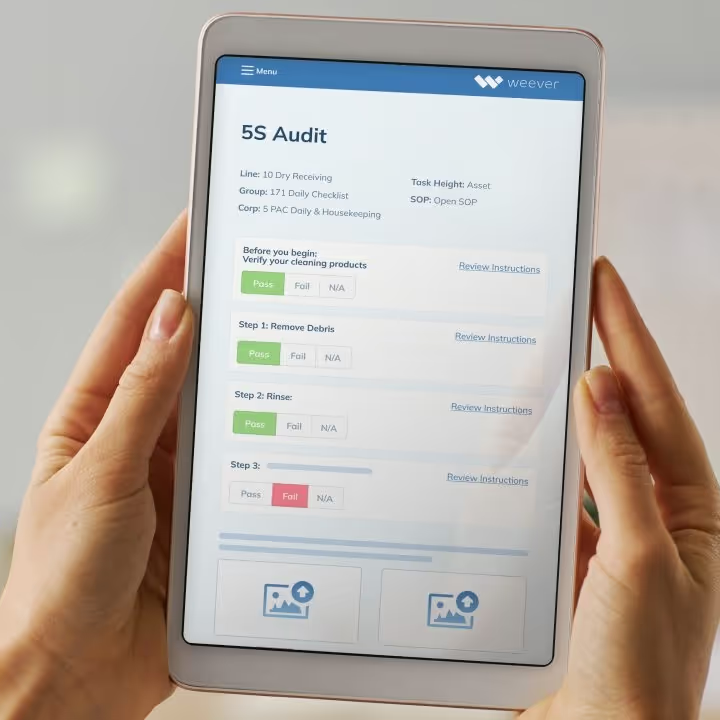
Leveraging 5S Audit Scorecards for Continuous Improvement
Optimizing operations and maintaining peak efficiency is paramount in the manufacturing industry. A proven strategy to achieve this is through consistent improvement initiatives bolstered by regular 5S audits and scorecards. By systematically evaluating operations and providing actionable feedback, manufacturers can significantly enhance their processes. This article explores how 5S audit scorecards drive continuous improvement and how Weever software simplifies this process.
New to 5S? Learn more with Weever’s Ultimate Guide to Success with 5S, and get started building a business case for a 5S program at your manufacturing facility with a free 5S Audit Checklist template.
The Power of 5S Audits in Continuous Improvement
The 5S methodology — Sort, Set in order, Shine, Standardize, and Sustain — is the cornerstone of a well-organized and efficient workplace. Regular 5S audits ensure these principles are consistently upheld. By frequently assessing operations, manufacturers can pinpoint areas for improvement, eliminate waste, and streamline workflows.
5S audit scorecards are instrumental in this process. They offer a structured framework to evaluate 5S adherence, highlighting strengths and weaknesses. This consistent assessment fosters a culture of continuous improvement where feedback is used to enhance operational efficiency and safety.
Learn more about 5S Audit Programs with Weever.
How Weever Software Enhances 5S Audit Management
Weever software provides a comprehensive solution for creating and managing 5S audit scorecards, simplifying the audit process for manufacturers. Here's how Weever streamlines 5S audits:
- Configurable 5S Audit Scorecards: Weever allows manufacturers to configure audit scorecards to align with specific operational needs. This flexibility ensures scorecards accurately reflect individual requirements and standards. Scorecards can be easily modified to adapt to evolving improvement goals.
- Automated Workflows for Efficient Audits: Weever's automated workflows streamline the audit process by ensuring each step is executed efficiently and systematically. Identified actions and improvements are promptly addressed, minimizing delays between audit completion and corrective action.
- Real-time Reporting and Data Analysis: Effective continuous improvement hinges on real-time reporting and data analysis. Weever provides valuable insights and trends from 5S audits, enabling data-driven decision-making. The software's data analysis capabilities highlight recurring issues, track progress over time, and uncover opportunities for further optimization.
Implementing 5S Audit Scorecards with Weever Software: A Step-by-Step Approach
Weever software facilitates a smooth and effective 5S audit scorecard implementation. Follow these steps:
- Assessment and Planning: Evaluate current 5S practices and identify key improvement areas. Develop a plan outlining the 5S audit program's objectives and how Weever software will be utilized.
- Designing Scorecards: Use Weever's tools to create audit scorecards aligned with operational standards. Include relevant criteria for each 5S principle to ensure comprehensive evaluation.
- Training and Onboarding: Train the team on Weever software and the importance of 5S audits. Provide clear instructions on conducting audits, recording findings, and effectively using software features.
- Conducting Audits: Schedule regular audits and assign responsible personnel. Utilize Weever software to guide the audit process, ensuring consistency and thoroughness.
- Reviewing Results and Taking Action: Analyze audit results using Weever's reporting tools. Identify areas requiring attention and implement corrective actions. Leverage automated workflows for timely issue resolution.
- Continuous Monitoring and Improvement: Regularly assess the 5S audit program's effectiveness. Use Weever's data insights to refine the process and drive ongoing improvement.
Continuous Improvement is Essential for Manufacturing Excellence
By leveraging 5S audit scorecards, manufacturers can ensure consistent 5S adherence, identify improvement areas, and boost efficiency. Weever software enhances this process with configurable scorecards, automated workflows, and real-time data analysis, making it an invaluable tool for manufacturers committed to continuous improvement. Embrace the power of 5S audits with Weever software to elevate manufacturing operations to new heights of excellence. Adopting a 5S program to drive digital transformation is easier than it seems, no matter your manufacturing operation. In just 3 weeks, archaic paper-based methodologies can be a thing of the past, with the Weever Accelerate Program.

The Importance of a 5S Audit Scorecard in Manufacturing Operations
Maintaining a clean, organized, and efficient manufacturing environment is critical for operational excellence. One powerful tool that supports these goals is the 5S audit scorecard. 5S audit scorecards not only helps sustain high standards of cleanliness and organization but also drives continuous improvement across manufacturing operations. In this post, we'll explore the significance of the 5S audit scorecard and how Weever software facilitates its creation and management, ensuring manufacturers can maintain peak efficiency effortlessly.
The Role of a 5S Audit Scorecard in Manufacturing
The 5S methodology—Sort, Set in order, Shine, Standardize, and Sustain—is essential for creating a well-organized workplace. Regular audits using a 5S scorecard ensure these principles are consistently applied, promoting an environment that is not only clean but also optimized for efficiency and safety.
Driving Continuous Improvement
A 5S audit scorecard provides a structured framework for evaluating adherence to 5S principles. By systematically assessing work areas, manufacturers can identify strengths and weaknesses, enabling targeted improvements. This continuous feedback loop fosters a culture of ongoing enhancement, where every audit contributes to operational excellence.
Enhancing Operational Excellence
Consistent use of 5S audit scorecards helps eliminate waste, streamline processes, and improve workflow efficiency. By regularly evaluating and refining operations, manufacturers can maintain high standards of productivity and quality, directly impacting their bottom line.
Simplifying 5S Audit Management with Weever Software
Weever software offers a comprehensive solution for creating and managing 5S audit scorecards. It streamlines the audit process, making it easier for manufacturers to conduct regular evaluations and uphold high standards. Here's how Weever simplifies 5S audit management:
Configurable Audit Scorecards
Weever software allows for the creation of configurable 5S audit scorecards, tailored to suit different manufacturing work areas of varying complexity. This flexibility ensures that the scorecards are relevant to specific operational needs, making the auditing process more effective and efficient.
Automated Workflows for Efficient Execution
One of the standout features of Weever software is its automated workflows. These workflows guide users through the audit process, ensuring that each step is completed systematically. Identified actions and improvements are promptly addressed, minimizing delays and ensuring that corrective measures are implemented swiftly.
Real-time Reporting and Data Analysis
Effective continuous improvement relies on real-time reporting and data analysis. Weever software provides valuable insights and trends from 5S audits, enabling manufacturers to make data-driven decisions. This capability highlights recurring issues, tracks progress over time, and uncovers opportunities for further optimization.
Adopting the 5S Methodology with Weever Software
Implementing the 5S methodology in manufacturing operations can seem daunting, but with Weever software, the process is straightforward and efficient. Here’s a step-by-step approach to adopting 5S audit scorecards using Weever:
Step 1: Assessment and Planning
Begin by assessing your current 5S practices and identifying key areas for improvement. Develop a plan that outlines the objectives of your 5S audit program and how Weever software will be utilized to achieve these goals.
Step 2: Designing the Scorecards
Use Weever’s configurable tools to create audit scorecards that align with your operational standards. Ensure that each scorecard includes relevant criteria for each of the 5S principles, providing comprehensive coverage for all aspects of your work environment.
Step 3: Training and Onboarding
Train your team on the use of Weever software and the importance of 5S audits. Provide clear instructions on how to conduct audits, record findings, and utilize the software’s features effectively.
Step 4: Conducting Audits
Schedule regular audits and assign responsible personnel. Utilize Weever software to guide the audit process, ensuring consistency and thoroughness. The software’s user-friendly interface makes it easy for team members to perform audits efficiently.
Step 5: Reviewing Results and Taking Action
Analyze the audit results using Weever’s real-time reporting tools. Identify areas that require attention and implement corrective actions. Leverage automated workflows to ensure timely resolution of identified issues.
Step 6: Continuous Monitoring and Improvement
Regularly review the effectiveness of your 5S audit program. Use the data insights provided by Weever software to refine the process and drive ongoing improvements. This continuous monitoring ensures that your manufacturing operations remain at the forefront of efficiency and excellence.
The Weever Accelerate Program
Adopting Weever’s solution can be quick and seamless, with the Weever Accelerate Program enabling full implementation in as little as three weeks. This program ensures that manufacturers can transition from traditional, paper-based methodologies to a digital, streamlined 5S audit process rapidly, without disruption to their operations.
Supercharge Manufacturing with 5S Audit Scorecards
The 5S audit scorecard is a vital tool in maintaining a clean, organized, and efficient manufacturing environment. It supports continuous improvement and operational excellence by providing a structured framework for regular evaluation and feedback. Weever software enhances this process by offering configurable audit scorecards, automated workflows, and real-time data analysis, making it easier for manufacturers to uphold high standards effortlessly. By adopting the 5S methodology with Weever software, manufacturers can ensure a smooth and effective transition to a culture of continuous improvement, driving their operations to new heights of excellence.
Interested in deep diving 5S methodology? Read on with Weever’s Ultimate Guide to Success with 5S!

The Importance of Proactive Measures in Manufacturing Operations
Autonomous Maintenance (AM) is no longer a nice-to-have, it's a strategic imperative for manufacturers aiming to reduce downtime, enhance asset reliability, and empower their workforce. While checklists and tools remain valuable components, true success hinges on more than operational tasks alone. It requires strategic vision, actionable insights, and, above all, strong leadership.
If you’re responsible for the strategic direction of Autonomous Maintenance/TPM, or a Plant Leader, CI manager, or TPM decision maker, this blog is built for you. It outlines not just what AM is, but how to lead it, scale it, and extract its full value, without burning out your people or your maintenance team.
Why Autonomous Maintenance Matters Now?
The modern manufacturing environment is strained by rising labor turnover, equipment complexity, and the constant pressure to “do more with less.” AM addresses all three.
As a core pillar of Total Productive Maintenance (TPM), Autonomous Maintenance transfers routine equipment care, cleaning, inspecting, lubricating, to the people who operate the machines every day. This shift:
- Reduces unplanned downtime
- Enhances Overall Equipment Effectiveness (OEE)
- Frees up skilled technicians for higher-value work
- Increases operator engagement and retention
- Establishes a proactive, data-driven maintenance culture
Put simply: AM turns equipment operators into owners, and it’s your leadership that makes that transformation stick.
The Strategic Role of the AM Leader
Implementing AM isn't just about handing out forms and assigning tasks. Leaders and decision makers must architect the system that supports it. This includes:
- Setting the vision – Aligning AM with broader TPM, CI, and performance goals.
- Driving cross-functional collaboration – Breaking silos between maintenance, operations, and leadership.
- Standardizing best practices – Building scalable processes for 5S audits, CILs (Clean, Inspect, Lubricate), and centerline management.
- Investing in training and tools – Ensuring operators have the knowledge and resources to succeed.
- Tracking impact and ROI – Measuring outcomes, identifying bottlenecks, and continuously improving.
Autonomous Maintenance is not an initiative, it’s shift in operations, and it’s your job to steer the ship.
Proof in Performance: Results You Can Replicate
Consider the example of the Assela Malt Factory, which implemented AM practices over an 18-month period. The results were transformational:
- 46% reduction in breakdowns
- 64% cut in overall maintenance costs
- 23% fewer maintenance person-hours
- 5% increase in production capacity
- 8% drop in machine idle time
These aren’t hypothetical numbers. They’re the result of committed leadership, clear processes, and empowered frontline teams.
Leading the Rollout: A 3-Stage Strategy for Success
Rolling out AM across a facility, or multiple sites, requires thoughtful staging. Here’s a proven approach that balances structure with adaptability:
Stage 1: Initiate
Train operators on equipment fundamentals.
Partner maintenance with production for deep-dive cleanings and inspections.
Eliminate contamination risks and establish lubrication/inspection standards.
Stage 2: Expand
Introduce visual management tools (color-coded gauges, QR-linked SOPs).
Use digital CIL forms to document inspections and abnormalities.
Capture trends and performance data for technician planning.
Stage 3: Improve
Continuously update procedures with operator feedback.
Scale best practices across lines or facilities.
Use real-time insights to refine preventive maintenance and training.
This phased approach gives teams room to build confidence and culture, while ensuring data and accountability flow throughout the system.
Best Practices for Sustainable Success
Successful AM leaders and decision makers follow these key principles:
- Start small, scale fast – Pilot a single production line or activity before expanding plant-wide.
- Digitize from the start – Paper systems hinder compliance, visibility, and speed. Use technology to embed AM into daily workflows.
- Measure what matters – Focus on metrics like OEE, mean time between failure (MTBF), inspection compliance, and technician utilization.
- Promote ownership and recognition – Create a culture where operators feel proud of their contribution to asset reliability and performance.
- Standardize to protect knowledge – Document CILs, 5S, and centerline audits to safeguard against turnover and inconsistency.
As a decision maker, your ability to simplify, sustain, and scale AM is your competitive advantage
How Weever Empowers AM Leaders
Building and sustaining Autonomous Maintenance programs takes more than vision, it takes the right infrastructure. That’s where Weever delivers unique value to AM leaders.
Weever is a Connected Worker platform designed to make Autonomous Maintenance easy to deploy, manage, and scale. Here’s how it helps you lead more efficiently:

The Role of Audit Checklists in Enhancing Quality Control
Maintaining high-quality standards in manufacturing is essential for success. Every product leaving the factory must meet strict quality benchmarks to satisfy customers and stay competitive. Audit checklists play a crucial role in ensuring these high standards. They help manufacturers keep track of every step in the production process, making sure each one meets the required quality criteria. This blog will focus on how audit checklists enhance quality control by identifying areas for improvement. By using these checklists, manufacturers can catch potential issues early, streamline processes, and continuously improve product quality. We'll explore the key features of effective audit checklists and how they contribute to maintaining excellence in manufacturing.
Audit Checklists Ensure Higher Quality Standards
Audit checklists ensure every step of the production process meets strict quality standards. Regular audits help identify defects early, preventing small issues from becoming major problems. Near miss reporting software is a valuable tool in this process, as it helps catch potential quality issues before they occur, promoting proactive measures. Additionally, using observation forms to document quality checks provides a clear record of compliance and helps track improvements. By integrating these tools, manufacturers can maintain high standards, reduce defects, and continuously improve product quality.
Enable Proactive Measures with Audit Checklists
Audit checklists support proactive measures in quality control by identifying potential issues before they become major problems. Near miss reporting software plays a crucial role in this process, allowing manufacturers to detect and address minor issues early, preventing them from escalating into serious quality concerns. Predictive maintenance also helps avoid equipment-related problems by monitoring machinery and scheduling maintenance before failures occur. This proactive approach ensures smoother operations, reduces downtime, and maintains high product quality. By using audit checklists, near miss reporting software, and predictive maintenance, manufacturers can stay ahead of potential issues and continuously improve their processes.
Utilizing 5S Audit Scorecards as an Audit Checklist
The 5S principles—Sort, Set in Order, Shine, Standardize, and Sustain—are lean methodologies that promote efficiency and organization. 5S audit scorecards are tools that help implement these principles in the workplace, ensuring a clean and organized environment. A well-organized workspace directly contributes to better quality control by reducing errors, streamlining processes, and improving safety.
Using 5S audit scorecards, manufacturers can regularly assess and improve their work areas. For example, "Sort" can be integrated into checklists to ensure unnecessary items are removed, while "Shine" checks can maintain cleanliness. "Set in Order" ensures tools and materials are properly arranged, and "Standardize" helps maintain consistent practices. "Sustain" encourages ongoing adherence to these standards. By incorporating these elements into audit checklists, manufacturers can enhance quality control and operational efficiency.
Continuous Improvement with Weever’s Solution for Audit Checklists
Continuous improvement is vital in manufacturing to stay competitive and maintain high-quality standards. Regular audits play a key role by providing ongoing feedback, identifying areas for enhancement, and ensuring processes are consistently optimized. Weever’s configurable audit checklists are designed to support this goal. These checklists can be easily adapted to evolving quality standards, allowing manufacturers to quickly respond to changes and implement improvements. By using Weever’s solution, manufacturers can ensure their audit processes remain relevant and effective, driving continuous improvement and maintaining excellence in their operations.
By using tools like near miss reporting software, predictive maintenance, and 5S audit scorecards, manufacturers can proactively address potential problems and maintain a clean, organized workspace. Weever’s configurable audit checklists adapt to evolving standards, providing ongoing feedback and driving continuous improvement.
Ready to enhance your quality control? Discover how Weever’s solutions can help your manufacturing operations maintain high standards and achieve excellence. Explore our offerings today and take the first step towards more efficient, reliable, and high-quality production processes.

Top Features to Include in Your Manufacturing Audit Checklist
Maintaining high standards is crucial for success in manufacturing. Every product that leaves the factory should meet strict quality, safety, and efficiency benchmarks. This is where a comprehensive audit checklist becomes essential. An audit checklist is a powerful tool that helps manufacturers keep track of their operations, ensuring that every step adheres to set standards. A well-structured audit checklist plays a vital role in the manufacturing process. It ensures compliance with industry regulations, helping manufacturers avoid costly fines and shutdowns. Additionally, it helps maintain high product quality by identifying and addressing issues early, before they become major problems. This proactive approach not only boosts the overall quality of the products but also enhances efficiency by streamlining processes and eliminating waste.
By regularly using audit checklists, manufacturers can ensure their operations run smoothly, consistently meeting high standards. In this blog, we will explore the key features to include in your manufacturing audit checklist, highlighting how each element contributes to better compliance, quality, and efficiency in your operations.
Maintaining Compliance and Regulatory Standards in Manufacturing
Ensuring regulatory compliance is essential in manufacturing. It keeps operations safe and aligns with industry standards. Including regulatory compliance checks in your audit checklist is a must, and there are a variety of tools available to help boost your compliance in manufacturing.
Why Include Regulatory Compliance Checks?
- Avoid costly fines and shutdowns.
- Ensure safety for workers and the environment.
- Maintain a positive reputation and trust with customers.
Consider Adopting Observation Forms
- These forms help monitor day-to-day operations.
- Ensure adherence to safety and environmental regulations.
- Provide a structured way to document compliance checks.
Incorporate Near Miss Reporting Software in Manufacturing Operations:
- Near miss reporting software helps identify potential hazards before they become serious issues.
- Encourages proactive measures to prevent accidents.
- Helps create a safer work environment by addressing risks early.
By incorporating these elements into your audit checklist, or by augmenting your audit process with such tools, you can maintain compliance, protect your workforce, and ensure smooth operations. Regularly reviewing and updating these checks will keep your manufacturing processes in line with the latest regulations, promoting a safe and efficient workplace.
Improved Quality Assurance Processes for Manufacturers
Quality control checks play a crucial role in this process by ensuring each product meets set specifications and identifying defects before products reach customers.
Why Are Quality Control Checks Vital?
- Ensure products meet industry and company standards.
- Identify and correct defects early.
- Maintain consistency and reliability in production.
Consider Adopting 5S Audit Scorecards
- Based on 5S principles: Sorting, setting in order, shining, standardizing, and sustaining practices.
- Promotes a clean, organized, and efficient workspace.
- Enhances productivity and reduces errors.
Leveraging Increasingly Integrated Work Systems
- Streamline quality assurance processes by connecting various production stages.
- Improve communication and coordination among different departments and between different business systems and software.
- Ensure all quality control measures are consistently applied.
By incorporating these elements into your manufacturing operations, you can ensure high-quality products, reduce waste, and improve overall efficiency. Regular use of quality control checks, the 5S audit scorecard, and integrated work systems helps maintain high standards and fosters continuous improvement. This leads to better products, satisfied customers, and a stronger market position.
How Manufacturers Can Optimize Operational Efficiency
Auditing for efficiency is essential for identifying bottlenecks and waste in manufacturing processes. These checks help pinpoint areas where production slows down or resources are wasted, enabling manufacturers to make necessary adjustments and improve productivity.
5S Audit Scorecards
- Optimize individual workspaces in your manufacturing production line with the systematic 5S approach.
- Find sources of waste and inefficiency in each separate process or team, boosting that area’s efficiency.
- Foster a culture of continuous improvement and employee ownership over their work areas.
Program Templates
- Standardize procedures across the production line.
- Improve workflow by providing clear, consistent guidelines.
- Ensure all employees follow best practices, reducing errors and increasing efficiency.
Predictive Maintenance:
- Anticipate and prevent equipment failures before they occur.
- Reduce downtime by scheduling maintenance during non-peak hours.
- Extend the lifespan of machinery and maintain smooth operations.
By incorporating these strategies, manufacturers can enhance their operational efficiency, reduce costs, and improve overall productivity. Regular efficiency checks, standardized procedures through program templates, predictive maintenance, and the use of 5S audit scorecards will ensure a streamlined and reliable manufacturing process. These practices lead to a more efficient operation, ultimately boosting the bottom line.
Configurable Solutions for Specific Manufacturer Needs with Weever’s Software
Weever’s configurable audit checklists offer significant benefits by being tailored to specific manufacturing processes. This configurability ensures that each checklist addresses unique operational requirements, enhancing its relevance and effectiveness.
With Weever’s software, manufacturers can create audit checklists that fit their exact needs, ensuring comprehensive coverage of critical areas. For example, safety protocols can be reconfigured to focus on particular measures relevant to a specific operation. Quality checks can be adjusted to emphasize the standards required for different products, and maintenance schedules can include tailored checks to suit various machinery and equipment.
The flexibility offered by Weever’s solutions allows for easy modification and updating of checklists as processes evolve. This adaptability ensures that audits remain effective and relevant, continually aligning with changing operational needs. Weever’s software makes it easier for manufacturers to maintain high standards, ensuring audits are always aligned with their specific goals.
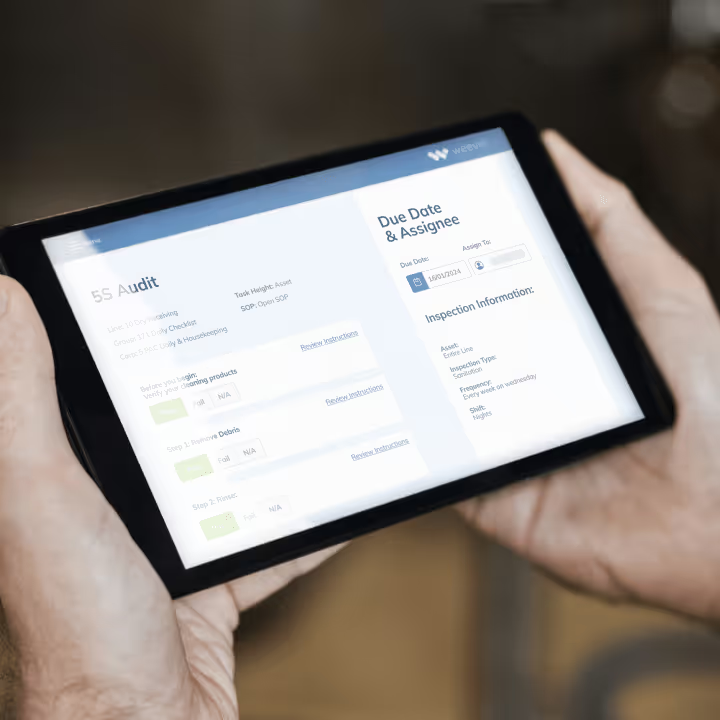
The Importance of an Audit Checklist in Manufacturing Operations
Success in manufacturing requires upholding high standards. Extensive standards for efficiency, safety, and quality should be met by each product before it leaves the factory. This is where audit checklists come in. They are essential tools that help manufacturers keep track of their operations, ensuring that every step in the process adheres to set standards.
Audit checklists play a vital role in manufacturing by making sure all activities comply with industry regulations. They help identify and correct errors before they become major problems, which ensures products are consistently high-quality. Additionally, these checklists boost efficiency by streamlining processes and eliminating waste.
In this blog, we will explore how audit checklists help ensure compliance, enhance quality, and improve efficiency in manufacturing processes. We'll show you why these checklists are indispensable for maintaining the highest standards in your operations.
Ensuring Compliance in Manufacturing with Audit Checklists
Manufacturing must adhere to regulations in order to guarantee worker safety and fulfill industry requirements. Audit checklists are essential tools that assist manufacturers in maintaining compliance by offering a systematic method to examine procedures and detect any problems.
They make sure that all activities follow the rules, which keeps expensive fines and production stops at bay.
Observation forms and near miss reporting software like Weever, further support compliance by capturing potential hazards and incidents. This proactive approach helps manufacturers address issues promptly, maintaining a safe and compliant work environment.
Ensuring Quality in Manufacturing with Audit Checklists
Audit checklists are critical for ensuring and enhancing product quality. They assist in identifying and correcting problems before they have an impact on the finished output. The 5S audit scorecard is an effective tool for promoting a clean, organized, and efficient workplace, which is critical to high-quality manufacturing.
Integrated work systems further enhance quality by streamlining processes, ensuring that every step is consistent and efficient. This combination of tools and systems helps manufacturers produce top-notch products every time.
Boosting Efficiency in Manufacturing with Audit Checklists
Audit checklists are essential for identifying and eliminating bottlenecks and inefficiencies in manufacturing processes. By regularly reviewing operations, these checklists help pinpoint areas that need improvement. Using program templates standardizes procedures, making workflows smoother and more efficient.
Predictive maintenance also plays a key role in boosting efficiency. By anticipating and addressing equipment issues before they cause downtime, manufacturers can keep operations running smoothly and avoid costly interruptions. Together, these tools and strategies ensure a highly efficient manufacturing process.
How Audit Checklists Promote Proactive Measures and Continuous Improvement
Taking proactive measures is crucial in manufacturing to prevent issues before they occur. Audit checklists are essential for this purpose. By conducting regular audits, manufacturers can identify potential problems early and address them promptly, avoiding costly disruptions and ensuring smooth operations.
Regular use of audit checklists supports continuous improvement by providing consistent feedback on processes. This helps manufacturers pinpoint areas needing enhancement and implement changes that boost efficiency and quality over time.
Near miss reporting software complements these efforts by capturing potential hazards before they become serious issues. This software allows workers to report near misses, which are then analyzed to prevent future incidents. By integrating these proactive tools and practices, manufacturers can create a safer, more efficient, and continuously improving work environment.
Weever’s Configurable Solutions for Effective Audits
Adopting configurable solutions for audit checklists in manufacturing offers many benefits. These checklists can be tailored to fit the specific needs of different processes, ensuring a perfect match for every operation. Weever’s configurable solutions allow manufacturers to configure their audits, making them more relevant and effective.
For example, a factory can design checklists to focus on particular safety protocols, quality checks, or maintenance schedules. This flexibility ensures all critical areas are covered thoroughly. With Weever’s solutions, manufacturers can streamline their audit processes, improve compliance, and boost overall efficiency. These tailored checklists make it easier to maintain high standards and continuously improve operations.
Ensuring Compliance, Quality, and Efficiency in Manufacturing Operations with Audit Checklists
Audit checklists are critical tools for maintaining good production standards. They contribute to compliance with industry laws, improved product quality, and increased operational efficiency. Checklists avoid severe problems and streamline procedures by detecting and addressing errors early on. They also contribute to continual improvement by offering frequent input on operations.
Tools like observation forms and near miss reporting software aid in compliance and proactive issue resolution. The 5S audit scorecard promotes an organized workspace, while integrated work systems ensure consistent quality. Predictive maintenance helps avoid downtime, and maintain smooth operations. Weever’s configurable solutions allow manufacturers to tailor checklists to their specific needs, enhancing audit effectiveness and overall efficiency. These strategies ensure manufacturers can maintain high standards and continuously improve their processes.

How Integrated Work Systems Improve Manufacturing Efficiency
Efficacy is of the utmost importance in the manufacturing industry, which moves like clockwork. In a highly competitive market, every second counts, and the ability to effectively simplify operations, minimize waste, and increase efficiency can be the deciding factor in whether or not a company can thrive or merely survive. The discovery of methods that can improve efficiency is not merely a goal for manufacturers; rather, it is a must.
The implementation of integrated work systems (IWS) is what comes into play here. The numerous components of the manufacturing process are brought together into a cohesive and interconnected network by these solutions, which are particularly sophisticated. Through the utilization of cutting-edge technology, integrated work systems make it possible to collect data in real-time, maintain seamless communication, and automate workflows, all of which lead to a considerable increase in overall efficiency.
Let’s investigate how integrated work systems have the potential to change manufacturing operations, with a particular emphasis on the role that these systems play in increasing efficiency and reducing downtime. In addition to this, we’ll look into real-world examples from prominent manufacturers who have effectively used these methods to achieve spectacular results.
Understanding Integrated Work Systems in Manufacturing
Integrated work systems are comprehensive solutions that unify various elements of the manufacturing process into a single, streamlined framework. These systems typically include components such as real-time data monitoring, automated workflows, predictive maintenance tools, and advanced analytics. In a manufacturing environment, integrated work systems facilitate seamless communication between different departments, enable precise tracking of production metrics, and support proactive decision-making to address potential issues before they escalate. Weever’s software plays a pivotal role in this integration by providing configurable solutions that enhance connectivity, automate routine tasks, and deliver actionable insights. This enables manufacturers to optimize their operations, reduce downtime, and significantly boost productivity, ultimately leading to more efficient and effective manufacturing processes.
Boosting Manufacturing Efficiency with Integrated Work Systems
Integrated work systems are designed to revolutionize efficiency in the manufacturing sector by streamlining workflows and enhancing communication. These systems create a unified platform where every department, from production to quality control, can collaborate seamlessly.
Streamlined workflows mean that tasks are automated and optimized, reducing manual intervention and the potential for errors. With improved communication channels, information flows effortlessly across the organization, ensuring everyone is on the same page and issues can be addressed promptly. Weever’s configurable solutions enhance these capabilities by providing intuitive tools that simplify task management and facilitate real-time updates, ensuring that all team members are well-informed and aligned with the overall production goals.
Another significant advantage of integrated work systems is the enhancement of data collection and analysis. These systems continuously gather data from various sources within the manufacturing process, enabling detailed and accurate insights into every aspect of production. With real-time monitoring, manufacturers can track performance metrics, identify bottlenecks, and implement quick decision-making processes to address any emerging issues. Weever’s software excels in this domain by offering advanced analytics and reporting features that turn raw data into actionable insights. This empowers manufacturers to make informed decisions rapidly, optimize their operations, and achieve higher levels of efficiency and productivity. The combination of streamlined workflows, enhanced communication, and robust data analysis ensures that integrated work systems are a critical asset in modern manufacturing, driving significant improvements in productivity and operational effectiveness.
Case Study: How Monin, a Syrup Manufacturer, Reduced Downtime with Integrated Work Systems
Reducing downtime is a critical goal for manufacturers aiming to maximize efficiency and productivity. Integrated work systems play a pivotal role in achieving this by enabling predictive maintenance and proactive issue resolution. These systems continuously monitor equipment performance and collect data to predict potential failures before they occur.
This allows maintenance teams to address issues proactively, preventing unexpected breakdowns and minimizing downtime. Automated scheduling and resource management further enhance this process by ensuring that maintenance activities are planned and executed efficiently without disrupting production schedules. Weever’s software provides powerful tools for these functions, helping manufacturers keep their operations running smoothly and efficiently.
A prime example of the effectiveness of integrated work systems in reducing downtime can be seen in the experience of Monin, a 100-year-old syrup manufacturer. Before implementing Weever, Monin struggled with manual workflows and paper-based reporting, leading to significant inefficiencies and delays. By digitizing their Production Readiness Reports and automating KPI reporting, Weever saved Monin 3-4 hours each day. This not only reduced downtime but also allowed managers to focus more on product quality and facility improvements.
The rapid adoption of Weever across all Monin's North American facilities within five months showcased the platform's user-friendly nature and effectiveness. Monin expanded its use of Weever to include OSHA-compliant Safety Incident Reporting, Root Cause Analysis Reporting (RCA), and Corrective and Preventive Actions (CAPAs), further streamlining processes and enhancing efficiency. The substantial time savings and improved compliance have contributed to Monin’s overall productivity and profitability, illustrating the transformative impact of integrated work systems.
The Multitude of Benefits Integrated Work Systems Offer Manufacturers
By streamlining workflows and improving communication, these systems ensure that every aspect of the production process operates smoothly and cohesively. Enhanced data collection and analysis provide valuable insights that drive informed decision-making, while real-time monitoring allows for quick response to potential issues.
Furthermore, predictive maintenance and automated scheduling help minimize downtime, keeping operations running seamlessly. As demonstrated by Monin's experience, the implementation of integrated work systems like Weever's software leads to substantial time savings, increased productivity, and improved compliance.
Manufacturers who embrace integrated work systems will be well-positioned to stay ahead of the competition, achieving higher levels of efficiency and operational excellence. By adopting these solutions, manufacturers can not only boost their productivity but also enhance their agility and resilience in an ever-changing market. Integrated work systems represent a vital investment for the future, ensuring that manufacturers can thrive in a dynamic and demanding industry.
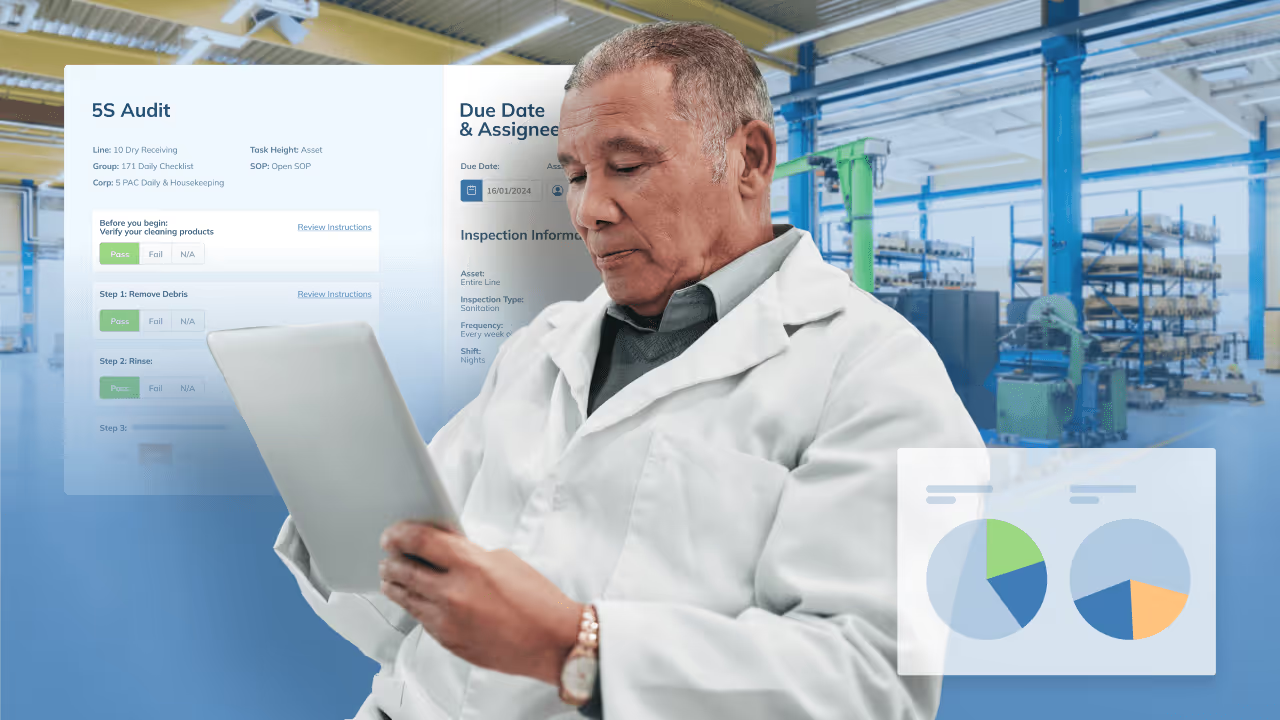
How Predictive Maintenance is Revolutionizing Manufacturing Operations
How Predictive Maintenance is Revolutionizing Manufacturing Operations
Explore how predictive maintenance enhances manufacturing efficiency and reliability with Weever's configurable solutions.
In the manufacturing industry, maintaining equipment and machinery is critical to ensuring smooth operations and avoiding costly downtime. Traditionally, maintenance strategies have ranged from reactive approaches, where issues are addressed after they arise, to proactive measures aimed at preventing problems before they occur. However, the advent of predictive maintenance has introduced a game-changing approach that leverages advanced technologies to predict and prevent equipment failures. This shift towards predictive maintenance is gaining traction due to its potential to significantly enhance manufacturing efficiency and reliability. This article delves into the transformative impact of predictive maintenance, comparing it with traditional reactive and proactive strategies, and highlights its benefits in revolutionizing manufacturing operations.
Understanding Maintenance Strategies in Manufacturing
- Reactive maintenance, often described as a "run-to-failure" approach, involves addressing equipment issues only after they occur. This strategy is straightforward and requires minimal upfront investment, making it suitable for non-critical equipment where downtime has a limited impact. However, reactive maintenance can lead to unexpected breakdowns, extended downtimes, and higher long-term costs due to unplanned repairs and replacements.
- In contrast, proactive maintenance aims to prevent equipment failures through regular inspections, scheduled servicing, and timely replacement of worn-out components. This approach helps to extend the lifespan of machinery and reduces the frequency of breakdowns. However, proactive maintenance can be resource-intensive and may not always accurately predict the optimal timing for maintenance activities, sometimes leading to unnecessary servicing and associated costs.
- Predictive maintenance emerges as a superior alternative by utilizing real-time data and advanced analytics to forecast equipment failures before they happen, thus combining the benefits of both reactive and proactive approaches while minimizing their drawbacks.
What is Predictive Maintenance?
Predictive maintenance is a proactive strategy that leverages real-time data and advanced analytics to predict equipment failures before they occur. The key components of predictive maintenance include sensors for data collection, IoT devices for connectivity, and AI-driven analytics for processing and interpreting the data. By continuously monitoring the condition of equipment, predictive maintenance identifies patterns and anomalies that indicate potential issues, allowing maintenance to be performed just in time to prevent failures.
The role of data and analytics in predictive maintenance is crucial. Sensors embedded in machinery collect a wealth of data on parameters such as temperature, vibration, and pressure. This data is transmitted via IoT devices to centralized systems where AI and machine learning algorithms analyze it to detect early warning signs of equipment degradation. The insights derived from this analysis enable precise predictions about when and where maintenance is needed, thus optimizing maintenance schedules and resource allocation.
When compared to reactive maintenance, predictive maintenance offers significant advantages. Reactive maintenance often leads to unexpected downtimes and costly emergency repairs, whereas predictive maintenance minimizes these disruptions by anticipating issues in advance.
Compared to proactive maintenance, predictive maintenance is more efficient and cost-effective. Proactive maintenance can lead to unnecessary maintenance activities and associated costs, while predictive maintenance ensures maintenance is performed only when necessary, based on actual equipment condition. However, the implementation of predictive maintenance requires an initial investment in technology and training, which can be a disadvantage for some manufacturers.
Technological Enablers of Predictive Maintenance
Several key technologies drive the effectiveness of predictive maintenance, making it a transformative approach in manufacturing.
- The Industrial Internet of Things (IIoT) connects sensors and devices across the manufacturing floor, enabling real-time data collection and communication. Advanced sensors gather detailed information on equipment performance, which is crucial for accurate predictions.
- Artificial Intelligence (AI) and Machine Learning (ML) play a pivotal role in analyzing the vast amounts of data collected. These technologies can identify patterns, anomalies, and trends that human analysts might miss, providing actionable insights into equipment health. Machine learning algorithms continuously improve their accuracy over time, making predictions more reliable.
- Cloud computing and data analytics are essential for storing, processing, and analyzing the large volumes of data generated by IIoT devices and sensors. Cloud-based platforms provide the computational power needed to run complex AI and ML algorithms, and they facilitate easy access to data from anywhere, ensuring timely decision-making.
These technologies work together seamlessly to predict failures and optimize maintenance schedules. Sensors collect real-time data, IIoT devices transmit this data to cloud platforms, where AI and ML algorithms analyze it to provide predictive insights. This integrated approach allows manufacturers to schedule maintenance activities at the most opportune times, minimizing downtime and maximizing equipment lifespan. The result is a more efficient, reliable, and cost-effective manufacturing operation.
Benefits of Predictive Maintenance in Manufacturing
Predictive maintenance offers numerous benefits that significantly enhance manufacturing operations. By leveraging real-time data and advanced analytics, manufacturers can achieve improved operational efficiency and productivity. Predictive maintenance ensures that equipment operates at optimal performance levels, reducing unexpected breakdowns and prolonging the lifespan of machinery. This proactive approach minimizes downtime, leading to substantial reductions in maintenance costs and less disruption to production schedules. Furthermore, predictive maintenance allows for better resource allocation and planning, as maintenance activities can be scheduled during non-peak times, ensuring minimal impact on overall productivity.
Several real-world examples and case studies illustrate these benefits. For instance, a leading automotive manufacturer reported a 20% increase in production efficiency and a 25% decrease in maintenance costs after implementing predictive maintenance. Another example is a major food processing plant that saw a 30% reduction in equipment downtime, resulting in significant cost savings and increased throughput. These success stories highlight the transformative impact of predictive maintenance on manufacturing efficiency and reliability.
Implementing Predictive Maintenance for Manufacturers
Adopting predictive maintenance in manufacturing involves several critical steps. The first step is assessing current maintenance practices to identify areas for improvement and determine the feasibility of implementing predictive maintenance. Next, manufacturers need to invest in the right technologies and tools, such as IIoT devices, advanced sensors, AI, and cloud-based analytics platforms. Training the workforce is essential to ensure they can effectively use these new technologies and integrate predictive maintenance processes into their daily routines. Establishing a continuous improvement cycle is also crucial, as it allows for ongoing optimization and refinement of maintenance practices based on data insights.
The implementation process does come with challenges, including initial costs and investment required for technology and training. Integrating predictive maintenance with existing systems and infrastructure can be complex and may require additional resources. Data security and privacy concerns must be addressed to protect sensitive information collected from equipment. Workforce training and change management are also critical, as employees need to adapt to new technologies and processes. However, these challenges can be overcome with careful planning, strategic investment, and a commitment to fostering a culture of continuous improvement. By addressing these obstacles, manufacturers can fully realize the benefits of predictive maintenance and transform their operations for greater efficiency and reliability.
The Role of Configurable Solutions in Predictive Maintenance
Configurability is crucial in predictive maintenance as it allows manufacturers to tailor solutions to their specific operational needs and processes. Configurable solutions can be adjusted to monitor different types of equipment, collect relevant data, and provide actionable insights based on unique manufacturing environments. For example, a configurable predictive maintenance solution can be customized to monitor the vibration patterns of a particular type of machinery, thereby providing more accurate and relevant maintenance predictions. This flexibility not only enhances the effectiveness of predictive maintenance but also supports scalability and future-proofing. As manufacturing operations grow or evolve, configurable solutions can be easily adapted to new requirements, ensuring long-term sustainability and efficiency.
Weever's Contribution to Predictive Maintenance for Manufacturers
Clients have reported significant improvements in operational efficiency and reduced maintenance costs, highlighting the effectiveness of Weever's solutions. For instance, a major manufacturer using Weever's predictive maintenance tools saw a 30% decrease in downtime and a notable increase in equipment lifespan. Looking ahead, Weever continues to innovate, focusing on developing even more advanced features and expanding the capabilities of their predictive maintenance solutions.
Predictive Maintenance is Already Revolutionizing Manufacturing Operations
By leveraging advanced technologies and configurable solutions, manufacturers can optimize their maintenance strategies and achieve greater operational success. Weever's predictive maintenance solutions are at the forefront of this transformation, providing manufacturers with the tools they need to stay competitive. Manufacturers are encouraged to embrace predictive maintenance for future success and consider adopting Weever's configurable solutions to fully realize these benefits and drive continuous improvement in their operations.
Take control of your operations with Weever's manufacturing solutions.
Discover How Predictive Maintenance Can Transform Your Manufacturing Efficiency!
Request more information Preview modal-
Request more information
Please tell us a bit about yourself so we can tailor our response and get you the information you need.
Continue Reading
Boost Your Manufacturing safety with Proactive Measures
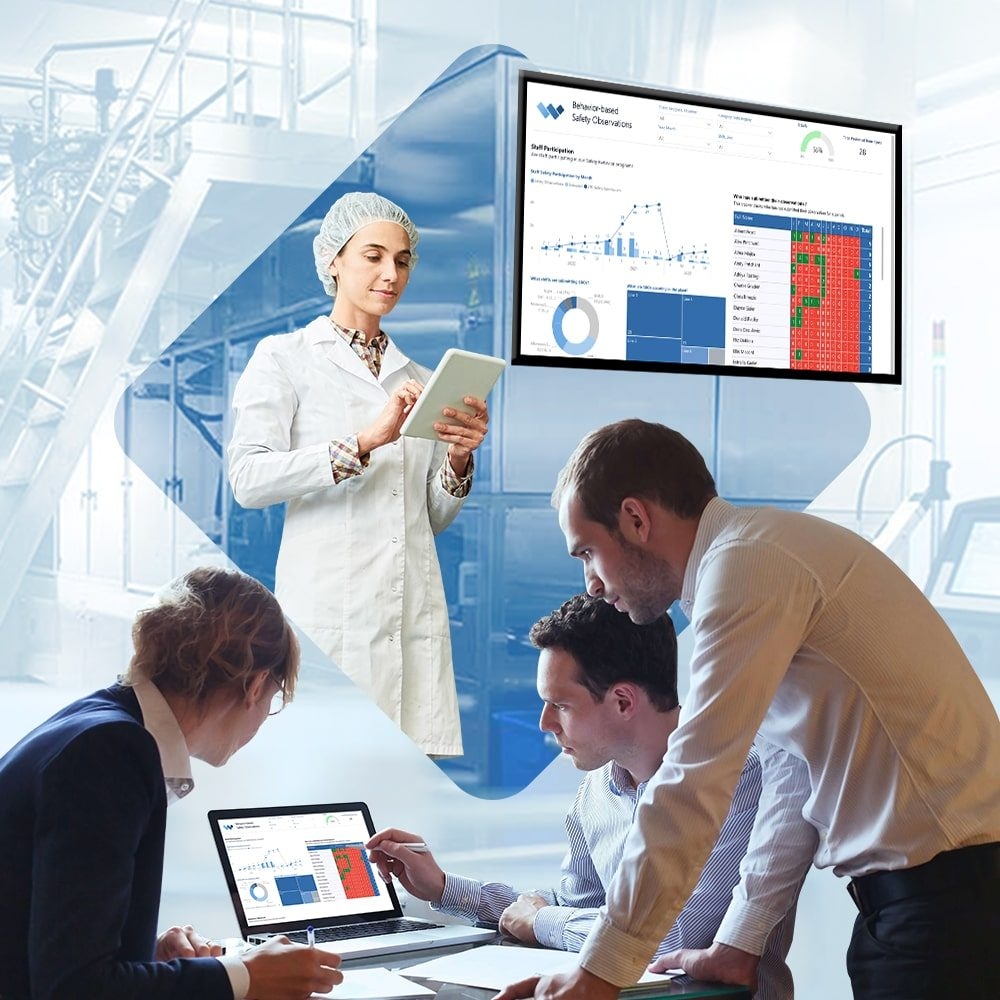
How Proactive Measures Can Lead to Cost Savings in Manufacturing

How to be more proactive about safety

How to implement a proactive safety program into your facility

Proactive Measures for Ensuring Compliance in Regulated Industries

Proactive Measures in Manufacturing: Leveraging Weever Software for a Safer Workplace
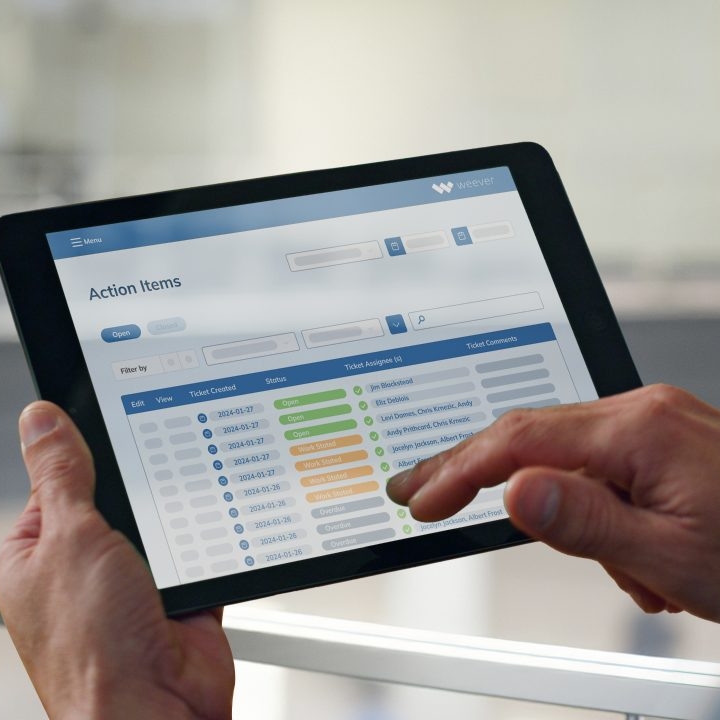
The Importance of Proactive Measures in Manufacturing Operations
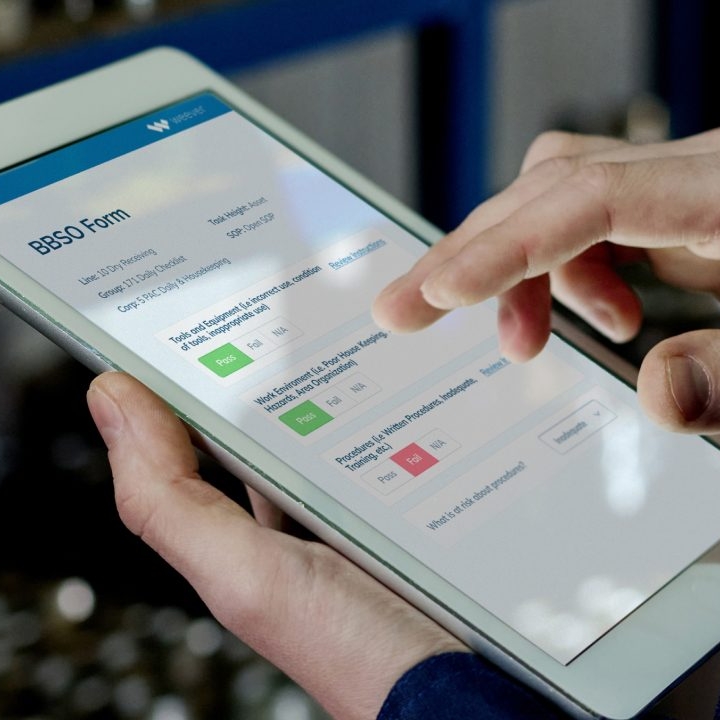
The Power of Proactive Measures in Preventing Equipment Failure

"Having cloud-based forms on devices around the facility makes them so much more accessible, which makes it painless for operators to quickly provide a report."
Johanna Velez, VP Quality Assurance


"Weever is really user friendly and will have a massive positive impact on our operations and training team."
Mel Cadle - Op Ex Lead Process Engineer


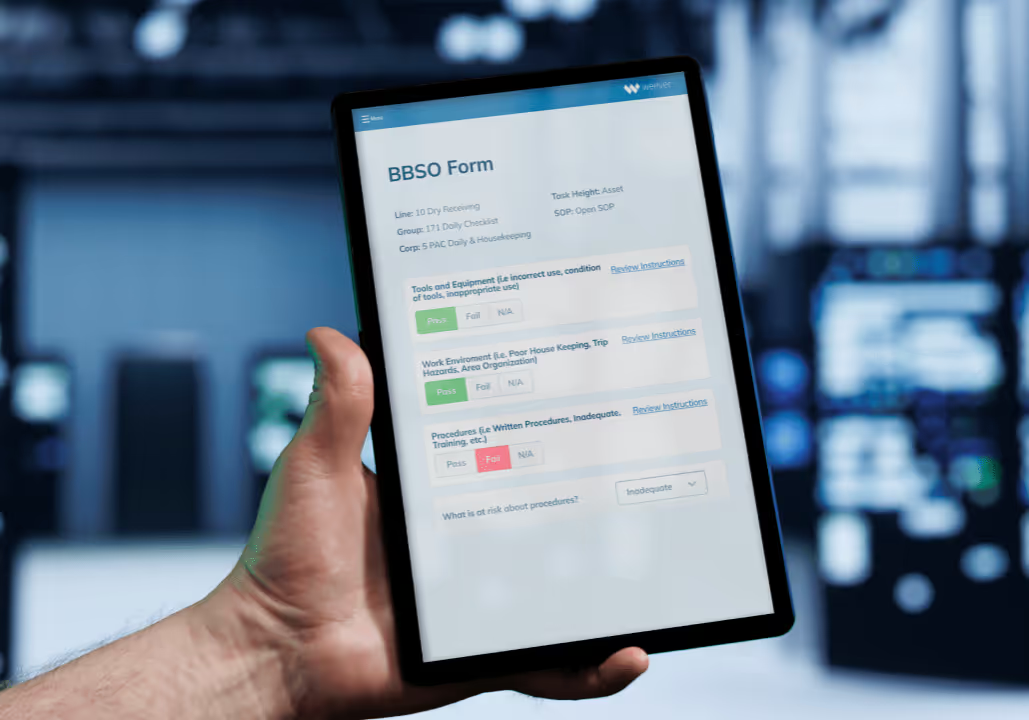
The Future of Manufacturing: Embracing Integrated Work Systems
The manufacturing industry is currently experiencing a significant transformation, driven by rapid advancements in technology and an increasing need for efficiency and adaptability. Traditionally reliant on manual processes and isolated systems, manufacturers are now embracing digital solutions to streamline operations and enhance productivity. The integration of advanced technologies is no longer a luxury but a necessity for staying competitive in the global market.
Technological advancements such as the Industrial Internet of Things (IIoT), artificial intelligence (AI), and advanced robotics are revolutionizing the manufacturing landscape. These innovations enable real-time data collection, predictive analytics, and automation, leading to improved decision-making and operational efficiency. The integration of these technologies allows manufacturers to optimize production processes, reduce downtime, and maintain high-quality standards.
At the heart of this transformation are integrated work systems, which seamlessly connect various elements of the manufacturing process. These systems facilitate the flow of information across different departments and stages of production, creating a cohesive and efficient workflow.
By leveraging integrated work systems, manufacturers can achieve greater transparency, agility, and responsiveness to market demands. The potential of these systems to drive significant improvements in manufacturing efficiency and productivity underscores their critical role in the industry's future.
Understanding Integrated Work Systems
Integrated work systems are comprehensive frameworks that connect various components of the manufacturing process, creating a unified and efficient operational environment. These systems encompass a wide array of technologies and tools, including IIoT devices, AI-driven analytics, cloud computing, and advanced robotics.
The core of integrated work systems lies in their ability to facilitate seamless connectivity and data sharing across different departments and production stages. This interconnectedness ensures that information flows freely and accurately, enabling real-time monitoring, predictive maintenance, and optimized resource allocation. For instance, smart factories equipped with IIoT sensors and AI analytics can predict equipment failures before they occur, significantly reducing downtime and maintenance costs.
Another example is the use of digital twins, which create virtual replicas of physical assets, allowing for detailed analysis and process optimization. By implementing integrated work systems, manufacturers can achieve unprecedented levels of efficiency, agility, and responsiveness, positioning themselves for success in the rapidly evolving industrial landscape.
Technological Advancements Driving Integration in Manufacturing Processes
The driving force behind integrated work systems is a suite of cutting-edge technologies that revolutionize manufacturing processes. The Industrial Internet of Things (IIoT) enables interconnected devices to communicate and share data, providing real-time insights into production. Artificial Intelligence (AI) and Machine Learning (ML) analyze this data to predict trends, optimize operations, and make informed decisions. Advanced robotics and automation streamline repetitive tasks, enhancing precision and speed, while cloud computing and data analytics facilitate the storage, processing, and accessibility of vast amounts of information.
Together, these technologies enhance efficiency, accuracy, and decision-making across the manufacturing floor. The benefits of embracing integrated work systems are profound: improved operational efficiency and productivity, enhanced real-time monitoring and maintenance, superior quality control, reduced downtime, and increased flexibility in adapting to market changes. For example, manufacturers that have adopted these systems report significant improvements, such as a 30% reduction in downtime and a 25% increase in production efficiency, illustrating the transformative potential of integrated work systems in the industry.
Future Trends in Integrated Work Systems and Overcoming Challenges in Manufacturing
Looking ahead, integrated work systems are poised to usher in a new era of manufacturing marked by predictive maintenance, which minimizes downtime by anticipating equipment failures before they occur.
The rise of autonomous manufacturing and smart factories, where machines independently manage production processes, will further enhance efficiency and precision. Digital twins, virtual replicas of physical assets, play a crucial role in optimizing manufacturing processes by allowing for detailed simulations and real-time adjustments. Human-robot collaboration is also set to revolutionize the workforce, combining human creativity with robotic precision to achieve unprecedented productivity. Additionally, integrated work systems promote sustainable manufacturing practices by optimizing resource use and reducing waste.
However, implementing these systems comes with challenges, including high initial costs and investments, integration with existing systems, data security and privacy concerns, and the need for extensive workforce training and change management. Overcoming these obstacles requires strategic planning, leveraging scalable and configurable solutions, investing in cybersecurity measures, and fostering a culture of continuous learning and adaptability within the workforce. By addressing these challenges, manufacturers can fully harness the potential of integrated work systems to drive future success.
The Role of Configurable Solutions and Weever for Manufacturers
Configurability is crucial in integrated work systems, enabling manufacturers to tailor solutions to their specific needs and ensuring seamless integration across diverse operations. Configurable solutions allow for:
- Adaptable to unique manufacturing processes.
- Scalability, adapting to growth and changing demands.
- Future-proofing by accommodating technological advancements.
Weever’s solutions exemplify the power of configurability in enhancing integration:
- Ease of Use: User-friendly interfaces tailored to various roles.
- Automated Workflows: Streamlining tasks and reducing manual input.
- Real-Time Reporting: Providing actionable insights and trend analysis.
The Transformative Potential of Integrated Work Systems
Integrated work systems hold transformative potential for the manufacturing industry, driving unparalleled efficiency, precision, and adaptability. By embracing these advanced technologies, manufacturers can optimize their operations, reduce downtime, and stay competitive in a rapidly evolving market.
The journey towards this future is paved with the promise of increased productivity and sustainability. To fully realize these benefits, manufacturers are encouraged to adopt Weever's configurable solutions, which are designed to meet diverse needs and ensure seamless integration. By partnering with Weever, manufacturers can not only navigate the complexities of modern manufacturing but also position themselves for long-term success and innovation.
Partner with Weever and step into the future of manufacturing.

Enhancing Visibility and Accountability with a 5S Audit Scorecard
Maintaining high standards of organization and efficiency is crucial across the manufacturing sector. The 5S methodology—Sort, Set in order, Shine, Standardize, and Sustain—provides a structured approach to workplace organization that can significantly enhance productivity and quality. Central to the success of this methodology is the 5S audit scorecard. By leveraging Weever's configurable 5S audit scorecard, manufacturers can achieve greater visibility and accountability in their processes and workflows. Read on and explore how Weever's 5S audit scorecard enhances these critical aspects in manufacturing environments.
The Role of the 5S Audit Scorecard in Manufacturing
A 5S audit scorecard is a powerful tool that helps ensure adherence to the 5S principles. It serves as a checklist to evaluate various aspects of workplace organization, cleanliness, and standardization. Regular use of the scorecard provides a consistent framework for assessing and improving work environments.
Visibility in Manufacturing Processes
Visibility is essential in manufacturing as it allows for real-time monitoring of processes, identifying issues promptly, and making informed decisions. Weever's 5S audit scorecard enhances visibility in several ways:
Real-Time Data Collection
Weever’s 5S audit scorecard facilitates real-time data collection, enabling immediate access to the current state of the workplace. This real-time visibility allows managers and supervisors to quickly identify areas that require attention and take corrective actions without delay. By providing up-to-date information, the scorecard helps maintain continuous improvement.
Detailed Reporting and Analytics
The scorecard’s detailed reporting features offer comprehensive insights into the audit results. These reports can highlight trends, pinpoint recurring issues, and track progress over time. With Weever’s solution, manufacturing leaders can generate customized reports that provide a clear view of the effectiveness of their 5S implementation, helping to drive data-informed decisions.
Visual Dashboards
Weever’s 5S audit scorecard includes visual dashboards that present audit results in an easy-to-understand format. These dashboards offer a snapshot of key metrics, making it simple for everyone in the organization to see how well different areas are performing. This visual representation enhances transparency and keeps everyone informed about the status of 5S initiatives.
Enhancing Accountability
Accountability is crucial for maintaining high standards and ensuring that everyone adheres to established processes. Weever’s 5S audit scorecard promotes accountability in the following ways:
Clear Responsibility Assignments
The scorecard helps assign clear responsibilities for different tasks and areas. Each audit can specify which team or individual is responsible for maintaining a particular area, ensuring that there is no ambiguity. This clear allocation of responsibilities ensures that everyone knows their roles and can be held accountable for their performance.
Regular Audits and Follow-Ups
Weever’s solution supports the scheduling of regular audits, ensuring that the 5S principles are consistently applied and maintained. The regularity of these audits creates a routine that keeps everyone focused on their duties. Additionally, the software facilitates follow-ups on action items, ensuring that issues identified during audits are addressed promptly and effectively.
Performance Tracking
The 5S audit scorecard allows for the tracking of individual and team performance over time. By monitoring performance metrics, managers can identify high-performing individuals and teams, as well as those that may need additional support or training. This performance tracking fosters a sense of accountability as employees know that their efforts are being monitored and evaluated.
Incentives and Recognition
Recognizing and rewarding employees for their adherence to 5S principles and exceptional performance can significantly boost morale and motivation. Weever’s scorecard can be configured to highlight top performers, making it easier for management to recognize and reward those who consistently meet or exceed standards. This recognition reinforces positive behaviors and encourages others to strive for similar achievements.
Implementing Weever’s 5S Audit Scorecard
Implementing Weever’s 5S audit scorecard is straightforward and beneficial for manufacturing organizations of all sizes. Here are some steps to effectively integrate this powerful tool into your operations:
Initial Setup and Configuration
Start by configuring the scorecard to match your specific manufacturing processes and standards. Weever’s solution is highly flexible, allowing you to tailor the scorecard to fit the unique needs of your facility. Define the criteria for each of the 5S principles and set up the scoring system that best suits your objectives.
Training and Engagement
Ensure that all employees are trained on how to use the scorecard effectively. Provide comprehensive training sessions to explain the importance of the 5S methodology and how the audit scorecard contributes to organizational goals. Engage staff by involving them in the setup process and encouraging their feedback. Make use of concrete examples of how 5S scorecards improved processes and workspaces during early implementation.
Regular Audits and Continuous Improvement
Schedule regular audits and use the scorecard to conduct thorough evaluations. Use the data collected to identify areas for improvement and implement changes as needed. Regularly review and adjust the scorecard criteria to ensure it remains relevant and effective.
Configurable 5S Audit Scorecards – A Vital Tool for Manufacturers
By providing real-time data, detailed reporting, and clear responsibility assignments, the scorecard ensures that the 5S principles are consistently applied and maintained. Implementing this powerful solution can lead to significant improvements in workplace organization, efficiency, and overall performance. Embrace the benefits of Weever’s 5S audit scorecard and transform your manufacturing processes today. Schedule a demo today.

How to Use a 5S Audit Scorecard in Manufacturing to Drive Staff Participation
For manufacturers, efficiency and organization are key. Implementing the 5S methodology—Sort, Set in order, Shine, Standardize, and Sustain—can transform workplaces, leading to improved productivity, safety, and morale. A critical tool in maintaining these principles is the 5S audit scorecard. By leveraging a configurable 5S audit scorecard, manufacturers can significantly boost staff participation and engagement, ultimately driving the success of the 5S initiative. Let’s explore how to effectively use a 5S audit scorecard to enhance staff involvement, supported by Weever’s user-friendly software.
You can learn more about Weever’s 5S Audits solutions here.
Understanding the 5S Audit Scorecard in Manufacturing
A 5S audit scorecard is a structured checklist used to evaluate adherence to the 5S principles. It provides a standardized method to assess and score various aspects of workplace organization and cleanliness. The scorecard typically covers criteria for each of the five S's, ensuring that all areas are consistently maintained.
Why Should Manufacturers Use a 5S Audit Scorecard?
- Consistency: The scorecard ensures that all audits are performed uniformly, maintaining high standards across the board, and improving the quality of the collected data.
- Accountability: Regular audits create a sense of responsibility among staff, encouraging them to uphold 5S principles.
- Continuous Improvement: The scorecard helps identify areas that need improvement, fostering a culture of continuous improvement.
Driving Manufacturing Staff Participation with a 5S Audit Scorecard
Engaging staff in the 5S process is crucial for its success. Here’s how a 5S audit scorecard can drive participation:
Clear Expectations and Transparency
A well-structured 5S audit scorecard sets clear expectations for staff. When employees understand the specific criteria they are being evaluated on, they are more likely to take ownership of their workspaces. Transparency in the scoring process fosters trust and motivates staff to consistently meet or exceed the standards.
Regular Feedback and Recognition
Using a 5S audit scorecard allows for regular feedback on performance. This feedback loop is essential for maintaining momentum. Recognizing and rewarding teams or individuals who achieve high scores reinforces positive behavior and encourages others to follow suit.
Involvement in the Audit Process
Involving staff in the audit process itself can significantly boost engagement. When team members participate in audits, they gain a deeper understanding of the 5S principles and see firsthand the impact of their efforts. This hands-on involvement can lead to greater commitment to maintaining 5S standards, and greater ownership by staff over their workflows.
Training and Education
The 5S audit scorecard can also be a valuable training tool. By highlighting areas for improvement, it provides concrete examples that can be used in training sessions. Ongoing education helps staff understand the importance of each of the 5S principles and how they contribute to overall efficiency and productivity.
Weever’s Configurable Solution for 5S Audits
Weever’s configurable software enhances the 5S audit process, making it easier for manufacturers to engage their staff. Here’s how:
User-Friendly Interface
Weever’s solution offers an intuitive interface that simplifies the audit process. Staff can easily navigate the scorecard, input data, and track performance over time. This ease of use reduces resistance to the audit process and encourages more frequent participation.
Configurable Scorecards
While standardization is crucial, flexibility is also important. Weever allows for configurable scorecards that can be tailored to specific manufacturing environments. This configurability ensures that the scorecard is relevant to the unique needs of each workspace, making it more meaningful for staff.
Real-Time Data and Reporting
Weever’s solution provides real-time data and reporting, giving instant feedback on audit results. This immediate visibility helps teams quickly address any issues, maintain high standards, and recognize improvements. Real-time reporting also facilitates better communication between management and staff. The collected data available on the cloud can be used for reporting by business analysts, managers, and executives.
Seamless Integration
Weever’s software integrates seamlessly with other business systems, ensuring that the 5S audit process can be incorporated into a greater operational workflow. This integration minimizes disruption and encourages staff to view 5S as an integral component of their daily routines.
Driving Staff Engagement in Manufacturing with 5S Audit Scorecards Now and into the Future
Implementing a 5S audit scorecard is a powerful strategy to drive staff participation and engagement in manufacturing. By setting clear expectations, providing regular feedback, involving staff in the process, and using it as a training tool, manufacturers can sustain high standards of workplace organization. Supported by Weever’s user-friendly, configurable solution, the 5S audit process becomes more efficient and engaging, ultimately contributing to the overall success of the 5S initiative. Embrace the power of the 5S audit scorecard and watch as your manufacturing operations become more organized, efficient, and productive.

Proactive Measures for Ensuring Compliance in Regulated Industries
Staying compliant is crucial yet challenging when operating in highly regulated industries like manufacturing. Regulations change often, and failing to keep up can lead to hefty fines, operational disruptions, and damage to a company’s reputation. Ensuring compliance requires constant vigilance and proactive measures.
Weever understands these challenges and is dedicated to making compliance easier for manufacturers. Weever solutions are designed to support proactive measures by providing tools for regular audits, employee training, accurate documentation, and risk management. With Weever, companies can stay ahead of regulations and maintain smooth, compliant operations.
The Importance of Proactive Measures in Manufacturing
Taking proactive measures toward compliance is critical in manufacturing because it helps identify and address potential issues before they become major problems. Proactive measures include regular audits, continuous employee training, and meticulous documentation. The benefits of proactive measures are substantial as avoiding fines saves money and resources that can be better used elsewhere. Maintaining a good reputation is essential for attracting and retaining customers and for building strong relationships with business partners. Efficient operations mean fewer disruptions, which improves productivity and reduces downtime.
A real-world example of the consequences of non-compliance is the Volkswagen emissions scandal in 2015. Volkswagen was found to have installed software to cheat emissions tests, leading to over $33 billion in fines and severe damage to their reputation. This scandal not only caused financial losses but also eroded customer trust and resulted in long-term negative impacts on the company’s brand.
By implementing proactive compliance measures, manufacturers can avoid such devastating consequences. Weever’s solutions help companies stay compliant by providing tools for regular audits, employee training, accurate documentation, and risk management, ensuring smooth and efficient operations.
Key Proactive Measures for Manufacturers
Here are five key measures that manufacturers can adopt to stay ahead.
1. Regular Audits and Inspections
- Conducting frequent audits and inspections is essential to ensure that all aspects of the manufacturing process are compliant with regulations.
- Regular checks help identify potential issues early, allowing for timely corrections before they escalate into significant problems. This not only prevents non-compliance but also maintains smooth operations.
2. Employee Training and Awareness
- Ensuring that employees are well-informed about compliance requirements is critical. When workers understand the regulations they need to follow, they are more likely to adhere to them.
- Implementing ongoing training programs helps keep the workforce updated on new regulations and best practices. This continuous improvement approach ensures that employees are always equipped with the latest knowledge, reducing the risk of non-compliance due to outdated information.
3. Documentation and Record-Keeping
- Keeping accurate and up-to-date records of all compliance-related activities is crucial. Detailed documentation supports transparency and accountability, making it easier to demonstrate compliance during audits.
- Thorough documentation helps in tracking compliance activities, ensuring that all processes are visible and verifiable. This transparency is vital for building trust with regulators and stakeholders.
4. Risk Management and Assessment
- Taking proactive measures involves identifying and evaluating potential compliance risks. Understanding where the risks lie allows for better preparation and prevention.
- Implementing strategies to mitigate identified risks is key to proactive compliance. By addressing risks before they become issues, manufacturers can maintain compliance and avoid disruptions.
5. Implementing Configurable Digital Solutions
- Using digital tools to streamline compliance processes makes it easier to manage and monitor compliance activities. Weever’s software solutions can automate many tasks, reducing the burden on staff and increasing efficiency.
- Configurable digital solutions can adapt to changing regulations and specific needs. This flexibility ensures that the tools remain relevant and effective as regulatory requirements evolve. Weever’s solutions, for example, allow manufacturers to tailor compliance tools to their specific processes, ensuring all critical areas are covered and up-to-date.
Taking proactive measures toward compliance is essential for maintaining high standards in manufacturing. Regular audits, continuous employee training, thorough documentation, risk management, and the implementation of configurable digital solutions all contribute to a robust compliance strategy. By adopting these measures, manufacturers can avoid the severe consequences of non-compliance. Weever’s solutions support these proactive measures, helping manufacturers stay compliant and focus on what they do best.
Spend Less Time on Admin. Get More Insights by Email.
Subscribe to receive practical tips, updates, and ideas to improve operations without the extra admin work.