
Autonomous Maintenance Step 5: How to Hand Over Autonomous Inspection
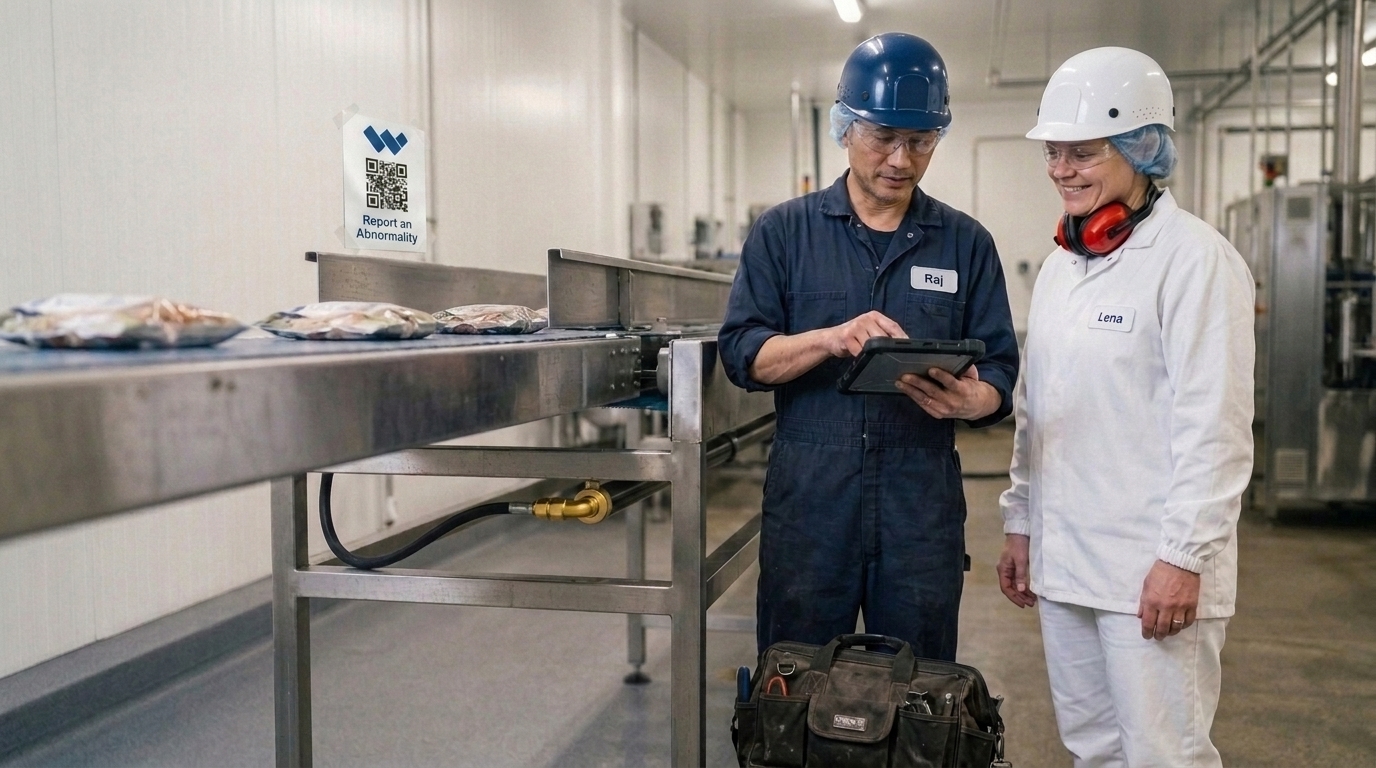
Table of contents

Share:


Up to now, a technician has been beside your operators for most of the program: during the deep clean, while the CIL standards were written, and through general inspection training. Step 5 is the moment that changes. Operators start running the inspections on their own, every shift, with nobody standing next to them.
It's the step the whole program has been building toward, and the one most often rushed. Hand over well and operators catch the loose bolt and the warm bearing on Tuesday's shift, long before anything stops. Hand over too early, or with a route that doesn't fit the shift, and you get completion rates that look perfect and checks nobody actually did.
Step 5 of the 7 steps of autonomous maintenance is autonomous inspection. This guide covers what changes at this step, how to hand inspection over in stages, how to keep oversight without hovering, and how to know the handover has worked.
What is step 5 of Autonomous Maintenance?
Step 5, called autonomous inspection in most TPM materials, is where operators take over routine inspection of their equipment. They run a single route for each machine that combines the cleaning and lubrication standards from step 3 with the inspection skills they learned in step 4, on shift and without a technician present. Supervisors review what operators find and coach where needed.
It's also the step where maintenance and operators agree, line by line, which checks now belong to operators and which stay on the preventive maintenance schedule, so nothing is done twice and nothing falls between the two.
What changes at step 5
How to hand over inspection
The handover works best in stages. Each one is small, and each one gives you a chance to fix the route before it becomes a habit.
1. Merge the standards into one route. Combine the step 3 CIL standard and the step 4 inspection points into one route per machine, ordered the way an operator walks around it. One route, one form, no doubling back.
2. Remove overlap with preventive maintenance. Sit down with maintenance and go through the PM schedule for each machine. Checks operators now do every shift can come off the PM list or move to a longer interval. Anything that needs tools, disassembly or a qualification stays with maintenance.
3. Cut and time the route. Time an operator doing the full route properly and compare it with the time the shift can give. If it doesn't fit, cut: keep the points where catching a problem early changes the outcome, and use ECRS (eliminate, combine, rearrange, simplify) on the rest. Centerline checks are usually best kept to the 5 to 20 variables that matter most.
4. Certify each operator on each route. A trainer watches the operator run the route, asks what they're looking for at each point, and signs them off. Record it in your skills matrix. Nobody runs a route alone until they're signed off on it.
5. Hand over in stages. For the first few weeks, a technician shadows the route on some shifts without taking over, then steps back to spot checks. Keep the technician as the operators' first call for questions.
6. Audit and coach. Supervisors review each shift's results, and an operator and technician walk the route together every so often to compare what each of them sees. Differences become coaching points, or changes to the standard.
Keep oversight without hovering
The point of step 5 is that operators own the inspection. Oversight should check the system, not the person.
Watch the numbers that move first. Findings per route should stay steady or rise as operators get sharper; a steady decline usually means people have stopped looking. Time per route should be consistent; a sudden drop is a warning sign that checks are being ticked rather than done. Time from report to fix shows whether maintenance is keeping its side of the deal. Completion rate matters too, but it's the last number to warn you.
The hub guide covers these leading and lagging indicators for an autonomous maintenance program in more detail.
Where step 5 goes wrong
- Handing over before step 4 is finished. Operators who don't understand how a component fails will tick the box without judging it.
- A route that doesn't fit the shift. When operators can't finish, they check what matters and mark the rest as done. The fix is a shorter route, not more pressure.
- Technicians disappear. Step 5 changes the technician's role from doing the checks to coaching and responding. It doesn't remove it.
- Findings go nowhere. If what operators report sits unresolved, reporting drops, and step 5 quietly fails while completion stays high.
- Two routes for the same machine. If the PM schedule isn't adjusted, operators and technicians check the same points and miss others.
When is step 5 done?
Step 5 is done when operators complete CILs on shift without a technician present and supervisors review what they find. In practice, that means every operator on the pilot line is signed off on their routes, each route fits the shift, findings are being reported and closed, and the PM schedule has been adjusted to match.
How Weever helps with step 5
In Weever, each route is a digital checklist in walking order, with the reference photo, target range and One Point Lesson for every point. Routes run on a schedule by shift, missed checks are flagged, and every failed check or abnormality routes to maintenance with its photo attached. Each submission is time-stamped, so supervisors can see completion, findings and route times by line and shift without building a spreadsheet.
At a global CPG manufacturer we worked with, the maintenance manager found that operators took to running inspections themselves once the route was easy to follow. The plant now averages over 1,500 AM submissions a month.
Next: make the best way the only way
Once operators run inspection on their own, the next job is making sure every shift, line and site does it the same way. That's step 6: standardizing and sharing best practices. Back to step 4: general inspection.
Spend Less Time on Admin. More Time Improving Operations.
See how Weever automates data entry, reporting, and action items so you can focus on improvement not admin.