
-%20smaller.webp)
.webp)
Explore More Blogs
5S Demo Thank you
Thank you for requesting a demo.
A Weever representative will be in touch ASAP.
Tell us a bit more about yourself so we can make our time together more productive.

Millions of jobs completed worldwide. View Testimonials

Poka Yoke
Poka Yoke
Everything you need to get it done.
Customizable Templates
Dashboard Reporting
Automated Workflows
Schedule Management
Real-time Visibility
On-Demand Instructions


Eliminate errors and improve operational efficiency with our intuitive poka yoke digital software solution, providing real-time error prevention and process optimization for your organization.
- Elevate Accountability
- Ensure Knowledge Transfer
- Drive Continuous Improvement
- Enhance Compliance
- Save Time with Automated KPI Reporting
Configurable & Accessible
Ensure quick adoption and compliance.
- Get started quickly with pre-built templates.
- Add physical QR Codes to link frontline staff quickly to the correct form.
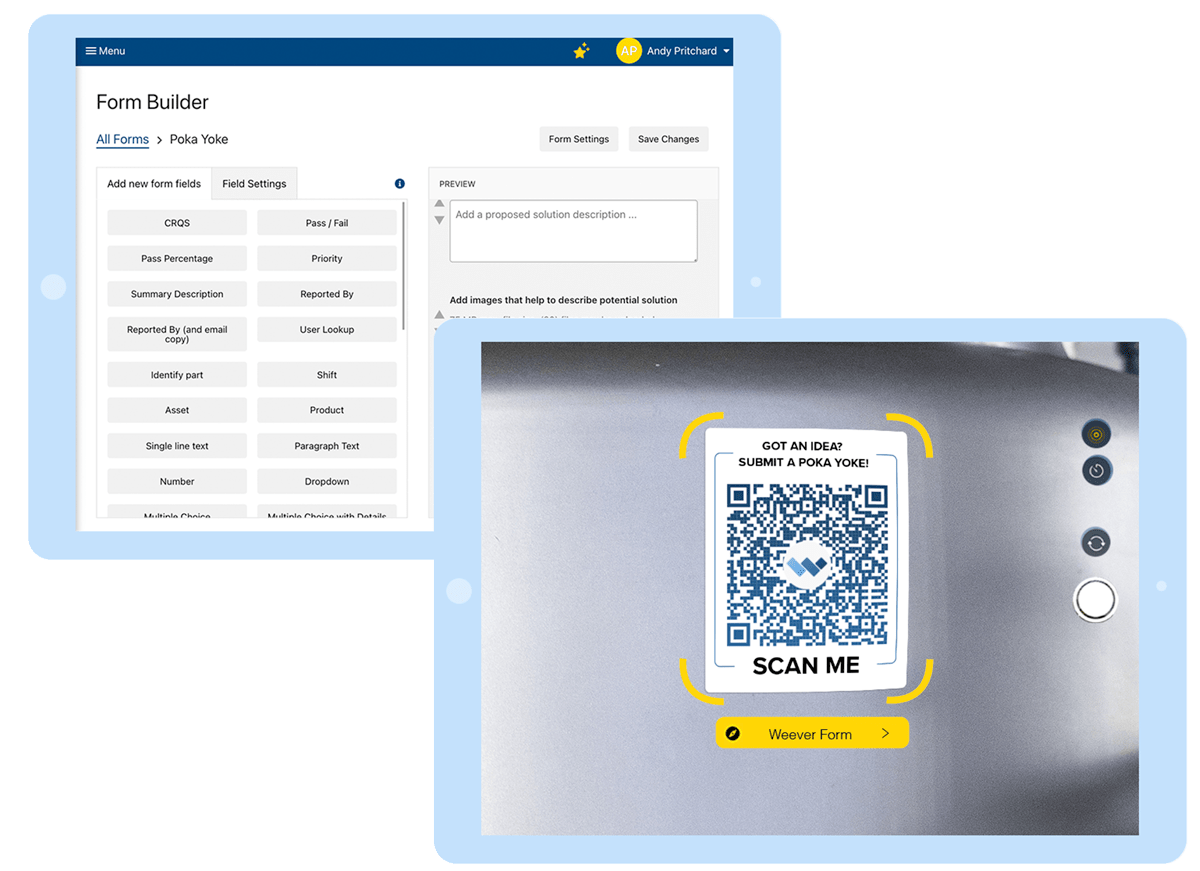

CAPTURE frontline data
Make it easy for frontline staff to make a difference
Foster a culture of excellence by engaging frontline staff in the continuous improvement process.
- Provide an overview of the idea and the problem you are solving.
- Take photos, add videos and sketches.
- Assign optional reward points for submitting ideas.

WORKFLOW AUTOMATION
Evaluate. Improve. Sustain.
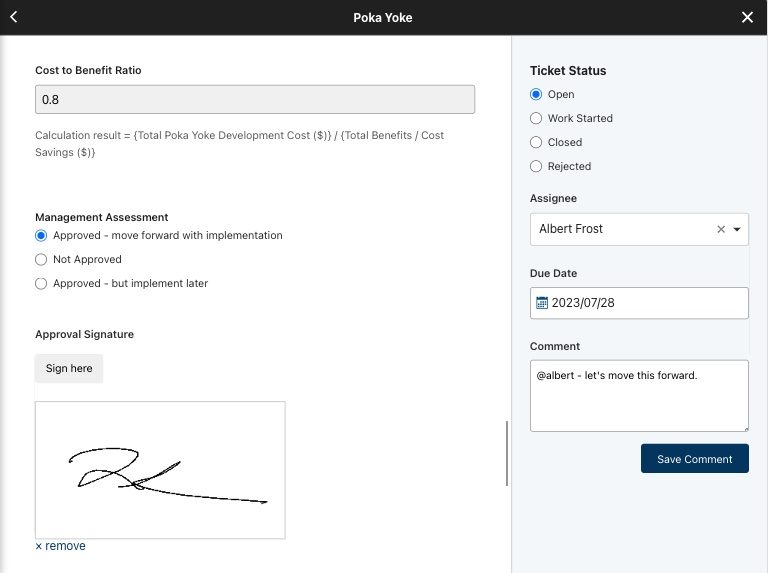
- Evaluate submissions in real-time.
- Automated workflows for "at-risk" observations.
- Foster collaboration and monitor project status to completion
REAL-TIME REPORTING
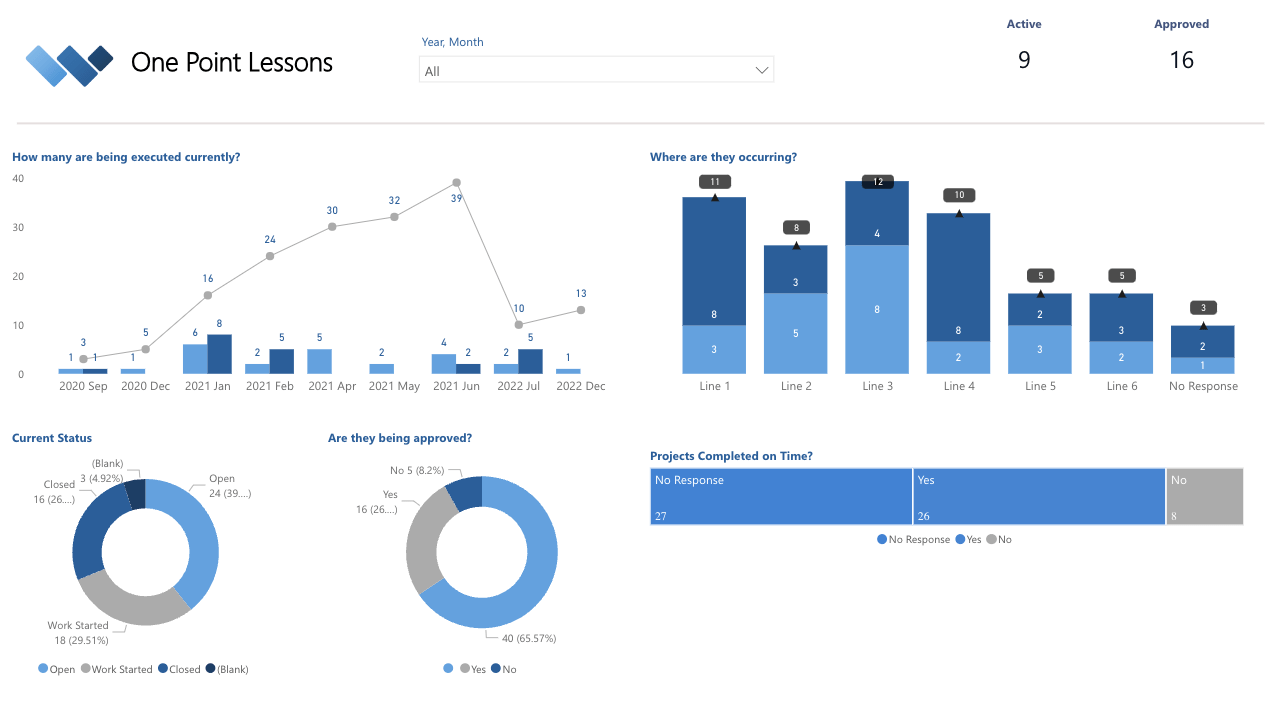
Automate Business Intelligence.
- Customizable reporting dashboards
- Download Spreadsheets & PDF documents
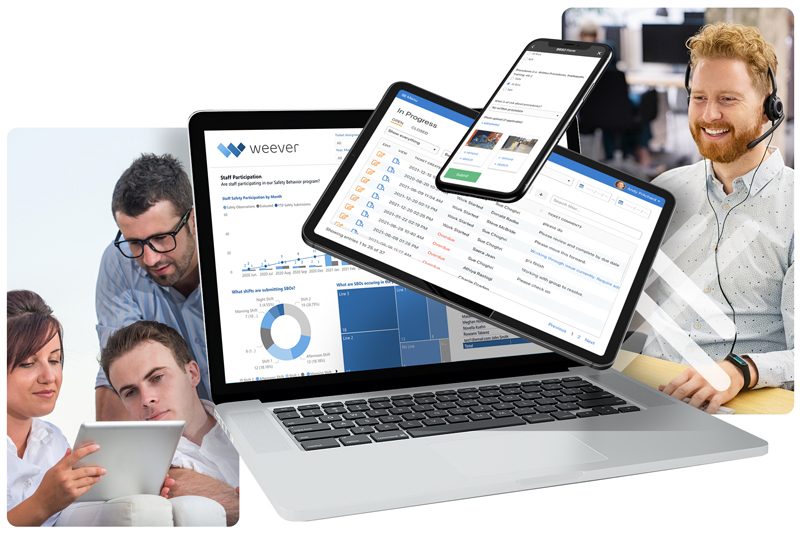
- Automatically push data to other business systems
Take a Guided Tour.

Cargo Securement Inspection
Cargo Securement Inspections
Everything you need to get it done.
Customizable Templates
Dashboard Reporting
Automated Workflows
Schedule Management
Real-time Visibility
On-Demand Instructions
"Having cloud-based forms on devices around the facility makes them so much more accessible, which makes it painless for operators to quickly provide a report."
Johanna Velez, VP Quality Assurance


"Weever is really user friendly and will have a massive positive impact on our operations and training team."
Mel Cadle - Op Ex Lead Process Engineer


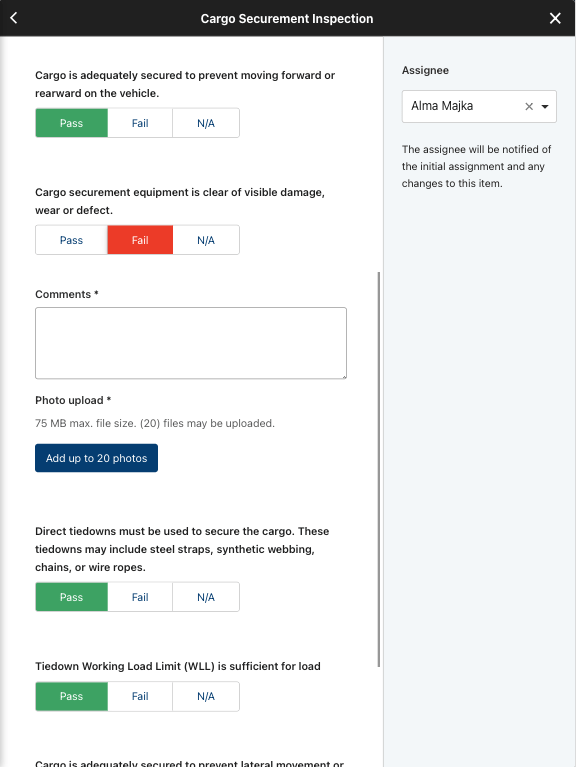
Digital DATA CAPTURE
Get it done correctly every time.
- Capture photos, sketches and digital signatures.
- Automate real-time instructions for each equipment type.
- Create action items with assignees and due dates.
- Measure cycle times to understand real impact.
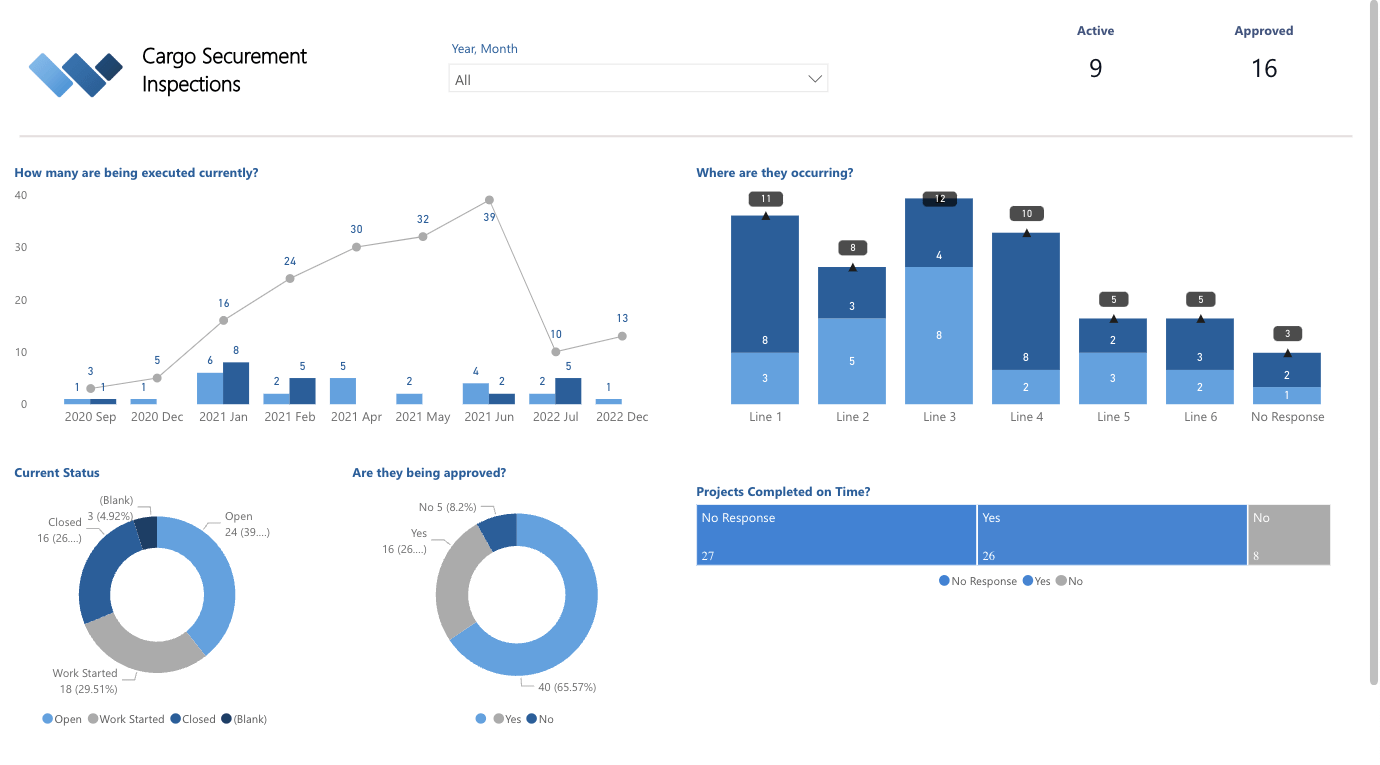
REAL-TIME REPORTING
Automate Business Intelligence.
- Customizable reporting dashboards
- Download Spreadsheets & PDF documents
- Automatically push data to other business systems
Take a Guided Tour.
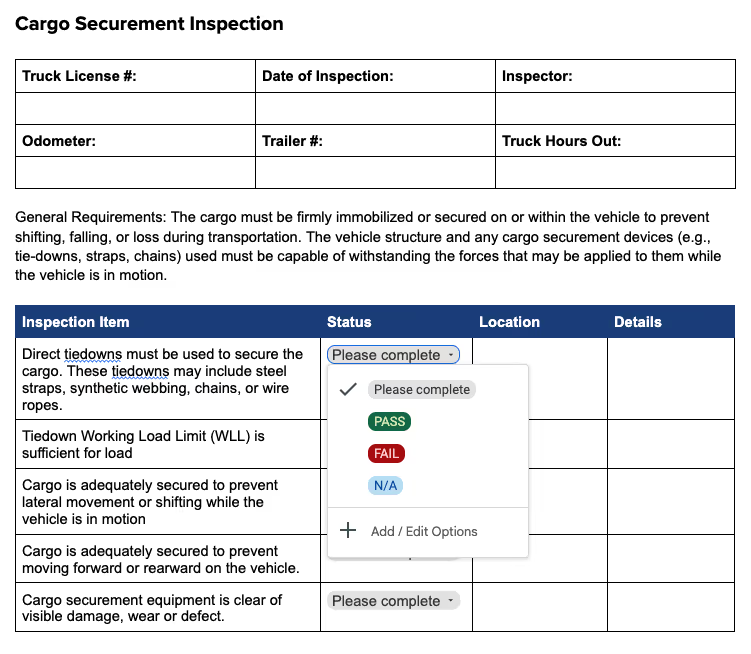
Cargo Securement Inspection Template
ROI Calculator
Digitize 5S Audits
Interested in learning approximately how much you will save by digitizing your 5S auditing program with Weever?
Weever will radically reduce the time and costs associated with auditing, action planning and re-auditing, and program reporting/administration.
Feel free to configure this ROI calculator to get a sense of what Weever can do for you.
5S Overview
5S Planning
5S Implementation
5S Auditing
5S Audit Digitization
FREE RESOURCEs
[convertcalculator id="3NKvHh7na3cP6Lvj9"]
(Please note the calculator may take a moment to load)
Sustain Improvements
Elevate Visibility
Save Time & Money

Vehicle & Trailer Pre & Post Trip Inspection Template
Vehicle & Trailer Pre & Post Trip Inspection Template
Entirely free and customizable Google Docs, MS Word, and PDF files sent to your email inbox.
Federal Motor Carrier Safety Administration (FMCSA) regulations mandate regular vehicle maintenance and inspections to ensure the safe and reliable operation of CMVs. Warehouses are responsible for implementing systematic vehicle maintenance programs, conducting pre-trip and post-trip inspections, and addressing any identified safety concerns promptly. Compliance with these regulations helps prevent mechanical failures and enhances overall road safety.
Solve Warehouse Trailer Inspections with Weever
- Configurable Templates.
- Enhance Real-time Visibility.
- Guide inspections with on-demand resources.
- Automate failure workflows.
- Customizable KPI Reporting.
- Manage Schedules.

Warehouse Housekeeping Inspections
Warehouse Housekeeping Inspections
Everything you need to get it done.
Customizable Templates
Dashboard Reporting
Automated Workflows
Schedule Management
Real-time Visibility
On-Demand Instructions
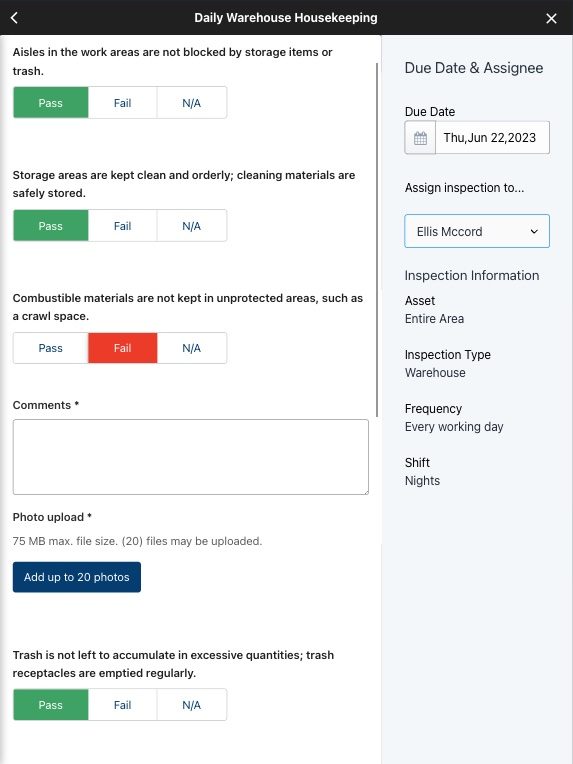
Digital DATA CAPTURE
Get it done correctly every time.
- Capture photos, sketches and digital signatures.
- Automate real-time instructions for each equipment type.
- Create action items with assignees and due dates.
- Measure cycle times to understand real impact.
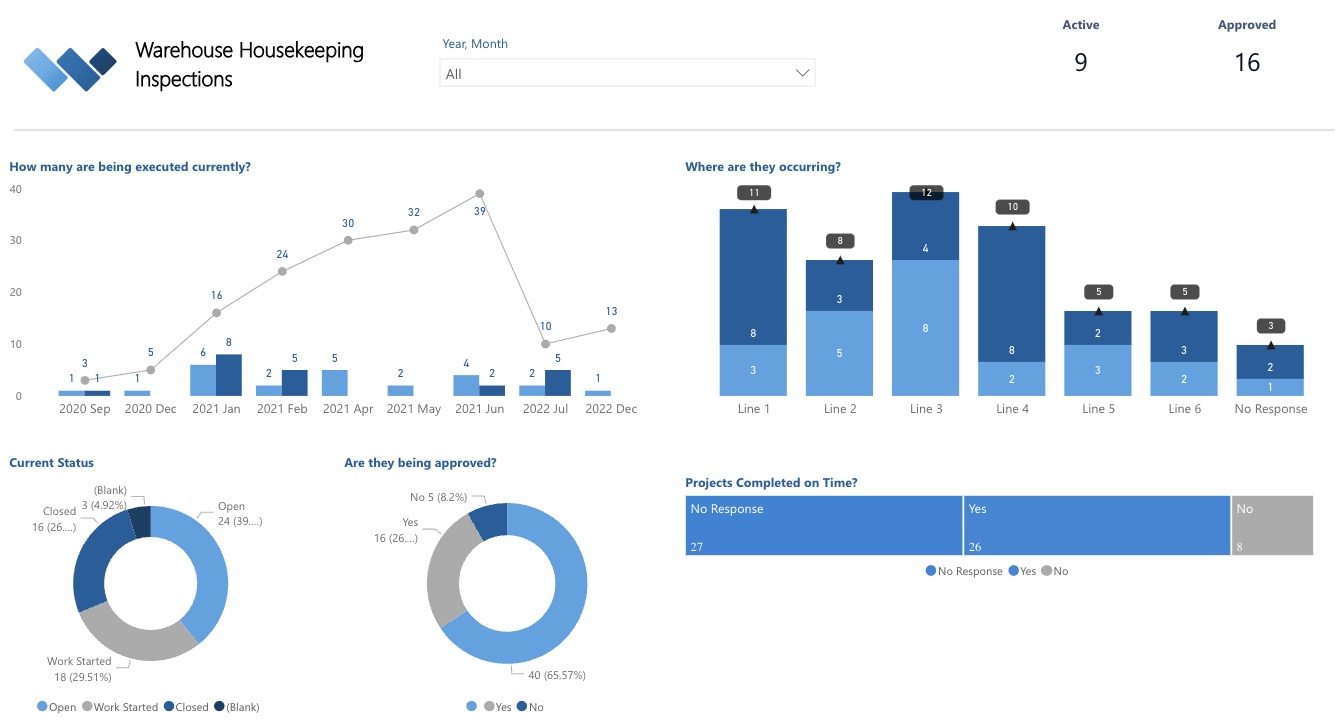
REAL-TIME REPORTING
Automate Business Intelligence.
- Customizable reporting dashboards
- Download Spreadsheets & PDF documents
- Automatically push data to other business systems
"Having cloud-based forms on devices around the facility makes them so much more accessible, which makes it painless for operators to quickly provide a report."
Johanna Velez, VP Quality Assurance
"Weever is really user friendly and will have a massive positive impact on our operations and training team."
Mel Cadle - Op Ex Lead Process Engineer


"It's easy to anticipate safety issues with Weever."
"In a warehouse setting it's very easy to fall into the trap of being reactive. With Weever we are 60-70% proactive. That's huge!"
Kody Crossen | Operations Manager of EHS, Walmart DC6080
Take a Guided Tour.
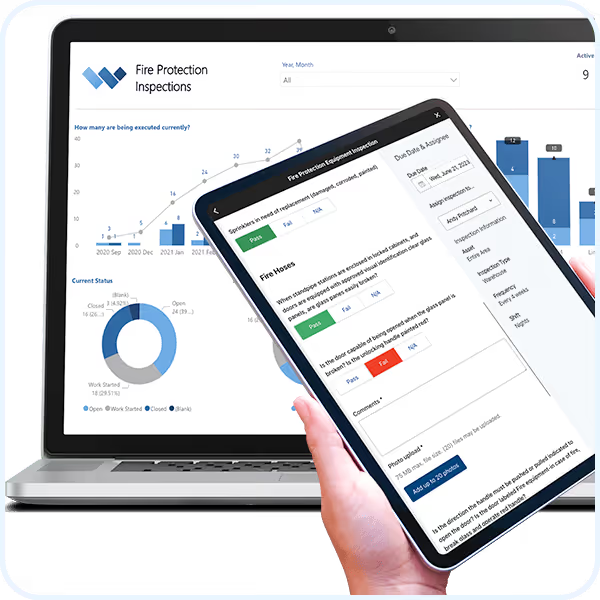
Fire Protection Equipment Inspections
Fire Protection Equipment Inspections
Everything you need to get it done.
Customizable Templates
Dashboard Reporting
Automated Workflows
Schedule Management
Real-time Visibility
On-Demand Instructions
"Having cloud-based forms on devices around the facility makes them so much more accessible, which makes it painless for operators to quickly provide a report."
Johanna Velez, VP Quality Assurance
"Weever is really user friendly and will have a massive positive impact on our operations and training team."
Mel Cadle - Op Ex Lead Process Engineer
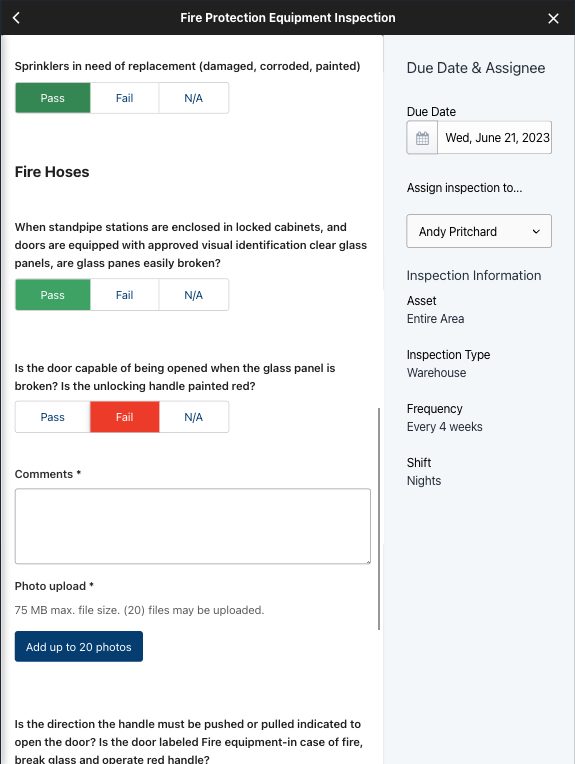
Digital DATA CAPTURE
Get it done correctly every time.
- Capture photos, sketches and digital signatures.
- Automate real-time instructions for each equipment type.
- Create action items with assignees and due dates.
- Measure cycle times to understand real impact.
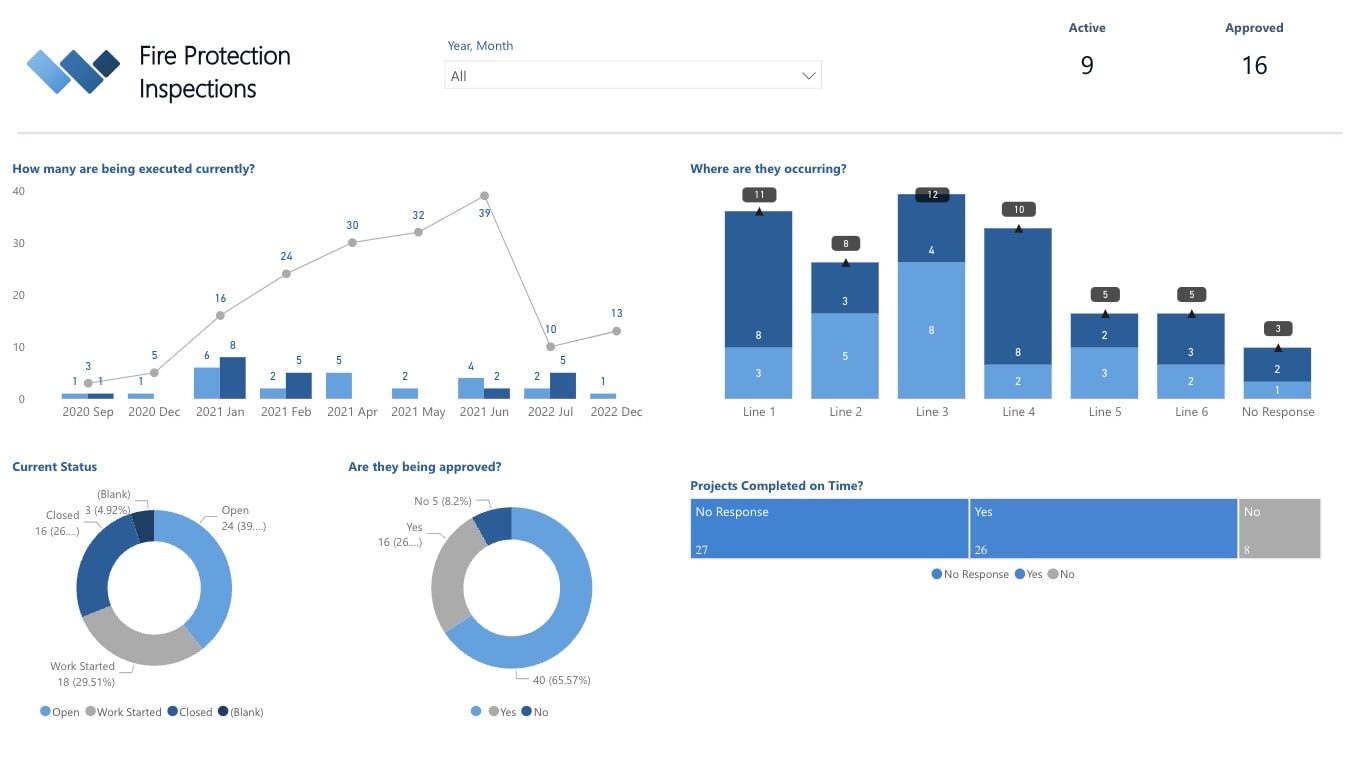
REAL-TIME REPORTING
Automate Business Intelligence.
- Customizable reporting dashboards
- Download Spreadsheets & PDF documents
- Automatically push data to other business systems
"It's easy to anticipate safety issues with Weever."
"In a warehouse setting it's very easy to fall into the trap of being reactive. With Weever we are 60-70% proactive. That's huge!"
Kody Crossen | Operations Manager of EHS, Walmart DC6080
Take a Guided Tour.

Fire Protection Equipment Inspection Template
Fire Protection Equipment Inspection
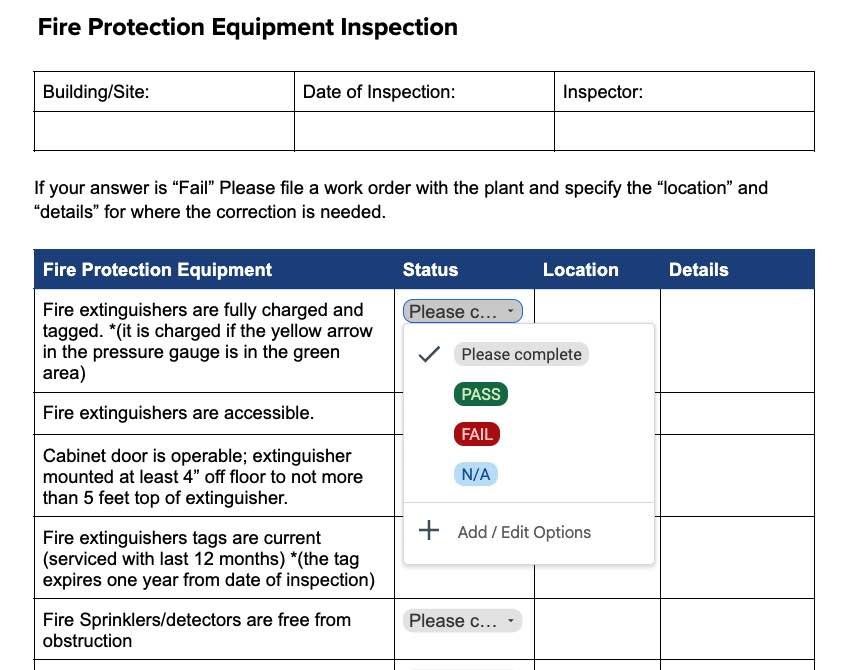
Entirely free and customizable Google Docs, MS Word, and PDF files sent to your email inbox.
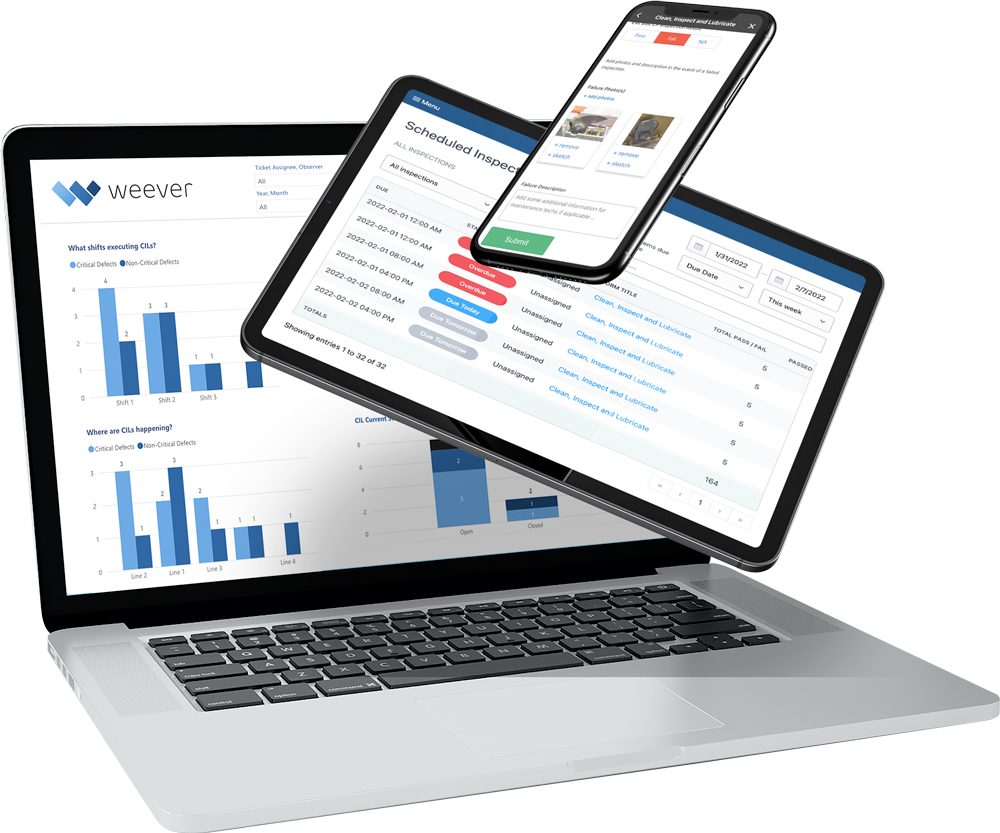
Solve Warehouse Fire Inspections with Weever
- Configurable Templates.
- Enhance Real-time Visibility.
- Guide inspections with on-demand resources.
- Automate failure workflows.
- Customizable KPI Reporting.
- Manage Schedules.
Millions of jobs completed worldwide. View Testimonials
Take a Guided Tour.

Unlock the Potential of Your Factory
As manufacturing systems have adopted more remote measures over the last two years, the industry has become fodder for cybercriminals. In 2021, the manufacturing industry became the second most targeted just behind finance and insurance. This represents a 300% increase in a single year.
More recently, cyberattacks have become more malicious as ransomware becomes more common. This May, Parker-Hannifin Corporation revealed that they have been hacked by ransomware actors. The firm, which is one of the world's largest motion control tech manufacturers, shared that the hackers were threatening to release sensitive employee information if they were not paid a fee. Unfortunately, this is not the first nor the last insidious attack that has happened in the same vein.
The Continued Rise of Cybercrime Today
Undoubtedly, cybercrime has been one of the most steadily growing threats in today's digital era. Over the last decade, cybercrime has gone from niche to wide-scale as more industries and sectors transition online. Currently, up to 80% of all businesses are affected by cybercrime around the world. By the end of 2022, cybercrime is estimated to become so rampant that up to 10% of all internet users worldwide will be affected.
This has birthed the creation of more cybersecurity responses, which in turn has continued the demand for experts in this field. In order to meet the demand to tackle cybercrime across multiple industries colleges are including cybersecurity training across all IT degrees. Current programs in online management information systems now include advanced training in cybersecurity and data analysis alongside the curriculum's usual programming and project management courses. This allows graduates to design and build highly secure systems that are anchored around organization and cybersecurity. Industry stakeholders hope that this will create a more well-rounded IT ecosystem wherein every player is able to create a powerful defense against sophisticated cybercriminals. This same comprehensive approach is also being adopted in manufacturing systems.
How Cybersecurity Is Curbing The Manufacturing Industry's Biggest Threats
Presently, cybersecurity measures are steadily closing the gap through which cybercriminals have been slipping through. Among the most effective ways that cybersecurity is protecting manufacturing systems is by increasing transparency and heightening authentication processes. Since many manufacturers found themselves vulnerable to phishing, malware, and ransomware upon their switch to online remote practices, improved transparency ensures that everything from the supply chain to daily reports is not siloed. This means that it is easier to spot anomalies that may be a sign of a malicious third party. In some cases, this may mean adopting secure cloud-based software like Weever that can streamline data, enhance real-time visibility, and cut down on errors, omissions, and costs that are common with older approaches, like paper forms, or outdated software.
Second, since up to 30% of all cybercrime incidents in manufacturing start internally, having better authentication measures reduces the risk of accidental or purposeful leaks. In this method, even "soft targets" (small and medium-sized manufacturers) have a smaller entry point for hackers to exploit. Since a shows that up to 21% of all files are not protected in any way, by employing better protocols that limit access, these sensitive documents are less likely to be exposed. Some common authentication measures in manufacturing today include zero-trust and multi-factor authentication. Through these, should a breach occur, it is also relatively faster to track and secure because there are fewer entryways to examine. Conversely, the average data breach takes about 280 days to detect and contain. By creating a more secure environment that is also easier to investigate in the off-chance of a breach, organizations can save up to $1 million in costs by containing breaches in less than 200 days.
Is The Dawn of Cybersecure Manufacturing Near?
To date, the manufacturing industry is still in the crosshairs of many cybercriminals who want to take advantage of its relative vulnerabilities. Fortunately, although widespread cybersecurity rollouts are still modest, more industry leaders are exploring ways to better digitalize the sector. As per the latest manufacturing industry reports, the industry is looking into optimizing data to increase automation and decision-making. While this will mainly increase task and data management, this is also a step forward to better track cybercrime trends. Apart from this, more manufacturers are also embracing smart solutions like modular and highly secure software that can be easily deployed while also safeguarding their online processes.
All in all, this bodes well for manufacturing systems that have thus far been lagging in terms of security and advancement. While this doesn't mean that the sector will ever truly be rid of cybercrime, it does mean that manufacturers are one step closer to becoming more secure players in Industry 4.0.
- Trusted solution - Over 2 million jobs completed worldwide.
- Your success is our #1 Priority - We partner with you to ensure results.
Learn more about Workflow Management
Explore the Platform

Non-Compliance Costs for FDA regulation violations
The cost of non-compliance for FDA violations can vary depending on several factors, including the nature and severity of the violation, the scale of the operation, and the history of compliance of the manufacturer.
Some relatively recent examples of extreme compliance violation penalties include:
Peanut Corporation of America (PCA)
In 2008 and 2009, PCA was involved in a salmonella outbreak linked to its peanut butter and peanut paste products. The outbreak resulted in hundreds of illnesses and several deaths. PCA knowingly shipped contaminated products and engaged in other unsanitary practices. The company's executives were prosecuted, and the CEO was sentenced to 28 years in prison. PCA filed for bankruptcy, and the subsequent legal proceedings and compensations amounted to significant financial losses.
Blue Bell Creameries
In 2015, Blue Bell, a popular ice cream manufacturer, faced a major listeria outbreak linked to its products. The outbreak resulted in several illnesses and three deaths. Blue Bell was found to have known about the contamination but failed to take appropriate actions. The company issued a nationwide recall and temporarily halted production at its facilities. Blue Bell faced regulatory scrutiny, legal actions, and a deferred prosecution agreement that required the company to pay over $19 million in fines and forfeitures.
Chipotle Mexican Grill
In 2015 and 2016, Chipotle experienced several foodborne illness outbreaks related to E. coli, norovirus, and salmonella. These outbreaks affected multiple locations across the United States and resulted in numerous illnesses. Chipotle faced extensive negative publicity, a decline in sales, and significant costs associated with outbreak investigations, legal settlements, and implementing food safety improvements. The company was required to pay millions of dollars in fines and settlement fees.
ConAgra Foods
In 2007, ConAgra Foods had a major recall of its Peter Pan and Great Value brand peanut butter products due to a salmonella outbreak. The outbreak resulted in hundreds of illnesses. Investigations revealed that the company's Georgia facility had several operational and sanitation deficiencies. ConAgra Foods faced legal actions, including class-action lawsuits, and the company settled with affected individuals. The total cost of the recall and subsequent legal proceedings amounted to tens of millions of dollars.
These examples highlight the potential consequences faced by large food manufacturing companies when they violate regulations and compromise public health. It's important to note that penalties and outcomes can vary depending on the specific circumstances, severity of violations, and regulatory actions taken.
Some potential costs associated with FDA violations for food manufacturers may include:
Regulatory penalties
The FDA can impose monetary penalties for non-compliance, which can range from warning letters and fines to more severe measures like product seizure, injunctions, or even criminal charges.
Product recall expenses
If a food product is found to be non-compliant or poses a risk to public health, a manufacturer may be required to recall the product from the market. This can involve costs related to notifying consumers, removing products from distribution channels, and disposing of or reworking the affected products.
Legal fees
Non-compliance issues may result in legal proceedings, requiring the services of attorneys to navigate the regulatory process, defend the company's interests, or negotiate settlements.
Reputational damage
Violations of FDA regulations can harm a company's reputation and consumer trust, leading to decreased sales, loss of market share, or difficulty in attracting new customers.
Remediation costs
Correcting the non-compliant practices and implementing necessary changes can involve expenses such as process modifications, facility upgrades, employee training, and quality control enhancements.
It's important to note that the actual costs can vary significantly based on the unique circumstances of each violation and the actions taken by the FDA and the food manufacturer. It's advisable for food manufacturers to prioritize compliance with FDA regulations and maintain a robust quality assurance and regulatory compliance program to minimize the risk of violations and associated costs.
Consulting with legal and regulatory experts specific to the food industry can provide more accurate and up-to-date information regarding the potential costs of non-compliance.
Take a Guided Tour.

Walmart Utilizes Weever to Drive Safety Excellence
How Walmart Utilizes Weever to Drive Proactive Safety
Distribution Center uses Safety Observations to be 60% to 70% more proactive and stop incidents before they occur.
case study highlights
- Walmart used Weever to become 60% to 70% more "proactive".
- Successful implementation of Weever's BBSO template resulted in a significant surge in safety observations within Walmart's Distribution Center.
- Proactive engagement and participation from supervisors, facilitated by the platform's adaptability, led to the quick adoption of the BBSO program.
- Innovative use of QR codes on racks facilitated easy access to BBSO forms, contributing to faster adoption rates.
- Swift updates and widespread acceptance by the operations team showcased Weever's effectiveness in streamlining processes.
In an insightful customer story video, Kody Crossen, Operations Manager EHS for Walmart Distribution Center (DC) in Pennsylvania, reveals the invaluable role of Behavior-Based Safety Observations (BBSO) in preventing safety incidents. Discover why Kody has found Weever, an innovative operations management software platform specializing in Food and CPG manufacturing, to be an indispensable tool for managing Walmart's BBSO program.
My name is Kody Crossen.
I am the Operations Manager of EHS for DC6080 in Tobyhanna, Pennsylvania.
Anytime anybody's looking at a safety program one of the most important details is looking at proactive versus reactive measures. In a warehouse setting it's very easy to fall into the trap of just constantly being reactive and looking at post-accident reviews the the building had in place safety observations.
But it was a little bit more like checking a box that you observe somebody. It wasn't necessarily providing any valuable metrics so kind of again fell into this trap of of checking a box of well, "yes we do observations" but then the back end of that was really well what are we getting out of it we needed something that was able to dig a little bit deeper within the operation of the building to understand what was going on.
It started out with what we were referring to as a soft launch so we had taken everything that that Weaver had put together for our building and we presented it to the operation staff.
They took a look at it helped make some changes and so then we took that feedback and we tried to really streamline it for the user. We took the new version went out as the operations team and we we piloted it and then officially wrote it out to the entire management staff here with any new process.
We want everyone to buy into the ease of use so another huge aspect that was really has been critical is implementing the QR codes. So the QR code were placed at the end of every single rack and a lot of managers are feeling favorable feedback about that basically, "hey I was walking in this area I was observing this associate and took my phone out took a picture of the QR code and now I have the form live to do an observation."
The first one is looking at manager engagement is the gaps in places that we should be doing more observations.
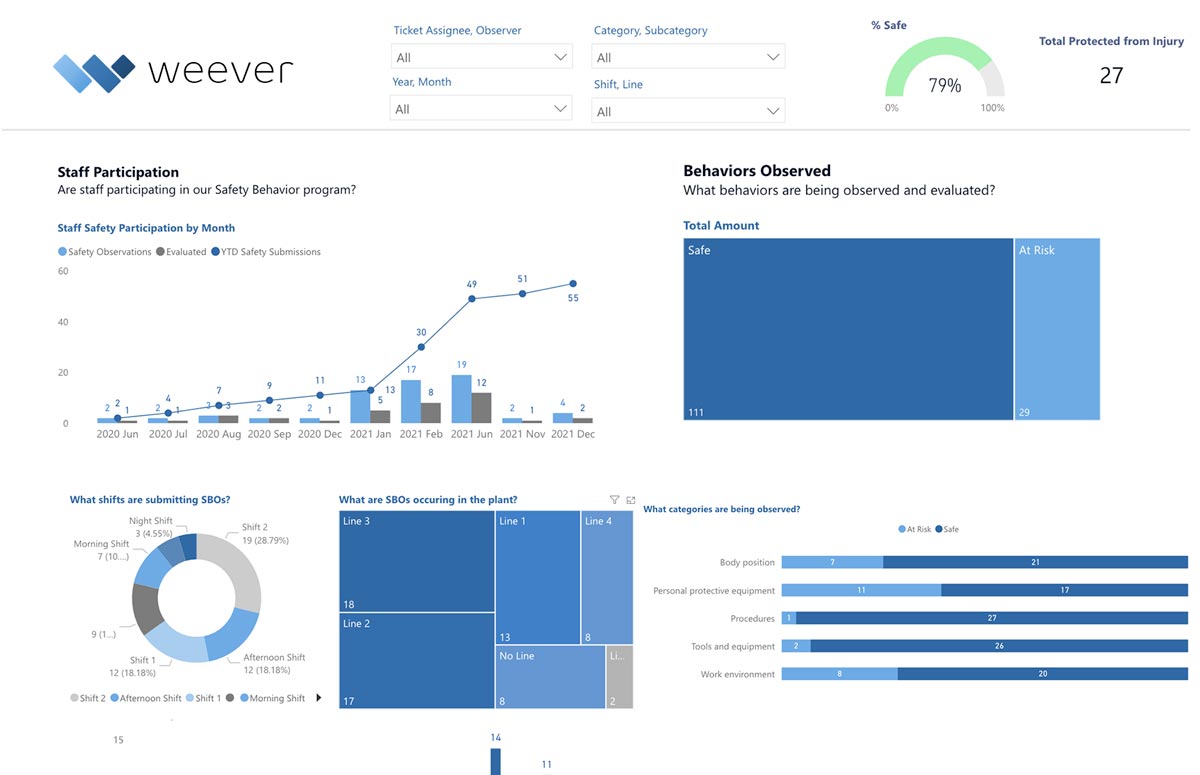
Having a snapshot of that right there on the report is incredibly helpful because we can see if we're having misses as a management team and what that allowed us to do is, you know as an environmental health and safety team, is start making our next moves and decisions based off of the real-time data of where we were seeing hot spots for things like body position, personal protective equipment, and those that were maybe breaking away or not following policies and procedures that were set forth to keep them safe.
But then also looking at the the the data based around the associate's behavior so if that is a body positioning issue we can have a conversation before there's an injury and it's kind of allowing us to no longer fly blind.
We know some prevalent bad habits that folks have but this is taking the assumption piece out of it and it's actually showing us hard data for different areas.
One in particular that has been extremely helpful is we're finding one area has a lot of issues with pinch gripping so we're going to set up more observations based around those work areas to stay ahead of it and to let associates know that you know historically this can, and does, lead to an injury and I don't want to take away the ability that the safety observations has given us to also have positive recognition we're finding a lot of people that are out there doing the right thing regularly and it's just a really good way to highlight that associate or those Associates for doing the right thing.
There's managers out there that that are really really good at looking at specific criteria of safety and then there's others that maybe they're just scratching the surface of it.
But they're not able to to maybe dig as deep as you would like and so this has now given them the tool that they need to have the appropriate conversation and to look at the correct things.
So it's it's shifted our safety culture in here from a management perspective because now we are much more focused in on what we should be looking at and it also allows the associates to understand what we are looking for so it's not as arbitrary as it once was.
So it's creating a lot more conversation and I think it's making associates much more mindful of their actions because there are people that are watching to make sure that they don't get hurt.
So now that we have it completely live across the building we're able to break it down by shift and so what that does is it gives us a road map to share during our daily meetings with fellow managers on on areas of opportunity.
So, I would recommend Weever because of the way that they want to make sure you're getting the needs for your building. Even a warehouse for Walmart in Virginia, or New York, they might be looking for something that's a little bit different than what I need in my part of the world and having the flexibility and the ability to have that constant communication back and forth with Weever to make sure that we are getting everything that we need exactly and knowing that before anything's rolled out to the building it has been looked at dozens and dozens if not hundreds of time by multiple people.
That to me was was huge. So it really solved the issue of switching gears from being reactive to more proactive. Right now we're kind of posturing ourselves to be probably 60 to 70 percent proactive. It's much easier to anticipate what's coming next knowing the infractions of safety and related items because of the BBSOs.
Enhancing Safety Observations with Weever
Seeking a comprehensive software solution for safety observation management, Kody turned to Weever. Dissatisfied with their existing system that merely checked off completed observations, Kody recognized the need for a platform that could offer intelligent insights to understand trends and proactively prevent incidents.
"We wanted to put our foot forward at being proactive and looking at various trends in the multitude of different procedures we have going on 24/7."
Kody Crossen, Operations Manager of EHS, Walmart
Interested in learning more about Weever's Proactive Safety Solution?
Request more information Preview modal-
Request more information
Please tell us a bit about yourself so we can tailor our response and get you the information you need.
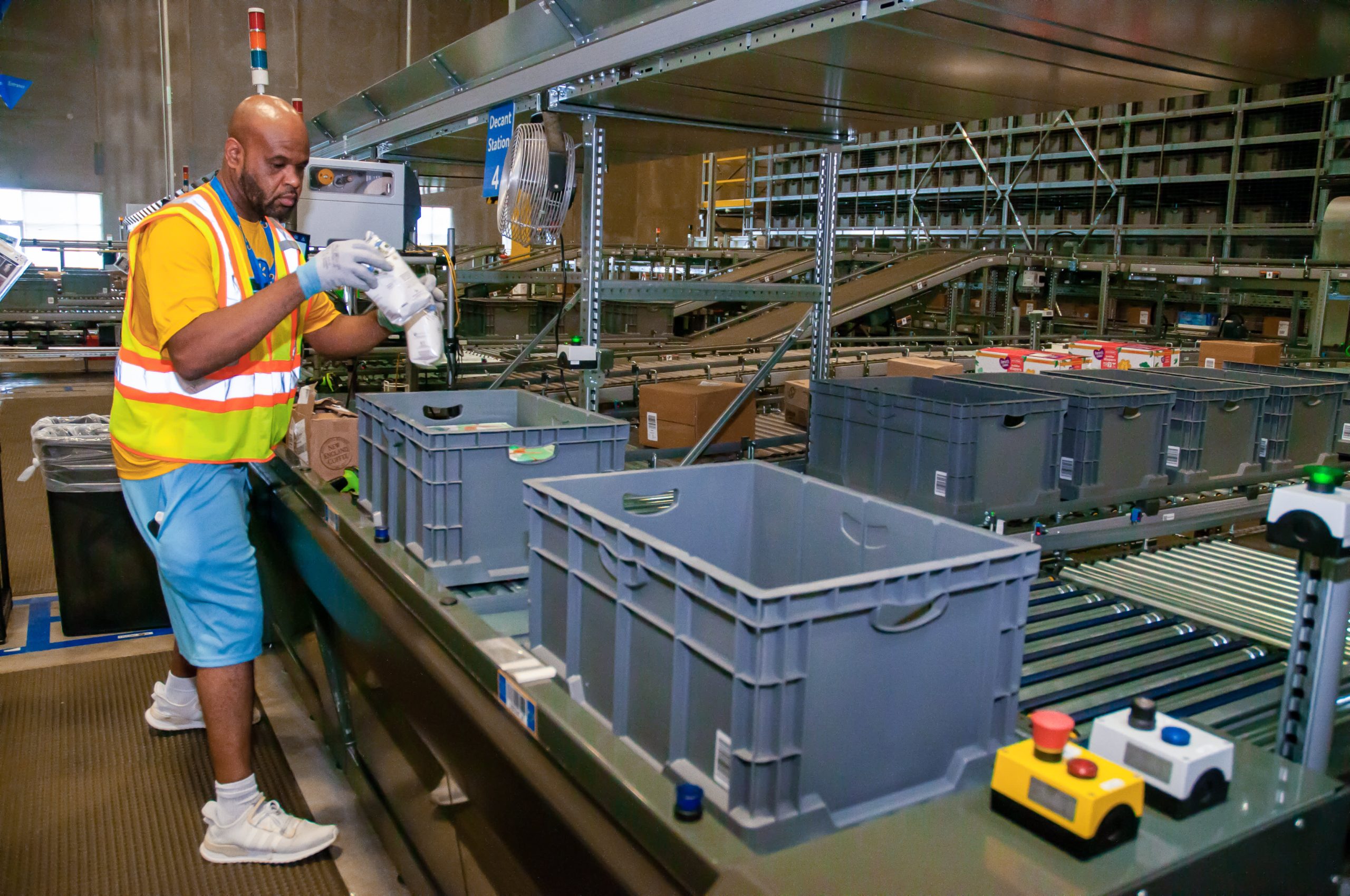
Implementing Weever with Speed and Success
Kody successfully introduced Weever's adaptable BBSO template to his operations team, which was swiftly embraced by supervisors. Through a few simple updates, the program quickly gained momentum. Walmart ingeniously employed QR codes to make BBSO forms easily accessible, leading to faster adoption rates.
"We wanted everyone to buy into the ease of use, so another critical aspect was QR codes, which were placed on every single rack and the manager's feedback was highly favorable."
Kody Crossen, Operations Manager of EHS, Walmart
Leveraging Real-Time Data for Strategic Decision-Making
Weever empowers Kody to base his strategies and decisions on real-time data rather than relying on assumptions. The comprehensive reports allow him and his team to understand supervisor behavior and enhance engagement. Weever's insightful data breaks down at-risk issues by line, shift, area, and date, enabling Kody to determine the most effective proactive and preventive measures.
"We are finding out that a certain area has an issue with "pinch gripping", so we are setting up more observations in those work areas to stay ahead of it and inform associates that this type of lifting leads to injury."
Kody Crossen, Operations Manager of EHS, Walmart
Building a Positive Safety Culture with Weever
Kody appreciates that Weever enables the recognition of associates who consistently demonstrate safe behaviors. Positive reinforcement plays a crucial role in fostering a robust safety culture. Furthermore, Kody believes Weever outshines other platforms by guiding supervisors through the process, ensuring successful outcomes.
"It's shifted our safety culture because now we are much more focused on what we should be looking at. And it also allows the associates to understand what we are looking for so it's not as arbitrary as it once was. It's creating a lot more conversation and I think it's making the associates much more mindful of their actions."
Kody Crossen, Operations Manager of EHS, Walmart
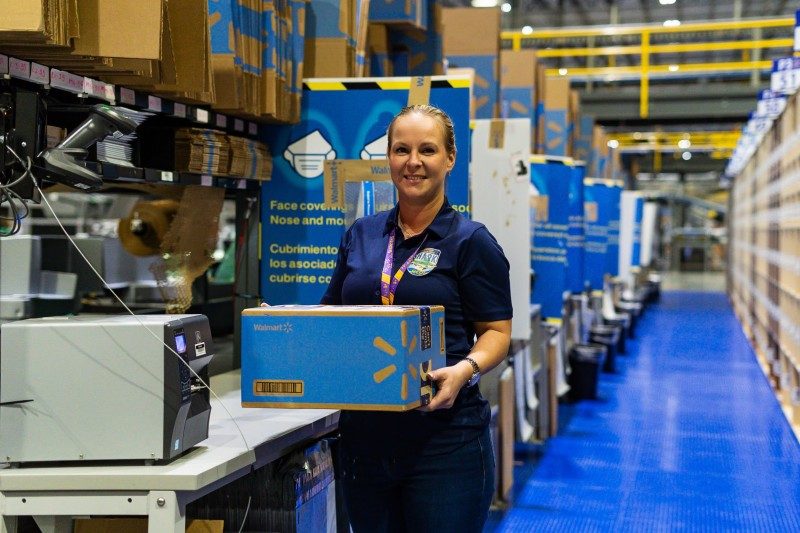
Expanding the Reach of Weever
Impressed with the benefits realized through Weever's implementation, Kody plans to extend its usage to additional safety applications within his Distribution Center.
Behavior-Based Safety Observations
Everything you need to get it done.
Customizable Templates
Dashboard Reporting
Automated Workflows
Schedule Management
Real-time Visibility
On-Demand Instructions
Millions of jobs completed worldwide.
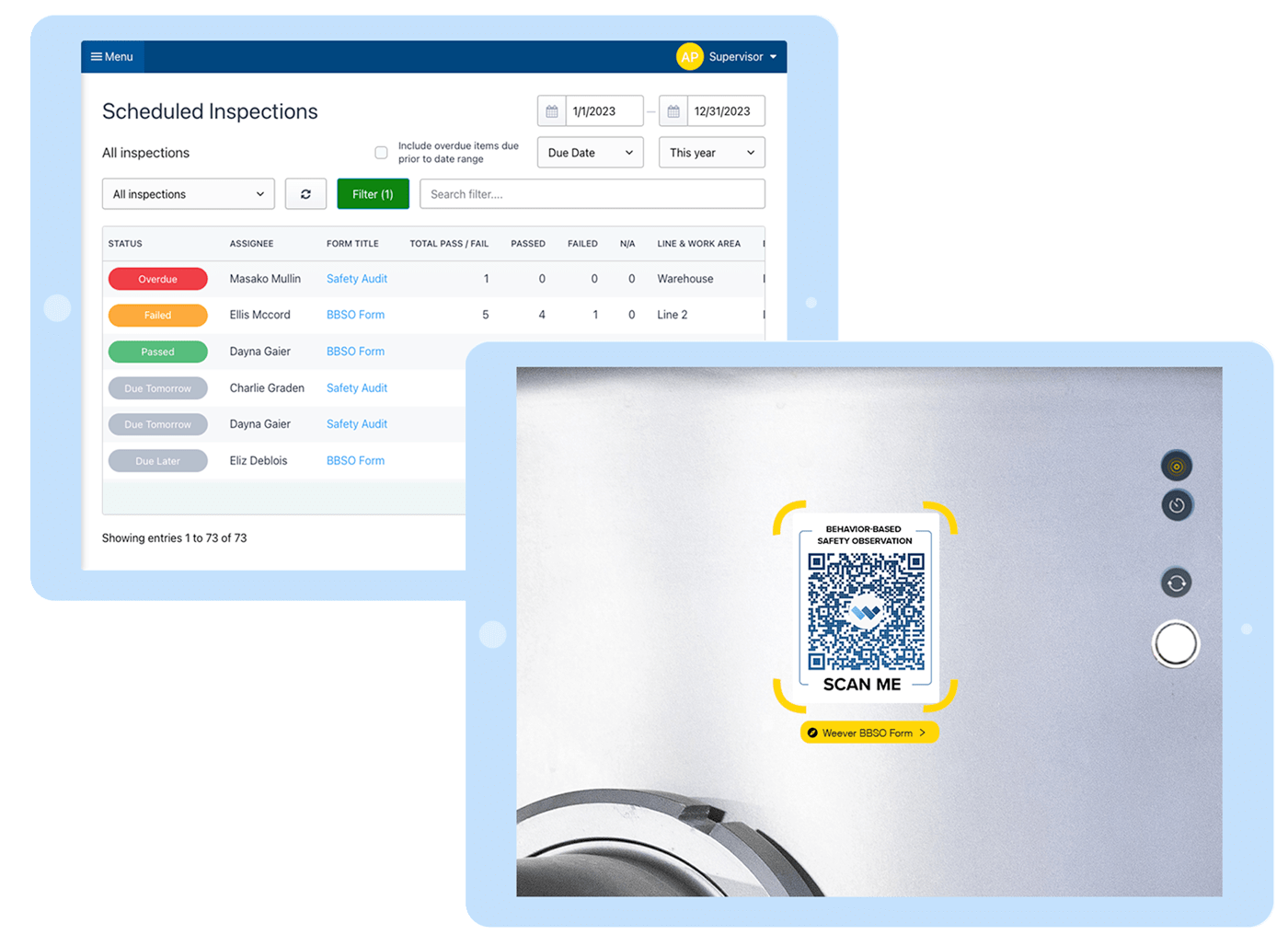
Schedules & QR Codes
Make it easy to complete observations.
- Get started quickly with pre-built templates.
- Use on-demand instructions and conditional logic to simplify the experience and ensure compliance.
- Build schedules and assign observations.
- Instantly understand observation completion status.
Digital DATA CAPTURE
Get it done correctly every time.
- Capture photos, sketches, videos, and digital signatures.
- Provide on-demand instructions to ensure compliance.
- Accelerate efficiency and adoption with a simple and highly intuitive interface.
WORKFLOW AUTOMATION
Evaluate and improve.
- Evaluate submissions in real-time.
- Foster collaboration between frontline staff and management.
- Monitor project status to completion.
REAL-TIME REPORTING
Automate Business Intelligence.
- Customizable reporting dashboards
- Download Spreadsheets & PDF documents
- Automatically push data to other business systems
Take a Guided Tour.

Measure the Real Impact of your 5S Audits with Cycle-based Activity Timing
Improving the efficiency of workstations is critical for businesses to increase their Overall Equipment Effectiveness (OEE).
However, the challenge lies in justifying the time and money invested in Lean initiatives, often because the benefits of these initiatives are not tangible, which makes it difficult to prove their return on investment (ROI).
The 5S methodology is one such initiative that aims to optimize the efficiency of workstations by removing clutter and redundant items, organizing the workspace, and standardizing the approach.
This system has proven effective in not only increasing efficiency and productivity but also reducing defects and waste, increasing employee engagement and retention.
However, site managers often ask for tangible proof of the ROI, which poses a challenge for Continuous Improvement (CI) managers.
How can cycle times help?
To address this issue, CI managers can use cycle-based activity timing during 5S audits.
Cycle time is the duration of one production cycle, and it can be used as a metric to identify improvement opportunities in a manufacturing process.
By measuring cycle time, managers can identify bottlenecks, waste, and inefficiencies, and develop strategies to improve the process.
Cycle-based activity timing involves timing operators while they perform a cycle-based activity, such as palletizing one pallet of product, capping one case of product, packing one case of product, labeling one case of product, or filling one case of product.

How does it work?
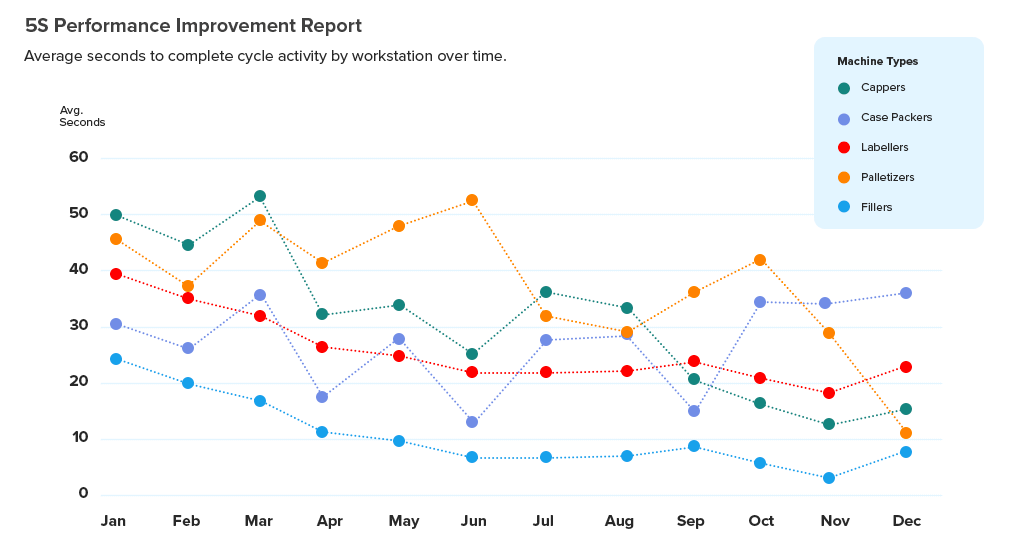
CI managers work with operators to choose an activity that is consistent over time for each workstation. The average time for each activity is charted over time. If the 5S initiative is working, cycle times will decrease, and OEE will increase.
Measuring cycle time can be used to improve manufacturing processes by reducing setup time, improving flow, and increasing throughput.
Moreover, this practice offers strategic guidance to focus on areas that yield the most results. For instance, CI managers may discover that capper machine workstations are lagging behind the other groups, indicating a need to review the 5S and talk to operators about how to improve workstations.
How can Weever help?

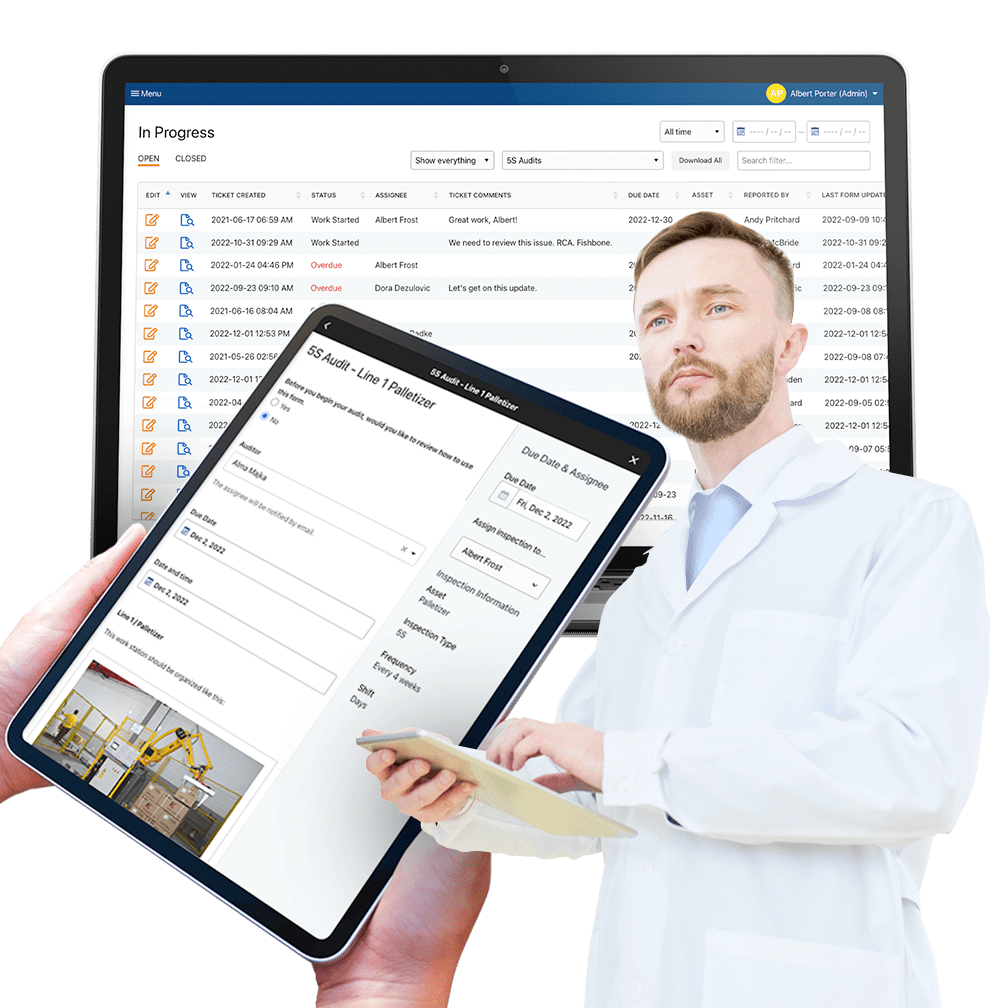
Weever includes a cycle-time stopwatch feature and a Performance Improvement Report so you can begin this process ASAP with our platform. Feel free to learn more about how Weever solves 5S audits.

Top 5 Frontline Employee Engagement Best Practice
Top 5 Frontline Employee Engagement Best Practice
Are you tired of slogging through your workday, feeling unfulfilled and disconnected from your organization? Do you wish you could be part of a culture of excellence that inspires innovation, collaboration, and engagement? Well, look no further! We have compiled some of the best practices we've seen in our 10 years of working with organizations around the world to help you build a culture of engagement and achieve amazing results.
1) Get Everyone Involved
First and foremost, get everyone involved! It's crucial that everyone is "rowing in the same direction" to build a culture of excellence. Your organization should empower, energize, and enable everyone, not just a chosen few. Detractors who feel left behind can infect others with negativity, so it's important to remove employees who aren't willing to participate and elevate themselves.
Weever helps get everyone involved through a universal site license instead of selling user "seats." Our platform is universally useful across all departments and operational use cases, making participation more accessible and inclusive.
2) Reward Innovation & Collaboratio
Reward innovation and collaboration! Encourage employees to share ideas and experiment with new approaches. Recognizing and rewarding employees for their hard work and achievements can help boost morale and increase engagement. Encourage cross-functional collaboration and teamwork to build a sense of community and make employees feel more connected to each other and the organization.
3) Clearly Define and Communicate Rolesand Objectives
Clearly define and communicate roles and objectives. Clear and consistent communication is key to building a culture of excellence and engagement. Ensure that employees are kept informed about the organization's goals, challenges, and progress. A clear sense of purpose can help employees feel more connected to the organization's mission and understand how their work contributes to it.
4) Get onto "The Floor" and Lead by Example
Leaders should model the behaviors they want to see in their employees, including a commitment to excellence, a positive attitude, and a willingness to learn and grow. The hardest part of implementing a culture of engagement is simply finding time to do it. Leaders must prioritize engaging with frontline staff to make a real positive impact on the company.
5) Invest in Skills Development & Safety
Invest in skills development! Providing opportunities for training and development, both technical and non-technical, can help employees build their skills and feel more valued. Investing in employee skills and training can also have numerous other benefits for manufacturing organizations, including increased employee engagement, motivation, retention, productivity, and quality.
Elevated safety can have a positive impact on employee engagement at manufacturing organizations by building trust, boosting morale, reducing stress, increasing productivity, and improving retention. When employees feel safe at work
Why is a Culture of Excellence important?
Industrial automation has revolutionized the manufacturing industry, but too much dependence on it can create disengaged employees. Building a Culture of Excellence can help to mitigate this issue.
Firstly, it's important to recognize that continuous improvement is essential to maintaining competitiveness and profitability in the manufacturing industry. In order to achieve this, a company needs to constantly look for ways to improve processes, products, and services. This requires additional work and a Culture of Excellence is required to drive continuous improvement.
Building a Culture of Excellence means creating an environment where employees are engaged, motivated, and committed to achieving the company's goals. When employees are engaged, they are more likely to be invested in the success of the company and willing to put in the extra effort required to drive continuous improvement. They will be more likely to identify areas for improvement and contribute innovation that can help the company stay ahead of the competition.
In addition, a Culture of Excellence can help to foster a sense of pride and ownership in the work that employees do. When employees feel that their work is valued and that they are contributing to the success of the company, they are more likely to be satisfied with their jobs and to remain loyal to the company.
Finally, building a Culture of Excellence can also help to attract and retain top talent. In a competitive industry like manufacturing, having a reputation for excellence can help to differentiate a company from its competitors and make it more attractive to potential employees.
Too much dependence on AI and Industry 4.0 industrial automation can also ostracize employees and destroy your culture. (Learn more about our take on Human Intelligence at https://weeversoftware.com/product)
How can Weever help?
Weever provides digital tools that unlocks your team's experience and insights, simplifies decision-making, and removes barriers that are hindering them from achieving their full potential.
Weever guides your team through digital workflows, and empowers them to easily capture their observations, insights, and improvement ideas.
The incredibly valuable human dimension of data capture, fuelled by instinct, experience and intuition, is something that is otherwise difficult to harness and action (and impossible when using paper).
Once captured, Weever transforms people-led data into actionable metrics and real-time insights that allow you to drive your organization forward.
Your employees, in turn, can see and feel the tangible impact that they are making - unlocking the success that comes through an empowered team.
Frontline Employee Engagement is a measure of how invested your frontline employees are in the growth and prosperity of your organization. If you change their investment level by enabling them, energizing them, and empowering them, you will reap the benefits of increased engagement.
- Empower your staff with "bottom up" Operational Excellence tools. Allow staff to understand the value your organization is manufacturing and how it is delivered so that they can correct issues autonomously. Staff can submit suggestions, observations, and abnormality reports and watch the progress of them into site initiatives and improvement projects.
- Energize your staff with personal goal tracking, gamification and automated reward points that they can redeem in your personalized rewards marketplace. Broadcast result KPIs and celebrate wins to keep staff engaged.
- Enable your staff with instant access to modern software that is just as focused on Operational Excellence as it is on Employee Engagement. Weever makes it easy to collect data, track projects and view reports while staff can also review leaderboard, point totals and redeem rewards - all in one place.
Frontline Employee Engagement Ultimate Guide

How to increase Employee Engagement by focusing on Ease and Usefulness
Hello there, department managers of manufacturing organizations! Are you ready to enhance your frontline employee engagement and turn your workplace into a Culture of Excellence? Of course, you are! Let me tell you about a concept that can help you get there: increasing the ease and usefulness of cultural participation.
Now, before you roll your eyes and think "Oh great, another buzzword," hear me out. Studies have shown that participation in continuous improvement programs is heavily influenced by the intention of employees to participate. In other words, if your employees don't care about your program, it's going to fall flat on its face. So, how can you increase the intention of your employees to participate? By making it easy and useful for them, of course!
1) Ease of Participation
Let's start with ease. You want your employees to be able to participate in your program with minimal effort. So, make it accessible! Mobile apps and digital tools can make a world of difference for your employees. Consider providing tablets or other devices to your frontline staff so they can easily access the necessary forms and resources. Additionally, providing on-demand instructions and tutorials can make participation barrier-free, removing the roadblocks that prevent employees from engaging.
Schedules can also make a big difference. By assigning tasks and reminders digitally, your employees can stay on track and participate in your program without getting pulled in different directions during their shifts. And don't forget about investing in your employees' skills development! Offering microlearning sessions, toolbox talks, and one-point lessons can help your employees grow and develop over time.
2) Usefulness of Participating
Now, let's talk about usefulness. You want your employees to feel like their participation in your program is beneficial to them. So, ask yourself: What's in it for them? How will their participation impact their lives? Broadcasting results can be an effective way to show your employees that their work is making a difference. Consider using real-time dashboards to display relevant KPIs in breakrooms. This can help to motivate your employees and increase their sense of purpose.
Finally, don't forget about rewards and recognition. External rewards can be a powerful motivator, and they can even lead to intrinsic motivation over time. Consider using a Rewards & Recognition Enhancement program to automatically reward form submissions with points that can be redeemed for prizes. This can help to incentivize your employees and increase their motivation to participate in your program.
How Weever can help
So, there you have it, department managers! By increasing the ease and usefulness of cultural participation, you can engage your frontline employees and turn your workplace into a Culture of Excellence.
Weever provides digital tools that unlocks your team's experience and insights, simplifies decision-making, and removes barriers that are hindering them from achieving their full potential.
Weever guides your team through digital workflows, and empowers them to easily capture their observations, insights, and improvement ideas.
The incredibly valuable human dimension of data capture, fuelled by instinct, experience and intuition, is something that is otherwise difficult to harness and action (and impossible when using paper).
Once captured, Weever transforms people-led data into actionable metrics and real-time insights that allow you to drive your organization forward.
Your employees, in turn, can see and feel the tangible impact that they are making - unlocking the success that comes through an empowered team.
Frontline Employee Engagement is a measure of how invested your frontline employees are in the growth and prosperity of your organization. If you change their investment level by enabling them, energizing them, and empowering them, you will reap the benefits of increased engagement.
- Empower your staff with "bottom up" Operational Excellence tools. Allow staff to understand the value your organization is manufacturing and how it is delivered so that they can correct issues autonomously. Staff can submit suggestions, observations, and abnormality reports and watch the progress of them into site initiatives and improvement projects.
- Energize your staff with personal goal tracking, gamification and automated reward points that they can redeem in your personalized rewards marketplace. Broadcast result KPIs and celebrate wins to keep staff engaged.
- Enable your staff with instant access to modern software that is just as focused on Operational Excellence as it is on Employee Engagement. Weever makes it easy to collect data, track projects and view reports while staff can also review leaderboard, point totals and redeem rewards - all in one place.
It all starts with a commitment from senior leadership and a willingness to make changes in how employees are engaged. Remember, it's not just about the words you say - it's about the actions you take!
Frontline Employee Engagement Ultimate Guide
Take a Guided Tour.

What Is a Daily Management System (DMS) in Manufacturing?
Most plants have a version of this moment: a shift supervisor calls a quick huddle, someone points at a whiteboard with yesterday's numbers, a few issues get mentioned out loud, and everyone heads back to the floor. It feels like alignment. But by next shift, half of what got flagged is already forgotten, because nobody owned it and nothing was tracked.
A Daily Management System (DMS), also called Daily Direction Setting (DDS), is what turns that loose daily habit into a structured one. It's the operating rhythm that keeps a plant's continuous improvement efforts from fading the same way every other "we'll get to it" initiative does.
Here's what a DMS actually involves, why it matters, and how to run one that survives past the whiteboard stage.
What is a Daily Management System (DMS)?
A DMS is a structured framework for managing day-to-day operational performance in manufacturing, built around continuous improvement and waste reduction. Rather than relying on ad hoc conversations, it gives a plant a consistent daily rhythm for reviewing performance, surfacing problems, and acting on them before they compound.
A typical DMS is built on five core elements:
- Daily meetings. Short, regular meetings where teams review performance metrics and flag issues that need attention, keeping everyone aligned and problems moving instead of sitting until someone remembers.
- Standard work procedures. Documented, consistent procedures that keep quality and output predictable across shifts and operators.
- Visual management. Charts, dashboards, and boards that make key performance indicators visible at a glance, so status doesn't require asking around to find out.
- Structured problem-solving. A repeatable process for tracing an issue back to its root cause, instead of patching the symptom and waiting for it to resurface.
- Continuous improvement. A standing expectation that teams identify and act on small improvements daily, rather than saving change for a quarterly initiative.
What are the benefits of a DMS framework?
- Better communication. Daily meetings and visual boards mean issues surface the same day they happen, not whenever someone happens to notice.
- A clearer focus on results. Performance metrics stay front and center instead of getting buried in a spreadsheet nobody opens between monthly reviews.
- Less waste. Standard work and structured problem-solving give teams a consistent way to catch and eliminate waste in the process, not just in the finished product.
- A real culture of continuous improvement. When small daily improvements are expected and visible, continuous improvement stops being a program and starts being how the plant actually runs.
A daily meeting without a way to track what was said is just a conversation. A DMS is what turns that conversation into follow-through.
Why DMS programs stall on paper and whiteboards
The elements above are straightforward on their own. What's hard is sustaining them.
A whiteboard gets erased before an issue is closed. A paper tracker gets updated inconsistently across shifts. A metric gets discussed in the meeting but never makes it into a report leadership actually reviews. The DMS framework isn't the problem, the follow-through is.
How Weever supports a Daily Management System
Weever is the Connected Worker Platform built for food, beverage, and CPG manufacturers, and a DMS is exactly the kind of daily operating rhythm it's built to run.
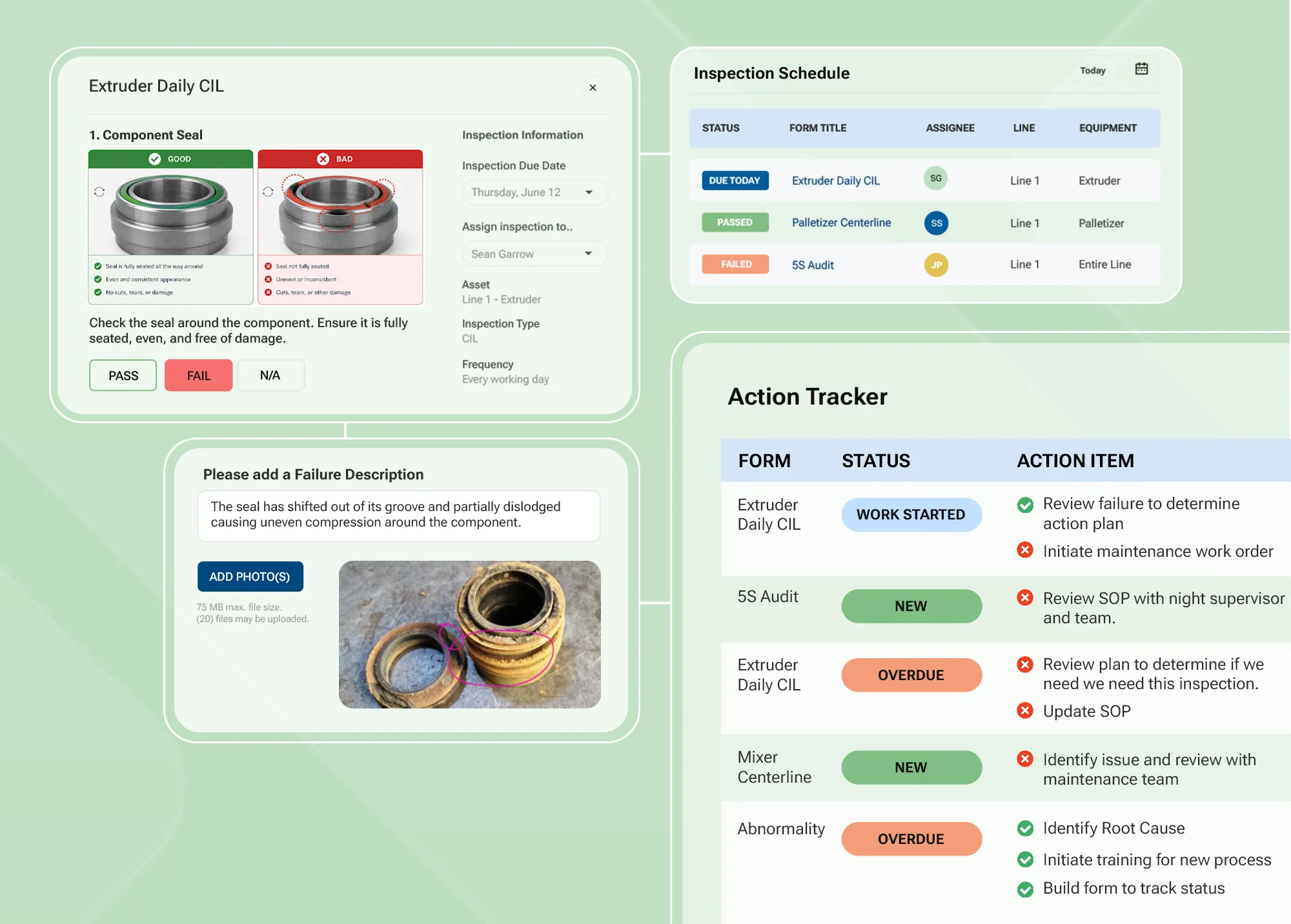
The idea behind Weever is simple: engage your team, unlock your data, improve your plant. A DMS depends on all three working together, and that's the loop Weever is built to close.
- Capture. Instead of a whiteboard that gets wiped clean at the next shift change, the right check, observation, or metric reaches the right person and gets captured at the source, with evidence, so the data behind your daily meeting is trustworthy from the start.
- Act. Every issue raised in a daily meeting gets an owner, a due date, and a status you can follow to closure, so nothing quietly drops between shifts the way it does on a paper tracker.
- Analyze. Frontline data usually ends up fragmented across separate logs, boards, and spreadsheets, with the context behind it, the why, missing entirely. Weever connects that data across every program, line, shift, and site into one real-time picture, so your daily meeting is grounded in what's actually happening, not a partial view.
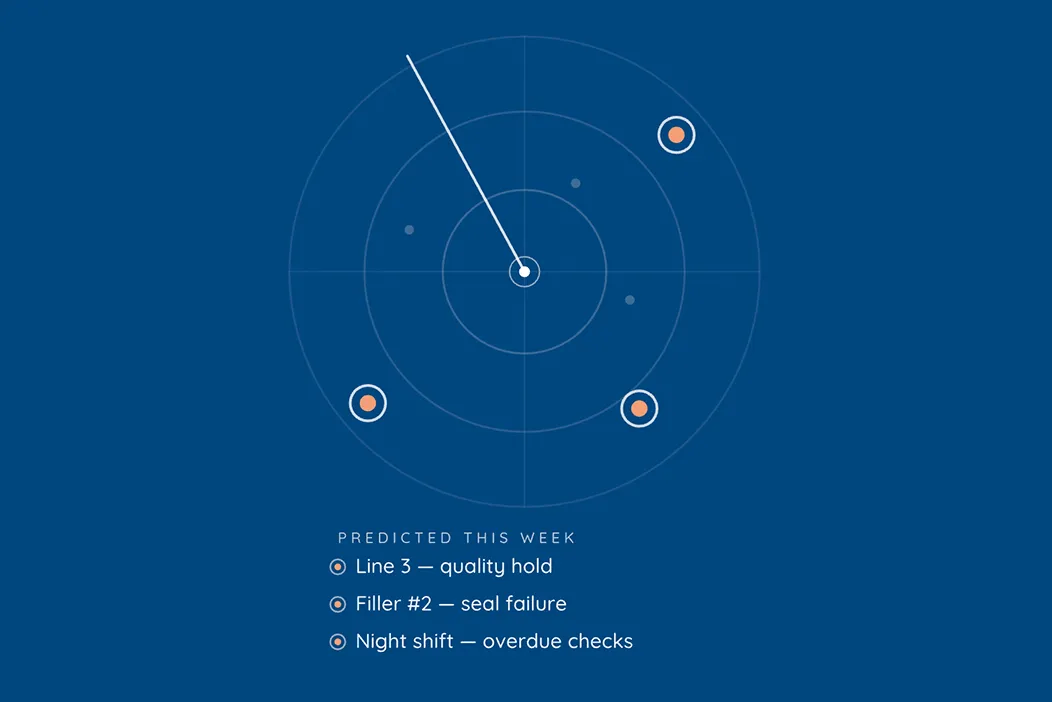
That connected, structured data is also what feeds Weever Radar, the operational intelligence built into Weever. Instead of a dashboard you have to interpret yourself, Radar surfaces what's happening, what it means, and what to do next, across every line, shift, and site, which is exactly the kind of standing visibility a mature DMS program depends on.
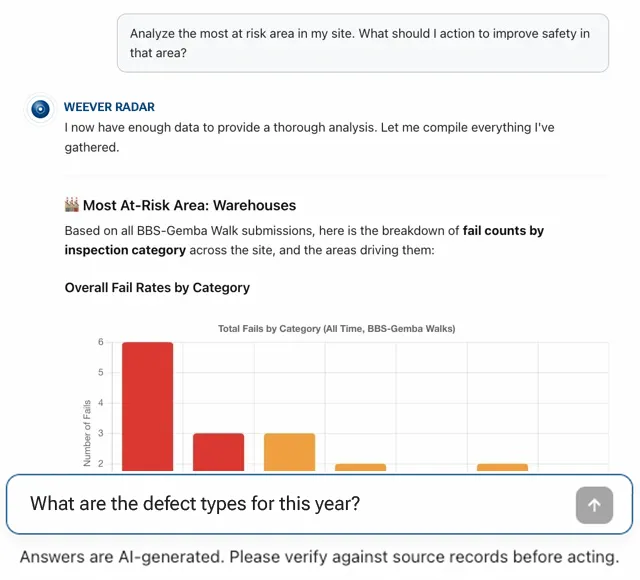
Want to see how Weever runs your daily management rhythm, from the huddle to the follow-through? Book a demo and we'll show you.

How skill development increases frontline employee engagement in manufacturing organizations
How investing in employee skills and training helps to increase frontline employee engagement
Investing in employee skills and training can help increase frontline employee engagement in manufacturing organizations in several ways:
Improved Job Satisfaction
By providing employees with the necessary skills and training, they become better equipped to perform their job duties. This can lead to increased job satisfaction, as employees feel more confident and capable in their roles. When employees are satisfied with their jobs, they are more likely to be engaged and committed to the organization.
Increased Motivation
When employees feel that their employer is investing in their development and growth, they are more motivated to perform well. They are more likely to see a future with the organization and to be committed to achieving its goals.
Higher Retention Rates
By investing in employee skills and training, employers can show that they value their employees and are willing to invest in their future. This can lead to higher retention rates, as employees are more likely to stay with an organization that supports their development.
Increases Productivity
Safe working conditions can also lead to increased productivity. When employees feel safe, they can focus on their work without worrying about potential hazards. This can lead to higher levels of concentration and increased productivity.
Enhanced Productivity
Well-trained employees are more productive, which can result in increased efficiency and profitability for the organization. This can be especially important in manufacturing organizations where productivity and efficiency are critical to success.
Improved Quality
When employees are properly trained, they are better able to produce high-quality work. This can lead to increased customer satisfaction and loyalty, which can be critical for the success of a manufacturing organization.
How Weever can help
Weever provides digital tools that unlocks your team's experience and insights, simplifies decision-making, and removes barriers that are hindering them from achieving their full potential.
Weever guides your team through digital workflows, and empowers them to easily capture their observations, insights, and improvement ideas.
The incredibly valuable human dimension of data capture, fuelled by instinct, experience and intuition, is something that is otherwise difficult to harness and action (and impossible when using paper).
Once captured, Weever transforms people-led data into actionable metrics and real-time insights that allow you to drive your organization forward.
Your employees, in turn, can see and feel the tangible impact that they are making - unlocking the success that comes through an empowered team.
Frontline Employee Engagement is a measure of how invested your frontline employees are in the growth and prosperity of your organization. If you change their investment level by enabling them, energizing them, and empowering them, you will reap the benefits of increased engagement.
- Empower your staff with "bottom up" Operational Excellence tools. Allow staff to understand the value your organization is manufacturing and how it is delivered so that they can correct issues autonomously. Staff can submit suggestions, observations, and abnormality reports and watch the progress of them into site initiatives and improvement projects.
- Energize your staff with personal goal tracking, gamification and automated reward points that they can redeem in your personalized rewards marketplace. Broadcast result KPIs and celebrate wins to keep staff engaged.
- Enable your staff with instant access to modern software that is just as focused on Operational Excellence as it is on Employee Engagement. Weever makes it easy to collect data, track projects and view reports while staff can also review leaderboard, point totals and redeem rewards - all in one place.
Frontline Employee Engagement Ultimate Guide
case study
Marks, Canadian Tire, Sportschek solves vendor non-compliance with Weever.
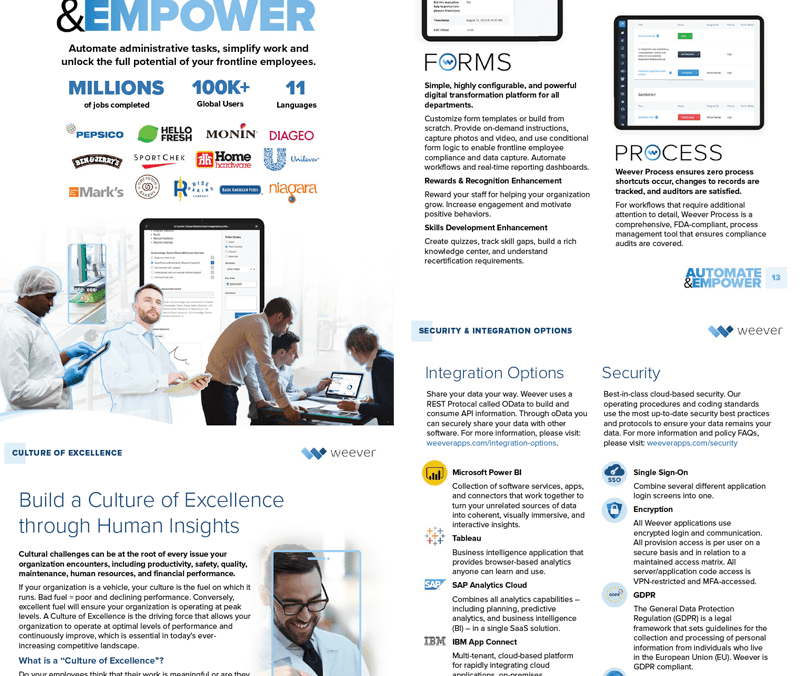
Learn about the Platform.
Download the brochure to get all the details about how Weever works.

What is Daily Management System (DMS)and how does it help manufacturers?
What is DMS and how does it help manufacturing organizations?
The Daily Management System (DMS), also known as Daily Direction Setting (DDS), is a framework for managing operational performance in manufacturing organizations. It is a structured approach to managing day-to-day operations that focuses on continuous improvement and waste reduction.
What is DMS?
The DMS approach typically involves the following key elements:
- Daily meetings: Regular daily meetings are held with teams to review performance metrics and identify any issues that need to be addressed. This helps to keep everyone informed and aligned, and to ensure that any problems are identified and addressed quickly.
- Standard work procedures: Standard work procedures are developed and implemented to ensure consistency and quality in processes and products.
Visual management: Visual tools such as charts, graphs, and dashboards are used to communicate key performance indicators and to track progress towards goals. - Problem-solving: A structured problem-solving process is used to identify the root causes of problems and to develop effective solutions.
- Continuous improvement: The DMS approach emphasizes continuous improvement, with teams encouraged to identify and implement small improvements on a daily basis.
What are the benefits of implementing a DMS framework?
By implementing the DMS framework, manufacturing organizations can benefit from a number of advantages. These include:
- Improved communication: Daily meetings and visual management tools help to ensure that everyone is informed and aligned.
- Greater focus on results: The DMS approach provides a clear focus on performance metrics and results.
- Reduced waste: Standard work procedures and problem-solving processes help to identify and eliminate waste in processes and products.
- Continuous improvement: The DMS approach encourages a culture of continuous improvement, with small improvements made on a daily basis.
How Weever can help
Weever provides digital tools that unlocks your team's experience and insights, simplifies decision-making, and removes barriers that are hindering them from achieving their full potential.
Weever guides your team through digital workflows, and empowers them to easily capture their observations, insights, and improvement ideas.
The incredibly valuable human dimension of data capture, fuelled by instinct, experience and intuition, is something that is otherwise difficult to harness and action (and impossible when using paper).
Once captured, Weever transforms people-led data into actionable metrics and real-time insights that allow you to drive your organization forward.
Your employees, in turn, can see and feel the tangible impact that they are making - unlocking the success that comes through an empowered team.
Frontline Employee Engagement is a measure of how invested your frontline employees are in the growth and prosperity of your organization. If you change their investment level by enabling them, energizing them, and empowering them, you will reap the benefits of increased engagement.
- Empower your staff with "bottom up" Operational Excellence tools. Allow staff to understand the value your organization is manufacturing and how it is delivered so that they can correct issues autonomously. Staff can submit suggestions, observations, and abnormality reports and watch the progress of them into site initiatives and improvement projects.
- Energize your staff with personal goal tracking, gamification and automated reward points that they can redeem in your personalized rewards marketplace. Broadcast result KPIs and celebrate wins to keep staff engaged.
- Enable your staff with instant access to modern software that is just as focused on Operational Excellence as it is on Employee Engagement. Weever makes it easy to collect data, track projects and view reports while staff can also review leaderboard, point totals and redeem rewards - all in one place.
case study
Marks, Canadian Tire, Sportschek solves vendor non-compliance with Weever.
Learn about the Platform.
Download the brochure to get all the details about how Weever works.

How elevated safety increases employee engagement at manufacturing organizations
How elevated safety increases employee engagement at manufacturing organizations
Elevated safety can have a positive impact on employee engagement at manufacturing organizations in several ways:
Builds Trust
When employees feel safe at work, they develop a sense of trust towards their employers. They feel valued and supported, and this can create a positive relationship between employees and management. This trust can foster an environment of transparency and open communication, which can increase employee engagement.
Boosts Morale
A safe work environment can boost employee morale, as it shows that the company cares about their well-being. When employees feel that they are valued, they are more likely to be engaged and committed to their work.
Reduces Stress
Workplace injuries and accidents can cause significant physical and emotional stress for employees. By prioritizing safety measures, organizations can reduce the risk of accidents and injuries, which can lead to a more positive work environment and reduced stress levels.
Increases Productivity
Safe working conditions can also lead to increased productivity. When employees feel safe, they can focus on their work without worrying about potential hazards. This can lead to higher levels of concentration and increased productivity.
Improves Retention
Employees who feel safe and supported are more likely to stay with the organization. This can reduce turnover rates and help organizations retain their most valuable employees.
How Weever can help
Weever provides digital tools that unlocks your team's experience and insights, simplifies decision-making, and removes barriers that are hindering them from achieving their full potential.
Weever guides your team through digital workflows, and empowers them to easily capture their observations, insights, and improvement ideas.
The incredibly valuable human dimension of data capture, fuelled by instinct, experience and intuition, is something that is otherwise difficult to harness and action (and impossible when using paper).
Once captured, Weever transforms people-led data into actionable metrics and real-time insights that allow you to drive your organization forward.
Your employees, in turn, can see and feel the tangible impact that they are making - unlocking the success that comes through an empowered team.
Frontline Employee Engagement is a measure of how invested your frontline employees are in the growth and prosperity of your organization. If you change their investment level by enabling them, energizing them, and empowering them, you will reap the benefits of increased engagement.
- Empower your staff with "bottom up" Operational Excellence tools. Allow staff to understand the value your organization is manufacturing and how it is delivered so that they can correct issues autonomously. Staff can submit suggestions, observations, and abnormality reports and watch the progress of them into site initiatives and improvement projects.
- Energize your staff with personal goal tracking, gamification and automated reward points that they can redeem in your personalized rewards marketplace. Broadcast result KPIs and celebrate wins to keep staff engaged.
- Enable your staff with instant access to modern software that is just as focused on Operational Excellence as it is on Employee Engagement. Weever makes it easy to collect data, track projects and view reports while staff can also review leaderboard, point totals and redeem rewards - all in one place.
Frontline Employee Engagement Ultimate Guide
case study
Marks, Canadian Tire, Sportschek solves vendor non-compliance with Weever.
Learn about the Platform.
Download the brochure to get all the details about how Weever works.
How does workflow automation reduce costs for manufacturing organizations?
How does workflow automation reduce costs for manufacturing organizations?
Workflow automation can help manufacturing organizations reduce costs by eliminating waste, reducing errors, and improving efficiency. By automating routine tasks, manufacturers can save time and reduce the cost of labor-intensive manual processes.
Workflow automation can reduce costs for manufacturing organizations in several ways:
1. Reduced Labor Costs
Automated workflows can significantly reduce labor costs by automating routine tasks that would otherwise require employees to spend time and effort completing. This can free up employees to focus on more complex and strategic tasks, reducing the need for additional staff or overtime pay.
2. Improved Resource Utilization
By automating workflows, manufacturers can make better use of their resources. Automated systems can handle tasks such as data entry, document processing, and inventory management, reducing the need for employees to complete these tasks manually. This can free up resources such as labor, time, and equipment for other more critical tasks.
3. Reduced Errors and Rework
Workflow automation can help reduce the occurrence of errors, which can result in significant cost savings for manufacturers. By automating processes such as data entry and document processing, manufacturers can significantly reduce the risk of errors, reducing the need for rework and additional resources.
4. Faster Time-to-Market
Automation can help manufacturers reduce the time required to bring products to market. By automating processes such as production planning, scheduling, and inventory management, manufacturers can speed up their workflow, reducing the time required to complete tasks and bring products to market.
5. Improved Equipment Utilization
Automated systems can help manufacturers optimize their use of equipment by tracking usage and identifying bottlenecks or inefficiencies. This can help manufacturers identify areas where equipment utilization can be improved, reducing downtime and increasing overall equipment effectiveness (OEE).
6. Improved Quality
Workflow automation can help improve product quality by reducing errors and inconsistencies in the manufacturing process. By automating processes such as quality control and inspection, manufacturers can ensure that products meet the required specifications, reducing the need for rework or scrap.
How can Weever help?
In summary, workflow automation can help manufacturing organizations reduce costs by reducing labor costs, improving resource utilization, reducing errors and rework, speeding up time-to-market, improving equipment utilization, and improving product quality. By reducing costs, manufacturers can improve profitability, invest in new technologies and equipment, and improve their competitiveness in the marketplace.
Weever saves time and money through powerful workflow automation, which enhances productivity in every department throughout your organization. By automating mundane and repeatable administrative tasks, Weever dramatically enhances productivity and gives time back to your leadership, which can be reallocated towards more value add activities.
Learn more about the Weever Platform
Take a Guided Tour.
Learn about the Platform.
Download the brochure to get all the details about how Weever works.
Over 2 million jobs completed for over 100,000 users worldwide. View Testimonials
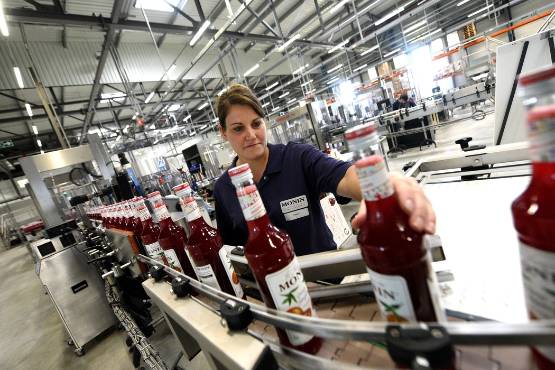
Monin was drowning in paper and looking for a system that would ensure compliant workflows and automate KPI reporting insights to inform continuous process improvement, all without overwhelming operators.
Review Customer Story

How does workflow automation increase collaboration in a manufacturing facility?
How does workflow automation increase collaboration in a manufacturing facility?
Workflow automation can increase collaboration in a manufacturing facility in several ways:
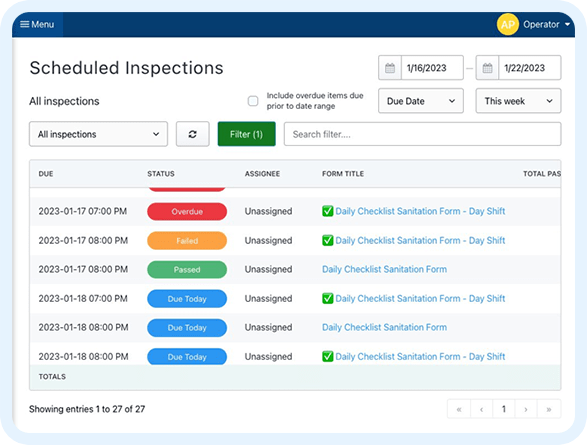
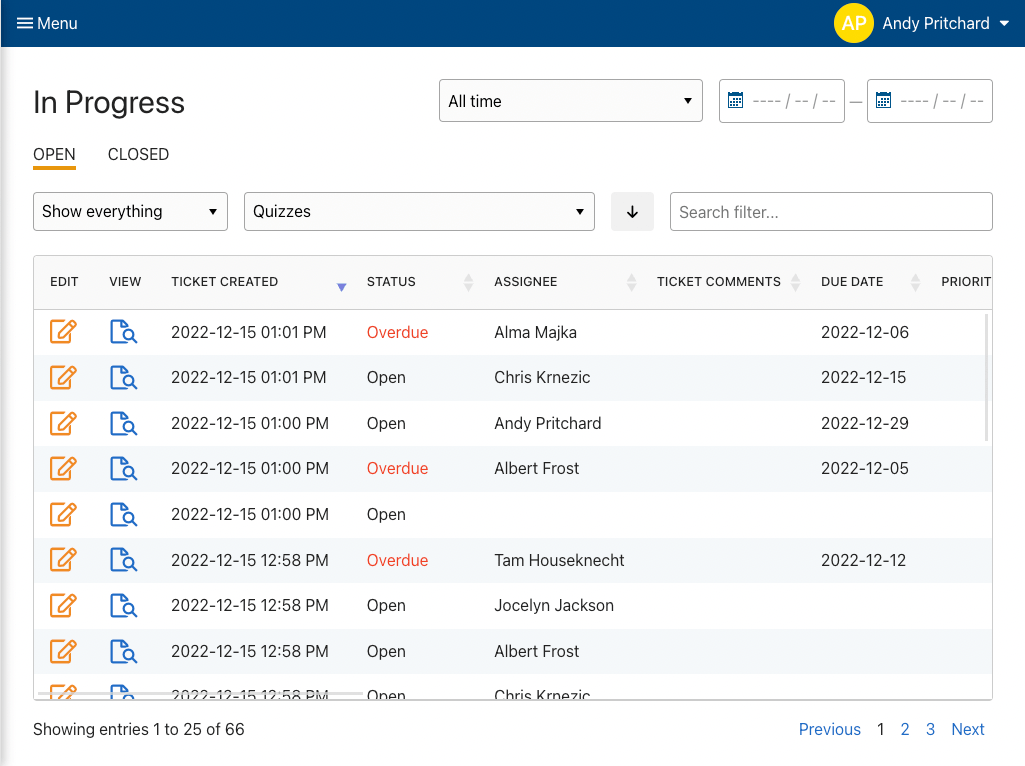
1. Centralized System for Tracking and Managing Tasks
Automated workflows provide a centralized system for tracking and managing tasks, which can improve collaboration among operators. By using a common system to track tasks, operators can see the progress of a project and know what has been completed and what still needs to be done.
2. Shared Access to Data and Information
Workflow automation systems can provide shared access to data and information, making it easier for operators to collaborate and work together. By using a common system to store and share data, operators can quickly access the information they need, reducing the need for manual data entry and communication.
3. Real-time Monitoring and Communication
Automated workflows can provide real-time monitoring and communication capabilities, allowing operators to communicate more effectively and quickly respond to issues that arise. By using automated systems to monitor processes, operators can identify problems early and collaborate to resolve them.
4. Improved Communication and Feedback
Automated workflows can improve communication and feedback among operators. By using a common system to track tasks, operators can easily provide feedback to each other, reducing the risk of miscommunication and improving collaboration.
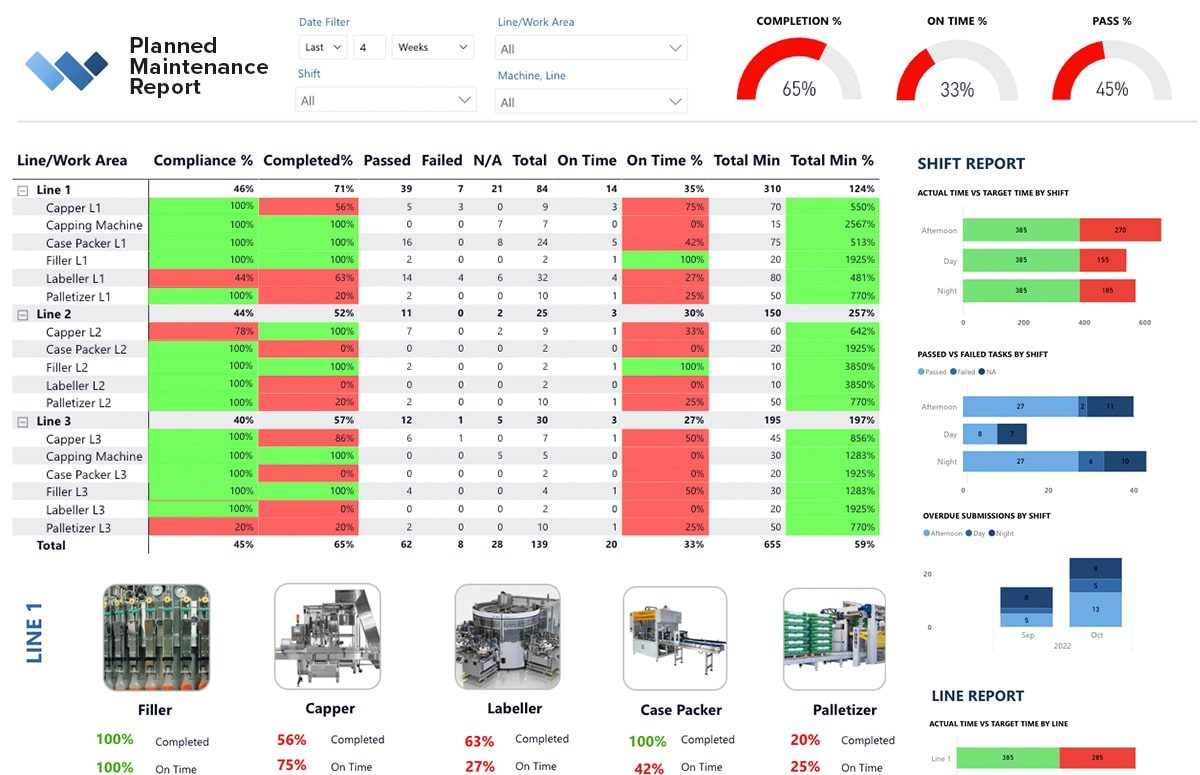
5. Improved Visibility into Workflow Processes
Automated workflows can improve visibility into workflow processes, providing operators with the information they need to collaborate more effectively. By using a common system to track tasks, operators can see how their work fits into the overall workflow, helping them to understand the impact of their work on the entire process.
6. Enhanced Cross-functional Collaboration
Automated workflows can enhance cross-functional collaboration by breaking down silos between departments. By providing a common system for tracking tasks and sharing data, workflows automation can help to improve collaboration among departments, reducing the risk of miscommunication and errors.
How can Weever help?
In summary, workflow automation can increase collaboration in a manufacturing facility by providing a centralized system for tracking and managing tasks, shared access to data and information, real-time monitoring and communication capabilities, improved communication and feedback, improved visibility into workflow processes, and enhanced cross-functional collaboration.
By improving collaboration, workflow automation can help manufacturers improve their productivity, efficiency, and overall performance.
Weever saves time and money through powerful workflow automation, which enhances productivity in every department throughout your organization.
By automating mundane and repeatable administrative tasks, Weever dramatically enhances productivity and gives time back to your leadership, which can be reallocated towards more value add activities.
Learn more about the Weever Platform
Take a Guided Tour.
Monin was drowning in paper and looking for a system that would ensure compliant workflows and automate KPI reporting insights to inform continuous process improvement, all without overwhelming operators.
Review Customer Story
Learn about the Platform.
Download the brochure to get all the details about how Weever works.
Over 2 million jobs completed for over 100,000 users worldwide. View Testimonials

How does workflow automation help to reduce errors for operators at a manufacturing facility?
How does workflow automation help to reduce errors for operators at a manufacturing facility?
Workflow automation can help reduce errors for operators at a manufacturing facility in several ways:
1. Standardized Processes
Automated workflows can be designed to standardize processes across the manufacturing facility, reducing the risk of human error. By using pre-determined rules and workflows, operators can ensure that tasks are performed consistently and accurately.
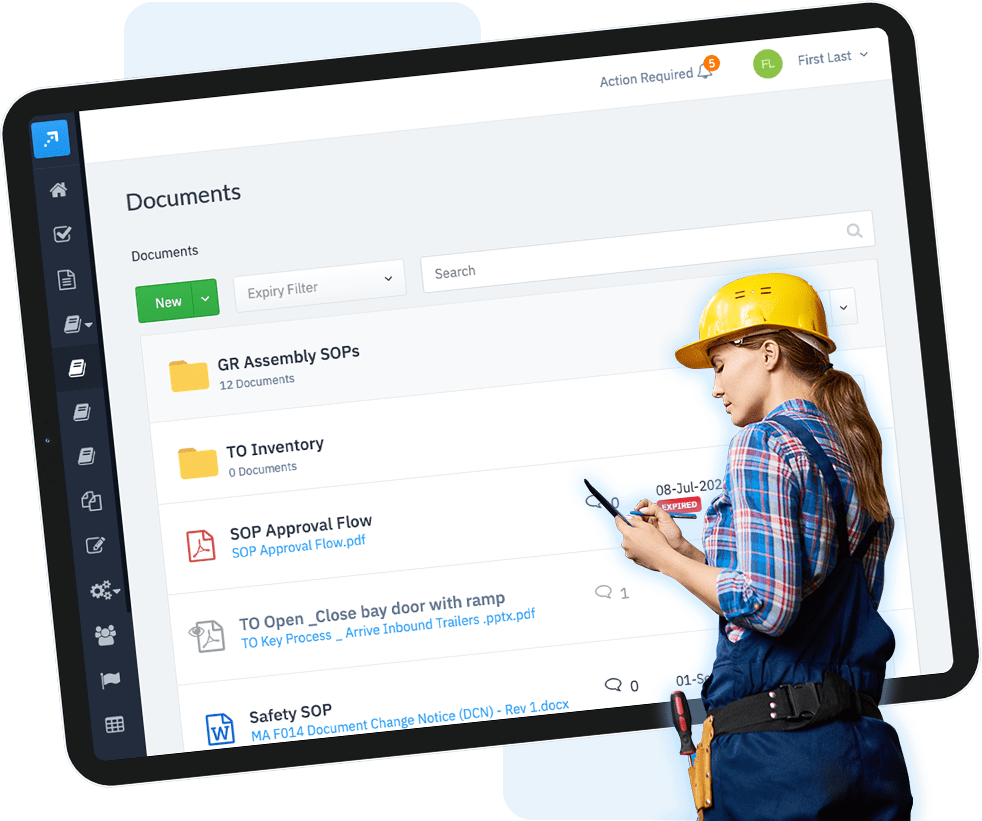
2. Elimination of Manual Data Entry
Manual data entry is one of the most common sources of errors in a manufacturing facility. Automating data entry tasks can significantly reduce errors by eliminating the need for operators to manually enter data. Automated systems can import data directly from machines or sensors, reducing the risk of transcription errors.
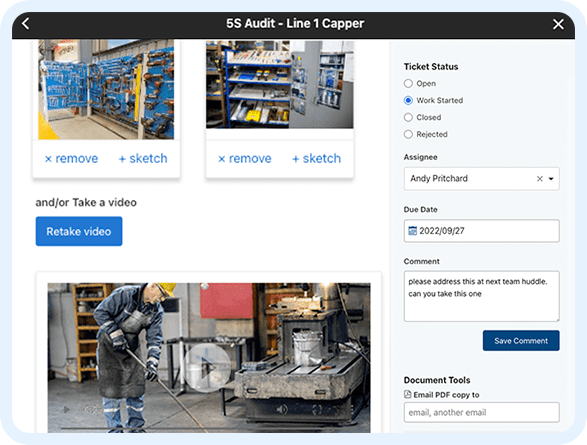
3. Reduced Complexity
Automation can simplify complex workflows, making them easier for operators to understand and complete. By breaking down complex processes into smaller, more manageable tasks, operators can focus on completing each step accurately, reducing the risk of errors.
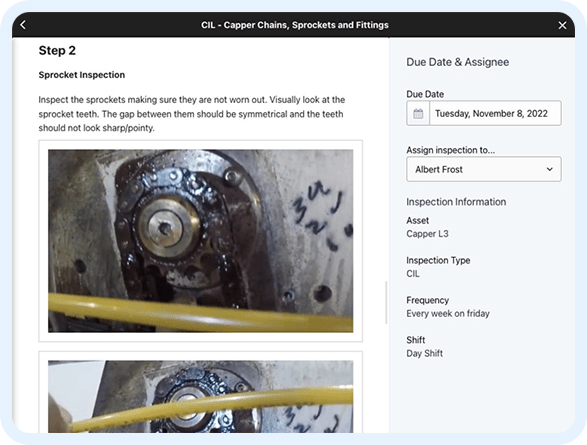
4. Real-time Monitoring
Automated workflows can be designed to monitor processes in real-time, alerting operators when an error occurs. This can help operators quickly identify and correct errors before they cause significant problems.
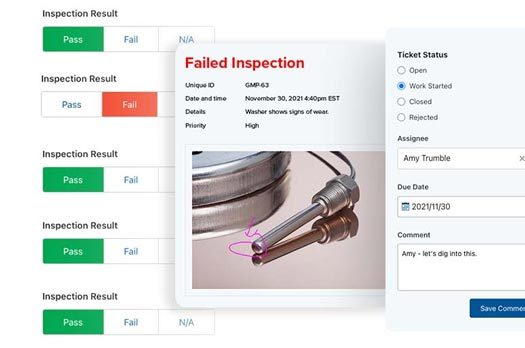
5. Improved Collaboration
Automated workflows can also improve collaboration among operators by providing a centralized system for tracking and managing tasks. This can help operators share information and communicate more effectively, reducing the risk of miscommunication and errors.
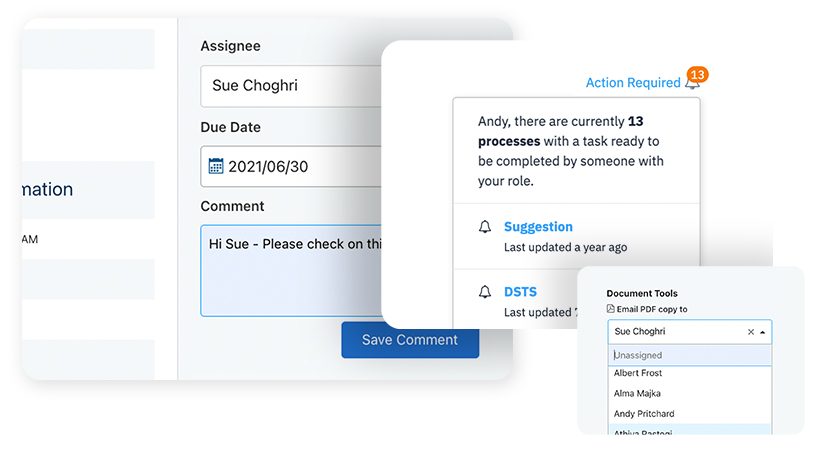
6. Data Analytics
Workflow automation systems can generate reports and analytics that can help operators identify areas of the manufacturing process that are prone to errors. This information can be used to improve processes, reducing the risk of future errors.
How can Weever help?
In summary, workflow automation can help reduce errors for operators at a manufacturing facility by standardizing processes, eliminating manual data entry, simplifying complex workflows, providing real-time monitoring, improving collaboration, and using data analytics to identify areas of improvement. By reducing errors, workflow automation can help manufacturers improve product quality, reduce waste, and improve overall efficiency.
Weever saves time and money through powerful workflow automation, which enhances productivity in every department throughout your organization. By automating mundane and repeatable administrative tasks, Weever dramatically enhances productivity and gives time back to your leadership, which can be reallocated towards more value add activities.
Learn more about the Weever Platform
Take a Guided Tour.
Monin was drowning in paper and looking for a system that would ensure compliant workflows and automate KPI reporting insights to inform continuous process improvement, all without overwhelming operators.
Review Customer Story
Learn about the Platform.
Download the brochure to get all the details about how Weever works.
Over 2 million jobs completed for over 100,000 users worldwide. View Testimonials

Enhance Productivity through Automation
How does automation enhance productivity at manufacturing facilities?
In today's fast-paced business environment, manufacturing organizations are under constant pressure to increase productivity and reduce costs.
Workflow automation involves using software to automate routine and repetitive tasks, such as data entry, file processing, and report generation. The goal is to streamline processes, reduce errors, and save time and resources. Workflow automation can be applied to all operational departments, from production and quality control to safety and maintenance.
Workflow automation can play a critical role in achieving these goals by streamlining operations and reducing the time and resources required to complete tasks.
Let's explore how manufacturing organizations can increase productivity and save time and money through workflow automation.
Eliminate Repeatable Processes
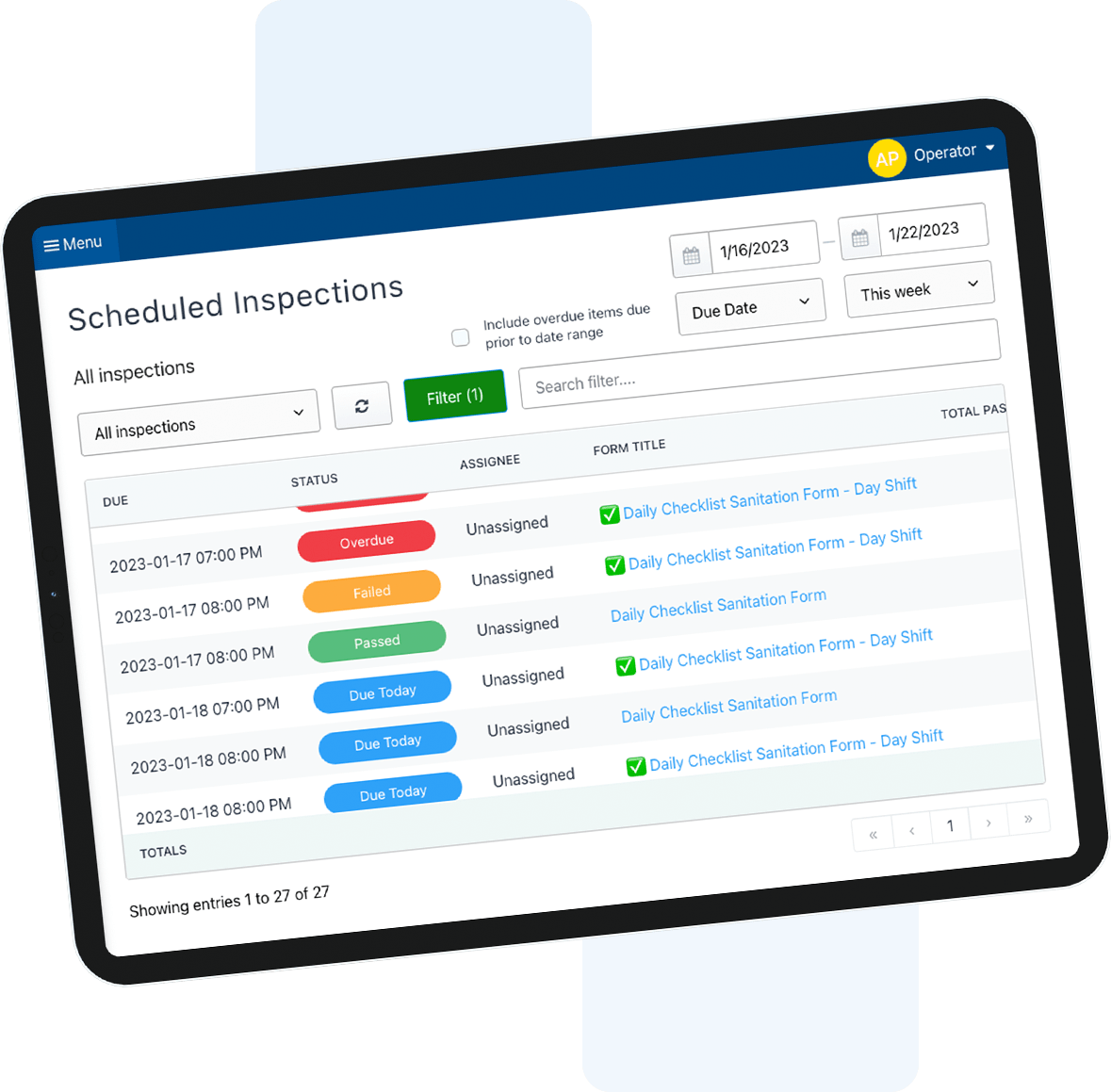
Workflow automation can help manufacturing organizations increase productivity by eliminating time-consuming manual and repeatable processes. By automating routine tasks such as data entry, project management, and report generation, employees can focus on higher-value activities that require more complex decision-making.
By automating mundane and repetitive tasks, employees are able to focus on providing insights and adding value. The administration is "outsourced" to software, which increases the efficiency and compliance of workflow management. As a result, the process is accelerated and employees are more engaged.
- Faster Task Completion
- Improved Efficiency
- Better Resource Utilization
- Accelerated Project Completion
Learn more about eliminating mundane tasks
Reduce Errors
Striking a balance between increased productivity and regulatory compliance is mandatory for manufacturing organizations. Cutting corners and skipping steps might accelerate processes but also open the door to dangerous defects and safety issues.
Automation helps to reduce errors and omissions and ensure tasks are completed correctly every time, which reduces rework, defects and time-to-close maintenance tickets.
- Standardized Processes
- Elimination of Manual Data Entry
- Reduced Complexity
- Real-time Monitoring
- Improved Collaboration
- Data Analytics
Learn more about Reducing Human Error
Save Time & Money
Workflow automation can help reduce costs by eliminating waste, reducing errors, and improving efficiency. By automating routine tasks, manufacturers can save time and reduce the cost of labor-intensive, manual processes. Automation can also help manufacturers eliminate waste, continuously improve and enhance efficiency.
- Reduced Labor Costs
- Improved Resource Utilization
- Reduced Errors and Rework
- Faster Time-to-Market
- Improved Equipment Utilization
- Improved Quality
Learn more about Saving Time & Money
Enhanced Collaboration
By automating the flow of information between different systems and teams, manufacturers can improve communication and collaboration, leading to better decision-making and more efficient operations.
Workflow automation can help enhance collaboration between different departments and teams within a manufacturing organization.
- Centralized System for Tracking and Managing Tasks
- Shared Access to Data and Information
- Real-time Monitoring and Communication
- Improved Communication and Feedback Loop
- Improved Visibility into Workflow Processes
- Enhanced Cross-functional Collaboration
Learn more about Enhancing Collaboration
How can Weever help?
Weever saves time and money through powerful workflow automation, which enhances productivity in every department throughout your organization. By automating mundane and repeatable administrative tasks, Weever dramatically enhances productivity and gives time back to your leadership, which can be reallocated towards more value add activities.
Learn more about the Weever Platform
Monin was drowning in paper and looking for a system that would ensure compliant workflows and automate KPI reporting insights to inform continuous process improvement, all without overwhelming operators.
Take a Guided Tour.
Over 2 million jobs completed for over 100,000 users worldwide. View Testimonials
Learn about the Platform.
Download the brochure to get all the details about how Weever works.
Automate mundane, manual processes to increase productivity
How does the reduction of manual processes through automation increase productivity at manufacturing facilities?
The elimination of manual processes through automation can significantly increase productivity for manufacturers by reducing the time and resources required to complete tasks. Lets examine some of the key ways that automation can improve productivity by affecting manual, repeated and mundane tasks and processes.
1. Faster Task Completion
Automation can complete tasks much faster than manual processes. For example, an automated system can generate reports or process data in a fraction of the time it would take an employee to do the same task manually. This can help manufacturers complete tasks more quickly, which can lead to increased throughput, faster delivery times and reduced time-to-close maintenance tickets.
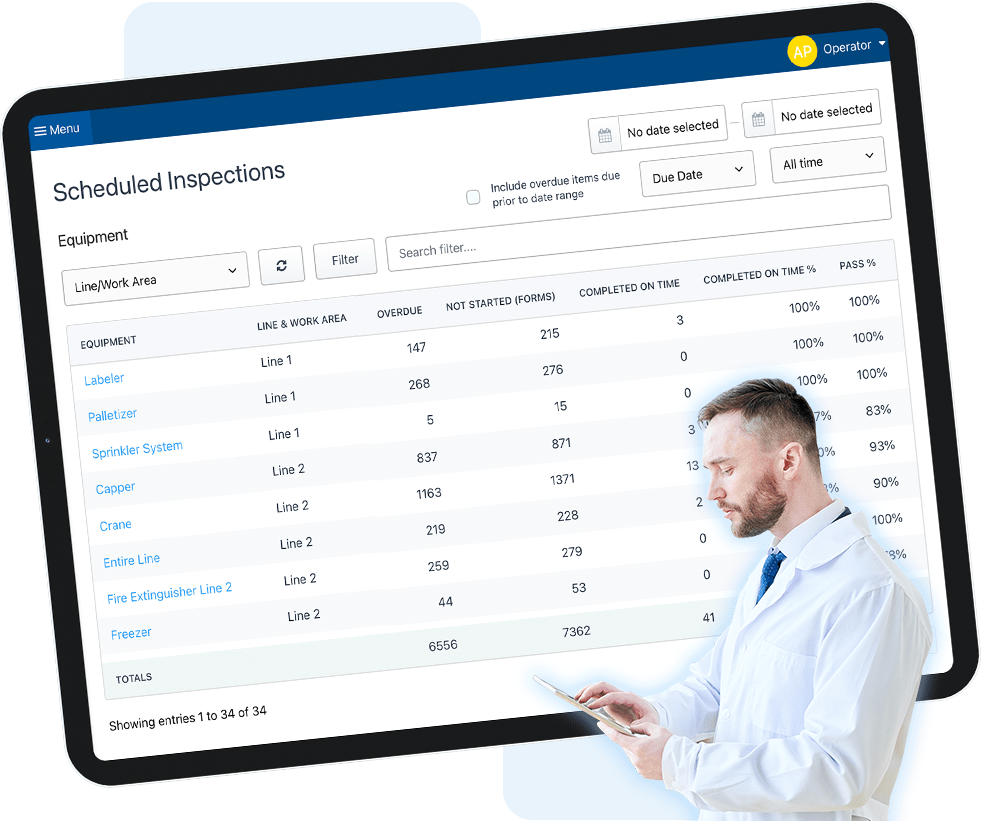
2. Improved Efficiency
Automation can also improve efficiency by reducing the time and resources required to complete tasks. For example, an automated system can handle routine tasks such as data entry, freeing up employees to focus on more complex and strategic activities. This can help manufacturers make better use of their resources, which can lead to improved productivity and reduced costs.
3. Better Resource Utilization
By automating routine tasks, manufacturers can make better use of their resources. For example, an automated system can generate reports or process data around the clock, reducing the need for employees to work overtime or on weekends. This can help manufacturers optimize their use of resources, which can lead to improved productivity and reduced costs.
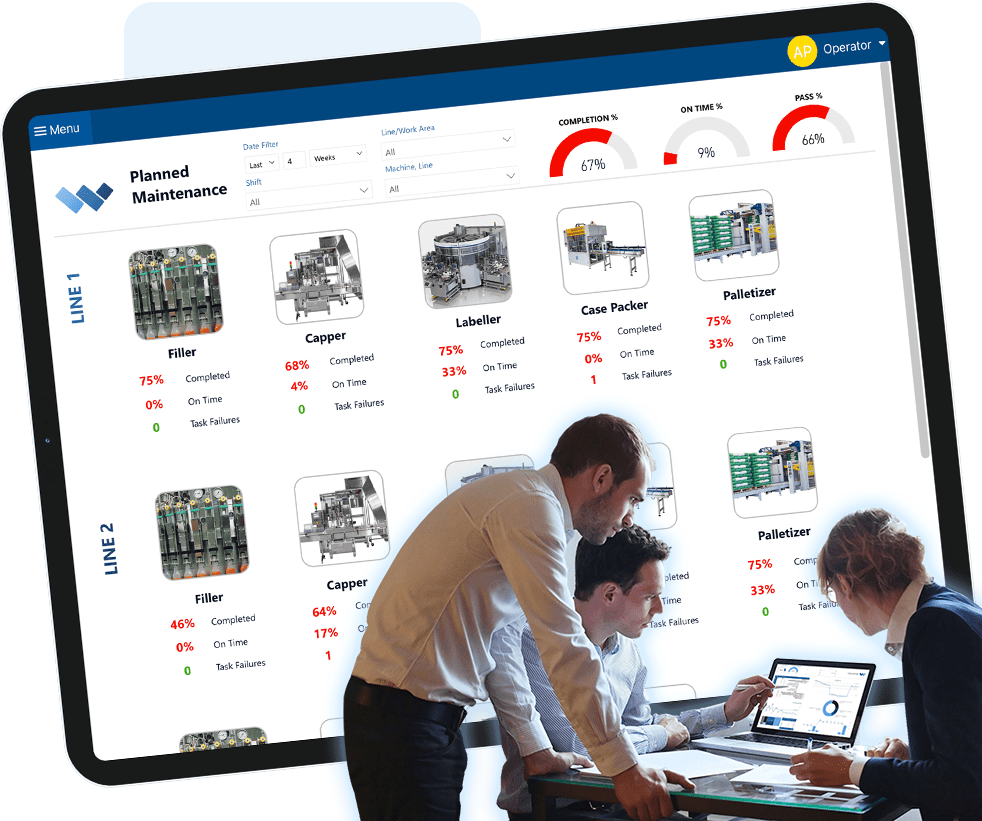
4. Accelerated Project Completion
Automation can also help improve the flow of work within a manufacturing organization. For example, an automated system can automatically route documents or data between different departments, reducing the need for manual handoffs or delays. This can help manufacturers speed up their workflow, which can lead to increased productivity and faster delivery times.
How can Weever help?
In summary, the elimination of manual processes through automation can significantly increase productivity for manufacturers by reducing the time and resources required to complete tasks, improving efficiency, reducing errors, better utilizing resources, and improving workflow.
Weever saves time and money through powerful workflow automation, which enhances productivity in every department throughout your organization. By automating mundane and repeatable administrative tasks, Weever dramatically enhances productivity and gives time back to your leadership, which can be reallocated towards more value add activities.
Learn more about the Weever Platform
Take a Guided Tour.
Monin was drowning in paper and looking for a system that would ensure compliant workflows and automate KPI reporting insights to inform continuous process improvement, all without overwhelming operators.
Review Customer Story
Learn about the Platform.
Download the brochure to get all the details about how Weever works.
Over 2 million jobs completed for over 100,000 users worldwide. View Testimonials

Top 5 Benefits of digitizing food plant sanitation schedules
Do you currently use software to manage your sanitation schedule?
Sanitation is a critical aspect of food production, and effective sanitation programs are essential to ensure the safety and quality of the products you produce. Managing these programs manually can be time-consuming, error-prone, and inconsistent, which is why using software, like Weever, can revolutionize the efficiency, safety, and efficacy of your sanitation process.
1. Improved efficiency
One of the primary benefits of using software to manage your sanitation schedules is that it can significantly improve efficiency. Sanitation programs involve many complex processes, and managing them manually can be time-consuming and difficult to track. By using software, you can automate many of these processes, such as scheduling and monitoring, saving you and your team time and effort.
With software, you can schedule sanitation tasks in advance, assign them to the appropriate personnel, and receive automatic notifications when they are complete. This reduces the time and effort required to track and manage sanitation tasks manually, freeing up your team to focus on higher-value tasks.
Additionally, software can improve communication and collaboration among team members, ensuring that everyone is on the same page and can work together efficiently. This can be especially helpful in larger organizations or those with multiple production lines or facilities.
2. Enhanced accuracy and consistency
Sanitation programs require precise procedures, and mistakes can have severe consequences, such as contamination or non-compliance with regulations. Using software can significantly increase accuracy and consistency, reducing the risk of errors and non-compliance.
With software, you can standardize your sanitation procedures, ensuring that they are consistent across all production lines and facilities. You can also automate many of the tasks involved in the sanitation process, reducing the risk of errors and ensuring that all necessary steps are completed in the correct order.
In addition, software can provide real-time feedback, enabling your team to identify and address issues quickly before they become bigger problems. This ensures that your sanitation program is always operating at peak efficiency, reducing the risk of quality and safety issues.
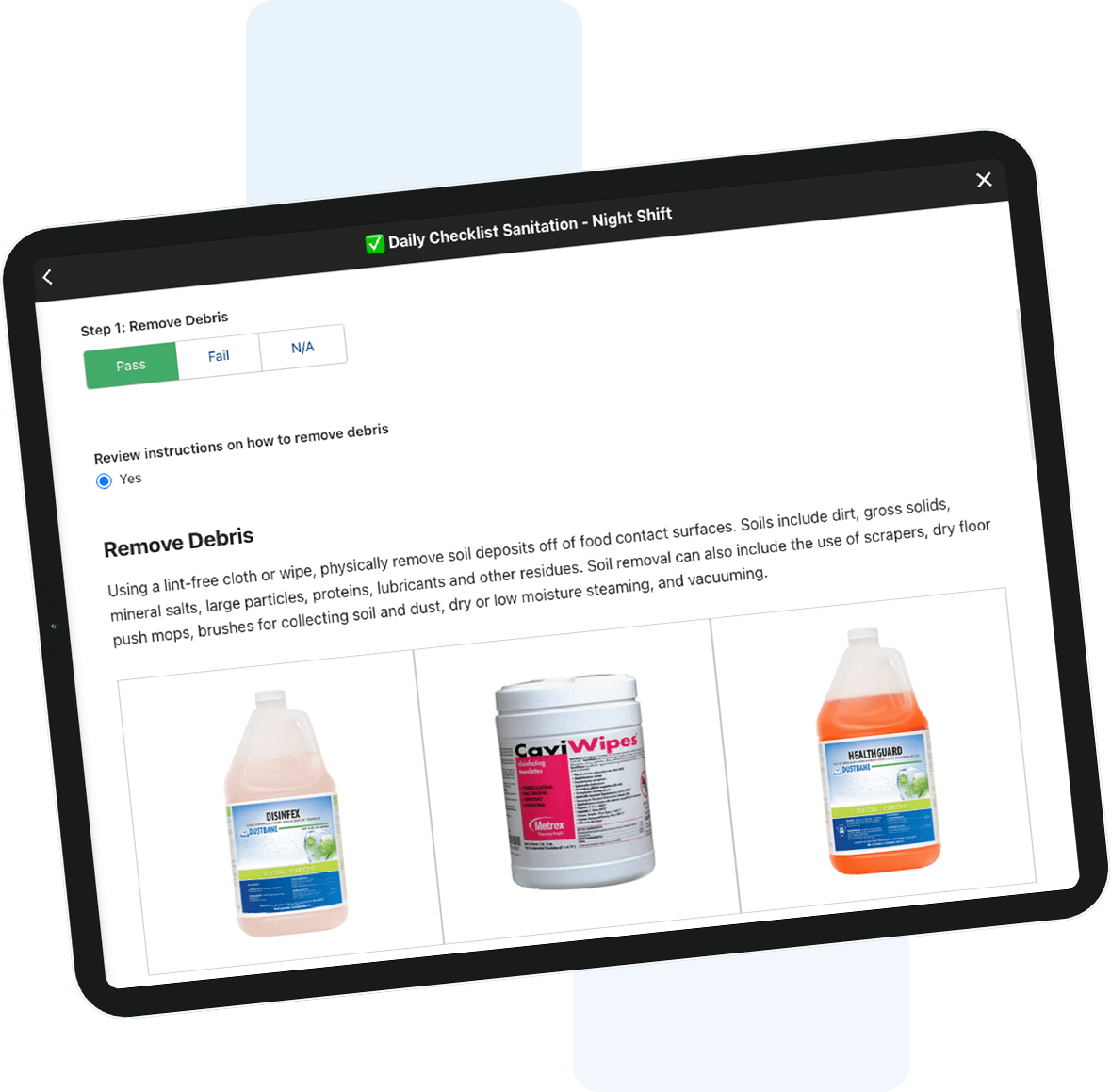
3. Ensure compliance
Food production is highly regulated, and non-compliance can result in costly fines, product recalls, and reputational damage. Managing your sanitation programs manually can be challenging and time-consuming, increasing the risk of non-compliance. Using software can significantly improve compliance, reducing the risk of regulatory issues.
Software can automate many of the processes involved in compliance, such as documenting and reporting, ensuring that all necessary records are kept and easily accessible. It can also provide real-time monitoring, enabling you to identify and address compliance issues immediately.
Software can provide real-time data and insights, allowing you to track your compliance performance and identify areas for improvement. This can help you stay ahead of regulatory changes and proactively address compliance issues, reducing the risk of non-compliance.
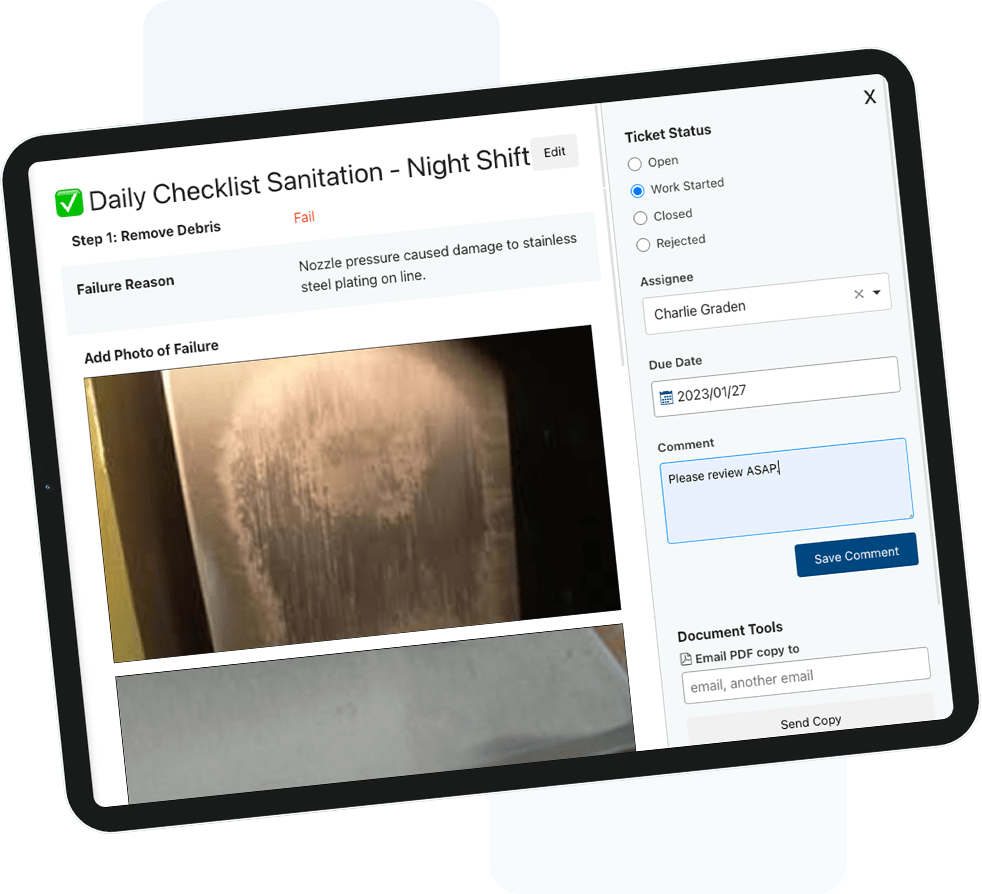
4. Reduced costs and risks
Sanitation programs can be costly, requiring significant resources, including time, labor, and equipment. Managing these programs manually can also be risky, increasing the risk of contamination and non-compliance. Using software can help you reduce costs and risks associated with sanitation programs.
By automating many of the processes involved in sanitation, such as scheduling and monitoring, software can reduce the time and labor required to manage these programs manually. This can help you reduce costs associated with sanitation, such as labor and equipment.
Furthermore, by improving accuracy, consistency, and compliance, software can significantly reduce the risk of contamination and non-compliance, reducing the risk of product recalls, safety incidents, and reputational damage.
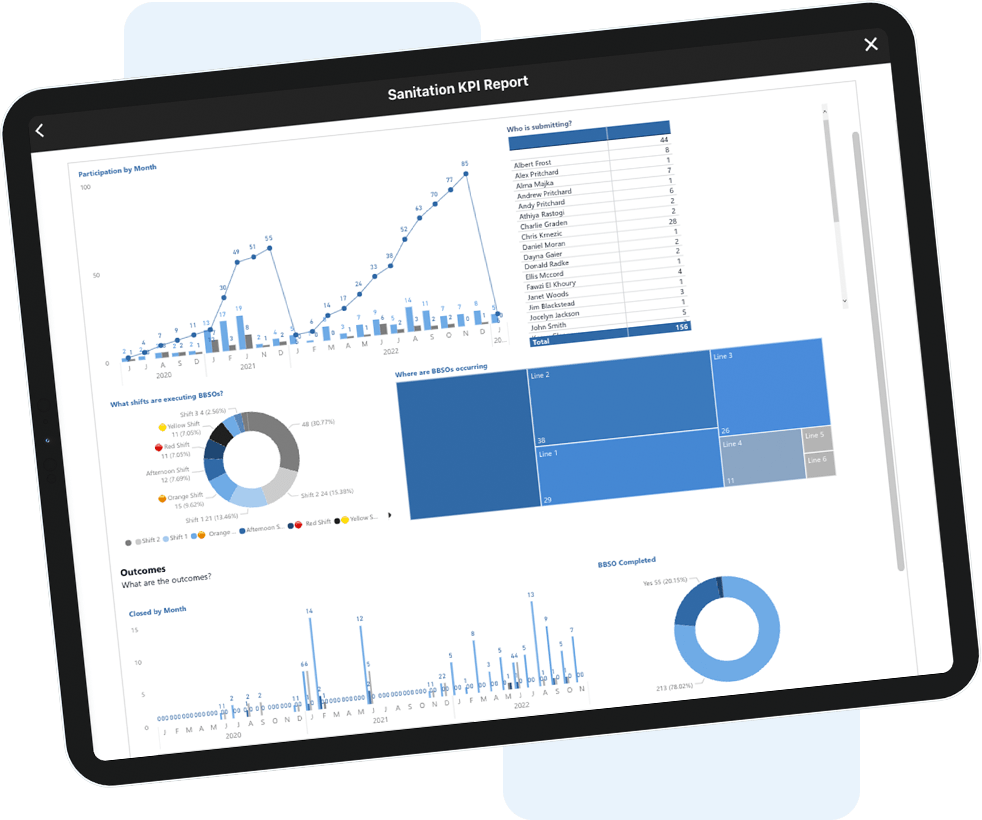
5. Improved data management
Sanitation programs involve a significant amount of data that can be demanded by auditors. Ensuring consistent and organized data helps the auditing process move forward without issues arising. Consistent data also allows for better KPI reporting so you have a better chance of uncovering insights that can be used to improve your program.
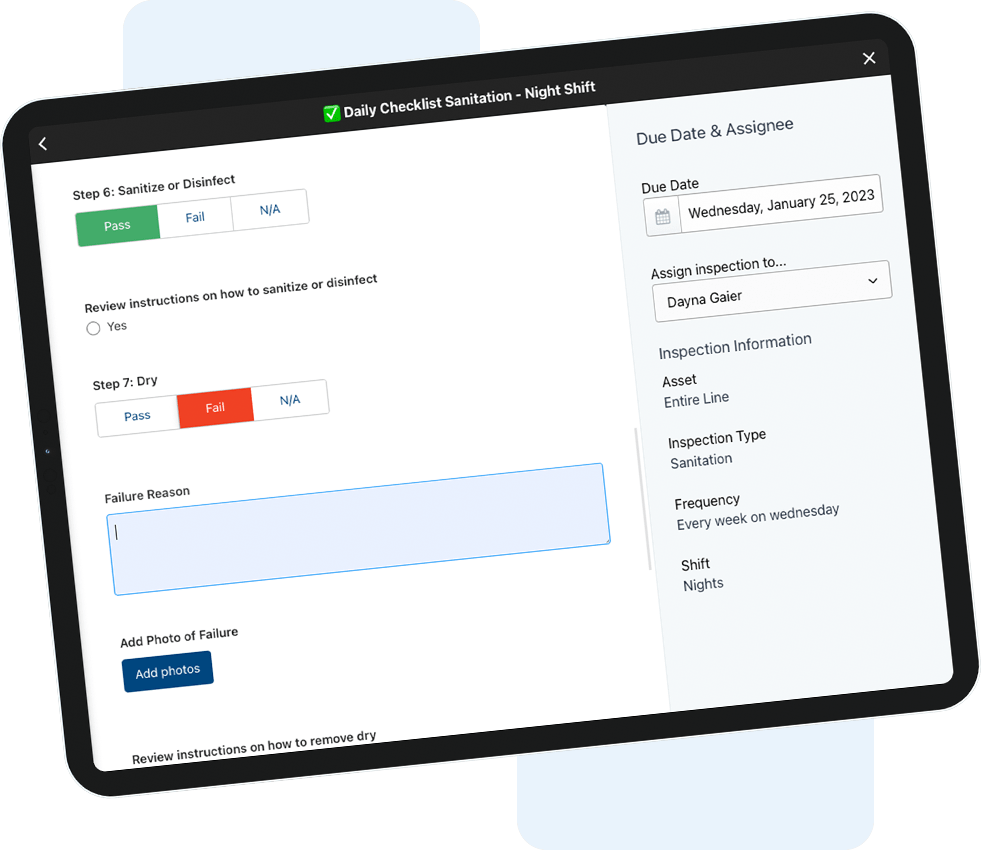
Spend Less Time on Admin. Get More Insights by Email.
Subscribe to receive practical tips, updates, and ideas to improve operations without the extra admin work.