
-%20smaller.webp)
.webp)
Explore More Blogs

Empower Machine Operators (and your Business) Through Total Productive Maintenance
In modern manufacturing, unplanned downtime, inefficiency, and reactive maintenance are no longer acceptable risks. That's why many leading organizations are turning to Total Productive Maintenance (TPM) and more specifically, to Autonomous Maintenance (AM) to drive equipment reliability, reduce waste, and boost performance from the ground up. In other words, they are increasingly relying on TPM and AM to stop small maintenance problems from becoming huge and expensive business failures.
When we're talking about the value of TPM and AM, the stakes are high. Unplanned downtime can have a profound and multifaceted impact on a business. Most immediately, it leads to lost revenue by halting production entirely, with high-output facilities potentially facing millions of dollars in losses. According to analysis published by Siemens in 2024, the automotive industry can experience downtime costs exceeding $2.3 million per hour.
Not in the automotive industry? Unplanned downtime costs manufacturers across industries a whopping $50 billion annually, according to Forbes. As estimated in the March 2025 article "Manufacturing Downtime: Definition, Stats, and More," manufacturing facilities can lose as much as 20% of their productive capacity due to unplanned breakdowns.
In addition, operational costs often spike due to the need for overtime pay, expedited shipping, and emergency maintenance efforts. Downtime also affects the customer experience because late deliveries and product unavailability can erode trust, damage customer relationships, and lead to a loss of future business. From a production standpoint, downtime disrupts not only the immediate line but also downstream processes, compromising overall productivity.
In tightly regulated industries, unplanned downtime can introduce safety hazards and compliance risks, exposing companies to legal or regulatory action. Finally, repeated or prolonged outages can result in significant reputational damage, diminishing a company's credibility and standing in the eyes of its customers and partners.
Now for some good news: A March 2025 research study indicated proactive strategies (like TPM and AM) result in a 30-50% reduction in downtime, lower maintenance costs, and increased overall equipment effectiveness. Additionally, according to the study, qualitative insights from maintenance managers highlight the importance of technology adoption, workforce training, and structured maintenance planning in ensuring long-term success.
This means that TPM is more than just a maintenance program; it's a culture shift. It empowers everyone in the organization, from engineers to operators, to take ownership of equipment health. When done right, the results are measurable and powerful: Greater reliability, higher efficiency, and a safer, more engaged workforce.
The Origins of Autonomous Maintenance
Autonomous Maintenance (AM) is one of the eight foundational pillars of Total Productive Maintenance (TPM), a system designed to improve equipment reliability, maximize productivity, and empower frontline workers. AM specifically focuses on shifting certain routine maintenance tasks from maintenance technicians to the machine operators themselves.
The concept of autonomous maintenance originated from Japan's manufacturing sector, particularly through the Toyota Production System (TPS) in the 1970s. It was further formalized by the Japan Institute of Plant Maintenance (JIPM) as part of TPM. The goal was to create a collaborative maintenance culture in which equipment is maintained proactively by the people who use it most.
Making the Business Case for TPM and AM
At its core, AM encourages machine operators to take greater responsibility for the basic care of their equipment. The tasks they perform typically include:
- Cleaning: Keeping equipment clean prevents buildup of debris that can lead to breakdowns.
- Inspecting: Spotting wear and tear or abnormal conditions early.
- Lubricating: Ensuring components run smoothly and reducing friction.
- Tightening: Preventing vibration-related failures or loosening of fasteners.
- Identifying abnormalities: Noticing unusual sounds, leaks, or behavior that indicate issues.
Autonomous maintenance, in giving frontline operators the authority and tools to perform simple, preventive maintenance tasks, trains them to detect issues early, prevent small problems from becoming big, expensive ones, and take ownership of the equipment they operate. This approach not only reduces reliance on maintenance technicians for minor issues; it also builds operator confidence and accountability.
There are three ways to involve operators in AM:
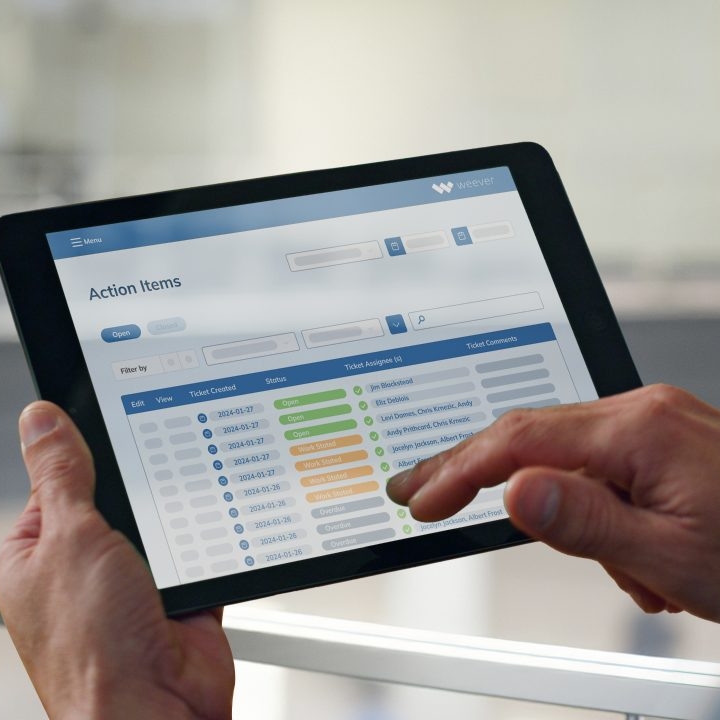
- Assign and schedule it. If it's not assigned, it won't happen. Regular maintenance tasks must be scheduled just like any production activity. With tools like Weever Inspections, managers can create digital Clean-Inspect-Lubricate (CIL) forms and assign them to specific machines, shifts, or operators, ensuring maintenance becomes part of the daily routine.
- Make it fast and frictionless. Operators are more likely to follow through if tasks are simple and efficient. Digital inspections with features like voice-to-text, integrated image capture, sketch tools, and auto-calculations reduce time-on-task while improving accuracy. When maintenance is easy, it gets done.
- Invest in step-0 education. Before operators can maintain equipment, they need to understand it. The "Step 0" of autonomous maintenance focuses on educating operators about machine components, failure modes, and safety. When operators know how a machine works, they can identify abnormalities and even suggest process improvements that boost equipment reliability.
The Bigger TPM and AM Picture
When organizations embed TPM into daily operations and enable AM, the results go beyond uptime. You get a more engaged workforce, reduced costs and risk, and significantly improved overall equipment effectiveness (OEE). One polymer plant that embraced TPM saw OEE improve from 75% to 85%, while maintenance costs dropped 20% and profitability grew 12%.
The bottom line: Autonomous maintenance isn't about asking operators to do more. It's about giving them the knowledge, tools, and ownership to create a more reliable, efficient operation, saving you money and time in the process.
Contact Weever for a demo and discover how our software can help you enable Autonomous Maintenance
Request more information Preview modal-
Request more information
Please tell us a bit about yourself so we can tailor our response and get you the information you need.
Continue Reading
Boost Your Manufacturing safety with Proactive Measures
How Proactive Measures Can Lead to Cost Savings in Manufacturing

How to be more proactive about safety

How to implement a proactive safety program into your facility

Proactive Measures for Ensuring Compliance in Regulated Industries

Proactive Measures in Manufacturing: Leveraging Weever Software for a Safer Workplace
The Importance of Proactive Measures in Manufacturing Operations
The Power of Proactive Measures in Preventing Equipment Failure

"Having cloud-based forms on devices around the facility makes them so much more accessible, which makes it painless for operators to quickly provide a report."
Johanna Velez, VP Quality Assurance


"Weever is really user friendly and will have a massive positive impact on our operations and training team."
Mel Cadle - Op Ex Lead Process Engineer



The Power of Observation: Reducing Risk and Elevating Safety Where It Matters Most
Many traditional safety programs often focus on checklists, incident logs, and reactive measures. In other words, they focus on what went wrong, not on why it happened in the first place. But organizations looking to reduce risk at the source are shifting toward behavior-based safety programs, which is an approach grounded in observation, data, and proactive culture-building.
Behavior-based safety (BBS) observations are not about policing workers or catching mistakes. They're about identifying high-impact behaviors, understanding their root causes, and reinforcing safe practices through structured, collaborative engagement. When implemented effectively, BBS creates a transparent, empowered safety culture; one where accountability is shared, improvements are continuous, and outcomes are measurable.
What Sets Behavior-Based Safety Apart?
Behavior-based safety represents a shift in how organizations manage risk. Instead of focusing solely on rules, procedures, or lagging indicators like incident rates, BBS emphasizes what people do, and why they do it.
The goal is straightforward: observe work in real time, gather objective data about safe and unsafe behaviors, and use that insight to reduce risk at its root.
At the operational level, trained observers conduct structured evaluations of job tasks. They track behaviors against specific safety criteria, recording both positive practices and deviations. These observations are used to identify trends, uncover systemic gaps, and shape targeted interventions.
But this isn't just about data collection. It's about building an organization-wide dialogue around safety that is grounded in accountability, not punishment.
The Value of Behavior-Based Observation Programs
Organizations that implement BBS observation programs consistently see measurable improvements in both safety outcomes and employee engagement. One of the most significant advantages is the ability to proactively identify risks. By observing behaviors in real time, organizations can detect unsafe actions before they result in incidents, shifting from reactive investigations to a more preventive, forward-looking approach.
Beyond risk reduction, BBS programs help cultivate a stronger, more resilient safety culture. Integrating observation into everyday operations encourages shared responsibility, fosters transparency, and supports continuous learning across teams. When safety is viewed as a collective value rather than a top-down mandate, cultural transformation follows.
Another key benefit is the generation of actionable safety intelligence. Observational data reveals patterns, exposes blind spots, and uncovers systemic risks that traditional reporting methods often miss. These insights allow leaders to make more informed decisions, target interventions more precisely, and drive meaningful, lasting improvements.
Perhaps most importantly, BBS programs deepen employee involvement. When frontline workers are invited to participate in observations and contribute feedback, they become more invested in creating a safer work environment. This engagement not only enhances safety practices but also strengthens morale and accountability across the organization.
A Proven Framework: The ABC Model
A key component of BBS is the ABC framework, which stands for antecedent, behavior, and consequence. The ABC framework helps organizations understand the drivers behind workplace actions.
- Antecedent is the condition, trigger, or environment that precedes a behavior.
Example: A cluttered workstation may lead to improper lifting techniques. - Behavior is the observable action taken in response to that trigger.
Example: An employee bends improperly to move a heavy object. - Consequence is the outcome of the behavior, which can reinforce or discourage it.
Example: No immediate injury may falsely signal that the behavior is acceptable.
Analyzing incidents through this lens helps organizations go beyond surface-level corrections and instead address the deeper systems and habits that shape safety outcomes.
Implementing a BBS Program: Best Practices
Launching a successful Behavior-Based Safety (BBS) initiative requires more than assigning a handful of observers to spread out over the shop floor. It demands a strategic, organization-wide approach anchored by five critical success factors.
First, it's essential to establish a clear framework. This means aligning on the objectives of the program, clearly defining which behaviors will be observed, and ensuring that those standards are applied consistently across all teams, shifts, and locations. Without this foundation, observation data can become fragmented or unreliable.
Second, observers must be trained not only to follow checklists but also to document behaviors objectively, provide constructive feedback, and build trust with the workforce. The credibility and consistency of observations are vital to the integrity of the program and its long-term success.
Third, the data collected through observations must be analyzed and acted upon. Safety leaders should schedule regular reviews to identify patterns, diagnose root causes, and adapt interventions based on what the data reveals. Without this feedback loop, the value of BBS data remains unrealized.
Reinforcing positive behavior is another essential component. Recognizing and celebrating safe practices helps embed them into the culture. Over time, this focus on positive reinforcement creates momentum and encourages broader adoption of safe habits throughout the workforce.
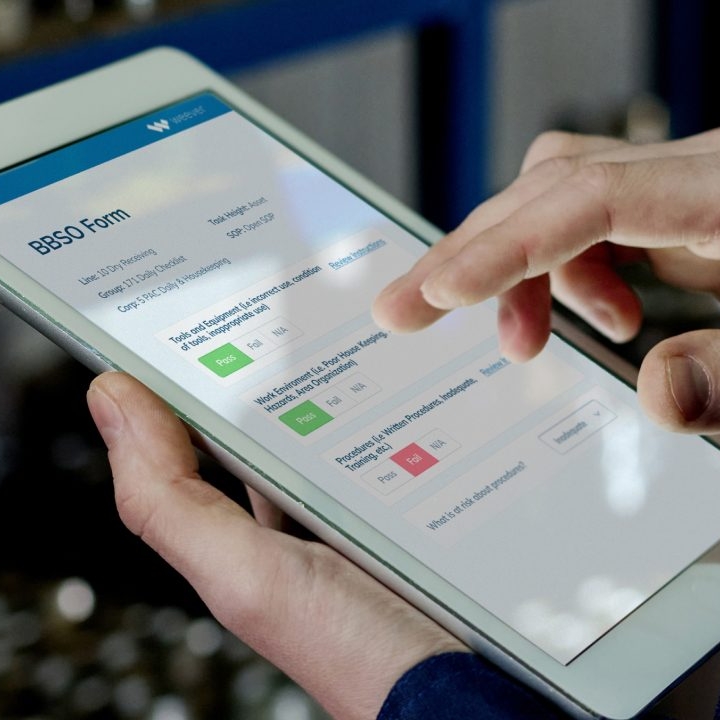
Finally, technology can play a powerful role in driving accountability. Digital platforms make it easier to standardize data collection, track participation, and generate real-time dashboards that highlight trends and progress. When integrated thoughtfully, technology becomes a key enabler of consistency, transparency, and continuous improvement across the BBS program.
The Bottom Line of BBS
Behavior-based safety observations are more than a tool. They're a strategic approach to cultivating a culture of safety excellence. When rooted in data, driven by purpose, and supported by leadership, BBS transforms safety from a compliance task into a core organizational capability.
In an era when operational resilience and workforce well-being are non-negotiable, companies that prioritize behavior-based safety position themselves for long-term success.
Used by organizations worldwide to manage Behavior-Based Safety Observation programs, Weever is a highly intuitive connected worker platform that simplifies data capture, workflow automation and reporting and ensures compliance.
Still not sure where to start. Behavior-Based Safety in Action, Ask Us!
Also, here are some safety observations sample questions and our BBSO Scorecard Template
Contact Weever for a demo and discover how our software helps you manage defects.
Request more information Preview modal-
Request more information
Please tell us a bit about yourself so we can tailor our response and get you the information you need.
Continue Reading
Boost Your Manufacturing safety with Proactive Measures
How Proactive Measures Can Lead to Cost Savings in Manufacturing
How to be more proactive about safety
How to implement a proactive safety program into your facility
Proactive Measures for Ensuring Compliance in Regulated Industries
Proactive Measures in Manufacturing: Leveraging Weever Software for a Safer Workplace
The Importance of Proactive Measures in Manufacturing Operations
The Power of Proactive Measures in Preventing Equipment Failure
"Having cloud-based forms on devices around the facility makes them so much more accessible, which makes it painless for operators to quickly provide a report."
Johanna Velez, VP Quality Assurance
"Weever is really user friendly and will have a massive positive impact on our operations and training team."
Mel Cadle - Op Ex Lead Process Engineer

From Monitoring to Impact: Operational Excellence in Manufacturing
Autonomous maintenance is a game-changer in modern manufacturing. At Weever Apps, we've seen firsthand how this approach can transform operations and boost efficiency.
Our guide outlines the 7 steps of autonomous maintenance, providing a practical roadmap for implementation. Whether you're looking for a comprehensive PPT or hands-on strategies, this post will equip you with the knowledge to revolutionize your maintenance practices.
1. Build a Strong Knowledge Foundation
Effective autonomous maintenance begins with a well-educated team. Organizations that invest in comprehensive training programs often see a significant increase in equipment uptime. This improvement stems from operators gaining a deep understanding of their machinery and the principles of preventive care. A solid training program should cover:
- Equipment anatomy
- Common failure points
- Basic troubleshooting techniques
To maximize the impact of training, organizations can implement a mentorship program where experienced operators guide newcomers. This approach reduces the learning curve in manufacturing settings. Digital tools for ongoing education keep team skills sharp. Mobile learning platforms allow operators to access training materials on-the-go, which improves knowledge retention rates.
A mix of hands-on practice, visual aids, and interactive sessions caters to different learning styles (and enhances overall comprehension). The investment in thorough training pays off through reduced equipment failures and production delays. As teams master the fundamentals, they pave the way for more advanced maintenance practices. The next step involves putting this knowledge into action through basic equipment cleaning procedures.
2. Implement Basic Equipment Cleaning
Regular equipment cleaning forms the foundation of effective autonomous maintenance. Companies must create clear, step-by-step cleaning procedures for each machine. These procedures should specify the frequency, tools, and techniques required. Operators need training to identify minor issues during cleaning, such as loose bolts or small leaks. Plants that implement daily cleaning and inspection routines can significantly reduce unexpected breakdowns.
Consistent cleaning provides multiple advantages. It eliminates debris that causes wear and tear, prolongs equipment lifespan, and enhances overall performance. Digital checklists (like those offered by Weever) streamline the cleaning process, ensure completion of all steps, and provide real-time data on cleaning effectiveness. Daily cleaning habits help operators develop a deeper understanding of their equipment, which leads to faster problem identification and resolution. This improved equipment familiarity sets the stage for the next critical step: identifying and eliminating sources of contamination.
3. Root Out Contamination Sources
Identifying and eliminating contamination sources is essential for effective autonomous maintenance. Industrial settings often face challenges from oil leaks, metal shavings, dust, and chemical residues, which can severely impact equipment performance and lifespan. To pinpoint contamination origins, companies should implement regular inspections using thermal imaging cameras and vibration analysis tools. These technologies, combined with AI algorithms trained on thermal image libraries, can spot problems in their early stages before equipment is destroyed. Operators need training to recognize early warning signs such as unusual noises, odors, or visible residues during their daily routines.
Preventing future contamination requires a multi-faceted approach. Companies should install proper filtration systems and seals to minimize environmental contaminants. Upgrading to sealed bearings and implementing stringent cleaning protocols for tools and work areas will further reduce contamination risks. Regular audits of maintenance procedures ensure alignment with best practices for contamination control. Digital checklists (such as those offered by Weever) can streamline this process, ensuring consistent execution of preventive measures across all shifts. The next step in effective autonomous maintenance involves the development and standardization of lubrication practices, which builds upon the foundation of a clean, contamination-free environment.
4. Master Lubrication for Peak Performance
Proper lubrication is the lifeblood of machinery, and mastering it significantly improves autonomous maintenance. Create detailed lubrication schedules that specify frequency, quantity, and type of lubricant for each piece of equipment. Use color-coding systems to match lubricants with their application points, which reduces errors and ensures consistency across shifts. Invest in high-quality lubricants appropriate for your specific machinery; they enhance equipment performance and extend the longevity of industrial machinery.
Train operators in proper lubrication techniques through hands-on workshops where they practice lubricating mock equipment, reinforcing correct procedures and safety protocols. Implement a digital tracking system to monitor lubricant consumption and equipment performance, which allows for data-driven optimization of lubrication practices. Consider using ultrasonic tools to detect early signs of inadequate lubrication, enabling proactive maintenance before costly breakdowns occur. The next step in effective autonomous maintenance involves conducting regular equipment inspections to catch potential issues early.
5. Implement Regular Equipment Inspections
Regular equipment inspections form the backbone of effective autonomous maintenance. A food processing plant in the Midwest implemented Autonomous Maintenance and achieved a 30% reduction in unplanned downtime within six months. Companies must develop comprehensive checklists tailored to each piece of machinery, covering all critical components and potential failure points. Operators need training to spot early warning signs such as unusual noises, vibrations, or temperature changes. Digital tools enable real-time reporting of issues, which allows swift responses to potential problems.
A tiered inspection system with daily, weekly, and monthly checks ensures thorough equipment monitoring. Non-invasive inspection techniques like thermography and ultrasound testing detect issues without disrupting operations. Clear escalation procedures for issues that operators can't resolve ensure seamless handoffs to specialized maintenance teams. Regular reviews and updates of inspection procedures based on equipment performance data and operator feedback continuously refine the process. The next step in autonomous maintenance involves empowering operators to perform basic maintenance tasks, which builds upon the foundation of regular inspections.
6. Empower Operators with Basic Maintenance Skills
Operators with basic maintenance skills become the first line of defense against equipment failures. Although it is impossible to prevent equipment failure entirely, you can greatly reduce costly downtime by optimizing your employees' knowledge and skills. Companies should identify tasks that operators can safely perform, such as tightening loose bolts, replacing filters, or adjusting machine settings. Equip teams with user-friendly digital checklists and step-by-step guides accessible via tablets or smartphones (Weever's platform excels at providing these tools). This approach ensures consistent execution and allows for real-time tracking of completed tasks.
Provide operators with a dedicated toolkit containing essential maintenance items:
- Wrenches
- Multimeters
- Lubricants
- Safety equipment
Establish clear escalation protocols to guide operators on when to involve specialized maintenance teams. Set specific thresholds for vibration levels or temperature readings that warrant expert intervention. Regular skill assessments and refresher training keep operators' abilities sharp and up-to-date with evolving equipment needs. The empowerment of operators to handle routine maintenance significantly reduces response times to minor issues, preventing them from escalating into major breakdowns. This proactive approach sets the stage for continuous improvement and optimization of the autonomous maintenance process.
7. Embrace Continuous Improvement
Continuous improvement forms the backbone of effective autonomous maintenance. Data analysis identifies trends and areas for enhancement in manufacturing processes. Operators provide valuable feedback and suggestions, offering unique insights into equipment behavior. Regular review meetings allow teams to discuss recent issues and brainstorm solutions, leading to significant process enhancements.
Companies must establish a formal process for reviewing and updating maintenance protocols. This ensures consistent application of best practices across all shifts. Quarterly audits of maintenance activities, followed by targeted training sessions, address identified gaps. Organizations can maximize the benefits of autonomous maintenance by fostering a culture of continuous improvement. This approach helps companies stay competitive in the rapidly evolving manufacturing landscape.
To support continuous improvement efforts, consider implementing these strategies:
- Establish key performance indicators (KPIs) to measure maintenance effectiveness
- Create a system for collecting and analyzing equipment performance data
- Develop a feedback mechanism for operators to share insights and suggestions
- Schedule regular cross-functional meetings to review maintenance processes and outcomes

Wrapping Up
The 7 steps of autonomous maintenance transform manufacturing operations. Companies that implement this approach empower operators, reduce downtime, and foster a culture of continuous improvement. Each step builds upon the previous one, creating a comprehensive system that addresses equipment care from multiple angles.
Many organizations leverage digital solutions to enhance their autonomous maintenance programs. Weever's Connected Worker platform offers tools designed to support these practices, including automated workflows and real-time dashboards. The platform's ability to foster employee engagement makes it a valuable asset for companies aiming to optimize frontline operations.
Success in autonomous maintenance requires consistent application and adaptation. Companies that combine operator knowledge, data-driven insights, and the right digital tools unlock the full potential of their equipment and workforce. A PowerPoint presentation (PPT) on the 7 steps of autonomous maintenance can serve as a useful training tool for organizations embarking on this journey.

Digitizing Manufacturing Operations: 5 Steps to Start Smart and Win Big
In today's hyper-competitive industrial landscape, "Digital Transformation" is no longer a buzzword, it's a mandate. Manufacturers are either embracing digitization to streamline their operations and reduce costs or falling behind competitors that do. To start, let's know what the difference is between Digitization and Digitalization?
Digitization is the process of converting analog information (like paper forms) into digital data.
Digitalization is the broader use of digital technologies to improve business models and operations.
In this blog, we focus on digitization: the crucial first step in a successful digital transformation journey within your manufacturing organization.
According to research from CEB (now Gartner) and Frost & Sullivan,
- 87% of senior business leaders cite digital transformation as a company priority
- 66% worry that failing to digitize will put their organization at a competitive disadvantage
The question is no longer if digitization is necessary, but rather how to do it effectively and particularly in complex manufacturing environments.
At Weever, we help manufacturing organizations take practical steps toward a fully digitized, high-performance operation to keep your workers seamlessly connected. Here's how you can get started and build momentum for long-term success.
1. Quick Wins with Big Impact
One of the biggest pitfalls of digital transformation is trying to "boil the ocean." Large-scale change efforts can stall without early proof points. That's why starting with small, high-impact projects is key.
According to a McKinsey report, digital transformation in manufacturing can boost throughput by 10% to 30%, improve cost of quality by 10% to 20%, and cut machine downtime by up to 50
With Weever's Starter Package, you can dip your toes into digitization without a massive upfront investment. It's a cost-effective, cloud-based solution that enables you to build your first digital workflows and gather results quickly, perfect for organizations that are still navigating their transformation journey.
2. Eliminate Manual Processes
If you're still using clipboards and filing cabinets, you're not alone. But every paper form on the shop floor represents an opportunity for waste, delay, and error not to mention regulatory risk.
Digitizing these forms is one of the easiest and most immediate ways to accelerate your operations. With Weever, forms are easily created and customized, giving your team mobile access via tablets or workstations.
This simple shift not only improves data accuracy and access but also unlocks real-time operational insights. See the top 5 benefits of going paperless
3. Involve Line Managers Early
Your frontline managers, in maintenance, production, quality, and safety, hold valuable insights into what's working and what's not. Engaging them early helps ensure that your digital solution addresses real pain points, such as:
- Delays in data reporting
- Manual data entry errors
- Missed procedural steps
Notably, McKinsey research indicates that transformations failing to engage line managers and frontline employees have a success rate of only 3%, compared to 26% and 28% when these groups are engaged, respectively.
Work with these leaders to define baseline KPIs and monitor improvements. Once you demonstrate ROI from these pilots, it's easier to scale up across the enterprise.
The Weever Enterprise Platform supports a smooth expansion path with comprehensive features for any size of operation.
4. Make it Easy and Engaging for Staff
Even the most robust digital tools can fail if they're clunky or hard to use. User adoption is often the biggest barrier to success.
That's where Weever stands apart. Our platform is designed with simplicity and user engagement in mind enabling staff to complete workflows intuitively, with minimal training. No bloated interfaces or overwhelming options.
Notably, According to Deloitte, the manufacturing industry lags other industries when it comes to recognition; only one in 10 manufacturing employees say recognition is an important part of their organization's culture.
Even better, we offer a built-in Rewards & Recognition system to help drive engagement and reinforce positive behaviors.
5. Think Continuous Improvement, Not Just a One-Time Fix
Digitization isn't just a tech upgrade, it's a mindset shift. Successful manufacturers treat it as a continuous improvement initiative, borrowing principles from Lean and World Class Manufacturing methodologies.
Notably, businesses that focus on continuous process improvement report a 35% increase in employee productivity.
Start by enabling employees to submit improvement suggestions or log quick kaizens directly from their devices. Making tablets part of the daily improvement culture helps foster ownership and accelerates technology adoption.
Weever's platform is designed to support iterative improvement, ensuring your factory stays ahead of challenges and evolves with your goals.
Digitizing your manufacturing operations doesn't have to be overwhelming. By starting small, eliminating paper, empowering managers, and keeping staff engaged, you can unlock powerful gains in efficiency, quality, and agility.
Weever is a smart Connected Worker Platform that empowers manufacturers with the tools to optimize operations, enhance efficiency, and seamlessly connect their workforce. By enabling smart workflows and data-driven insights, Weever transforms manufacturing systems for greater productivity and success -transforming manufacturing by making operations smarter, more efficient, and seamlessly connected.
Ready to transform your operations?
Contact Weever for a demo and discover how our software helps you manage defects.
Request more information Preview modal-
Request more information
Please tell us a bit about yourself so we can tailor our response and get you the information you need.
Continue Reading
"Having cloud-based forms on devices around the facility makes them so much more accessible, which makes it painless for operators to quickly provide a report."
Johanna Velez, VP Quality Assurance
"Weever is really user friendly and will have a massive positive impact on our operations and training team."
Mel Cadle - Op Ex Lead Process Engineer

Mastering Autonomous Maintenance: A Strategic Path for AM/TPM Managers
As an Autonomous Maintenance (AM) or Total Productive Maintenance (TPM) Manager, you're at the helm of one of the most transformative strategies in modern manufacturing. Your leadership and management doesn't just reduce downtime, it fosters accountability, improves equipment reliability, and drives a cultural shift toward continuous improvement on the shop floor.
This blog is designed to help you execute your AM initiatives with clarity, purpose, and measurable impact.
Understanding Your Role in Autonomous Maintenance
Autonomous Maintenance shifts the ownership of routine equipment upkeep from specialized maintenance technicians to machine operators. As an AM Manager, your role is to:
- Design and document inspection, cleaning, lubrication, and audit protocols.
- Train operators to recognize, report, and resolve early signs of wear and failure.
- Foster collaboration between departments to align maintenance goals with production.
- Use data to optimize performance and continuously improve standards.
You're not just managing tasks, you're cultivating a system of proactive machine care and operator engagement.
Core Components of a Successful AM Program
As the lead facilitator, you'll oversee the rollout of three foundational AM practices:
- 5S Audits - Establish a baseline for workplace cleanliness and order. Regular audits, scored and tracked, help maintain high standards of efficiency.
- Abnormality Management - Teach operators to detect and report deviations from standard performance before issues escalate. Early detection means faster correction and fewer disruptions.
- CIL and Centerline Audits - Organize regular Clean, Inspect, Lubricate routines. Ensure centerline values (temperature, pressure, RPMs) are monitored and maintained within optimal ranges.
Each of these practices empowers operators while generating data you'll use to enhance equipment performance and forecast maintenance needs.
The Value You Bring to the Operation
Your efforts as an AM Manager produce tangible results. The Assela Malt Factory / Weever case study revealed impressive outcomes from an AM rollout, including:
- 46% fewer breakdowns
- 64% reduction in maintenance costs
- 23% fewer technician hours spent on basic tasks
- 5% improvement in plant-wide production capacity
These outcomes depend on your ability to coordinate training, standardize routines, and maintain communication channels between technicians and operators.
The AM Rollout Plan: Leading Through Phases
To drive adoption and ensure sustainability, implement AM in three structured stages:
Stage 1: Initiate
- Train operators on equipment basics.
- Facilitate deep initial cleaning and inspections.
- Set standards for lubrication and contamination control.
Stage 2: Expand
- Launch operator-led inspections with standardized CIL forms.
- Introduce visual management (color-coded indicators, QR codes, etc.).
- Begin tracking and analyzing inspection and abnormality data.
Stage 3: Improve
- Gather feedback, refine procedures, and document lessons learned.
- Empower operators to take on minor repairs and enhance self-management.
- Monitor KPIs and use findings to update One Point Lessons (OPLs).
Through each phase, your leadership ensures alignment, accountability, and continuous progress.
Best Practices for TPM and AM Leaders
Over the years, successful AM Managers have found these strategies essential:
- Start Small and Scale - Introduce one activity at a time to avoid overwhelming staff.
- Document Everything - Standard operating procedures protect against knowledge loss from staff turnover.
- Prioritize Visuals and Real-Time Guidance - Equip operators with tablets, videos, and visual aids to ensure consistent performance.
- Limit Centerline Complexity - Focus on 5-20 high-impact inspection points to avoid "checklist fatigue."
- Create Feedback Loops - Facilitate timely responses to operator-reported issues and continuously refine procedures.
Your ability to guide and mentor teams is what transforms AM from theory into everyday practice.
How Weever Makes the AM Manager's Job Easier and More Efficient
Implementing and scaling an Autonomous Maintenance program is no small feat. But with Weever, AM Managers gain a powerful partner that simplifies operations and maximizes impact. Here's how Weever supports your success:
Streamline Training and Operator Guidance
Weever offers real-time, on-demand instructions embedded directly into your CIL workflows ,reducing errors, eliminating the need for constant retraining, and enabling quick onboarding of new staff.
Automate Scheduling and Compliance
Automated CIL and inspection schedules ensure tasks are completed on time. Missed items are flagged, and notifications keep operators and technicians aligned without micromanagement.
Capture Rich Data Without the Hassle
Skip the paperwork. Weever allows operators to submit inspections with photos, talk-to-text entries, and conditional logic fields ,capturing higher quality data in less time.
Enhance Collaboration Between Teams
Failed inspections or abnormality reports can automatically trigger maintenance tickets, alert stakeholders, and track issue resolution ,all in one workflow.
Monitor Performance in Real-Time
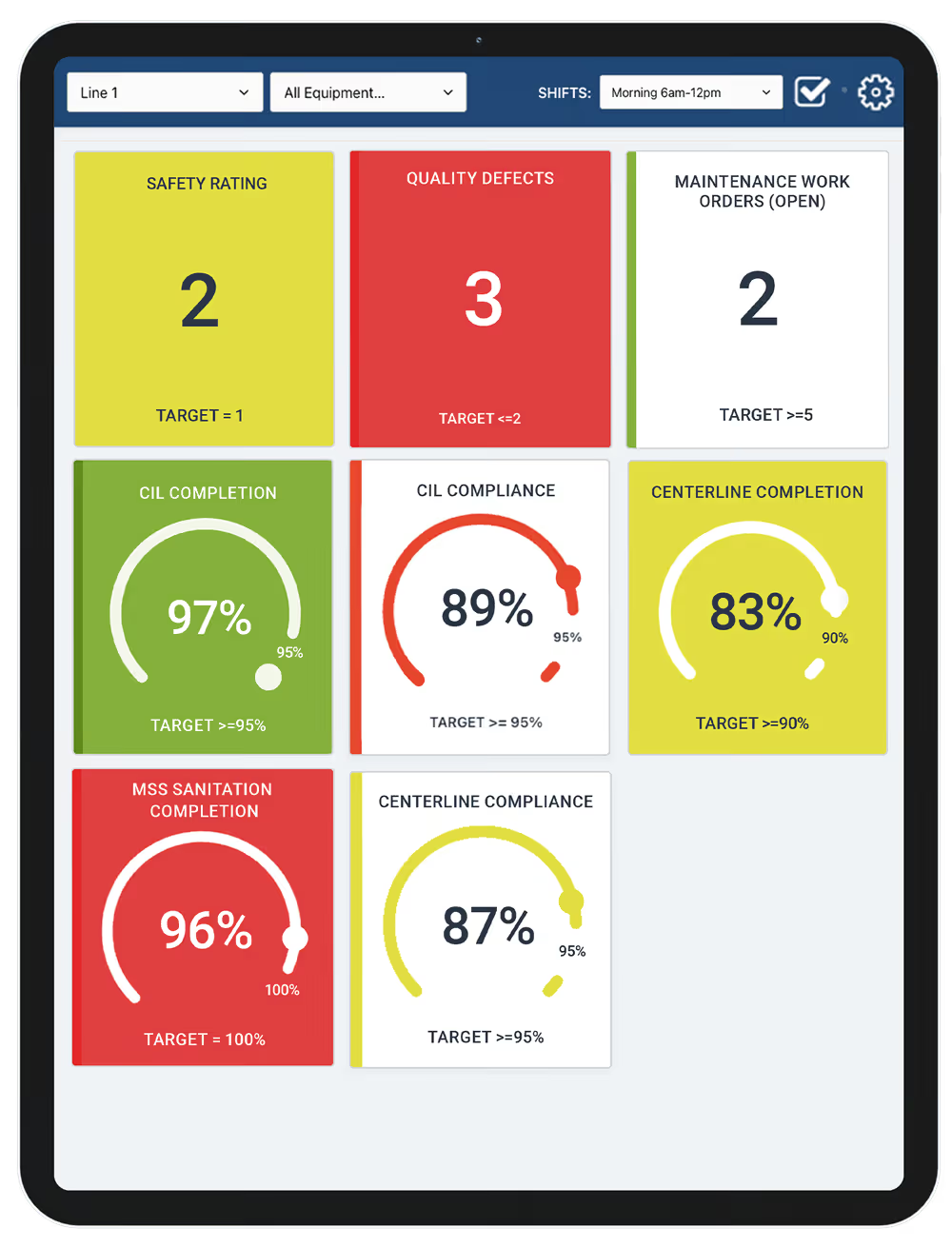
Dashboards give you immediate insights into AM execution across machines and teams. You can instantly spot issues, identify trends, and plan proactive interventions.
Save Time with Automated Reporting
Weever consolidates inspection data and KPIs into exportable dashboards ,saving TPM Managers up to 30% of their day previously spent battling spreadsheets.
Motivate and Recognize Your Team
Gamification tools like Weever Rewards help you spotlight top performers and foster a culture of ownership and excellence.
With Weever, you can spend less time putting out fires and more time leading continuous improvement. It's not just a software platform , it's a force multiplier that helps you scale Autonomous Maintenance faster, with less friction, and greater long-term success.
Ready to lead your AM program to world-class performance? Let Weever help you get there. Visit weeversoftware.com or contact solutions@weeversoftware.com to learn more.
Contact Weever for a demo and discover how our software helps you manage defects.
Request more information Preview modal-
Request more information
Please tell us a bit about yourself so we can tailor our response and get you the information you need.
Continue Reading
Boost Your Manufacturing safety with Proactive Measures
How Proactive Measures Can Lead to Cost Savings in Manufacturing
How to be more proactive about safety
How to implement a proactive safety program into your facility
Proactive Measures for Ensuring Compliance in Regulated Industries
Proactive Measures in Manufacturing: Leveraging Weever Software for a Safer Workplace
The Importance of Proactive Measures in Manufacturing Operations
The Power of Proactive Measures in Preventing Equipment Failure
"Having cloud-based forms on devices around the facility makes them so much more accessible, which makes it painless for operators to quickly provide a report."
Johanna Velez, VP Quality Assurance
"Weever is really user friendly and will have a massive positive impact on our operations and training team."
Mel Cadle - Op Ex Lead Process Engineer

Building a Culture of Excellence in Manufacturing
Create an Environment Where Your Frontline Employee is Engaged
In today's fast-paced manufacturing landscape, where automation and digital transformation dominate, the human factor still reigns supreme. A Culture of Excellence isn't just a feel-good slogan, it's a strategic necessity. It's about more than meeting KPIs; it's about creating an environment where your frontline workforce is engaged, empowered, and enabled to drive sustained success.
What Is a Culture of Excellence?
A Culture of Excellence is a system of shared values, behaviors, and standards that drives every person in the organization: from the plant floor to the C-suite, to strive for continuous improvement and high performance. In manufacturing, this translates into fewer defects, safer operations, higher-quality products, and a more profitable bottom line.
But excellence isn't accidental. It's built patiently, strategically, and with a people-first mindset.
Why Does It Matter?
In an age of industry 4.0, the risk of employee disengagement is real. Overreliance on automation can dehumanize work, making employees feel undervalued. A Culture of Excellence counters this by:
- Increasing job satisfaction and retention
- Driving continuous improvement
- Enhancing quality and safety
- Boosting productivity and profitability
Studies show that companies with engaged employees experience:
- 40% fewer safety incidents
- 20% greater productivity
- Over 20% higher profitability
The 3 Es of Employee Engagement: Empower, Energize, Enable
Creating a Culture of Excellence comes down to consistently engaging your frontline team in three critical ways:
1. Empowerment: Give Them a Voice
Are your employees accountable for success? Do they have permission to speak up? Empowerment starts by shifting from "management makes decisions" to "everyone contributes to outcomes." This cultivates ownership, pride, and a sense of relevance on the shop floor.
How to Empower:
- Invite ideas and feedback regularly
- Recognize and implement frontline insights
- Create systems that reward accountability
2. Energy: Make Them Want to Act
Are your teams excited to make a difference? An empowered employee still needs to be emotionally invested. Energized employees go the extra mile because they want to, not because they have to.
How to Energize:
- Connect tasks to larger organizational goals
- Foster a culture of purpose and teamwork
- Celebrate contributions regularly
3. Enablement: Provide the Right Tools
Do your people have what they need to succeed? Enthusiastic employees will disengage quickly if they're hampered by paper-based processes or clunky systems.
How to Enable:
- Replace paper forms and spreadsheets with intuitive digital tools
- Use accessible platforms with real-time dashboards and mobile access
- Offer microlearning and on-demand training
Human Insight is Your Secret Weapon
Even with the best technology, you can't replicate frontline intuition. Just as WWII pilots had a sixth sense about their aircraft, your operators understand their machines in a way data often can't capture. Ignoring their insights risks overlooking early warning signs and improvement opportunities.
Leverage this "human sensor network" by making data collection easy and meaningful. Use tools that capture voice, photos, and video feedback-and act on what your employees share.
Making Participation Easy and Meaningful
Research shows two key factors determine whether employees will actively participate in improvement efforts:
1. Ease of Participation
Participation must be simple, quick, and accessible.
- Use tablets and mobile apps on the floor
- Offer multilingual support and talk-to-text features
- Build easy-to-navigate schedules and task alerts
2. Usefulness of Participation
Participation must feel rewarding-both intrinsically and extrinsically.
Intrinsic motivators include:
- Mastery and learning
- Purpose and connection
- Autonomy and control
Extrinsic motivators include:
- Points-based rewards
- Recognition
- Career advancement opportunities
Broadcasting KPIs, celebrating wins, and giving clear feedback loops reinforce that participation matters.
Best Practices from the Field
1. Get Everyone Involved
Culture isn't built by a select few-it's a team sport. Remove participation barriers and encourage collaboration across departments.
2. Reward Innovation and Teamwork
Incentivize idea sharing and recognize employees who contribute solutions or collaborate cross-functionally.
3. Clearly Communicate Roles and Goals
Tie every task to the bigger picture. Employees should know exactly how their work supports organizational success.
4. Lead by Example
Get out of the office and onto the floor. Leadership visibility builds trust and shows commitment.
5. Invest in Continuous Learning
Toolbox talks, one-point lessons, and microlearning modules can help build competence and confidence.
6. Prioritize Safety
A safe workplace builds trust and lowers stress. When employees feel secure, they're more likely to engage.
Final Thoughts: Culture Is Built on Commitment
Building a Culture of Excellence isn't a one-time project, it's a long-term commitment. It starts with intention and is sustained by action. By empowering, energizing, and enabling your workforce, you don't just improve KPIs you create a place where people want to show up and do their best work every day.
Want to learn more about how Weever can help? Get in touch. We'd love to support your journey toward excellence.
Contact Weever for a demo and discover how our software helps you manage defects.
Request more information Preview modal-
Request more information
Please tell us a bit about yourself so we can tailor our response and get you the information you need.
Continue Reading
Boost Your Manufacturing safety with Proactive Measures
How Proactive Measures Can Lead to Cost Savings in Manufacturing
How to be more proactive about safety
How to implement a proactive safety program into your facility
Proactive Measures for Ensuring Compliance in Regulated Industries
Proactive Measures in Manufacturing: Leveraging Weever Software for a Safer Workplace
The Importance of Proactive Measures in Manufacturing Operations
The Power of Proactive Measures in Preventing Equipment Failure
"Having cloud-based forms on devices around the facility makes them so much more accessible, which makes it painless for operators to quickly provide a report."
Johanna Velez, VP Quality Assurance
"Weever is really user friendly and will have a massive positive impact on our operations and training team."
Mel Cadle - Op Ex Lead Process Engineer

Unlocking Operational Excellence as a Leader in Autonomous Maintenance
Autonomous Maintenance (AM) is no longer a nice-to-have, it's a strategic imperative for manufacturers aiming to reduce downtime, enhance asset reliability, and empower their workforce. While checklists and tools remain valuable components, true success hinges on more than operational tasks alone. It requires strategic vision, actionable insights, and, above all, strong leadership.
If you’re responsible for the strategic direction of Autonomous Maintenance/TPM, or a Plant Leader, CI manager, or TPM decision maker, this blog is built for you. It outlines not just what AM is, but how to lead it, scale it, and extract its full value, without burning out your people or your maintenance team.
Why Autonomous Maintenance Matters Now?
The modern manufacturing environment is strained by rising labor turnover, equipment complexity, and the constant pressure to “do more with less.” AM addresses all three.
As a core pillar of Total Productive Maintenance (TPM), Autonomous Maintenance transfers routine equipment care, cleaning, inspecting, lubricating, to the people who operate the machines every day. This shift:
- Reduces unplanned downtime
- Enhances Overall Equipment Effectiveness (OEE)
- Frees up skilled technicians for higher-value work
- Increases operator engagement and retention
- Establishes a proactive, data-driven maintenance culture
Put simply: AM turns equipment operators into owners, and it’s your leadership that makes that transformation stick.
The Strategic Role of the AM Leader
Implementing AM isn't just about handing out forms and assigning tasks. Leaders and decision makers must architect the system that supports it. This includes:
- Setting the vision – Aligning AM with broader TPM, CI, and performance goals.
- Driving cross-functional collaboration – Breaking silos between maintenance, operations, and leadership.
- Standardizing best practices – Building scalable processes for 5S audits, CILs (Clean, Inspect, Lubricate), and centerline management.
- Investing in training and tools – Ensuring operators have the knowledge and resources to succeed.
- Tracking impact and ROI – Measuring outcomes, identifying bottlenecks, and continuously improving.
Autonomous Maintenance is not an initiative, it’s shift in operations, and it’s your job to steer the ship.
Proof in Performance: Results You Can Replicate
Consider the example of the Assela Malt Factory, which implemented AM practices over an 18-month period. The results were transformational:
- 46% reduction in breakdowns
- 64% cut in overall maintenance costs
- 23% fewer maintenance person-hours
- 5% increase in production capacity
- 8% drop in machine idle time
These aren’t hypothetical numbers. They’re the result of committed leadership, clear processes, and empowered frontline teams.
Leading the Rollout: A 3-Stage Strategy for Success
Rolling out AM across a facility, or multiple sites, requires thoughtful staging. Here’s a proven approach that balances structure with adaptability:
Stage 1: Initiate
Train operators on equipment fundamentals.
Partner maintenance with production for deep-dive cleanings and inspections.
Eliminate contamination risks and establish lubrication/inspection standards.
Stage 2: Expand
Introduce visual management tools (color-coded gauges, QR-linked SOPs).
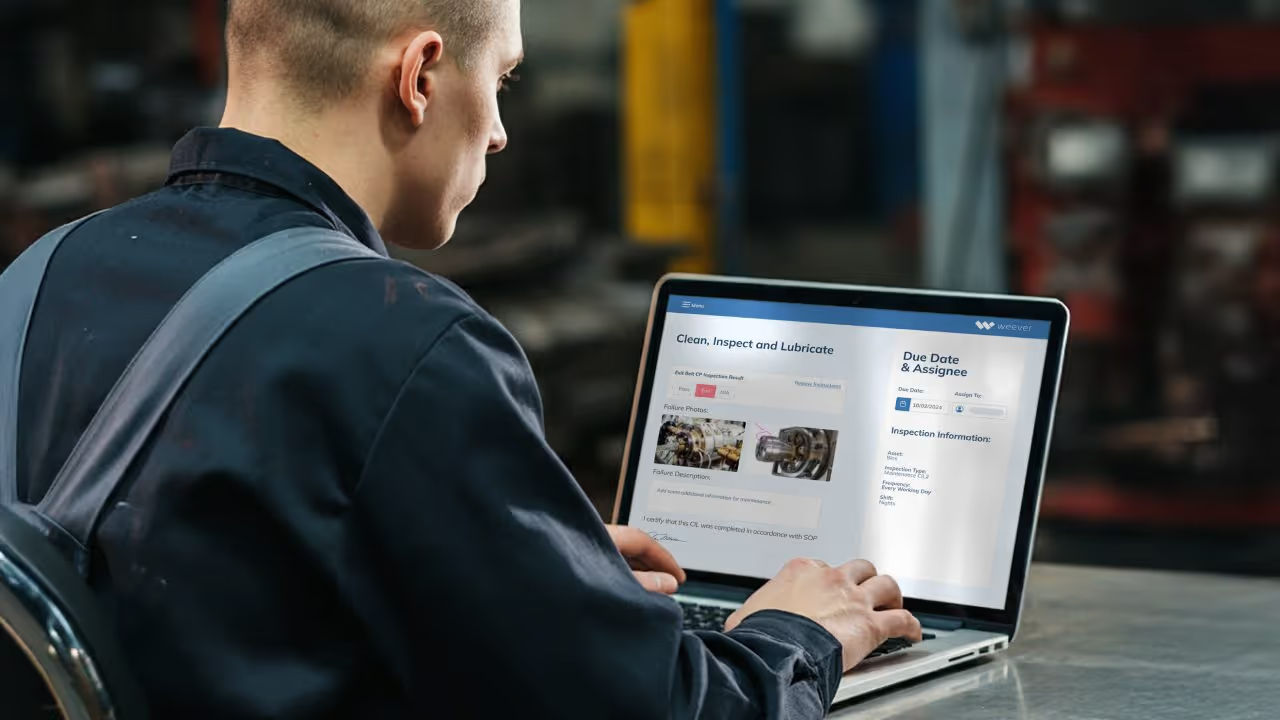
Use digital CIL forms to document inspections and abnormalities.
Capture trends and performance data for technician planning.
Stage 3: Improve
Continuously update procedures with operator feedback.
Scale best practices across lines or facilities.
Use real-time insights to refine preventive maintenance and training.
This phased approach gives teams room to build confidence and culture, while ensuring data and accountability flow throughout the system.
Best Practices for Sustainable Success
Successful AM leaders and decision makers follow these key principles:
- Start small, scale fast – Pilot a single production line or activity before expanding plant-wide.
- Digitize from the start – Paper systems hinder compliance, visibility, and speed. Use technology to embed AM into daily workflows.
- Measure what matters – Focus on metrics like OEE, mean time between failure (MTBF), inspection compliance, and technician utilization.
- Promote ownership and recognition – Create a culture where operators feel proud of their contribution to asset reliability and performance.
- Standardize to protect knowledge – Document CILs, 5S, and centerline audits to safeguard against turnover and inconsistency.
As a decision maker, your ability to simplify, sustain, and scale AM is your competitive advantage
How Weever Empowers AM Leaders
Building and sustaining Autonomous Maintenance programs takes more than vision, it takes the right infrastructure. That’s where Weever delivers unique value to AM leaders.
Weever is a Connected Worker platform designed to make Autonomous Maintenance easy to deploy, manage, and scale. Here’s how it helps you lead more efficiently:
Why invest in Human Intelligence (HI)
Why invest in Human Intelligence (HI)
Striking a balance between Artificial and Human Intelligence
Industry 4.0 and Artificial Intelligence offer vast opportunities for organizations to improve efficiency and bottom line company performance. However, in the past 15 years, productivity gains in manufacturing have stagnated. Since 2007, annual growth has decreased to .7%. Companies are spending billions on new machines and software while expecting their staff to manage the business with paper forms and manual processes.s
Prioritizing Artificial Intelligence (AI) over Human Intelligence (HI) has created a "burning platform" of diminished returns. In this article we'll look at the virtuous cycle between HI, Continuous Improvement, employee engagement, and discuss how Weever can help you leverage Industry 4.0 and digital transformation to strike a balance between the valuable intelligence provided by your people and your machines.

HI versus AI: What's the Difference?
Similar to how we have an intuition when there are issues with our car, operators have the same intuition about the machines they use every day. It is very useful to take your car into the dealership and have their computers run analytics on your engine, but it doesn't replace the insight of the driver when something is "off" with their vehicle. In fact, it's usually that human intuition that lets the driver know it might be time to take a closer look under the hood.
Machines are great at crunching big data, finding patterns/insights, and making algorithmic decisions quickly. This is helpful for manufacturers who are looking to glean data for insights, detect and remove product defects from the line within existing processes. However, machines require known variables and known outcomes in order to work. They require a predictable environment. When the unknown occurs, or overhauls of processes or procedures are required, the insights provided by artificial intelligence can be limited.
Conversely, your employees are better at dealing with new and changing situations. They can use instinct, experience and creativity when faced with process abnormalities, developing equipment maintenance issues, and quality defects. They work directly with your lines, machines, and equipment and can develop a "sixth sense" for when issues are going to occur.
People are better at uncovering root causes, creating solutions, and interpreting where and when to apply the insights from your AI. Standard Procedures set the predictable processes and when they are not adhered to this creates an opportunity for review. An engaged employee is more likely to become aware of non-conformance issues and process abnormalities than any machine.
A partnership between Human Intelligence and Artificial Intelligence should be the engine that drives innovation and continuous improvement.

Why is HI Important?
Improving the AI in your factory can be as simple as installing the latest update. Upgrading your HI is not so straightforward because it involves improving employee engagement. Studies from around the world have proven that improving employee engagement will result in improved company performance including increased innovation, productivity, and profitability.
According to Engaging for Success: Enhancing Performance Through Employee Engagement, which studies the impact of Employee Engagement investment at organizations like John Lewis Partnership, Tesco, Sainsbury's, Standard Chartered Bank, Toyota, Google, and others, strong employee Engagement is a sustainable competitive advantage.
The study found that "organizations that truly engage and inspire their employees produce world-class levels of innovation, productivity, and performance." Over the course of the 5-year, UK government-funded research project, they discovered that companies with low employee engagement earn an operating income 32.7 percent lower than counterparts with more engaged employees.
The "2012 State of the American Worker" report from Gallup made clear the impacts of improved engagement on key performance indicators. According to the survey, increased employee engagement results in:
- 40% reduction in safety-related incidents
- 40% reduction is quality defects
- 37% reduction in absenteeism
- 20% increase in productivity
- Over 20% increase in profitability
Engaged employees have a sense of personal attachment to their work and organization; they are motivated and able to give their best to help it succeed - and from that flows a series of tangible benefits for the organization and individuals alike.

How to foster Human Intelligence (HI)
There is a "virtuous circle" that exists in the relationship between HI, Employee Engagement, and Continuous Improvement.
CI is what separates good organizations from great ones. The most sure-fire evidence that you are successfully cultivating HI is an employee culture dedicated to Continuous Improvement.
When your staff are engaged they proactively find opportunities to incrementally improve processes, product quality, and safety. Simultaneously their efforts prevent machine and equipment breakdowns, saving the company time and money. This, in turn, enhances morale and retention and increases customer satisfaction and loyalty. And voila! The Virtuous Cycle of HI is born!
How organizations foster engagement can be as unique as the company itself. There are a variety of ways to intrinsically and extrinsically motivate employees to care for the success and well-being of the company.
Weever is a cloud-based workflow management platform that automates and engages the power of Human Intelligence and has a philosophy revolving around the "3Es":
- Empowerment - Do your employees understand that they are accountable for the success of the organization? Empowerment provides employees with permission and resources to create action.
- Energize - Are your employees intrinsically and extrinsically motivated for going above and beyond? If there is no "emotion" within your culture, there is a good chance your employees will do the bare minimum to not get fired.
- Enable - Do your employees have the tools and resources they need to be successful? If your tools are insufficient, staff will choose not to participate where possible because the probability of success is slim.
Ultimately, your organization's Human Intelligence is optimized when your people are engaged and motivated, enabled to find successful outcomes, and have the time to focus on what yields real results.
Frontline Employee Engagement Ultimate Guide


Take a Guided Tour.

The Benefits of Digitizing your Factory Operations
Benefits of Digitizing Factory Operations
5 primary benefits that are realized by eradicating paper forms and spreadsheets from your operations.

Digitization is the process of eliminating paper from your operations and there are countless benefits to transitioning paper and spreadsheet-based processes to a digital framework.
Paper has been used for centuries to collect data and manage reporting. And there is still a use for paper in today's modern continuous improvement process. For example, the "A3" report is named after the size of paper that is recommended to use. Paper can be useful for quick note-taking and brainstorming.
However, in today's increasingly competitive global economy, paper has inherent challenges that cannot be overcome. Manufacturers are continuously improving towards the pursuit of perfection. Perfection is basically the most optimal and efficient way to produce the most units at the highest possible quality and the lowest possible price. Of course, perfection is a concept that can never be achieved, but the pursuit of it is what is important.
Many manufacturers have embraced digitization for production (with sophisticated ERP systems like SYSPRO) the office (with productivity software like Microsoft) and logistics, but have done little to digitize the factory floor.
The irony is that the biggest benefits of digitization will be realized, in most cases, where the product is manufactured. This has been realized by some of the world's largest manufacturers, like Mars and Unilever, who have spent massive resources to digitize factory operations.
The core benefits of factory digitization include:
1. Real-Time Visibility
Understand what's happening as it happens.
Paper forms hang out on the floor until they are completed and then they are provided to a person to process the information and then finally a manager might see the data and realize there is a problem. If this sounds familiar, it is a common issue of paper-based operations.
Digitization allows for predefined business rules to play out automatically when a form is submitted by someone on the factory floor. A benefit of this is that things happen in "real-time".
This means that you don't have to wait until the product has left the factory to understand an issue needs to be resolved. When changes are made, your data is updated in real-time, which means you have your finger on the pulse of your operations.
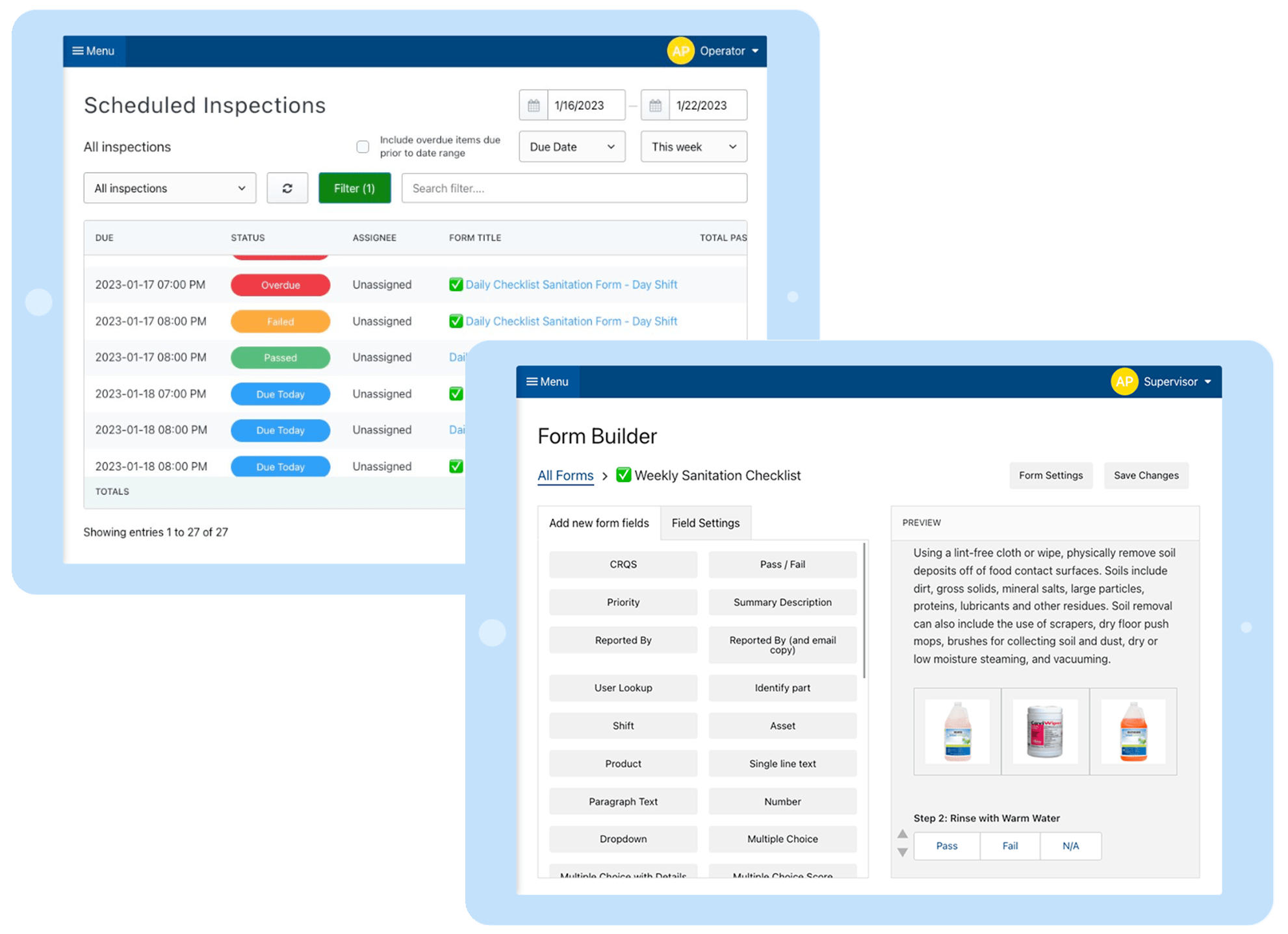
2. Cost Savings
Reduce waste and save money.
Paper forms and spreadsheets require time and effort to work. Administrative tasks cost and add a lot of waste to your processes.
Digitization automates mundane, repeatable tasks, which not only accelerates processes but also saves operational costs by way of headcount and productivity.
3. Automation
Accelerate mundane, repeatable tasks and enhance employee engagement.
Digitization allows for algorithms, a set of predefined rules, to automatically execute certain mundane and repeatable tasks. This means that those tasks are completed quicker, more reliably and less expensively than hiring a person to do them.
For example, Alerts can be sent to specific stakeholders when certain conditions are met. So when a machine issue is determined on the line to require maintenance help, notifications are sent immediately to the maintenance team. If there are a certain number of quality incidents, your quality team can be made aware. And so on.
Reporting is another example of automation. Digitization allows for reports to be automatically tabulated so that a person does not have to manually input the data and generate the graphs every time. The process is automated so the submission goes from "floor to bar graph" in real-time.
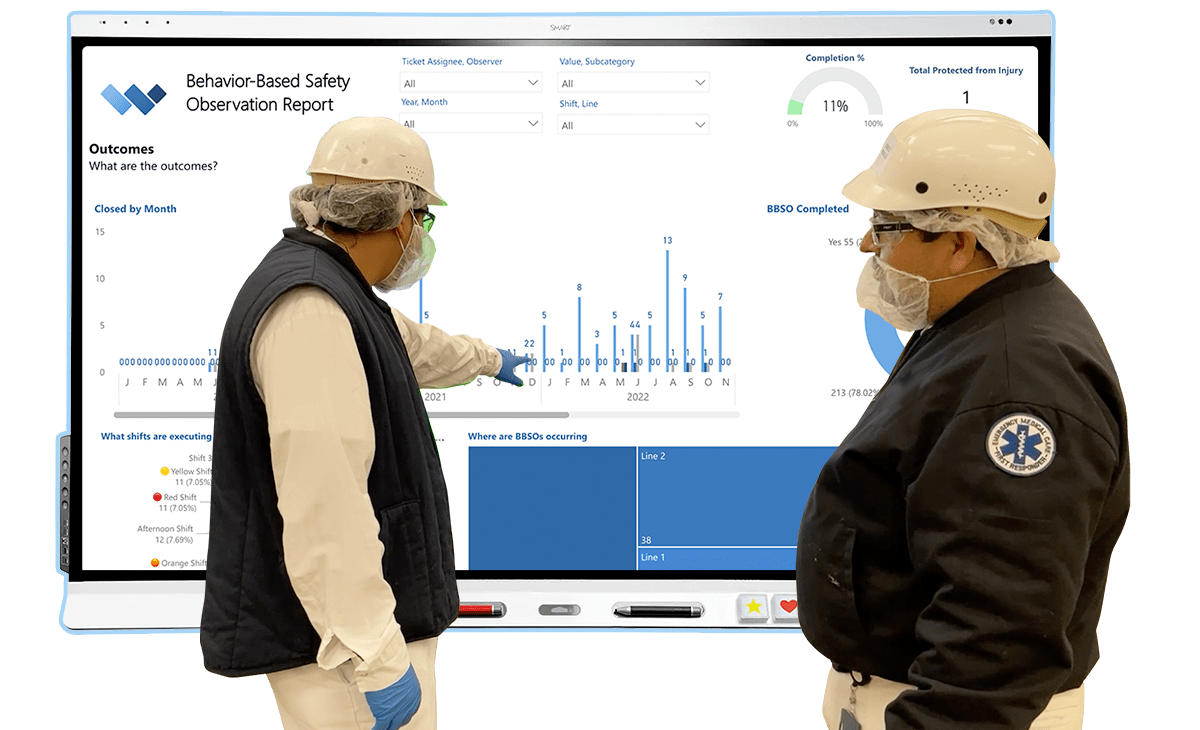
4. Simplicity & Structure
Increase accessibility and the probability for successful outcomes.
Digitization provides opportunities to allow for greater clarity of purpose and process, so that staff are not confused by complexity.
For example, conditional logic allows for you to show only form fields that are relevant to the specific situation. If the staff member wants to report a near-miss, there is no need to report an injured person - so that field will not be shown.
You can also place conditions on fields that need to be satisfied before the form is submitted. For example, you can make inputs required and/or alert users that a number is outside of a predefined range.
Digitized forms also allow for greater structure, so that each form is filled out the same way. This helps you define SOPs and understand process deviations so they can be more quickly corrected.
5. Compliance
Ensure everything gets done correctly.
With paper forms, how can you be sure that processes are being executed in such a way that they adhere to internal SOPs and/or regulatory requirements.Paper forms do not provide real-time updates, they do not automate alerts, and they do not promote simplicity and structure. Because of this, they are not conducive to compliance. Paper makes it harder to ensure the job is done correctly.
Many manufacturers come to digitization because they have been fined by regulators for not adhering to required practices. Staff take short cuts because they only need to "pencil whip" a paper form to "confirm" something has been completed.
Digitization offers many options to confirm compliance. For example, you can require staff to take photos of things when they occur. Submissions are time stamped so you know when they were sent through.
Take a Guided Tour.

Making the unpredictable predictable
Making the Unpredictable Predictable
The Foundation of Continuous Improvement
As an experienced manager, you are skilled at managing the day-to-day processes within your organization. You know all the Standard Operating Procedures that dictate how to deal with events as they arise. And you rely on systems that are perfectly tuned to manage predictable events that make your organization run.
Within the context of manufacturing, your systems help you manage the production process, acquire raw materials, distribute finished goods, pay invoices, send invoices and manage budgets, and even detect predictable defects that are a usual outcome of your manufacturing process.
ERP and MES systems are great at keeping your organization running smoothly by managing predictable events.
ERP and Supply Chain products are mostly financial platforms that manage production processes from raw materials acquisition, inventory, and production to distribution and invoicing. MES (Manufacturing Execution) / SCADA (supervisory control and data acquisition) software automatically captures data from the production process using sensors, including defects, machine heat and other data points.

Artificial Intelligence (AI) is a relatively new addition to manufacturing systems that offers a ton of value if deployed correctly. Integrated with your manufacturing systems, AI can take on mundane, repeatable tasks that previously required human intelligence to complete. AI uses algorithms to crunch big sets of data, analyze trends and provide insights to managers.
Through a process called "machine learning", AI can also be set up to automatically make changes to systems based on desired outcomes. For example, if the desired outcome is to reduce raw material costs, an AI system can be granted permission to distribute vendor orders appropriately based on price. Or perhaps production timelines are the priority, so the AI system will automatically order from vendors that have the materials available and can meet delivery timelines.
Artificial Intelligence offers numerous applications that enhance productivity, efficiency, save costs, etc. The major limitation of an overreliance on machines is that they only work when variables and outcomes are known entities. Most of your core production process is governed by known entities and defined successful outcomes.
But what happens when unknown, unpredictable events occur?
At its core, Continuous Improvement (CI) is about encountering unknown issues and transforming them into known issues with a standard process to circumvent them. Essentially, it is about transforming the unpredictable (the unknown unknowns) into the predictable (the known).
The CI process involves a systematic way to:
- Detect issues, non-conformance and/or process abnormalities
- Identify root causes
- Brainstorm and discover creative solutions
- Plan, coordinate, and collaborate to make the solution a reality
- Test, confirm and update Standard Opeating Procedures (SOPs)

Detecting abnormalities and rolling their prevention into your day-to-day processes is at the heart of CI and the path to creating robust, sustainable organizational growth using Operational Excellence as the foundation.
Unpredictable events like Incidents, near misses, machine breakdowns, non-conformance process abnormalities, and inspection/audit failures happen, and when they do AI is no match for Human Intelligence (HI).
Weever empowers your Human Intelligence (HI) to transform the unpredictable into predictable.
Human Intelligence is optimized when staff are engaged and motivated, they are enabled to find successful outcomes, and they have the time to focus on what yields real results. Weever is a cloud-based workflow management platform that automates and engages the Human Intelligence Engine across your entire organization.
Take a Guided Tour.
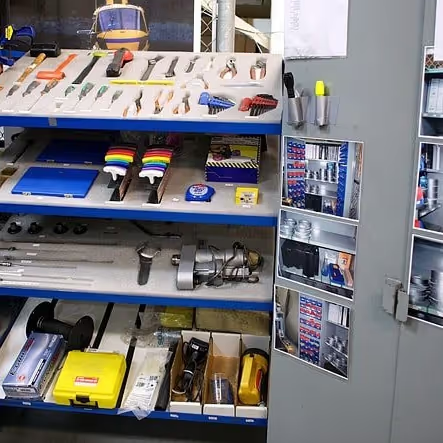
Practical Guide to 5S Sorting
As your manufacturing facility gears up for a transformative "Optimization Blitz," the initial step of the 5S methodology, Sort, sets the stage for an efficient and organized workspace.
On the first day of the “blitz”, Frontline staff, working hand-in-hand with 5S leadership, will embark on the crucial task of sorting their workstations.
In this article we discuss an overview of the Sort step, the process involved, key considerations, and best practices to make this phase impactful.
But first, let’s review what 5S is and why it is important.
What is 5S?
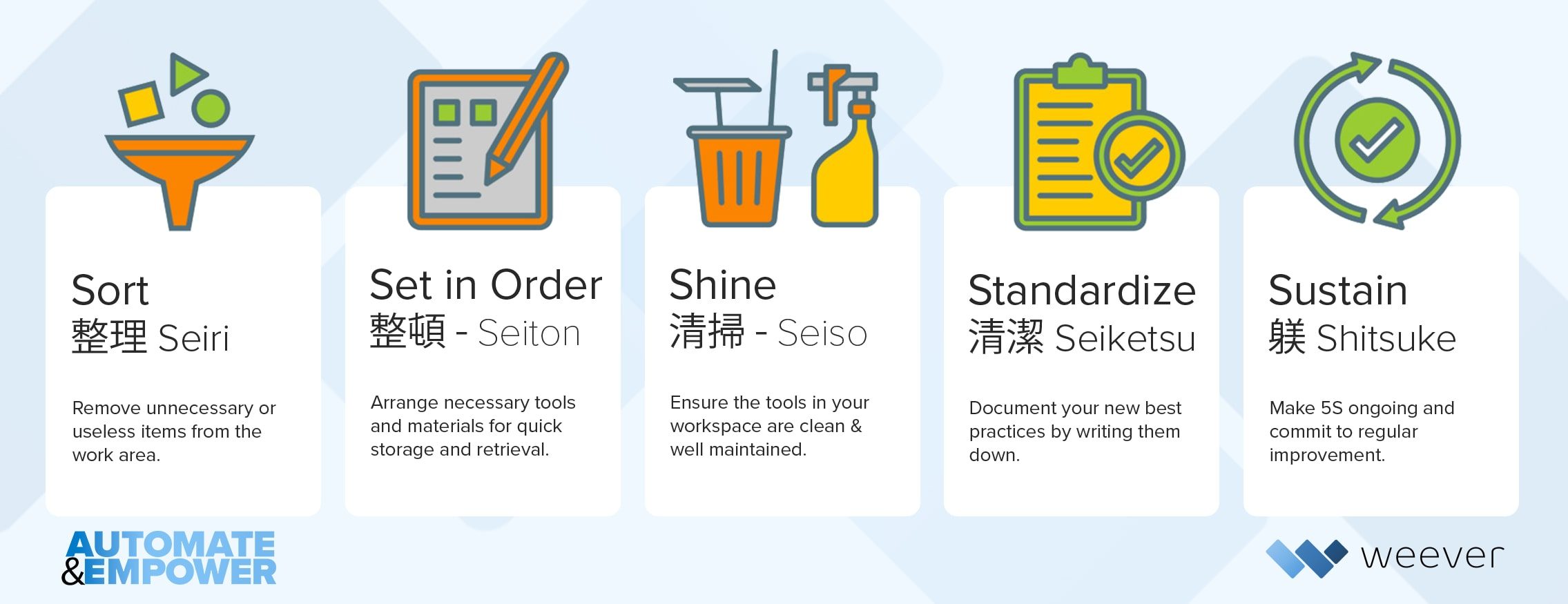
The 5S methodology is a systematic approach aimed at organizing a workspace for efficiency and effectiveness. It consists of five steps, each starting with the letter "S":
- Sort: Eliminate unnecessary items from the workspace, keeping only the essentials.
- Set in Order: Organize and arrange necessary items in a logical and accessible manner for easy retrieval and use.
- Shine: Clean the workspace regularly to maintain cleanliness and identify any issues or abnormalities.
- Standardize: Establish and maintain standardized work procedures to sustain the improvements made in the first three steps.
- Sustain: Develop a habit of maintaining the established standards and continuously improving the workspace.
This methodology is often applied in manufacturing, service industries, and various workplaces to streamline processes, reduce waste, and enhance productivity.
The Sort Step
Now that we understand the 5S methodology a bit better, let’s dig into understanding how to sort a workstation to maximize its productivity.
The Sort step aims to declutter workspaces by identifying and removing unnecessary items.
It's about distinguishing between what's needed (the essentials) and what's not (the clutter). By reducing unnecessary items, teams create streamlined, organized, and efficient work areas, laying the groundwork for improved productivity.
How to Sort a Workstation
The Sort step in the 5S methodology kickstarts the Optimization Blitz, fostering a workspace conducive to efficiency and productivity. Through collaborative efforts, clear guidelines, and a purposeful approach to sorting, frontline staff and 5S leaders can lay a strong foundation for subsequent steps, ensuring a streamlined and organized workspace for enhanced operations.
Here are the steps involved in completing an efficient sorting step.
Gather the Team
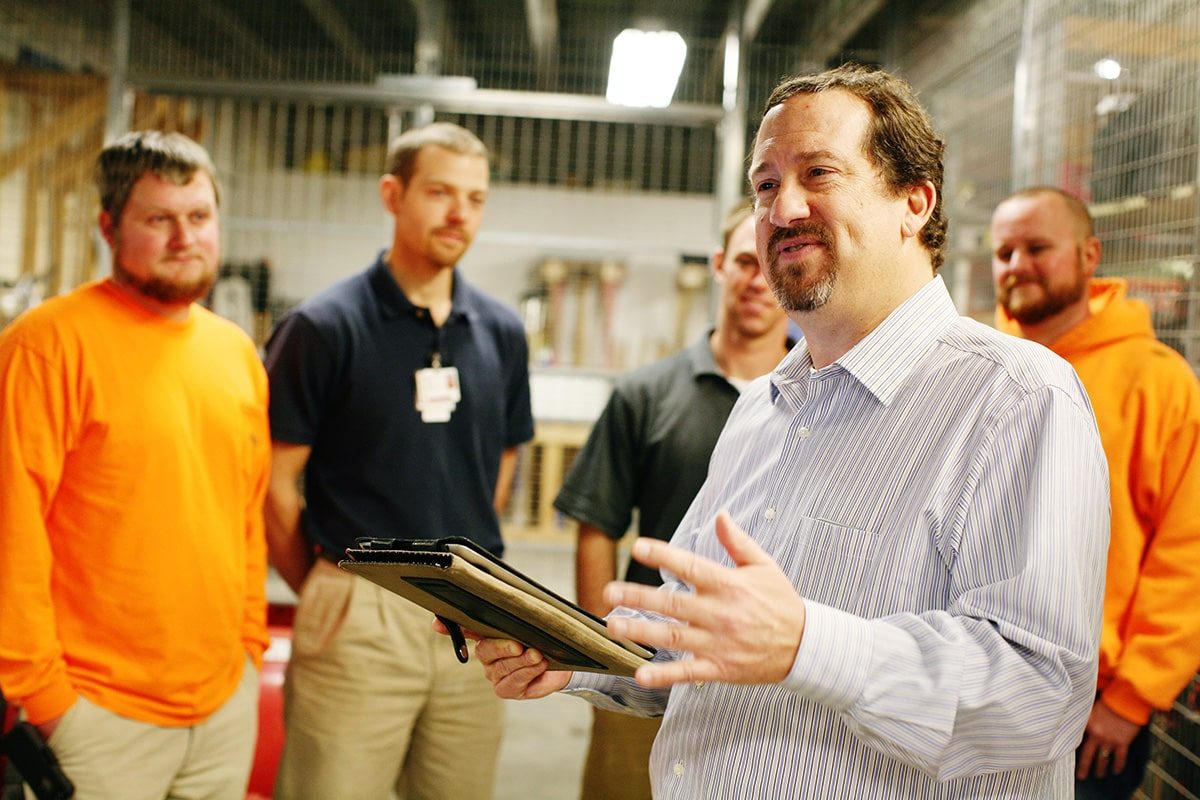
Assemble a team comprising frontline staff and 5S leaders to collaborate on the sorting process. Sorting is most effective when a team can work together to identify items, define criteria, separate and relocate.
Set Criteria
Define clear criteria for identifying non-essential items, considering factors like frequency of use, relevance to current processes, and condition. Some factors to consider include:
- Necessity: Determine what items are necessary for daily operations. Ask whether an item is essential for the work being done in that area. If not, consider removing it.
- Frequency of Use: Evaluate how often items are used. Items used regularly should be easily accessible, while those used infrequently can be stored in less accessible areas.
- Redundancy: Identify duplicate items and assess if they are all necessary. Redundant items can clutter the workspace and should be minimized.
- Purpose: Clarify the purpose of each item. If an item's purpose isn't evident or it serves no clear function, it might be a candidate for removal.
- Safety and Compliance: Ensure that items necessary for safety or regulatory compliance are readily available and properly stored. Anything related to safety or regulations should not be compromised.
- Future Needs: Consider potential future needs, but be cautious not to hoard items based solely on speculative future requirements. Balance current necessities with potential future use.
- Team Input: Involve the team working in the area during the sorting process. They likely have insights into what is necessary for their tasks and can contribute valuable perspectives.
Identify and Separate Items
Assess every item in the workspace, categorizing them into essential (needed for daily tasks) and non-essential (obsolete, rarely used).
Segregate items into "Keep," "Discard," or "Reallocate" categories based on the established criteria.
Dispose or Relocate
Discard obsolete items responsibly or relocate them to designated storage areas outside the immediate workspace.
Items categorized for relocation should be transferred to designated storage areas, keeping them away from the immediate workspace but still easily accessible if needed. Ensure these storage areas are organized, labeled, and easily navigable. This prevents clutter and supports efficient retrieval when required.
Ensure responsible disposal methods, which might include recycling, donation, or proper waste disposal as per company policies and environmental regulations. Maintain records of items being discarded, noting reasons for disposal. This documentation aids in tracking progress and making informed decisions in the future.
Best Practices for an Effective Sort
For best results during the sorting process ensure you encourage and open dialogue, set clear criteria and document what was removed and why. Here are some additional best practices that you might consider:
Collaborative Approach
Encourage open communication and collaboration among team members during sorting.
Clear Guidelines
Provide clear criteria and guidelines to facilitate decision-making during item sorting.
Purposeful Sorting
Focus on functionality and necessity rather than sentimental value when assessing items.
Continuous Improvement Mindset
Instill a culture of ongoing sorting to prevent re-accumulation of unnecessary items. Use 5S audits to capture improvement insights.
Documentation
Keep records of discarded items and reasons for removal to track progress and inform future decisions. It is helpful to include before and after photos for each section in the workstation. These can be used to build Standardization SOPs and Audit checklists later in the 5S process.

Customer: 6 million accident-free work hours and counting.
CASE STUDY
6 million accident-free work hours and counting.
Weever plays a pivotal role in achieving over 6 million accident-free work hours and counting at Global Manufacturer
CASE STUDY Highlights:
To protect the confidentiality of sensitive safety metrics, the customer and case study contact have requested to remain anonymous.
Challenge:
- Client organization implemented a global, incident-focused safety platform but could not achieve ultimate zero incident goal.
Solution:
- Weever was added as a complementary platform to manage peer-to-peer Safety Behavior Observations (SBOs).
Results:
- Reduced incidents from 16/month avg. in one dept. to over 6,000,000 accident free hours and counting.
- Won a prestigious European safety award in 2024.
- Key contact was promoted to a regional role to replicate success across the entire network.
The Challenge: Bridging the Gap from 70% Reduction to Achieving Zero Incidents
In 2018, our customer was using a global safety platform to capture 10-15 reports of incidents and near misses per day from approximately 1000 employees.
"For people in my position, that's gold dust," explained the safety leader. "When you get engagement from people on the shop floor, identifying unsafe conditions, you can actually go in and start fixing those issues before they escalate."
By analyzing the data, they identified that 50% of injuries stemmed from recurring issues, such as hand injuries and needle stick incidents. This realization drove the organization to launch a 100 Day improvement plan, targeting the root causes of these safety challenges.
The initiative achieved remarkable success, reducing first aid incidents by 70%, from 28 to 8 per year in one department.
Despite these gains, the organization faced a new hurdle: the majority safety improvement initiatives and actions were driven top-down. Frontline staff were reporting issues but not engaged in the solution.
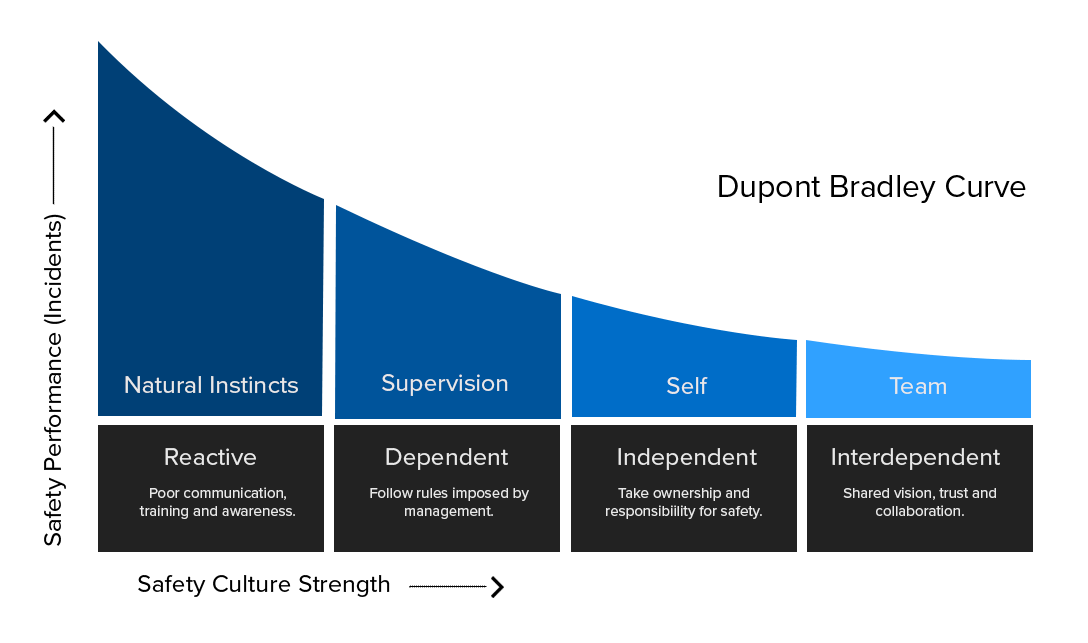
Leadership recognized that the organization's safety culture aligned with the "Independent Phase" of the Bradley Curve. They recognized the need to empower employees at all levels to take ownership and be more responsible for their safety as well as the safety of their coworkers.
"Rather than relying on one departmental manager and two shift managers to police the whole team, it was about engaging the power of the team," shared the safety leader. "We wanted everyone to look out for their colleagues and themselves. If someone forgot a safety protocol for even a moment, we encouraged others to step in, have a conversation, and correct it."
Peer-to-peer Safety Behavior Observations (SBO) were identified as the next critical step toward achieving the ultimate goal of zero incidents.
Initially, the organization attempted to integrate SBO into their existing safety platform. While it was effective for high-level oversight, the platform was clunky, slow, and not user-friendly for frontline employees.
Attempts to "shoehorn" SBO into the system failed, leading to declining engagement and waning support from senior leadership.
"It was just so clunky, so challenging, so slow that we just didn't get the engagement we wanted," the safety leader admitted.
Recognizing the need for a new solution, they turned to Weever, a platform designed to streamline engagement and empower peer-to-peer accountability.
The Implementation: Empowering a Bottom-Up Approach to Drive Safety Engagement
While exploring platform options, Weever emerged as the ideal choice to meet the customer's specific needs. They sought software that could seamlessly complement their existing global safety platform, which they intended to continue using for incident and near-miss compliance.
The new platform needed to be highly customizable to address their unique requirements. Most importantly, they prioritized ease of use and intuitive design to minimize barriers to participation and maximize engagement among frontline staff.
The client began working with the Weever Customer Success team to quickly digitize their SBO program.
"When you begin a new journey into something new and unfamiliar, having specialist support at your side is a huge comfort.", said the safety lead.
The change was transformative. Employees appreciated Weever's simple and user-friendly platform, which enabled them to complete safety observations in just a few minutes. Over time, the program became self-sustaining, with employees driving its growth organically.
"To make something work, you don't want them to take 3 or more clicks to get in. When something takes five to 10 minutes, it puts people off. You want them to be able to drop in their observation and get out. Make it as efficient and as slick a process as possible. Then you get engagement."
Weever's features, such as customizable forms and streamlined reporting, enhanced the efficiency of safety observations. The data collected via Weever was showcased in monthly safety forums, fuelling productive discussions and informed decision-making.
"Being able to get the data and chop that up into departmental buckets, enabling managers to see what is actually happening with their own team, being able to customize it to meet our needs, was probably why this has been so successful."
When the SBO relaunch with Weever began, it was anticipated that achieving a full cultural transformation would take 3-4 years. However, just one year into the engagement, the site has already seen remarkable progress, with over 50% of the staff-approximately 500 frontline employees-actively participating.
Our client is particularly delighted with how the program has developed its own momentum, evolving into a self-sustaining initiative driven by employee engagement. "Now that we've got half of the factory trained and understanding what the program is trying to achieve, we're no longer having to push. We are actually seeing people asking to have their team be part of this."
The Results: Achieving a Culture of Safety Excellence and Award-Winning Milestones
The partnership with Weever helped the organization achieve and sustain an extraordinary cultural transformation.
At the time of writing this case study, the site surpassed 6,000,000 accident-free work hours, a milestone once considered unattainable.
Employee engagement has significantly increased, making safety an integral part of daily operations. While the site originally set an aspirational goal of 200 Safety Behavior Observation (SBO) submissions per month, they are now exceeding expectations, averaging over 400 submissions monthly-more than double their target!
Weever's data visualization tools proved invaluable, enabling leaders to uncover trends and target specific behaviors for improvement. Monthly safety forums, enriched by Weever's insights, became pivotal in fostering shared ownership of safety initiatives.
This cultural shift earned the organization a prestigious European safety award in 2024.
Reflecting on the impact of Weever, a safety leader commented, "Sometimes you just need to get people to believe in zero incidents. Weever has given us the edge to achieve our cultural change goals."
Looking Ahead
As the safety program continues to flourish, it has garnered increasing interest from other sites within the organization's network. Recognizing this success, our contact has been promoted to a regional role, tasked with replicating the site-level achievements across the entire network.
The safety team remains dedicated to sustaining this transformation, leveraging Weever to further enhance safety culture and operational excellence. This case exemplifies how Weever's Connected Worker platform can empower organizations to achieve their safety goals and foster lasting cultural change.
"Having cloud-based forms on devices around the facility makes them so much more accessible, which makes it painless for operators to quickly provide a report."
Johanna Velez, VP Quality Assurance
"Weever is really user friendly and will have a massive positive impact on our operations and training team."
Mel Cadle - Op Ex Lead Process Engineer
Take a Guided Tour.
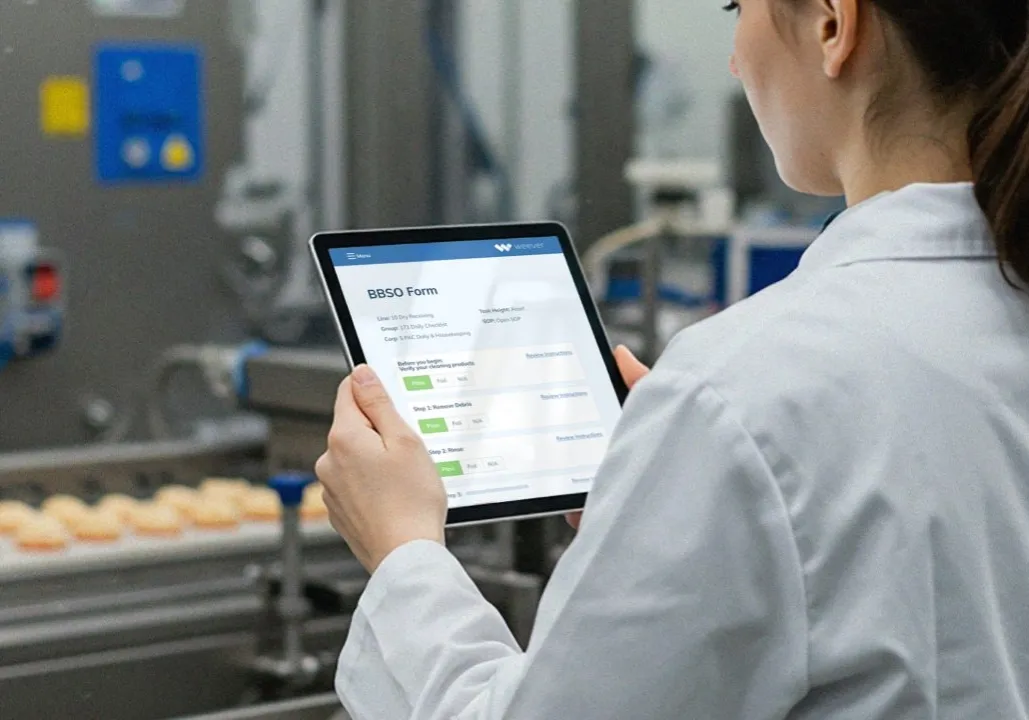
How Can Digital Transformation Solutions Revolutionize the Factory Floor for Frontline Workers?
Manufacturing is undergoing a seismic shift, driven by advancements in technology and a growing need for efficiency, adaptability, and communication. At the heart of this transformation are frontline workers, the backbone of the factory floor. But how can technology-driven strategies revolutionize their work and improve operational outcomes? The answer lies in adopting technologies that enhance worker efficiency, streamline processes, and provide actionable insights. Here’s how digital transformation, with Weever software leading the charge, is reshaping the factory floor experience for frontline workers.
The Role of Digital Transformation in Manufacturing
Digital transformation in manufacturing involves integrating digital technologies into every facet of operations, from production to quality control. For frontline workers, this means moving away from paper-based processes, inefficient communication, and manual tracking. Instead, it offers real-time access to data, streamlined workflows using automation, and intuitive platforms that enhance productivity. The ultimate goal is to create a seamless ecosystem where workers, machines, and systems collaborate efficiently.
Digital transformation solutions are particularly crucial for frontline workers who rely on quick decision-making, clear instructions, and efficient communication. Let’s explore how these solutions, particularly those offered by Weever, can revolutionize the factory floor.
Key Benefits of Digital Transformation Solutions for Factory Workers
Digital transformation solutions are not just about introducing new tools; they are about creating a more efficient, informed, and empowered workforce. Here are the key benefits:
- Streamlined communication: Instant updates and alerts ensure workers are always informed.
- Reduced manual effort: Automation handles repetitive tasks, freeing workers for higher-value activities.
- Real-time data access: Workers can access necessary information on-demand, improving decision-making.
- Improved accuracy: Technology solutions minimize errors associated with manual data entry and tracking.
- Improved Compliance With Safety Protocols: Digital checklists and automated alerts ensure compliance with safety protocols.
Simplifying Digital Transformation for Workers
One of the biggest hurdles in implementing digital transformation is ensuring the tools are easy to use. Frontline workers often have diverse technical skills, making user-friendly platforms essential. Weever excels in this area by providing an intuitive interface designed for simplicity. Workers can quickly learn to navigate the platform with minimal training, reducing downtime and fostering rapid adoption.
With Weever, tasks like reporting production issues, accessing safety protocols, or completing audits become effortless. By removing complexity, the software allows workers to focus on their responsibilities without being bogged down by technology.
Elevating Productivity with Weever
Routine tasks like filling out forms, assigning corrective actions, or tracking autonomous maintenance schedules often consume valuable time. Weever automates these workflows, ensuring tasks are completed accurately and on time. When an issue arises, the system generates actionable items and assigns them to the right personnel, keeping everyone accountable and on track.
For instance:
- Audits can be scheduled and tracked automatically, with alerts sent to the relevant team members.
- Maintenance requests are seamlessly logged and assigned, ensuring no downtime.
- Production bottlenecks can trigger immediate alerts, enabling proactive responses.
By automating routine tasks, frontline workers can redirect their focus to higher-value activities that drive productivity and innovation.
Making Data Actionable in Real-Time
Data is the foundation of effective decision-making, but raw data alone is insufficient. Workers and managers need actionable insights that highlight inefficiencies and suggest improvements. Weever’s digital transformation solutions for factory workers provide exactly that.
- Real-time reporting: Managers can monitor activities on the factory floor, identifying issues as they arise.
- Predictive insights: Analysis of production trends helps optimize workflows and prevent bottlenecks.
- Communication tools: Workers receive instant updates, keeping them aligned with operational priorities.
For example, imagine a machine showing signs of wear. Weever’s predictive insights can flag this early, prompting timely maintenance and avoiding costly downtime. Such data-driven capabilities empower both workers and managers to operate more effectively.
Ensuring a Smooth Transition for Your Organization
Implementing digital transformation is not just about the tools; it’s about the process. Weever ensures a seamless transition through a structured rollout methodology. From the start, the software is tailored to the unique needs of your factory, ensuring a perfect fit.
- Guided implementation: Weever’s team works closely with your organization to configure the platform for maximum impact.
- Configurable templates: Industry-specific templates streamline setup and ensure compliance with regulations.
- Ongoing support: Dedicated customer success teams provide continuous assistance, ensuring long-term success.
This step-by-step approach reduces resistance to change and ensures that all team members, from managers to frontline workers, are equipped to leverage the software effectively.
Why Weever Leads the Way in Digital Transformation
While many digital transformation solutions promise efficiency, few deliver the comprehensive impact that Weever provides. By combining ease of use, automation, real-time insights, and a proven rollout methodology, Weever creates a solution that addresses the unique challenges of factory workers.
Key differentiators include:
- An intuitive design that prioritizes worker engagement.
- Automated workflows that eliminate manual effort.
- Actionable insights to drive continuous improvement.
- A personalized implementation process that ensures long-term success.
With Weever, digital transformation is no longer a complex undertaking but an accessible and effective way to revolutionize the factory floor.
The Future of the Factory Floor with Digital Transformation
The factory floor of the future is one where workers are empowered by technology, operations are streamlined, and data drives decision-making. Digital transformation is not just a trend; it’s a necessity for manufacturers aiming to stay competitive in a fast-evolving industry. By adopting solutions like Weever, manufacturers can create an environment where frontline workers thrive, and productivity soars.
Ready to Revolutionize Your Factory Floor?
The benefits of digital transformation are clear: streamlined processes, empowered workers, and a more efficient factory floor. With Weever software, you gain a partner dedicated to making this transformation seamless and impactful. Don’t wait to modernize your operations and empower your team. Contact Weever today to schedule a demo and take the first step toward a smarter, more efficient factory floor.
How Do You Choose The Right Manufacturing Compliance Software For Your Business, And Why Does Weever Stand Out?
Discover how to choose the best manufacturing compliance software and why Weever excels with automation, real-time insights, and seamless integration.
Navigating the complexities of manufacturing compliance is no small feat. With stringent regulations and growing customer expectations, the need for robust compliance management has never been greater. The question arises: how do you select the right manufacturing compliance software for your business? The answer lies in understanding the key features your organization requires and identifying a solution that not only meets these needs but exceeds them. Here's how to make the right choice and why Weever stands out as the perfect partner for compliance management.
Understanding the Core of Manufacturing Compliance Software
Before diving into specific solutions, it's important to clarify what manufacturing compliance software does. This type of software is designed to help businesses adhere to industry regulations, comply with regulatory standards, and streamline processes. Key features typically include audit management, corrective action tracking, compliance reporting, and real-time monitoring. The right solution should offer a combination of these features while remaining adaptable to your unique operational requirements.
When evaluating options, keep an eye out for software that aligns with your goals for efficiency, accuracy, and scalability. Let's explore the factors that should guide your decision-making process.
Key Factors to Consider in Your Selection Process
Choosing the right manufacturing compliance software involves careful consideration of several factors. First, ensure the software is user-friendly. A complex interface can hinder adoption and reduce the efficiency of your team. Second, prioritize solutions that automate routine tasks, such as scheduling audits and assigning corrective actions. Automation streamlines operations, reduces human error, and ensures consistency across your processes.
Next, look for robust real-time reporting capabilities. Real-time insights, trend analysis, and actionable recommendations are critical for proactive decision-making. Scalability is also essential, as your software should grow alongside your business. Finally, assess the vendor's rollout methodology. A smooth onboarding process, industry-specific templates, and ongoing support can make all the difference in successfully integrating the software into your operations.
Simplifying Compliance Management
Weever software sets itself apart with an intuitive and user-friendly interface that makes compliance management straightforward for all team members. Unlike some solutions that require extensive training, Weever is designed to be accessible, ensuring that even non-technical users can quickly adapt. This ease of use translates to faster adoption rates and increased team productivity. Whether you're managing audits, tracking corrective actions, or generating reports, Weever's platform simplifies the process at every step.
Reducing Manual Effort with Automation
One of Weever's standout features is its ability to automate compliance workflows. Manual processes often lead to delays, missed tasks, and inconsistencies. With Weever, you can automate everything from scheduling audits to assigning corrective actions. For example, when an audit identifies a gap, the software automatically generates an action item, assigns it to the appropriate team member, and tracks progress until resolution. This ensures that nothing falls through the cracks, allowing you to maintain compliance effortlessly.
Data-Driven Decision Making in Real-Time
Compliance isn't just about meeting regulations; it's about continuously improving your operations. Weever provides powerful insights into your compliance data, helping you identify trends, address gaps, and proactively mitigate risks. Real-time reporting capabilities allow you to track operational progress, track compliance metrics, and generate detailed regulatory reports in minutes. By offering clear, actionable data, Weever empowers manufacturers to make informed decisions and maintain a competitive edge.
Tailored Support for Seamless Integration
Integrating new software into your existing operations can be a daunting task, but Weever ensures a smooth transition with its tailored rollout methodology. From day one, the Weever team works closely with your organization to understand your specific needs. Pre-designed templates and dedicated onboarding support simplify the setup process, allowing you to hit the ground running. Moreover, Weever's customer success team provides ongoing assistance, ensuring you maximize the software's potential over time.
Why Weever Stands Out Among Manufacturing Compliance Solutions
When comparing manufacturing compliance software solutions, Weever consistently stands out for its commitment to excellence. Its intuitive design, robust automation, and real-time reporting capabilities address the most pressing challenges manufacturers face today. The software's scalability ensures it adapts to your business's evolving needs, while its tailored rollout methodology minimizes disruption and accelerates adoption.
Weever goes beyond traditional compliance management by offering an integrated platform that enhances efficiency, accuracy, and decision-making. Whether you're looking to streamline your audit processes, gain deeper insights into your operations, or ensure consistent compliance with industry regulations, Weever provides a comprehensive solution.
Take the Next Step Toward Compliance with Weever
Selecting the right manufacturing compliance software is a critical decision that can significantly impact your business's efficiency and growth. By choosing Weever, you're investing in a solution that simplifies compliance management, simplifies complex workflows through automation, and delivers actionable insights. Don't let compliance challenges hold your business back. Contact Weever today to schedule a demo and discover how our software can transform your compliance strategy.
See how Weever enhances compliance efficiency. Request a demo.
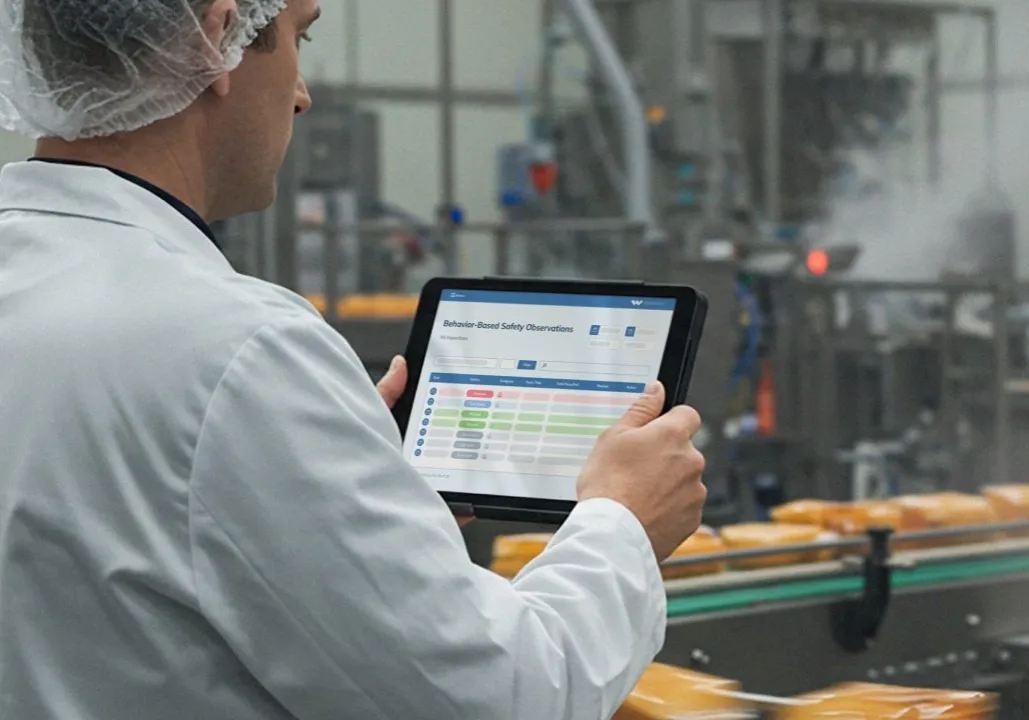
How Weever Revolutionizes Food Manufacturing Operations?
The food manufacturing industry operates under strict regulations and high-stakes conditions, where maintaining efficiency, safety, and compliance is essential. In this demanding environment, Weever’s connected worker platform emerges as a vital tool, enabling manufacturers to seamlessly bridge the gap between workers, processes, and technology. By offering real-time communication, task management, and data-driven insights, Weever empowers teams to enhance productivity and ensure compliance with ease.
Why Food Manufacturers Need Connected Worker Platforms
Food manufacturers face a unique set of challenges that demand tailored solutions. Balancing regulatory compliance, product quality, operational efficiency, and worker safety requires robust tools to simplify complex processes. Weever addresses these challenges by delivering:
- Streamlined Compliance: Automating processes ensures adherence to food safety standards, such as HACCP and GMP requirements.
- Increased Productivity: Optimized workflows and better task allocation reduce downtime and enhance throughput.
- Enhanced Worker Engagement: Real-time communication and intuitive interfaces improve workforce morale and involvement.
- Real-Time Insights: Advanced reporting tools allow manufacturers to make informed decisions quickly, reducing waste and bottlenecks.
By leveraging Weever’s connected worker platform, food manufacturers can overcome these hurdles and position themselves for sustainable growth and success.
How Weever Stands Out as a Leading Solution
Weever distinguishes itself in the crowded field of connected worker platforms by delivering a purpose-built solution for food manufacturing. Its features cater specifically to the industry’s unique demands, offering compliance assurance, operational efficiency, and worker empowerment. Below, we’ll examine how Weever’s capabilities make it a top choice for food manufacturers.
Workers Empowered by Simplicity
In the high-pressure environment of food manufacturing, usability is critical. Workers, whether on the production line or in management, need tools they can adopt quickly without extensive training.
Weever’s platform is designed with simplicity in mind. Its intuitive interface ensures that teams can access the features they need without confusion. Configurable workflows and templates allow manufacturers to adapt the software to their specific processes, from production line tasks to compliance checklists.
This flexibility ensures that Weever can seamlessly integrate into existing operations, reducing onboarding time and improving adoption rates. For food manufacturers, where every minute of downtime impacts productivity, this ease of use is a game-changer.
Streamlining Operations with Automation
Manual processes are prone to errors, inefficiencies, and inconsistencies. Automation solves these issues by standardizing workflows and ensuring critical tasks are completed accurately and on time.
Weever excels in automating a wide range of tasks, including:
- Assigning and tracking production tasks.
- Conducting safety and quality checks.
- Managing autonomous maintenance schedules.
By reducing the reliance on manual interventions, Weever frees up workers to focus on higher-value activities. This not only improves productivity but also ensures consistent adherence to safety and quality standards, which are paramount in food manufacturing.
Driving Decisions with Data Insights
Data-driven decision-making is essential for optimizing operations and maintaining a competitive edge. Weever provides manufacturers with the tools needed to gather, analyze, and act on data from the production floor.
Key reporting and analytics features include:
- Real-time tracking of worker performance and task completion.
- Identification of production bottlenecks and inefficiencies.
- Monitoring compliance with safety and regulatory standards.
With a centralized dashboard, supervisors gain a comprehensive view of operations at a glance. This enables them to address issues proactively, ensuring smooth workflows and maintaining high-quality outputs. For manufacturers seeking to reduce waste, improve efficiency, and meet regulatory demands, Weever’s data insights are invaluable.
Lightning-Fast Integration with Manufacturing Operations
Implementing a connected worker platform can be daunting, particularly in an industry with little room for operational disruption. Weever understands this challenge and has developed a rollout methodology that prioritizes simplicity and support.
The rollout process includes:
- Easy Setup: Pre-configured templates and tools ensure that Weever can be deployed with minimal technical expertise.
- Dedicated Training Resources: Teams receive comprehensive training to ensure they can maximize the platform’s potential from day one.
- Ongoing Support: Weever’s customer success team provides continued guidance, addressing any issues that arise during or after implementation.
This method ensures that food manufacturers can integrate Weever into their workflows quickly and efficiently, with minimal downtime and disruption.
While other connected worker platforms can bring valuable features, Weever’s emphasis on compliance, worker empowerment, and operational efficiency gives it a distinct advantage for food manufacturers. Its focus on creating user-friendly, configurable, and data-rich solutions ensures it meets the industry’s unique demands head-on.
In contrast, some competing platforms prioritize general-purpose features or require extensive customization, which can slow adoption or limit usability. For food manufacturers needing an industry-specific solution, Weever delivers unmatched value.
Why Food Manufacturers Choose Weever
Food manufacturers choosing Weever gain access to a platform that combines:
- Intuitive design for rapid adoption.
- Powerful automation to streamline operations.
- Advanced insights for data-driven decisions.
- Seamless implementation for minimal disruption.
Whether you aim to improve compliance, boost productivity, or enhance worker engagement, Weever provides the tools and support needed to achieve these goals. Its focus on addressing the unique challenges of food manufacturing makes it a clear choice for industry leaders.
Transform Your Operations with Weever
The food manufacturing industry is increasingly reliant on connected worker platforms to stay competitive and compliant. Among the available options, Weever stands out as a solution that prioritizes usability, automation, and actionable insights.
Are you ready to see how Weever can transform your operations? Contact us today for a demo and discover why food manufacturers trust Weever to empower their workforce and drive operational success.
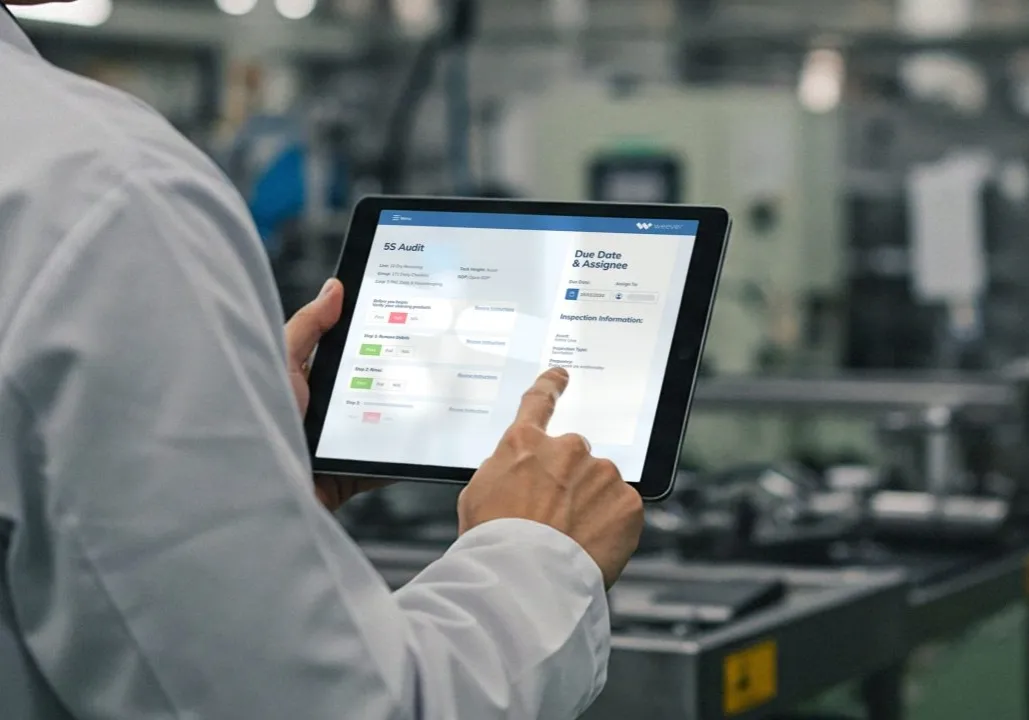
What are the benefits of using manufacturing audit management software to streamline audit processes?
Audits are a cornerstone of effective manufacturing operations. They ensure compliance, enhance quality control, and identify opportunities for continuous improvement. However, traditional audit processes can be cumbersome, prone to human error, and inefficient. The reliance on manual documentation, scattered workflows, and reactive problem-solving often results in missed deadlines and unresolved issues. This is where manufacturing audit management software solutions like Weever step in, revolutionizing the way audits are conducted and managed.
The Challenges of Traditional Audit Processes in Manufacturing
Audits in manufacturing involve more than just ticking off checklists. They encompass detailed inspections, regulatory compliance verification, and corrective action tracking. When conducted using manual or outdated methods, audits can be slow, inconsistent, and lacking in actionable insights. Teams often struggle with fragmented processes, including redundant data entry, lost documents, and incomplete follow-ups on identified issues.
Additionally, regulatory standards in manufacturing are becoming increasingly stringent, requiring organizations to maintain accurate and up-to-date records for compliance. Without an efficient system in place, manufacturers face the risk of non-compliance, which can result in fines, reputational damage, and production delays.
These challenges highlight the critical need for a streamlined, automated, and integrated approach to managing audits.
Weever: Transforming Audit Processes for Manufacturers
Weever’s manufacturing audit management software solutions are designed to tackle these challenges head-on. By leveraging automation, real-time reporting, and user-friendly design, Weever ensures that manufacturers can conduct audits with precision, efficiency, and confidence.
An Intuitive Design for Easy Management
Weever’s manufacturing audit management software simplifies even the most complex audit processes with its intuitive interface. Creating and customizing audit templates becomes a straightforward task, eliminating the need for technical expertise or extensive training. Manufacturers can tailor templates to meet the specific requirements of their operations, whether they are conducting a 5S audit, equipment autonomous maintenance inspection, or regulatory compliance review.
The platform’s ease of use enables teams to focus on executing audits rather than struggling with complicated tools. Audit processes are clearly laid out, and team members can access relevant information with just a few clicks. This simplification ensures consistency across audits, reduces errors, and saves time.
Automating Away Operational Inefficiencies
One of the standout benefits of Weever’s software is its ability to automate critical aspects of the audit process. Scheduling audits, assigning tasks, and tracking corrective actions are seamlessly managed through the platform. Automation ensures that audits occur on time and that every step is accounted for.
For example, if an audit identifies a safety hazard, Weever immediately triggers a corrective action plan. Tasks are assigned to the appropriate team members, and deadlines are set to ensure timely resolution. This level of automation minimizes the risk of overlooked issues and enhances accountability within the organization.
By automating workflows, manufacturers can eliminate redundant manual tasks, freeing up valuable time and resources for more strategic activities.
Driving Continuous Improvement with Real-Time Data
Data is at the heart of effective audits, and Weever’s software turns data into actionable insights. By analyzing audit results, the platform identifies patterns and recurring issues, enabling manufacturers to address root causes rather than just symptoms. This proactive approach to problem-solving leads to long-term improvements in quality and compliance.
Real-time reporting capabilities further enhance the audit process. Manufacturers can monitor audit progress, track non-compliance issues, and generate detailed reports instantly. Whether for regulatory submissions or internal reviews, these reports provide a clear and comprehensive view of audit outcomes. The ability to access real-time data ensures that potential risks are addressed promptly, preventing small issues from escalating into significant problems.
Seamless Integration into Operations that Just Works
Introducing new software into a manufacturing environment can be challenging, but Weever makes the transition seamless. The platform’s rollout methodology includes guided onboarding, pre-built templates, and comprehensive training. This ensures that teams can quickly adopt and integrate the software into their existing processes.
Weever’s flexible configuration allows it to adapt to the unique needs of each manufacturer. Whether it’s integrating with existing systems or tailoring workflows to align with organizational goals, the platform is designed to fit seamlessly into diverse operational environments. With minimal disruption to daily operations, manufacturers can begin reaping the benefits of streamlined audits almost immediately.
Why Choose Weever?
In an industry where accuracy, efficiency, and compliance are critical, Weever’s manufacturing audit management software solutions provide a reliable and effective way to streamline audit processes. By simplifying complex workflows, automating critical tasks, and delivering actionable insights, Weever empowers manufacturers to maintain high standards of quality and compliance while reducing operational risks.
Weever transforms audits from a reactive process into a proactive tool for continuous improvement. Manufacturers no longer need to rely on manual systems or siloed software that fails to provide a comprehensive view of their operations. Instead, they gain a centralized, intuitive, and efficient platform that ensures audits are conducted with precision and purpose.
Take the First Step Toward Streamlined Audits
Ready to revolutionize your audit processes? Contact Weever today to schedule a demo and discover how our manufacturing audit management software solutions can help streamline your operations and enhance compliance.
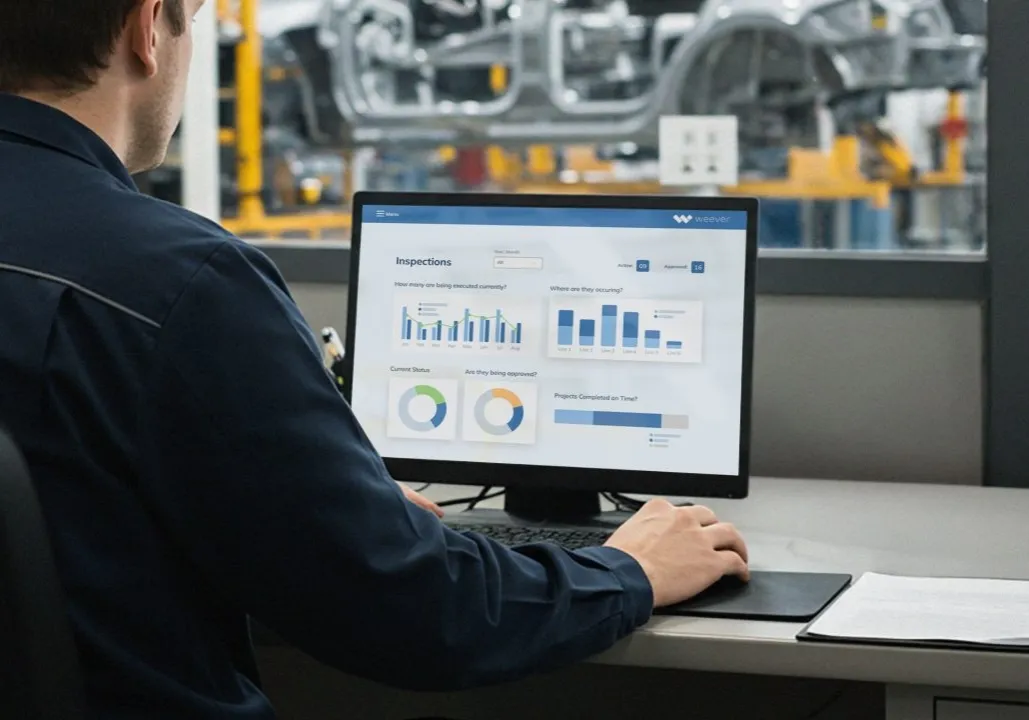
How does automotive quality control tracking software drive efficiency in precision manufacturing?
The automotive manufacturing industry is synonymous with precision and high standards. Every part, from engine components to safety systems, must meet strict quality benchmarks to ensure performance, durability, and safety. Quality control in this sector isn’t just about maintaining standards—it’s about driving efficiency, reducing waste, and ensuring consistent output.
In this context, automotive quality control tracking software has emerged as a vital tool for manufacturers. These systems empower teams to monitor, analyze, and enhance production processes while minimizing errors and maximizing efficiency. Weever’s automotive quality control tracking software stands out as a solution that not only meets the challenges of precision manufacturing but also exceeds expectations.
Why Quality Control Matters in Automotive Manufacturing
Precision manufacturing in the automotive industry demands meticulous attention to detail. A single defective part can compromise the safety and functionality of a vehicle, leading to costly recalls, reputational damage, and even legal liabilities. Beyond product quality, effective quality control practices directly impact production efficiency, cost management, and customer satisfaction.
Key reasons why quality control is vital in automotive manufacturing include:
- Ensuring compliance with stringent industry regulations and safety standards.
- Identifying and eliminating defects early in the production process.
- Minimizing waste and reducing production costs.
- Maintaining consistency across large production runs.
- Building trust with customers by delivering reliable, high-quality products.
Without robust quality control systems, achieving these goals is nearly impossible. Automotive quality control tracking software bridges this gap by streamlining processes, enhancing visibility, and empowering teams to maintain the highest standards.
How Weever Software Drives Efficiency in Automotive Quality Control
Weever’s automotive quality control tracking software is purpose-built to meet the unique challenges of precision automotive manufacturing. From simplifying workflows to delivering actionable insights, Weever provides the tools manufacturers need to enhance efficiency, reduce defects, and stay ahead of the competition.
Simplifying Quality Control Management
One of the most significant barriers to adopting new quality control solutions is complexity. Many systems require extensive training or technical expertise, leading to delays in implementation and resistance from users. Weever eliminates these challenges with its intuitive interface and user-friendly design.
The platform allows manufacturers to configure workflows, set up inspection protocols, and monitor production processes with ease. Whether tracking defect rates or scheduling routine quality checks, Weever makes it simple for teams to manage quality control without the need for extensive technical training. This ease of use ensures quick adoption, enabling teams to focus on their core responsibilities without being bogged down by complex tools.
Responding to Defects Swiftly
Delays in addressing defects can disrupt production schedules, increase costs, and compromise quality. Weever’s software automates critical quality control processes, ensuring that issues are identified and addressed promptly.
The platform automates quality control checks, streamlining repetitive tasks and reducing the likelihood of human error. When defects are detected, Weever assigns actionable tasks to the appropriate team members, providing clear instructions for resolution. This automated workflow ensures that issues are resolved quickly and efficiently, minimizing disruptions and maintaining production flow.
By eliminating manual processes, Weever not only enhances accuracy but also frees up valuable time for workers to focus on other high-priority tasks.
Making Real-Time Data Work for You
Data is a powerful asset in automotive manufacturing, but only if it’s used effectively. Weever’s quality control tracking software provides manufacturers with the tools to analyze quality data and uncover trends that can drive continuous improvement.
By identifying recurring issues or patterns, manufacturers can take proactive steps to address underlying problems before they escalate. For example, if a particular production line consistently experiences higher defect rates, supervisors can investigate and implement corrective measures.
Weever’s real-time reporting capabilities take this a step further. Managers can monitor quality metrics, defect rates, and resolution timelines in real-time, enabling them to make informed decisions on the fly. This level of visibility ensures that quality issues are addressed promptly, reducing downtime and maintaining high standards of automotive manufacturing.
Seamless Rollout in a Cinch
Implementing new quality control systems can be a daunting task, especially in complex manufacturing environments. Weever understands this challenge and has developed a rollout methodology that prioritizes simplicity and support.
With configurable templates and hands-on assistance, Weever ensures that automotive manufacturers can integrate quality control tracking seamlessly into their operations. The platform is designed to work alongside existing systems, minimizing disruption and ensuring a smooth transition.
Weever’s support doesn’t end with implementation. The team provides ongoing guidance and training to help manufacturers maximize the platform’s potential. This commitment to customer success ensures that businesses can quickly realize the benefits of enhanced quality control.
The Benefits of Weever’s Quality Control Tracking Software
Weever’s automotive quality control tracking software delivers tangible benefits that directly impact efficiency and productivity in precision manufacturing. These include:
- Improved defect detection and resolution through automated workflows.
- Enhanced operational efficiency by eliminating manual processes.
- Greater visibility into quality metrics with real-time reporting.
- Proactive identification of trends and inefficiencies to drive continuous improvement.
- Seamless implementation with minimal disruption to existing operations.
By addressing the challenges of quality control head-on, Weever empowers manufacturers to maintain high standards, reduce costs, and achieve long-term success.
Transform Your Quality Control Processes with Weever Software
In the world of automotive manufacturing, precision and quality are non-negotiable. Weever’s automotive quality control tracking software provides the tools and insights needed to meet these demands while driving efficiency and reducing defects.
If you’re ready to revolutionize your quality control processes, contact Weever for a demo today. Discover how our software can help you maintain a competitive edge in the automotive manufacturing industry.
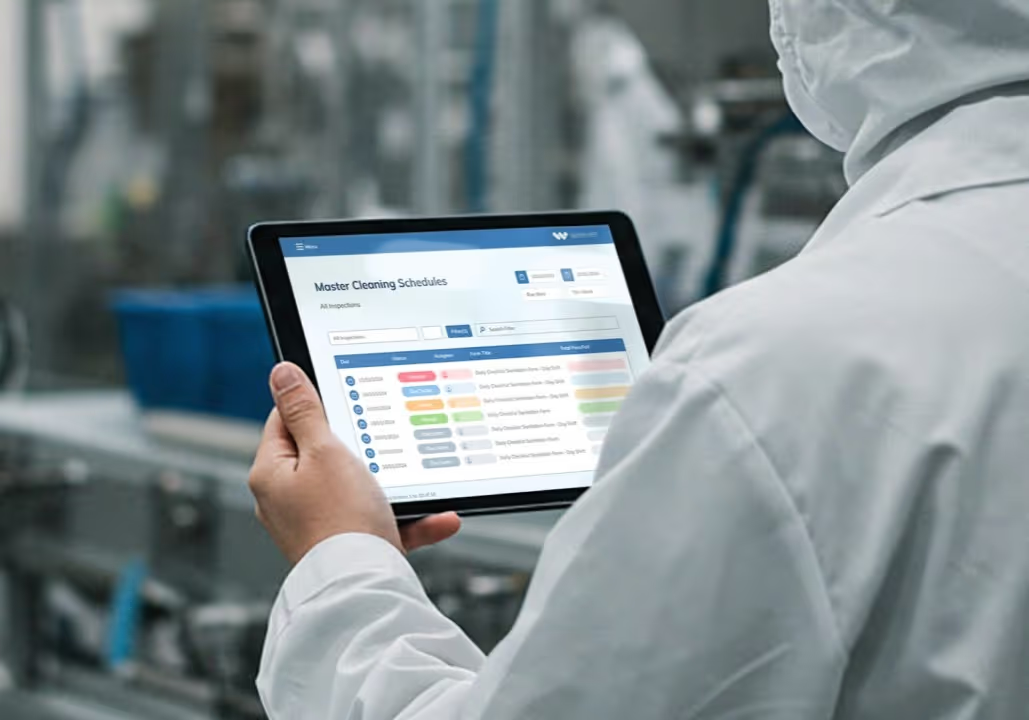
What Should a Master Cleaning Schedule Include, and How Can Weever Software Help You Stay Compliant and Efficient?
A master cleaning schedule is essential for maintaining cleanliness, ensuring safety, and achieving compliance in industries like food manufacturing. It serves as a roadmap for routine cleaning tasks, outlining what needs to be done, when it needs to be done, and who is responsible for doing it. An effective master cleaning schedule ensures that no critical task is missed, which is vital in maintaining operational efficiency and meeting strict regulatory standards.
This guide explores the key components of a master cleaning schedule and highlights how Weever software can streamline the process, helping businesses stay compliant and efficient.
What Information Should a Master Cleaning Schedule Contain?
A master cleaning schedule should provide comprehensive details to ensure that all cleaning requirements are clearly defined and consistently executed. The following elements are crucial:
- Detailed Cleaning Tasks: Each task should be clearly defined, including the specific areas or equipment that require cleaning, the cleaning methods to be used, and the cleaning agents or tools needed.
- Frequency of Cleaning: The schedule should specify how often each task must be performed to maintain cleanliness and meet regulatory requirements, whether daily, weekly, monthly, or as needed.
- Assigned Responsibilities: Each task should be assigned to a specific individual or team, ensuring accountability and preventing overlap or confusion.
- Verification and Documentation: The schedule should include provisions for recording completed tasks, verifying their execution, and maintaining records for audit purposes.
By including these components, a master cleaning schedule becomes a valuable tool for ensuring consistency, maintaining hygiene standards, and demonstrating compliance with industry regulations.
The Challenges of Managing a Master Cleaning Schedule
While a master cleaning schedule is essential, managing it effectively can be challenging, especially in large-scale operations. Common hurdles include:
- Keeping track of numerous cleaning tasks across various areas or equipment.
- Ensuring that all tasks are completed on time and by the appropriate personnel.
- Maintaining accurate and up-to-date records for audits and inspections.
- Identifying inefficiencies or gaps in the cleaning process.
These challenges can lead to missed tasks, non-compliance issues, and operational inefficiencies. However, with the right tools, these obstacles can be overcome.
How Weever Software Simplifies Master Cleaning Schedule Management
Weever software is a powerful solution designed to streamline the creation, execution, and management of master cleaning schedules. By combining intuitive tools, automation, and actionable insights, Weever helps businesses maintain compliance and efficiency in their cleaning operations.
Simplify Schedule Creation and Management
Creating a master cleaning schedule from scratch can be daunting, but Weever simplifies the process with its intuitive platform. The user-friendly interface allows teams to configure cleaning tasks and timelines to suit their specific operational needs, all without requiring technical expertise.
Whether defining cleaning protocols for specialized equipment or setting up recurring tasks for high-traffic areas, Weever ensures that schedules are easy to create, update, and manage. This flexibility reduces setup time and ensures that the schedule aligns perfectly with operational requirements.
Ensure Nothing is Overlooked with Automation
One of the most significant advantages of Weever is its ability to automate recurring tasks and assign action items to the appropriate team members. Instead of relying on manual reminders or spreadsheets, the platform automatically generates cleaning assignments and sends notifications to ensure timely completion.
This automation eliminates the risk of missed tasks, reduces manual intervention, and allows supervisors to focus on higher-value activities. Additionally, the platform provides real-time updates on task progress, making it easy to track completion and compliance.
Drive Efficiency with Real-Time Data and Reporting
Weever doesn’t just help you execute your cleaning schedule; it also provides valuable insights into the process. By analyzing cleaning data, the platform identifies patterns and trends that can be used to optimize workflows and reduce downtime.
For example, if certain tasks consistently require more time or resources, supervisors can adjust schedules or reallocate staff to address inefficiencies. The platform’s real-time reporting capabilities allow supervisors to monitor task completion, track compliance with regulatory standards, and address issues immediately. This proactive approach ensures that cleanliness and safety standards are consistently maintained.
Streamlined Implementation for Rapid Impact
Adopting a new system can sometimes disrupt operations, but Weever’s structured rollout methodology ensures a smooth transition. From guided setup processes to comprehensive training tools, the platform supports teams every step of the way.
Weever’s pre-configured templates and intuitive design make it easy to implement the master cleaning schedule quickly. Teams can start using the platform with minimal downtime, allowing businesses to see immediate benefits. Additionally, ongoing support ensures that any challenges are promptly addressed, enabling teams to maximize the platform’s potential.
Why Weever Software is the Ideal Solution for Master Cleaning Schedules
While a master cleaning schedule is a vital tool for maintaining cleanliness and compliance, managing it manually can be time-consuming and prone to errors. Weever software offers a streamlined solution that not only simplifies schedule creation but also enhances execution and oversight.
With Weever, businesses can:
- Create detailed, configurable cleaning schedules with ease.
- Automate recurring tasks and assign responsibilities to ensure accountability.
- Gain actionable insights from cleaning data to optimize efficiency.
- Monitor compliance and address issues in real time through advanced reporting tools.
- Implement the system quickly and effectively with guided support.
This comprehensive approach ensures that businesses can maintain high standards of cleanliness and compliance while minimizing administrative burdens.
Transform Your Cleaning Operations with Weever Software
Managing a master cleaning schedule is a critical responsibility, but it doesn’t have to be overwhelming. Weever software provides the tools and support needed to simplify the process, enhance efficiency, and ensure compliance with industry regulations.
If you’re ready to revolutionize your cleaning operations, contact Weever for a demo today. Discover how our platform can help you create a master cleaning schedule that keeps your business compliant, efficient, and always prepared for the next challenge.
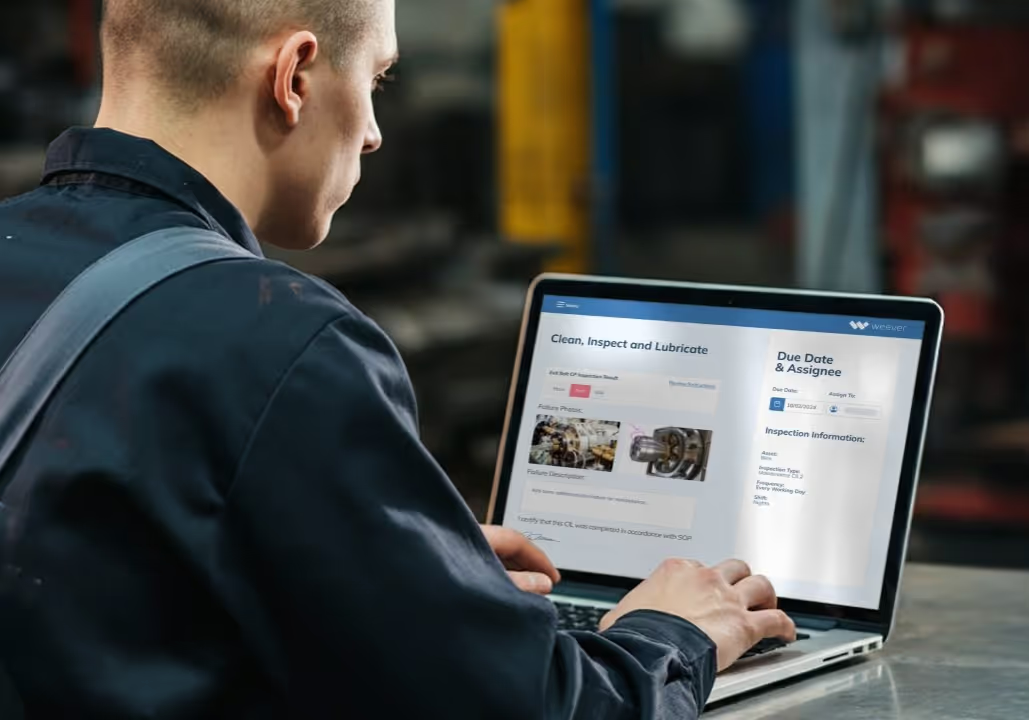
Achieving Operational Efficiency with Weever: Integrating Centerlining, CIL, and 5S Audits
Operational efficiency is more than just a buzzword—it’s a critical goal for manufacturers aiming to remain competitive in an increasingly demanding marketplace. Consistently producing high-quality products while minimizing downtime, waste, and variability requires a meticulous approach. Key methodologies such as Centerlining, Clean Inspect Lubricate (CIL), and 5S audits serve as foundational pillars of operational efficiency. However, implementing and maintaining these practices across teams and facilities is no small feat.
This is where Weever’s software comes in. By providing an intuitive, integrated platform, Weever empowers manufacturers to seamlessly adopt and optimize these essential practices. In this blog, we’ll explore the question: How can manufacturers achieve operational efficiency by integrating Centerlining, CIL, and 5S audits with Weever? Along the way, we’ll uncover how Weever’s innovative solutions simplify implementation, automate workflows, and provide real-time insights to ensure sustained efficiency and excellence.
Understanding the Role of Centerlining, CIL, and 5S Audits in Operational Efficiency
Before diving into the specifics of how Weever enhances these practices, it’s important to understand their individual contributions to operational efficiency:
- Centerlining: This process involves setting and maintaining optimal equipment parameters to reduce variability in production. By adhering to precise settings, manufacturers can ensure consistent quality and minimize waste.
- Clean Inspect Lubricate (CIL): As a core component of autonomous maintenance, CIL emphasizes regular cleaning, inspection, and lubrication to keep equipment running smoothly. This proactive approach prevents unexpected breakdowns and extends equipment life.
- 5S Audits: Rooted in lean manufacturing principles, 5S audits focus on organizing and maintaining the workplace to improve efficiency and safety. The five pillars—Sort, Set in Order, Shine, Standardize, and Sustain—help create a clean, structured environment that minimizes errors and enhances productivity.
Individually, these practices drive significant benefits. Combined, they create a holistic framework for achieving and sustaining operational efficiency. However, traditional approaches to implementing these methodologies often face hurdles such as inconsistent execution, time-consuming manual processes, and limited visibility into results.
Weever eliminates these challenges by offering a unified platform to integrate, automate, and optimize Centerlining, CIL, and 5S audits.
Intuitive Integration with Weever’s Platform
For any operational improvement initiative to succeed, teams must be able to adopt and integrate new practices with ease. This is especially true for methodologies like Centerlining, CIL, and 5S audits, which require consistent execution across shifts and teams.
Weever’s software is designed with simplicity in mind. Its intuitive interface ensures that users at all levels—from shop-floor operators to managers—can navigate the platform and quickly implement these practices without extensive training.
- Centerlining: Setting up Centerlining parameters is straightforward with Weever. Teams can configure optimal settings for equipment, define acceptable ranges, and establish alerts for deviations—all within a few clicks.
- CIL: Weever makes scheduling and executing CIL tasks effortless. Teams can create detailed checklists for cleaning, inspecting, and lubricating equipment, ensuring that nothing is overlooked.
- 5S Audits: The platform enables manufacturers to configure 5S checklists, making it easy to assess workplace organization and address areas for improvement.
This simplicity reduces the learning curve, accelerates adoption, and allows teams to focus on execution rather than struggling with complex software.
Automation in Action: Driving Consistency and Efficiency
Consistency is a cornerstone of operational efficiency, and Weever ensures that key practices are carried out reliably through automated workflows.
- Centerlining: Once parameters are defined, Weever monitors equipment settings in real time, automatically flagging deviations and notifying teams to take corrective action. This ensures that production remains within optimal ranges, reducing variability and waste.
- CIL: Routine maintenance tasks are automated with Weever, from scheduling to tracking completion. The software sends reminders for cleaning, inspection, and lubrication activities, ensuring that critical tasks are performed on time. Deviations or abnormalities discovered during inspections can be documented and escalated for prompt resolution.
- 5S Audits: Weever streamlines 5S audits by guiding teams through standardized checklists and assigning follow-up tasks for any deficiencies identified. Automated notifications keep audits on schedule, ensuring that workplace organization is maintained consistently.
By eliminating manual intervention and providing automated oversight, Weever reduces the risk of errors, ensures timely execution, and frees up teams to focus on value-added activities.
Insight-Driven Decision Making: Leveraging Data for Improvement
Operational efficiency is not a one-time achievement—it requires ongoing monitoring and continuous improvement. Weever provides manufacturers with the tools to achieve both through powerful data-driven insights.
- Centerlining: Weever collects and analyzes data from equipment settings, enabling teams to identify trends and recurring deviations. For example, patterns of variability might point to the need for equipment recalibration or operator training.
- CIL: Insights from CIL tasks help manufacturers track the health of their equipment over time. Teams can use this data to identify components that require frequent maintenance, schedule predictive maintenance activities, and reduce unplanned downtime.
- 5S Audits: Weever provides actionable insights from 5S audit data, helping teams identify common organizational issues and measure the impact of improvements over time.
Real-time reporting further enhances visibility by providing up-to-the-minute updates on the status of Centerlining, CIL, and 5S activities. This immediacy enables manufacturers to respond quickly to deviations or gaps, ensuring that operational efficiency is maintained without disruption.
Standardized Excellence: Consistency Across Teams and Facilities
Implementing Centerlining, CIL, and 5S audits across a single production line is challenging enough; scaling these practices across multiple teams or facilities introduces even greater complexity. Weever addresses this challenge with a structured rollout methodology that ensures consistency and standardization.
- Templates and Standardized Workflows: Weever provides pre-configured templates and workflows for each practice, ensuring that every team follows the same high standards.
- Configurable Framework: While standardization is key, Weever’s platform is also flexible enough to accommodate unique operational needs. Teams can configure workflows and parameters without compromising consistency.
- Scalability: Whether rolling out these practices across a single site or a global network of facilities, Weever makes it easy to scale operations and maintain uniformity.
This approach ensures that operational efficiency becomes a company-wide standard rather than being limited to isolated pockets of excellence.
Take the First Step Toward Transforming Operational Efficiency
The integration of Centerlining, CIL, and 5S audits with Weever delivers measurable results. By maintaining optimal equipment settings, manufacturers reduce variability, minimize waste, and ensure consistent quality. Proactive maintenance routines extend equipment life and reduce the risk of unplanned downtime. Meanwhile, a clean, organized workplace fosters safety, efficiency, and productivity.
Beyond these tangible benefits, Weever promotes a culture of accountability and continuous improvement. By automating workflows, providing actionable insights, and ensuring consistent execution, Weever helps manufacturers achieve operational efficiency and sustain it over time.
Operational efficiency is within reach when manufacturers have the right tools to support their efforts. By integrating Centerlining, Clean Inspect Lubricate (CIL), and 5S audits with Weever, teams can streamline workflows, make data-driven decisions, and create a culture of consistency and improvement.
Ready to see the difference Weever can make in your operations? Contact Weever today for a demo and discover how our software can help you achieve maximum operational efficiency.
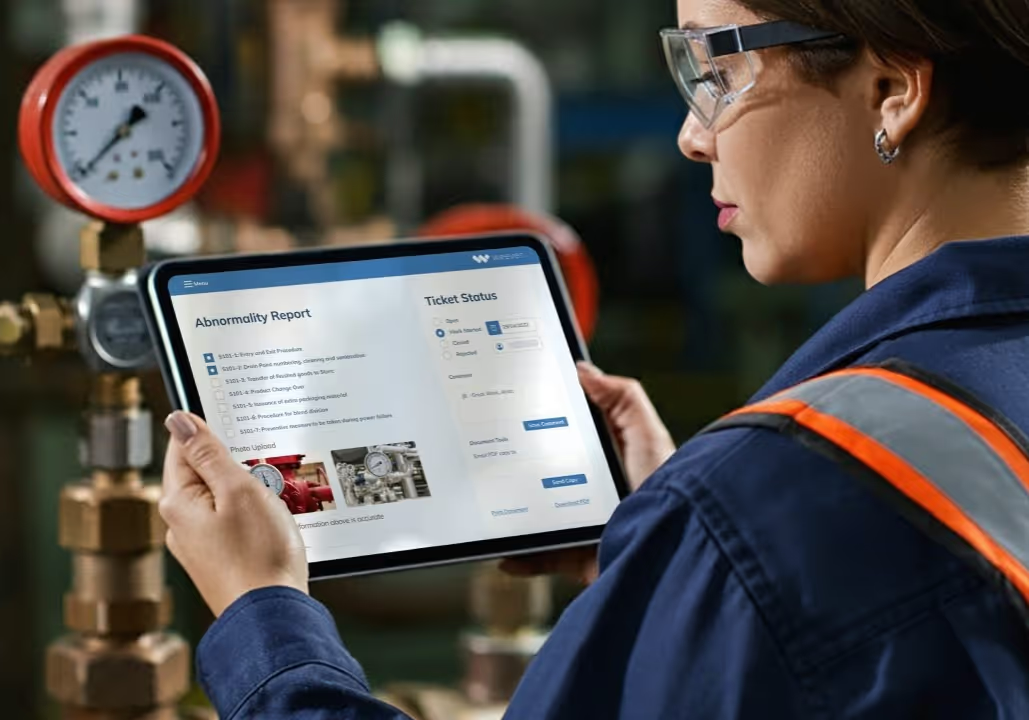
Reducing Defects through Proactive Monitoring with Weever’s Abnormality and Defect Detection
The smallest defect can have costly ripple effects in manufacturing operations, leading to product recalls, dissatisfied customers, and lost revenue. Manufacturers need a way to proactively identify and address issues before they escalate. Enter Weever’s abnormality and defect detection – a cutting-edge approach that transforms how manufacturers monitor and resolve quality issues.
This blog explores the question: How does proactive monitoring with Weever’s abnormality and defect detection reduce defects and improve product quality? Let’s dive in to uncover the answer.
The Challenge: Why Defect Prevention is Critical
Modern production environments operate at a breakneck pace, leaving little room for error. Yet, even the most sophisticated processes are not immune to abnormalities that can lead to defects. These issues can stem from equipment malfunctions, human errors, or process deviations.
Traditional defect management often relies on reactive measures, addressing issues only after they’ve disrupted production or tarnished a product. This approach not only increases costs but also risks reputational damage. Proactive monitoring, particularly with Weever’s specialized tools, flips the script, allowing manufacturers to anticipate and eliminate defects before they become problems.
Proactive Monitoring: The Key to Superior Product Quality
Proactive monitoring leverages real-time data and predictive insights to identify abnormalities at their earliest stages. By doing so, manufacturers can intervene promptly, reducing defect rates and improving overall product quality. Weever’s abnormality and defect detection solution is uniquely positioned to drive this shift.
But what sets Weever apart? Let’s explore the features that make it an indispensable tool for proactive monitoring.
Simplicity at Weever’s Core
In the fast-paced manufacturing world, tools that are cumbersome or complex are unlikely to gain traction. That’s why Weever’s platform is designed with intuitive usability at its core.
Setting up proactive monitoring for abnormalities and defects is straightforward, enabling teams to get started without a steep learning curve. The software allows users to configure custom workflows, define defect parameters, and deploy monitoring protocols with ease. This simplicity ensures quick adoption and boosts confidence among staff at all levels.
Seamless Automation Abnormality and Defect Management
Time is of the essence when abnormalities arise. Weever automates the detection process, flagging issues as soon as they occur. The software assigns corrective action items to the appropriate teams, ensuring swift resolution.
Automation doesn’t stop there. Weever’s proactive monitoring capabilities integrate seamlessly with existing workflows, reducing manual intervention and minimizing the chances of human error. By closing the loop between detection and resolution, manufacturers can prevent small abnormalities from snowballing into full-blown defects.
Data-Driven Excellence with Real-Time Insights and Reporting
Understanding the “why” behind defects is as important as addressing them. Weever provides manufacturers with rich insights into defect patterns and trends. By analyzing historical data, the software identifies recurring issues, empowering teams to implement long-term improvements.
Weever’s real-time reporting is a game-changer, offering visibility into abnormalities and defects as they happen. This immediacy allows teams to respond in the moment, minimizing the impact on production quality. Over time, these insights drive a culture of continuous improvement, where data-informed decisions become the norm.
Scalable Solutions: Deploying Weever Across Operations
Rolling out proactive monitoring across multiple production lines can be daunting. Weever simplifies this process with its strategic rollout methodology, ensuring smooth implementation and consistent quality control, in as little as three weeks.
Whether you’re managing a single facility or a global network of plants, Weever ensures that every production line benefits from the same high standards. Its adaptable framework accommodates diverse operational needs, making it the ideal solution for organizations of any size.
The Results: Fewer Defects, Higher Quality, Happier Customers
The impact of integrating proactive monitoring with Weever’s abnormality and defect detection is transformative for manufacturers. By detecting issues at their earliest stages and taking swift corrective action, production lines experience a dramatic reduction in defect rates. This early intervention not only prevents small problems from escalating but also ensures that production processes run more efficiently, minimizing waste and downtime.
As a result, product quality reaches new heights. With continuous monitoring in place, manufacturers can consistently deliver goods that meet or exceed industry standards. This commitment to excellence resonates with customers, fostering trust and loyalty while enhancing the company’s reputation in the marketplace. Furthermore, addressing abnormalities proactively translates to significant cost savings, as manufacturers avoid the financial and operational burden of large-scale recalls or defect-related disruptions.
Ultimately, the combination of fewer defects, superior product quality, and improved customer satisfaction positions manufacturers to thrive in a competitive landscape. Weever’s solution empowers teams to not only solve problems but also build a future rooted in consistent quality.
A Future Without Defects Starts Here
Proactive monitoring isn’t just a strategy; it’s a commitment to excellence. With Weever’s abnormality and defect detection solution, manufacturers can transform their approach to quality control, reducing defects and elevating product standards.
Ready to experience the difference for yourself? Contact Weever today for a demo and take the first step toward defect-free manufacturing.

Weever's Reporting Helps Identify and Manage Defects
For manufacturers, early detection and swift management of defects are essential to maintaining quality and minimizing downtime. Left unchecked, even minor abnormalities can escalate, disrupting production lines and increasing costs. That's where Weever software makes a difference. With tools designed to detect defects at the earliest stages, automate the response, and provide real-time insights, Weever empowers manufacturers to maintain the highest operational efficiency.
So, how does Weever help manufacturers detect and manage defects in production? Let's explore how Weever's solutions address this need at every stage of the defect management process.
Simplified Defect Detection: An Intuitive, User-Friendly Platform
Effective defect management starts with quick and accurate detection. Weever's intuitive interface is designed with operators in mind, making it easy for them to identify and report abnormalities or defects without disrupting their work.
Operators on the floor are often the first to notice potential issues, yet traditional reporting systems can be cumbersome, slowing down detection times, and allowing small issues to go unaddressed. Weever solves this by providing a user-friendly platform that minimizes the time needed to log defects. The streamlined interface allows operators to report abnormalities or quality issues with minimal clicks, ensuring that details reach the relevant teams in real time.
This ease of use reduces the risk of defects being overlooked and helps operators feel more comfortable and confident in reporting issues. With Weever, identifying a defect becomes a simple, standardized process that seamlessly fits into the production workflow.
Automated Defect Management: Streamlining Workflows and Action Items
Identifying a defect is only the beginning; the real challenge lies in ensuring that each issue is addressed swiftly and effectively. Weever's solution automates the defect management process, assigning action items and tracking each step's progress, ensuring that no defect slips through the cracks.
Once a defect is reported, Weever automatically triggers a series of actions based on pre-configured workflows. These workflows specify who is responsible for each step in the process, from assessment to resolution, and notify relevant team members as needed. Each action item is tracked within Weever's system, allowing supervisors to monitor progress in real time. This automation eliminates the need for manual task assignments, reducing the likelihood of human error and ensuring consistent responses to each defect.
Weever's automated workflows also help standardize defect management across the organization, so every operator, technician, or manager knows the correct procedures to follow. With Weever, manufacturers can confidently manage abnormalities and defects with speed and consistency, reducing the risk of recurring issues or extended downtime.
Real-Time and Data-Driven Decision-making for Proactive Management
In addition to detecting and addressing individual defects, understanding broader patterns is key to preventing future issues. Weever's real-time reporting and data analysis features empower manufacturers to identify trends in abnormalities and defects, enabling proactive management.
Weever's platform continuously gathers and analyzes data on reported defects, providing insights into the underlying causes of recurring issues. For instance, if a particular machine frequently malfunctions or if specific product lines exhibit higher defect rates, Weever's data-driven insights allow manufacturers to identify these patterns and address them proactively. Armed with this information, teams can make informed decisions on preventive maintenance, equipment upgrades, or process adjustments to eliminate the root causes of defects.
Real-time reporting further enhances Weever's effectiveness, as abnormalities are flagged the moment they're reported, allowing teams to react immediately. This instant reporting minimizes the risk of production delays by ensuring that all personnel are alerted to potential issues as soon as they arise. By combining real-time insights with historical data, Weever enables manufacturers to take both immediate action and long-term preventive measures, enhancing overall quality and efficiency.
Weever's Seamless Implementation for Consistent Abnormality and Defect Management
For manufacturers with multiple facilities or large-scale operations, consistency in defect detection and management processes is critical. Weever's streamlined rollout methodology is designed to ensure that manufacturers can implement defect detection and management systems across facilities with ease and efficiency.
Weever's rollout process is structured to minimize disruption to ongoing operations. Manufacturers receive comprehensive training and resources to support a smooth integration of the platform, allowing teams to start using Weever quickly. The platform is adaptable to various production environments, making it ideal for organizations with complex workflows or multiple locations. By establishing uniform procedures for defect detection and management, Weever helps ensure that every facility or team operates under the same high standards.
With this consistent approach, manufacturers can confidently monitor and manage defects across all areas of their operations, fostering a culture of continuous improvement and quality control.
Weever: A Comprehensive Solution for Effective Abnormality and Defect Management
In manufacturing, the ability to detect and manage abnormalities and defects quickly and accurately is essential for maintaining product quality, minimizing waste, and ensuring operational efficiency. Weever software offers a comprehensive solution that simplifies each stage of the defect management process. From its easy-to-use interface to its automated workflows, real-time insights, and structured rollout methodology, Weever provides manufacturers with the tools they need to detect, manage, and prevent defects effectively.
Weever not only helps manufacturers address individual abnormalities but also supports a proactive approach to quality control, allowing teams to anticipate and mitigate potential disruptions before they impact production. With Weever, manufacturers gain more than just a defect management tool; they gain a partner in quality assurance, enabling them to maintain the highest standards and drive continuous improvement across their operations.
In a sector where precision and reliability are paramount, Weever's defect detection and management capabilities are an asset for any manufacturer committed to excellence. By turning real-time data into actionable insights and automating response workflows, Weever empowers manufacturers to stay ahead of potential issues, optimizing productivity and ensuring consistent quality every step of the way.
Contact Weever for a demo and discover how our software helps you manage defects.
Request more information Preview modal-
Request more information
Please tell us a bit about yourself so we can tailor our response and get you the information you need.
Continue Reading
Boost Your Manufacturing safety with Proactive Measures
How Proactive Measures Can Lead to Cost Savings in Manufacturing
How to be more proactive about safety
How to implement a proactive safety program into your facility
Proactive Measures for Ensuring Compliance in Regulated Industries
Proactive Measures in Manufacturing: Leveraging Weever Software for a Safer Workplace
The Importance of Proactive Measures in Manufacturing Operations
The Power of Proactive Measures in Preventing Equipment Failure
"Having cloud-based forms on devices around the facility makes them so much more accessible, which makes it painless for operators to quickly provide a report."
Johanna Velez, VP Quality Assurance
"Weever is really user friendly and will have a massive positive impact on our operations and training team."
Mel Cadle - Op Ex Lead Process Engineer

CoC Certificate of Conformance: The Essential Guide
Navigating the world of regulatory compliance can feel like wandering through a maze, especially when it comes to Certificates of Conformance (CoCs). A CoC certificate of conformance is a critical document that verifies your product meets specific quality and safety standards. Whether you're dealing with international trade, complex industry regulations, or simply want to build trust with your customers, understanding CoCs is essential for your business. This guide breaks down everything you need to know about CoC certificate of conformance, from what they are and why they matter to how to obtain one and the risks of non-compliance. We'll also explore best practices for CoC management and the future of digital CoCs. Let's make navigating compliance less daunting and more manageable.
Key Takeaways
- CoCs are essential for demonstrating product compliance and building customer trust. They facilitate smoother transactions and verify adherence to industry standards, protecting your business and strengthening your brand reputation.
- Obtaining a CoC involves selecting the most appropriate method for your specific needs. Whether through the manufacturer, a third-party lab, or self-certification, understanding the relevant requirements is key.
- Digital CoC management streamlines compliance and minimizes risks. Using technology for tracking, storage, and automation saves time and resources, reducing errors and ensuring you're always audit-ready.
What is a Certificate of Conformance (CoC)?
A Certificate of Conformance (CoC) is a formal document stating that a product meets specific quality, safety, or regulatory standards. Think of it as a seal of approval, assuring buyers that the product is safe and meets acceptable quality benchmarks. This certification is crucial for selling products in many countries and can simplify customs procedures by providing necessary compliance information upfront. Businesses rely on CoCs to build trust with customers and demonstrate their commitment to quality. Want to learn more about quality management? Check out our Ultimate Guide to 5S Audits.
Definition and Purpose
A CoC acts as critical proof of compliance, verifying that a product adheres to the required standards and regulations. This protects consumers and facilitates smooth international trade. It's often issued by the manufacturer or a designated testing lab. The purpose of a CoC is twofold: it assures buyers of product quality and helps sellers meet legal and market requirements. For businesses looking to improve operational efficiency, a CoC can be a valuable tool. See how Weever can help streamline your processes with our ROI calculator.
Key Components of a CoC
A CoC generally includes several key pieces of information. It details the product itself, including a description, model number, and specifications. It also identifies the manufacturer or importer, providing their name, address, and contact information. Crucially, the CoC lists the specific standards and regulations the product complies with. Additionally, it notes the manufacturing date and location, as well as details about the testing process, including who performed the tests and when and where they occurred. Finally, contact information is included for record-keeping and follow-up. Maintaining accurate records is essential for any business. Explore how Weever simplifies document management for improved organization. For real-world examples of successful CoC implementation, check out our case studies.
Why CoCs Matter for Quality and Trade
Certificates of Conformity (CoCs) aren't just paperwork; they're vital for maintaining high product standards and ensuring smooth business transactions. They offer a standardized way to prove your products meet required specifications, building customer trust and minimizing potential disruptions.
Maintaining Product Standards
CoCs play a crucial role in upholding consistent product quality. By adhering to the standards outlined in a CoC, manufacturers demonstrate their commitment to delivering reliable and safe products. This focus on quality control helps minimize defects and ensures products function as intended. A clearly defined process for obtaining a CoC, whether through internal quality checks or third-party testing, builds a foundation for continuous improvement and reduces the likelihood of costly product recalls. This dedication to quality builds trust with customers and strengthens your brand reputation. For businesses implementing lean manufacturing principles, CoCs provide verifiable proof of adherence to 5S audit standards, a key component of a successful lean program. Using a platform like Weever can streamline your 5S audits and help maintain consistent quality control. Learn more about how Weever supports 5S audits.
Facilitating Smooth Transactions
CoCs are essential for streamlining trade, both domestically and internationally. They assure buyers that products meet regulatory requirements and industry best practices. This reduces the risk of shipment delays or rejection at customs, which can significantly impact delivery times and overall costs. A CoC acts as a trusted verification document, simplifying the import/export process and fostering stronger relationships between buyers and sellers. This clear documentation also simplifies supply chain management, making it easier to track products and ensure compliance throughout the entire process. By minimizing potential hold-ups, CoCs contribute to more predictable and efficient business operations. For a deeper dive into optimizing your supply chain, explore Weever's resources on improving operational efficiency.
What's in a CoC?
A Certificate of Conformity (CoC) formally declares that your product meets the required standards. Think of it as a detailed snapshot of your product's compliance journey. This section breaks down the essential information a CoC typically includes.
Essential Details and Data
A comprehensive CoC clearly identifies the product, including its name, model number, description, and relevant technical specifications. Think of this as the "who" section of your CoC. It should also detail the manufacturer or importer's name, address, and contact information—the "from whom" section. Crucially, the CoC lists the specific safety standards and regulations the product complies with. This is the heart of the document, demonstrating adherence to industry best practices and legal requirements.
Testing information forms another critical part of the CoC. This section should outline the testing dates, locations, and the entities that conducted the tests. Providing this information adds transparency and validity to the certification process. Details about the product's manufacturing date and location are also essential for traceability. If third-party testing labs were involved, their names and roles should be clearly stated. Finally, the CoC should include contact information for record-keeping, ensuring easy access to relevant documentation.
Ensuring Completeness and Accuracy
A CoC is only effective if it's complete and accurate. Inaccurate or incomplete information can lead to shipment delays, legal issues, and damage to your brand's reputation. Double-check every detail before issuing a CoC. Ensure all relevant standards are listed and the testing information is accurate and up-to-date. If you're unsure about any aspect of creating a CoC, consulting with a quality control expert or legal professional can provide valuable guidance. Remember, a well-maintained CoC protects your business and builds trust with your customers.
Who Needs a CoC?
A Certificate of Conformance (CoC) isn't just paperwork; it's proof that your product meets specific quality and safety standards. While not mandatory for every business, certain industries rely on CoCs to maintain compliance, build trust with customers, and access global markets. Let's explore which sectors commonly use them.
Industries Relying on CoCs
Several industries consider CoCs essential for their operations. These include:
- Pharmaceuticals: Given the critical nature of medications, pharmaceutical companies must rigorously test their products. A CoC verifies that drugs meet stringent safety and efficacy standards, ensuring patient well-being and regulatory compliance. This often involves a complex process of clinical trials and meticulous documentation.
- Chemicals: The chemical industry handles substances that can be hazardous if not manufactured and used correctly. CoCs confirm that chemicals adhere to environmental and safety regulations, minimizing risks to workers, consumers, and the environment. This includes everything from industrial chemicals to common household cleaning products.
- Food Products: Food safety is paramount. CoCs provide assurance that food items meet health and safety standards, covering aspects like ingredients, processing, and packaging. This helps protect consumers from contamination and other health risks. Food safety regulations are constantly evolving, making CoCs even more critical.
- Vehicles: Vehicle manufacturers must comply with safety and emissions regulations to ensure roadworthiness and minimize environmental impact. A CoC demonstrates that vehicles meet these standards, covering everything from seat belts to exhaust systems. The specific vehicle regulations vary by region and country.
- Electronics: Electronic products must meet safety and performance standards to prevent hazards like electrical shocks and fires. CoCs confirm compliance, giving consumers confidence in the products they purchase. This applies to a wide range of electronics, from smartphones to household appliances.
These are just a few examples, and the specific requirements for CoCs vary significantly between industries and even within specific product categories. Research the specific regulations that apply to your products and target markets.
Product Examples and Standards
Understanding which products require CoCs often involves looking at the relevant standards they must meet. Here are a few examples:
- Medical Devices: Medical devices, from simple bandages to complex surgical equipment, often require CoCs demonstrating compliance with standards like ISO 13485, which focuses on quality management systems for medical devices. This ensures patient safety and the effectiveness of the devices.
- Construction Materials: Construction materials like cement, steel, and wood are often subject to standards related to strength, durability, and fire resistance. CoCs provide evidence that these materials meet the required specifications, ensuring the structural integrity of buildings and other infrastructure. Organizations like ASTM International develop many of these standards.
- Toys: Children's toys must meet stringent safety standards to prevent choking hazards, toxicity, and other risks. CoCs confirm compliance with regulations like those set by the Consumer Product Safety Commission (CPSC) in the United States, protecting children and giving parents peace of mind.
This isn't an exhaustive list, but it highlights the diverse range of products and standards involved in CoC compliance. Resources like the International Organization for Standardization (ISO) website offer extensive information on various international standards. You can also find specific requirements from regulatory bodies in your target markets.
How to Get a CoC
Getting a Certificate of Conformance (CoC) might seem complicated, but it's a straightforward process. There are three main paths you can take, each with its own pros and cons. Choosing the right one depends on your specific product and business needs.
Manufacturer-Issued CoCs
The easiest way to obtain a CoC is directly from the manufacturer. Manufacturers routinely issue these certificates, declaring that their products meet the required standards. This is often the quickest and most cost-effective option. However, it's worth noting that a manufacturer-issued CoC might not hold the same weight as one from an independent source. For internal quality control or less stringent requirements, this can be a perfectly acceptable route. If you're working with a reputable manufacturer, their internal testing and quality assurance processes might be robust enough for your needs. For more on finding the right manufacturer, check out this helpful resource on vetting suppliers.
Third-Party Certification
For a more rigorous and impartial assessment, consider getting your CoC from an independent third-party testing lab. These labs specialize in product testing and certification, providing an unbiased evaluation of your product's compliance. A third-party CoC offers increased credibility and assurance to your customers and business partners. It demonstrates a commitment to quality and can be particularly valuable when dealing with international trade or complex regulatory requirements. While this option might involve additional costs and time, the enhanced trust and reduced risk often make it worthwhile. A good starting point for finding accredited testing labs is the International Laboratory Accreditation Cooperation (ILAC).
Self-Certification
In some cases, businesses can self-certify their products. This means they conduct their own internal testing and issue their own CoC. Self-certification can be a practical choice for businesses with established quality management systems and in-depth product knowledge. However, it's essential to ensure your internal processes are rigorous and meet the relevant standards. Transparency is key here; clearly documenting your testing procedures and results can help build confidence in your self-certified CoC. Keep in mind that self-certification might not be recognized in all situations, especially when dealing with specific regulations or international trade. It's always best to check the specific requirements for your industry and target markets. Resources like the American Society for Quality (ASQ) can offer guidance on quality management systems and self-certification best practices.
CoC Challenges
Getting a Certificate of Conformance (CoC) isn't always straightforward. It requires careful attention to detail and a solid understanding of varying international standards. This section highlights some common roadblocks you might encounter and offers practical advice to make the process smoother.
Common Hurdles
One common challenge is the sheer complexity of regulations. Standards for CoCs differ significantly between countries and even between specific products. Keeping track of these different requirements can be a major headache, especially for businesses working across multiple markets. Cost is another potential hurdle. Obtaining a CoC often involves testing, inspections, and certifications, which can add up and affect your profits. Finally, the risk of non-compliance is a serious concern. Failing to secure the necessary CoC can lead to shipment delays or rejections at customs, causing costly disruptions.
Overcoming Challenges
Don't let these challenges deter you. Several proactive steps can simplify the CoC process. If you're feeling overwhelmed by regulations, consider getting expert advice. A consultant specializing in international trade can offer valuable guidance and help you understand the specific requirements for your products and target markets. Thorough research is also essential. Investigate the CoC requirements for your export destinations. Understanding the specific standards and procedures upfront will save you time and prevent costly errors. Finally, explore how automation tools can streamline your CoC management. Software solutions can help track deadlines, manage documentation, and ensure compliance with changing regulations, freeing you to focus on other parts of your business.
Risks of Not Having a CoC
Failing to obtain a Certificate of Conformance (CoC) exposes your business to serious risks, impacting everything from your bottom line to your brand reputation. Understanding these potential consequences is crucial for making informed decisions about compliance.
Legal and Financial Implications
One of the most immediate risks is the potential for legal issues and financial losses. Customs authorities can seize or destroy shipments that don't meet required standards, leading to significant financial setbacks. Beyond the immediate loss of goods, you could face fines and other penalties. Importing and exporting goods becomes more complex without proper documentation, and legal battles can be costly and time-consuming. Learn more about CoCs and importing. Delays at customs due to missing paperwork disrupt your supply chain, leading to production slowdowns and missed deadlines, translating into lost revenue and damaged customer relationships. Explore the financial implications of non-compliance.
Impact on Brand and Customers
Beyond the immediate financial and legal ramifications, the absence of a CoC can severely damage your brand and erode customer trust. A CoC demonstrates your commitment to quality and safety. Without it, customers may question the integrity of your products and your dedication to meeting industry standards. See how CoCs build trust. In a competitive market, this can be a significant disadvantage. If your products are deemed unsafe or substandard due to the lack of a CoC, you risk product recalls, which can be both costly and damaging. Understand the importance of a CoC in preventing faulty products from reaching consumers. Ultimately, the lack of a CoC can jeopardize your market access and limit your growth.
Best Practices for CoC Compliance
Staying on top of Certificate of Conformance (CoC) requirements can feel like a juggling act, but with the right approach, you can ensure your business remains compliant and avoids costly setbacks. Here's how to streamline your CoC management:
Track Your CoCs Effectively
Organized CoC tracking is crucial. A centralized system helps you quickly locate specific certificates when needed for audits, customer requests, or internal reviews. Think of it as your CoC library—easy to search and always current. This not only saves you time and headaches but also demonstrates a commitment to quality and compliance. Consider these methods for efficient tracking:
- Digital document management: Move away from paper-based systems and go digital. Cloud-based platforms offer secure storage, version control, and easy access from anywhere. This is particularly helpful for businesses with multiple locations or remote teams. Check out our resources on document management for more tips.
- Spreadsheet organization: If your CoC volume is manageable, a well-structured spreadsheet can be a practical tracking tool. Ensure it includes key details like certificate number, issue date, expiry date, product name, and relevant standards. Regularly update your spreadsheet to avoid using outdated certificates.
- Dedicated CoC software: For larger organizations with complex CoC requirements, specialized software can automate tracking, renewals, and reporting. This streamlines the entire process and minimizes the risk of errors. Explore Weever's customer success stories to see how we help businesses manage compliance efficiently.
Stay Up-to-Date on Standards
Standards and regulations are constantly evolving. Staying informed about changes relevant to your industry and products is essential for maintaining compliance. Outdated CoCs can lead to shipment delays, fines, and damage to your brand reputation. Here's how to stay ahead of the curve:
- Industry subscriptions: Subscribe to industry publications, newsletters, and regulatory updates. These resources provide valuable insights into changing standards and best practices.
- Regular reviews: Schedule regular reviews of your CoC processes and documentation. This helps identify gaps and ensures your procedures align with current requirements. Weever's reporting features can help you visualize and analyze your compliance data.
- Professional consultation: If you're unsure about specific requirements or navigating complex regulations, seek expert advice. A consultant specializing in compliance can provide tailored guidance and support. Request a demo to learn more about how Weever can help streamline your compliance efforts.
The Future of CoCs
The future of Certificates of Conformance (CoCs) is undeniably digital. As industries increasingly rely on interconnected systems and real-time data, traditional paper-based CoCs are becoming cumbersome and inefficient. This shift toward digitalization offers significant advantages, streamlining processes and bolstering security. Let's explore the key trends shaping the future of CoCs.
Digital CoCs and New Tech
Digital CoCs use technology to improve the creation, storage, and verification of conformity documents. This transition offers several key benefits: increased efficiency, fewer errors, and better security through features like digital signatures and blockchain technology. Imagine instantly accessing all your CoCs, eliminating the need for physical storage and reducing the risk of lost or damaged documents. This digital transformation is already happening, with organizations like the Physikalisch-Technische Bundesanstalt (PTB) developing standardized data structures for certification information. The move toward Digital Calibration Certificates (DCCs) further demonstrates this evolution, creating a path for seamless integration with quality management systems. Initiatives like the Digital Product Conformity Certificate Exchange are also working to build a secure and efficient global system for sharing these critical documents.
Evolving Standards
As technology changes, so do the standards surrounding CoCs. The push for mandatory electronic certificates by 2026 underscores the growing importance of digital solutions. Staying informed about these evolving standards is crucial for maintaining compliance and realizing the full potential of digital CoCs. Organizations like JAS-ANZ are actively developing frameworks and specifications for the digital transformation of product conformity, ensuring integrity and sustainability across the supply chain. Keeping up with these developments will be essential for businesses looking to optimize their conformity assessment processes and stay competitive.
Automate Your CoC Process
Managing Certificates of Conformance (CoCs) manually can be a real headache. Sifting through files, tracking down signatures, and ensuring everything is current takes valuable time and effort. Switching to a digital CoC management system streamlines your entire process, saving you time and resources while reducing errors.
Benefits of Digital CoC Management
Imagine creating, tracking, and managing CoCs effortlessly. With digital CoC management, this becomes a reality. Generate CoCs quickly and accurately, with all necessary information automatically populated, eliminating manual data entry and ensuring consistency. Digital storage means no more lost certificates. Everything is readily accessible, searchable, and secure, making audits easier with all necessary documentation at your fingertips. Automated reminders ensure CoCs are always current and compliant, minimizing the risk of penalties or disruptions. For more on the advantages of going digital, check out this helpful guide on document management.
How Weever Helps
Weever's connected worker platform offers a powerful solution for streamlining your CoC process. Our platform empowers frontline teams to create and manage CoCs directly from their mobile devices. Features like photo and video capture allow employees to document proof of conformance, while eSignatures ensure quick and secure approvals. All your CoCs are securely stored in the cloud and accessible anytime. Weever integrates with your existing systems, minimizing disruption and maximizing efficiency. Ready to see how Weever can transform your CoC management? Request a demo today or explore our customer success stories to see how we've helped other businesses. You can also explore our ROI calculator to see the potential impact.
Related Articles
- BRC Compliance Audits | Weever
- Best Practices for Manufacturers Developing Your Audit Checklist | Weever
- Creating an Effective Manufacturing Audit Checklist with Weever Software | Weever
- How Does Clean Inspect Lubricate (CIL) Work: A Step-by-Step Guide with Weever | Weever
- FDA Regulated Software Validation Process | Weever
Frequently Asked Questions
What's the difference between a manufacturer-issued CoC and one from a third-party testing lab?
A manufacturer-issued CoC comes directly from the company that made the product, stating it meets their internal standards. A third-party CoC comes from an independent lab, offering a more impartial assessment and often carrying more weight, especially for international trade. Choosing the right one depends on your specific needs and the level of assurance required.
Our company deals with a high volume of CoCs. How can we manage them efficiently?
Consider switching to a digital CoC management system. This eliminates paper-based clutter and allows for easy searching, tracking, and automated reminders for renewals. Digital systems also offer better security and version control, ensuring you always have the most up-to-date CoC readily available. For high-volume needs, dedicated CoC software can automate many tasks and streamline your entire process.
What are the biggest risks of not having the correct CoCs in place?
The consequences can be serious. You risk shipments being delayed or rejected at customs, leading to financial losses and disruptions to your supply chain. Legally, you could face fines and penalties. Perhaps most importantly, the lack of a CoC can damage your brand's reputation and erode customer trust.
How can I stay informed about changing CoC standards and regulations?
Staying up-to-date is crucial. Subscribe to industry publications and regulatory updates. Regularly review your internal CoC processes and documentation. If you're dealing with complex international trade, consider consulting with a specialist who can provide tailored guidance and keep you informed about relevant changes.
What's the future of CoCs, and how can my business prepare?
The future is digital. Digital CoCs offer increased efficiency, reduced errors, and better security. Start exploring digital CoC management systems and familiarize yourself with emerging technologies like blockchain and digital signatures. Staying informed about evolving standards and digitalization efforts will be key to remaining competitive and compliant.
Spend Less Time on Admin. Get More Insights by Email.
Subscribe to receive practical tips, updates, and ideas to improve operations without the extra admin work.