
-%20smaller.webp)
.webp)
Explore More Blogs
Creating a Successful Autonomous Maintenance Program
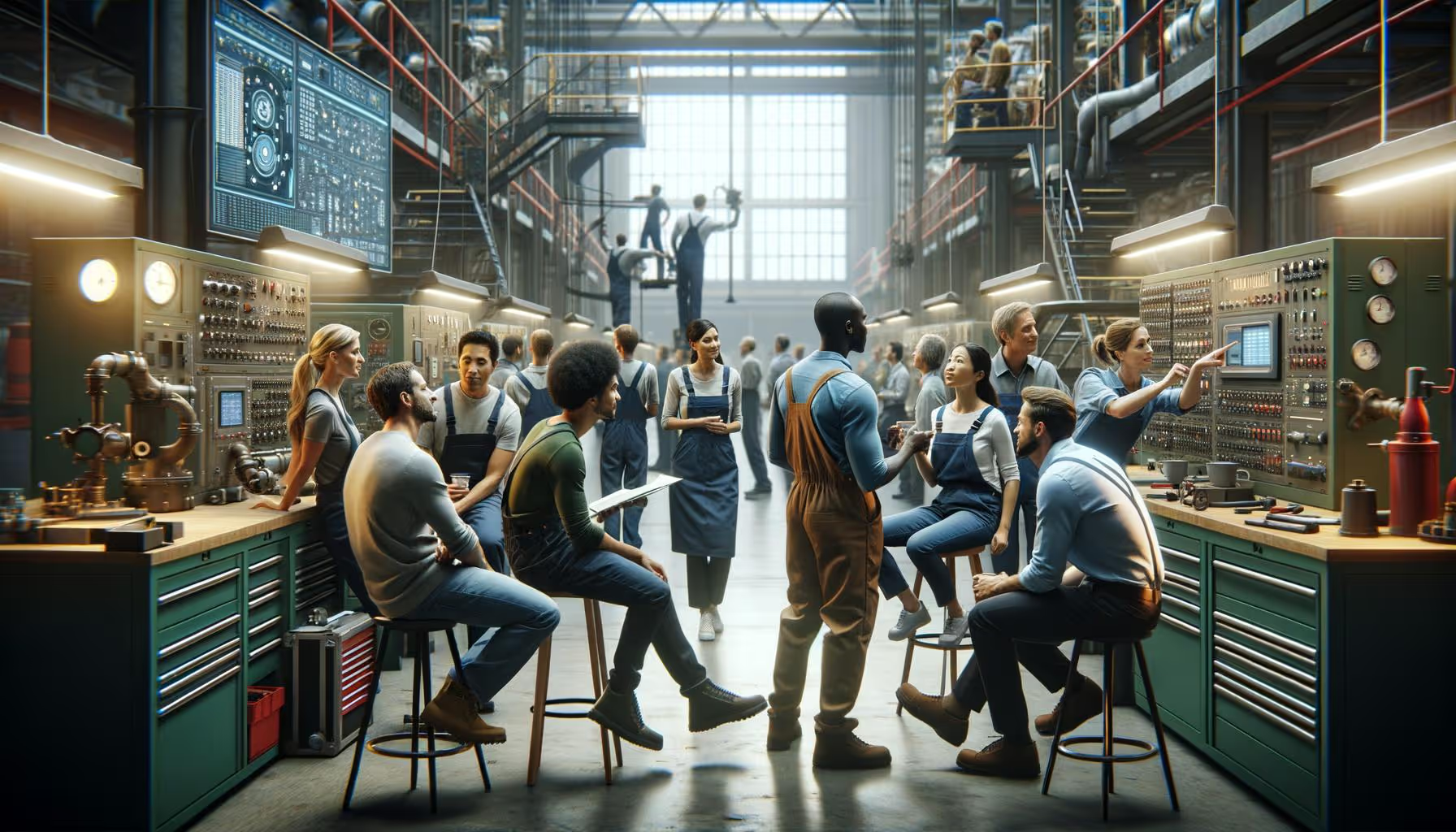
Manufacturing efficiency is the cornerstone of success in today's competitive landscape. At Weever Apps, we've seen firsthand how an autonomous maintenance program can revolutionize operations.
This approach empowers operators to take ownership of equipment care, reducing downtime and boosting productivity. In this post, we'll explore the key elements of creating a successful autonomous maintenance program and how it can transform your manufacturing processes.
What is Autonomous Maintenance?
Redefining Equipment Care
Autonomous Maintenance (AM) revolutionizes equipment care by placing operators at the forefront. This approach diverges from traditional maintenance models, where specialized technicians handle all equipment issues. Instead, AM empowers machine operators to take charge of routine maintenance tasks.
The Core Principles of AM
AM's foundation rests on creating a culture of ownership on the factory floor. Operators become the primary defense against equipment failures. They conduct daily inspections, perform cleaning tasks, and execute basic maintenance. This responsibility shift leads to quicker problem identification and resolution, which significantly reduces downtime.

AM requires some upfront training but has a direct impact on OEE through the increased involvement of machine operators.
Tangible Benefits for Manufacturers
AM's advantages extend beyond reduced downtime. Companies that embrace this approach often experience:
- Extended equipment lifespan
- Enhanced product quality
- Improved operator skills and job satisfaction
- Lower maintenance costs
A Departure from Traditional Maintenance
Traditional maintenance approaches often rely on reactive measures (fixing problems after they occur). AM, however, takes a proactive stance. It focuses on preventing issues through regular cleaning, inspection, and minor repairs.
One key difference lies in operator involvement. Traditional models might limit operators to simply reporting issues to the maintenance team. AM actively involves them in maintaining equipment in top condition.
Leveraging Technology in AM
Modern AM programs harness digital tools for data collection and analysis. These technological solutions streamline the AM process, making it easier for operators to log issues and for managers to track performance metrics.
As we move forward, we'll explore the key components that form the backbone of a successful Autonomous Maintenance program. These elements work together to create a robust system that drives operational excellence and fosters a culture of continuous improvement.
Building Blocks of Effective Autonomous Maintenance
Operator Empowerment Through Training
The foundation of any successful Autonomous Maintenance (AM) program rests on comprehensive operator training. This training transcends basic equipment operation. Operators must develop a deep understanding of their machines' inner workings and learn to identify potential issues before they escalate into major problems.
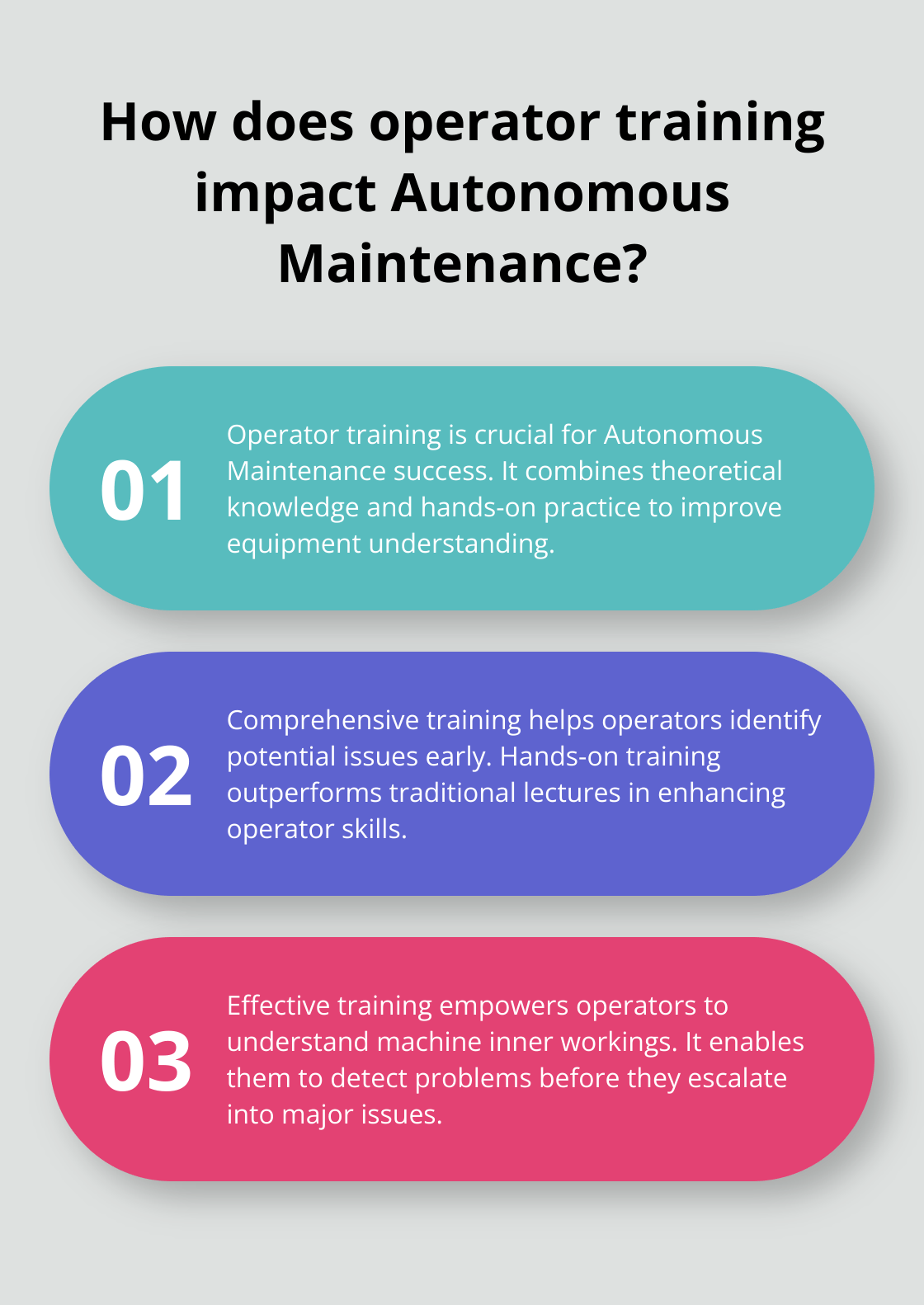
An effective training program combines theoretical knowledge with hands-on practice. Hands-on training can significantly outperform traditional lectures in improving operator skills.
Workspace Organization
An organized workspace plays a vital role in efficient AM implementation. The 5S methodology (Sort, Set in Order, Shine, Standardize, Sustain) provides a framework for creating and maintaining an organized work environment.
The implementation of 5S can lead to substantial improvements in productivity and safety. Companies investing in comprehensive workplace organization have experienced reductions in equipment-related downtime.
To implement 5S effectively, involve operators in the process. They possess intimate knowledge of their work areas and can provide valuable insights into optimal organization. Use visual management tools (such as color-coding and clear labeling) to facilitate easy identification of tool and material locations.
Standardization of Maintenance Procedures
Standardized procedures form the backbone of a successful AM program. They ensure consistency in maintenance tasks, regardless of who performs them. This consistency prevents equipment failures and extends machine life.
When developing standard operating procedures (SOPs), include both operators and maintenance technicians in the process. Their combined expertise will result in comprehensive and practical procedures. Create clear, step-by-step instructions and incorporate visual aids where applicable.
Digital tools can significantly enhance the effectiveness of SOPs.
Robust Inspection Routines
Regular inspections play a critical role in catching potential issues early. Develop detailed inspection checklists for each piece of equipment, focusing on key areas prone to wear or failure.
Train operators to use all their senses during inspections. Unusual sounds, smells, or vibrations often indicate developing problems. Encourage operators to document any anomalies they notice, no matter how small they might seem.
A digital inspection system can streamline this process. Operators can easily log inspection results and flag issues for immediate attention, ensuring that no potential problem goes unnoticed.
These key components form a strong foundation for an Autonomous Maintenance program. However, the journey doesn't end here. The next crucial step involves the actual implementation of these building blocks in a real-world manufacturing environment.
How to Implement Autonomous Maintenance
Secure Management Buy-In
The first step in implementing Autonomous Maintenance (AM) requires full support from top management. This involves more than just approval; it demands active engagement and resource allocation. Present a clear business case that highlights potential ROI.

To solidify management commitment, organize a plant tour that focuses on current maintenance pain points. This hands-on approach often resonates more than presentations. Follow up with a detailed implementation plan, including resource requirements and expected outcomes.
Build a Cross-Functional Team
Successful AM implementation depends on collaboration across departments. Form a dedicated team that includes members from operations, maintenance, engineering, and management. This diverse group brings varied perspectives and expertise to the table.
When you select team members, prioritize those with strong communication skills and a willingness to embrace change. Include both experienced staff and fresh talent to balance institutional knowledge with innovative thinking.
Assign clear roles and responsibilities to each team member. For example, designate a project champion from senior management to oversee progress and remove obstacles. Appoint team leaders for specific areas like training, documentation, and technology implementation.
Create a Phased Implementation Plan
A full-scale AM implementation often leads to resistance and poor results. Instead, adopt a phased approach. Start with a pilot program in a single area or production line. This allows you to refine processes and demonstrate value before scaling up.
A typical phased plan might look like this:
Phase 1 (1-3 months): Select pilot area, conduct initial training, and implement basic cleaning and inspection routines.Phase 2 (3-6 months): Expand to more complex maintenance tasks, refine SOPs, and start measuring key performance indicators (KPIs).Phase 3 (6-12 months): Roll out to additional areas, implement advanced training, and integrate digital tools.Phase 4 (12+ months): Full implementation across the plant, continuous improvement initiatives.
Set realistic timelines and milestones for each phase. Review progress regularly and be prepared to adjust the plan based on feedback and results.
Leverage Digital Tools for Data-Driven Decisions
Modern AM implementation requires technology to streamline data collection, analysis, and decision-making processes.
Implement a robust Computerized Maintenance Management System (CMMS) to track equipment performance, schedule maintenance tasks, and manage inventory. Look for a system that offers mobile accessibility, allowing operators to input data and access information on the go.
Use data analytics to identify trends and predict potential equipment failures. This proactive approach can reduce unplanned downtime by up to 50% (according to a study by McKinsey).
Consider implementing IoT sensors on critical equipment to enable real-time monitoring and predictive maintenance. While the initial investment may seem high, the long-term benefits (reduced downtime and extended equipment life) often justify the cost.
Choose the Right Software Solution
Selecting the appropriate software solution plays a key role in the success of your AM program. Look for a platform that offers comprehensive features such as automated workflows, real-time dashboards, and intuitive digital forms. These features support efficient data capture, cross-team visibility, and faster issue resolution.
Weever's Connected Worker platform stands out as a top choice in this regard. It not only provides these essential features but also supports comprehensive programs like 5S Audits and Autonomous Maintenance. The platform's user-friendly interface and single site license model (with no user fees) simplify implementation and drive digital transformation in frontline operations.
Final Thoughts
Autonomous maintenance programs transform manufacturing operations. Companies reduce downtime, extend machine lifespans, and boost productivity when operators take ownership of equipment care. The shift to proactive maintenance improves equipment reliability, product quality, and operator job satisfaction.

Organizations must secure management buy-in and form a cross-functional team to implement an autonomous maintenance program. A phased implementation plan allows for gradual adoption and refinement of processes. Investing in the right digital tools supports data collection, analysis, and decision-making.
Weever's Connected Worker platform streamlines the implementation of autonomous maintenance programs. This solution offers automated workflows, real-time dashboards, and intuitive digital forms to enhance frontline operations. Organizations can accelerate their AM journey and realize the full potential of their maintenance strategies with the right approach and tools.
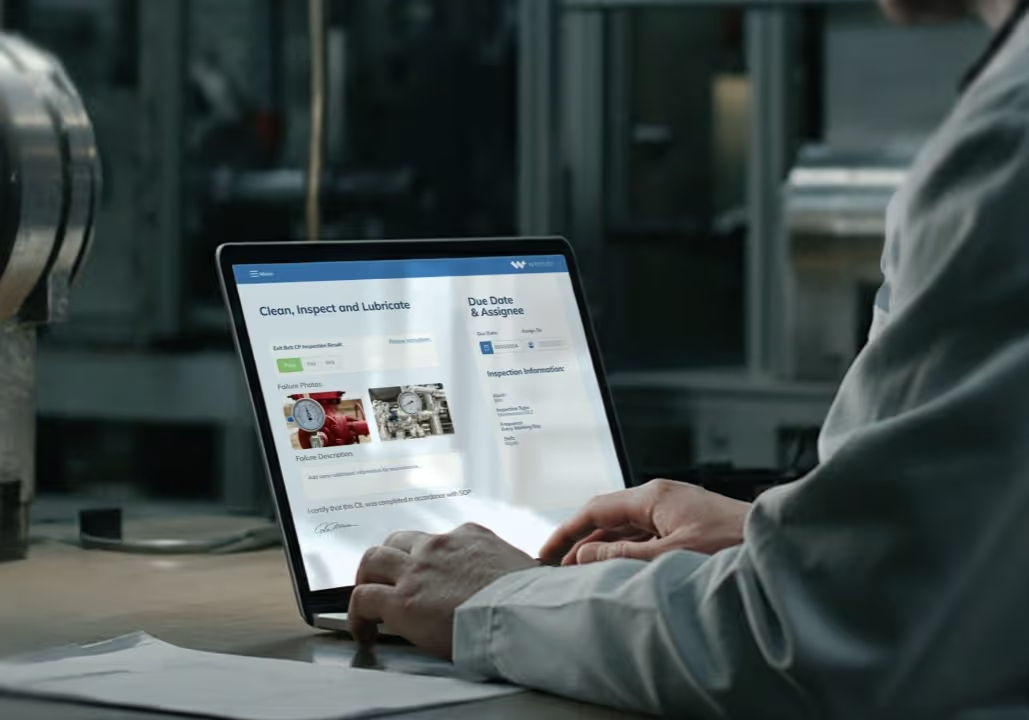
Tracking CIL with Weever’s Connected Worker Platform: Real-Time Monitoring for Manufacturers
Manufacturing industries rely heavily on maintaining equipment efficiency and minimizing downtime to stay competitive. Ensuring that machines are properly cleaned, inspected, and lubricated (CIL) is essential to achieving this goal. Operator-led maintenance plays a key role in managing these tasks, but tracking CIL processes manually can be error-prone, time-consuming, and difficult to manage at scale.
Weever’s Connected Worker Platform offers a solution by digitizing and automating CIL processes, providing real-time monitoring and improving transparency across manufacturing operations. This post explores how Weever’s platform can enhance CIL tracking and help manufacturers optimize their maintenance routines.
Simplifying Real-Time CIL Tracking for Operators
Weever’s Connected Worker Platform is designed with ease of use in mind, allowing operators to manage and track CIL tasks efficiently, even in fast-paced manufacturing environments.
- Intuitive interface: The platform’s user-friendly design makes it simple for operators to access CIL checklists, view assigned tasks, and track their progress in real time.
- CIL training for operators: Weever integrates CIL training for operators directly into the platform, ensuring that frontline workers are well-equipped to follow cleaning standards, inspection routines, and lubrication schedules without extensive onboarding.
Example: A manufacturer in the aerospace industry uses Weever’s Connected Worker Platform to digitize its lubrication schedules, allowing operators to easily track which machines require maintenance and ensuring tasks are completed on time.
Keeping CIL Processes on Track
Automating CIL tasks is essential for ensuring that maintenance is carried out consistently and without delay. Weever’s platform automates the scheduling, assignment, and completion of CIL tasks, reducing the need for manual oversight.
- Automated scheduling: Weever’s platform automatically schedules CIL tasks, such as cleaning, inspections, and lubrication, based on usage or specific time intervals. This prevents critical tasks from being overlooked.
- Real-time action items: Operators receive real-time action items that guide them through the maintenance process, ensuring that CIL tasks are completed on time and in accordance with cleaning standards and CIL checklists.
- Decentralized maintenance: Weever supports decentralized maintenance by automating CIL task assignments across teams and locations, allowing each operator to manage their responsibilities independently while maintaining alignment with company standards.
Example: A semiconductor packaging facility uses Weever to automate CIL tasks for its production line. Operators receive real-time reminders and step-by-step instructions for cleaning and inspecting equipment, helping prevent contamination and equipment failures.
Maintenance with Data-Driven Decision Making
Weever’s platform goes beyond just managing CIL tasks—it also collects valuable data that can help manufacturing managers optimize their maintenance strategies. Real-time reporting and insights allow companies to monitor trends, track compliance, and make informed decisions.
- Data collection: Weever captures data on task completion, equipment performance, and adherence to CIL practices. This data can be used to identify patterns and trends, such as recurring equipment issues or inefficiencies in maintenance routines.
- Real-time reporting: Managers receive real-time updates on the status of CIL tasks, enabling them to quickly intervene if something is missed or delayed. This transparency increases accountability and helps ensure that operators follow CIL SOPs consistently.
- Tracking CIL with connected worker platforms: Weever integrates CIL tracking with connected worker platforms, allowing managers to monitor task completion and compliance across multiple teams and locations.
Example: A plastic manufacturing company uses Weever’s real-time reporting to monitor CIL tasks across multiple production lines. By analyzing trends, the company adjusts its lubrication schedules to improve machine performance and reduce unplanned downtime.
Seamless Implementation for Manufacturing Teams
Implementing a new digital platform for CIL tracking requires careful planning and support. Weever’s rollout methodology ensures that manufacturers can smoothly transition to the Connected Worker Platform without disrupting production schedules.
- Step-by-step implementation: Weever’s phased rollout process ensures that operators and managers can gradually adopt the platform. This minimizes disruption and allows teams to get accustomed to the new system at their own pace.
- Tailored training: Weever provides comprehensive training for operators and managers, ensuring that they understand how to use the platform’s features, such as visual controls for CIL and real-time monitoring.
- Ongoing support: Weever offers continuous support during and after the rollout, ensuring that manufacturing teams can make the most of the platform’s capabilities for tracking CIL tasks and improving maintenance performance.
Example: A state of the art 3D printing manufacturer implements Weever’s Connected Worker Platform in phases, starting with CIL training for operators on a few of its 3D printers before expanding to the entire facility. The step-by-step rollout allows the company to integrate real-time CIL tracking without interrupting daily operations.
Enhancing CIL Processes with Real-Time Monitoring
Tracking CIL processes in real time is essential for maintaining equipment efficiency and preventing breakdowns in manufacturing industries. Weever’s Connected Worker Platform provides manufacturers with the tools they need to digitize and automate CIL tracking, ensuring that tasks are completed consistently and on time.
By simplifying workflows with visual controls, automating task assignments, and providing real-time insights into performance, Weever helps manufacturers optimize their maintenance processes and improve overall equipment reliability. With a seamless rollout methodology and ongoing support, Weever makes it easy for manufacturing teams to adopt real-time CIL tracking and ensure that operator-led maintenance is carried out effectively.
For manufacturers looking to enhance transparency, accountability, and efficiency in their CIL processes, Weever’s Connected Worker Platform is the ideal solution for success.
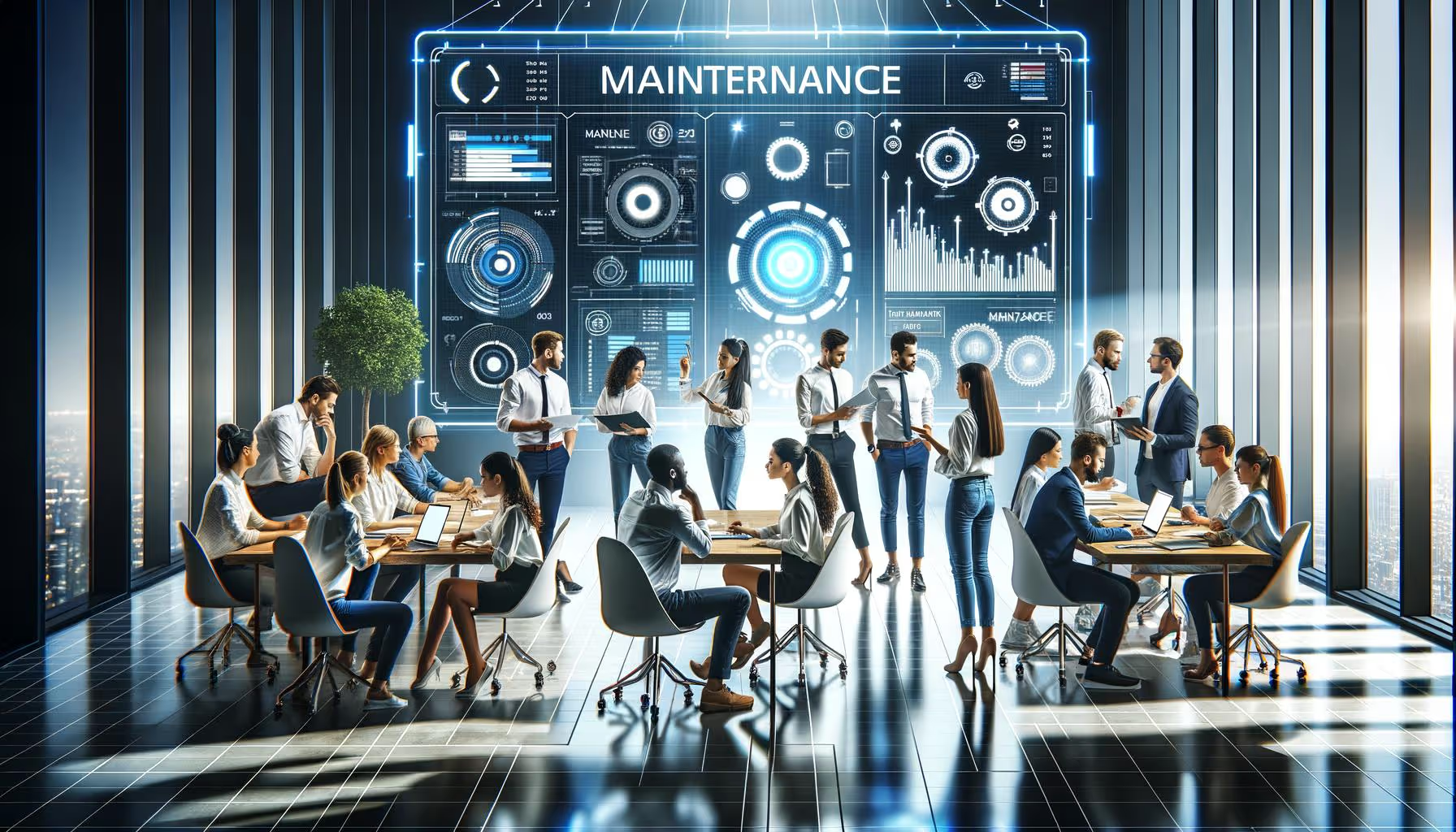
Designing an Effective Autonomous Maintenance Board
Autonomous maintenance boards are powerful tools for enhancing equipment reliability and operator engagement. These visual management systems empower frontline workers to take ownership of routine maintenance tasks, reducing downtime and improving overall equipment effectiveness.
At Weever Apps, we've seen firsthand how well-designed boards can transform maintenance practices. In this post, we'll explore the key components, design best practices, and implementation strategies for creating an effective autonomous maintenance board.
What Makes an Effective Autonomous Maintenance Board?
An effective autonomous maintenance board serves as the cornerstone of a successful maintenance strategy. It acts as a visual hub that centralizes critical information, empowering operators to take charge of equipment upkeep. Let's explore the essential components that make these boards truly impactful.
Visual Management at a Glance
Visual management plays a pivotal role in communicating complex information quickly. A well-designed board uses clear, concise visuals such as equipment diagrams, color-coded status indicators, or QR codes linking to detailed maintenance procedures. The Aberdeen Group reports that companies using visual management tools experience a 23% increase in overall equipment effectiveness (OEE).
Equipment-Specific Details
Each piece of machinery has unique characteristics, and your board should reflect this. Include detailed information about each machine's maintenance needs, common issues, and troubleshooting steps. This specificity helps operators address problems confidently as they arise. A Plant Engineering survey found that 70% of manufacturers reported improved equipment reliability after implementing detailed, equipment-specific maintenance protocols.
Performance Metrics That Matter
Your board should prominently display key performance indicators (KPIs) that directly impact your operations. These might include metrics like mean time between failure (MTBF) and planned maintenance tasks. Tracking the right KPIs can lead to improved maintenance practices and overall operational efficiency.
Clear Maintenance Schedules and Tasks
A well-organized schedule keeps maintenance on track. Your board should clearly outline daily, weekly, and monthly tasks, making it easy for operators to know what needs to be done and when. Include checklists for routine inspections and space for operators to sign off on completed tasks. This accountability can lead to a significant reduction in unplanned downtime (up to 30-50%, according to McKinsey & Company).
Interactive Elements for Engagement
To maximize the effectiveness of your autonomous maintenance board, consider incorporating interactive elements. These could include magnetic task cards, dry-erase sections for real-time updates, or digital displays that sync with maintenance software (such as Weever's Connected Worker platform). Interactive components encourage active participation and keep the board dynamic and relevant.

The next step in creating an effective autonomous maintenance board involves implementing best practices for board design and layout. These practices ensure that your board not only contains the right information but presents it in a way that's intuitive and easy to use.
How to Design an Effective Maintenance Board
Designing an effective autonomous maintenance board requires careful consideration of visual elements, organization, and user interaction. A well-designed board communicates essential information clearly and encourages active engagement from operators. Here are key strategies to enhance your board's effectiveness:
Clear and Consistent Labeling
Clear and consistent labeling plays a crucial role in workplace safety procedures and preventive maintenance across various industries. Implementing a standardized labeling system helps operators quickly locate information, reducing confusion and improving efficiency. This clarity is essential not only for maintenance tasks but also for overall workplace safety.
Strategic Color Coding
Implement a color-coding system to enhance visual communication. For example, use green for completed tasks, yellow for in-progress items, and red for urgent issues. This visual hierarchy allows operators to assess priorities at a glance. The Color Marketing Group states that color-coded information processes 60% faster than text alone, making it a powerful tool for quick decision-making on the shop floor.
Space for Dynamic Updates
Allocate ample space on your board for real-time updates and notes. This could include a section for daily production goals, an area for reporting unexpected issues, or a space for sharing best practices. Make this area easily accessible and encourage operators to use it regularly. Companies that implement such dynamic communication spaces report a 25% increase in problem-solving efficiency (according to a survey by the Manufacturing Enterprise Solutions Association).
Interactive Elements
Incorporate interactive elements to maximize engagement. These could include magnetic task cards, dry-erase sections for real-time updates, or digital displays that sync with maintenance software. Interactive components encourage active participation and keep the board dynamic and relevant. Consider integrating QR codes that link to detailed maintenance procedures or training videos, further enhancing the board's utility.
Digital Integration
While physical boards are valuable, digital integration can take your autonomous maintenance program to new heights. Platforms like Weever Apps offer real-time updates and seamless integration with existing systems. This combination of physical and digital tools creates a powerful hub for autonomous maintenance that drives continuous improvement and operational excellence.

The next step in creating an effective autonomous maintenance board involves implementing these design principles and ensuring proper usage among your team. Let's explore how to train operators, establish update procedures, and encourage ongoing feedback to maximize the impact of your newly designed board.
How to Implement and Maintain Your Autonomous Maintenance Board
Train Your Team for Success
The implementation of your autonomous maintenance board starts with comprehensive training. This isn't a one-off event but an ongoing process. Begin with hands-on sessions where operators physically interact with the board. Show them how to update statuses, log issues, and access digital resources through QR codes or integrated tablets.
Establish a Consistent Update Schedule
Consistency is key when it comes to maintaining your autonomous maintenance board. Set a clear schedule for updates and adhere to it strictly. Daily stand-up meetings in front of the board can effectively ensure it stays current and relevant.

Consider assigning rotating responsibilities for board updates. This not only distributes the workload but also increases ownership across the team.
Encourage Operator Feedback
Your operators possess invaluable insights that can drive significant improvements in your maintenance processes. Create multiple channels for feedback – suggestion boxes, digital forms, or dedicated time during team meetings.
To maximize engagement, try implementing a reward system for suggestions that lead to measurable improvements.
Leverage Technology for Real-Time Updates
While physical boards are powerful visual tools, integrating digital systems can enhance your autonomous maintenance program. Digital platforms allow for real-time updates that sync across devices, ensuring everyone has the most current information at their fingertips.
The key is to find a balance – use the physical board as a central hub, but use digital tools to improve speed and accessibility of information.
Monitor and Adapt
Implementing and maintaining an effective autonomous maintenance board is an iterative process. It requires commitment, consistency, and a willingness to adapt based on feedback and results. Regularly assess the board's effectiveness (e.g., quarterly reviews) and make necessary adjustments to ensure it continues to meet your team's evolving needs.
Autonomous maintenance enhances equipment reliability and longevity, minimizing unexpected breakdowns and production disruptions. It also contributes to overall operational efficiency.
Final Thoughts
An autonomous maintenance board catalyzes operational excellence, improving equipment reliability and team engagement. It centralizes critical information and empowers frontline workers, fostering a culture of proactive maintenance and continuous improvement. The benefits include reduced downtime, increased equipment lifespan, enhanced operator skills, and improved safety, all contributing to substantial operational efficiency gains.

The true power of an autonomous maintenance board lies in its ability to drive ongoing improvement. Teams uncover new insights, identify recurring issues, and develop innovative solutions through daily interactions. Organizations should assess their current maintenance practices, engage frontline workers in the design process, and invest in comprehensive training to maximize adoption and effectiveness.
Weever Apps understands the transformative power of well-designed autonomous maintenance programs. Our Connected Worker platform integrates with physical boards, providing real-time updates, automated workflows, and analytics capabilities. This combination of visual impact and digital efficiency can elevate autonomous maintenance efforts, driving sustainable improvements in productivity and operational excellence.
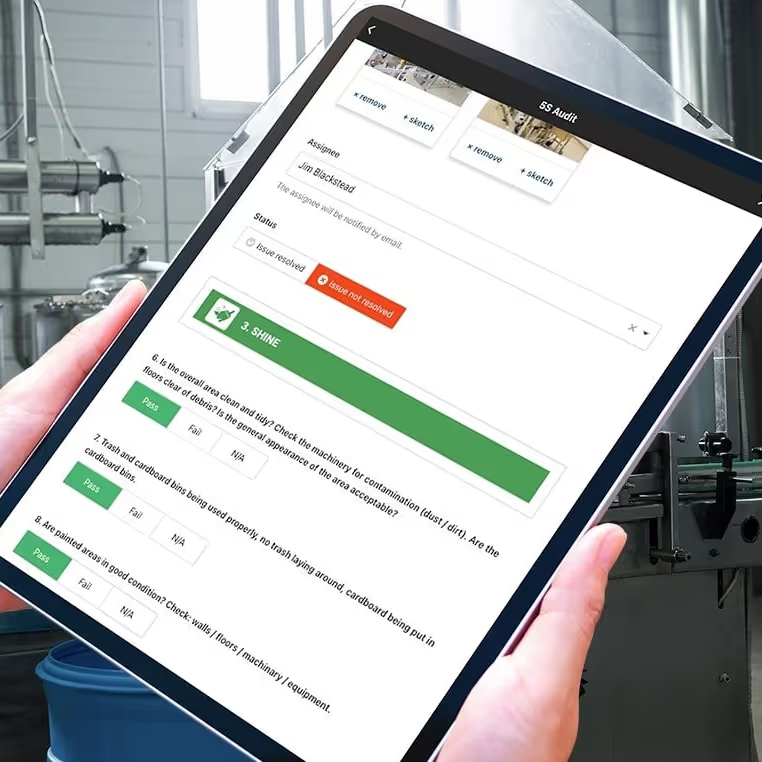
How Weever Automates CIL Tasks to Streamline Maintenance Efficiency
Today, maximizing efficiency in manufacturing is key to maintaining a competitive edge. One area where inefficiencies often arise is in the management of Cleaning, Inspection, and Lubrication (CIL) tasks, which are crucial to ensuring optimal equipment performance. Traditionally, these tasks have been handled manually by operators, leading to inconsistencies, delays, and potential errors. But what if there was a way to automate these manual processes, ensuring standardized procedures and real-time visibility across the organization? This is where Weever's platform comes in. Let's explore how Weever can help streamline maintenance processes by automating CIL tasks and maximizing workflow efficiency.
The Importance of Streamlined CIL Processes in Maintenance
Effective CIL practices are essential for keeping machinery in top condition and preventing costly downtime. However, when CIL tasks are performed manually, it opens the door to inefficiencies and inaccuracies. Standardizing and digitizing these tasks can bring major benefits, including better time management, increased accountability, and improved machine performance. But how can this be achieved in practice?
Weever's Role in Automating CIL Tasks
Weever's platform offers a comprehensive solution that automates manual CIL tasks, making maintenance processes more efficient, organized, and transparent. Below, we'll explore how Weever's features address the common pain points associated with manual CIL tasks and present a clear path to workflow optimization.
1. Simplifying the Process for Frontline Workers
Weever's user-friendly interface is designed with frontline workers in mind, allowing them to easily automate tasks that were once manual, such as cleaning standards, inspection routines, and lubrication schedules. With Weever, operators can access digitized instructions and checklists, reducing the complexity of CIL tasks and making it easier to adhere to standard operating procedures (SOPs).
Operators often struggle to keep up with manual CIL tasks, especially in fast-moving environments where time is of the essence. Weever simplifies the process by providing standardized CIL checklists (CIL SOPs), visual controls, and easy access to digitized instructions. This helps operators perform tasks consistently and accurately, while ensuring they don't miss any critical steps in the CIL process.
By digitizing CIL instructions and providing connected platforms, Weever empowers frontline workers to carry out decentralized maintenance more effectively, reducing dependency on centralized maintenance teams and allowing tasks to be completed more quickly and efficiently.
2. Ensuring Accountability
One of the most powerful aspects of Weever's platform is its ability to automate workflows. This feature allows for seamless task assignment and scheduling, ensuring that operators know exactly what needs to be done and when. For example, Weever can automatically assign CIL action items, such as cleaning or lubrication tasks, to specific operators, with deadlines clearly outlined to ensure timely completion.
This level of automation eliminates the guesswork often associated with manual task management. Operators are held accountable for their tasks, while supervisors can easily track progress and ensure that no CIL task is left incomplete. This is especially important for maintaining a high standard of cleanliness, inspection routines, and lubrication schedules.
In addition, by using Weever's automated workflows, organizations can easily implement standardized CIL practices, ensuring that each operator follows the same protocols, no matter the shift or day. This consistency helps prevent machine breakdowns and prolongs equipment life.
3. Leveraging Data for Better Decision-Making
Weever's platform goes beyond task automation by providing valuable insights and trends derived from the data collected during the CIL process. By tracking CIL tasks and generating reports, Weever enables managers to monitor key performance indicators (KPIs) related to maintenance efficiency.
For instance, managers can track how often specific machines require cleaning or lubrication and adjust maintenance schedules accordingly. They can also identify bottlenecks in the workflow and pinpoint areas where improvements can be made.
By analyzing trends in maintenance data, organizations can adopt a preventive maintenance strategy, addressing potential issues before they lead to costly machine downtime. This proactive approach helps optimize overall workflow efficiency and reduces operational disruptions.
4. Increasing Transparency and Accountability
Transparency is crucial for any maintenance program, and Weever's real-time reporting feature ensures that everyone stays on the same page. Managers can instantly access reports on CIL task completion, giving them visibility into how well tasks are being executed and whether any delays or issues have arisen.
Weever's connected worker platform allows operators to update task statuses in real-time, ensuring that managers are always informed about the progress of ongoing maintenance activities. This level of transparency fosters greater accountability among frontline workers and reduces the likelihood of missed tasks or miscommunication.
With real-time reporting, organizations can also identify trends, such as recurring machine issues or operator delays, and take corrective action before small problems escalate into larger ones.
5. Ensuring Seamless Implementation of Automated CIL Workflows
Implementing a new system can be challenging, especially in large organizations with many moving parts. Weever's phased rollout methodology ensures a smooth transition from manual CIL processes to fully automated workflows.
Weever's team provides comprehensive training to ensure that operators and managers alike are comfortable using the platform. By rolling out the system in phases, Weever helps teams gradually adapt to the new processes without overwhelming them. This approach ensures that any issues are identified and addressed early in the implementation process, making it easier for the organization to fully embrace the new system.
Additionally, Weever's support team is available throughout the rollout process, providing ongoing assistance to ensure a seamless transition. This commitment to customer success helps organizations implement Weever's platform confidently, knowing that they will have the support they need to get the most out of the system.
Elevating Maintenance Efficiency with Weever
In an increasingly competitive manufacturing landscape, organizations cannot afford to let inefficiencies in CIL processes slow them down. By automating manual CIL tasks, Weever offers a powerful solution that improves maintenance workflows, enhances operator accountability, and provides valuable insights for continuous improvement. From ease of use to real-time reporting, Weever's platform is designed to streamline maintenance processes and drive operational efficiency.
Don't let manual CIL tasks hold your organization back. Discover how Weever's platform can help automate your maintenance processes and improve workflow efficiency today. Schedule a demo with Weever now and take the first step towards optimizing your maintenance operations.

Top Autonomous Maintenance Training Resources
Autonomous maintenance is a cornerstone of modern manufacturing efficiency. At Weever Apps, we've seen firsthand how proper training can transform production floors and boost productivity.
This blog post will guide you through the best autonomous maintenance training materials available today. From online courses to essential books, we'll cover resources that can help your team master this critical skill set.
Key Elements of Autonomous Maintenance Training
Effective autonomous maintenance training consists of several critical components that work together to create a robust, efficient system. This training empowers operators with the skills and knowledge needed to take ownership of their equipment and contribute actively to its upkeep.
Mastering TPM Principles
Total Productive Maintenance (TPM) forms the foundation of autonomous maintenance. Training programs must cover TPM concepts thoroughly, emphasizing how they apply to daily operations. TPM is a Japanese approach that aims to maximize equipment effectiveness through the involvement of all employees. This significant improvement underscores the importance of a solid TPM understanding.
Hands-On Equipment Care Skills
Practical skills for equipment care are essential. Training should include hands-on sessions where operators learn to perform basic maintenance tasks, identify early signs of wear, and make minor repairs.
Standardized Procedures
Consistent cleaning and inspection procedures across shifts and departments are vital. Training should cover the creation and use of visual aids, checklists, and standard operating procedures (SOPs).
Fostering a Culture of Improvement
Creating a culture of continuous improvement and ownership is perhaps the most challenging yet rewarding aspect of autonomous maintenance training. This involves teaching problem-solving techniques, encouraging proactive behavior, and recognizing improvement efforts.
Leveraging Digital Tools
Modern autonomous maintenance training incorporates digital tools to enhance learning and implementation. These tools (such as mobile apps and cloud-based platforms) streamline the creation of standardized procedures, facilitate real-time data collection, and provide instant access to critical information. The use of digital solutions in training programs can significantly accelerate the adoption of autonomous maintenance practices and improve overall operational efficiency.

As we explore the various training resources available for autonomous maintenance, it's important to consider how these key elements are addressed in each offering. Let's now turn our attention to the online courses and certifications that can help your team master these essential skills.
Online Training for Autonomous Maintenance
The digital age has revolutionized learning, making online courses and certifications an excellent choice for mastering autonomous maintenance principles. These programs offer flexibility and accessibility, catering to various skill levels and providing valuable insights into effective maintenance strategies.
Comprehensive TPM Courses
Udemy's "Autonomous Maintenance in TPM" course offers a thorough exploration of Total Productive Maintenance principles. This course covers TPM fundamentals and provides practical examples of autonomous maintenance implementation in real-world scenarios. With over 5,000 enrolled students, it has garnered positive feedback for its clear explanations and actionable content.
Industry-Specific Training
eLearning Industry's "Introduction to Autonomous Maintenance" program targets manufacturing environments specifically. This course focuses on developing operator skills for equipment care and minor repairs (crucial for reducing downtime and improving overall equipment effectiveness).
Certification Programs
Reliable Plant's "Autonomous Maintenance Certification" course provides a rigorous option for professionals seeking to validate their skills. This program covers theoretical aspects and includes practical assessments to ensure participants can apply their knowledge effectively.
Practical Implementation Strategies
LinkedIn Learning's "Implementing Autonomous Maintenance" series offers a practical approach to rolling out autonomous maintenance programs. This series particularly benefits managers and team leaders responsible for driving organizational change. It covers topics such as creating standardized procedures and fostering a culture of continuous improvement.

While these online resources provide valuable knowledge, practical application remains key to success in autonomous maintenance. Digital platforms like Weever Apps support the implementation of autonomous maintenance practices, helping translate learned concepts into actionable workflows. Such tools ensure that the knowledge gained from these courses translates effectively to the shop floor.
As we explore the wealth of online training options, it's important to consider other valuable resources that can enhance your autonomous maintenance knowledge. Let's now turn our attention to the essential books and publications that serve as cornerstones in this field.
Essential Books for Autonomous Maintenance Mastery
Operator-Focused Guidance
The Japan Institute of Plant Maintenance's "TPM for Every Operator" serves as an excellent starting point for frontline workers. This book breaks down complex TPM concepts into digestible, actionable steps that operators can apply immediately on the shop floor. It emphasizes visual management, providing numerous examples of before-and-after scenarios (which illustrate the impact of effective autonomous maintenance practices).
Systematic Implementation Approach
Yoshihito Fukui's "Autonomous Maintenance in Seven Steps" offers a structured methodology for rolling out an autonomous maintenance program. The book explains each step thoroughly with real-world examples, making it easier for maintenance teams to adapt the principles to their specific environments. It includes practical worksheets and checklists that facilities can implement directly, which saves valuable time in program development.
Facilitating Organizational Change
Terry Wireman's "The Autonomous Maintenance Facilitator's Guide" proves indispensable for those who lead the charge in implementing autonomous maintenance. It addresses the often-overlooked human aspect of maintenance transformation, providing strategies to overcome resistance to change and foster a culture of continuous improvement. The guide includes case studies from various industries (offering insights into successful implementation strategies and common pitfalls to avoid).
Industry-Specific Applications
Tokutaro Suzuki's "TPM in Process Industries" tailors autonomous maintenance principles to the unique challenges faced in continuous process environments. This book provides particular value for industries such as chemical processing, food production, and pharmaceuticals. It offers detailed guidance on adapting TPM concepts to environments where traditional equipment-focused approaches may fall short.
Digital Integration Resources
As organizations implement the principles outlined in these books, they should consider how digital tools can enhance their autonomous maintenance programs. Platforms like Weever Apps align with these foundational concepts and provide digital solutions that bridge the gap between theory and practice. Such tools support the creation of standardized procedures, facilitate real-time data collection, and provide instant access to critical information, accelerating the adoption of autonomous maintenance practices.

Final Thoughts
Autonomous maintenance stands as a cornerstone of modern manufacturing excellence. Proper training unlocks its full potential, and the resources explored in this post offer a comprehensive toolkit for organizations. The true power of autonomous maintenance lies in the seamless integration of theoretical knowledge with hands-on application.

Teams can develop skills to identify and address equipment issues proactively through autonomous maintenance training materials. This approach reduces downtime and fosters a culture of ownership and continuous improvement among operators. Regular training ensures that your team remains at the forefront of maintenance excellence as technology advances and best practices evolve.
Digital tools play a vital role in bridging the gap between theory and practice. Weever Apps offers a Connected Worker platform that aligns with autonomous maintenance principles. It streamlines data capture, improves cross-team visibility, and ensures easy access to critical information from any device (enhancing the implementation of autonomous maintenance programs).

Mastering Autonomous Maintenance: PPT Guide
At Weever Apps, we've seen firsthand how autonomous maintenance revolutionizes manufacturing processes. This approach empowers operators to take charge of equipment care, boosting efficiency and reducing downtime.
In this guide, we'll walk you through the essentials of autonomous maintenance, from implementation steps to cutting-edge tools. We'll also share practical tips for creating an effective autonomous maintenance PPT presentation to help you roll out this strategy in your organization.
What is Autonomous Maintenance?
Revolutionizing Equipment Care
Autonomous maintenance transforms manufacturing by placing equipment care directly in the hands of operators. This approach empowers machine operators to take responsibility for the routine maintenance of the equipment they use.
From Reactive to Proactive Maintenance
Traditional maintenance models often lead to a reactive stance, where operators alert maintenance teams only when issues arise. This approach increases downtime and repair costs. AM changes this paradigm, encouraging operators to engage with their equipment daily.
Knowledge and Skills Empower Operators
AM prioritizes continuous learning. Operators don't just clean and lubricate; they receive training to understand their machines' inner workings. This knowledge enables them to detect subtle changes that might indicate future issues.
Boosting Manufacturing Efficiency
AM benefits extend beyond breakdown prevention. Operator involvement in maintenance often improves product quality and production speed.
Moreover, AM can significantly reduce maintenance costs over time.
Digital Tools Enhance AM Implementation
Digital platforms support AM initiatives by providing tools for faster issue resolution and improved cross-team communication. Digital forms and real-time dashboards facilitate maintenance activity logging and progress tracking across the plant floor.
Overcoming Implementation Challenges
Implementing AM requires a cultural shift and initial investment in training. However, the long-term benefits in equipment reliability, cost savings, and employee engagement make it a worthwhile endeavor for forward-thinking manufacturing companies.

As we move forward, let's explore the step-by-step process of implementing Autonomous Maintenance in your organization.
How to Implement Autonomous Maintenance
Start with a Deep Clean
The journey to Autonomous Maintenance (AM) begins with a thorough cleaning of all equipment. This step serves as a critical inspection process, not just a cosmetic improvement. Operators should document every abnormality they find during cleaning. A study by the Japan Institute of Plant Maintenance revealed that it will be impossible to eradicate and manage degradation if team efforts are not concentrated on recognizing and addressing issues discovered during cleaning.

Use digital forms to record findings during this phase. This creates a baseline for future improvements and helps prioritize maintenance tasks.
Tackle Contamination at the Source
After equipment cleaning, focus on preventing contamination. Identify and eliminate sources of dirt, dust, and debris. This might involve installing covers, improving seals, or redesigning processes to reduce waste.
A food processing plant reduced contamination-related downtime by implementing targeted solutions based on operator feedback during this stage.
Establish Clear Maintenance Standards
Develop straightforward, visual standards for cleaning, inspection, and basic maintenance tasks. Make these standards easily accessible to operators. Digital platforms can host these standards, making updates and access simple.
Include step-by-step guides, photos, and videos in your standards. This ensures consistency across shifts and reduces the learning curve for new operators.
Implement Regular Inspections
Set up a schedule for general inspections. These should be more comprehensive than daily checks. Train operators to use all their senses - sight, sound, smell, and touch - to detect potential issues.
Use digital checklists to guide these inspections. This ensures nothing is missed and creates a digital trail for compliance and analysis. Companies using digital inspection tools report faster completion times compared to paper-based systems.
Continuous Skill Development
Ongoing training is essential for AM success. Start with basic maintenance skills and gradually increase complexity. Use a mix of classroom sessions, hands-on practice, and digital learning modules.
Create a knowledge base where operators can share insights and solutions. This fosters a culture of continuous improvement and problem-solving.
Implementing AM requires commitment from all levels of the organization. The payoff in terms of equipment reliability, reduced downtime, and engaged employees is substantial. As we move forward, let's explore the tools and technologies that can enhance your Autonomous Maintenance program.
Tech Tools for Autonomous Maintenance
Digital Checklists and Mobile Apps
Paper-based maintenance logs are obsolete. Digital checklists and mobile apps have transformed how operators conduct inspections and record maintenance activities. These tools offer real-time data capture, instant information sharing, and standardized processes across teams.

Weever's Connected Worker platform provides intuitive digital forms for easy data capture during maintenance rounds. This ensures consistency in inspections and allows for quick identification of trends or recurring issues. The platform's automated workflows also speed up issue resolution, reducing equipment downtime.
Plant Engineering magazine reported that companies using mobile maintenance apps experienced a 20% increase in productivity compared to those using traditional methods. This boost results from reduced paperwork, faster data entry, and improved communication between operators and maintenance teams.
Smart Sensors and IoT Integration
The Internet of Things (IoT) has introduced a new dimension to equipment monitoring. Smart sensors attached to machinery continuously collect data on various parameters (temperature, vibration, pressure). This real-time monitoring allows for early detection of potential issues before they escalate into major problems.
IoT for predictive maintenance improves equipment reliability, reduces downtime, and optimizes maintenance operations across industries. While implementing IoT sensors requires an initial investment, the long-term benefits in reduced downtime and maintenance costs are substantial.
When integrating IoT sensors, focus on critical equipment first. Start with machines that have the highest impact on production or those with a history of frequent breakdowns. This targeted approach ensures maximum return on investment.
Data Analytics for Predictive Maintenance
The wealth of data collected through digital tools and IoT sensors is only valuable if it can be analyzed effectively. Advanced analytics platforms use machine learning algorithms to identify patterns and predict potential equipment failures.
These predictive maintenance systems can forecast when a piece of equipment is likely to fail, allowing maintenance teams to schedule repairs during planned downtime. This proactive approach significantly reduces unexpected breakdowns and associated costs.
GE Digital revealed that a major airline saved $100 million annually by implementing predictive maintenance on their fleet. While the scale might differ, similar principles apply to manufacturing equipment.
When implementing predictive maintenance, start small. Choose one critical piece of equipment and gather historical data on its performance and maintenance history. Use this data to build and refine your predictive model before scaling to other machines.
Augmented Reality for Maintenance Guidance
Augmented Reality (AR) technology enhances maintenance procedures by overlaying digital information onto the physical world. AR can provide step-by-step visual instructions, highlight specific components, and offer real-time guidance to operators during maintenance tasks.
AR tools can significantly reduce errors and improve the efficiency of maintenance procedures. They also serve as an effective training tool, allowing new operators to learn complex maintenance tasks more quickly.
Final Thoughts
Autonomous maintenance revolutionizes manufacturing by empowering operators to care for their equipment. This approach reduces downtime, cuts costs, and fosters a culture of continuous improvement. Companies that overcome implementation challenges often reap substantial long-term benefits in operational efficiency and employee engagement.

Technological advancements will further enhance autonomous maintenance practices. Artificial intelligence, augmented reality, and digital twins will provide unprecedented insights into equipment performance and maintenance needs. These tools will make complex tasks more accessible to operators and improve predictive maintenance capabilities.
Organizations can leverage Weever's Connected Worker platform to support their autonomous maintenance initiatives. The platform offers digital forms for inspections and real-time dashboards for monitoring activities. When creating an autonomous maintenance PPT presentation, emphasize benefits, showcase supporting technologies, and outline a clear implementation path (to drive efficiency and innovation in your manufacturing operations).

TPM Autonomous Maintenance: Key Steps Revealed
TPM Autonomous Maintenance is a game-changing approach to equipment care that empowers operators to take charge of their machinery. At Weever Apps, we've seen firsthand how this strategy can dramatically reduce downtime and boost productivity.
In this post, we'll reveal the key TPM Autonomous Maintenance steps that can transform your maintenance processes. Get ready to learn how you can implement these practices and reap the benefits for your organization.
What is TPM Autonomous Maintenance?
The Core of Operator-Led Equipment Care
TPM Autonomous Maintenance puts basic maintenance responsibilities directly into the hands of machine operators. This strategy transforms equipment management and creates a culture of ownership on the factory floor. Operators perform daily checks, cleanings, and minor repairs instead of waiting for the maintenance team to address issues. This proactive approach catches problems early, often before they escalate into costly breakdowns.
Quantifiable Impact on Performance
A McKinsey & Company study revealed that predictive maintenance techniques can cut machine downtime by 30 to 50 percent and extend machine life by 20 to 40 percent. These figures underscore the substantial effect that operator-led maintenance can have on a company's bottom line.
Reshaping Workplace Dynamics
TPM Autonomous Maintenance does more than improve equipment performance-it fundamentally shifts workplace culture. Operators become more engaged, develop a deeper understanding of their machines, and take pride in equipment upkeep. The Manufacturing Institute found that companies investing in comprehensive operator training experienced a 70% reduction in equipment-related downtime, highlighting the importance of equipping operators with effective maintenance skills.
A Pillar of Total Productive Maintenance
Autonomous Maintenance is a key component of the larger Total Productive Maintenance (TPM) framework. It works in conjunction with other TPM pillars (such as Planned Maintenance and Focused Improvement) to create a comprehensive maintenance strategy. As part of a full TPM program, Autonomous Maintenance contributes to significant improvements in Overall Equipment Effectiveness (OEE). World-class OEE benchmarks sit at around 85%, while typical manufacturers without TPM initiatives often hover around 40%-a gap that represents a massive opportunity for improvement.
Practical Implementation Steps
To implement Autonomous Maintenance effectively, companies should:
- Start with thorough equipment cleaning, which often reveals hidden issues and serves as a diagnostic tool.
- Use digital forms for real-time problem documentation to ensure comprehensive issue identification and reporting.
- Focus on contamination prevention by implementing measures like sealing leaks and improving filtration systems.
- Develop standardized procedures for cleaning and lubrication to enhance task consistency and minimize errors.
- Train operators on inspection tasks, empowering them to identify issues (such as loose parts or unusual noises) and facilitate better maintenance decisions.

These steps lay a strong foundation for a successful Autonomous Maintenance program. The ultimate goal is to create a system where operators act as the first line of defense against equipment failures, working in harmony with maintenance teams to keep production running smoothly.
Now that we understand the fundamentals of TPM Autonomous Maintenance, let's explore the key steps for its implementation in more detail.
How to Implement Autonomous Maintenance
Implementing Autonomous Maintenance requires a structured approach and unwavering commitment. This section outlines the key steps to successfully integrate this strategy into your operations.
Start with a Clean Slate
The journey begins with a thorough equipment cleaning. This step serves as a critical diagnostic tool. According to one study conducted by Rabinowicz of M.I.T., internal surface degradation is the cause of over 70% of equipment failures. During this initial cleaning, operators often uncover hidden issues like loose bolts, small leaks, or worn components.

A digital checklist system enhances this process. It allows operators to document findings in real-time, ensuring comprehensive issue capture.
Tackle Contamination at the Source
After the initial clean, focus shifts to eliminating contamination sources. This step maintains equipment condition and reduces future cleaning time.
Practical measures include:
- Sealing leaks in hydraulic systems
- Upgrading filtration systems
- Installing protective covers on exposed moving parts
Establish Clear Standards
Creating standardized procedures for cleaning and lubrication comes next. These standards ensure consistency across shifts and reduce variability in maintenance quality.
Develop visual aids and step-by-step guides for each piece of equipment. Include details like cleaning frequency, lubricant types, and application points. Make these guides easily accessible through digital platforms for quick reference.
Empower Through Training and Inspection
Training operators to conduct general inspections forms a critical step. This involves teaching them to identify early signs of wear, unusual noises, or performance changes.
Start with basic inspection tasks and gradually increase complexity as operators gain confidence. Use augmented reality tools for on-the-job guidance.
As operators become more proficient, transition to autonomous inspections where they take full responsibility for routine checks without direct supervision. This fosters a sense of ownership and pride in equipment care.
Organize for Efficiency
Standardizing workplace organization proves essential for sustaining Autonomous Maintenance. Implement 5S principles (Sort, Set in Order, Shine, Standardize, Sustain) to create an efficient work environment.
Use visual management techniques like color-coding and shadow boards to make tool and supply locations intuitive. This reduces time wasted searching for items and ensures everything returns to its proper place.
With these key steps in place, organizations can build a strong foundation for their Autonomous Maintenance program. The next section explores the tools and technologies that can further enhance these efforts and drive even greater results.
Tech Tools for Autonomous Maintenance
Digital Checklists: The Foundation of Modern Maintenance
Paper-based checklists are obsolete. Digital checklists have become the cornerstone of effective Autonomous Maintenance programs. These tools enable operators to record inspections, flag issues, and track maintenance tasks in real-time.

A study by the Aberdeen Group found that organizations using digital checklists experience 23% fewer unplanned downtime events compared to those relying on paper-based systems. This reduction translates directly to improved productivity and cost savings.
IoT Sensors: The Eyes and Ears of Your Equipment
Internet of Things (IoT) sensors transform equipment monitoring and maintenance. These tiny devices collect data on various parameters (such as temperature, vibration, and pressure). This information enables predictive maintenance strategies, catching potential issues before they escalate into costly breakdowns.
A report by McKinsey states that predictive maintenance can reduce machine downtime by up to 50% and increase machine life by 20% to 40%. The impact on the bottom line is substantial, with maintenance costs potentially decreasing by 10% to 40%.
Augmented Reality: Expert Knowledge on the Shop Floor
Augmented Reality (AR) bridges the skills gap in maintenance operations. AR-enabled devices allow less experienced operators to receive real-time guidance from remote experts, overlaying instructions directly onto their field of view.
CMMS: The Brain of Your Maintenance Operation
Computerized Maintenance Management Systems (CMMS) serve as the central hub for all maintenance activities. These systems schedule tasks, track inventory, manage work orders, and generate reports, providing a holistic view of maintenance operations.
A survey by Plant Engineering found that 53% of facilities using CMMS reported improved maintenance scheduling, while 45% saw reductions in equipment downtime. The right CMMS can significantly improve organizations implementing Autonomous Maintenance.
Choosing the Right Tools
Implementing these technologies requires careful planning and integration. It's important to select tools that complement each other and align with your specific maintenance goals. Technology should enhance, not replace, the skills and judgment of your operators.
When considering digital solutions for Autonomous Maintenance, Weever Apps stands out as a top choice. Its Connected Worker platform offers intuitive digital forms, real-time dashboards, and automated workflows, making it an excellent option for organizations looking to optimize their maintenance operations.
Final Thoughts
TPM Autonomous Maintenance transforms equipment care and boosts operational efficiency. Organizations can reduce downtime, extend equipment life, and improve productivity by following key TPM Autonomous Maintenance steps. These steps include thorough equipment cleaning, tackling contamination sources, establishing clear standards, and providing comprehensive training.

Technology enhances TPM Autonomous Maintenance efforts through digital checklists, IoT sensors, augmented reality tools, and Computerized Maintenance Management Systems (CMMS). These tools streamline maintenance processes and enable predictive strategies to prevent costly breakdowns. Organizations can optimize their maintenance programs with solutions like Weever Apps' Connected Worker platform.
TPM Autonomous Maintenance offers significant advantages for organizations of all sizes. It reduces downtime, extends equipment life, improves product quality, and increases employee engagement. Organizations can transform their maintenance processes and drive lasting improvements in operations by implementing TPM Autonomous Maintenance steps and leveraging the right technological tools.
Decentralized Maintenance: Boosting Efficiency with Weever's Customizable Solutions
Efficient maintenance practices are critical to ensuring smooth operations, minimizing equipment downtime, and preventing costly breakdowns. Decentralized maintenance is becoming an increasingly popular strategy for improving maintenance efficiency by empowering frontline workers to take responsibility for routine tasks such as cleaning, inspecting, and lubricating equipment. This method, also referred to as operator-led maintenance, allows teams across various locations to manage their equipment independently while following standardized processes.
Weever's customizable solutions provide the tools needed to streamline preventive maintenance by operators and enhance frontline worker maintenance practices. In this blog, we will explore how decentralized maintenance can boost efficiency across industries, supported by Weever's flexible platform.
How Can Decentralized Maintenance Boost Efficiency Using Weever's Customizable Solutions?
By decentralizing maintenance processes and giving operators more control over routine tasks, companies can improve productivity, reduce downtime, and maintain consistency across locations. Here's how Weever's customizable solutions support decentralized maintenance:
Empowering Teams with a Customizable Platform
Weever's customizable platform makes it easy for decentralized teams across different locations or departments to adopt and manage maintenance practices without requiring extensive technical expertise.
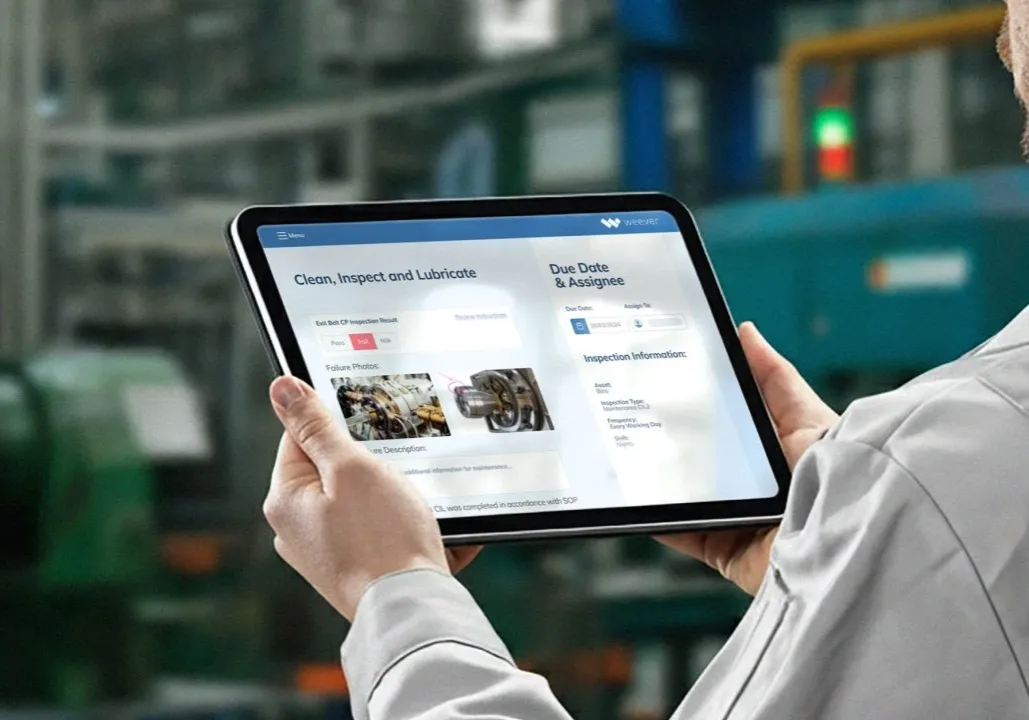
- User-friendly interface: Weever's platform is designed to be intuitive, allowing operators to quickly navigate and manage their tasks, from following CIL checklists (Cleaning, Inspection, Lubrication) to adhering to CIL standard operating procedures (SOPs).
- Minimal training required: CIL training for operators is integrated within Weever's platform, enabling teams to start managing maintenance tasks without lengthy onboarding or technical training. This is especially beneficial in decentralized settings, where multiple teams may need to be trained across various locations.
- Adaptable to different industries: Whether in food production, retail, or healthcare, Weever's platform can be tailored to fit the specific maintenance requirements of each industry. For example, operators in food production can track cleaning standards, while retail teams can schedule inspection routines for point of sale systems.
- Standardizing CIL practices: Weever allows businesses to standardize CIL practices across multiple sites, ensuring consistency and compliance with industry standards regardless of location.
By making maintenance tasks simple to manage and easy to implement, Weever's platform helps decentralized teams stay organized and efficient.
Streamlining Maintenance Processes
Automation is key to ensuring that decentralized maintenance tasks are carried out efficiently and consistently. Weever automates workflows and action items, ensuring that maintenance activities are assigned, tracked, and completed on time.
- Automated scheduling of tasks: Weever automates the scheduling of critical maintenance tasks, such as lubrication schedules, inspection routines, and adherence to cleaning standards. This ensures that maintenance tasks are performed consistently and on time, regardless of the team or location.
- Clear action items for operators: Each frontline worker is assigned clear, actionable maintenance tasks, such as following CIL checklists or completing CIL SOPs. Operators are notified of upcoming tasks, allowing them to prioritize and complete maintenance activities efficiently.
- Real-time notifications: Operators and managers receive real-time notifications when tasks are due, overdue, or completed. This helps teams stay on track and ensures that nothing is missed, reducing the risk of equipment failure or compliance issues.
- Centralized tracking of decentralized tasks: Even in a decentralized setup, Weever's platform centralizes task tracking, so managers can easily monitor maintenance activities across multiple locations.
By automating workflows and action items, Weever ensures that decentralized teams remain efficient, organized, and accountable for their maintenance tasks.
Data-Driven Maintenance Management
In decentralized maintenance systems, having access to real-time data and insights is crucial for ensuring consistency and identifying areas for improvement. Weever's insights, trends, and real-time reporting features enable decentralized teams to monitor their maintenance activities and make data-driven decisions.
- Monitoring maintenance performance: Weever tracks maintenance activities and collects data on task completion, equipment health, and overall maintenance performance. This allows teams to identify recurring issues, track maintenance trends, and make informed adjustments.
- Tracking CIL with connected worker platforms: Weever's platform allows teams to track CIL practices using connected worker platforms, providing visibility into which maintenance tasks are being completed and which may need attention.
- Identifying areas for improvement: Weever's insights dashboard helps managers identify areas where maintenance practices may be falling short, such as equipment that consistently requires repairs or tasks that are frequently missed. This information enables teams to adjust lubrication schedules, improve cleaning standards, and fine-tune inspection routines.
- Real-time reporting across decentralized teams: Weever provides real-time reporting on all maintenance activities, giving managers and teams visibility into the status of tasks across multiple locations. This ensures that maintenance tasks are completed on schedule and that teams stay informed about the progress of their maintenance routines.
Weever's data insights and real-time reporting allow decentralized teams to stay on top of their maintenance activities, making proactive decisions that improve overall efficiency and equipment performance.
Supporting a Smooth Transition to Decentralized Maintenance
Transitioning to a decentralized maintenance system can be challenging, especially when multiple teams are involved. Weever's rollout methodology ensures that decentralized teams receive the training and support they need to integrate the platform into their daily routines effectively.
- Phased rollout process: Weever's implementation process is designed to be gradual and phased, ensuring that teams can adopt the platform at their own pace without disrupting regular operations. This approach helps workers adjust to the new system smoothly.
- Tailored training for teams: Weever provides customized training that is specific to each industry and team's needs. For example, in food production, workers are trained on maintaining strict cleaning standards, while in retail, workers learn how to maintain refrigeration units or point-of-sale systems.
- Visual controls for CIL: To help teams manage their tasks more effectively, Weever provides visual controls for CIL, making it easy to see what tasks are pending, completed, or overdue. These visual cues simplify task management, even in decentralized environments.
- Ongoing support and updates: Weever offers continued support to decentralized teams, ensuring that the platform is continually optimized to meet changing needs. As new regulations or trends emerge, Weever's team provides updates and assistance to ensure compliance and efficiency.
By providing a tailored rollout methodology, Weever ensures that decentralized teams can transition to the platform seamlessly, ensuring that maintenance routines are integrated into everyday operations without disruption.
Boosting Efficiency with Weever's Decentralized Maintenance Solutions
In industries such as food production, retail, logistics, and healthcare, decentralized maintenance can significantly improve operational efficiency by empowering frontline workers to manage maintenance tasks independently. Weever's customizable solutions provide the tools needed to implement decentralized maintenance effectively, from operator-led maintenance to tracking CIL checklists and automating inspection routines.
With Weever, decentralized teams benefit from an intuitive platform that simplifies maintenance management, automated workflows that ensure tasks are completed consistently, and real-time reporting that provides visibility into maintenance activities across multiple locations. Weever's rollout methodology further ensures that decentralized teams receive the training and support they need to seamlessly integrate the platform into their operations.
For businesses looking to boost efficiency and streamline maintenance processes, Weever's customizable solutions offer a powerful tool for managing decentralized maintenance across any industry.

TPM: Implementing Autonomous Maintenance Steps
At Weever Apps, we understand the importance of efficient maintenance practices in manufacturing. Total Productive Maintenance (TPM) is a key strategy for improving equipment reliability and productivity.
One of the core pillars of TPM is autonomous maintenance, which empowers operators to take ownership of their equipment. In this post, we'll explore the essential TPM autonomous maintenance steps and how they can transform your maintenance processes.
What is Autonomous Maintenance?
Redefining Equipment Care in Manufacturing
Autonomous Maintenance (AM) stands as a cornerstone of Total Productive Maintenance (TPM), revolutionizing equipment care in manufacturing. This approach transforms operators from mere users into equipment custodians, creating a paradigm shift in maintenance practices.
Empowering Operators as Equipment Guardians
AM transfers basic maintenance responsibilities to machine operators, establishing a first line of defense against equipment deterioration. Operators, who interact with machines daily, occupy an ideal position to detect early signs of wear and tear. Their routine tasks (cleaning, lubricating, and basic inspections) prevent minor issues from escalating into major breakdowns.
Quantifiable Advantages of AM Implementation
The impact of AM on equipment reliability and productivity is substantial. This directly translates to increased productivity and cost savings.

Furthermore, AM significantly extends equipment lifespan. This not only reduces capital expenditure on new equipment but also ensures consistent product quality over time.
Operators: The New Maintenance Vanguard
In the AM framework, operators assume a pivotal role. They evolve from button-pushers to equipment experts. This transition demands comprehensive training and a cultural shift.
Digital tools play a vital role in supporting this transition. Platforms like Weever (our top choice) provide operators with user-friendly digital checklists and real-time data capture capabilities. These features ensure consistent performance of maintenance tasks and collection of valuable equipment data for analysis.
As we move forward, let's explore the key steps in implementing Autonomous Maintenance, which form the backbone of this transformative approach.
How to Implement Autonomous Maintenance
Start with a Clean Slate
The journey to Autonomous Maintenance (AM) begins with a thorough initial cleaning and inspection. This step is recognized as a strategy for preventive and proactive maintenance in TPM, helping eliminate costly equipment breakdowns. Operators gain intimate knowledge of their machines during this process, identifying potential issues hidden under layers of grime.
Tackle Contamination at the Source
After cleaning, the focus shifts to eliminating contamination sources. This step maintains the pristine condition achieved in the initial cleaning. Operators should identify and address the root causes of dirt, dust, and debris accumulation.

A food processing plant implemented contamination control measures and increased product quality by 15% within three months. This improvement directly impacted their bottom line, reducing waste and enhancing customer satisfaction.
Establish Clear Standards
Creating cleaning and lubrication standards ensures consistency. These standards should be clear, concise, and easily accessible to all operators. Digital tools play a significant role here. For instance, Weever's platform (our top choice) allows companies to create and distribute digital checklists and standard operating procedures (SOPs) to ensure uniform practices across all shifts.
Invest in Comprehensive Training
General inspection training equips operators with skills to identify potential issues before they escalate. This training should cover basic troubleshooting, understanding normal operating conditions, and recognizing early warning signs of equipment failure.
A manufacturing plant that invested in comprehensive operator training reduced maintenance costs by 30% within the first year of implementation. This substantial saving demonstrates the value of well-trained operators in the AM process.
Empower Through Autonomous Inspections
As operators become more proficient, they should conduct autonomous inspections. These regular check-ups allow for early detection of anomalies and swift corrective action. The key is to make these inspections a routine part of the operator's responsibilities.
Optimize the Workplace
Effective organization and management of the workplace is essential for successful AM implementation. This step involves applying 5S principles (Sort, Set in Order, Shine, Standardize, Sustain) to create an efficient and safe working environment.
A well-organized workplace leads to significant time savings. One automotive parts manufacturer increased productivity by 20% after implementing 5S principles as part of their AM program.
Foster Continuous Improvement
The final step involves creating a culture of continuous improvement and standardization. This requires regular reviews and updates of AM processes based on feedback and data collected during inspections.
Implementing these steps requires commitment and resources, but the payoff is substantial. Companies that successfully implement AM report increased equipment reliability, reduced downtime, and improved product quality. The methodical approach to each step, leveraging digital tools to streamline the process, ensures consistent execution across your organization.
As we move forward, it's important to acknowledge that implementing Autonomous Maintenance isn't without its challenges. Let's explore some common hurdles and strategies to overcome them in the next section.
Navigating Roadblocks in Autonomous Maintenance
Overcoming Resistance to Change
Resistance from operators and management often hinders Autonomous Maintenance (AM) implementation. Clear communication of benefits addresses this challenge. Share success stories from similar industries.

Involve key stakeholders early in the planning process. Create a pilot program to demonstrate tangible results.
Bridging the Skills Gap
Effective AM requires significant investment in training and skill development. Start with a skills assessment to identify gaps. Develop a comprehensive training program that includes both theoretical knowledge and hands-on practice.
Implement a mentorship program where experienced operators guide newer ones.
Use digital tools to support training efforts. Platforms like Weever offer interactive digital work instructions and on-the-job guidance, making it easier for operators to learn and retain new skills.
Striking the Right Balance
Balancing AM tasks with regular production responsibilities challenges many organizations. Integrate AM activities into daily routines gradually. Use time studies to understand task duration and adjust schedules accordingly.
Implement a task prioritization system.
Use digital scheduling tools to help operators manage their time effectively. These tools can send reminders for AM tasks and help track completion rates.
Sustaining Long-Term Engagement
Maintaining momentum and enthusiasm over time is essential for AM success. Implement a recognition program to celebrate achievements.
Hold regular feedback sessions to identify and address challenges promptly. Use data from AM activities to showcase improvements and reinforce the program's value.
Continuously evolve your AM program based on operator feedback and changing business needs. This adaptability ensures the program remains relevant and effective over time.
Final Thoughts
Autonomous Maintenance (AM) transforms equipment care and operational efficiency in the TPM framework. Organizations that implement the TPM autonomous maintenance steps achieve significant improvements in equipment reliability and productivity. These steps cultivate a sense of ownership among operators, leading to a more engaged and proactive workforce.

Digital tools enhance the effectiveness of AM programs. Weever's Connected Worker platform streamlines data capture, provides real-time insights, and facilitates seamless communication. Organizations that leverage such innovative tools position themselves for long-term success in an era of rapid technological advancement.
The path to successful AM implementation presents challenges, but the rewards are substantial. Each step forward moves an operation towards greater efficiency, reliability, and competitiveness. The future of manufacturing depends on empowered operators and optimized equipment, with AM as the key to unlocking this potential.
.webp)
How to Conduct an Effective Autonomous Maintenance Audit
Autonomous maintenance audits are essential for optimizing equipment reliability and operational efficiency. These audits help identify gaps in maintenance practices, operator skills, and workplace organization.
At Weever, we understand the critical role these assessments play in driving continuous improvement. This guide will walk you through the steps to conduct an effective autonomous maintenance audit, ensuring your organization reaps the full benefits of this powerful tool.
How to Prepare for an Autonomous Maintenance Audit
Clarify Your Audit Objectives
Start by defining clear, specific goals for your audit. Do you want to improve equipment reliability, reduce downtime, or enhance operator skills? Pinpoint your objectives and communicate them to all stakeholders. You might aim to reduce unplanned downtime by 15% or increase operator compliance with maintenance procedures by 25%.
Build Your Dream Team
Assemble a diverse audit team that includes operators, maintenance technicians, and supervisors. Each member brings unique insights to the table. Assign roles based on expertise – a senior operator can lead equipment inspections while a maintenance manager oversees procedure reviews. Try to form a team of 3-5 members to balance thoroughness with efficiency.
Gather Essential Data
Collect all relevant documentation before the audit begins. This includes:
- Equipment maintenance logs (from the past 6-12 months)
- Standard operating procedures (SOPs) for each piece of equipment
- Training records for operators
- Previous audit reports and action plans

Having this information readily available will streamline the audit process and provide valuable context for your findings.
Craft a Comprehensive Checklist
Develop a detailed checklist that covers all aspects of your autonomous maintenance program. Include items such as:
- Cleanliness standards for each work area
- Lubrication schedules and procedures
- Visual management tool usage and effectiveness
- Operator knowledge of equipment functions and troubleshooting
Tailor your checklist to your specific equipment and processes. A well-designed checklist ensures no critical areas are overlooked during the audit.
Set Up a Timeline
Create a realistic timeline for your audit. Factor in time for preparation, on-site inspections, data analysis, and report writing. Allow extra time for unexpected issues or deeper investigations if needed. A well-planned schedule keeps the audit on track and respects everyone's time.
With these preparation steps complete, you're ready to move on to the actual audit process. The next section will guide you through conducting the autonomous maintenance audit effectively.
How to Execute Your Autonomous Maintenance Audit
Scrutinize Maintenance Records
Start your audit by examining equipment maintenance logs and schedules. Look for patterns in breakdowns, frequency of maintenance tasks, and adherence to scheduled activities. Pay attention to any recurring issues or equipment that consistently underperforms. If a particular machine has required unscheduled maintenance three times in the past month, it warrants a deeper investigation.
Gauge Operator Expertise
Assess the knowledge and skills of your operators. Conduct brief interviews or quizzes to evaluate their understanding of equipment functions, maintenance procedures, and troubleshooting techniques. Ask specific questions like, "What steps do you take if you notice unusual vibrations in this machine?" or "How often do you perform lubrication checks on this equipment?" This will help you identify any knowledge gaps that need addressing.
Inspect Workplace Organization
A clean, well-organized work area is essential for effective autonomous maintenance. Tour the facility and evaluate the cleanliness and organization of each work station. Look for proper tool storage, clearly marked areas for equipment and materials, and adherence to 5S principles. Take note of any areas where clutter or disorganization could hinder maintenance activities or create safety hazards.
Evaluate Visual Management Tools
Visual management tools play a vital role in autonomous maintenance. Check for the presence and proper use of visual aids such as color-coded tags, equipment status boards, and maintenance schedule displays. These tools should be up-to-date, easily visible, and actively used by operators. If you notice outdated or ignored visual cues, flag them for improvement.
Verify Procedural Compliance
Observe operators in action to verify their adherence to standard operating procedures (SOPs). Watch them perform routine maintenance tasks and compare their actions to the documented procedures. Note any deviations or shortcuts taken. This step is important for identifying potential risks and ensuring consistency across shifts and teams.

Throughout the audit, maintain open communication with operators and supervisors. Their insights can provide valuable context and help you understand the root causes of any issues you uncover. The goal is not to catch people doing something wrong, but to identify opportunities for improvement and support the team in enhancing their autonomous maintenance practices.
With these steps completed, you'll have gathered a comprehensive picture of your autonomous maintenance program's strengths and weaknesses. This information forms the foundation for the next phase: analyzing your findings and developing targeted action plans.
Turning Audit Insights into Action
Spot Trends and Opportunities
Review your audit data thoroughly. Look for recurring issues across different equipment or departments. For example, if multiple machines show signs of inadequate lubrication, this indicates a systemic problem rather than isolated incidents. Identify positive trends too - areas where teams consistently excel can serve as models for others.
Rank Issues for Maximum Impact
Not all problems are equal. Prioritize issues based on their potential impact on safety, production, and costs. A minor cosmetic issue might rank low, while a recurring equipment failure that causes frequent downtime would be a top priority. Use a simple scoring system (1-5) for factors like urgency, impact, and ease of implementation to help rank your action items objectively.
Craft SMART Action Plans
For each priority issue, develop a SMART action plan: Specific, Measurable, Achievable, Relevant, and Time-bound. Try to create goals like "reduce unplanned downtime on Press #3 by 20% within 3 months through daily operator inspections and weekly maintenance checks" instead of vague objectives.
Assign Clear Ownership
Every action item needs an owner. Choose individuals with the right skills and authority to drive change. For example, assign a senior operator to lead a training initiative on proper equipment cleaning techniques. Make sure each owner understands their role and has the resources they need to succeed.
Establish a Robust Follow-up Process
Create a structured follow-up schedule to track progress on your action items. Weekly check-ins for high-priority issues and monthly reviews for longer-term projects can maintain momentum. Use a digital tool to automate reminders and track completion rates (Weever's Connected Worker platform is an excellent choice for this). This visibility ensures nothing falls through the cracks and allows for quick adjustments if certain initiatives don't yield the expected results.

The goal of this process is to foster a culture of continuous improvement in your autonomous maintenance program. Systematic addressing of audit findings and progress tracking will create a cycle of ongoing enhancement that drives long-term operational excellence.
Final Thoughts
Regular autonomous maintenance audits form the backbone of a robust equipment management strategy. These audits identify problems and uncover opportunities to enhance operational efficiency and equipment reliability. The benefits extend beyond the maintenance department, leading to reduced downtime, increased productivity, and improved product quality.

Operators become more engaged and take greater ownership of their equipment through these audits. This engagement creates a safer and more efficient work environment. Autonomous maintenance audits also help companies stay ahead of potential issues, allowing for proactive rather than reactive maintenance strategies.
To maximize the impact of autonomous maintenance audits, companies should leverage digital tools designed for this purpose. Weever's Connected Worker platform offers features to streamline the audit process, from data collection to action item tracking. With real-time dashboards and automated workflows, Weever helps turn audit insights into tangible improvements (quickly and efficiently).

How Frontline Workers Can Streamline Maintenance Routines Using Weever's Connected Worker Platform
In industries such as food production, retail, logistics, and healthcare, maintaining smooth operations and reducing downtime are critical to success. However, managing maintenance tasks on the frontlines can be challenging without the right tools, leading to missed tasks, equipment breakdowns, and reduced efficiency. Frontline worker maintenance-where operators take charge of daily maintenance activities-can transform this process, but only if supported by effective tools.
Enter Weever's Connected Worker Platform: a robust solution designed to streamline maintenance routines for frontline workers. Weever empowers operators to handle preventive and routine maintenance efficiently, through operator-led maintenance, where they follow tasks such as cleaning standards, inspection routines, and lubrication schedules. With Weever, workers have access to automated workflows, real-time reporting, and visual controls that simplify maintenance tasks.
How Can Frontline Workers Streamline Maintenance Routines Using Weever's Connected Worker Platform?
The Weever platform is a comprehensive solution that simplifies the management of maintenance tasks, allowing frontline workers to take control of their daily routines without the need for extensive technical knowledge. Below, we explore how Weever helps frontline workers streamline maintenance processes, providing them with the tools to increase productivity, improve compliance, and minimize downtime.
Empowering Frontline Workers with an Intuitive Platform
One of the key challenges in operator-led maintenance is making sure that workers can easily navigate and manage maintenance tasks. Many frontline workers don't have extensive technical training, so the platform they use must be accessible and intuitive.
Weever's Connected Worker Platform addresses this challenge with a user-friendly interface designed for simplicity:
- Intuitive Navigation: Workers can easily access the tasks they need to complete, whether it's checking CIL checklists (Cleaning, Inspection, Lubrication), following CIL standard operating procedures (SOPs), or viewing upcoming lubrication schedules.
- Minimal Training Required: The platform provides CIL training for operators that ensures they can quickly understand the necessary maintenance processes. Workers don't need specialized skills or extensive onboarding to execute preventive maintenance by operators. This allows them to efficiently handle maintenance tasks like cleaning standards or inspection routines without delays.
- Tailored for Various Industries: Whether working in food production, logistics, or healthcare, Weever can be customized to fit the specific requirements of each sector. For example, workers in retail can follow digitized CIL instructions to maintain refrigeration systems, while those in logistics can track conveyor belt maintenance with ease.
Weever empowers workers to take responsibility for their maintenance tasks, enhancing productivity and operational efficiency with an intuitive and accessible platform.
Streamlining Maintenance Routines
Managing multiple maintenance tasks and ensuring they're completed on time can be overwhelming without a structured process in place. Weever's automated workflows remove the guesswork from frontline worker maintenance, ensuring that all tasks are completed consistently and efficiently.
- Automated Task Assignment: Weever automatically schedules and assigns tasks to frontline workers, whether it's following inspection routines, lubrication schedules, or adhering to cleaning standards. This ensures that preventive maintenance tasks are completed on time, reducing the likelihood of equipment failures.
- Clear Action Items: Each worker is assigned clear and actionable maintenance tasks, such as completing a CIL checklist or following a CIL SOP. Workers are alerted to upcoming or overdue tasks, allowing them to prioritize maintenance effectively.
- Real-Time Notifications: Weever provides real-time notifications to workers and managers when a task is due or missed, ensuring that preventive maintenance by operators is carried out consistently. This feature helps avoid gaps in maintenance that could lead to equipment downtime or compliance issues.
By automating workflows and providing real-time action items, Weever ensures that frontline workers can stay on top of their tasks without manual oversight, streamlining the entire maintenance process.
Data-Driven Decision Making for Maintenance
In order to maintain equipment reliability and ensure that maintenance routines are effective, frontline workers need access to data and insights about their equipment's performance. Weever's Connected Worker Platform offers valuable insights and real-time reporting tools that help workers and managers stay informed and make proactive decisions.
- Tracking Maintenance Performance: Weever enables frontline workers to track their maintenance activities using data-driven insights. By tracking CIL with connected worker platforms, workers and managers can monitor equipment health, track task completion, and identify areas where preventive maintenance may be lacking.
- Identifying Recurring Issues: Weever's insights dashboard helps identify recurring issues with specific equipment, such as frequent breakdowns or recurring lubrication needs. For instance, if a machine regularly fails its CIL checklist, operators can adjust their lubrication schedules or inspections to mitigate the issue before it becomes a larger problem.
- Real-Time Reporting: Weever's real-time reporting feature gives frontline workers instant visibility into the status of their maintenance tasks. Workers and managers can quickly see which tasks have been completed, which are overdue, and which may require immediate attention. This helps ensure that preventive maintenance by operators is always on track, minimizing downtime and keeping equipment in top condition.
Weever helps workers and managers stay ahead of issues, making data-driven decisions that improve overall performance and ensure compliance with cleaning standards and other regulatory requirements.
Seamlessly Integrating Weever's Connected Worker Platform
One of the main concerns when implementing new technology is ensuring a smooth transition for workers who may not be used to handling digital tools. Weever's rollout methodology ensures that frontline workers can easily adopt and integrate the platform into their daily routines without disruption.
- Step-by-Step Rollout Plan: Weever's implementation process is structured in phases, starting with an introduction to the platform and gradually integrating it into the workers' everyday maintenance tasks. Workers are trained on how to access their CIL checklists, follow digitized CIL instructions, and manage their lubrication schedules. This phased approach ensures that workers aren't overwhelmed by the transition.
- Tailored Training: Weever offers CIL training for operators tailored to the specific industry in which they work. For example, food production workers receive training on how to adhere to strict cleaning standards, while retail workers are trained to maintain refrigeration and POS systems.
- Visual Controls for CIL: To further simplify task management, Weever offers visual controls for CIL, allowing workers to see at a glance what tasks are pending, completed, or require immediate action. These visual cues make it easy for workers to stay on top of their maintenance duties, even in busy environments like retail or logistics.
By providing a structured rollout plan, tailored training, and easy-to-understand visual controls, Weever ensures that frontline workers can seamlessly integrate the platform into their routines and start benefiting from its powerful features right away.
Streamlining Maintenance Routines with Weever's Connected Worker Platform
Managing maintenance routines doesn't have to be complicated. Weever's Connected Worker Platform simplifies the entire process, empowering frontline workers to take control of operator-led maintenance without needing advanced technical skills. From automating cleaning standards and inspection routines to tracking trends and providing real-time insights, Weever helps workers execute preventive maintenance by operators efficiently.
With an intuitive interface, automated workflows, and robust reporting tools, Weever ensures that frontline workers can handle maintenance tasks effectively, reducing equipment downtime and enhancing productivity. Its structured rollout methodology ensures a smooth transition, providing workers with the training and support they need to incorporate Weever into their daily routines seamlessly.
Weever's Connected Worker Platform is the key to streamlining maintenance processes, boosting productivity, and ensuring that maintenance tasks are always completed on time.

Essential Autonomous Maintenance Resources and PDFs
Autonomous maintenance is revolutionizing how manufacturing facilities operate, boosting efficiency and reducing downtime. At Weever Apps, we've seen firsthand the impact of this approach on production lines across various industries.
To help you implement these practices, we've compiled a list of essential autonomous maintenance resources and PDFs. These tools will guide you through the process, from understanding core principles to practical implementation strategies.
What is Autonomous Maintenance?
Redefining Equipment Care in Manufacturing
Autonomous Maintenance (AM) transforms the traditional approach to equipment care in manufacturing. This innovative strategy is defined as a maintenance strategy where machine operators continuously monitor their equipment, make adjustments and perform minor maintenance tasks.
Operators: The New Equipment Guardians
In AM, operators take on the role of equipment guardians. They perform daily checks, execute basic maintenance tasks, and handle minor repairs. This shift in responsibility fosters a sense of ownership and pride among workers, resulting in better-maintained equipment and fewer unexpected breakdowns.
Quantifiable Benefits for Manufacturers
The impact of AM on manufacturing facilities is both significant and measurable. A study conducted in an automotive plant revealed impressive results:
- 35.2% reduction in machine failures (from 788 to 511)
- 26.3% decrease in average failure duration
These improvements led to enhanced operational efficiency and reduced repair costs.
Key Components of an Effective AM Program
To create a successful AM program, manufacturers need to focus on three essential components:
- Comprehensive Training: Operators must understand not only how to operate machines but also their inner workings and potential failure points. This knowledge empowers them to identify and address issues before they escalate.
- Standardized Procedures: Consistency across shifts and departments is vital. Clear, step-by-step guides for cleaning, inspection, and basic maintenance tasks ensure operators perform these duties correctly and efficiently.
- Appropriate Tools: Both physical tools for maintenance tasks and digital solutions for tracking and reporting are essential. Connected Worker platforms support comprehensive AM programs by facilitating data capture, issue reporting, and adherence to standardized procedures.
The Role of Technology in AM
Digital tools play a significant role in modern AM programs. They streamline data collection, automate workflow processes, and provide real-time insights into equipment performance. These technological advancements enable manufacturers to:
- Track maintenance activities more accurately
- Identify trends and patterns in equipment behavior
- Make data-driven decisions for preventive maintenance

As we explore the resources available for implementing Autonomous Maintenance, it's important to consider how these tools can integrate with your existing systems and processes.
Where to Find Top Autonomous Maintenance Resources
Industry-Leading Publications
The book "TPM in Process Industries" by Tokutaro Suzuki stands as a cornerstone text for Autonomous Maintenance (AM) implementation. It offers detailed insights into maximizing production effectiveness, focused improvement, autonomous maintenance, and planned maintenance in process-based manufacturing environments. Another essential read is "Autonomous Maintenance in Seven Steps" by Fumio Gotoh, which presents a step-by-step guide to implementing AM programs.

For those who prefer a data-driven approach, "The Handbook of Maintenance Management" by Joel Levitt includes chapters on AM with practical examples and quantifiable results from various industries.
Online Learning Platforms
Coursera offers a comprehensive course on "Lean Six Sigma and the Toyota Production System" which includes modules on AM. The University of Michigan developed this course, which provides a solid foundation in lean manufacturing principles (including AM).
The Society for Maintenance & Reliability Professionals (SMRP) offers an online course specifically on Autonomous Maintenance. This course adds value by providing a certificate upon completion, which enhances professional credentials.
Expert Insights Through Webinars and Podcasts
The "Maintenance and Reliability Podcast" hosted by James Kovacevic often features episodes on AM implementation. Recent episodes have included discussions with industry leaders on overcoming common AM challenges and measuring program success.
ReliabilityWeb.com hosts regular webinars on various maintenance topics, including AM. Their webinar "Autonomous Maintenance: Empowering Operators for Peak Performance" attracted over 1,000 live attendees, indicating high interest in this topic among industry professionals.
Digital Tools for AM Implementation
Digital tools play a vital role in modern AM programs. They streamline data capture, automate workflow processes, and provide real-time insights into equipment performance. These technological advancements enable manufacturers to:
- Track maintenance activities more accurately
- Identify trends and patterns in equipment behavior
- Make data-driven decisions for preventive maintenance
Weever Apps offers a Connected Worker platform that complements these resources by providing practical means to implement AM strategies, track progress, and analyze results in real-time.
As we move forward, we will explore essential Autonomous Maintenance PDFs that provide practical tools for implementing these strategies in your facility.
Essential PDFs for Autonomous Maintenance Success
Comprehensive Checklists and Templates
The Autonomous Maintenance Checklist is a practical resource that helps both seasoned professionals and novices understand the basic principles of maintenance and reliability. This document provides valuable guidance for implementing effective autonomous maintenance practices.

Another standout resource is the "5S Workplace Organization Template" from the Lean Enterprise Institute. This fillable PDF helps teams systematically organize their workspace (a key foundation for effective AM). Manufacturers who use this template have reported up to 30% improvement in workplace efficiency.
Step-by-Step Implementation Guides
The Japan Institute of Plant Maintenance (JIPM) provides a comprehensive "Autonomous Maintenance Implementation Guide" PDF. This 50-page document outlines a proven 12-week implementation plan, complete with daily tasks and milestones. A food processing plant in Ohio followed this guide and achieved a 25% reduction in unplanned downtime within the first six months.
For those who seek a more industry-specific approach, the "Pharmaceutical Industry AM Guide" from the International Society for Pharmaceutical Engineering (ISPE) offers tailored strategies for GMP environments. This guide has helped pharmaceutical manufacturers reduce contamination risks by up to 60%.
Real-World Case Studies
The "Autonomous Maintenance Success Stories" PDF from Plant Services magazine compiles five in-depth case studies from diverse industries. One standout example is a tire manufacturer that increased Overall Equipment Effectiveness (OEE) by 18% after implementing AM practices outlined in the document.
McKinsey & Company's "The Power of Autonomous Maintenance" PDF presents quantitative data from 50 global manufacturers. On average, companies achieved a 10-15% increase in production output and a 20-25% reduction in maintenance costs after implementing robust AM programs.
Digital Tools for AM Implementation
Digital tools play a vital role in modern AM programs. They streamline data capture, automate workflow processes, and provide real-time insights into equipment performance. These technological advancements enable manufacturers to:
- Track maintenance activities more accurately
- Identify trends and patterns in equipment behavior
- Make data-driven decisions for preventive maintenance
Weever Apps offers a Connected Worker platform that complements these resources by providing practical means to implement AM strategies, track progress, and analyze results in real-time.
Final Thoughts
Autonomous maintenance transforms manufacturing by empowering operators to care for equipment, leading to significant improvements in productivity and cost-effectiveness. The resources and PDFs we shared provide a solid foundation for implementing and optimizing autonomous maintenance programs across various industries. These valuable tools, including comprehensive checklists and implementation guides, offer practical insights that can be tailored to specific needs.

Digital tools play a critical role in supporting autonomous maintenance initiatives. Our Connected Worker platform complements these resources with features for data capture, workflow automation, and real-time performance tracking. Weever Apps enhances compliance, drives employee engagement, and supports comprehensive programs (including autonomous maintenance).
The combination of industry-leading resources and digital solutions unlocks the full potential of autonomous maintenance. This approach improves equipment reliability, reduces costs, and fosters a culture of continuous improvement and employee empowerment. As you enhance your autonomous maintenance journey, remember that the right tools and knowledge are essential for success in today's competitive manufacturing landscape.

Simplifying Preventive Maintenance by Operators with Weever's Automated Workflows
Operator-led maintenance has emerged as a key strategy to empower frontline workers to take control of routine maintenance tasks, such as cleaning, inspecting, and lubricating equipment. This decentralized approach, known as preventive maintenance by operators, improves operational efficiency, enhances equipment longevity, and prevents costly breakdowns.
However, managing preventive maintenance tasks can become overwhelming without the right tools and systems in place. Weever software offers a robust solution by automating maintenance workflows, providing actionable insights, and simplifying task management, all within an intuitive interface. This blog explores how Weever's automated workflows streamline preventive maintenance for operators, ensuring compliance with industry standards and improving overall productivity.
How Does Weever Simplify Preventive Maintenance for Operators Through Automated Workflows?
Weever transforms the preventive maintenance process by enabling operators to take charge of essential tasks without needing advanced technical expertise. Here's how Weever simplifies operator-led maintenance across various industries.
User-Friendly Interface for Simplified Maintenance Management
Preventive maintenance requires consistency and precision. For operators on the frontline, managing multiple tasks efficiently can be challenging without a user-friendly system. Weever addresses this challenge with its intuitive interface, making it easy for operators to execute preventive maintenance tasks such as cleaning, inspection, and lubrication.
- Easy Access to Maintenance Tasks: Weever's interface is designed to ensure that operators can quickly access CIL checklists (Cleaning, Inspection, Lubrication), follow CIL standard operating procedures (SOPs), and track their progress with minimal effort. This ensures that tasks like meeting cleaning standards or following through with inspection routines are handled systematically.
- No Extensive Training Needed: Operators don't need extensive training to use Weever's platform. The software provides CIL training for operators that can be quickly implemented. Operators can learn how to manage lubrication schedules, access digitized CIL instructions, and perform preventive maintenance tasks without lengthy onboarding sessions.
- Adaptable for Different Industries: Whether the operator works in food production, retail, or logistics, Weever is configurable to fit the specific needs of any industry. For example, retail operators can ensure that refrigeration units follow proper cleaning standards, while logistics operators can easily schedule inspection routines for conveyor belts.
By offering a simple and adaptable platform, Weever empowers operators to take control of frontline worker maintenance tasks effectively, ensuring minimal disruptions to daily operations.
Streamlining Preventive Maintenance
One of the biggest challenges in operator-led maintenance is ensuring that tasks are consistently performed and not forgotten. Weever eliminates this risk by automating workflows, so operators receive real-time notifications and clear action items for their scheduled maintenance tasks.
- Automated Scheduling: Weever automatically generates maintenance schedules for tasks like cleaning standards, lubrication schedules, and inspection routines. This ensures that operators perform preventive maintenance on time and without missing any critical steps. For instance, in the food industry, CIL checklists can be automatically scheduled, reminding operators to clean and inspect production equipment regularly.
- Clear Action Items: Once a task is scheduled, operators receive clear, actionable items on their dashboard. This means they know exactly which piece of equipment needs attention, what maintenance actions are required, and the timeframe for completing the task. Weever's automation helps eliminate confusion and ensures that maintenance tasks are completed thoroughly and efficiently.
- Real-Time Notifications: Operators and management are instantly notified when a task is due or missed, ensuring that preventive maintenance tasks are addressed promptly. These notifications help streamline workflows and ensure that critical tasks, such as maintaining lubrication schedules or following CIL standard operating procedures (SOPs), are completed on time.
Weever's automated workflows and action items reduce the need for constant manual oversight, ensuring that equipment is well-maintained and compliant with industry standards without overwhelming operators.
Making Data-Driven Maintenance Decisions
Preventive maintenance isn't just about completing tasks-it's about optimizing performance over time. Weever's advanced analytics and real-time reporting features allow operators to track equipment health, monitor maintenance performance, and identify emerging trends that may impact productivity.
- Data-Driven Insights: By tracking CIL with connected worker platforms, operators and managers gain visibility into the performance of individual pieces of equipment. Weever tracks key metrics such as downtime, completion rates, and maintenance frequency, providing valuable insights into equipment health. For example, if a particular piece of machinery consistently requires lubrication outside of its normal schedule, operators can adjust lubrication schedules to prevent future issues.
- Identifying Trends Over Time: Weever's platform helps identify recurring maintenance issues, allowing operators to make informed decisions and take preventive action. This is especially important in industries like logistics, where consistent equipment performance is crucial to ensuring on-time deliveries. Tracking trends over time allows operators to anticipate potential breakdowns and schedule preventive maintenance before they become critical.
- Real-Time Reporting: Operators and managers can monitor the completion of maintenance tasks in real-time, ensuring that inspection routines and cleaning standards are consistently met. Real-time reporting provides an overview of which tasks are completed, overdue, or pending, helping businesses maintain equipment uptime and minimize downtime.
Weever's data insights and real-time reporting ensure that both operators and managers stay informed and can make proactive decisions to improve the effectiveness of preventive maintenance practices.
Seamlessly Integrating Maintenance Practices
Introducing a new system for operator-led maintenance can be daunting, especially when businesses are accustomed to traditional maintenance methods. Weever's rollout methodology is designed to ensure a smooth transition for operators and management, offering tailored onboarding and support throughout the process.
- Phased Implementation: Weever offers a step-by-step rollout process that starts with training key operators on the basics of using the platform and understanding CIL checklists, digitized CIL instructions, and other critical maintenance tasks. This phased approach helps operators gradually adapt to the platform without disrupting regular operations.
- Standardizing CIL Practices: One of the key benefits of Weever is its ability to help businesses standardize CIL practices across multiple locations. By providing operators with consistent guidelines for cleaning, inspecting, and lubricating equipment, Weever ensures that preventive maintenance tasks are performed to the same high standard, regardless of location.
- Tailored Training and Support: Weever's platform comes with built-in support and training, ensuring that operators can quickly get up to speed on how to manage and execute preventive maintenance tasks. This includes providing CIL training for operators, ensuring they can confidently execute CIL standard operating procedures (SOPs).
- Visual Controls for CIL: To further enhance task visibility, Weever provides visual controls for CIL, ensuring that operators can easily see what tasks are pending, completed, or need immediate attention. These visual cues help prevent maintenance oversights and ensure that critical equipment remains in good working condition.
With Weever's structured rollout methodology, businesses can quickly implement automated workflows, ensuring operators adopt preventive maintenance by operators without disruption and benefit from a seamless transition.
Simplifying Preventive Maintenance with Weever's Automated Workflows
In industries where operational efficiency is crucial, such as manufacturing, healthcare, retail, and logistics, keeping equipment running smoothly is essential. Operator-led maintenance, powered by Weever's automated workflows, ensures that preventive maintenance tasks are completed consistently, efficiently, and on time. By simplifying task management, automating action items, and providing real-time insights, Weever enables operators to take charge of their maintenance tasks without needing extensive technical training.
Weever's intuitive interface, combined with automated workflows, real-time reporting, and a structured rollout process, makes preventive maintenance simpler and more effective for operators across industries. By providing easy access to CIL checklists, digitized CIL instructions, and tailored CIL training for operators, Weever helps businesses streamline maintenance processes, standardize maintenance practices, and improve overall equipment performance.
For businesses looking to enhance productivity and ensure seamless preventive maintenance practices, Weever offers the tools needed to empower frontline workers and drive operational success.

Creating a Robust Autonomous Maintenance Program
Autonomous maintenance programs are revolutionizing the manufacturing industry. These programs empower operators to take ownership of their equipment, leading to increased efficiency and reduced downtime.
At Weever Apps, we've seen firsthand how digital tools can supercharge these initiatives. In this post, we'll explore the key components of a robust autonomous maintenance program and show you how to implement one successfully.
What Is Autonomous Maintenance?
Revolutionizing Equipment Care
Autonomous Maintenance (AM) transforms the manufacturing industry by shifting basic equipment care from specialized teams to machine operators. This strategy prevents breakdowns, reduces downtime, and increases overall equipment effectiveness (OEE).
Empowering Operators
AM puts operators in charge of their equipment. They perform routine tasks such as cleaning, lubricating, and conducting basic inspections. This hands-on approach enables operators to identify potential issues early, preventing minor problems from becoming major breakdowns.
Proactive vs. Reactive Approaches
Traditional maintenance often relies on reactive measures or scheduled interventions by specialized teams. AM flips this model, creating a proactive culture where every operator becomes the first line of defense against equipment failure.
Developing a Skilled Workforce
AM extends beyond equipment maintenance; it develops a skilled, engaged workforce. AM provides a chance for operators to expand their skills and take on more responsibility.
Digital Tools: The AM Catalyst
Effective AM implementation requires robust training programs and clear standard operating procedures (SOPs). Digital tools play a crucial role in this process. They facilitate quicker AM adoption by enabling real-time tracking and issue reporting. Platforms like Weever offer intuitive interfaces for managing these programs, ensuring comprehensive documentation and performance tracking.

The next section will explore the key components that form an effective Autonomous Maintenance program. We'll examine how to set up training initiatives, establish cleaning routines, and leverage digital tools to supercharge your AM efforts.
Building Blocks of Successful Autonomous Maintenance
Comprehensive Training Programs
The foundation of any effective Autonomous Maintenance (AM) initiative rests on thorough employee training. A well-designed training program should cover equipment functionality, basic maintenance techniques, and problem-solving skills. A food processing plant in the Midwest implemented Autonomous Maintenance and achieved a 30% reduction in unplanned downtime within six months.

To maximize training impact, implement a tiered approach. Begin with foundational concepts and progress to more advanced topics. Practical experience is essential – the National Training Laboratories indicates that hands-on training can result in a 75% retention rate (compared to just 5% for traditional lectures).
Standardized Cleaning and Inspection Routines
Consistent cleaning and inspection routines are vital for maintaining equipment health. These routines should be clearly defined, easy to follow, and integrated into daily operations. A food processing plant that implemented standardized AM routines reported a 28% reduction in maintenance costs within the first year.
Create detailed checklists for each piece of equipment, outlining specific tasks and their frequency. This approach ensures that operators don't overlook critical steps and helps them develop a keen eye for potential issues. Regular audits of these routines can identify areas for improvement and ensure ongoing compliance.
Data-Driven Decision Making
The use of digital tools for data collection and analysis transforms AM programs. Modern Computerized Maintenance Management System (CMMS) platforms enable real-time tracking of equipment performance, maintenance activities, and key metrics. This wealth of data supports informed decision-making and continuous improvement.
A steel mill in Pennsylvania used predictive analytics as part of their AM program and saw a 22% reduction in unplanned downtime. The analysis of patterns in equipment performance data allows operators to identify potential issues before they escalate into costly breakdowns.
Employee Engagement and Ownership
Successful AM programs foster a culture of ownership among operators. This shift in mindset encourages employees to take pride in their equipment and proactively address potential issues. A Society for Human Resource Management survey found that 86% of employees report greater job satisfaction when given opportunities for skill development.
Try to create recognition programs that celebrate successful AM initiatives. These programs can boost morale and reinforce the importance of operator involvement in equipment maintenance.
Continuous Improvement Processes
AM is not a one-time implementation but an ongoing process of refinement and improvement. Establish regular review meetings to discuss the effectiveness of current practices and identify areas for enhancement. Encourage operators to submit suggestions for process improvements (a chemical plant in Texas saw a 30% increase in operator confidence after implementing such a program).
The implementation of these key components creates a robust foundation for a successful Autonomous Maintenance program. In the next section, we'll explore how digital tools can streamline the AM implementation process and drive even greater results.
How Digital Tools Enhance Autonomous Maintenance
Digital tools transform Autonomous Maintenance (AM) programs. The right technology streamlines workflows, improves decision-making, and boosts employee engagement. Let's explore how digital solutions elevate AM initiatives.
Digitization of Maintenance Workflows
Paper-based systems slow down processes, introduce errors, and complicate data analysis. Digital forms eliminate these issues. Operators log maintenance activities, report issues, and access critical information quickly.

Digital forms ensure consistency in data collection. This standardization identifies trends and supports data-driven decisions.
Real-Time Visibility Improves Decision-Making
Real-time dashboards provide instant visibility into maintenance activities and equipment performance. Managers make informed decisions quickly with immediate data access.
These dashboards help identify bottlenecks in the maintenance process.
Employee Engagement Increases
User-friendly digital interfaces make it easier for operators to engage with the AM program. Employees use intuitive and accessible tools consistently.
Mobile access to these digital tools is particularly important. Operators log issues or access information at the point of need, rather than leaving their workstation. This immediacy improves efficiency and encourages more frequent and accurate reporting.
Comprehensive Maintenance Programs Receive Support
Digital tools support a wide range of maintenance initiatives beyond basic AM tasks. 5S audits become much more efficient when conducted digitally.
Behavior Based Safety Observations also benefit from digital tools.
Weever: A Top Choice for Digital AM Solutions
While many digital tools exist for AM, Weever stands out as a top choice. Its Connected Worker platform offers automated workflows, real-time dashboards, and intuitive digital forms. These features align perfectly with the needs of a robust AM program. Weever's user-friendly interface and comprehensive support for programs like 5S Audits and Behavior Based Safety Observations make it an excellent option for companies looking to enhance their AM initiatives.
Final Thoughts
Autonomous maintenance programs transform manufacturing operations. These initiatives increase efficiency, reduce downtime, and improve equipment reliability. Operators take ownership of their equipment, creating a proactive culture that addresses potential issues before they become costly breakdowns.

Digital tools play a vital role in the success of autonomous maintenance initiatives. They streamline workflows, provide real-time visibility, and support data-driven decision-making. Companies that digitize maintenance processes ensure consistency, improve efficiency, and gain valuable insights for continuous improvement.
Weever's Connected Worker platform offers a comprehensive solution for autonomous maintenance programs. It features automated workflows, real-time dashboards, and intuitive digital forms (optimizing frontline operations). Companies that adopt these strategies and leverage platforms like Weever can unlock new levels of operational excellence and reduce costs.

Key Steps for Successful Autonomous Maintenance
Autonomous maintenance is revolutionizing how manufacturing facilities operate. At Weever Apps, we've seen firsthand how this approach empowers operators to take ownership of their equipment's upkeep.
Implementing autonomous maintenance isn't just a trend-it's a strategic move that boosts efficiency and reduces downtime. In this post, we'll guide you through the key steps for autonomous maintenance success, helping you transform your maintenance practices.
What is Autonomous Maintenance?
The Core of Autonomous Maintenance
Autonomous Maintenance (AM) revolutionizes manufacturing by combining inspection results with design and manufacturing data. This approach focuses on preventing breakdowns rather than simply fixing machines when they fail.

At its core, AM empowers frontline workers. Instead of relying solely on specialized maintenance teams, operators perform basic upkeep tasks. These include regular cleaning, inspection, and minor repairs. The primary objective is to identify and address small issues before they escalate into significant problems.
Benefits for Manufacturing Operations
AM offers substantial advantages to manufacturing operations. First and foremost, it significantly reduces downtime. When operators can handle minor issues on the spot, production continues without interruption while waiting for the maintenance team.
Cost savings represent another major benefit. This reduction stems from fewer major repairs and extended equipment lifespan.
Beyond financial benefits, AM fosters a culture of ownership. Operators feel more connected to their work when they take responsibility for their equipment's health. This increased engagement leads to higher job satisfaction and improved overall performance.
Breaking Away from Traditional Maintenance
Traditional maintenance typically follows a reactive model: something breaks, then it gets fixed. AM flips this approach on its head by adopting a proactive stance that prioritizes prevention over cure.
In traditional models, operators and maintenance staff often work in isolation. AM breaks down these barriers, promoting collaboration. This teamwork results in faster problem-solving and more efficient operations.
A key differentiator is the use of technology. While traditional maintenance often relies on paper-based systems, AM leverages digital tools. Platforms enable real-time tracking of maintenance tasks, making it easier to identify trends and make data-driven decisions.
Challenges and Considerations
Implementing AM comes with its own set of challenges. It requires a significant shift in mindset and investment in training. However, for companies willing to embrace this approach, the payoff in efficiency and reliability proves substantial.
As we move forward, we'll explore the essential steps for implementing Autonomous Maintenance in your organization. These steps will guide you through the process of transforming your maintenance practices and reaping the benefits of this innovative approach.
How to Implement Autonomous Maintenance
Implementing Autonomous Maintenance (AM) requires a structured approach and commitment from all levels of an organization. Successful AM implementation hinges on four key areas: operator training, standardized procedures, visual management, and consistent routines.
Empower Operators Through Training
The foundation of effective AM lies in comprehensive operator training. This results in greater equipment reliability, reduction of failures, increased lifespan, reduced downtime, and overall improvement in operational performance.
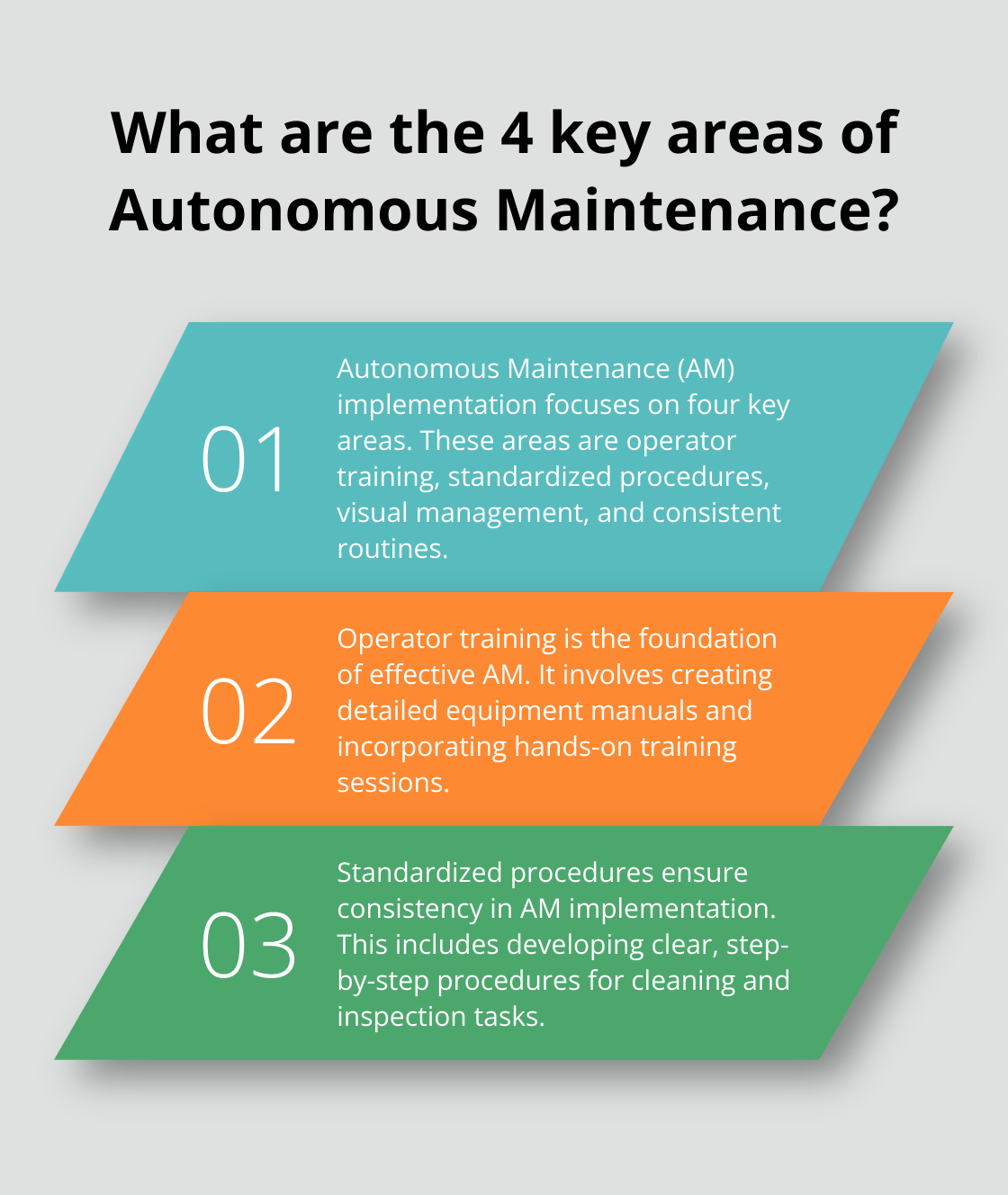
Create detailed equipment manuals that cover not just operation, but also common issues and their solutions. Incorporate hands-on training sessions where operators practice identifying and addressing minor problems. Use simulation software to provide safe, repeatable training scenarios. This approach allows operators to gain experience without risking actual equipment damage.
Standardize Cleaning and Inspection
Consistency is key in AM. Develop clear, step-by-step procedures for cleaning and inspection tasks. These should be easily accessible and understood by all operators.
Create digital checklists that guide operators through each task. These checklists should include specific criteria for what constitutes a "clean" or "properly functioning" piece of equipment. Use photos or videos to illustrate correct procedures. This visual guidance reduces errors and ensures uniformity across shifts and teams.
Leverage Visual Management Tools
Visual management tools play a vital role in AM success. They provide quick, at-a-glance information about equipment status and maintenance needs.
Implement color-coded systems to indicate equipment status (e.g., green tags for fully operational machines, yellow for those needing minor attention, and red for equipment requiring immediate maintenance). Install digital displays near workstations showing real-time equipment performance data. This immediate feedback helps operators quickly identify and address issues.
Establish Operator-Led Maintenance Routines
Regular, operator-led maintenance routines form the backbone of successful AM. These routines should integrate into daily workflows, not treated as separate tasks.
Start small and gradually increase the scope of operator responsibilities. Begin with daily cleaning and basic inspections, then progress to more complex tasks like lubrication and minor adjustments. Use digital scheduling tools to ensure these routines are consistently performed. Track completion rates and the impact on equipment performance to demonstrate the value of these efforts.
Implementing these steps requires dedication and resources, but the payoff is substantial. Companies that successfully implement AM often see dramatic improvements in equipment reliability, productivity, and overall operational efficiency. As we move forward, we'll explore the common challenges that organizations face when implementing Autonomous Maintenance and discuss effective strategies to overcome them.
Navigating Autonomous Maintenance Hurdles
Addressing Resistance to Change
One of the most significant barriers to Autonomous Maintenance (AM) implementation is resistance from operators and maintenance staff. Organizations can reduce downtime, cut maintenance costs, and improve product quality when operators take ownership of their machinery.

To combat this, organizations should focus on clear communication and involvement. Town hall meetings explain the benefits of AM, not just for the company but for individual employees. Sharing success stories from other organizations that have implemented AM can be effective.
A transition plan that gradually introduces AM responsibilities helps build confidence. Starting with simple tasks like basic cleaning and progressing to more complex maintenance activities over time reduces the feeling of being overwhelmed.
Bridging the Training Gap
Inadequate training can derail even the most promising AM initiatives.
To address this, organizations should invest in comprehensive, ongoing training programs. A mix of learning methods - classroom sessions, hands-on practice, and e-learning modules - proves effective. Digital platforms can be particularly useful here, allowing for easy access to training materials and progress tracking.
A mentorship program where experienced operators guide newer ones through AM processes can be highly effective. This peer-to-peer learning helps build a culture of knowledge sharing.
Equipping Teams for Success
Lack of proper tools and resources can severely hamper AM efforts.
Organizations should conduct a thorough assessment of their current tools and identify gaps. Investing in user-friendly digital tools simplifies data collection and analysis. Connected Worker platforms offer intuitive digital forms and real-time dashboards that make it easier for operators to perform and track maintenance tasks.
The importance of physical tools should not be overlooked. Operators need easy access to the right cleaning supplies, measuring instruments, and basic repair tools. Creating dedicated AM stations near each work area with all necessary equipment can be beneficial.
Sustaining Long-Term Commitment
Maintaining enthusiasm for AM over the long term can be challenging. The initial excitement often wanes, leading to a gradual decline in adherence to AM practices.
To combat this, organizations should establish a robust system of accountability and recognition. Real-time dashboards track AM performance metrics and celebrate successes. A rewards program for teams that consistently meet or exceed AM targets can boost motivation.
Regular audits are essential for sustaining AM. Quarterly reviews assess the effectiveness of the AM program and identify areas for improvement. These reviews serve as opportunities to gather feedback from operators and make necessary adjustments to AM processes.
Final Thoughts
Autonomous maintenance transforms equipment upkeep in organizations. Companies empower operators to take ownership of their machinery, which reduces downtime and cuts costs. The steps for autonomous maintenance include operator training, standardized procedures, visual management tools, and consistent routines.

Organizations that overcome implementation challenges gain increased equipment reliability and improved product quality. Regular audits, performance tracking, and adjustments based on feedback optimize maintenance practices. These efforts foster a culture of continuous improvement and proactive problem-solving.
Weever's Connected Worker platform streamlines autonomous maintenance efforts with automated workflows and real-time dashboards. The platform supports each step of autonomous maintenance implementation, from operator training to task tracking. Organizations that embrace this approach position themselves for long-term success in the evolving industrial landscape.

TPM and Autonomous Maintenance: A Perfect Partnership
Manufacturing efficiency is the cornerstone of success in today's competitive industrial landscape. At Weever Apps, we've seen firsthand how Total Productive Maintenance (TPM) and Autonomous Maintenance can transform operations.
TPM and Autonomous Maintenance form a powerful partnership that maximizes equipment effectiveness and empowers operators. This blog post explores how these two approaches work together to boost productivity, reduce downtime, and create a culture of continuous improvement in manufacturing environments.
Understanding Total Productive Maintenance (TPM)
Definition and Core Principles
Total Productive Maintenance (TPM) is a comprehensive approach to equipment maintenance that optimizes production efficiency and product quality. TPM aims to eliminate losses, reduce downtime, and maximize the overall effectiveness of equipment.
The Eight Pillars of TPM
TPM rests on eight fundamental pillars:
- Autonomous Maintenance
- Planned Maintenance
- Quality Maintenance
- Focused Improvement
- Early Equipment Management
- Training and Education
- Safety, Health, and Environment
- TPM in Administration

Each pillar contributes to a comprehensive maintenance strategy. The Autonomous Maintenance pillar, for example, empowers operators to perform routine maintenance tasks, which reduces the workload on specialized maintenance teams.
Real-World Benefits of TPM Implementation
Companies that successfully implement TPM often experience significant operational improvements. One global OEM reduced maintenance costs by 15 percent for the entire organization by applying this approach to roughly 25,000 field technicians across the globe.
Large manufacturers have reported substantial gains from TPM implementation. For instance, an automotive parts manufacturer saw a 15% increase in Overall Equipment Effectiveness (OEE) within the first year of implementing TPM using a Connected Worker platform. They particularly benefited from real-time dashboards that provided cross-team visibility into maintenance activities.
Implementation Challenges and Solutions
While TPM offers clear benefits, its implementation can present challenges. Common hurdles include resistance to change, lack of management support, and difficulty in sustaining the program long-term.
To address these challenges, companies should consider starting with a pilot program in a single area of their facility. This approach allows for a demonstration of TPM benefits on a smaller scale before a company-wide rollout. Digital platforms can support this transition by providing easy-to-use forms for data capture and automated workflows for faster issue resolution, making the shift to TPM smoother for all employees.
Key Performance Indicators for TPM
To evaluate the effectiveness of a TPM program, it's essential to track key performance indicators (KPIs). Important metrics include:
- Overall Equipment Effectiveness (OEE)
- Mean Time Between Failures (MTBF)
- Mean Time To Repair (MTTR)
- Maintenance Cost as a Percentage of Replacement Asset Value (RAV)
Consistent monitoring of these KPIs helps identify areas for improvement and demonstrates the value of the TPM program to stakeholders.
As we move forward, it's important to understand how Autonomous Maintenance (one of the eight pillars) plays a specific role within the broader TPM framework. Let's explore this concept in more detail.
Empowering Operators Through Autonomous Maintenance
Redefining Operator Roles
Autonomous Maintenance (AM) transforms how operators interact with their equipment. It shifts routine maintenance responsibilities from specialized technicians to machine operators, creating a proactive approach to equipment care.

In traditional manufacturing settings, operators often take a hands-off approach to maintenance, relying solely on dedicated maintenance teams. AM changes this paradigm. It trains operators to perform basic maintenance tasks such as cleaning, lubricating, and conducting simple inspections. This shift reduces the workload on maintenance specialists and fosters a sense of ownership among operators.
Cultivating a Culture of Continuous Improvement
AM extends beyond task delegation; it nurtures a culture of continuous improvement on the shop floor. When operators become intimately involved with their equipment's upkeep, they more likely suggest improvements and innovations.
Bridging the Skills Gap
One of the most significant challenges in modern manufacturing is the widening skills gap. AM addresses this issue by creating a structured program for knowledge transfer. Experienced technicians train operators in maintenance basics, effectively spreading critical skills throughout the organization.
Leveraging Technology for Enhanced AM
To maximize the benefits of AM, many companies turn to digital solutions. Connected Worker platforms provide tools that support AM initiatives. These platforms offer features such as:
- Digital checklists for maintenance tasks
- Real-time data collection and analysis
- Automated alerts for potential equipment issues
- Easy access to equipment manuals and training materials
By integrating these technological solutions, companies can streamline their AM processes and improve overall equipment reliability.
Measuring AM Success
To ensure the effectiveness of an AM program, companies must track key performance indicators (KPIs). Some important metrics to monitor include:
- Mean Time Between Failures (MTBF)
- Overall Equipment Effectiveness (OEE)
- Percentage of planned vs. unplanned maintenance activities
- Number of operator-initiated improvement suggestions
Regular analysis of these KPIs helps companies identify areas for improvement and demonstrate the value of their AM program to stakeholders.
As companies continue to refine their AM strategies, the next logical step involves a deeper exploration of the implementation process. Let's examine the practical steps and considerations for introducing Autonomous Maintenance in a manufacturing environment.
How to Implement Autonomous Maintenance
Create a Solid Foundation
The first step in implementing Autonomous Maintenance (AM) requires a thorough cleaning and inspection of all equipment. This process identifies and addresses existing issues. A food processing plant in the Midwest implemented Autonomous Maintenance and achieved a 30% reduction in unplanned downtime within six months.

Organize a company-wide cleaning day to kickstart this process. This event serves two purposes: it restores equipment to optimal condition and familiarizes operators with their machines. During this initial cleaning, operators should tag any abnormalities they find, creating a baseline for future improvements.
Develop Comprehensive Training Programs
Effective training underpins the success of AM. A structured training program should cover basic maintenance tasks, equipment operation, and problem-solving skills. The Japan Institute of Plant Maintenance recommends a minimum of 40 hours of training per operator for successful AM implementation.
Start with classroom sessions to cover theoretical aspects, then move to hands-on training on the shop floor. Use a mix of experienced maintenance technicians and external trainers to provide a well-rounded education. Incorporate visual aids (such as diagrams and videos) to make complex concepts more accessible.
Leverage Technology for Enhanced AM
Modern technology plays a pivotal role in supporting AM initiatives. Digital tools streamline maintenance processes, improve data collection, and facilitate better decision-making. A report by McKinsey states that companies leveraging digital tools in their maintenance programs reduce maintenance costs by 20-30%.
Implement a Connected Worker platform to digitize maintenance checklists, provide easy access to equipment manuals, and enable real-time reporting of issues. These platforms also offer features like automated alerts for potential equipment problems and data analytics for predictive maintenance.
Overcome Implementation Challenges
Implementing AM often faces resistance from both operators and management. To overcome this, communicate clearly about the benefits of AM. Share success stories from other companies or departments that have successfully implemented AM.
One common challenge is the fear of job loss among maintenance technicians. Address this by emphasizing that AM allows technicians to focus on more complex tasks and preventive maintenance strategies. A study by the Society for Maintenance and Reliability Professionals found that companies with successful AM programs increased their maintenance staff's job satisfaction by 25%.
Another hurdle involves sustaining the AM program over time. Combat this by setting up a reward system for operators who consistently perform their AM duties. Regularly review and update the AM procedures to keep them relevant and effective.
Measure Success and Drive Continuous Improvement
To ensure the ongoing success of your AM program, establish clear metrics for measuring progress. Key Performance Indicators (KPIs) should include Overall Equipment Effectiveness (OEE), Mean Time Between Failures (MTBF), and the number of operator-initiated improvements.
Regularly review these metrics and use the data to drive continuous improvement. Encourage operators to suggest improvements to the AM procedures. This not only enhances the effectiveness of the program but also increases operator buy-in.
Final Thoughts
TPM and Autonomous Maintenance revolutionize manufacturing operations by creating a robust system for maintaining and optimizing production assets. Organizations can expect reduced downtime, increased equipment lifespan, improved product quality, and enhanced employee engagement. These improvements translate into tangible financial gains, with some companies reporting maintenance cost reductions of up to 30% and OEE increases of 15% or more within the first year of implementation.

Companies considering TPM and Autonomous Maintenance implementation should start with a clear understanding of current processes and equipment conditions. They must conduct a thorough assessment of maintenance practices, identify areas for improvement, and develop a comprehensive training program. Connected Worker platforms can streamline maintenance processes, improve data collection, and facilitate better decision-making.
Successful implementation requires commitment from all levels of the organization (from leadership to frontline workers). Companies should start with pilot programs in specific areas to demonstrate success before scaling across the entire operation. This approach will position manufacturers for success in an increasingly competitive landscape, optimizing equipment performance and empowering employees to take ownership of their work environment.

Empowering Operator-Led Maintenance with Weever: Enhancing Productivity in Manufacturing
Operator-led maintenance is widely recognized for its transformative impact on the manufacturing industry. By empowering frontline workers to take ownership of routine maintenance tasks-such as cleaning, inspecting, and lubricating machinery-manufacturers can boost productivity, prevent unexpected equipment failures, and maintain smoother workflows while meeting high operational standards.
Weever software provides the tools and technology to make operator-led maintenance seamless, standardized, and scalable, helping manufacturers stay ahead of industry challenges. Whether you're managing a high-speed production line or complex machinery, Weever enables teams to implement effective frontline worker maintenance practices through an easy-to-use platform.
How Weever Enables Operators to Take Control of Maintenance Tasks in Manufacturing
In manufacturing, where efficiency and precision are paramount, Weever's operator-led maintenance tools are invaluable. By streamlining maintenance standards and digitizing routine tasks, Weever empowers operators to maintain equipment without disrupting production. Let's explore how Weever provides a tailored solution for the manufacturing industry.
1. Empowering Operators with Intuitive Tools
Implementing operator-led maintenance requires software that is accessible to frontline workers, many of whom may not have extensive technical expertise. Weever's user-friendly platform is designed to empower operators in manufacturing environments, ensuring quick adoption and smooth operation.
- Intuitive Interface: Weever's clean, easy-to-use interface allows operators to perform tasks such as CIL (Cleaning, Inspection, Lubrication) checklists and follow standard operating procedures (SOPs) with minimal training. This ensures operators can focus on maintaining equipment rather than navigating complex systems.
- CIL Training for Operators: Weever includes tools to streamline and track CIL training for operators, ensuring that they quickly get up to speed on the processes they need to execute, improving overall equipment efficiency (OEE).
- Configurable for Non-Manufacturing: In manufacturing, where diverse machinery and equipment require varied maintenance routines, Weever allows businesses to create workflows that align with their specific maintenance needs, from cleaning production lines to managing preventive maintenance on critical equipment.
By simplifying how decentralized maintenance tasks are assigned and tracked, Weever enables workers to take ownership of their equipment, resulting in higher efficiency and fewer interruptions to production.
2. Enhancing Efficiency Through Automation
While empowering operators is essential, the efficiency of operator-led maintenance increases exponentially when combined with automation. Weever automates workflows to support preventive maintenance by operators, reducing the need for constant manual intervention and improving consistency.
- Automated Cleaning Schedules: In the manufacturing industry, strict cleaning standards are crucial for product quality and compliance. Weever automatically schedules cleaning tasks, ensuring that nothing is missed and providing accountability.
- Lubrication Schedules: Weever enables automated lubrication schedules, ensuring that critical equipment like conveyor belts, presses, and production lines are maintained regularly to prevent breakdowns and extend machine life.
- CIL Checklists and SOPs: Weever generates automated CIL checklists and SOPs, guiding operators through the steps they need to follow for maintenance. This makes it easy for operators to track completed tasks and ensure that essential maintenance procedures are followed accurately.
By automating routine tasks, Weever reduces human error and ensures that critical maintenance tasks, like cleaning and inspection, are performed consistently, improving overall operational efficiency.
3. Data-Driven Maintenance Decisions in Real-Time
In the fast-paced manufacturing environment, having real-time access to maintenance data can mean the difference between smooth operations and costly downtime. Weever's real-time reporting provides the insights necessary to maintain operational control and identify areas for improvement in maintenance practices.
- Data-Driven Decisions: Weever tracks maintenance activities such as cleaning standards and inspection routines, giving manufacturers real-time feedback on how well maintenance tasks are being performed. This helps in identifying issues early and taking preventive actions to avoid equipment failures.
- Tracking CIL with Connected Worker Platforms: Weever integrates connected worker platforms, allowing managers and operators to track CIL checklists and monitor trends in performance across multiple production lines or facilities. This means that businesses can quickly adapt to emerging trends or new compliance requirements.
- Insights into Maintenance Trends: Weever's analytics tools help manufacturing plants anticipate shifts in maintenance needs, allowing them to adjust their approach and stay ahead of industry trends. This proactive approach minimizes unplanned downtime and improves equipment reliability.
Weever's powerful reporting tools make it easy to analyze historical data, spot inefficiencies, and make proactive adjustments to enhance performance in manufacturing environments.
4. Seamlessly Implementing Maintenance Processes
Introducing new maintenance procedures can be challenging, particularly in industries that rely on complex machinery. Weever's structured rollout methodology makes it easier for manufacturing plants to implement decentralized maintenance practices.
- Standardizing CIL Practices: One of the key advantages of Weever's rollout methodology is the ability to easily implement standardized CIL practices across multiple sites or production lines. This consistency is critical for manufacturers, where regulatory compliance and product quality are paramount.
- Digitizing CIL Instructions: Weever supports the digitization of CIL instructions, making it easier for operators to follow step-by-step procedures. This digitization increases accuracy and ensures that frontline workers have access to the latest SOPs directly on their devices.
- Visual Controls for CIL: To further simplify the process, Weever incorporates visual controls for CIL, allowing operators to see at a glance what maintenance tasks are pending or overdue. These visual cues reduce confusion and keep operations running smooth
Whether rolling out new maintenance protocols across a manufacturing facility or adjusting to new production requirements, Weever's structured approach ensures minimal disruption and smooth implementation.
Transforming Manufacturing with Weever
Operator-led maintenance is a powerful tool for boosting productivity in the manufacturing industry, and Weever is at the forefront of this transformation. By empowering frontline workers to take control of routine maintenance tasks, Weever helps manufacturers improve operational efficiency, maintain compliance, and reduce costly downtime.
With its intuitive design, automated workflows, real-time insights, and structured rollout methodology, Weever provides the perfect platform for manufacturers to implement decentralized maintenance. From digitizing CIL instructions to automating cleaning and lubrication routines, Weever makes it easier for operators to perform maintenance tasks efficiently while allowing managers to track progress and stay ahead of industry trends.
For manufacturers looking to future-proof their operations, Weever offers the tools needed to empower frontline workers and drive success through smart, operator-led maintenance.

Autonomous Maintenance: Key Concepts and Strategies
At Weever Apps, we've seen firsthand how autonomous maintenance can transform manufacturing operations. This approach empowers operators to take ownership of equipment care, leading to improved efficiency and reduced downtime.
In this post, we'll explore the key concepts and strategies of autonomous maintenance, including its core principles and implementation techniques. We'll also discuss how to create effective autonomous maintenance PPTs to support your training initiatives.
What is Autonomous Maintenance?
The Core Concept
Autonomous Maintenance is a key concept in Total Productive Maintenance (TPM), along with 5S. It involves putting equipment care directly in the hands of machine operators. This approach aims to maximize equipment effectiveness while minimizing downtime.

At its heart, Autonomous Maintenance involves the training of operators to perform routine maintenance tasks. These tasks include cleaning, lubricating, and conducting basic inspections. This shift in responsibility allows maintenance technicians to focus on more complex issues, which leads to a more efficient use of resources.
Tangible Benefits for Manufacturing
The impact of Autonomous Maintenance on manufacturing operations is significant. Companies implementing Autonomous Maintenance have seen reductions in equipment breakdowns. This reduction translates to increased uptime and productivity.
Early problem detection by operators prevents minor issues from escalating into major failures. This preventive approach can lead to reduced maintenance costs compared to reactive maintenance strategies.
Autonomous vs. Preventive Maintenance
Autonomous and Preventive Maintenance both aim to reduce equipment failures, but they differ in execution. Preventive Maintenance involves scheduled maintenance activities, often performed by specialized technicians. Autonomous Maintenance, however, empowers operators to perform daily maintenance tasks.
This distinction creates a sense of ownership among operators, which leads to better equipment care. Companies implementing Autonomous Maintenance have reported improved employee engagement and job satisfaction.
Implementation Challenges
While the benefits of Autonomous Maintenance are clear, its implementation comes with challenges. These challenges include:
- Resistance to change from both operators and maintenance staff
- The need for comprehensive training programs
- Initial time investment for setup and training
However, companies that overcome these hurdles often see significant long-term benefits.
Technology's Role in Autonomous Maintenance
Modern technology plays a vital role in the success of Autonomous Maintenance programs. Digital platforms provide tools for task scheduling, data collection, and performance tracking. These platforms make it easier for operators to perform their maintenance duties and for managers to oversee the process.
As we move towards Industry 4.0, the integration of Autonomous Maintenance with technologies like IoT and AI will further enhance its effectiveness. This integration will lead us to our next topic: the implementation of Autonomous Maintenance in modern manufacturing environments.
How to Implement Autonomous Maintenance
Train Operators for Equipment Care
The foundation of successful autonomous maintenance rests on comprehensive operator training. This training extends beyond basic equipment operation and focuses on the intricacies of machine care. Operators must understand how to run the equipment, identify potential issues, perform basic maintenance tasks, and recognize when to escalate problems to specialized technicians.

A study by the Manufacturing Institute revealed that companies investing in comprehensive operator training experienced a 70% reduction in equipment-related downtime. This statistic underscores the importance of thorough training programs.
To make training effective, use a mix of classroom sessions, hands-on practice, and digital learning tools. Digital platforms can be particularly useful here, allowing for the creation of interactive training modules that operators can access on-demand, ensuring consistent knowledge across shifts.
Develop Robust Standard Operating Procedures
After operator training, the next step involves the development of clear, detailed standard operating procedures (SOPs) for maintenance tasks. These SOPs should cover everything from daily equipment checks to more complex maintenance activities.
A report by the Aberdeen Group found that companies with standardized maintenance procedures experience 20% less downtime than those without. This highlights the critical role of well-defined SOPs in autonomous maintenance success.
When creating SOPs, involve operators in the process. Their hands-on experience can provide valuable insights into the most effective ways to maintain equipment. Use simple, clear language and include visual aids where possible. Digital forms can be used to create interactive SOPs that guide operators through each step of the maintenance process.
Implement Visual Management Systems
Visual Management (VM) is a set of practices that facilitate the management of the production process by quick detection of irregularities. It involves the use of visual cues to communicate important information quickly and effectively. This can include color-coded tags for different types of maintenance tasks, visual inspection points on equipment, and digital dashboards displaying real-time maintenance status.
To implement an effective visual management system, start by identifying key information that needs communication. This could include equipment status, maintenance schedules, or performance metrics. Then, design visual aids that convey this information clearly and concisely. Real-time dashboards can be a valuable tool here, providing at-a-glance visibility into maintenance activities across the entire operation.
Establish a Continuous Improvement Process
Implementing autonomous maintenance is not a one-time event, but an ongoing process of continuous improvement. Regular audits and feedback sessions should be conducted to identify areas for refinement and to ensure that the program remains effective as equipment and processes evolve.
Try to create a culture of continuous improvement where operators feel empowered to suggest changes and improvements to the maintenance process. This not only helps to refine the autonomous maintenance program but also increases operator engagement and ownership.
The implementation of autonomous maintenance requires a structured approach and ongoing commitment. However, the benefits (increased efficiency, reduced downtime, and improved operator engagement) make it a worthwhile investment for any manufacturing operation. In the next section, we'll explore key strategies for ensuring the long-term success of your autonomous maintenance program.
Mastering Autonomous Maintenance Strategies
Define Clear Roles and Responsibilities
The first step to master autonomous maintenance is to establish clear roles and responsibilities for all team members. This clarity prevents confusion and ensures coverage of every maintenance aspect.

Create detailed job descriptions for operators that include specific maintenance tasks. An operator might be responsible for daily equipment cleaning, lubrication checks, and basic inspections. Maintenance technicians should focus on more complex repairs and preventive maintenance tasks.
A study by the Society for Human Resource Management found that clear job descriptions can increase productivity by up to 25%. This statistic underscores the importance of well-defined roles in autonomous maintenance.
Implement a Robust Data Collection System
Effective autonomous maintenance relies on accurate and timely data. Implement a robust data collection system to track equipment performance, identify trends, and make informed decisions.
Modern manufacturing environments benefit from digital data collection tools. These tools allow for real-time data capture, which reduces the risk of human error and provides instant access to critical information.
Digital platforms (like Weever's Connected Worker platform) offer intuitive forms for easy data capture. This ensures that operators can quickly and accurately record maintenance activities. Real-time data collection enables faster issue resolution and enhances cross-team visibility through live dashboards.
Drive Continuous Improvement
The final strategy to master autonomous maintenance is to establish a culture of continuous improvement. This involves regular process reviews, data analysis, and incremental changes to enhance efficiency and effectiveness.
Conduct regular audits of your autonomous maintenance program. These audits should assess the effectiveness of current practices, identify areas for improvement, and gather feedback from operators and maintenance staff.
A report by McKinsey & Company found that companies with a strong culture of continuous improvement saw a 10% increase in overall equipment effectiveness (OEE) compared to their peers. This highlights the significant impact that ongoing refinement can have on maintenance outcomes.
Leverage Technology for Enhanced Performance
Technology plays a pivotal role in modern autonomous maintenance strategies. Advanced software solutions can streamline processes, improve data accuracy, and provide real-time insights.
Try to integrate IoT sensors with your maintenance system. These sensors can monitor equipment performance in real-time, alerting operators to potential issues before they escalate into major problems.
Artificial Intelligence (AI) and Machine Learning (ML) algorithms can analyze vast amounts of maintenance data to predict equipment failures. This predictive approach can significantly reduce unplanned downtime and extend equipment lifespan.
Final Thoughts
Autonomous maintenance transforms modern manufacturing operations. Companies empower operators to care for equipment, which reduces downtime and increases productivity. This approach fosters a culture of responsibility and continuous improvement among frontline workers.

Employee engagement drives successful autonomous maintenance programs. Operators become proactive problem-solvers when they invest in equipment care. This mindset shift improves equipment reliability and enhances job satisfaction (as well as team morale).
The future of autonomous maintenance integrates IoT sensors and AI-driven analytics. Companies use digital solutions like Weever's Connected Worker platform to streamline their programs. Many organizations develop comprehensive autonomous maintenance PPTs to support their training initiatives and ensure long-term success.

How to Perform Workplace Audits and Inspections
Workplace audits and inspections are essential for maintaining a safe and efficient work environment. At Weever Apps, we've seen firsthand how these practices can significantly reduce accidents and boost productivity.
Regular audits help identify potential hazards before they become serious problems, ensuring compliance with safety regulations and improving overall workplace efficiency. This blog post will guide you through the process of conducting effective workplace audits and inspections, providing practical tips to enhance your safety protocols.
Why Workplace Audits and Inspections Matter
Workplace audits and inspections are not just bureaucratic exercises. They are powerful tools that can transform your organization's safety culture and operational efficiency. Companies that implement regular, well-executed audits and inspections often see significant reductions in workplace incidents (up to 50% in some cases).
Catch Problems Before They Escalate
One of the primary benefits of audits and inspections is their ability to identify potential hazards before they cause harm. For example, a manufacturing company discovered a faulty machine guard during a routine inspection. This prompt identification prevented a potentially serious injury and avoided costly downtime.
Stay Ahead of Regulatory Requirements
Compliance with safety regulations isn't just about avoiding fines - it's about protecting your workforce. According to OSHA, workplaces that establish an effective safety and health management system can reduce their workplace injury and illness costs by 20 to 40 percent. Regular audits ensure you not only meet the minimum standards but exceed them.
Boost Operational Efficiency
Audits and inspections often reveal inefficiencies in processes that might otherwise go unnoticed. A logistics company identified bottlenecks in their warehouse operations during a safety audit. By addressing these issues, they improved safety and increased their throughput by 15%.
Empower Employees
Involving employees in the audit and inspection process can significantly enhance workplace safety. Studies show that employee involvement in safety programs can lead to a 60% reduction in incident rates. When workers feel their input is valued, they are more likely to report potential hazards and suggest improvements.
Leverage Technology for Better Results
Modern digital tools (like those offered by Weever Apps) can streamline the audit and inspection process. These tools allow for real-time data collection, analysis, and reporting, making it easier to identify trends and take prompt action. With mobile-friendly interfaces, auditors can conduct inspections on-the-go, increasing efficiency and accuracy.

The benefits of workplace audits and inspections are clear. They protect your workforce, improve efficiency, and foster a culture of safety. But how do you conduct these audits effectively? In the next section, we'll explore the key elements of successful workplace audits.
Mastering Workplace Audits
Craft the Ultimate Audit Checklist
A comprehensive audit checklist serves as your roadmap to success. Analyze past incidents and near-misses to identify high-risk areas. Near miss incidents often precede loss producing events but may be overlooked as there was no harm. This analysis is essential for preventing future accidents.

Incorporate regulatory requirements into your checklist. OSHA standards should form the backbone, but don't stop there. Industry-specific guidelines (such as those from the American National Standards Institute) can provide additional depth.
Tailor your checklist to your specific workplace. A construction site will have different focus areas compared to a manufacturing plant. Engage department heads to identify unique hazards in their areas.
Empower Your Audit Team
Your auditors are the eyes and ears of your safety program. Invest in their training. The Board of Certified Safety Professionals offers specialized certifications that can dramatically improve audit quality.
Consider cross-training auditors from different departments. This fresh perspective can uncover blind spots that department-specific auditors might miss.
Harness the Power of Digital Tools
Paper-based audits are outdated. Digital tools streamline the process, improve accuracy, and facilitate real-time reporting. Modern platforms allow auditors to capture data, photos, and signatures on-the-go, significantly reducing audit time and improving data quality.
With digital tools, you can analyze trends over time, identifying recurring issues that might slip through the cracks in a paper-based system. This data-driven approach allows for more targeted interventions and resource allocation.
Foster Employee Engagement
Your employees are on the front lines every day. They often have insights that even the most thorough auditor might miss. Create channels for employees to contribute to the audit process.
Implement a suggestion box system (either physical or digital). Reward employees who identify potential hazards or suggest improvements.
Try implementing a rotating audit team that includes frontline employees. This approach not only improves audit quality but also increases buy-in for safety initiatives across the organization.
A well-executed audit is an investment in your company's future, protecting both your employees and your bottom line. Now that we've covered the key elements of successful workplace audits, let's explore how to conduct effective workplace inspections in the next section.
How to Conduct Effective Workplace Inspections
Establish a Consistent Inspection Schedule
Workplace inspections form the foundation of a robust safety program. Create a regular schedule that covers all areas of your workplace. Inspect high-risk areas more frequently (weekly or daily). Lower-risk areas might require monthly or quarterly inspections.

Mix scheduled and unannounced inspections to get a true picture of workplace safety. This combination reveals issues that might remain hidden during planned visits.
Document Findings Thoroughly
Thorough documentation proves essential for effective inspections. Use digital tools to capture detailed notes, photos, and videos of potential hazards or non-compliance issues. This visual evidence becomes invaluable when communicating problems to management or planning corrective actions.
Specificity matters in documentation. Instead of noting "trip hazard in warehouse," write "loose electrical cord across main aisle in southeast corner of warehouse." This level of detail facilitates quick location and resolution of issues.
Prioritize and Address Identified Issues
Not all issues carry equal weight. Use a risk assessment matrix to prioritize your findings. Address high-risk issues that could cause severe injury or significant property damage immediately. Stop work in an area if you encounter an imminent danger until the hazard is controlled.
Set realistic timelines for correction of less urgent issues. Assign responsibility for each corrective action to a specific person or team. This accountability ensures that issues don't slip through the cracks.
Consider whether similar hazards might exist in other areas of your workplace for each identified issue. This proactive approach prevents future incidents.
Leverage Technology for Streamlined Inspections
Modern digital tools can revolutionize your inspection process. These platforms allow for real-time data collection, analysis, and reporting. With mobile-friendly interfaces, inspectors can conduct inspections on-the-go, increasing efficiency and accuracy.
Health and safety apps can help organizations track and analyze incident data, enabling them to identify trends and take proactive steps to improve workplace safety. This data-driven approach allows for more targeted interventions and resource allocation, significantly improving overall workplace safety.
Engage Employees in the Inspection Process
Your employees possess valuable insights that even the most thorough inspector might miss. Create channels for employees to contribute to the inspection process.
Implement a suggestion box system (either physical or digital). Reward employees who identify potential hazards or suggest improvements. Try implementing a rotating inspection team that includes frontline workers. This approach improves inspection quality and increases buy-in for safety initiatives across the organization.
Final Thoughts
Workplace audits and inspections transform organizational safety culture and operational efficiency. Companies that implement these practices reduce incidents, meet regulatory requirements, and increase productivity. These tools empower employees, foster safety awareness, and uncover hidden inefficiencies in processes.

Technology streamlines audits and inspections through real-time data collection, analysis, and reporting. Digital platforms enable trend identification and prompt action, while mobile interfaces allow on-the-go inspections. At Weever Apps, we offer a Connected Worker platform that enhances productivity and supports comprehensive safety programs.
Workplace safety requires continuous improvement through regular audits, inspections, and employee engagement. Organizations that prioritize these practices invest in long-term success and sustainability. Make audits and inspections integral to your operations, embrace technology, and refine processes for a safer, more efficient workplace.
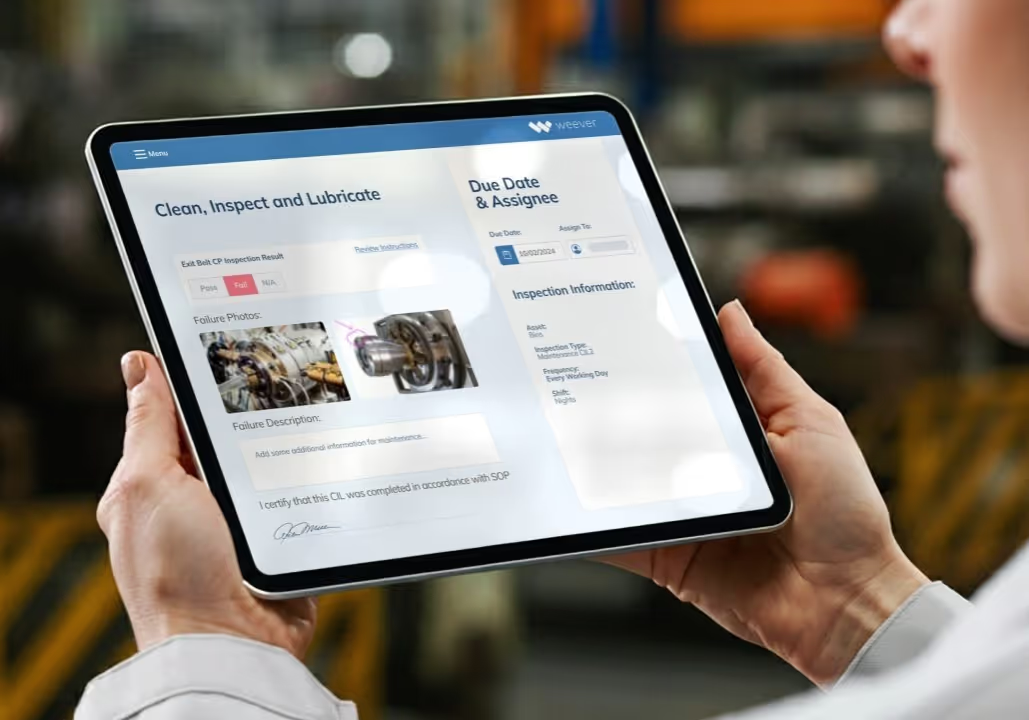
Optimizing Lubrication Schedules with Weever: Improving Machine Longevity
In manufacturing, equipment reliability is paramount to sustaining operational efficiency. A critical component of this reliability is the consistent and timely application of lubrication. Overlooking a lubrication task can result in costly equipment breakdowns, significant downtime, and reduced productivity.
Weever software offers an optimized approach to managing lubrication schedules, empowering operators to effectively oversee and execute these tasks. This post delves into how Weever facilitates the maintenance of consistent lubrication schedules to prolong equipment life in manufacturing environments.
Weever's Intuitive Platform Simplifies Task Management
Weever's user-friendly platform enables operators to effortlessly manage lubrication schedules. This minimizes the risk of overlooked tasks and ensures consistent application across the manufacturing floor.
Streamlined Maintenance for Manufacturing Efficiency
In bustling manufacturing settings, operators often juggle multiple maintenance responsibilities. Weever's straightforward interfaces allow operators to swiftly check off lubrication tasks amidst busy production cycles. For instance, operators at a manufacturing plant might use Weever to regularly prompt maintenance reminders for CNC machines, thereby reducing downtime due to wear or friction.
Automated Reminders and Clear Action Items Keep Operations Smooth
Weever automates the scheduling and assignment of lubrication tasks, providing operators with timely reminders and clear directives. This ensures that maintenance is performed regularly and without interruption. For example, a packaging factory might utilize Weever to schedule lubrication for filling machines based on usage, optimizing task timing to prevent machine stoppages.
Data-Driven Insights Foster Proactive Maintenance Adjustments
Weever tracks lubrication performance data, offering valuable insights that help managers tailor maintenance schedules to better suit machine usage patterns and enhance longevity. For instance, a heavy machinery manufacturer could adjust lubrication frequencies based on real-time data, improving both machine performance and lifespan.
Seamless Integration with Existing Maintenance Workflows
Weever's tailored rollout process ensures that its lubrication management system can be seamlessly integrated into existing operations without disrupting ongoing activities. This might involve phased implementations, where a manufacturing team gradually adopts Weever, starting with critical equipment and expanding as familiarity with the platform increases.
Comprehensive Solution for Optimized Lubrication Management
By simplifying lubrication management, automating essential tasks, and providing actionable insights, Weever aids manufacturers in maintaining their equipment more effectively, thus extending its operational life. With tools that are easy to use, coupled with automated workflows and real-time reporting, Weever ensures consistent and timely lubrication, helping to mitigate downtime, avert equipment failures, and boost overall operational efficiency.
For manufacturers aiming to refine their lubrication practices and enhance equipment longevity, Weever offers an ideal solution.
Ready to enhance your manufacturing operations? Schedule a demo with Weever today and see how our lubrication management solutions can extend the life of your machinery and boost your operational efficiency. Don't miss out-optimize your maintenance practices now!
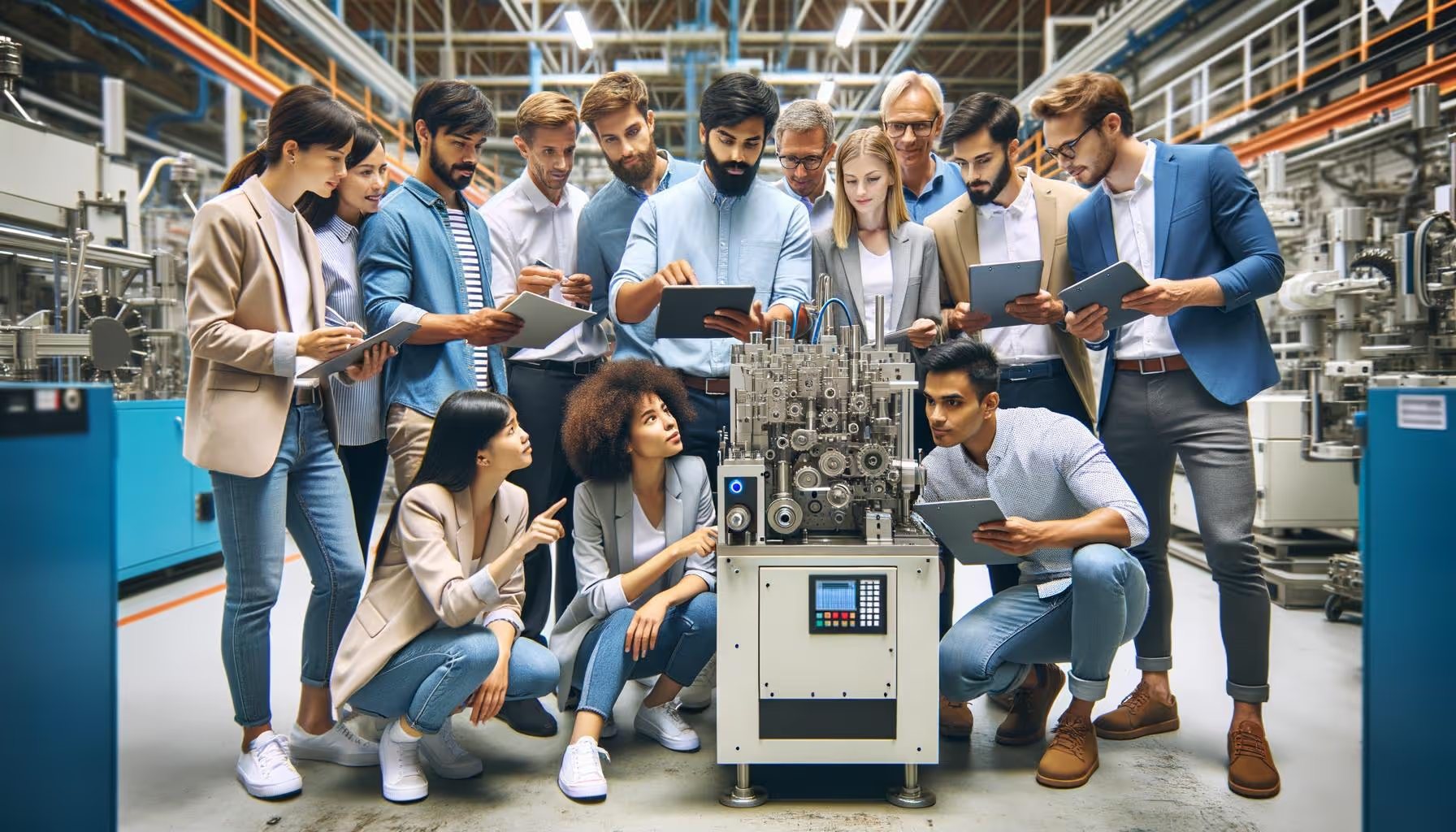
Training Your Team in Autonomous Maintenance
At Weever Apps, we've seen firsthand how training autonomous maintenance can revolutionize manufacturing operations. This approach empowers employees to take ownership of equipment care and upkeep, leading to improved efficiency and reduced downtime.
Implementing an effective autonomous maintenance program requires a well-structured training strategy. In this post, we'll explore the key elements of successful training initiatives and how to overcome common challenges in the process.
What is Autonomous Maintenance?
The Foundation of Autonomous Maintenance
Autonomous Maintenance (AM) forms a key pillar of Total Productive Maintenance (TPM). This approach shifts basic maintenance responsibilities to machine operators, transforming the traditional maintenance model. AM empowers frontline workers to take ownership of their equipment, fostering a proactive culture of care and upkeep.
Core Components of AM
AM involves operators in routine maintenance tasks. These include:
- Cleaning equipment
- Lubricating moving parts
- Conducting basic inspections
This proactive approach helps identify potential issues early. For instance, an operator might detect unusual vibrations or sounds during daily checks, enabling swift intervention.
Tangible Organizational Benefits
Implementing AM leads to significant improvements in Overall Equipment Effectiveness (OEE). A study by the Manufacturing Enterprise Solutions Association revealed that companies successfully implementing TPM practices (including AM) experienced OEE improvements of up to 30%. This translates to:
- Reduced downtime
- Increased productivity
- Substantial cost savings
Employee Growth and Satisfaction
AM extends beyond equipment care; it focuses on people development. Operators gain deeper machine understanding, enhancing their skills and job satisfaction. A Society for Human Resource Management survey found that 86% of employees reported increased job satisfaction when given opportunities to learn new skills and take on additional responsibilities.
Key Elements for Successful Implementation
Organizations need a structured approach to successfully implement AM. This includes:
- Comprehensive training programs
- Clear standard operating procedures (SOPs)
- Regular audits and feedback mechanisms
Companies using digital tools to manage these components often see faster adoption and better results. Digital platforms allow for easy creation and distribution of SOPs, real-time tracking of maintenance tasks, and instant issue reporting.
Addressing Implementation Challenges
One common hurdle in AM implementation is resistance to change. To overcome this, organizations should involve operators in the planning process and clearly communicate AM benefits. A McKinsey & Company study found that change management initiatives are 6.3 times more likely to succeed when employees actively participate in the process.

The implementation of AM requires more than just process changes; it demands a shift in organizational culture. This cultural transformation fosters ownership and continuous improvement, setting the stage for the next critical phase: developing an effective training program.
How to Build a Robust Autonomous Maintenance Training Program
Assess Your Team's Current Capabilities
Before you start training, evaluate your team's existing skills and knowledge. Conduct a comprehensive skills assessment to identify gaps and strengths. Use practical tests, surveys, and one-on-one interviews with operators. The Manufacturing Institute reports that 67% of manufacturers face a moderate to severe shortage of qualified workers. Pinpoint specific areas for improvement to tailor your training program effectively.
Structure Your Curriculum
Create a structured curriculum that addresses identified skill gaps. Cover both theoretical knowledge and practical skills. Include modules on equipment functionality, common failure modes, and preventive maintenance techniques. The Japan Institute of Plant Maintenance recommends a step-by-step approach that includes basic concepts of small groups and autonomous maintenance, TPM goals, and an approach to individual improvement.
Incorporate Hands-On Learning Experiences
Theory alone doesn't suffice. Add hands-on learning experiences to reinforce concepts and build practical skills. Set up dedicated training stations where operators practice maintenance tasks in a controlled environment. Use actual equipment or realistic simulations to provide authentic learning experiences. The National Training Laboratories found that hands-on practice leads to a 75% retention rate (compared to just 5% for lecture-style learning).
Leverage Digital Tools for Training
Digital platforms enhance your training program's effectiveness. Use e-learning modules for theoretical content, which allows operators to learn at their own pace. Implement virtual reality (VR) simulations for high-risk or complex maintenance tasks. A study by PwC shows that VR training can reduce training time by up to 40% while it improves knowledge retention.
Track Progress and Manage Training Schedules
To track progress and manage training schedules, use a digital platform. Weever's intuitive interface allows for easy creation of training modules, progress tracking, and real-time reporting. This ensures that all team members receive consistent training and that management can easily monitor progress and identify areas for improvement.

An effective Autonomous Maintenance training program requires ongoing effort and adaptation. The next section will explore common challenges you might face during implementation and provide strategies to overcome them.
Navigating Training Hurdles in Autonomous Maintenance
Addressing Employee Resistance
Change often breeds resistance. To combat this, involve your team from the outset. Create a steering committee with representatives from different departments to guide the AM implementation. This study was developed with the purpose of enhancing procedures in the maintenance sector regarding a company which supplies air-conditioning tubes to the automotive industry.

Communicate the benefits of AM clearly. Share success stories from other companies or departments. Use concrete examples to illustrate the positive impact on both the company and individual roles.
Balancing Training and Production
Finding time for training without disrupting production is a common concern. Consider implementing a train-the-trainer model. Select key operators to receive intensive training, then task them with training their peers.
Utilize microlearning techniques. Break down training into short, focused sessions that can be completed during natural lulls in production.
Ensuring Consistent Skill Application
Consistency is key in AM. Develop clear, step-by-step standard operating procedures (SOPs) for each maintenance task. Make these SOPs easily accessible through digital platforms.
Implement a buddy system where experienced operators mentor newcomers. This peer-to-peer learning reinforces skills and promotes a culture of continuous improvement.
Measuring Training Effectiveness
To gauge the impact of your AM training, establish clear metrics. Track key performance indicators (KPIs) such as Overall Equipment Effectiveness (OEE), Mean Time Between Failures (MTBF), and the number of operator-identified issues.
Use digital tools to collect and analyze this data in real-time. Platforms like Weever allow you to create custom dashboards that provide instant insights into training progress and its impact on operational metrics. This real-time feedback enables quick adjustments to your training approach, ensuring continuous improvement.
Regular skill assessments are essential. Conduct practical tests every quarter to evaluate operator competence.
Final Thoughts
Training autonomous maintenance transforms your workforce and boosts operational efficiency. A comprehensive training program improves equipment reliability and invests in your team's growth. Successful implementation requires thorough skill assessment, structured curricula, hands-on experiences, and digital tools.

The long-term benefits of autonomous maintenance training include improved equipment uptime, reduced maintenance costs, and a more engaged workforce. Operators who take ownership of their equipment develop a deeper understanding of processes, leading to innovative solutions. Organizations can start or enhance their training programs by assessing their current state, identifying skill gaps, and developing tailored curricula.
Weever's Connected Worker platform offers powerful tools for creating digital workflows, managing training schedules, and monitoring performance metrics. This makes it an ideal solution for organizations implementing autonomous maintenance programs. Training autonomous maintenance builds a culture of excellence that will drive your organization forward, transforming your team into proactive problem-solvers who drive efficiency and innovation across operations.
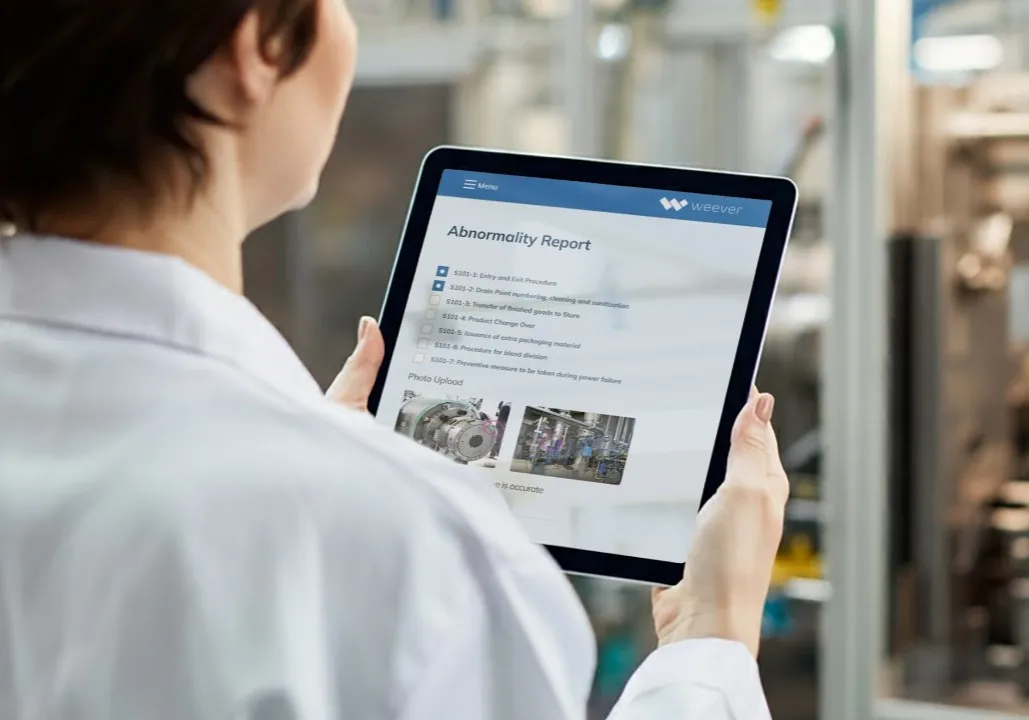
Enhancing Inspection Routines through Digitization: Weever's Role in Modern Maintenance
The shift toward digitizing maintenance processes is essential for maintaining efficiency, compliance, and productivity in industries today. Inspection routines are a critical part of these processes, ensuring equipment reliability, safety, and performance. But traditional manual inspection routines can be time-consuming, prone to error, and difficult to track. That's where Weever comes in.
Weever's software empowers businesses to digitize and streamline their inspection routines, improving the consistency, efficiency, and transparency of maintenance tasks across industries like retail, manufacturing, warehousing, and healthcare. In this blog, we will explore how Weever helps modernize inspection routines through digitization, using operator-led maintenance as a key approach to achieving better outcomes.
How Can Weever Enhance Inspection Routines Through Digitization in Modern Maintenance?
Weever addresses the challenges of modern maintenance by providing a platform that digitizes inspection routines, making them easier to manage, track, and optimize. Here's how Weever enhances these processes across industries:
Simplifying Inspection Routines through Digitization
One of the major barriers to effective inspection routines is the complexity of managing them manually. Paper-based systems can lead to missed tasks, lost records, and confusion among frontline workers. Weever's user-friendly platform solves these issues by digitizing inspection routines and making them accessible to operators.
- User-Friendly Interface: Weever's intuitive interface ensures that operators can quickly access and complete inspection tasks, regardless of their technical expertise. Whether it's following CIL (Cleaning, Inspection, Lubrication) checklists or adhering to CIL standard operating procedures (SOPs), Weever simplifies the process with digital tools that are easy to navigate.
- Accessible Across Industries: From food production to logistics, Weever's platform can be tailored to meet the specific inspection needs of any industry. In food production, for example, workers can easily track cleaning standards and inspection routines for critical equipment, ensuring compliance with hygiene regulations. Meanwhile, in logistics, operators can quickly conduct inspections on conveyor belts and machinery, keeping operations running smoothly.
- CIL Training for Operators: Weever integrates CIL training for operators directly into the platform, allowing them to learn and execute inspection routines more efficiently. This ensures that preventive maintenance by operators is handled effectively, with minimal onboarding required.
By simplifying inspection tasks and digitizing processes, Weever empowers frontline workers to perform operator-led maintenance with confidence and efficiency, reducing the burden of manual inspections.
Streamlining Inspection Processes
Automation is at the core of Weever's approach to modernizing inspection routines. Manual processes can easily lead to missed inspections, delayed maintenance, and equipment failures. Weever eliminates these risks by automating inspection workflows and creating real-time action items for frontline workers.
- Automated Scheduling: Weever's platform automates the scheduling of inspection routines, ensuring that tasks such as lubrication schedules and cleaning standards are assigned at the right time. Operators are notified when inspections are due, preventing delays that could impact equipment performance or compliance.
- Clear Action Items: Each operator receives clear, actionable tasks, such as completing a CIL checklist or following a CIL SOP. These tasks are assigned with specific deadlines and instructions, ensuring that inspections are completed on time and according to established standards.
- Real-Time Notifications: Weever sends real-time alerts when an inspection task is overdue, missed, or completed. This keeps both operators and managers informed, ensuring that preventive maintenance by operators is consistently executed without gaps.
- Tracking CIL with Connected Worker Platforms: Weever integrates connected worker platforms to track the status of CIL checklists and ensure that inspections are logged and completed across decentralized maintenance teams. This feature is particularly useful in industries where multiple teams manage different pieces of equipment across various locations, such as in warehousing or retail.
With automated workflows, Weever reduces the reliance on manual oversight, helping companies streamline their inspection routines and ensure nothing is overlooked.
Data-Driven Maintenance Decisions
Digitizing inspection routines doesn't just make them easier to complete-it also provides valuable data that can optimize overall maintenance strategies. Weever's platform captures and analyzes inspection data, providing actionable insights and trends that help managers identify recurring issues, track compliance, and improve performance.
- Actionable Insights: By digitizing inspection routines, Weever gives managers access to real-time data on equipment performance and inspection completion rates. This helps identify patterns, such as recurring equipment failures or delays in completing inspection tasks, allowing businesses to take preventive actions before problems escalate.
- Identifying Maintenance Trends: Weever's insights dashboard allows managers to track long-term trends in inspection performance. For example, if a particular piece of machinery requires frequent repairs, managers can adjust inspection schedules to ensure more frequent checks. This proactive approach prevents costly downtime and extends the lifespan of equipment.
- Real-Time Reporting: Weever's real-time reporting feature allows managers to track inspection tasks as they happen, giving full visibility into compliance and task completion. For instance, in a food production facility, real-time reports can confirm whether sanitation inspections have been completed between production shifts, ensuring compliance with hygiene standards.
- Tracking Compliance: Weever's platform tracks inspection routines across multiple teams and locations, making it easy for managers to ensure that cleaning standards, lubrication schedules, and inspection routines are being followed consistently. This is especially critical in industries like healthcare or food production, where failure to comply with cleaning and inspection protocols can lead to safety or regulatory violations.
Through its insights and real-time reporting, Weever enables businesses to take a data-driven approach to inspection routines, ensuring that maintenance strategies are continuously optimized.
Seamless Integration of Digitized Inspection Routines
Introducing digitized inspection routines can seem like a complex process, especially for teams accustomed to manual methods. Weever's rollout methodology ensures a smooth and seamless transition, making it easy for businesses to adopt new inspection processes without disrupting day-to-day operations.
- Phased Rollout: Weever's implementation process is gradual, allowing teams to adopt the platform step by step. This phased approach ensures that operators have the time to adjust to using digitized inspection routines, CIL checklists, and other preventive maintenance tools without feeling overwhelmed.
- Tailored Training: Weever offers comprehensive training that is specific to each industry's needs. Whether it's CIL training for operators in a food production facility or training logistics workers to manage decentralized maintenance processes, Weever ensures that frontline workers are equipped with the knowledge and tools they need to perform their inspection tasks effectively.
- Visual Controls for CIL: To help streamline the adoption of new inspection routines, Weever includes visual controls for CIL, allowing operators to see at a glance what tasks are pending, completed, or need immediate attention. These visual cues simplify task management, helping operators stay organized and on schedule.
- Digitizing CIL Instructions: Weever helps businesses digitize CIL instructions, making it easy for operators to follow detailed inspection steps. Digitized instructions reduce the likelihood of errors and ensure that inspection routines are performed consistently across all teams.
Weever's customizable rollout process ensures that businesses can integrate digitized inspection routines into their existing maintenance operations quickly and effectively, with minimal disruption.
Achieving Modern Inspection Efficiency with Weever
In modern maintenance, efficiency and accuracy are critical to ensuring operational success, safety, and compliance. By digitizing inspection routines, Weever helps businesses eliminate the challenges of manual processes, empowering frontline workers to take control of their maintenance tasks through operator-led maintenance practices.
With Weever, inspection routines are easier to manage, automate, and track, ensuring that maintenance tasks are performed on time and according to industry standards. From food production to logistics, Weever's platform helps businesses streamline their inspection workflows, leverage data-driven insights, and ensure compliance across the board.
For any company looking to enhance its inspection routines through digitization, Weever offers the tools and solutions needed to improve efficiency, reduce errors, and maintain high operational standards.
Ready to enhance your inspection efficiency? Schedule a demo with Weever and see firsthand how our digital solutions can optimize your maintenance tasks, ensure compliance, and drive operational success across industries.

Mastering the Seven Steps of Autonomous Maintenance
At Weever Apps, we've seen firsthand how Autonomous Maintenance can transform manufacturing operations. This powerful approach empowers operators to take ownership of their equipment, reducing downtime and boosting productivity.
The 7 steps of Autonomous Maintenance provide a clear roadmap for implementation, guiding teams from initial cleaning to continuous improvement. In this post, we'll break down each step and show you how to master them for lasting results.
What is Autonomous Maintenance?
Defining Autonomous Maintenance
Autonomous Maintenance revolutionizes manufacturing and industrial sectors. This key component of Total Productive Maintenance (TPM) transfers basic maintenance responsibilities to machine operators. The strategy allows skilled technicians to focus on complex tasks, which improves overall operational efficiency.
The Power of Operator Involvement
Autonomous Maintenance empowers frontline workers to take ownership of their equipment. Operators become the first line of defense against breakdowns and inefficiencies. They perform routine tasks (cleaning, lubricating, and basic inspections). This hands-on approach leads to earlier detection of potential issues, which reduces unplanned downtime and extends equipment lifespan.
Tangible Benefits for Industries
The impact of Autonomous Maintenance on manufacturing and industrial sectors is significant. Implementing this approach can reduce manufacturing costs by 30%, decrease inventories by 50%, and improve Overall Equipment Performance by 150-200%.

These improvements translate to increased productivity, better product quality, and enhanced safety. Companies that involve operators in maintenance foster a culture of continuous improvement and problem-solving at all levels.
Core Principles and Objectives
The primary goal of Autonomous Maintenance is to achieve zero defects and zero losses. This ambitious target drives organizations to optimize their operations continually. Key principles include:
- Operator Empowerment: Train machine operators to perform basic maintenance tasks and identify abnormalities.
- Proactive Approach: Address potential issues before they escalate into major problems.
- Standardization: Develop clear, consistent procedures for maintenance activities.
- Continuous Improvement: Review and enhance maintenance practices based on data and feedback regularly.
Implementation Challenges and Solutions
Implementing these principles requires a shift in organizational culture. It demands commitment from both management and frontline workers. However, the long-term benefits (improved efficiency, reduced costs, and increased equipment reliability) make Autonomous Maintenance a worthwhile investment for any manufacturing or industrial operation.
To overcome implementation challenges, companies can leverage digital tools. Connected Worker platforms (like Weever) can streamline the adoption of Autonomous Maintenance by providing intuitive interfaces for operators to follow maintenance procedures, capture data, and communicate issues in real-time. These platforms support comprehensive programs and ensure easy data access from any device, which facilitates a smoother transition to Autonomous Maintenance practices.
As we move forward, we'll explore the seven steps of Autonomous Maintenance in detail, providing a roadmap for successful implementation in your organization.
How to Implement the Seven Steps of Autonomous Maintenance
Step 1: Initial Cleaning and Inspection
The Autonomous Maintenance journey starts with a thorough equipment cleaning. This step serves as a critical inspection opportunity. Operators must remove dirt, grime, and debris while identifying abnormalities such as loose bolts, cracks, or leaks.

Create detailed cleaning checklists for each equipment piece. These checklists function as training tools and ensure consistency across shifts. Document all findings (no matter how small) to establish a baseline for future improvements.
Step 2: Eliminating Contamination Sources
After cleaning the equipment, focus on preventing future contamination. Identify and address the root causes of dirt, dust, and debris accumulation. This step might involve sealing leaks, improving ventilation, or redesigning components to reduce wear.
Develop a contamination control plan that outlines specific actions for each identified source. Assign responsibilities and set deadlines for implementing solutions. Regular audits will help ensure these improvements remain effective.
Step 3: Establishing Cleaning and Lubrication Standards
Create clear, visual standards for cleaning and lubrication tasks. Use photos and diagrams to illustrate proper techniques and expected outcomes. Specify the frequency, tools, and materials required for each task.
Train operators on these standards and provide easy access to reference materials. Consider using QR codes on equipment that link to digital work instructions or video tutorials.
Step 4: General Inspection Training
Equip operators with the skills to perform basic inspections. This includes understanding equipment components, recognizing normal vs. abnormal conditions, and using simple measurement tools.
Develop a tiered training program that gradually increases operator competence. Start with basic visual inspections and progress to more complex checks. Use hands-on practice sessions and quizzes to reinforce learning.
Step 5: Autonomous Inspections
As operators become more skilled, they can take on more advanced inspection tasks. Create detailed inspection routes and checklists for each equipment piece. Use a digital platform to guide operators through inspections and capture data in real-time.
Set clear criteria for when to escalate issues to the maintenance team. Encourage operators to suggest improvements based on their daily interactions with the equipment.
Step 6: Workplace Organization
Apply 5S principles (Sort, Set in Order, Shine, Standardize, Sustain) to create an efficient and organized work environment. This step optimizes workflow and reduces wasted time and motion.
Create visual management systems, such as shadow boards for tools and color-coding for different areas or processes. Regularly audit the workplace organization and involve operators in continuous improvement efforts.
Step 7: Continuous Improvement
The final step refines the Autonomous Maintenance program. Analyze data collected during inspections to identify trends and opportunities for improvement. Hold regular team meetings to discuss challenges and brainstorm solutions.
Implement a suggestion system that rewards operators for identifying and solving problems. Use key performance indicators (KPIs) to track the impact of Autonomous Maintenance on equipment reliability, productivity, and costs.
Throughout this process, digital tools can significantly enhance implementation. Connected Worker platforms provide operators with easy-to-use digital checklists, real-time data capture, and automated workflows that streamline each Autonomous Maintenance step. This not only improves efficiency but also provides valuable data for continuous improvement efforts.
Successful implementation of Autonomous Maintenance requires commitment, patience, and a willingness to learn and adapt. Organizations can unlock the full potential of their workforce and equipment by following these seven steps and leveraging the right tools (such as Weever's Connected Worker platform).
As we move forward, we'll explore how to effectively implement Autonomous Maintenance using Connected Worker platforms, focusing on digitizing processes, real-time data analysis, and enhancing communication between operators and maintenance teams.
How Digital Tools Revolutionize Autonomous Maintenance
Streamlining Inspections with Digital Checklists
Digital checklists transform traditional maintenance processes. They eliminate errors associated with paper-based systems and offer additional benefits. Operators receive step-by-step guidance through inspections, which ensures consistency and completeness. These tools often include visual aids (photos or videos) for easy abnormality identification.
Harnessing Real-Time Data Power
Connected Worker platforms enable immediate data collection and analysis. This provides instant insights into equipment performance. Such immediate feedback allows for quick decision-making and proactive maintenance.

An automotive parts manufacturer reduced unplanned downtime by 18% within six months of implementing real-time data collection in their Autonomous Maintenance program (Journal of Manufacturing Technology Management).
Bridging Communication Gaps
Effective communication between operators and maintenance teams is essential for Autonomous Maintenance success. Digital platforms facilitate instant messaging, photo sharing, and video calls. This enables quick problem-solving and knowledge sharing.
Accelerating Skill Development through E-Learning
Digital platforms offer powerful e-learning capabilities. Organizations can deliver consistent training across multiple sites. Interactive modules, quizzes, and virtual simulations help operators build and reinforce their maintenance skills.
Selecting the Right Digital Platform
When choosing a Connected Worker platform for Autonomous Maintenance, consider factors like ease of use, mobile accessibility, and integration capabilities with existing systems. While several options exist, Weever Apps stands out as a top choice due to its comprehensive feature set and user-friendly interface (specifically designed for frontline workers).
Digital tools significantly enhance the effectiveness of Autonomous Maintenance programs. They lead to improved equipment reliability, reduced downtime, and increased operational efficiency.
Wrapping Up
Mastering the seven steps of Autonomous Maintenance transforms manufacturing operations. Each step builds a robust foundation for equipment reliability and operational excellence. Operators take ownership of their machinery, which reduces downtime, improves product quality, and boosts overall productivity.

Companies that implement Autonomous Maintenance often see dramatic reductions in maintenance costs and increased equipment lifespan. The cultural shift towards proactive problem-solving leads to innovations that extend beyond the shop floor. Digital tools play a crucial role in modern implementation of the Autonomous Maintenance 7 steps.
We encourage you to assess your current maintenance practices and identify areas for improvement. Engage your team in the process and emphasize the benefits of operator empowerment. Consider leveraging digital tools like Weever Apps to support your efforts and enhance your Autonomous Maintenance program.
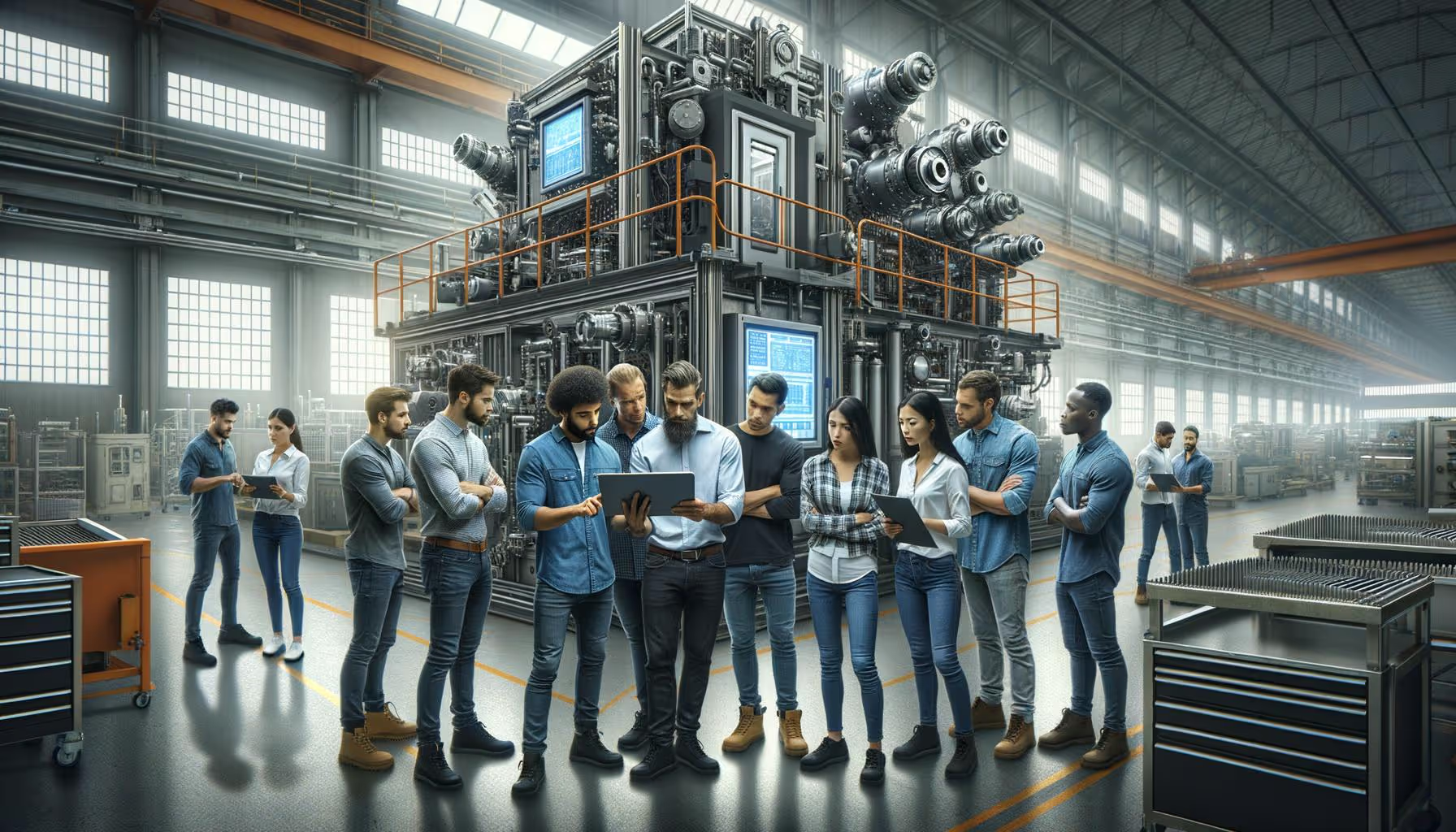
Why Is Autonomous Maintenance Important?
At Weever Apps, we've seen firsthand how autonomous maintenance can transform manufacturing operations. This approach empowers operators to take ownership of equipment care, leading to significant improvements in productivity and efficiency.
Why is autonomous maintenance important? It's a game-changer for reducing downtime, cutting costs, and boosting overall equipment effectiveness.
What Is Autonomous Maintenance?
A Shift in Maintenance Philosophy
Autonomous maintenance revolutionizes the traditional approach to equipment care. It transfers basic maintenance responsibilities from specialized technicians to machine operators. This strategy forms a key pillar of Total Productive Maintenance (TPM), a process of maximizing equipment effectiveness through the active involvement of all supporting departments.
Operator Empowerment
In autonomous maintenance, operators assume tasks that were once the domain of maintenance specialists. These include:
- Regular cleaning
- Lubrication
- Routine inspections
This hands-on involvement allows operators to develop an intimate understanding of their equipment. As a result, they can identify potential issues early, preventing minor problems from escalating into major breakdowns.
Breaking Departmental Barriers
A stark contrast exists between autonomous maintenance and conventional approaches. Traditional methods often create silos between maintenance and operations departments. Autonomous maintenance, however, dismantles these barriers. It promotes collaboration and shared accountability for equipment health across all levels of the organization.
Continuous Improvement Drive
Autonomous maintenance transcends mere task performance. It instills a culture of ongoing learning and enhancement. Operators are encouraged to propose improvements to equipment and processes based on their daily interactions. This bottom-up approach often uncovers innovative solutions that might be overlooked in traditional top-down maintenance structures.
Technological Support
Modern technology plays a crucial role in facilitating autonomous maintenance. Digital platforms (like Weever) provide essential tools for this approach, including:
- Easy data capture mechanisms
- Real-time dashboards for enhanced visibility
- Automated workflows for swift issue resolution
These features empower operators to take an active role in maintenance while ensuring information accessibility to all stakeholders.
As we move forward, let's explore the numerous benefits that make autonomous maintenance a game-changer for manufacturing operations.

How Does Autonomous Maintenance Boost Performance?
Dramatic Reduction in Downtime
Autonomous maintenance significantly decreases equipment downtime. Predictive maintenance analysis helps prevent unplanned downtime by flagging equipment for proactive maintenance based on usage and performance data. For large manufacturers, this translates to millions in saved revenue.
Slashing Maintenance Costs
Organizations that adopt autonomous maintenance cut maintenance costs by up to 50% (according to the Society for Maintenance and Reliability Professionals). This reduction stems from fewer emergency repairs, extended equipment life, and optimized use of maintenance resources.
Skyrocketing Operator Expertise
Operator competence improves rapidly when they take on maintenance tasks. Plant Engineering magazine's survey revealed that 78% of companies implementing autonomous maintenance reported improved operator competence within six months. This enhanced expertise often leads to innovative process improvements, further boosting efficiency.
Creating a Safer Work Environment
Autonomous maintenance significantly improves workplace safety. The National Safety Council found that companies with operator-led maintenance programs experienced 40% fewer workplace accidents related to equipment malfunction. Regular inspections and immediate addressing of minor issues prevent potentially dangerous situations from developing.
Leveraging Digital Tools for Success
Digital platforms (such as Weever) play a key role in maximizing the benefits of autonomous maintenance. These tools streamline implementation by:
- Simplifying task performance for operators
- Facilitating easy data recording
- Enhancing communication of issues
- Providing management with real-time insights into equipment performance and maintenance needs

The advantages of autonomous maintenance are clear, but effective implementation requires careful planning and the right approach. Let's explore the steps to successfully introduce autonomous maintenance in your organization.
How to Implement Autonomous Maintenance
Start with Comprehensive Training
The foundation of effective autonomous maintenance is thorough operator training. This isn't just about teaching basic maintenance tasks; it's about fostering a deep understanding of equipment functionality.

Training should cover:
- Equipment anatomy and function
- Common failure modes and their indicators
- Proper cleaning and lubrication techniques
- Basic troubleshooting skills
Use hands-on sessions, simulations, and regular refresher courses to reinforce learning. The goal is to transform operators into equipment experts who can spot potential issues before they become problems.
Standardize Procedures and Inspections
Consistency is key in autonomous maintenance. Develop clear, step-by-step standard operating procedures (SOPs) for all maintenance tasks. These SOPs should be easily accessible, preferably through a digital platform (like Weever), which allows for real-time updates and ensures all operators work from the latest version.
Implement a rigorous inspection schedule. Define and assign daily, weekly, and monthly checks clearly.
Establish a Robust Reporting System
Quick identification and resolution of issues are crucial. Set up a streamlined system for operators to report problems and track their resolution. Digital platforms excel here, allowing for immediate notification of relevant personnel and real-time status updates.
Foster a Culture of Continuous Improvement
Autonomous maintenance requires ongoing refinement and adaptation. Encourage operators to suggest improvements based on their daily interactions with the equipment. Implement a formal process for reviewing and implementing these suggestions.
Regular audits of the autonomous maintenance program are essential. These audits should assess the effectiveness of current practices and identify areas for improvement. Use the insights gained to continuously refine your approach.
Final Thoughts
Autonomous maintenance stands as a cornerstone of modern manufacturing excellence. Its importance cannot be overstated in today's competitive industrial landscape. Organizations that empower operators to take ownership of equipment care unlock a wealth of benefits that ripple through every aspect of their operations.

The long-term impact of autonomous maintenance on organizational efficiency transforms the traditional reactive approach to equipment care into a proactive strategy. This paradigm shift results in increased equipment reliability, extended asset lifespans, and significantly reduced maintenance expenses. The ripple effects of these improvements touch every corner of the organization, from enhanced safety to boosted productivity and profitability.
Companies that have not yet embraced autonomous maintenance should act now to secure competitive advantages. We at Weever Apps offer a Connected Worker platform designed to streamline the implementation of autonomous maintenance practices. Our solution provides the digital tools necessary to empower operators, facilitate seamless communication, and drive continuous improvement (without disrupting existing workflows).
Spend Less Time on Admin. Get More Insights by Email.
Subscribe to receive practical tips, updates, and ideas to improve operations without the extra admin work.