
-%20smaller.webp)
.webp)
Explore More Blogs

Seven Steps to Effective Autonomous Maintenance
Autonomous maintenance is a game-changer in modern manufacturing. At Weever Apps, we've seen firsthand how this approach can transform operations and boost efficiency.
Our guide outlines the 7 steps of autonomous maintenance, providing a practical roadmap for implementation. Whether you're looking for a comprehensive PPT or hands-on strategies, this post will equip you with the knowledge to revolutionize your maintenance practices.
1. Build a Strong Knowledge Foundation
Effective autonomous maintenance begins with a well-educated team. Organizations that invest in comprehensive training programs often see a significant increase in equipment uptime. This improvement stems from operators gaining a deep understanding of their machinery and the principles of preventive care. A solid training program should cover:
- Equipment anatomy
- Common failure points
- Basic troubleshooting techniques
To maximize the impact of training, organizations can implement a mentorship program where experienced operators guide newcomers. This approach reduces the learning curve in manufacturing settings. Digital tools for ongoing education keep team skills sharp. Mobile learning platforms allow operators to access training materials on-the-go, which improves knowledge retention rates.
A mix of hands-on practice, visual aids, and interactive sessions caters to different learning styles (and enhances overall comprehension). The investment in thorough training pays off through reduced equipment failures and production delays. As teams master the fundamentals, they pave the way for more advanced maintenance practices. The next step involves putting this knowledge into action through basic equipment cleaning procedures.
2. Implement Basic Equipment Cleaning
Regular equipment cleaning forms the foundation of effective autonomous maintenance. Companies must create clear, step-by-step cleaning procedures for each machine. These procedures should specify the frequency, tools, and techniques required. Operators need training to identify minor issues during cleaning, such as loose bolts or small leaks. Plants that implement daily cleaning and inspection routines can significantly reduce unexpected breakdowns.
Consistent cleaning provides multiple advantages. It eliminates debris that causes wear and tear, prolongs equipment lifespan, and enhances overall performance. Digital checklists (like those offered by Weever) streamline the cleaning process, ensure completion of all steps, and provide real-time data on cleaning effectiveness. Daily cleaning habits help operators develop a deeper understanding of their equipment, which leads to faster problem identification and resolution. This improved equipment familiarity sets the stage for the next critical step: identifying and eliminating sources of contamination.
3. Root Out Contamination Sources
Identifying and eliminating contamination sources is essential for effective autonomous maintenance. Industrial settings often face challenges from oil leaks, metal shavings, dust, and chemical residues, which can severely impact equipment performance and lifespan. To pinpoint contamination origins, companies should implement regular inspections using thermal imaging cameras and vibration analysis tools. These technologies, combined with AI algorithms trained on thermal image libraries, can spot problems in their early stages before equipment is destroyed. Operators need training to recognize early warning signs such as unusual noises, odors, or visible residues during their daily routines.
Preventing future contamination requires a multi-faceted approach. Companies should install proper filtration systems and seals to minimize environmental contaminants. Upgrading to sealed bearings and implementing stringent cleaning protocols for tools and work areas will further reduce contamination risks. Regular audits of maintenance procedures ensure alignment with best practices for contamination control. Digital checklists (such as those offered by Weever) can streamline this process, ensuring consistent execution of preventive measures across all shifts. The next step in effective autonomous maintenance involves the development and standardization of lubrication practices, which builds upon the foundation of a clean, contamination-free environment.
4. Master Lubrication for Peak Performance
Proper lubrication is the lifeblood of machinery, and mastering it significantly improves autonomous maintenance. Create detailed lubrication schedules that specify frequency, quantity, and type of lubricant for each piece of equipment. Use color-coding systems to match lubricants with their application points, which reduces errors and ensures consistency across shifts. Invest in high-quality lubricants appropriate for your specific machinery; they enhance equipment performance and extend the longevity of industrial machinery.
Train operators in proper lubrication techniques through hands-on workshops where they practice lubricating mock equipment, reinforcing correct procedures and safety protocols. Implement a digital tracking system to monitor lubricant consumption and equipment performance, which allows for data-driven optimization of lubrication practices. Consider using ultrasonic tools to detect early signs of inadequate lubrication, enabling proactive maintenance before costly breakdowns occur. The next step in effective autonomous maintenance involves conducting regular equipment inspections to catch potential issues early.
5. Implement Regular Equipment Inspections
Regular equipment inspections form the backbone of effective autonomous maintenance. A food processing plant in the Midwest implemented Autonomous Maintenance and achieved a 30% reduction in unplanned downtime within six months. Companies must develop comprehensive checklists tailored to each piece of machinery, covering all critical components and potential failure points. Operators need training to spot early warning signs such as unusual noises, vibrations, or temperature changes. Digital tools enable real-time reporting of issues, which allows swift responses to potential problems.
A tiered inspection system with daily, weekly, and monthly checks ensures thorough equipment monitoring. Non-invasive inspection techniques like thermography and ultrasound testing detect issues without disrupting operations. Clear escalation procedures for issues that operators can't resolve ensure seamless handoffs to specialized maintenance teams. Regular reviews and updates of inspection procedures based on equipment performance data and operator feedback continuously refine the process. The next step in autonomous maintenance involves empowering operators to perform basic maintenance tasks, which builds upon the foundation of regular inspections.
6. Empower Operators with Basic Maintenance Skills
Operators with basic maintenance skills become the first line of defense against equipment failures. Although it is impossible to prevent equipment failure entirely, you can greatly reduce costly downtime by optimizing your employees' knowledge and skills. Companies should identify tasks that operators can safely perform, such as tightening loose bolts, replacing filters, or adjusting machine settings. Equip teams with user-friendly digital checklists and step-by-step guides accessible via tablets or smartphones (Weever's platform excels at providing these tools). This approach ensures consistent execution and allows for real-time tracking of completed tasks.
Provide operators with a dedicated toolkit containing essential maintenance items:
- Wrenches
- Multimeters
- Lubricants
- Safety equipment
Establish clear escalation protocols to guide operators on when to involve specialized maintenance teams. Set specific thresholds for vibration levels or temperature readings that warrant expert intervention. Regular skill assessments and refresher training keep operators' abilities sharp and up-to-date with evolving equipment needs. The empowerment of operators to handle routine maintenance significantly reduces response times to minor issues, preventing them from escalating into major breakdowns. This proactive approach sets the stage for continuous improvement and optimization of the autonomous maintenance process.
7. Embrace Continuous Improvement
Continuous improvement forms the backbone of effective autonomous maintenance. Data analysis identifies trends and areas for enhancement in manufacturing processes. Operators provide valuable feedback and suggestions, offering unique insights into equipment behavior. Regular review meetings allow teams to discuss recent issues and brainstorm solutions, leading to significant process enhancements.
Companies must establish a formal process for reviewing and updating maintenance protocols. This ensures consistent application of best practices across all shifts. Quarterly audits of maintenance activities, followed by targeted training sessions, address identified gaps. Organizations can maximize the benefits of autonomous maintenance by fostering a culture of continuous improvement. This approach helps companies stay competitive in the rapidly evolving manufacturing landscape.
To support continuous improvement efforts, consider implementing these strategies:
- Establish key performance indicators (KPIs) to measure maintenance effectiveness
- Create a system for collecting and analyzing equipment performance data
- Develop a feedback mechanism for operators to share insights and suggestions
- Schedule regular cross-functional meetings to review maintenance processes and outcomes

Wrapping Up
The 7 steps of autonomous maintenance transform manufacturing operations. Companies that implement this approach empower operators, reduce downtime, and foster a culture of continuous improvement. Each step builds upon the previous one, creating a comprehensive system that addresses equipment care from multiple angles.
Many organizations leverage digital solutions to enhance their autonomous maintenance programs. Weever's Connected Worker platform offers tools designed to support these practices, including automated workflows and real-time dashboards. The platform's ability to foster employee engagement makes it a valuable asset for companies aiming to optimize frontline operations.
Success in autonomous maintenance requires consistent application and adaptation. Companies that combine operator knowledge, data-driven insights, and the right digital tools unlock the full potential of their equipment and workforce. A PowerPoint presentation (PPT) on the 7 steps of autonomous maintenance can serve as a useful training tool for organizations embarking on this journey.

Automating 5S Audits with Weever for Consistent, Accurate Results
Maintaining standards in manufacturing that deliver consistent, accurate results requires regular audits to ensure adherence and uncover opportunities for improvement. Traditional audit processes often rely on manual tracking and data entry, which can lead to inconsistencies, delays, and missed action items. The 5S methodology—Sort, Set in Order, Shine, Standardize, and Sustain—has become a cornerstone of workplace organization and efficiency in manufacturing. Its principles help create cleaner, safer, and more efficient work environments.
Weever software transforms the 5S auditing process by introducing automation, making it easier to schedule, execute, and follow up on audits. With streamlined workflows and real-time insights, Weever ensures consistent, accurate results that drive workplace efficiency. Let’s explore how automating 5S audits with Weever makes this possible.
A Platform That Simplifies Audits for Everyone
For 5S audits to be effective, they need to be easy for employees to perform regularly. Complex systems or extensive training requirements can deter teams from conducting audits consistently, undermining the benefits of 5S. Weever addresses this challenge with a platform designed for simplicity and ease of use.
Weever’s intuitive interface allows employees to complete 5S audits quickly and with minimal effort. Pre-configured checklists guide users through the process, ensuring that every aspect of the 5S methodology is addressed. Whether employees are using a desktop computer or a mobile device, they can log observations, document findings, and submit audit results in real time. This accessibility reduces the time spent on audits and ensures that all team members can participate, regardless of their technical expertise.
By making audits straightforward and user-friendly, Weever helps foster a culture of accountability and consistency. Employees can focus on upholding 5S standards rather than struggling with cumbersome audit tools.
Keeping the Process Consistent with Automation
Manual 5S audit processes often leave room for inconsistency and oversight. Missed deadlines, unclear responsibilities, and incomplete follow-ups can erode the effectiveness of the methodology. Weever’s automation features ensure that every step of the audit process is executed reliably and on schedule.
With Weever, audits are automatically scheduled at regular intervals, so teams never miss a review. Tasks are assigned to the appropriate personnel, ensuring clarity and accountability. When abnormalities or defects are identified during an audit, the system generates actionable follow-up items and tracks them to completion. This eliminates the guesswork associated with manual tracking and ensures that every issue is addressed promptly.
Automation not only saves time but also reduces the risk of human error. By providing a standardized process for conducting and managing audits, Weever ensures consistency across teams and departments.
From Data to Decisions: Real-Time Insights and Trend Analysis
The value of 5S audits lies in the insights they provide into workplace organization and cleanliness. Conducting an audit is only the first step—analyzing the data and using it to drive improvements is where the real impact is made. Weever helps manufacturers unlock the full potential of their 5S audits by delivering real-time insights and trend analysis.
Weever’s platform provides instant access to audit results, enabling teams to address any abnormalities or defects as soon as they are discovered. Comprehensive reporting tools make it easy to identify recurring issues and track improvement over time. For example, managers can use visual dashboards to monitor trends in workplace cleanliness or evaluate the frequency of specific deviations. This data-driven approach allows manufacturers to make informed decisions and implement targeted improvements.
With Weever’s insights, teams can shift from a reactive approach to a proactive one. Instead of simply addressing problems as they arise, they can anticipate and prevent future issues, leading to a more stable and efficient workplace.
Standardizing Excellence Across the Organization
For manufacturers with multiple facilities or departments, achieving consistency in 5S audits can be a challenge. Variations in audit methods or standards can lead to discrepancies that undermine the effectiveness of the program. Weever’s structured rollout methodology ensures that automated 5S audits are implemented smoothly and consistently across the organization.
Weever’s rollout process begins with a seamless integration into existing workflows, minimizing disruptions to day-to-day operations. Predefined templates and checklists ensure that every team follows the same audit procedures, creating a unified approach to 5S. To support adoption, Weever provides training resources and ongoing support, helping employees quickly adapt to the new system.
By standardizing the 5S auditing process, Weever creates a foundation for consistent workplace organization and cleanliness. Teams across different locations or shifts can operate under the same high standards, fostering a company-wide commitment to efficiency and safety.
The Impact of Automating 5S Audits with Weever
Automating 5S audits with Weever goes beyond simplifying the process—it fundamentally transforms how manufacturers maintain workplace organization and efficiency. With a platform that combines ease of use, automation, real-time insights, and consistent implementation, Weever ensures that 5S principles are upheld and improved over time.
How Weever Supports 5S Audits:
- User-Friendly Interface: Reduces complexity and makes audits accessible to all employees.
- Automation: Ensures regular scheduling, clear task assignments, and effective follow-ups.
- Real-Time Data and Trends: Provides actionable insights to drive continuous improvement.
- Consistent Rollout: Standardizes audit practices across teams and facilities.
By reducing reliance on manual processes and equipping teams with powerful tools, Weever enables manufacturers to achieve consistent, accurate results that support a cleaner, safer, and more efficient workplace.
Take the Next Step Toward Workplace Excellence
Ready to revolutionize your 5S auditing process? With Weever, you can automate audits, improve consistency, and gain valuable insights that drive continuous improvement. Contact us today to request a demo and see how Weever can help your organization maintain the highest standards of workplace organization and efficiency.
What is Jishu Hozen Autonomous Maintenance?
At Weever Apps, we're always exploring ways to enhance manufacturing efficiency. Jishu Hozen autonomous maintenance is a powerful approach that puts equipment care directly in the hands of operators.
This method, originating from Japan's Total Productive Maintenance philosophy, transforms how organizations manage their machinery and production processes.
In this post, we'll break down the principles of Jishu Hozen, its implementation, and the significant benefits it brings to businesses.
What is Jishu Hozen?
The Essence of Autonomous Maintenance
Jishu Hozen, a cornerstone of Total Productive Maintenance (TPM), empowers machine operators to take charge of their equipment's well-being. This Japanese concept (which translates to "autonomous maintenance") revolutionizes traditional maintenance approaches by shifting basic upkeep responsibilities to the frontline workers who interact with the machinery daily.

At its core, Jishu Hozen involves operators performing routine tasks such as cleaning, lubricating, and conducting basic inspections. This proactive approach allows for early detection of potential issues, reducing the likelihood of unexpected breakdowns.
From TPM to Global Standard
Jishu Hozen emerged from the Total Productive Maintenance philosophy developed in Japan during the 1970s. It addresses the growing complexity of manufacturing equipment and the need for more efficient maintenance strategies. Today, it stands as a global standard for manufacturing excellence.
Measurable Operational Impact
The objectives of Jishu Hozen extend beyond mere equipment care. This translates to tangible benefits such as reduced downtime, increased productivity, and significant cost savings.
Workforce Empowerment and Engagement
One of the most profound impacts of Jishu Hozen is on employee engagement and skill development. Operators trained in autonomous maintenance report higher job satisfaction and a stronger sense of ownership over their work. This cultural shift often results in improved quality control, as operators become more attuned to the nuances of their equipment's performance.
Digital Solutions for Enhanced Implementation
To fully leverage the benefits of Jishu Hozen, many organizations turn to digital solutions. Platforms like Weever offer tools that streamline the implementation of autonomous maintenance programs, providing real-time data capture, automated workflows, and comprehensive dashboards for tracking progress and identifying areas for improvement.
As we move forward, we'll explore the practical steps to introduce Jishu Hozen in the workplace, including the necessary training and skill development required for successful implementation.
How to Implement Jishu Hozen
Start with a Pilot Program
Select a specific area or piece of equipment for your pilot program. This approach allows you to test and refine your strategy before a company-wide rollout. Choose a critical machine that frequently experiences issues or one that significantly impacts production when it's down.
Train Your Operators
Comprehensive training forms the foundation of successful implementation. Begin with the basics of equipment operation and maintenance. Teach operators to identify abnormalities, perform basic cleaning and lubrication tasks, and conduct simple inspections. Use hands-on training methods and provide clear, visual guides for each task.

A strong training and development program can have numerous short- and long-term benefits, including increasing employee engagement and retention rates.
Establish Clear Standards and Procedures
Develop detailed, step-by-step procedures for each maintenance task. Create visual aids (such as photographs or diagrams) to illustrate proper techniques. Standardize these procedures across all shifts to ensure consistency.
Leverage Technology for Efficiency
Digital tools can significantly enhance your Jishu Hozen program. Mobile apps and tablets allow operators to access maintenance checklists, report issues, and document their work in real-time. For instance, Connected Worker platforms offer digital forms and automated workflows that streamline the entire process, from task assignment to completion tracking.
Monitor and Measure Progress
Set clear, measurable goals for your Jishu Hozen program. Track key performance indicators (KPIs) such as equipment uptime, mean time between failures (MTBF), and maintenance costs. Use this data to identify areas for improvement and to demonstrate the program's value to stakeholders.
The success of your Jishu Hozen implementation depends on continuous improvement and feedback. Regular reviews and refinements of your processes will ensure that your program remains effective and adapts to changing needs. In the next section, we'll explore the tangible benefits that organizations can expect from a well-executed Jishu Hozen program.
How Does Jishu Hozen Boost Organizational Performance?
Reduction in Equipment Failures
Organizations that adopt Jishu Hozen experience significant decreases in unexpected breakdowns. Companies empower operators to take ownership of their equipment, which leads to improved maintenance practices and reduced failures.
Increase in Overall Equipment Effectiveness
Overall Equipment Effectiveness (OEE) is a key metric for manufacturing efficiency. Companies implementing Jishu Hozen often see improvements in OEE. This boost stems from increased equipment availability, improved performance, and higher quality output.
Cost Savings Through Preventive Action
The financial impact of Jishu Hozen can be substantial. Preventive maintenance techniques, enhanced by autonomous maintenance, can lead to cost savings by avoiding costly breakdowns, extending equipment life, and optimizing maintenance schedules.
Enhanced Product Quality and Customer Satisfaction
Operators who are more in tune with their equipment can spot quality issues early. This improvement in quality can directly translate to higher customer satisfaction and fewer returns or complaints.
Improved Safety Records
Safety is paramount in any industrial setting. Companies that embrace Jishu Hozen often report improvements in safety. This improvement is attributed to operators' increased awareness of their work environment and equipment conditions.
Accelerated Problem-Solving and Innovation
Empowering operators with maintenance responsibilities often leads to unexpected innovations. When frontline workers understand their equipment intimately, they are more likely to suggest improvements, which can lead to significant efficiency gains.

Many organizations turn to digital solutions to fully capitalize on these benefits. Platforms like Weever offer tools that streamline Jishu Hozen implementation, providing real-time data capture, automated workflows, and comprehensive dashboards. These digital aids ensure that the benefits of autonomous maintenance are fully realized and easily quantifiable.
Final Thoughts
Jishu Hozen autonomous maintenance transforms modern manufacturing. It empowers operators to take ownership of their equipment, which leads to remarkable improvements in efficiency, quality, and overall performance. The long-term impact extends beyond the shop floor, fostering a culture of continuous improvement and innovation that drives competitive advantage.

The benefits of Jishu Hozen include reduced downtime, increased equipment longevity, improved product quality, and significant cost savings. It also transforms the workforce, making operators more engaged, skilled, and proactive. This results in a more resilient and adaptable organization.
Implementing Jishu Hozen requires commitment, training, and the right tools. Digital solutions play a key role in streamlining this process. Connected Worker platforms offer powerful features that support Jishu Hozen implementation, from digital checklists to real-time data capture and analysis.

How to Create an Impactful Autonomous Maintenance Plan
Autonomous maintenance is revolutionizing how industries approach equipment upkeep. At Weever Apps, we've seen firsthand how this strategy empowers operators and boosts operational efficiency.
An effective autonomous maintenance presentation can be the key to successfully implementing this approach in your organization. In this post, we'll guide you through creating an impactful plan that transforms your maintenance practices and drives long-term equipment reliability.
What is Autonomous Maintenance?
The Core of Autonomous Maintenance
Autonomous maintenance is a manufacturing concept that empowers machine operators to take responsibility for the routine maintenance of the equipment they use. This strategy shifts basic maintenance tasks from specialized technicians to frontline workers who interact with the machinery daily.

AM empowers and promotes ownership. Operators take on responsibilities like cleaning, lubricating, and conducting basic inspections. This hands-on involvement leads to a deeper understanding of equipment functionality and potential issues.
A study by the Office of Energy Efficiency and Renewable Energy found that businesses practicing preventive maintenance (which includes AM principles) can save 12 to 18 percent compared to those relying solely on corrective maintenance. This significant cost reduction highlights the financial impact of AM implementation.
Transforming Industrial Settings
In manufacturing and industrial environments, AM brings about a cultural shift. It's not just about task redistribution; it creates a workforce that actively engages in maintaining operational excellence.
For example, a food processing plant that implemented AM reported a 30% reduction in unplanned downtime within the first year. This improvement came from operators who quickly identified and addressed minor issues before they escalated into major breakdowns.
Breaking from Traditional Maintenance
AM marks a departure from traditional maintenance models where operators and maintenance staff work in silos. In conventional setups, operators might ignore early warning signs, waiting for scheduled maintenance or breakdowns to occur.
With AM, the lines blur. Operators become the first line of defense against equipment deterioration. They receive training to spot anomalies and take immediate action, often preventing issues that would have previously led to production halts.
Digital Tools Enhancing AM
Modern AM programs benefit from digital tools that streamline processes and improve efficiency. Connected Worker platforms (like the one offered by Weever) can significantly boost the effectiveness of AM initiatives. These platforms enable real-time issue reporting, provide easy access to maintenance procedures, and facilitate better communication between operators and maintenance teams.
The integration of digital tools in AM can lead to substantial improvements in Overall Equipment Effectiveness (OEE). Companies that leverage such technologies often see faster issue resolution and more consistent maintenance practices.
As we move forward, let's explore the steps to develop a robust Autonomous Maintenance plan that can transform your maintenance practices and drive long-term equipment reliability.
How to Build Your Autonomous Maintenance Plan
Assess and Prioritize Equipment
Start your autonomous maintenance (AM) plan with a thorough equipment assessment. Identify critical machines that could significantly impact production if they fail. Prioritize these for your AM program. This step lays the foundation for a targeted and effective maintenance strategy.
Train Operators Comprehensively
Invest in comprehensive operator training. This goes beyond teaching basic maintenance tasks. Cultivate a deep understanding of equipment functions. Operators should learn to recognize early warning signs of potential issues (e.g., unusual sounds, vibrations, or temperature changes). This knowledge empowers them to prevent minor issues from escalating into major problems.
Implement Rigorous Routines
Establish rigorous cleaning and inspection routines. These should not be superficial checks. Teach operators to conduct detailed inspections, looking for signs of wear, loose components, or contamination. A food processing plant that implemented such routines saw a 40% reduction in unexpected breakdowns within six months.
Develop Clear Standard Operating Procedures
Create clear, concise standard operating procedures (SOPs) for each maintenance task. Make these easily accessible, preferably through a digital platform. A Connected Worker platform (like Weever) excels in this area, allowing operators to access SOPs instantly on mobile devices.
Set Up Performance Metrics and Monitoring
Establish concrete performance metrics to track the effectiveness of your AM program. Key metrics might include Mean Time Between Failures (MTBF) or Overall Equipment Effectiveness (OEE). A manufacturing plant that closely monitored these metrics saw their OEE improve from 65% to 85% over a year after implementing AM.

Implement a robust monitoring system. This should allow for real-time tracking of equipment performance and maintenance activities. Digital tools can significantly enhance this process. For example, IoT sensors can provide continuous data on equipment health, allowing for predictive maintenance approaches.
Regular review sessions play a vital role in refining your AM processes. Use these to analyze data, identify trends, and encourage operator feedback. Their hands-on experience often provides invaluable insights for improvement.
Building an effective AM plan requires commitment, continuous learning, and adaptation. The rewards - increased equipment reliability, reduced downtime, and improved productivity - make it a worthwhile investment for any manufacturing or industrial operation. As you implement your plan, you'll likely encounter challenges. Let's explore how to overcome these common hurdles in the next section.
Tackling Autonomous Maintenance Hurdles
Addressing Resistance to Change
Autonomous maintenance (AM) implementation involves seven steps, including initial cleaning and addressing problem sources. To overcome resistance, companies must prioritize clear communication and education. Explain AM benefits for both the organization and individual roles. Operators acquire valuable skills for career advancement, while maintenance staff can focus on complex, higher-value tasks.

A manufacturing plant in Ohio overcame resistance by involving operators and maintenance staff in the planning process. This collaborative approach increased employee engagement scores by 25% within six months of AM implementation.
Striking the Right Balance
Finding equilibrium between autonomous tasks and specialized maintenance work challenges many organizations. Define roles and responsibilities clearly. Create a tiered system where operators handle basic tasks, and maintenance specialists address complex issues.
A food processing facility implemented this approach and reduced maintenance technician workload for routine tasks by 30%. This allowed specialized staff to focus on critical issues, resulting in a 15% decrease in overall equipment downtime.
Ensuring Consistent Execution
Consistency in AM proves challenging to maintain over time. Implement a robust tracking system to address this issue. Digital tools (such as Weever's Connected Worker platform) allow real-time monitoring of AM tasks, ensuring thorough completion.
Regular audits and refresher training sessions help maintain high standards. A chemical plant that implemented monthly AM audits improved task completion rates by 40% over a year.
Adapting to Equipment Diversity
Different equipment types require varied AM approaches. Create equipment-specific AM plans to tackle this challenge. Involve operators and maintenance staff in developing these plans, as they often possess unique insights into each machine's quirks and needs.
A textile manufacturer successfully adapted their AM plan for various machines by creating detailed, equipment-specific checklists. This tailored approach reduced equipment-specific failures by 35% within the first year.
Leveraging Technology for Success
Technology plays a vital role in overcoming AM challenges. Connected Worker platforms (like Weever) streamline processes, improve communication, and enhance data collection. These tools provide real-time insights, allowing for quick adjustments to the AM program.
A food processing plant that implemented a digital platform for their AM program saw a 50% reduction in paperwork and a 20% increase in task completion rates. The platform's mobile accessibility allowed operators to access information and report issues instantly, improving overall efficiency.
Final Thoughts
Autonomous maintenance transforms modern manufacturing and industrial settings. It empowers operators to take ownership of equipment care, leading to improved operational efficiency and equipment longevity. An effective autonomous maintenance presentation catalyzes organizational buy-in and successful implementation, highlighting the shift from reactive to proactive maintenance.

The long-term benefits of autonomous maintenance include substantial reductions in unplanned downtime and extended equipment lifespan. Organizations that implement this approach often see dramatic improvements in productivity and cost savings. Regular audits, performance reviews, and operator feedback sessions ensure the program evolves with changing equipment needs and technological advancements.
Technology enhances modern autonomous maintenance programs. Connected Worker platforms like Weever support comprehensive programs by providing real-time data access, streamlined communication, and efficient task management. These digital tools ensure frontline workers have the necessary information and resources at their fingertips, positioning organizations for sustained success in an increasingly competitive global marketplace.
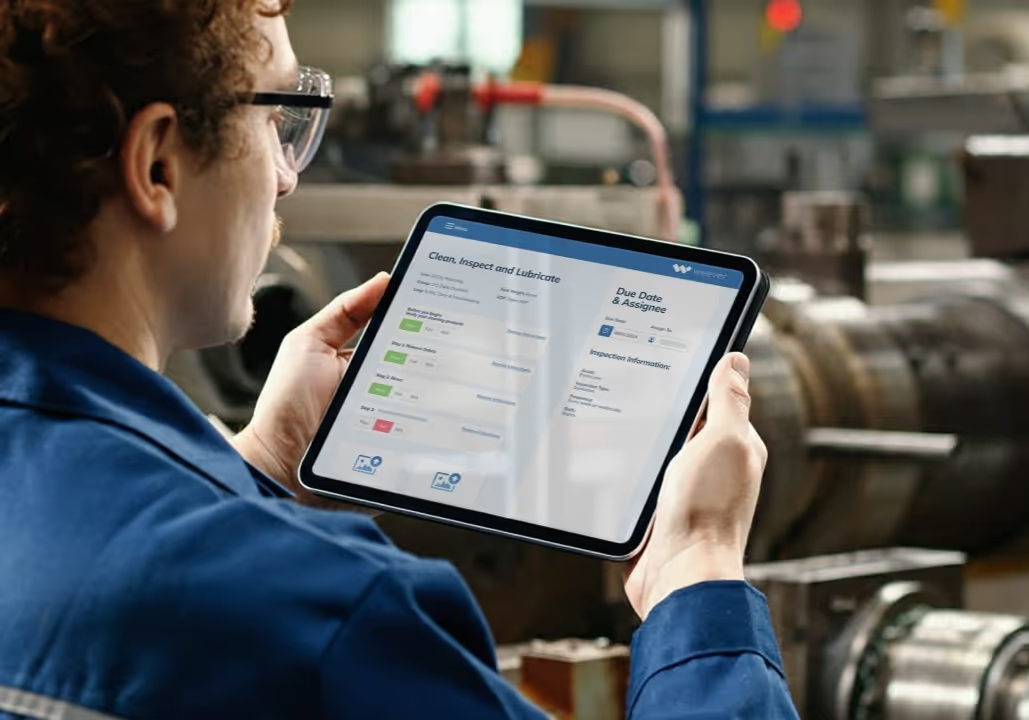
Standardizing CIL Practices Across Your Organization Using Weever’s Digital Platform
In the manufacturing industry, maintaining equipment through Cleaning, Inspection, and Lubrication (CIL) routines is essential for maximizing productivity and preventing breakdowns. However, without standardized CIL practices, companies face inconsistent maintenance, missed tasks, and equipment downtime. Standardizing these CIL practices across all teams, shifts, and locations ensures that every operator follows the same procedures, resulting in more reliable operations and improved equipment performance.
Weever’s digital platform plays a critical role in helping organizations standardize CIL practices across their operations, empowering teams to adopt a more streamlined and efficient approach to operator-led maintenance. In this blog, we’ll explore how Weever simplifies the creation, management, and execution of standardized CIL routines to improve maintenance practices and performance.
Simplifying Standardized CIL Practices
Standardizing CIL practices across an entire organization can be a daunting task, especially when teams are spread across multiple locations or shifts. Weever’s platform simplifies this process by offering an intuitive, easy-to-use system that allows companies to digitize and standardize their CIL procedures with minimal setup. This makes it easy for both operators and managers to follow consistent maintenance routines, regardless of their technical expertise.
Easy-to-Use CIL Checklists
Weever makes it simple to create and manage CIL checklists, ensuring that operators can easily access the correct procedures. By digitizing CIL instructions and integrating them into an easy-to-follow interface, frontline workers can confidently complete their tasks without confusion or deviation from the standard operating procedures (SOPs).
For example, a large-scale automotive parts manufacturer standardized their cleaning standards across all production lines using Weever’s platform. By digitizing their CIL checklists, the company ensured that every operator followed the same steps for cleaning and inspecting robotic assembly arms, resulting in fewer equipment failures and a more efficient production process.
Ensuring CIL Consistency
Ensuring consistency in preventive maintenance by operators requires a system that automates workflows and task assignments. Weever’s platform automates the distribution of CIL tasks, ensuring that operators receive timely reminders and actionable items directly through the platform. This automation eliminates the risk of missed tasks, keeps operators accountable, and ensures that every action follows the same standardized process.
Automation of Lubrication Schedules and Inspection Routines
By automating lubrication schedules and inspection routines, Weever helps operators maintain equipment consistently, reducing the likelihood of breakdowns caused by missed or incomplete maintenance. Automated workflows mean that operators are always aware of upcoming tasks, and managers can track completion rates in real-time, ensuring that all equipment is properly maintained.
For example, a metal fabrication facility used Weever to automate its lubrication schedules for heavy machinery, such as presses and cutting machines. Operators received real-time notifications for lubrication tasks, which were logged in the platform, ensuring consistency and reducing the risk of unscheduled downtime caused by poor lubrication practices.
Data-Driven Improvements Across The Organization
Tracking the performance and compliance of CIL tasks is critical to improving maintenance strategies and ensuring equipment reliability. Weever’s platform provides valuable insights and real-time reporting, enabling managers to track performance trends, monitor compliance, and make data-driven decisions to optimize maintenance practices.
Identifying Gaps in CIL Practices
Through Weever’s insights and data-tracking tools, managers can identify gaps in their CIL routines, such as equipment that frequently fails inspections or tasks that are often delayed. By analyzing these trends, companies can adjust their maintenance schedules and provide additional CIL training for operators where necessary to improve overall equipment efficiency (OEE).
For instance, a plastics manufacturing company used Weever to track the performance of its injection molding machines. Insights revealed that certain machines required more frequent lubrication than initially scheduled. By adjusting the lubrication schedules based on these insights, the company was able to reduce the frequency of machine malfunctions and extend the lifespan of its equipment.
Real-Time Reporting for Immediate Compliance
Weever’s real-time reporting ensures that CIL tasks are being completed on time and according to standardized procedures. Managers have instant visibility into the status of tasks, helping them verify that cleaning standards, inspection routines, and lubrication schedules are consistently followed across the organization. This visibility also allows for quicker interventions if tasks are missed or delayed.
Seamlessly Implementing Standardized CIL Practices
Transitioning to a standardized CIL system requires careful planning and execution to ensure that all teams adopt the new procedures seamlessly. Weever’s rollout methodology is designed to support organizations through every step of this process, offering comprehensive training and support to ensure that standardized CIL practices are integrated smoothly into daily operations.
Phased Rollout for Smooth Adoption
Weever’s phased rollout approach allows organizations to gradually introduce standardized CIL practices without overwhelming their teams. This step-by-step process ensures that operators have time to adapt to the new system, and managers can monitor the adoption process to ensure that the transition is successful.
In a chemical manufacturing plant, Weever’s phased rollout began by standardizing cleaning and inspection routines for one production line before expanding to the entire facility. This approach allowed operators to become comfortable with the new platform and ensured that any challenges were addressed early in the process, leading to a smooth and efficient implementation.
Comprehensive Training and Support
To ensure that operators are fully equipped to follow the new CIL practices, Weever provides comprehensive CIL training for operators. This training includes guidance on how to use the platform, how to follow digitized CIL instructions, and how to track their tasks using visual controls for CIL. Weever’s support team also offers ongoing assistance to ensure that operators and managers feel confident using the platform.
Standardizing CIL Practices with Weever for Optimal Performance
Standardizing CIL practices is key to ensuring equipment reliability, reducing downtime, and maintaining consistent operations in manufacturing. Weever’s digital platform simplifies the process of creating, managing, and tracking CIL routines, making it easy for organizations to implement standardized procedures across their teams.
By automating workflows, providing real-time reporting, and offering comprehensive training, Weever helps companies maintain consistency in operator-led maintenance and ensure that every piece of equipment is properly cared for. For any manufacturing company looking to standardize their CIL practices and improve equipment performance, Weever offers the ideal solution to drive operational efficiency and long-term success.
Catchy Slogans for Autonomous Maintenance Success
5S Audits Reporting Dashboard
MS Power BI Template
SOlve 5S with Weever
Say goodbye to inefficient 5S audits and hello to Weever.
Are you struggling with paper forms and spreadsheets for your 5S Auditing program? Get in touch to see how Weever can help you solve your 5S audits today!
"Having cloud-based forms on devices around the facility makes them so much more accessible, which makes it painless for operators to quickly provide a report."
Johanna Velez, VP Quality Assurance


"Weever is really user friendly and will have a massive positive impact on our operations and training team."
Mel Cadle - Op Ex Lead Process Engineer


Ultimate Guide to Success with 5S


bandjlogo
Bell
Canadian-Tire-Logo

Diageo-customer-logo-min

greyston-bakery-logo

hello-fresh-customer-logo
marks-customer-logo

CSL_Limited_logo
monin-logo

Winland Food

Mars-logo-main
rise-baking-customer-logo
Rockwool-Customer-Logo-min

Sportcheck-customer-logo

unilever-customer-logo

walmart-logo-small
husqvarna-customer-logo

Ajinomoto_logo

Peet's_Coffee_logo

Royal-Canin-Logo
Next Previous
5S Auditing Preview text
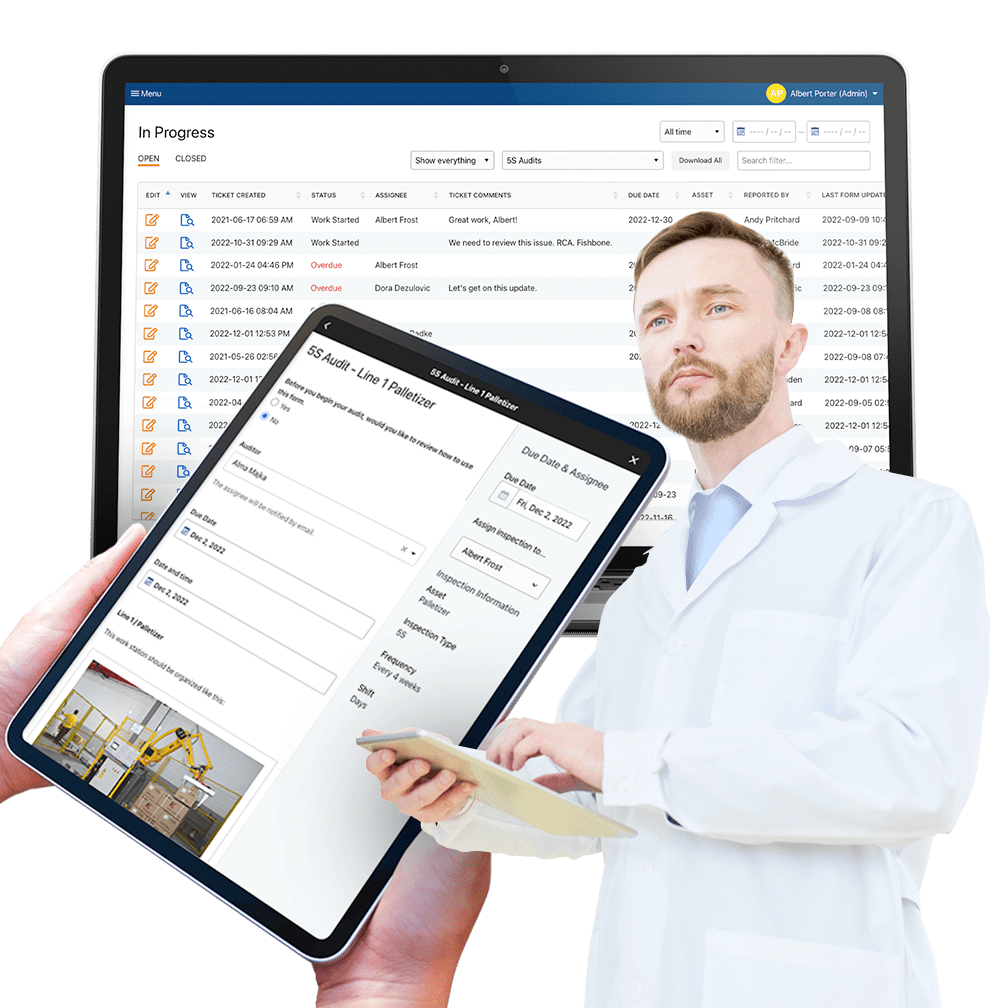
Automate 5S Auditing to ensure compliance and radically increase workstation productivity.
- Extremely simple and easy to use.
- Save time with automated reporting and administration.
- Capture richer data and manage improvement workflows.
- Automate schedules to ensure compliance.
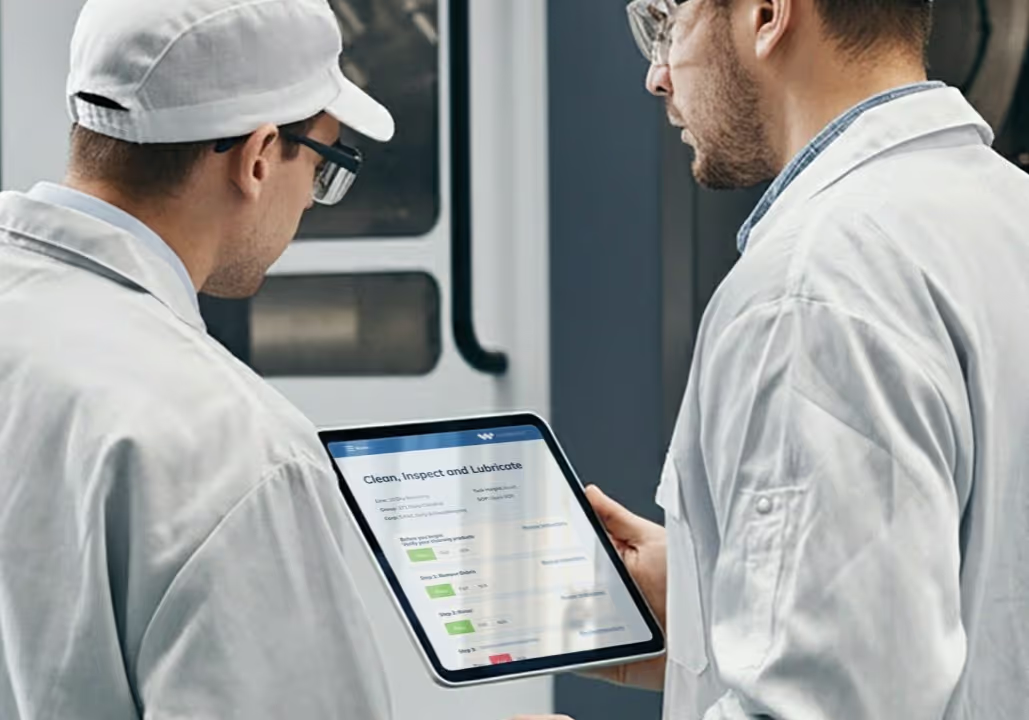
Streamlining Clean, Inspect, Lubricate (CIL) Processes with Weever: Boosting Maintenance Efficiency
For manufacturers, maintaining equipment uptime and performance is critical to staying competitive. Effective Clean, Inspect, Lubricate (CIL) processes ensure equipment remains in peak condition, minimizing downtime and improving operational efficiency. However, implementing consistent and efficient CIL routines can be challenging, particularly in high-paced environments with complex equipment. Weever’s digital platform provides manufacturers with the tools to streamline and automate CIL processes, helping to boost maintenance efficiency and reduce the risk of unexpected failures.
Simplifying CIL for Operators and Technicians
Weever’s intuitive interface makes it easy for operators and technicians to manage CIL tasks, regardless of technical expertise or experience level.
- User-friendly design: The platform provides a clear, straightforward interface where CIL tasks can be accessed, tracked, and completed with minimal training. Operators can easily follow CIL steps, reducing time spent navigating complex systems.
- Quick setup and task guidance: Weever allows teams to create and implement CIL routines quickly, so they can establish effective maintenance protocols without complex setups. Each CIL task is broken down into simple steps with actionable guidance for operators.
- Access to digital instructions: Operators can view digitized CIL instructions directly on the platform, ensuring they complete each task correctly. Detailed instructions also reduce the chances of skipped or incomplete steps, which are common in manual processes.
Example: In an automotive parts manufacturing plant, operators use Weever’s platform to view digital CIL instructions for various machines, following each step for cleaning and inspecting equipment to ensure production runs smoothly.
Ensuring Consistency and Timeliness
Weever enhances the consistency of CIL processes through automated workflows, so tasks are always assigned, tracked, and completed on time.
- Automatic scheduling of CIL tasks: Weever automates the scheduling and assignment of CIL tasks based on equipment usage and maintenance history, ensuring tasks are not missed. This proactive approach helps maintain equipment health and reduces wear and tear.
- Clear action items and notifications: Each task includes clear action items and reminders to guide operators through each step of CIL processes. Operators receive automated notifications when tasks are due, keeping everyone on track and minimizing the need for manual tracking.
- Integrated visual controls: Visual controls for CIL provide operators with a quick overview of what tasks are pending, completed, or overdue. This makes it easy for teams to stay organized and ensure compliance with CIL routines.
Example: A food production facility relies on Weever’s automated workflows to ensure equipment is lubricated and cleaned according to food safety regulations. Operators receive notifications to inspect machines every shift, ensuring no step is missed.
Data-Driven Maintenance Decisions
By digitizing CIL processes, Weever provides manufacturers with real-time insights that allow for smarter, data-driven maintenance decisions.
- Insight into CIL trends: Weever collects data on task completion, equipment performance, and frequency of issues, giving manufacturers insight into trends. Managers can analyze this data to identify recurring issues or equipment that requires additional maintenance.
- Real-time task monitoring: With real-time reporting, teams can monitor the status of CIL tasks, instantly identifying any skipped or delayed steps that could impact production. This transparency helps teams address potential problems before they escalate, ensuring production remains uninterrupted.
- Predictive maintenance opportunities: By tracking patterns in equipment performance, Weever helps manufacturers adopt preventive maintenance, scheduling CIL routines based on data rather than set time intervals. This can reduce unnecessary downtime and extend equipment lifespan.
Example: A plastic packaging plant uses Weever’s data insights to adjust lubrication schedules for high-use machines. Real-time monitoring identifies which equipment needs additional inspection based on performance patterns, reducing instances of unexpected failures.
Seamless Implementation for Manufacturing Teams
Implementing a digital CIL process can be daunting, especially for large teams or multi-location facilities. Weever’s scalable rollout methodology ensures a smooth transition to digital CIL processes.
- Step-by-step deployment: Weever’s implementation plan is gradual and scalable, allowing companies to roll out the platform across various departments or locations without disrupting production. This approach allows operators to get comfortable with the new processes.
- Comprehensive training: Weever provides training and onboarding to ensure operators understand how to use the platform and follow each step of CIL procedures. This training helps bridge knowledge gaps and fosters consistency across teams.
- Ongoing support: Weever’s support team is available to assist with troubleshooting or optimization, ensuring the platform continues to meet the organization’s needs as maintenance demands evolve.
Example: A large electronics manufacturer implements Weever across multiple facilities, starting with pilot testing in one department. After initial success, the platform is expanded across all departments with minimal disruption, allowing operators to standardize CIL processes for the whole organization.
Transforming CIL Efficiency with Weever
Streamlining CIL routines is essential for optimizing maintenance and ensuring equipment reliability in manufacturing. By simplifying CIL processes, automating workflows, providing actionable insights, and ensuring a smooth rollout, Weever enables manufacturers to maximize efficiency and reduce downtime.
For companies looking to enhance maintenance efficiency and improve equipment performance, Weever’s platform is the solution that drives results through digital CIL management.
Contact us today to book a demo!

Exploring Autonomous Maintenance: A Comprehensive Guide
Quality Defect Reporting
Customizable Templates
Dashboard Reporting
Automated Workflows
Schedule Management
Real-time Visibility
On-Demand Instructions
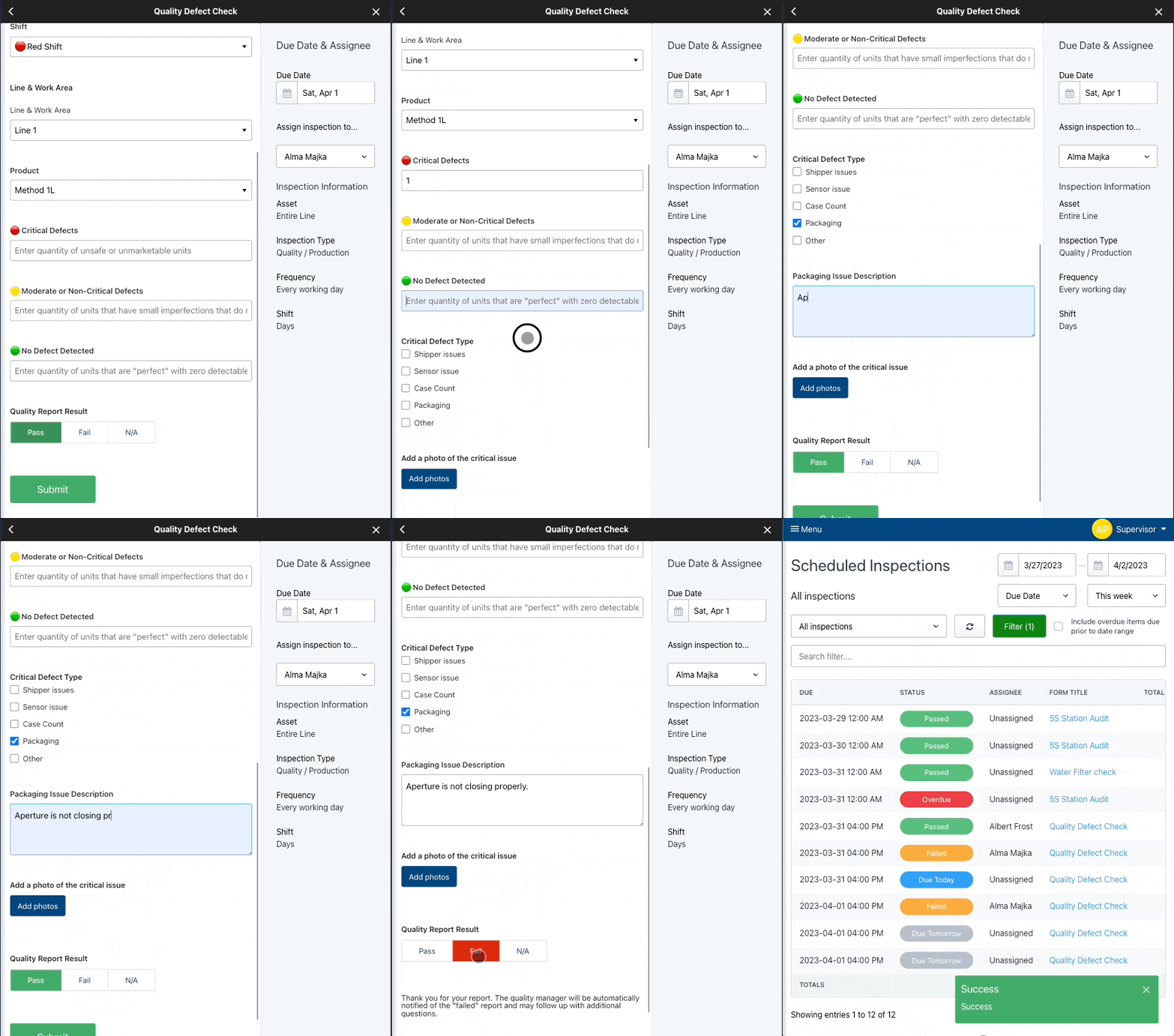
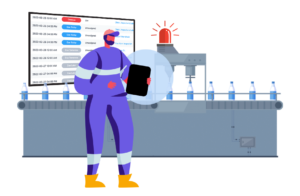
Digital DATA CAPTURE
Get it done correctly every time.
- Customize pre-built templates
- Guide staff through a seamless experience with on-demand instructions
- Create automated schedules and assignments
- Automate conditional "failure" workflows to ensure compliance
- And so much more ...


WORKFLOW AUTOMATION
Evaluate and approve.
- Evaluate submissions in real-time
- Automate workflows
- Foster collaboration and monitor project status to completion
- And so much more ...
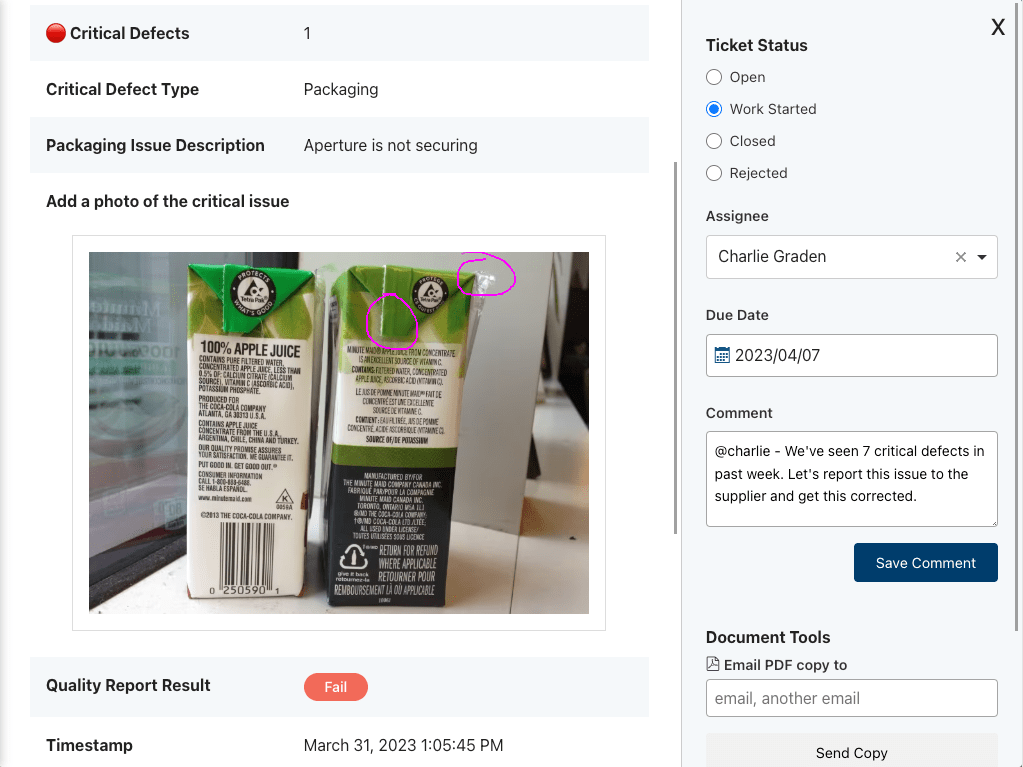
WORKFLOW AUTOMATION
Evaluate and approve.
- Evaluate submissions in real-time
- Automate workflows
- Foster collaboration and monitor project status to completion
- And so much more ...
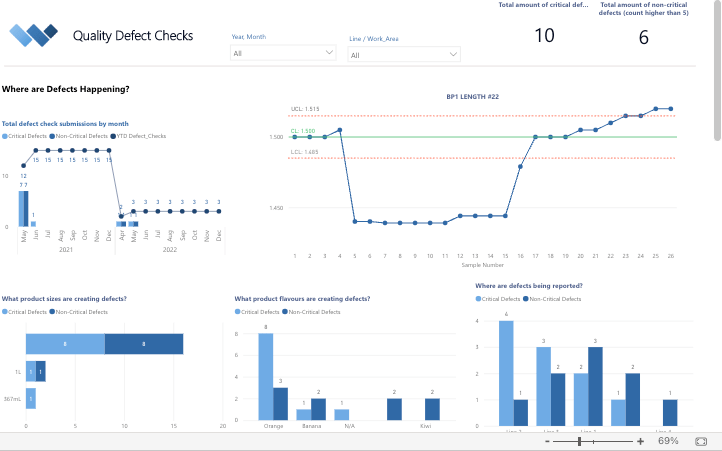
REAL-TIME REPORTING
Automate Business Intelligence.
- Customizable reporting dashboards
- Download Spreadsheets & PDF documents
- Automatically push data to other business systems

Take a Guided Tour.
Do it all with Weever.
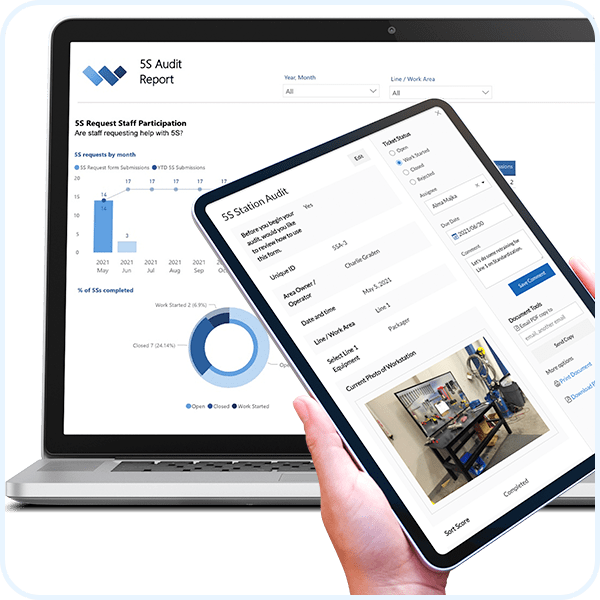
5S Auditing
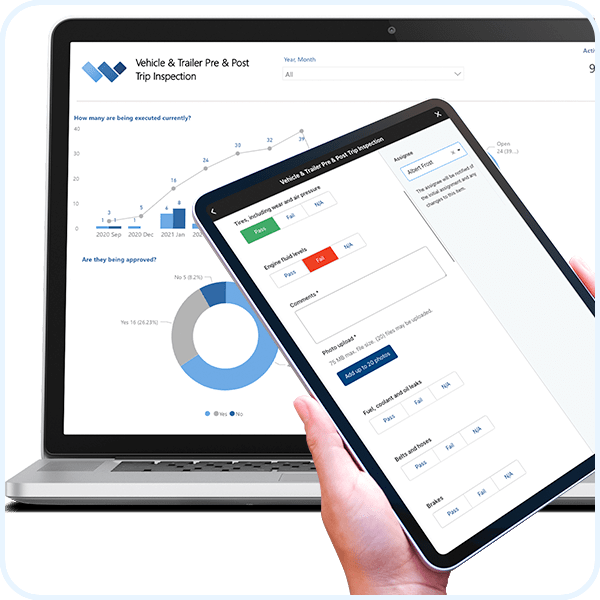
Vehicle & Trailer Pre & Post Trip Inspection
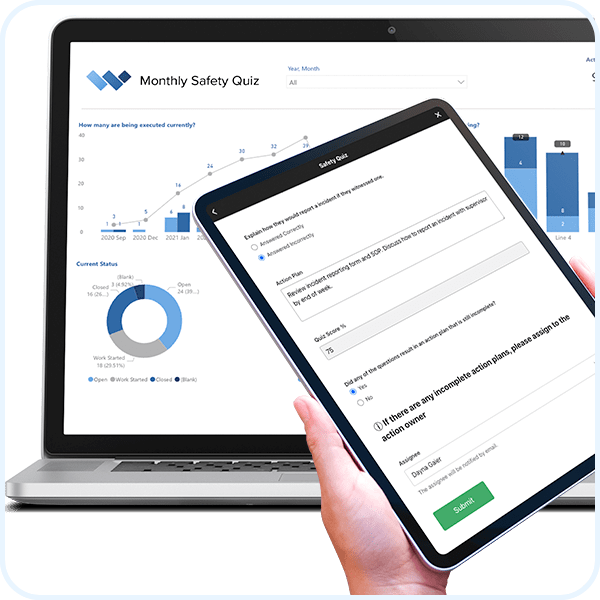
Monthly Safety Quiz
Machine Breakdown Analysis
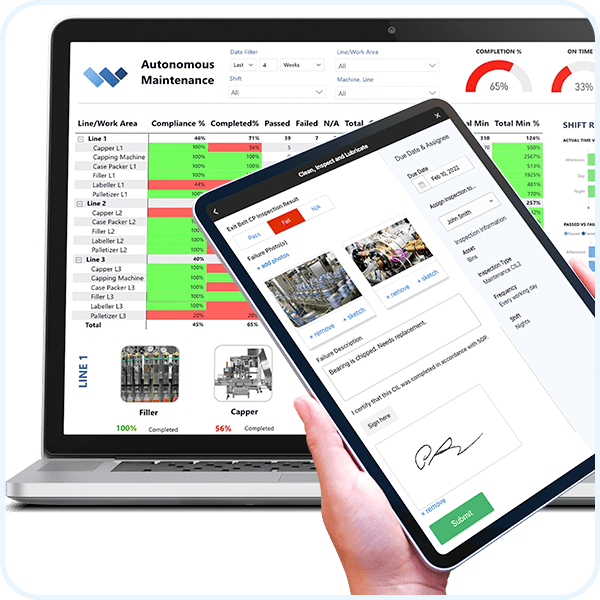
Autonomous Maintenance
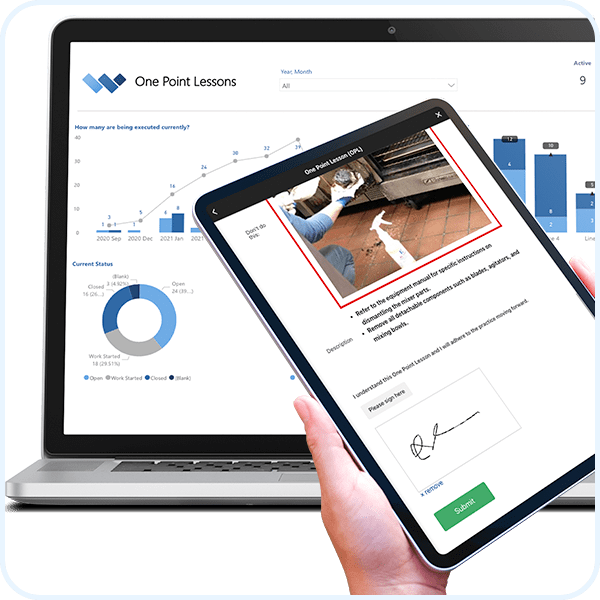
One Point Lessons (OPL)
Weever is a comprehensive workflow management platform that is used to automate safety, quality, maintenance, production, compliance, continuous improvement and training operational requirements.
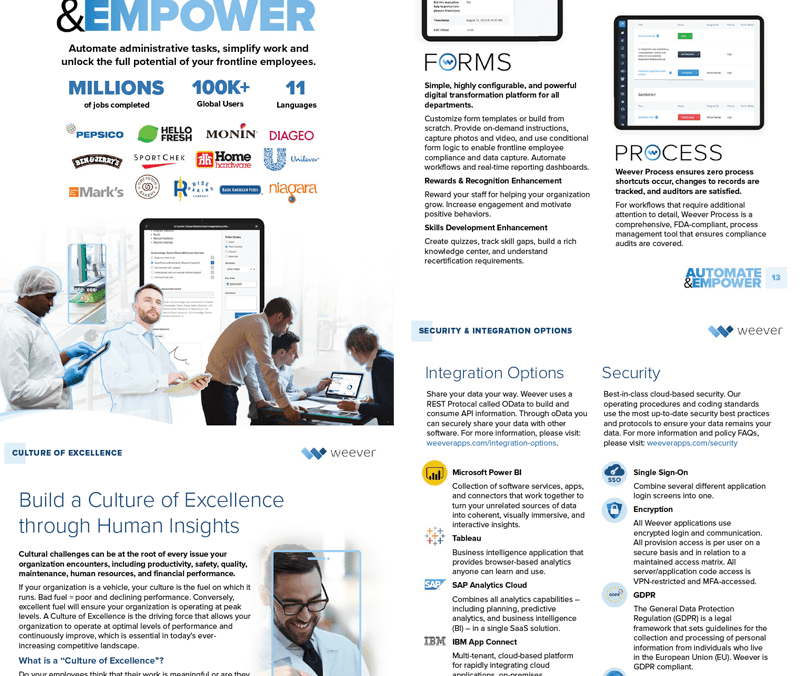
Learn about the Platform.
Download the brochure to get all the details about how Weever works.

Automating CIL Workflows with Weever: Saving Time and Reducing Manual Errors
Maximizing equipment uptime and performance is essential for manufacturers. Effective Clean, Inspect, Lubricate (CIL) routines are vital to this maintenance, but managing them manually can be error-prone and time-consuming. Weever’s automated workflows offer a streamlined approach to CIL management, improving both accuracy and consistency in a way that supports operators while enhancing productivity. By automating key steps, Weever’s software saves time, reduces errors, and allows manufacturers to focus on core operations rather than repetitive administrative tasks.
Simplifying CIL Automation
One of Weever’s primary strengths lies in its user-friendly design, making it accessible for all operators, regardless of technical expertise. By offering an intuitive interface, Weever ensures that automating CIL processes is straightforward and manageable.
- No extensive training required: Weever’s platform is designed to be accessible without the need for deep technical knowledge. Operators can quickly learn to use the platform to automate CIL routines, saving time and eliminating the need for in-depth training sessions.
- Clear, actionable tasks: Each step in the CIL process is presented in clear, simple language, reducing the chance for confusion or missed steps. By using Weever’s platform, operators can see exactly what needs to be done, when, and in what order.
- Digital access to CIL instructions: Weever digitizes CIL instructions, so operators can access them in real-time. Having these instructions readily available not only helps maintain consistency but also improves operators’ confidence and efficiency in completing tasks.
For example, in a manufacturing plant using Weever, operators who previously struggled with paper-based CIL routines can now view digital instructions on their tablets. This provides instant clarity on their next steps, reducing errors and ensuring every part of the CIL cycle is completed as required.
Eliminating Manual Errors
A key benefit of using Weever is its automated workflows, which bring precision and reliability to CIL routines. By automating CIL tasks, Weever ensures that each action is assigned, tracked, and completed on time, reducing reliance on manual reminders and minimizing errors.
- Automated scheduling: Weever allows manufacturers to set up recurring CIL routines according to specific maintenance schedules. Each CIL task is automatically assigned at the right time, ensuring consistent adherence to schedules without the need for manual tracking.
- Action item reminders: Operators receive reminders for each CIL action item, helping them stay on top of their duties without needing to remember every detail. With automatic prompts for each step, the risk of missed or overlooked tasks is minimized.
- Tracking completion: Weever automatically tracks the completion of each task, creating a record of every action taken. This tracking reduces the chance of duplicated efforts and ensures that managers have a complete overview of what’s been done.
Data-Driven CIL Decisions
Weever provides powerful analytics and real-time reporting tools that allow manufacturers to optimize their CIL routines based on real-world performance data. This feature is crucial in a manufacturing setting where any deviation from established maintenance schedules can lead to downtime or reduced product quality.
- CIL performance insights: Weever’s analytics track patterns in CIL performance, providing actionable insights into trends. For example, managers can quickly identify if certain equipment consistently requires more frequent lubrication or inspection, enabling proactive adjustments.
- Real-time monitoring: With real-time tracking, managers can see the status of each CIL task as it’s being performed. Any missed steps or delays are flagged immediately, giving teams the chance to address them before they impact production.
- Identifying recurring issues: Over time, Weever’s data allows managers to spot recurring issues with specific machines or parts. This insight is invaluable for manufacturers looking to implement preventive maintenance practices and reduce unplanned downtime.
Seamless Integration of CIL Automation Across Departments
Implementing new software across multiple departments or sites can be challenging, but Weever’s structured rollout methodology ensures a smooth transition to automated CIL workflows.
- Gradual implementation: Weever offers a phased approach to implementation, allowing organizations to introduce automated CIL routines gradually. This phased approach reduces disruption and allows operators to adapt to the new system comfortably.
- Comprehensive training and support: Weever provides training for operators and managers to ensure they understand the platform’s capabilities fully. This includes CIL training for operators, helping them get acquainted with automated workflows, digital instructions, and real-time monitoring.
- Tailored setup: Each manufacturing facility has unique needs, and Weever’s rollout methodology allows for a tailored setup that aligns with each department’s specific requirements. This configurability helps ensure the platform meets the needs of different teams and supports organization-wide adoption.
Elevating CIL Maintenance with Weever’s Automation
By automating CIL routines, Weever’s platform offers manufacturers a way to streamline maintenance processes, reduce manual errors, and boost efficiency across the board. With an intuitive design, automated workflows, real-time insights, and a smooth rollout process, Weever is equipped to help manufacturing organizations implement more accurate, consistent CIL routines. For manufacturers aiming to increase productivity and reduce downtime, Weever’s automated CIL workflows provide the essential tools to improve equipment performance and achieve optimal operational efficiency.

Digital Workplace Organization Best Practices
Digital workplace organization has become essential for modern businesses. The shift to remote and hybrid work models has amplified the need for efficient digital systems and processes.
At Weever Apps, we've seen firsthand how proper organization can boost productivity and reduce stress in digital environments. This post will explore best practices for streamlining your digital workplace, from file management to communication channels and productivity tools.
How to Streamline Digital File Management
Implement a Consistent Naming Convention
A consistent naming convention forms the foundation of efficient digital file management. When you avoid duplication through proper naming conventions, you can save a lot of time and money. You won't have to spend time searching for information or recreating lost files.

Create a standardized format that includes key details like date, project name, and file type. For example: "2024-11-12_ProjectX_Budget_v2.xlsx". This approach enables easy sorting and instant recognition of file contents.
Create a Logical Folder Structure
An organized folder structure is essential for efficient file management. A Wakefield Research survey reveals that 54% of office professionals could save up to 18 minutes per hour if they found information and files more quickly.
Design your folder hierarchy to reflect your organization's structure or workflow. Use main categories for departments or major projects, then create subcategories for specific tasks or stages. This method provides a clear path for file storage and retrieval, which minimizes time spent searching for documents.
Use Tags and Metadata
While folder structures matter, they can sometimes limit file categorization. Tags and metadata offer a solution. AIIM (Association for Intelligent Information Management) reports that organizations using metadata effectively can cut information search time by up to 50%.
Encourage your team to apply relevant tags when saving files. These could include project names, client names, or specific keywords related to the file's content. Most modern file management systems allow for easy tagging and searching based on these tags, which simplifies file location across different folders.
Utilize metadata fields to include extra information about files (such as author's name, last modification date, or file status). Consistent population of these fields creates powerful search capabilities that can save hours of time in the long run.
Automate File Organization
Automation can significantly enhance your file management efforts. Many digital platforms offer features that automatically sort, tag, and file documents based on predefined rules. This reduces human error and ensures consistency in file organization.
Set up automated workflows to move files to appropriate folders based on their content or metadata. For instance, you could create a rule that automatically moves all invoices to a designated "Finance" folder and tags them with the current month.
Regular Maintenance and Clean-up
Even the best-organized systems require regular maintenance. Schedule periodic clean-ups to archive old files, remove duplicates, and ensure that naming conventions and folder structures remain relevant.
Try to implement a quarterly review process where team members assess their digital files and folders. This practice helps maintain an organized digital workspace and prevents the accumulation of unnecessary files.
As we move forward, let's explore how to optimize digital communication channels, another critical aspect of a well-organized digital workplace.
How to Optimize Digital Communication Channels
Select the Right Communication Tools
Effective digital communication forms the backbone of a well-organized workplace. The first step in optimization involves choosing appropriate tools for different types of interactions. For quick, informal exchanges, instant messaging platforms (like Slack or Microsoft Teams) excel. These tools enable real-time communication and can be organized into channels for specific topics or teams.

Email remains a staple for more formal or detailed communications. However, it's important to use email judiciously to prevent inbox overload. A McKinsey study found that the average professional spends 28% of their workday reading and answering emails. To combat this, consider using project management tools for task-related communications, reserving email for external communications and important announcements.
Video conferencing tools prove essential for face-to-face interactions, especially in remote or hybrid work environments. These platforms facilitate more nuanced communication and help build stronger team relationships.
Establish Clear Communication Guidelines
After tool selection, it's important to establish clear guidelines for their use. This prevents confusion and ensures that important information doesn't get lost in the noise.
Create a communication charter that outlines which channels should be used for different types of messages. For example, specify that all project updates should be posted in the relevant project management tool, while company-wide announcements should be sent via email.
Set expectations for response times on different platforms. For instance, instant messages might require a response within a few hours, while emails could have a 24-hour response window.
Implement Effective Notification Strategies
Notification overload can significantly hamper productivity. A study by RescueTime found that the average knowledge worker checks email or IM every 6 minutes. To combat this, implement strategies to manage notifications effectively.
Encourage team members to customize their notification settings. This might include turning off non-essential notifications during focused work periods or setting up "do not disturb" hours.
Use features like conversation threads to keep discussions organized and reduce unnecessary notifications. This can help team members stay informed without constant interruptions.
Try implementing a "notification-free" day or afternoon each week, where team members focus on deep work without the distraction of constant communication alerts.
The optimization of digital communication channels can significantly enhance productivity and reduce stress in your digital workplace. The goal is not just to communicate more, but to communicate more effectively. As we move forward, we'll explore how to leverage digital workplace tools to further boost productivity and streamline operations.
How Digital Tools Boost Workplace Productivity
Streamline Tasks with Project Management Platforms
Project management tools transform team organization and focus. Platforms like Asana, Trello, or Monday.com offer visual task boards, deadline tracking, and team collaboration features. These tools centralize project information, which reduces time spent on status updates and meetings.

To maximize benefits, integrate these tools with your existing systems. For example, link your project management platform with your team's communication tools to automatically update task statuses when team members send messages.
Enhance Collaboration with Real-Time Document Editing
Real-time collaborative editing platforms (like Google Workspace or Microsoft 365) allow multiple team members to work on the same document simultaneously. This approach speeds up the review process and ensures everyone works with the most up-to-date information.
To get the most out of these platforms, establish clear guidelines for document organization and version control. Use comment features for feedback and discussions, which keeps all relevant information in one place. This practice reduces email clutter and streamlines decision-making processes.
Track Time and Measure Productivity
Time tracking tools provide valuable insights into how teams spend time and where they can improve productivity. Apps like RescueTime or Toggl offer automatic time tracking, detailed reports, and integrations with other productivity tools.
When you implement time tracking, focus on using the data for process improvement rather than micromanagement. Encourage team members to use these tools for personal productivity insights, which fosters a culture of self-improvement.
Choose Tools Thoughtfully
To avoid tool overload, carefully assess your team's needs and select platforms that integrate well with your existing systems. Regular training and clear usage guidelines will ensure your team gets the most out of these powerful productivity enhancers.
For frontline workers, Weever Apps offers a Connected Worker platform that boosts productivity and operational efficiency. It includes features like automated workflows, real-time dashboards, and intuitive digital forms. This makes Weever Apps an excellent choice for organizations looking to optimize their frontline operations.
Final Thoughts
Digital workplace organization empowers teams to perform at their best. It creates a streamlined, efficient environment that boosts productivity and reduces stress. The strategies we discussed, from file management to communication optimization, play vital roles in building a well-organized digital workplace.

Success requires continuous improvement and adaptation as technology evolves and work patterns shift. Regular assessments of your digital workplace strategies ensure they remain effective and aligned with your team's needs. Encourage employee feedback and remain open to new tools or methods that could further enhance productivity.
A well-organized digital workplace leads to significant time savings, improved collaboration, and enhanced job satisfaction. For frontline workers, Weever Apps offers tailored solutions to streamline operations and improve data visibility. Prioritizing digital workplace organization invests in your team's efficiency, effectiveness, and well-being.
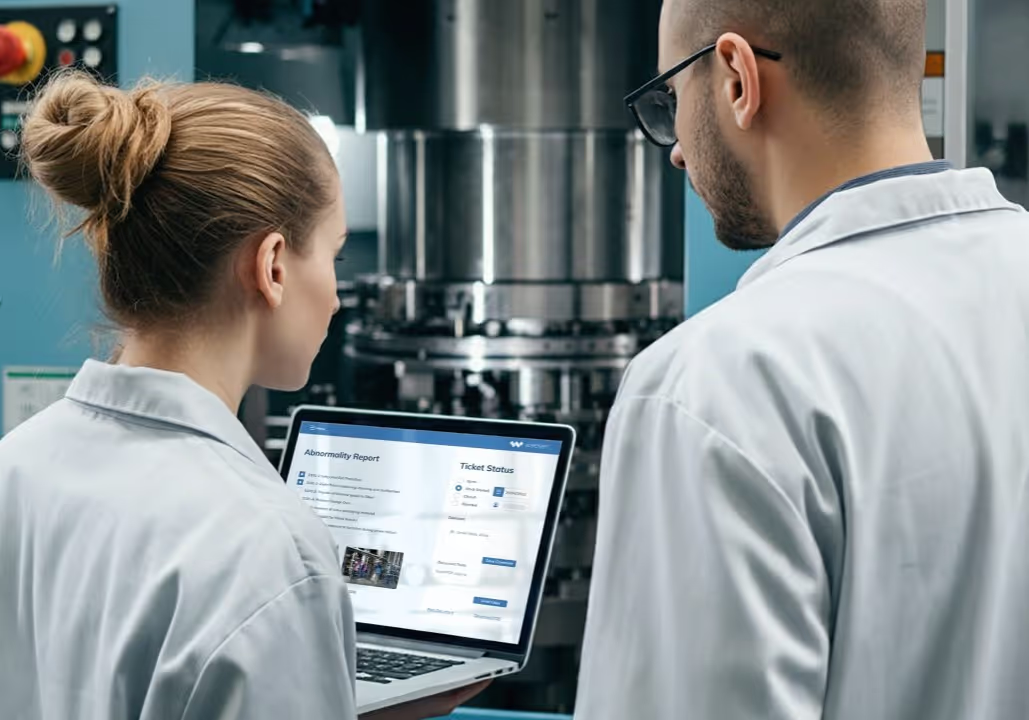
How Weever Simplifies Abnormality Detection and Resolution for Manufacturers
Maintaining operational efficiency means promptly identifying and resolving abnormalities and defects before they escalate into costly disruptions. However, with complex workflows and the constant drive to maximize output, detecting these issues early can be challenging. That’s where Weever software comes into play. Designed specifically with manufacturers in mind, Weever offers a streamlined solution to abnormality detection and resolution, helping teams maintain efficiency and optimize productivity.
So, how exactly does Weever simplify abnormality and defect detection and resolution for manufacturers? Let’s dive into the capabilities of Weever that make it an indispensable asset.
Abnormality Detection Made Simple: A User-Friendly Platform
The first step in managing any abnormality is accurate and prompt detection. With Weever’s intuitive interface, abnormality reporting becomes a seamless process. Operators on the production floor are often the first to notice issues, but traditional reporting methods can be time-consuming, leading to delays that risk further complications. Weever addresses this challenge by providing a user-friendly platform that enables operators to quickly log abnormalities with minimal disruption to their workflow.
Weever’s platform is built with the end-user in mind. Its interface is clean and easy to navigate, requiring minimal training to get started. This ensures that team members can report abnormalities or defects without hesitation, even if they are not technically inclined. Operators can record details on any irregularities they observe, from equipment malfunctions to quality issues in the final product, all with just a few clicks. The simplicity of Weever’s platform allows operators to focus on their primary responsibilities while confidently contributing to the larger goal of operational efficiency.
Streamlined Workflows and Action Item Tracking
Identifying an abnormality is only the first step; taking corrective action is where the real challenge begins. This is where Weever’s automated workflows come into play. Once an abnormality is reported, Weever’s software automatically triggers a sequence of action items designed to resolve the issue. These workflows are configurable, allowing manufacturers to define and assign specific roles to handle particular types of abnormalities, ensuring that each issue is dealt with promptly and efficiently.
By automating the assignment of action items, Weever minimizes the chance of errors or missed steps, making sure every abnormality is addressed systematically. The software can notify relevant team members immediately, provide them with precise instructions on the next steps, and monitor the progress of each action item until resolution. This not only saves time but also ensures that corrective actions are standardized across the organization, reducing the risk of recurring issues due to oversight or inconsistency.
Spotting Trends and Real-Time Reporting
One of the most powerful tools Weever offers is its ability to analyze data and provide valuable insights into abnormality patterns. By consistently tracking abnormalities, Weever can identify trends and recurring issues, allowing manufacturers to address the root causes proactively. This insight is essential for continuous improvement and enables management teams to implement preventive measures that reduce the likelihood of future defects or operational disruptions.
Weever’s real-time reporting capabilities take these insights a step further. Managers and operators receive instant notifications when an abnormality is reported, allowing for immediate responses to potential issues. The software’s real-time reporting features enable teams to view data in real-time, providing a clear picture of the production floor’s current state. This capability is especially useful for quickly identifying bottlenecks or frequently occurring issues, allowing management to deploy targeted solutions before minor issues become major setbacks.
By transforming data into actionable insights, Weever empowers manufacturers to move from a reactive to a proactive approach. Instead of waiting for issues to arise, manufacturers can anticipate and mitigate potential disruptions, thereby improving efficiency and reducing downtime.
Consistency Across the Board: Weever’s Rollout Methodology
For manufacturers with multiple facilities or departments, consistency in processes is critical. Variations in reporting methods or action-taking procedures between teams can lead to discrepancies that hinder effective resolution. Weever’s streamlined rollout methodology solves this challenge, enabling manufacturers to standardize abnormality and defect detection and resolution processes across all teams or facilities.
Weever’s implementation process is designed to be as efficient as possible, with minimal disruption to day-to-day operations. The software is adaptable to various manufacturing environments, making it easy to integrate Weever into existing workflows. Training materials and support are also provided, ensuring that every team member can use the platform effectively from day one. As a result, manufacturers can establish a unified approach to abnormality and defect detection and resolution, enhancing consistency, reliability, and productivity across their operations.
Weever: A Holistic Solution for Efficient Abnormality and Defect Management
In the dynamic world of manufacturing, Weever stands out as a holistic solution that simplifies abnormality detection and resolution from start to finish. With its intuitive interface, automated workflows, insightful reporting, and efficient rollout methodology, Weever enables manufacturers to address abnormalities and defects with speed and accuracy. By ensuring that each step of the process is streamlined, Weever empowers teams to focus on their primary roles, secure in the knowledge that any irregularities will be handled promptly and effectively.
The ability to detect and resolve abnormalities quickly is essential to maintaining operational efficiency in manufacturing. Weever software not only simplifies this process but also elevates it by leveraging automation, real-time reporting, and data-driven insights. This approach allows manufacturers to take a proactive stance on defect prevention, ultimately enhancing productivity and contributing to a more resilient manufacturing process.
With Weever, manufacturers have a trusted partner that supports them in minimizing disruptions and maintaining the highest standards of quality and efficiency. In an industry where every minute counts, Weever provides the tools manufacturers need to stay ahead of potential issues, secure in the knowledge that they are equipped to tackle abnormalities with confidence and precision.
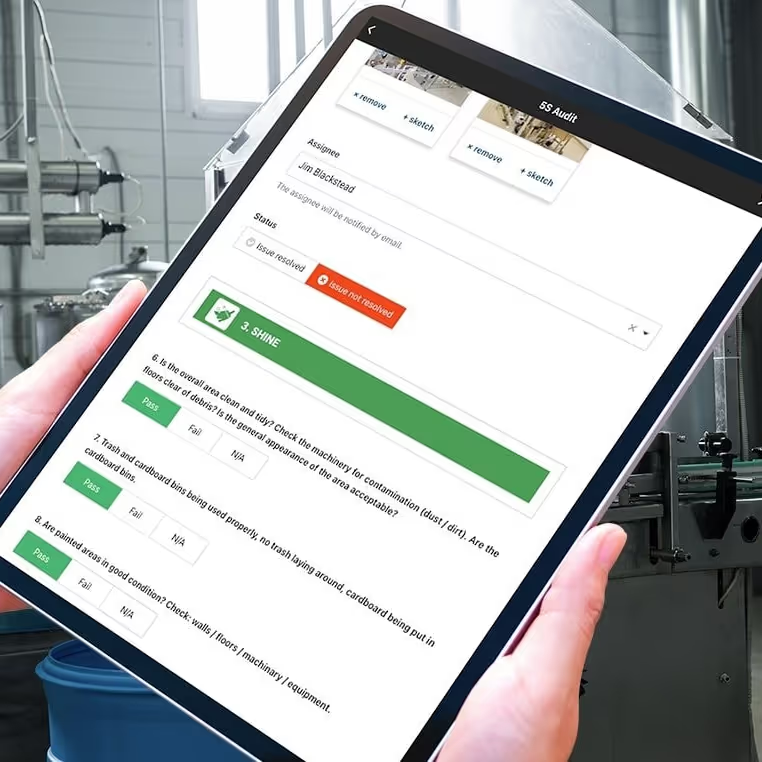
Enhancing Manufacturing Cleaning Standards with Weever
In the manufacturing industry, maintaining rigorous cleaning standards is critical to ensuring compliance, protecting product integrity, and avoiding costly disruptions. Whether it's adhering to strict safety regulations or maintaining clean, efficient production environments, achieving consistent and effective cleaning is essential for operational success.
However, managing these tasks can be daunting, especially when relying on manual processes that leave room for error. Weever software offers a robust solution that simplifies, automates, and tracks cleaning routines, ensuring that manufacturing companies can maintain high standards without overburdening their teams. By leveraging tools such as operator-led maintenance, Cleaning Inspection Lists (CIL) checklists, and tracking CIL with connected worker platforms, Weever helps businesses integrate preventive maintenance seamlessly into their cleaning processes.
So, how can Weever help the manufacturing industry achieve these rigorous cleaning standards? Let's explore how Weever's solutions are tailored to meet these challenges.
Simplifying the Implementation of Cleaning Protocols
One of the primary challenges faced by the manufacturing industry is ensuring that frontline workers can follow cleaning standards consistently and efficiently. Often, cleaning protocols can be complex, and without the right tools, it's easy for workers to miss crucial steps, leading to compliance issues or subpar results.
Weever's intuitive interface addresses this challenge by simplifying how cleaning protocols are communicated and executed:
- User-Friendly Interface: Weever's platform is designed to be easy for frontline workers to navigate, regardless of their technical skill level. With minimal training, employees can access tasks, view CIL checklists, and follow standard operating procedures (SOPs) to complete their cleaning responsibilities.
- Quick Implementation: Training for operators is built into the platform, allowing teams to quickly get up to speed with the cleaning protocols specific to their operations. In manufacturing environments where equipment cleanliness is critical, this streamlined training ensures that no time is wasted and that operators are ready to maintain high standards from day one.
- Adaptable for Multiple Industries: Weever's customizable interface allows businesses to tailor the platform to their specific cleaning needs. From tracking lubrication schedules on machinery to managing inspection routines on production lines, Weever provides the flexibility needed to meet the cleaning demands of different manufacturing sectors.
Weever empowers operator-led maintenance across manufacturing facilities, ensuring that cleaning standards are met consistently and efficiently with simple-to-follow and easy-to-implement tasking.
Ensuring Consistency in Cleaning Standards
Ensuring that cleaning tasks are consistently performed is a major hurdle for industries that rely on manual processes. In fast-paced manufacturing environments, missed cleaning routines can lead to serious compliance issues, equipment malfunctions, or operational downtime. Weever automates cleaning tasks to eliminate these risks. Weever's automated workflows and action items help streamline the cleaning process:
- Automated Scheduling: Weever's platform automates the scheduling of critical cleaning tasks. Whether it's daily equipment sanitation or regular maintenance of production areas, operators are automatically notified when tasks are due. This ensures that cleaning routines are never missed, reducing the risk of contamination, product defects, or equipment failures.
- Clear Action Items: Each operator is assigned specific cleaning tasks, such as following a CIL checklist or completing an SOP. These tasks come with clear action items and deadlines, ensuring that workers know exactly what to do and when to do it. For instance, machine operators can be notified to clean and inspect equipment after each production run, while maintenance staff receive reminders for scheduled deep cleans.
- Real-Time Notifications: Weever sends real-time alerts when a task is missed or overdue, allowing managers to intervene quickly. This feature ensures that cleaning standards are maintained without fail and that nothing slips through the cracks. For example, if a critical cleaning task on a production line is skipped, management can be alerted immediately and take corrective action to prevent potential issues.
By automating workflows and providing clear action items, Weever ensures that preventive maintenance by operators is carried out consistently, helping manufacturing facilities maintain their cleaning standards without relying on manual oversight.
Monitoring and Improving Cleaning Performance
In manufacturing, where strict cleanliness and equipment maintenance are paramount, having detailed insights into cleaning performance is critical. Weever's platform offers real-time reporting and analytics that allow companies to monitor cleaning routines, identify trends, and make data-driven improvements.
Here's how Weever's insights and reporting features enhance cleaning performance:
- Tracking Cleaning Activities: Weever tracks all cleaning activities in real time, providing visibility into what tasks have been completed and which are still pending. This is especially useful for tracking CIL with connected worker platforms, where operators are responsible for performing and logging their cleaning duties. For example, a manufacturing plant can monitor which operators have completed their cleaning tasks and which equipment may need additional attention.
- Identifying Gaps and Trends: Weever's platform provides valuable insights into cleaning performance over time. Managers can analyze data to identify gaps in compliance or trends that may indicate recurring issues, such as frequent equipment downtime due to inadequate cleaning or maintenance. By recognizing these patterns, companies can adjust their cleaning protocols to improve outcomes.
- Real-Time Reporting for Accountability: Weever's real-time reporting ensures that all cleaning activities are tracked and logged immediately. This level of accountability provides transparency into how well cleaning standards are being maintained, allowing managers to ensure that their teams are staying compliant with industry regulations and internal policies.
By providing deep insights into cleaning activities, Weever enables businesses to proactively manage their cleaning protocols, make improvements, and ensure long-term compliance with industry standards.
Seamlessly Integrating Cleaning Standards into Daily Routines
Transitioning to a new cleaning management system can be daunting, especially in manufacturing environments with strict regulations and complex processes. Weever's rollout methodology ensures a smooth and seamless transition, allowing manufacturing facilities to quickly integrate cleaning standards into their daily routines.
Here's how Weever supports a successful rollout:
- Phased Implementation: Weever provides a phased rollout process that ensures operators can gradually adopt the platform without disrupting daily operations. This means operators can begin by using CIL checklists and digitizing instructions to manage cleaning routines while gradually incorporating other features like automated task assignments and reporting.
- Tailored Training for Operators: Training for operators is a core part of Weever's rollout plan. Whether it's teaching production line workers how to meet stringent cleaning standards or training maintenance staff on efficiently managing equipment upkeep, Weever offers tailored support to ensure compliance from day one.
- Visual Controls for CIL: Weever's platform includes visual controls, which make it easy for operators to see at a glance what cleaning tasks are pending, completed, or overdue. This visual aid simplifies task management and ensures that critical cleaning duties are never overlooked, even in busy manufacturing environments.
By offering comprehensive training and visual tools, Weever ensures that teams can easily integrate cleaning standards into their routines, maintaining compliance without additional burden.
Achieving Rigorous Cleaning Standards with Weever's Multi-Industry Approach
Maintaining high cleaning standards is a priority for the manufacturing industry, where compliance and operational efficiency go hand in hand. Weever's customizable solutions offer a powerful platform to help manufacturers meet their cleaning goals by automating workflows, providing real-time insights, and simplifying task management through intuitive tools like operator-led maintenance and CIL checklists.
With Weever, manufacturing facilities can streamline their cleaning routines, track performance, and ensure that they are meeting both internal and regulatory cleaning standards. From automated task assignments to real-time reporting, Weever ensures that every aspect of cleaning is managed efficiently, allowing businesses to focus on what they do best-producing quality products in safe, compliant environments.
For any manufacturing business looking to improve their cleaning standards, Weever provides the perfect platform to boost productivity, maintain compliance, and ensure cleanliness across all operations.

Implementing 7S Workplace Organization Techniques
At Weever Apps, we've seen firsthand how workplace organization can transform businesses. The 7S Workplace Organization system is a powerful tool for boosting efficiency and productivity.
This comprehensive approach goes beyond simple tidying up. It's a strategic method that can revolutionize your entire work environment.
What is the 7S Workplace Organization System?
The Seven S's Explained
The 7S Workplace Organization Standard is a comprehensive approach to streamline operations and boost productivity. It transforms your entire work environment through seven interconnected elements: Sort, Set in Order, Shine, Standardize, Sustain, Safety, and Spirit.

Sort eliminates unnecessary items from the workspace. Set in Order organizes essential items for easy access. Shine maintains cleanliness. Standardize creates consistent processes. Sustain maintains improvements over time. Safety prioritizes a hazard-free environment. Spirit fosters a positive workplace culture.
Tangible Benefits of 7S Implementation
The 7S system yields significant benefits. A study by the Lean Enterprise Research Centre found that organizations adopting lean principles (like 7S) reduced operational costs by up to 20% in the first year alone.
The U.S. Bureau of Labor Statistics reported 5,486 worker fatalities in 2022. The Safety principle of 7S directly addresses this issue. Moreover, studies show that the average person wastes 4.3 hours per week searching for papers. Sort and Set in Order principles tackle this problem head-on, potentially saving valuable work hours.
Practical Application of 7S Principles
To implement 7S effectively, start with a comprehensive audit of your current workplace organization. This will identify areas for immediate improvement. Next, create a tailored implementation plan with realistic timelines.
Employee engagement is key for success. Consider appointing 7S champions in each department to maintain momentum. Use digital tools (such as those offered by Weever Apps) to track progress - real-time dashboards can monitor key performance indicators related to 7S implementation.
Regular data collection and analysis will identify areas that need prompt corrective action. This ongoing commitment ensures the 7S system remains effective over time, continuously improving your workplace organization and efficiency.
Digital Solutions for 7S Implementation
In today's digital age, technology plays a vital role in implementing and maintaining 7S standards. Digital solutions (like Weever Apps) support the implementation and maintenance of 7S workplace organization standards. These tools offer features such as:
- Digital checklists for audits
- Real-time data collection and analysis
- Mobile accessibility for on-the-go inspections
- Automated reporting for quick insights
By leveraging these digital solutions, organizations can streamline their 7S implementation process and ensure consistent adherence to the principles.
As we move forward, let's explore how to implement the first four S elements in detail, starting with the 'Sort' principle.
How to Implement the First Four S Elements
Sort: Declutter with Purpose
The Sort phase requires a systematic approach to workspace organization. Categorize items as essential, occasionally used, or unnecessary. Apply red tags to items unused in the past month for removal or alternative storage. Creating a dedicated workspace can maximize productivity, efficiency, health, and well-being for freelancers.

Set a specific timeframe (e.g., one week) for this process. Involve all team members and encourage thorough sorting. Create a designated area for red-tagged items, allowing a brief retrieval period before permanent removal.
Set in Order: Strategic Placement
After sorting, focus on strategic organization. Place frequently used items within arm's reach and less frequently used items further away. Utilize shadow boards for tools, color-coding for files, and clear labeling for storage areas.
A manufacturing plant in Ohio reported a 15% increase in productivity after implementing this step. They created workstation layouts that minimized movement and reduced search time for tools.
Shine: Clean and Inspect
Cleanliness impacts both function and safety. Develop a daily cleaning schedule for each area. Assign responsibilities and provide necessary cleaning supplies at each station.
During cleaning, inspect equipment for signs of wear or malfunction. This proactive approach can reduce equipment downtime by up to 35% (according to a study by Plant Engineering magazine).
Standardize: Consistency is Key
Create visual aids and checklists to maintain the first three S's. Use photos of properly organized workspaces as references. Develop standard operating procedures (SOPs) for cleaning and organization tasks.
A food processing plant implemented digital checklists (using a platform like Weever Apps) for their standardization process. They saw a 40% reduction in non-compliance issues within the first quarter of implementation.
Continuous Improvement through Digital Solutions
Digital tools play a crucial role in implementing and maintaining these 4S elements. Platforms (such as Weever Apps) offer features like digital checklists, real-time data collection, and automated reporting. These solutions streamline the implementation process and ensure consistent adherence to 4S principles.
The interconnected nature of these elements often leads to an iterative refinement process. As you implement each S, you'll likely revisit and improve the others. This ongoing cycle sets the stage for the final three S elements, which we'll explore in the next section.
Mastering the Final 3S Elements: Sustain, Safety, and Spirit
Sustain: Embedding Improvements Through Habit Formation
The Sustain element focuses on maintaining organizational improvements over time. Research from University College London indicates that it takes an average of 66 days for a new behavior to become automatic. To leverage this insight, organizations can implement a 90-day challenge for their teams to solidify new 7S practices.

Digital tools play a key role in tracking daily adherence to new processes. A manufacturing plant in Michigan used a digital checklist app to monitor 7S compliance. After 90 days, they achieved a 95% adherence rate to new organizational practices.
To further reinforce positive habits, companies can create a reward system for consistent 7S adherence. This could range from a monthly recognition program to performance-based bonuses. The Incentive Research Foundation found that well-structured incentive programs can increase performance by up to 44%.
Safety: Proactive Measures for a Secure Workplace
Safety stands as a paramount concern in any workplace. The U.S. Bureau of Labor Statistics reported 2.7 million nonfatal workplace injuries and illnesses in 2020, many of which could have been prevented with proper safety measures.
One effective strategy is to implement a near-miss reporting system. This allows employees to report potential hazards before they cause harm. A chemical plant in Texas implemented such a system and reduced workplace accidents by 50% within a year.
Regular safety audits using digital tools ensure consistent monitoring and quick identification of potential hazards. Organizations can implement digital audit tools that allow for real-time data collection to maximize the effectiveness of quality audits.
Spirit: Cultivating Engagement and Positive Workplace Culture
The Spirit element focuses on creating a positive workplace culture. According to Gallup, highly engaged teams show 21% greater profitability.
Organizations can implement an employee feedback system to identify areas for improvement in workplace culture. A tech company in Seattle used quarterly pulse surveys and saw employee satisfaction scores increase by 30% over a year.
Creating opportunities for cross-departmental collaboration can foster a sense of community and shared purpose. A marketing firm in New York implemented monthly cross-team projects and saw a 40% increase in employee-reported job satisfaction.
Companies should encourage personal development by offering learning opportunities that align with both company goals and individual interests. LinkedIn's 2019 Workplace Learning Report found that 94% of employees would stay at a company longer if it invested in their learning and development.
The 7S system requires ongoing commitment and refinement. Organizations that successfully implement these final three S elements can create a sustainable, safe, and spirited workplace that drives long-term success and employee satisfaction.
Final Thoughts
The 7S Workplace Organization system transforms businesses by boosting efficiency and productivity. Companies that implement this system can expect reduced operational costs, increased productivity, and improved safety records. The system also creates a more engaged workforce and addresses common workplace issues like time wasted searching for items.

Successful implementation of 7S workplace organization requires a comprehensive audit, a tailored plan with realistic timelines, and employee engagement at all levels. Companies should appoint 7S champions in each department to maintain momentum and use digital tools to track progress. Regular data collection and analysis help identify areas that need prompt corrective action.
Weever Apps offers digital solutions to streamline the implementation and maintenance of 7S workplace organization standards. The Connected Worker platform provides features such as automated workflows, real-time dashboards, and intuitive digital forms. These tools make it easier to manage 7S initiatives and drive operational excellence in any organization.
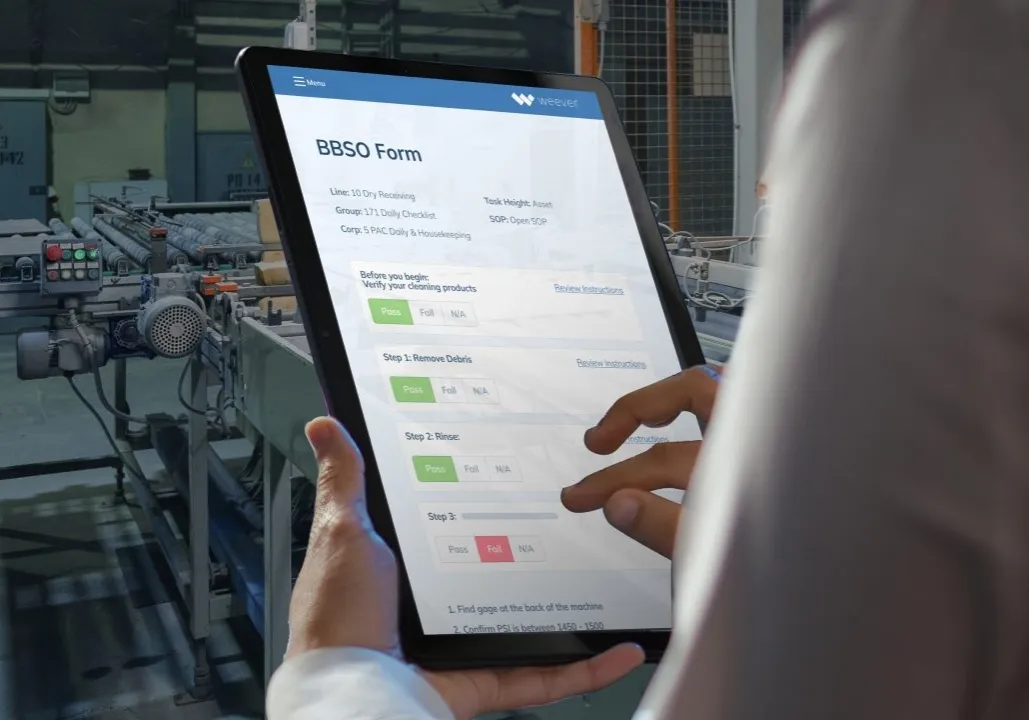
Training for Autonomous Maintenance: Elevate Your Workforce with Weever's Tools
The ability to maintain equipment effectively and efficiently is crucial to operational success. Autonomous maintenance, a key element of Total Productive Maintenance (TPM), empowers operators to take responsibility for routine maintenance tasks, ensuring that equipment runs smoothly and minimizing downtime. However, the effectiveness of autonomous maintenance hinges on the workforce's ability to execute these tasks competently, which is where comprehensive training comes into play.
How can training for autonomous maintenance elevate your workforce, and how does Weever help businesses stay ahead of emerging trends? The answer lies in a strategic approach to training that not only upskills employees but also keeps them aligned with the latest industry developments. Here's how Weever software can be instrumental in achieving this.
The Importance of Training in Autonomous Maintenance
Training is the backbone of any successful autonomous maintenance program. It equips operators with the skills and knowledge they need to perform maintenance tasks effectively, ensuring that equipment remains in peak condition. Proper training helps prevent breakdowns, reduces repair costs, and extends the life of machinery.
Moreover, training in autonomous maintenance does more than just teach employees how to perform specific tasks; it fosters a culture of ownership and responsibility. When operators are trained to handle maintenance duties, they become more engaged and invested in the performance of the equipment they work with daily. This engagement leads to higher productivity, better quality control, and a more proactive approach to maintenance.
However, the industrial environment is constantly changing, with new technologies and methodologies emerging regularly. To keep up, businesses must ensure that their training programs evolve as well, incorporating the latest trends and best practices in autonomous maintenance.
How Weever Facilitates Autonomous Maintenance Training
Weever software plays a pivotal role in helping businesses develop and manage effective autonomous maintenance training programs. Here's how:
1. Ease of Use: Simplifying the Training Process
One of the biggest challenges in training for autonomous maintenance is ensuring that the process is straightforward and accessible to all employees, regardless of their technical background. Weever's user-friendly interface makes this possible by simplifying the training process.
With Weever, businesses can easily create and manage comprehensive training modules that guide employees through every aspect of autonomous maintenance. The platform's intuitive design means that even those with minimal technical skills can navigate the training materials effectively, ensuring that the entire workforce is upskilled efficiently.
Moreover, as new trends emerge, Weever allows for quick updates to training content, ensuring that employees are always learning the most current practices. This adaptability is crucial for businesses looking to stay ahead in an ever-changing industry.
2. Automated Workflows and Action Items: Ensuring Consistent Training
Consistency is key when it comes to training, especially in a dynamic environment like autonomous maintenance. Weever automates training workflows and action items, ensuring that all employees receive the same level of instruction and are aligned with the latest maintenance practices.
Automated workflows in Weever help businesses streamline the training process by setting up predefined paths that employees can follow at their own pace. For example, Weever can automatically assign training modules to new hires or update existing employees' training plans as new procedures are introduced. This automation reduces the administrative burden on managers and ensures that training is delivered consistently across the organization.
Additionally, Weever's automation features help businesses stay current with emerging trends. As new autonomous maintenance techniques are developed, Weever can integrate these into training programs automatically, ensuring that the workforce is always equipped with the latest skills and knowledge.
3. Insights and Trends: Data-Driven Training Improvements
Training is not a one-time event but an ongoing process that should evolve with the needs of the business and the industry. Weever's advanced analytics provide businesses with valuable insights into the effectiveness of their training programs.
Through detailed reports and data visualization, Weever enables managers to track how well employees are absorbing the training material and how effectively they are applying it on the job. This data-driven approach allows businesses to identify areas where training might need to be enhanced or adjusted, ensuring that the workforce is always operating at its best.
Furthermore, Weever's insights extend beyond just training effectiveness. The platform also tracks industry trends, helping businesses anticipate changes in autonomous maintenance practices. By analyzing these trends, Weever helps businesses adapt their training programs to ensure that their workforce remains at the cutting edge of the industry.
4. Real-Time Reporting: Keeping Training Aligned with Industry Developments
In a fast-paced industrial environment, real-time reporting is essential for keeping training programs aligned with the latest trends. Weever's real-time reporting features allow businesses to monitor the progress of their training initiatives as they happen, enabling quick adjustments and ensuring that training remains relevant and effective.
For example, if a new maintenance trend is identified, managers can immediately assess how well the current training program addresses this trend and make necessary adjustments. Real-time reporting also helps in identifying any gaps in training, allowing businesses to address these promptly before they impact operational efficiency.
This ability to make data-driven adjustments in real-time ensures that businesses are always prepared for new challenges and can maintain a highly skilled and adaptable workforce.
5. Rollout Methodology: Smooth Implementation of New Training Programs
Implementing new training programs, especially in a complex area like autonomous maintenance, can be challenging. Weever's structured rollout methodology simplifies this process, ensuring that new training initiatives are integrated smoothly into the existing framework.
Weever provides a clear roadmap for implementing new training programs, from initial planning to full deployment. This structured approach minimizes disruption to daily operations and ensures that all employees are brought up to speed on new practices efficiently.
As new trends in autonomous maintenance emerge, Weever's rollout methodology ensures that businesses can quickly adapt their training programs, keeping their workforce ahead of the curve. This agility is crucial for maintaining a competitive edge in an industry where change is constant.
Elevate Your Workforce With Weever's Autonomous Maintenance Training
Training is a critical component of any autonomous maintenance program. It not only equips employees with the skills they need to maintain equipment effectively but also fosters a culture of ownership and continuous improvement. However, to stay competitive, businesses must ensure that their training programs are dynamic and evolve with industry trends.
Weever software is an invaluable tool in this process, offering a user-friendly interface that simplifies training, automating workflows to ensure consistency, providing insights to improve training effectiveness, enabling real-time reporting to keep training aligned with industry developments, and offering a structured rollout methodology to implement new programs smoothly.
By leveraging Weever, businesses can elevate their workforce through effective autonomous maintenance training, ensuring they stay ahead of emerging trends and maintain a high level of operational efficiency.

How to Create Autonomous Maintenance Training Material
At Weever Apps, we understand the importance of effective autonomous maintenance training material in modern manufacturing environments.
Proper training empowers operators to take ownership of equipment maintenance, reducing downtime and improving overall efficiency.
This blog post will guide you through the process of creating comprehensive and engaging training resources for your autonomous maintenance program.
What is Autonomous Maintenance?
Redefining Equipment Care
Autonomous Maintenance (AM) revolutionizes modern manufacturing by transferring basic maintenance duties from specialized technicians to machine operators. This approach empowers frontline workers to take charge of their equipment, which boosts efficiency and minimizes downtime.
Core Principles of AM
AM focuses on training operators to execute routine maintenance tasks (cleaning, lubricating, and basic inspections). This proactive strategy helps identify potential issues early, which prevents costly breakdowns and extends equipment lifespan.
Essential Components of Effective AM Programs
Successful AM programs share several key elements:
- Comprehensive Training: Equips operators with necessary knowledge and skills.
- Standardized Procedures: Provides clear guidelines for each maintenance activity.
- Robust Data Systems: Enables tracking and analysis of maintenance information.

Digital platforms (like Weever's Connected Worker solution) excel in supporting these components. They streamline the creation and execution of standardized maintenance procedures through digital forms and automated workflows. Real-time dashboards offer valuable insights into maintenance activities, helping teams spot trends and improvement areas.
Organizational Transformation Through AM
AM's benefits extend beyond equipment reliability. Organizations implementing AM often experience a cultural shift towards increased employee engagement and ownership. Operators become more invested in their work, which leads to improved quality and productivity.
Furthermore, AM allows specialized maintenance staff to concentrate on complex issues, optimizing skilled labor utilization. This task redistribution can result in significant cost savings and enhanced overall maintenance efficiency.
AM plays a vital role in enhancing Overall Equipment Effectiveness (OEE), a critical metric for manufacturing performance.
The next chapter will explore how to identify specific training needs for your AM program, ensuring your team is well-prepared to embrace this transformative approach.
How to Pinpoint Your Autonomous Maintenance Training Needs
Evaluate Your Current Maintenance Landscape
Start with a comprehensive audit of your existing maintenance procedures. This audit should involve both frontline operators and maintenance specialists. Use digital forms to collect data on common equipment issues, frequency of breakdowns, and current maintenance practices. A study by the Manufacturing Institute reveals that companies which regularly assess their maintenance practices experience a 10-15% increase in overall equipment effectiveness (OEE).
Identify Knowledge Gaps and Skill Deficiencies
After mapping out your current maintenance landscape, identify where your team's knowledge falls short. This step is essential for developing targeted training materials. Use skills assessment tools to evaluate your operators' current understanding of equipment functionality, basic maintenance procedures, and troubleshooting techniques. The Society for Maintenance and Reliability Professionals (SMRP) recommends focusing on five key areas: equipment cleaning, inspection, lubrication, tightening, and adjustment.
Customize Training for Different Roles
Not all team members require the same level of training. Tailor your content to suit different roles and experience levels within your organization. For example, new operators might need more basic equipment knowledge, while experienced team members might benefit from advanced troubleshooting techniques. A survey by Training Industry Magazine found that personalized training programs result in 50% higher engagement rates compared to one-size-fits-all approaches.

To effectively customize your training, consider using a digital platform that allows for role-based content delivery. This approach ensures that each team member receives the most relevant information for their specific responsibilities. Weever's Connected Worker platform excels in this area, offering customizable digital forms and workflows that can be tailored to different roles and skill levels.
Leverage Technology for Continuous Improvement
The goal of identifying training needs isn't just to fill knowledge gaps-it's to create a foundation for continuous improvement in your autonomous maintenance program. Digital platforms (like Weever) can help you track progress, gather feedback, and iterate on your training materials over time. These tools provide valuable insights into which areas of your training program are most effective and where improvements are needed.
As you move forward with your training needs assessment, the next step is to develop effective training materials that address the specific gaps and requirements you've identified. The following section will guide you through this process, ensuring your autonomous maintenance training program is both comprehensive and engaging.
How to Create Engaging Autonomous Maintenance Training Materials
Leverage Multi-Format Learning
Research by the Association for Talent Development shows that a mix of training formats can increase knowledge retention by up to 60%. Combine written manuals with instructional videos and interactive digital modules to cater to different learning styles. Use short video demonstrations for complex tasks, while providing detailed written procedures for reference. A comprehensive training package should include various media types to enhance learning effectiveness.
Develop Clear, Action-Oriented Instructions
When crafting maintenance procedures, clarity is key. A study by the Manufacturing Institute found that well-written, step-by-step instructions can reduce errors in maintenance tasks by up to 25%. Break down complex procedures into manageable steps, using active language and precise terminology. For example, instead of "Lubricate the machine," specify "Apply 3 drops of oil to each of the 4 marked points on the conveyor belt."
Harness the Power of Visual Aids
Cognitive performance improved by 2.5 standard deviations for participants who attended all initial and booster sessions in a visual processing study. Incorporate diagrams, photos, and infographics to illustrate maintenance procedures. Use color-coding to highlight critical components or potential hazard areas. For instance, create a visual troubleshooting guide that uses red to indicate common problem areas and green for solutions.
Implement Interactive Checklists
Digital checklists are powerful tools for ensuring consistency in maintenance tasks. A report by Plant Engineering magazine revealed that facilities using digital checklists saw a 23% improvement in maintenance efficiency. Design interactive checklists that guide operators through each step of a maintenance procedure, allowing them to mark off completed tasks and add notes or photos as needed.
Utilize Digital Platforms for Enhanced Training
Digital platforms (such as Weever's Connected Worker solution) excel in supporting autonomous maintenance training. They streamline the creation and execution of standardized maintenance procedures through digital forms and automated workflows. Real-time dashboards offer valuable insights into maintenance activities, helping teams spot trends and improvement areas. These platforms also allow for easy integration of various media types, making it simple to create and deliver comprehensive training packages.

Final Thoughts
Effective autonomous maintenance training material empowers frontline workers and optimizes manufacturing processes. A mix of training formats, clear instructions, and visual aids enhances knowledge retention and task execution. Interactive checklists and digital platforms streamline maintenance procedures and provide real-time insights.

The development of autonomous maintenance training material requires continuous updates to reflect evolving technology and best practices. Employee feedback and participation in the training process create more relevant and practical materials that address real-world challenges on the shop floor. This approach fosters a culture of ownership and efficiency throughout the organization.
Weever's Connected Worker solution helps create, deliver, and track training materials while providing valuable data on maintenance activities. With features like automated workflows and real-time dashboards, Weever enhances autonomous maintenance efforts and drives operational excellence. This investment in comprehensive training and digital tools leads to reduced downtime, increased productivity, and a more engaged workforce.
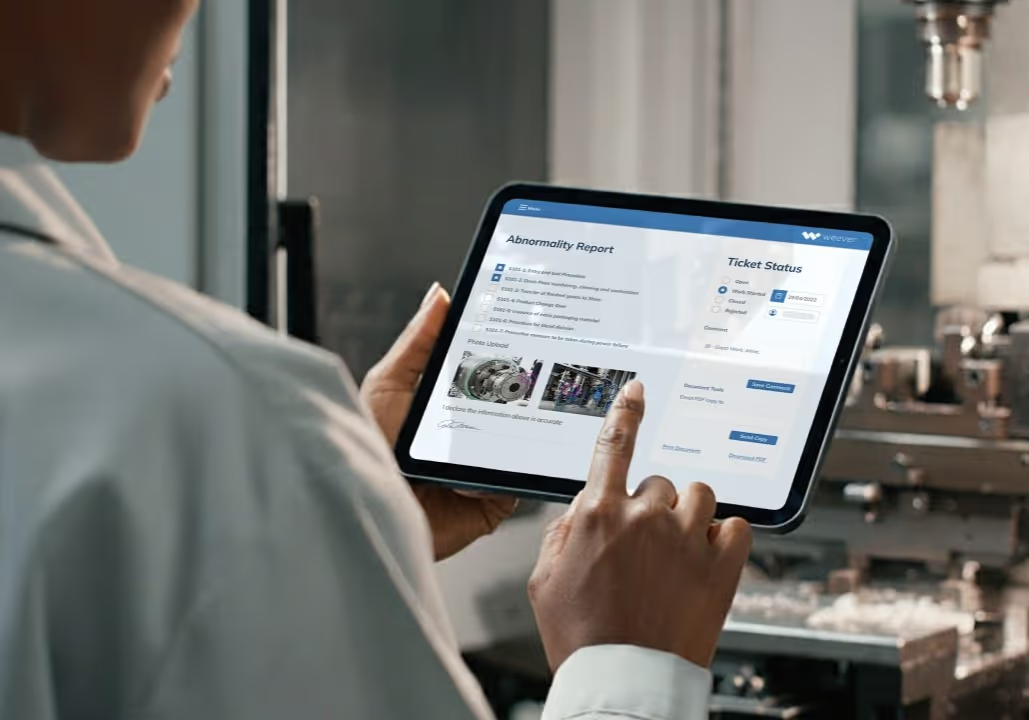
Tracking and Reporting Abnormalities and Defects in Real-Time with Weever
Identifying and addressing abnormalities and defects quickly is essential to maintaining smooth operations and high-quality standards for manufacturers. Delays in resolving issues can disrupt production, reduce output, and increase operational costs. To tackle this, Weever software provides manufacturers with real-time tracking and reporting capabilities, enabling them to identify and resolve issues as they arise. But how does real-time abnormality and defect reporting in Weever help manufacturers stay efficient and proactive?
This post will explore Weever’s powerful real-time features and how they simplify abnormality tracking, provide immediate insights, and enable manufacturers to minimize disruptions.
Abnormality Reporting Made Simple
Detecting abnormalities and defects on the production floor is often a frontline responsibility, and Weever’s platform makes this process as straightforward as possible. Its intuitive, user-friendly interface allows operators to track and report any irregularities they observe without causing interruptions in their workflow.
The design of Weever’s interface prioritizes ease of use so that operators can quickly log abnormalities as soon as they are noticed. This reduces the likelihood of issues going unreported due to time constraints or complex reporting procedures. Operators simply input essential information with minimal clicks, providing relevant details on the issue, which can then be viewed in real-time by supervisors or managers.
This ease of use helps ensure that abnormalities are consistently recorded and that each issue receives prompt attention. Operators don’t need extensive training to use Weever effectively, making it a valuable tool for improving operational efficiency.
Weever’s Workflow Automation
In the fast-moving manufacturing world, once an abnormality or defect is detected, taking corrective action promptly is crucial to minimizing its impact. Weever automates the process of assigning action items, which accelerates issue resolution and ensures that every abnormality is addressed quickly and effectively.
When an abnormality or defect is logged, Weever’s automated workflows assign specific actions to team members based on predefined criteria. This not only removes the manual process of assigning tasks but also guarantees that the appropriate personnel are alerted immediately. Every action item is tracked within the system, allowing supervisors to monitor the progress of each task and ensure completion.
Automated workflows are configurable to fit unique manufacturing environments, so manufacturers can tailor Weever’s processes to their specific operational needs. By creating a standardized approach to handling abnormalities and defects, Weever helps minimize the time from detection to resolution, ensuring every issue receives the attention it requires.
Real-Time Data and Action at Your Fingertips
Understanding patterns and trends in abnormalities and defects is essential for long-term improvements in operational efficiency. With Weever, manufacturers gain valuable insights into recurring issues and potential areas for preventive maintenance through real-time data analysis and reporting capabilities.
Weever’s software continuously collects data on reported abnormalities and defects, which can then be analyzed to reveal patterns and trends. This allows management teams to identify underlying causes of frequent issues and proactively address them. For example, if certain equipment is consistently causing defects, maintenance schedules can be adjusted, or replacement parts can be prioritized.
One of the most significant advantages of Weever’s real-time reporting is its ability to alert teams to abnormalities instantly. As soon as an issue is logged, relevant team members and supervisors are notified, allowing them to take immediate corrective action. This instant feedback loop minimizes the time abnormalities remain unaddressed, reducing the potential for extended production delays and costly disruptions. By enabling manufacturers to respond proactively, Weever’s real-time reporting becomes a critical component in maintaining seamless operations.
Seamless Integration for Consistency Across Complex Operations
For manufacturers with multiple facilities or complex operations, ensuring a consistent approach to abnormality and defect tracking across all locations is essential. Weever’s structured rollout methodology is designed to streamline the implementation process, allowing teams to quickly adopt real-time abnormality and defect tracking across multiple manufacturing sites with ease.
Weever’s rollout approach prioritizes minimal disruption, providing manufacturers with training and resources to ensure smooth adoption of the platform. This means that Weever can be quickly and efficiently integrated into existing workflows, making it accessible and useful across departments and locations. Standardized procedures are put in place for tracking and reporting abnormalities, ensuring uniformity across the board and making performance data from various facilities directly comparable.
By establishing a consistent method for handling abnormalities and defects, manufacturers gain peace of mind knowing that every team is equipped to handle issues promptly and reliably, regardless of location.
Real-Time Abnormality and Defect Tracking: A Game-Changer for Manufacturing Efficiency
In manufacturing, real-time abnormality and defect tracking are vital for maintaining high operational standards. With Weever, manufacturers benefit from a software solution that not only simplifies the process but also enhances it with automation, data-driven insights, and seamless implementation.
Weever’s real-time features empower operators and supervisors alike to detect, track, and resolve abnormalities as they happen. By automating workflows, providing immediate alerts, and offering insightful data, Weever helps manufacturers reduce the time abnormalities impact production, paving the way for a more proactive approach to operational efficiency.
With Weever, manufacturers can transform their approach to abnormality and defect management. In an industry where every second matters, Weever’s ability to instantly track and address issues ensures manufacturers stay ahead of disruptions, optimizing productivity and quality across the board.

7S Workplace Organization Standards Explained
At Weever Apps, we've seen firsthand how a well-organized workplace can transform productivity and safety. The 7S Workplace Organization Standard offers a comprehensive approach to achieving this transformation.
This powerful system, rooted in lean manufacturing principles, goes beyond simple tidiness. It's a strategic method for creating efficient, safe, and productive work environments across industries.
What Are the 7S's of Workplace Organization?
The Seven S's of Workplace Organization form the backbone of a lean, efficient, and safe work environment. These principles have transformed workplaces across various industries. Let's break down each 'S' and explore how they contribute to a well-organized workplace.
Sort, Set, and Shine: The Foundation of Organization
The first three S's lay the groundwork for an organized workspace:
- Sort (Seiri): This step involves the removal of unnecessary items from the work area.
- Set in Order (Seiton): This principle ensures that everything has a designated place, which reduces time wasted searching for tools or materials.
- Shine (Seiso): This focus on cleanliness not only improves the work environment but also helps identify potential issues before they become problems.
Standardize and Sustain: Maintaining Order
The next two S's help maintain the organization established by the first three:
- Standardize (Seiketsu): This step creates consistent processes across the organization, often involving visual aids and checklists to ensure everyone follows the same procedures.
- Sustain (Shitsuke): Perhaps the most challenging step, this requires ongoing commitment from all team members. Regular audits and feedback sessions can help maintain the new organizational standards.
Safety and Security: The Modern Additions
The final two S's address crucial aspects of modern workplaces:
- Safety: Safety protocols reduce accidents and improve overall workplace health.
- Security: This step protects both physical assets and data, which is increasingly important in our digital age.
Implementing the 7S system requires commitment from leadership and active participation from all employees. However, the benefits are substantial. Organizations that have fully embraced these principles have seen improvements in productivity, quality, and employee satisfaction.

Digital tools can play a significant role in implementing and maintaining the 7S system. Platforms like Weever Apps offer digital forms and real-time dashboards that simplify regular audits, progress tracking, and compliance with established standards. These digital solutions help organizations sustain their 7S efforts and continuously improve their workplace organization.
As we move forward, let's explore how to effectively implement these 7S principles in your workplace, starting with conducting a thorough 7S audit.
How to Implement 7S in Your Workplace
Conduct a Comprehensive Audit
The first step to implement 7S is to perform a thorough audit of your current workplace organization. This audit should evaluate each of the seven S's: Sort, Set in Order, Shine, Standardize, Sustain, Safety, and Security. Conduct a comprehensive audit to organize tools, materials, and equipment in a way that maximizes accessibility and minimizes wasted time searching for items. Include employees from different departments to obtain a well-rounded perspective.
Create a Tailored Implementation Plan
After your audit, develop a detailed implementation plan. Prioritize areas that need immediate attention and set realistic timelines for each phase of the project. Divide larger goals into smaller, manageable tasks. Assign responsibilities to specific team members or departments to ensure accountability.
Engage and Train Your Workforce
Employee buy-in is essential for the success of 7S implementation. Conduct training sessions to educate your workforce on the principles of 7S and its benefits. Use real-world examples and case studies to illustrate the positive impact of 7S. Encourage questions and feedback to address any concerns early in the process.

Consider appointing 7S champions within each department. These individuals can serve as resources for their colleagues and help maintain momentum throughout the implementation process.
Use Technology for Tracking and Measurement
Implement digital tools to track progress and measure results. Digital platforms offer real-time dashboards that can help you monitor key performance indicators (KPIs) related to 7S implementation. These might include metrics such as time saved in searching for tools, reduction in workplace accidents, or improvements in quality control.
Regular data collection and analysis are essential. Use digital forms to conduct weekly or monthly 7S audits, allowing you to quickly identify areas that may be slipping and take corrective action. Share these results with your team to maintain transparency and motivation.
Implementing 7S is an ongoing process of continuous improvement. Regular reviews and adjustments to your implementation strategy will help ensure long-term success and maximize the benefits of a well-organized workplace. As we move forward, let's explore the numerous benefits that a well-implemented 7S system can bring to your organization.
How 7S Boosts Workplace Performance
Supercharging Productivity and Efficiency
The 7S Workplace Organization Standard transforms operations beyond mere tidiness. Organizations that implement these principles experience a dramatic shift in their productivity and efficiency.

When companies apply the Sort and Set in Order principles, employees reclaim valuable time. The National Association of Professional Organizers reports that the average person wastes 4.3 hours per week searching for papers. Eliminating this waste allows companies to significantly boost their productivity.
Creating a Safer Work Environment
The organization and cleanliness focus directly contributes to workplace safety. Worker fatalities in the United States reached 5,486 in 2022, with a rate of 3.7 fatalities per 100,000 full-time equivalent workers. Companies can dramatically reduce incidents through clean, organized spaces (Shine) and clear safety protocols. One manufacturing plant reported a reduction in workplace accidents after 7S implementation.
Elevating Quality Control Standards
A well-organized workspace naturally improves quality control. Proper sorting and storage of tools and materials decreases the risk of using incorrect or substandard items. The Standardize principle ensures consistent processes across the organization. An automotive parts manufacturer reported a reduction in defects after 7S implementation, directly attributing this improvement to better organization and standardization.
Boosting Employee Morale and Engagement
7S implementation often results in a significant boost to employee morale. Workers take pride in their organized and efficient workspace, leading to increased engagement. This enhanced engagement can result in lower turnover rates and higher job satisfaction.
Reducing Costs and Waste
The focus on eliminating waste and improving efficiency often leads to substantial cost savings. A study by the Lean Enterprise Research Centre found that implementing lean principles (which include 7S) can reduce operational costs by up to 20% in the first year.
While 7S implementation requires an initial investment of time and resources, the long-term benefits far outweigh the costs. Organizations that commit to these principles often gain a competitive edge, becoming better equipped to meet customer demands and adapt to changing market conditions.
Final Thoughts
The 7S Workplace Organization Standard transforms workplaces into efficient, safe, and productive environments. Organizations that implement Sort, Set in Order, Shine, Standardize, Sustain, Safety, and Security gain a competitive edge through increased productivity, improved safety, and enhanced quality control. These principles also boost employee morale and engagement, leading to lower turnover rates and a more positive work culture.

Regular audits, employee training, and consistent application maintain the benefits of the 7S standard over time. As market conditions and technologies evolve, organizations must adapt their 7S practices to stay competitive. Many companies now turn to digital solutions to support their ongoing 7S efforts.
Weever Apps offers a Connected Worker platform that aligns with 7S principles. With automated workflows, real-time dashboards, and digital forms, Weever helps organizations maintain their 7S standards (and track progress). The 7S Workplace Organization Standard, combined with modern digital tools, creates a foundation for long-term success in today's competitive business landscape.

Inspiring Autonomous Maintenance Slogans for Your Team
At Weever Apps, we know the power of words to inspire action and drive change. Autonomous maintenance slogans can be a game-changer for manufacturing teams, boosting morale and reinforcing best practices.
In this post, we'll explore effective slogans that can transform your autonomous maintenance program. We'll also share tips on creating custom slogans that resonate with your team and align with your company's goals.
Why Slogans Matter in Autonomous Maintenance
Driving Engagement Through Memorable Phrases
Slogans act as powerful catalysts for maintenance teams. They're not mere catchphrases; they're tools that can boost productivity significantly. A study found that manufacturers anticipate worker productivity will increase by 41% with effective strategies. When teams internalize slogans like "Every Machine, Our Responsibility," they take more ownership of equipment health.
Reinforcing Best Practices Daily
Slogans serve as constant reminders of key maintenance principles. A well-placed slogan like "Inspect, Detect, Correct" prompts operators to perform checks without constant supervision.
Fostering a Unified Maintenance Culture
A shared sense of purpose is vital for autonomous maintenance success. Slogans contribute to this by aligning team members around common goals and values.
Measuring Slogan Impact
To gauge slogan effectiveness, track key performance indicators before and after implementation. Look for improvements in metrics like mean time between failures (MTBF) or overall equipment effectiveness (OEE).
Crafting Impactful Slogans
The power of slogans lies in their simplicity and relevance. They should resonate with your team's daily experiences and challenges. You should carefully craft and strategically deploy slogans to enhance your autonomous maintenance program's effectiveness and drive lasting improvements in equipment reliability and team performance.

As we move forward, we'll explore specific examples of effective autonomous maintenance slogans that have proven successful in various industrial settings. These examples will provide inspiration for creating your own impactful slogans tailored to your unique operational needs.
Crafting Powerful Autonomous Maintenance Slogans
Ownership: The Foundation of Excellence
"Our Machines, Our Responsibility" stands out as a powerful slogan that transforms team dynamics. This phrase instills a sense of ownership among operators, encouraging them to take pride in their equipment's condition. When team members feel personally invested in their machinery, they perform regular checks and report issues promptly.
Prevention: The Key to Productivity
"Prevent Today, Produce Tomorrow" emphasizes the long-term benefits of proactive maintenance. This message reminds teams that small preventive actions lead to significant productivity gains. Autonomous maintenance can have significant impacts on production lines, as demonstrated by research analyzing its implementation through an eight-step process.
Continuous Improvement in Action
"Inspect, Clean, Optimize: Every Day" encapsulates the core principles of autonomous maintenance. This slogan serves as a daily checklist for operators, ensuring they cover all bases in their maintenance routines. It's a practical reminder that maintenance requires ongoing attention, not just one-time efforts.
Empowerment Leads to Performance
"You See It, You Own It" empowers operators to take immediate action when they notice issues. This approach reduces response times to potential problems.
Small Actions, Big Results
"Every Check Counts" reinforces the idea that no maintenance task is too small. This slogan encourages operators to pay attention to details and understand how their actions contribute to overall equipment reliability. It links daily tasks to broader organizational goals.

To implement these slogans effectively, display them prominently in work areas and incorporate them into daily briefings. Regular reinforcement helps embed these principles into your team's culture, driving lasting improvements in your autonomous maintenance program.
As we move forward, we'll explore practical tips for creating custom slogans that resonate with your unique team and operational needs. These insights will help you craft messages that truly inspire and motivate your workforce.
How to Create Impactful Maintenance Slogans
Keep It Short and Sweet
The most memorable slogans pack a punch in just a few words. Try to limit your slogan to five words or fewer. "Clean, Inspect, Improve" captures the essence of autonomous maintenance in three powerful words. Short slogans stick in team members' minds and become part of daily operations.
Align with Company Values
Your slogan should reflect your organization's core principles and objectives. If safety tops your priority list, consider "Safety First, Maintenance Always." For innovation-focused companies, "Innovate Through Maintenance" might resonate more. This alignment reinforces broader company goals through your maintenance program.
Involve Your Team
Turn slogan creation into a collaborative effort. This approach not only generates diverse ideas but also increases buy-in from those who will use the slogan daily. Organize a slogan contest or brainstorming session.
Use Action-Oriented Language
Choose words that inspire action and energy. "Optimize," "empower," and "transform" can motivate your team to take charge. Positive language tends to be more effective. Instead of "Reduce Downtime," opt for "Maximize Uptime" to focus on the desired outcome.
Test and Refine
What sounds great in a meeting might fall flat on the shop floor. Implement a slogan for a month, then collect feedback. This iterative process ensures your slogans remain relevant and impactful.

Final Thoughts
Autonomous maintenance slogans transform workplace culture and drive operational excellence. These powerful phrases reinforce key principles, boost morale, and create a shared sense of purpose among team members. Effective slogans encourage operators to take ownership of their equipment and address maintenance issues proactively, leading to improved reliability and productivity.

We at Weever Apps recognize the impact of engaging frontline workers and streamlining maintenance processes. Our Connected Worker platform supports comprehensive programs like autonomous maintenance, offering digital tools for data capture, real-time dashboards, and automated workflows. This technology, combined with impactful slogans, fosters a culture of continuous improvement and operational excellence.
The most effective autonomous maintenance slogans align with company values, inspire action, and resonate with daily experiences. Involving employees in the slogan creation process and refining messages regularly ensures these phrases continue to drive positive change. Organizations that implement powerful slogans (alongside robust maintenance programs) often see reduced downtime, increased product quality, and a more skilled, empowered workforce.
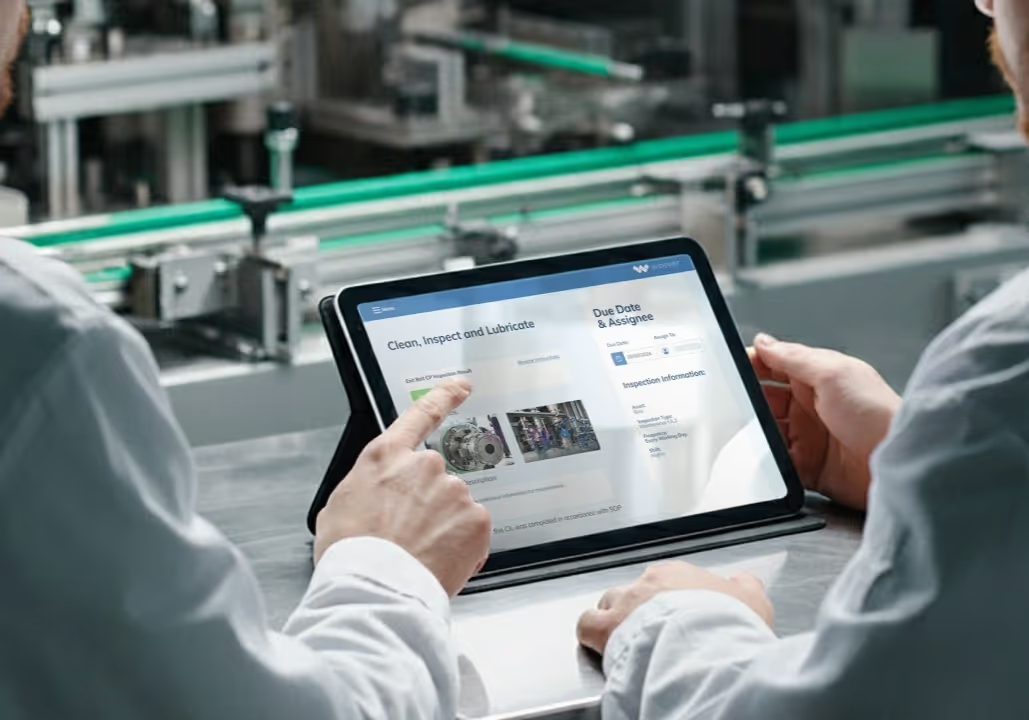
Operator-Led CIL Training with Weever: Bridging Knowledge Gaps Across Different Manufacturing Industries
In the manufacturing industry, keeping equipment in optimal working condition is crucial for maintaining operational efficiency. Cleaning, Inspection, and Lubrication (CIL) routines are a core part of maintaining machinery, reducing downtime, and ensuring product quality. However, one of the biggest challenges manufacturing companies face is ensuring consistent CIL practices across different teams, shifts, and even locations. This is where operator-led CIL training plays a critical role in bridging knowledge gaps and ensuring every operator is on the same page.
Weever software enables effective operator-led CIL training, empowering frontline workers to manage their own equipment maintenance through accessible, standardized, and trackable CIL practices. This blog explores how Weever’s platform helps manufacturing plants overcome training challenges, ensuring consistent preventive maintenance by operators, regardless of their technical expertise or background.
Simplifying Operator-Led CIL Training
One of the most significant barriers to consistent CIL practices is the complexity of the procedures involved. CIL tasks must be performed with precision to ensure optimal machine performance, but not all operators have the same level of experience or technical understanding. Weever simplifies the training process, making it easy for operators to access CIL training regardless of their skill level or industry.
User-Friendly Interface for All Operators
Weever’s intuitive platform is designed to be accessible for operators across different roles and industries. Whether the operator works in automotive manufacturing, plastics production, or food processing, the software’s clean and easy-to-navigate interface allows them to access CIL checklists, follow CIL standard operating procedures (SOPs), and complete their assigned tasks without needing extensive technical training.
Consistent CIL Practices Across Teams
Weever ensures consistency across teams by standardizing CIL practices. Operators are guided through step-by-step instructions on cleaning standards, inspection routines, and lubrication schedules, ensuring that maintenance is performed the same way, every time. This reduces the variability in how tasks are completed and helps bridge knowledge gaps between experienced workers and those new to the role.
In a pharmaceutical manufacturing facility, where machinery cleanliness is paramount, operators use Weever to follow strict cleaning standards. Weever’s platform digitizes these standards and makes them easily accessible to every worker, ensuring that no steps are missed during the cleaning process.
Enhancing Training Through Automation
Training operators on CIL practices is only effective if those practices are consistently reinforced through hands-on tasks. Weever automates the assignment of CIL tasks and integrates these assignments directly into an operator’s workflow, ensuring that training is applied in real-time and that operators are constantly practicing and reinforcing what they’ve learned.
Automating the Training Process
Weever automates CIL training by assigning specific tasks and action items to operators, ensuring that training is not just theoretical but actively applied in daily routines. The platform schedules maintenance tasks and sends automated reminders to operators, ensuring that tasks like lubrication schedules and cleaning routines are completed at the right intervals.
Clear Action Items for Each Task
Weever assigns clear, actionable tasks to each operator, making it easier for them to stay organized and complete their duties. Operators are provided with detailed CIL checklists that outline the specific steps they need to follow, reducing ambiguity and ensuring that maintenance tasks are performed correctly. This automation ensures that no step is skipped, leading to better overall equipment efficiency.
In a paper manufacturing facility, operators tasked with maintaining large-scale pulping machines receive automated reminders to follow specific lubrication schedules. The platform not only sends notifications but also provides the exact lubrication points and tools required, ensuring nothing is left to chance.
Ensuring Continuous Improvement
Tracking the effectiveness of operator-led CIL training is essential for continuous improvement. Weever provides powerful insights into how well operators are performing their maintenance tasks and offers real-time reporting features that allow managers to monitor compliance and identify areas where additional support or training may be needed.
Tracking Training Progress and Performance
Weever’s platform tracks the performance of operators during their CIL tasks, providing managers with data on task completion rates, adherence to cleaning standards, and overall compliance with CIL SOPs. This allows management to see where operators may need additional training or support, ensuring that every worker is up to speed on the latest maintenance practices.
For example, in a plastics manufacturing plant, operators tasked with maintaining injection molding machines are tracked to ensure that they are following the required cleaning and lubrication schedules. If certain tasks are missed or delayed, managers can easily spot these trends and provide targeted training to bridge any knowledge gaps.
Analyzing Trends and Identifying Gaps
Weever’s insights also allow managers to analyze trends in maintenance performance over time. By tracking inspection routines and lubrication schedules, management can identify patterns, such as recurring equipment failures or missed maintenance tasks. This data enables them to make informed decisions on adjusting maintenance schedules or providing additional training to prevent future issues.
In a steel production plant, Weever’s insights might reveal that lubrication tasks for rolling mills are frequently delayed during peak production times. Armed with this information, the plant can adjust the lubrication schedules to ensure tasks are completed during downtime, preventing equipment failure and minimizing disruptions.
Real-Time Reporting for Immediate Feedback
With Weever’s real-time reporting features, managers can monitor the progress of CIL tasks as they are being performed. This level of transparency ensures that CIL training programs are effective and that operators are applying their training to actual tasks. Real-time reporting also allows managers to address issues immediately, ensuring that critical maintenance tasks are completed on time and to the required standards.
In an automotive parts manufacturing plant, real-time reporting helps ensure that operators are maintaining assembly line machinery according to the CIL SOPs. Managers receive instant updates when a task is completed, ensuring that equipment remains in optimal working condition and that preventive maintenance is performed without delay.
Tailored Support for Effective CIL Training Adoption
Implementing operator-led CIL training across an entire manufacturing facility can seem daunting, especially when dealing with different teams, shifts, or locations. Weever provides a structured rollout methodology that ensures the smooth adoption of CIL training, with tailored support to address specific knowledge gaps and ensure consistent practices.
Step-by-Step Rollout Process
Weever’s rollout process is designed to be gradual, allowing teams to adopt operator-led CIL training at their own pace. This phased approach ensures that operators have the time and support needed to adapt to the new system without feeling overwhelmed. The rollout can begin with a single department or machine and gradually expand to cover the entire facility as operators become comfortable with the platform.
In a manufacturing facility that produces parts for the aerospace industry, Weever’s phased rollout ensures that operators can slowly integrate the use of CIL checklists into their daily routines. By starting with one group of machines, the facility ensures that operators fully understand the process before expanding it to other areas.
Comprehensive Training and Support
Weever offers extensive CIL training for operators, ensuring that they fully understand how to access, follow, and complete CIL tasks. The training is tailored to the specific needs of the facility, ensuring that each operator knows how to maintain their assigned equipment according to the CIL SOPs.
For example, in a metal fabrication plant, operators receive hands-on training on using Weever to maintain welding equipment. The training ensures that they know how to use the visual controls for CIL to track their tasks and follow the digitized CIL instructions provided by the platform.
Bridging Knowledge Gaps with Weever’s Operator-Led CIL Training
Consistent maintenance is critical for keeping manufacturing equipment in optimal working condition, and operator-led CIL training plays a vital role in achieving this goal. Weever’s software enables manufacturing plants to standardize and simplify the training process, ensuring that operators receive the guidance and tools they need to perform their CIL tasks accurately and efficiently.
By offering an intuitive platform, automating CIL workflows, providing real-time insights, and delivering comprehensive support, Weever ensures that every operator can participate in preventive maintenance by operators, regardless of their experience level or technical knowledge. For any manufacturing plant looking to improve equipment reliability, reduce downtime, and standardize maintenance practices, Weever offers the ideal solution to bridge knowledge gaps and ensure long-term success.

Workplace Audits: Improving Safety and Efficiency
Workplace audits and inspections are powerful tools for improving safety, efficiency, and compliance in any organization. At Weever Apps, we've seen firsthand how these assessments can transform work environments and boost overall performance.
Regular audits help identify potential hazards, streamline processes, and ensure adherence to regulations. This blog post will explore the different types of workplace audits, their benefits, and best practices for conducting them effectively.
Types of Workplace Audits
Workplace audits come in various forms, each serving a specific purpose in improving organizational performance. The most effective companies utilize a combination of these audit types to maintain a comprehensive overview of their operations.
Safety Audits: Protecting Your Most Valuable Asset
Safety audits identify and mitigate workplace hazards. These audits typically involve a thorough inspection of physical work environments, equipment, and safety protocols. Safety audits should involve employees from all levels of the organization, as they often have unique insights into daily safety challenges.
Quality Audits: Ensuring Consistent Excellence
Quality audits evaluate an organization's processes, products, or services against established standards. These audits maintain customer satisfaction and reduce waste. To maximize the effectiveness of quality audits, organizations should implement a digital audit tool that allows for real-time data collection and analysis.
Environmental Audits: Sustainability in Action
Environmental audits assess an organization's impact on the environment and compliance with environmental regulations. These audits have become increasingly important as consumers and investors prioritize sustainability. Environmental audits can save 15 to 30 percent on energy consumption in water and wastewater plants. Environmental audits should focus on areas such as waste management, energy efficiency, and resource conservation.
Compliance Audits: Navigating the Regulatory Landscape
Compliance audits ensure that an organization adheres to relevant laws, regulations, and industry standards. These audits are particularly important in highly regulated industries such as healthcare and finance. To streamline compliance audits, organizations should use a platform that offers customizable digital forms and automated workflows to ensure all regulatory requirements are met (Weever Apps stands out as a top choice in this regard).

The implementation of a comprehensive audit program that encompasses these four key areas can significantly improve overall performance, reduce risks, and drive continuous improvement. The goal of these audits isn't just to identify problems but to create actionable solutions that enhance workplace safety, quality, environmental sustainability, and regulatory compliance.
Now that we've explored the main types of workplace audits, let's examine the numerous benefits that regular auditing can bring to an organization.
Why Regular Workplace Audits Matter
Regular workplace audits are not just a box-ticking exercise; they're a powerful tool for driving real improvements across your organization. We've observed how consistent auditing practices can transform businesses, boosting safety, efficiency, and employee satisfaction.
Spotting and Fixing Issues Before They Escalate
One of the primary benefits of regular audits is their ability to identify potential problems before they become serious. For instance, a safety audit might reveal that 15% of employees are not wearing proper protective equipment, allowing management to address this issue before it leads to accidents. This proactive approach can significantly reduce workplace incidents. The National Safety Council reports that companies with comprehensive safety programs see fewer injuries and illnesses, which can lead to greater profits as workers' compensation premiums and other costs decrease.
Streamlining Operations for Better Performance
Audits don't just improve safety; they also enhance operational efficiency. Organizations can identify bottlenecks and inefficiencies by systematically reviewing processes. For example, a quality audit might reveal that a particular production step causes delays 30% of the time. Armed with this information, companies can implement targeted improvements.
Staying Ahead of Regulatory Changes
In today's rapidly evolving regulatory landscape, staying compliant is more challenging than ever. Regular compliance audits help organizations stay ahead of the curve. For instance, in the healthcare sector (where regulations change frequently), organizations that conduct quarterly compliance audits are 40% less likely to face penalties during official inspections, according to a study by the Health Care Compliance Association.
Boosting Employee Morale and Engagement
Perhaps surprisingly, regular audits can significantly improve employee morale and engagement. When employees see that their organization commits to continuous improvement, they feel more valued and invested in their work. Organizations can foster a culture of continuous improvement and boost overall job satisfaction by involving employees in the audit process and acting on their feedback.

The benefits of regular workplace audits are clear, but how can organizations effectively implement these audits? The next section will explore best practices for conducting workplace audits, ensuring that your organization can maximize the value of these essential assessments.
How to Conduct Effective Workplace Audits
Conducting effective workplace audits requires a strategic approach and the right tools. We have observed how proper planning and execution can make all the difference in audit outcomes. Here's how to maximize the impact of your workplace audits:
Create a Robust Audit Plan
Start by developing a comprehensive audit plan. This plan should outline the scope, frequency, and objectives of each audit type. For example, you might conduct safety audits monthly, while compliance audits could occur quarterly. Your plan should also identify key stakeholders and their roles in the audit process.

A well-structured plan ensures consistency and helps track progress over time.
Leverage Digital Tools for Efficiency
Paper-based audits and manual data entry are outdated methods. Digital tools streamline the audit process, improve accuracy, and save time. For instance, modern audit platforms allow for real-time data collection and analysis.
Digital tools also enable trend analysis across multiple audits, providing valuable insights for continuous improvement.
Invest in Auditor Training
Proper auditor training is essential for effective audits. Auditors should know relevant standards, regulations, and best practices. They should also possess strong communication and analytical skills.
This investment pays off: companies with well-trained auditors can identify more improvement opportunities compared to those with untrained staff.
Foster Employee Engagement
Preparing for a workplace safety audit involves several key steps:
- Review Safety Policies and Procedures
- Conduct a Thorough Safety Inspection
- Provide Safety Training
- Maintain Records
- Implement necessary changes
Involving employees at all levels in the audit process can yield surprising benefits. Frontline workers often have unique insights into daily operations that management might miss. Encourage open communication and create channels for employees to provide feedback during audits.
Act on Audit Findings
The true value of an audit lies in the actions taken afterward. Develop a system for tracking and implementing improvements based on audit findings. Assign clear responsibilities and deadlines for each action item.
These practices can transform audit processes from a compliance exercise into a powerful tool for continuous improvement. The goal isn't just to identify issues, but to drive meaningful change that enhances safety, efficiency, and overall performance.
Final Thoughts
Workplace audits and inspections are essential tools for organizations to enhance safety, efficiency, and compliance. These practices allow companies to identify potential issues, streamline operations, and foster a culture of continuous improvement. The benefits extend beyond regulatory compliance, improving employee morale, reducing incidents, and increasing operational efficiency.

We expect future trends in workplace auditing to include the integration of artificial intelligence and machine learning for enhanced predictive capabilities. The use of wearable technology and Internet of Things (IoT) devices may provide real-time data for more dynamic auditing processes. Organizations that embrace these practices and leverage innovative tools will create safer, more efficient, and compliant work environments.
Weever Apps offers a powerful Connected Worker platform to streamline audit processes and drive continuous improvement. Our features include automated workflows, real-time dashboards, and intuitive digital forms to enhance productivity and support comprehensive programs. Companies can transform their audit processes from routine checks into powerful drivers of organizational excellence with these tools.
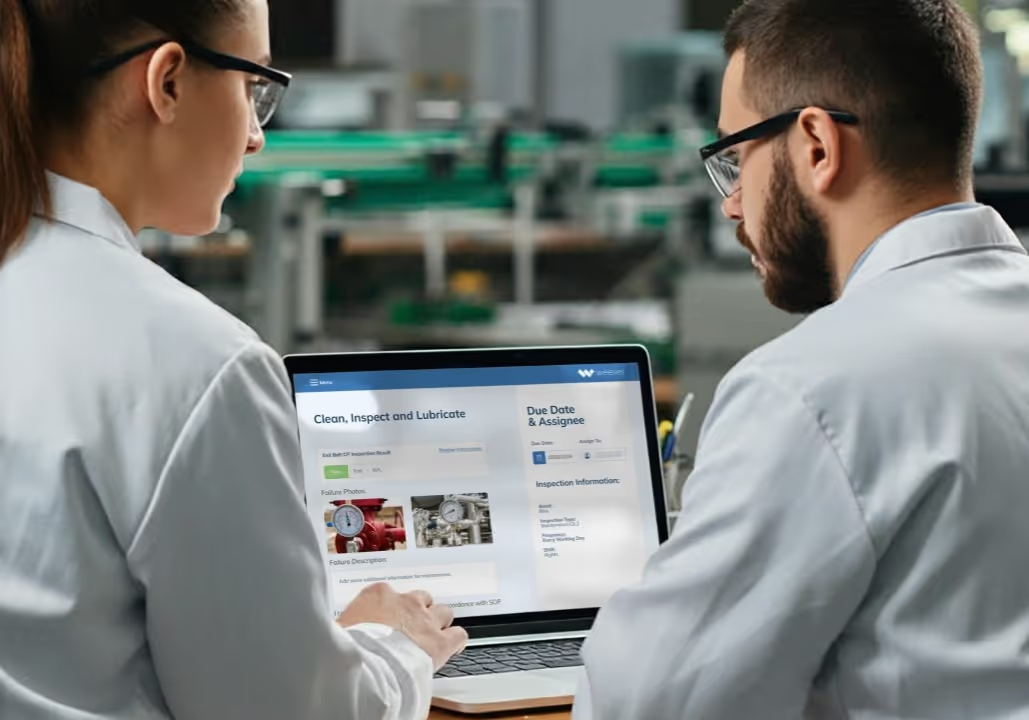
Standardizing CIL Standard Operating Procedures (SOPs) with Weever
Maintaining equipment through regular cleaning, inspection, and lubrication (CIL) is critical for ensuring optimal performance and minimizing downtime in the manufacturing industry. To achieve consistency and precision in these tasks, it is essential to have CIL Standard Operating Procedures (SOPs). SOPs provide clear, step-by-step instructions that guide operators in performing essential maintenance tasks, ensuring compliance with industry regulations, preventing equipment failure, and improving overall operational efficiency.
However, the challenge many manufacturing plants face is ensuring that these SOPs are followed consistently across teams, shifts, and locations. This is where Weever software plays a crucial role in standardizing CIL SOPs and providing the tools to ensure that they are adhered to consistently and effectively.
In this blog post, we’ll explore how Weever helps manufacturing companies standardize CIL SOPs, ensuring that operator-led maintenance is carried out efficiently and according to best practices.
Putting the ‘S’ in CIL SOPs
One of the key challenges in standardizing CIL SOPs across a manufacturing plant is the complexity of maintaining consistency. Different operators may interpret instructions differently, or teams across shifts may use varied approaches to the same tasks. Weever simplifies the process of creating and managing CIL SOPs, ensuring that everyone follows the same procedures, regardless of the team or shift.
Intuitive Platform for Easy SOP Creation
Weever’s platform makes it easy for manufacturing plants to create detailed CIL SOPs with minimal effort. Its user-friendly interface allows maintenance managers to document every step of the cleaning, inspection, and lubrication process, ensuring that all necessary tasks are covered comprehensively. CIL checklists can be easily digitized and attached to each SOP, ensuring that operators know exactly what needs to be done.
For example, in a car parts manufacturing plant, operators can access digital CIL SOPs for maintaining critical machinery such as CNC machines or robotic arms. Each SOP provides step-by-step instructions for cleaning and lubricating the equipment, ensuring consistent maintenance practices across teams.
Seamless Access to SOPs for Operators
Weever ensures that frontline workers can quickly access the CIL SOPs they need to perform their tasks. With digital instructions available on mobile devices or workstations, operators can review the procedures and complete tasks without needing to search through physical documents or manuals. This streamlines the process, allowing them to focus on the tasks at hand and reducing the likelihood of errors.
In another example, frontline operators in a packaged foods manufacturing facility can use Weever’s platform to access CIL SOPs for maintaining mixers, slicers, and conveyors. The SOPs outline specific cleaning standards, inspection routines, and lubrication schedules, ensuring that equipment is compliant with strict food safety guidelines.
Ensuring SOP Compliance Through Automation
Creating CIL SOPs is only the first step. Ensuring that they are followed consistently requires automation and clear action items. Weever automates the distribution and execution of CIL tasks, assigning specific actions to operators and ensuring that no task is overlooked.
Automating the Distribution of CIL SOPs
Weever automates the scheduling and distribution of CIL tasks, ensuring that operators receive their assignments based on predefined intervals or equipment usage. This automation eliminates the need for manual oversight and ensures that tasks are always completed on time, in line with the CIL SOPs.
For instance, in a manufacturing plant that produces packaging materials, Weever automatically assigns cleaning and lubrication tasks for the rollers and presses used in production. Operators are notified when tasks are due, and the digital CIL SOP guides them through the maintenance steps.
Assigning Clear Action Items to Operators
Weever ensures that each operator receives clear action items based on the CIL SOPs. These tasks are displayed on the operator’s dashboard, allowing them to see what needs to be done, when it needs to be done, and how to do it. This clarity reduces confusion and ensures that CIL tasks are completed precisely as specified in the SOPs.
For example, a manufacturing facility that produces automotive components can use Weever to assign specific cleaning tasks to operators at the end of each shift. The CIL checklist includes detailed steps on how to clean machinery, inspect for wear, and lubricate moving parts, ensuring that the equipment is ready for the next shift.
Monitoring Compliance and Performance
Once CIL SOPs are implemented, it is essential to monitor their effectiveness and ensure that operators are following them consistently. Weever’s insights and real-time reporting features give manufacturing managers full visibility into how well CIL tasks are being performed and where improvements can be made.
Tracking CIL Compliance and Performance
Weever tracks the completion of CIL tasks in real time, allowing managers to monitor whether operators are adhering to the standard operating procedures. If tasks are missed or incomplete, managers receive alerts and can take corrective action before equipment failure occurs. This level of oversight ensures that preventive maintenance by operators is completed on time and to the required standard.
For example, in a plastics manufacturing plant, Weever tracks the cleaning and lubrication of extrusion machines. If an operator fails to complete the task by the scheduled time, the system alerts the maintenance manager, who can investigate the issue and ensure that the task is completed before the machine is put back into production.
Analyzing Trends for Continuous Improvement
Weever provides valuable insights into how well CIL SOPs are being followed and how maintenance practices can be optimized. By analyzing trends in compliance and identifying recurring issues, manufacturing plants can adjust their maintenance schedules or provide additional training to operators where necessary.
For instance, in a steel production facility, Weever’s insights might reveal that lubrication tasks are often delayed due to high production demands. Based on this data, the maintenance team can adjust the lubrication schedules to occur during planned downtime or slow periods, ensuring that equipment is properly maintained without disrupting production.
A Structured Approach to SOP Implementation
Introducing standardized CIL SOPs across a manufacturing plant requires careful planning and execution. Weever provides a structured rollout methodology that ensures a smooth transition from manual processes to digital CIL management, minimizing disruption and ensuring quick adoption by frontline workers.
Phased Implementation for Seamless Transition
Weever’s rollout process is designed to be phased, allowing manufacturing plants to gradually introduce digital CIL SOPs without disrupting operations. Teams can start with one department or piece of equipment, perfect the process, and then expand to other areas of the plant. This approach ensures that operators have time to adapt to the new system without feeling overwhelmed.
For example, a tire manufacturing plant might begin by digitizing the CIL SOPs for its rubber-mixing machines. Once the operators are comfortable using Weever to manage their CIL tasks, the plant can expand the system to cover its extruders, molds, and curing equipment.
Comprehensive Training and Support
Weever provides CIL training for operators, ensuring that they understand how to use the platform and follow the standardized procedures. The training covers everything from accessing CIL checklists and following SOPs to using visual controls for CIL and tracking tasks through connected worker platforms.
This hands-on training helps standardize CIL practices across the plant, ensuring that every operator follows the same procedures, regardless of their experience level.
Another example: In a metal fabrication plant, Weever provides CIL training for operators responsible for maintaining CNC machines. The training ensures that all operators follow the same lubrication schedules and cleaning standards, reducing wear and tear on the machines and preventing breakdowns.
Standardizing CIL SOPs with Weever for Manufacturing Success
Equipment reliability and efficiency are critical to maintaining production quality and minimizing downtime. By standardizing CIL SOPs through Weever, manufacturing plants can ensure that operator-led maintenance is performed consistently and accurately, reducing the risk of equipment failure and improving overall operational efficiency.
Weever’s intuitive platform, automated workflows, real-time reporting, and structured rollout methodology make it the ideal solution for standardizing CIL practices in manufacturing. From creating clear, actionable SOPs to tracking compliance and optimizing performance, Weever helps manufacturing plants maintain their equipment, reduce costs, and achieve long-term success.
For manufacturing plants looking to standardize their CIL SOPs and improve their maintenance practices, Weever provides the tools and support needed to streamline operations and ensure that every task is completed to the highest standard.

Autonomous Maintenance: Comprehensive PDF Guide
At Weever Apps, we've created a comprehensive guide to autonomous maintenance, available as a PDF download. This resource is designed to help manufacturing and industrial organizations transform their maintenance practices.
Autonomous maintenance empowers operators to take ownership of equipment care, leading to improved efficiency and reduced downtime. Our guide covers everything from implementation strategies to best practices, providing a roadmap for success in this innovative approach to maintenance.
What is Autonomous Maintenance?
The Core of Autonomous Maintenance
Autonomous maintenance is a method in manufacturing that gives machine operators the responsibility for basic maintenance tasks. This practical strategy puts maintenance power directly into machine operators' hands.
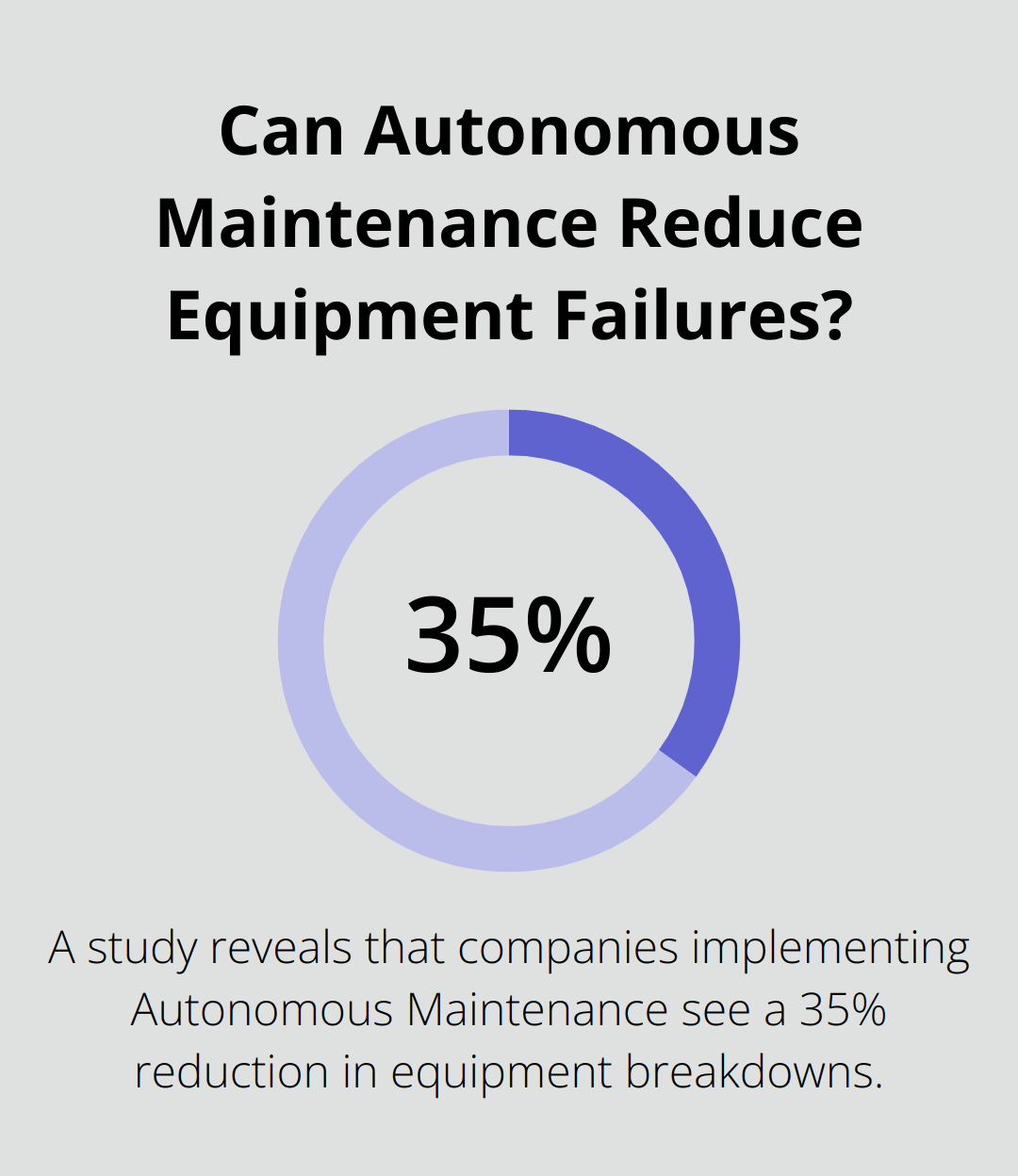
AM empowers frontline workers to take ownership of their equipment. Instead of relying solely on specialized maintenance teams, operators become the first line of defense against breakdowns and inefficiencies. They perform daily checks, basic maintenance tasks, and minor repairs on the machines they use every day.
This responsibility shift creates a culture where everyone invests in keeping operations smooth. Operators trained to spot early signs of wear and tear prevent small issues from becoming major problems that halt production.
Measurable Benefits for Your Bottom Line
AM's impact on manufacturing and industrial settings is significant and quantifiable. A study in the Journal of Quality in Maintenance Engineering reveals that companies implementing AM see a 35% reduction in equipment breakdowns. This directly increases uptime and productivity.
The benefits extend further. The Society for Maintenance and Reliability Professionals reports that effective AM programs can reduce maintenance costs by 10-30%. This occurs because operators address minor issues before they require expensive repairs or replacements.
A Departure from Traditional Maintenance
AM marks a clear break from traditional maintenance approaches. In the past, maintenance was often reactive (fix it when it breaks) or followed a rigid schedule that didn't align with actual equipment needs.
With AM, maintenance becomes proactive and tailored. Operators who work with the equipment daily notice subtle performance changes. They adjust maintenance schedules based on real-time observations, not just calendar dates.
Bridging Operations and Maintenance
This approach fosters a stronger connection between operations and maintenance teams. Instead of working in silos, these groups collaborate closely, sharing insights and working towards common goals of equipment reliability and efficiency.
Operators (now equipped with basic maintenance skills) communicate more effectively with specialized maintenance staff. This collaboration leads to faster problem-solving and more efficient use of resources.
Technology's Role in Autonomous Maintenance
Modern technology plays a crucial role in successful AM implementation. Digital tools (like Weever's Connected Worker platform) enable real-time data capture, analysis, and communication. These systems allow operators to log observations, track maintenance activities, and access equipment manuals instantly.
The integration of Internet of Things (IoT) sensors with AM practices further enhances equipment monitoring. These sensors provide continuous data streams, allowing for predictive maintenance based on actual equipment condition rather than fixed schedules.
As we move into the implementation phase of Autonomous Maintenance, it's clear that this approach offers a powerful way to transform maintenance practices and boost overall operational efficiency.
How to Implement Autonomous Maintenance
Assess Your Current State
Start your Autonomous Maintenance (AM) journey with a thorough evaluation of your existing practices. Conduct an audit of equipment conditions, maintenance schedules, and operator skills. This baseline assessment will highlight areas for improvement and help set realistic goals for your AM program.

A manufacturing plant in Ohio used this approach and discovered that 40% of their maintenance tasks could shift to operators, freeing up specialized staff for more complex issues.
Develop a Phased Implementation Plan
Create a step-by-step plan to introduce AM practices gradually. Launch a pilot program on a single production line or piece of equipment. This approach allows you to refine your methods before expanding AM across the entire facility.
The Japan Institute of Plant Maintenance outlines an effective 12-week implementation plan. This structured approach has helped companies achieve up to a 25% reduction in unplanned downtime within six months.
Equip Your Team with the Right Tools
Invest in tools and technologies that support AM practices. Digital platforms (like Weever's Connected Worker solution) are essential for tracking maintenance activities, accessing equipment manuals, and facilitating communication between operators and maintenance teams.
Provide operators with basic maintenance tools for daily tasks. This might include cleaning supplies, lubrication equipment, and simple diagnostic tools. The initial investment in these tools typically pays off quickly through reduced downtime and extended equipment life.
Deliver Comprehensive Training
Effective training is vital for AM success. Develop a program that covers both theoretical knowledge and hands-on skills. Include modules on:
- Equipment functionality and common failure modes
- Basic maintenance techniques (cleaning, lubrication, tightening)
- Visual inspection methods
- Safety procedures
- Use of digital maintenance tracking tools
Consider partnerships with equipment manufacturers for specialized training. Many offer courses tailored to their machinery, which can significantly enhance operator competence.
The Society for Maintenance and Reliability Professionals reports that companies investing in comprehensive AM training see a 20-25% reduction in maintenance costs within the first year of implementation.
Establish Continuous Improvement Processes
Implement regular review and feedback mechanisms to refine your AM program. Schedule periodic assessments to identify areas for improvement and adjust your approach as needed. This continuous improvement mindset ensures your AM program evolves with your organization's changing needs and technological advancements.
As you move forward with your Autonomous Maintenance implementation, the next critical step is to establish best practices that will ensure long-term success and maximize the benefits of your new maintenance approach.
How to Maximize Autonomous Maintenance Success
Define Clear Roles and Responsibilities
Clarity forms the foundation of successful Autonomous Maintenance (AM) programs. Assign specific tasks to operators, maintenance technicians, and supervisors. Operators might perform daily equipment checks and basic cleaning, while maintenance technicians handle complex repairs.

A study by the Manufacturing Enterprise Solutions Association revealed that companies with clearly defined AM roles experienced a 15% increase in overall equipment effectiveness (OEE) within the first year of implementation.
Create a responsibility matrix that outlines who does what and when. This visual aid prevents task overlap and ensures coverage of all necessary maintenance activities.
Develop Robust Standard Operating Procedures
Standard Operating Procedures (SOPs) serve as the backbone of effective AM. These step-by-step guides ensure consistency across shifts and reduce error risks.
Involve operators in the SOP creation process. Their hands-on experience provides invaluable insights. Use clear, simple language and include visual aids like photos or diagrams.
A food processing plant in California reported a 30% reduction in equipment-related quality issues after implementing detailed AM SOPs.
Schedule quarterly reviews to keep SOPs current and effective. As equipment and processes evolve, update your procedures accordingly.
Embrace Continuous Improvement
AM thrives on ongoing enhancement. Implement a system for collecting and acting on feedback from operators and maintenance staff.
Use digital tools to track key performance indicators (KPIs) like mean time between failures (MTBF) and overall equipment effectiveness (OEE). These metrics allow for quick analysis and action.
Organize regular kaizen events focused on specific AM challenges. These short, focused improvement sessions yield significant results. An automotive parts manufacturer reported a 20% reduction in unplanned downtime after implementing monthly AM kaizen events.
Encourage operators to suggest improvements. Create a simple process for submitting ideas and recognize those that lead to measurable improvements. This approach fosters a culture of ownership and innovation.
Leverage Technology for Enhanced Performance
Integrate digital solutions to streamline AM processes. Connected Worker platforms (such as Weever) excel at capturing real-time data, facilitating communication, and providing instant access to maintenance information.
These platforms enable operators to log observations, access equipment manuals, and communicate with maintenance teams efficiently. The result: faster problem resolution and improved equipment reliability.
Conduct Regular Performance Reviews
Schedule periodic assessments of your AM program. Regular performance reviews help to identify areas of improvement and align the maintenance objectives with the overall business strategy.
Try to involve all levels of the organization in these reviews. Insights from operators, supervisors, and management contribute to a comprehensive understanding of the program's effectiveness.
Use the results of these reviews to refine your AM strategies, update training programs, and allocate resources more effectively.
Final Thoughts
Autonomous Maintenance transforms equipment care and operational efficiency. Organizations that adopt this approach often experience reduced downtime, increased equipment lifespan, and improved collaboration between teams. The long-term impact on productivity and efficiency translates directly to increased production capacity and higher-quality output.

Organizations considering AM should assess current practices, develop an implementation plan, and invest in necessary tools and training. Weever's Connected Worker platform offers a comprehensive solution for digitizing AM processes, enhancing compliance, and driving efficiency. Success in AM comes from consistent effort, ongoing evaluation, and adaptability.
For a detailed guide on implementing and optimizing your AM program, download our comprehensive Autonomous Maintenance PDF. This resource provides in-depth strategies, best practices, and practical tips to help you transform your maintenance approach. The PDF will equip you with the knowledge to drive lasting improvements in your operations.

How to Implement TPM Autonomous Maintenance
At Weever Apps, we understand the importance of efficient manufacturing processes. TPM autonomous maintenance is a powerful strategy that empowers operators to take ownership of their equipment.
This approach not only reduces downtime but also boosts productivity and extends machine life. In this post, we'll guide you through the implementation of TPM autonomous maintenance, helping you transform your shop floor operations.
What Is TPM Autonomous Maintenance?
The Foundation of Equipment Care
TPM Autonomous Maintenance stands as a cornerstone of Total Productive Maintenance (TPM). This approach puts equipment care directly in the hands of operators, transforming the traditional maintenance model. Frontline workers perform basic maintenance tasks on the machines they use daily, creating a shift in responsibility and ownership.
Empowering Operators for Enhanced Efficiency
Autonomous Maintenance creates a sense of ownership among operators. Instead of relying solely on specialized maintenance teams, operators take on responsibilities like cleaning, inspecting, and performing minor repairs. This shift speeds up maintenance processes and leverages the intimate knowledge operators have of their machines.
Measurable Impact on Performance
Organizations that implement Autonomous Maintenance see tangible results. A Manufacturing Enterprise Solutions Association (MESA) study revealed that companies implementing Autonomous Maintenance experienced a 12% increase in Overall Equipment Effectiveness (OEE). This boost in efficiency stems from reduced unplanned downtime and early detection of potential problems.
Benefits for Both Organizations and Employees
The advantages of Autonomous Maintenance extend beyond operational metrics. Employees also reap benefits, gaining new skills, feeling more valued, and developing a deeper understanding of their work environment.
Digital Tools Enhancing Implementation
Modern technology has made Autonomous Maintenance more accessible. Digital platforms provide operators with user-friendly tools for logging inspections, reporting issues, and accessing maintenance guides. This digital approach (which includes real-time tracking of maintenance activities) ensures consistency across the shop floor.

Autonomous Maintenance represents more than just a maintenance strategy; it's a cultural shift that aligns the goals of operators, maintenance teams, and management. This shared responsibility for equipment health creates a more engaged workforce and a resilient production environment. As we move forward, we'll explore the specific steps to implement this powerful approach in your organization.
How to Implement TPM Autonomous Maintenance
Start with a Clean Slate
The implementation of TPM Autonomous Maintenance begins with a thorough cleaning of equipment. This process serves as a critical inspection opportunity. Operators must clean every part of their machines, identifying and tagging abnormalities as they proceed. This deep clean restores equipment to its optimal condition and helps operators become intimately familiar with their machines.

During this phase, create a detailed log of all issues found. Use digital tools to capture photos and descriptions of problems, which facilitates easier tracking and resolution. This initial cleaning often uncovers hidden defects that have impacted performance (sometimes for years).
Tackle Contamination at the Source
After equipment cleaning, the next step involves identifying and eliminating sources of contamination. This could range from oil leaks to metal shavings. The objective is to prevent contaminants from affecting machine performance in the first place.
Implement countermeasures for each contamination source. For example, if dust poses a problem, consider installing covers or improving ventilation. If leaks occur frequently, upgrade seals or redesign components. This step often requires cross-functional collaboration between operators, maintenance teams, and engineers.
Establish Clear Standards
Develop comprehensive standards for cleaning and lubrication. These standards should specify exactly what needs to be done, how often, and with what tools or materials. Digital checklists and visual aids can make these standards easy to follow and enforce.
For lubrication, create a color-coded system to indicate different types of lubricants and their application points. This visual management technique reduces errors and ensures consistency across shifts.
Empower Through Training and Tools
Equip operators with the knowledge and tools they need to conduct general inspections. This includes training on how to use measurement tools, recognize early signs of wear, and understand the impact of their findings on production.
Provide operators with a toolkit specific to their equipment. This might include items like thermal cameras for detecting hotspots or vibration meters for identifying misalignments. The investment in these tools pays off through early detection of potential failures.
Transition to Autonomous Inspections
As operators become more proficient, increase their responsibilities gradually. Move from supervised to autonomous inspections. This transition requires clear guidelines and a system for escalating issues that are beyond the operator's scope.
Use digital platforms to track inspection results and trends over time. This data not only helps predict maintenance needs but also refines the inspection process itself.
The journey to implement TPM Autonomous Maintenance requires patience and persistence. However, the rewards – increased equipment reliability, improved product quality, and a more engaged workforce – make it worthwhile. As organizations progress through these steps, they should focus on continuous improvement rather than immediate perfection. The next chapter will address common challenges that arise during this implementation process and provide strategies to overcome them.
Navigating TPM Autonomous Maintenance Hurdles
Addressing Employee Resistance
Change often breeds resistance, and TPM Autonomous Maintenance is no exception. Operators may view additional maintenance tasks as burdensome or outside their job description. To combat this, communicate clearly about the program's benefits. Share success stories from other companies or departments.

Create a recognition program that rewards operators for their contributions to equipment uptime. This could be a monthly award for the most thorough inspections or the most valuable improvement suggestion. Involve operators in the planning process, allowing them to contribute ideas on how to implement the program effectively.
Securing Management Buy-In
Without strong management support, TPM Autonomous Maintenance programs often falter. To gain this crucial backing, present a clear business case. Highlight potential cost savings and productivity improvements. Predictive maintenance can reduce machine downtime by up to 50% and increase machine life by 20% to 40%.
Organize site visits to companies successfully running TPM programs. Seeing the benefits firsthand can motivate management. Additionally, start with a pilot program on a critical piece of equipment. Use the results to demonstrate the potential impact across the entire operation.
Bridging the Training Gap
Inadequate training can derail even the most promising TPM initiatives. Develop a comprehensive training program that goes beyond basic maintenance tasks. Include modules on problem-solving, root cause analysis, and continuous improvement methodologies.
Leverage technology to enhance training effectiveness. Use augmented reality tools to provide interactive, on-the-job guidance for maintenance tasks. Create short, focused video tutorials that operators can access on-demand via tablets or smartphones (ensuring knowledge is always at their fingertips).
Sustaining Long-Term Momentum
Initial enthusiasm for TPM Autonomous Maintenance can wane over time. To maintain momentum, establish clear metrics and regularly communicate progress. Use visual management boards to display key performance indicators like equipment uptime, number of operator-identified issues, and cost savings.
Implement a tiered audit system where operators, supervisors, and managers all play a role in ensuring program adherence. This creates accountability at all levels. Regularly refresh the program with new challenges or focus areas to keep it engaging. You could introduce a monthly theme that spotlights different aspects of equipment care.
Leverage digital tools to streamline the TPM process. Platforms like Weever Apps provide intuitive interfaces for logging inspections, reporting issues, and tracking improvements. This not only makes the process more efficient but also generates valuable data for continuous refinement of the program.
Final Thoughts
TPM Autonomous Maintenance transforms equipment care and operational excellence. Organizations achieve significant improvements in productivity, equipment reliability, and overall efficiency when operators take ownership of their machines. The implementation journey presents challenges, but a well-structured plan and commitment to continuous improvement overcome these obstacles.

The long-term benefits of successful TPM Autonomous Maintenance implementation are substantial. Organizations can expect reduced downtime, extended equipment life, improved product quality, and a more engaged workforce. These outcomes contribute to a more competitive and resilient operation in today's fast-paced manufacturing environment.
Many organizations turn to digital solutions to streamline the implementation and management of TPM Autonomous Maintenance programs. Weever Apps offers a Connected Worker platform that supports comprehensive programs like Autonomous Maintenance. With features such as automated workflows, real-time dashboards, and intuitive digital forms (to name a few), Weever enhances compliance, saves costs, and drives digital transformation in frontline operations.
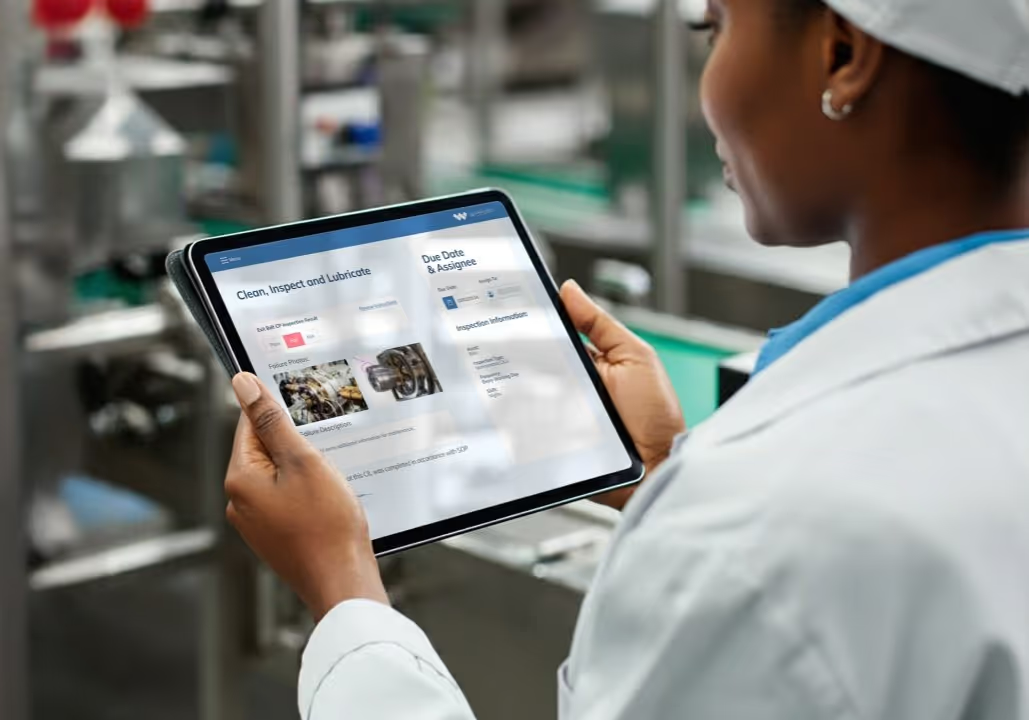
How Can Manufacturing Plants Create Efficient CIL Checklists Using Weever?
In the manufacturing industry, equipment downtime can lead to significant financial losses, production delays, and reduced operational efficiency. Effective maintenance routines are essential to keeping machinery running smoothly, and this is where Cleaning, Inspection, and Lubrication (CIL) tasks play a crucial role. By implementing CIL checklists, manufacturing plants can ensure regular upkeep of their equipment, preventing breakdowns and enhancing overall equipment effectiveness (OEE).
However, managing these tasks manually can be time-consuming and prone to errors. Manufacturing plants can benefit greatly from digitizing their CIL checklists and automating task management through a platform like Weever. This not only streamlines the maintenance process but also provides valuable insights that can help optimize equipment performance over time. In this blog, we’ll explore how manufacturing plants can create efficient CIL checklists using Weever and how this can improve maintenance processes, reduce downtime, and increase productivity.
Simplifying CIL Checklist Creation with Weever
Creating and managing CIL checklists can be a daunting task, especially in large manufacturing plants with multiple pieces of equipment. Weever’s user-friendly platform makes it easy for teams to create digital CIL checklists and manage them efficiently, even without extensive technical expertise.
Intuitive Interface for Easy Checklist Management
Weever’s interface is designed to be simple and intuitive, allowing manufacturing teams to create CIL checklists quickly and easily. With just a few clicks, operators can set up tasks for cleaning, inspecting, and lubricating equipment, ensuring that all necessary maintenance procedures are covered. Operators can also access CIL standard operating procedures (SOPs) directly from the platform, making it easier for them to follow detailed steps without needing paper manuals or extra guidance.
Quick Access to CIL Tasks
Frontline worker maintenance is crucial to minimizing downtime and maintaining efficiency on the shop floor. With Weever, operators can access their assigned CIL tasks in real-time, allowing them to check off items on their CIL checklists as they go. Whether it's following lubrication schedules, inspecting machine components, or cleaning equipment surfaces, operators can complete tasks quickly and without interruption.
An Example from a Car Manufacturing Plant
A car manufacturing plant can use Weever to create CIL checklists for its assembly line machines, allowing operators to easily access their daily maintenance tasks. This ensures that cleaning standards are met, inspections are done on time, and lubrication schedules are followed consistently, improving machine longevity.
Streamlining CIL Task Management
Once CIL checklists are in place, keeping track of which tasks are completed and when the next maintenance is due can be a challenge, especially for decentralized maintenance teams. Weever solves this problem by automating workflows and generating action items that are directly tied to CIL checklists.
Automating Task Assignments
Weever automates the assignment of CIL tasks, ensuring that maintenance routines are followed regularly without manual oversight. Operators receive notifications when it’s time to perform cleaning, inspection, or lubrication tasks, ensuring that maintenance is carried out on schedule and no steps are missed. The automation of preventive maintenance by operators helps manufacturing plants maintain equipment reliability without requiring constant supervision.
Translating CIL Checklists into Action Items
Weever turns CIL checklist items into clear, actionable tasks for operators. For example, if an inspection reveals a worn-out component, the operator can automatically create a follow-up task for repair or replacement, preventing small issues from escalating into larger problems. This level of task automation helps manufacturing facilities maintain smooth operations and reduces the likelihood of costly breakdowns.
Data-Driven Maintenance Optimization
One of the biggest advantages of digitizing CIL checklists through Weever is the ability to track and analyze maintenance data over time. This helps plant managers gain valuable insights into how their equipment is performing and identify areas for improvement.
Tracking CIL Performance and Compliance
Weever provides real-time tracking of all CIL tasks, allowing managers to monitor whether cleaning standards, inspection routines, and lubrication schedules are being followed consistently. By tracking CIL with connected worker platforms, plant managers can see which tasks have been completed and which are still pending, ensuring full compliance with maintenance protocols.
Identifying Trends and Recurring Issues
By analyzing data collected from CIL checklists, Weever enables manufacturing plants to identify trends and recurring issues with specific equipment. For example, if a particular machine requires frequent lubrication, managers can adjust the lubrication schedule to improve performance and reduce wear. This kind of preventive maintenance by operators can greatly extend the lifespan of machinery.
Real-Time Reporting for Instant Visibility
Weever’s real-time reporting feature provides instant visibility into the status of CIL checklists and maintenance tasks. Plant managers can see whether critical tasks have been completed on time and ensure that all equipment is being maintained according to industry standards. This level of transparency helps manufacturing plants avoid compliance violations and keep production running smoothly.
An Example from a Manufacturer
A manufacturing facility uses Weever to track the completion of CIL checklists for its conveyor belts and sealing machines. By analyzing the data, the plant manager notices that the sealing machines need more frequent lubrication, leading to an adjustment in the lubrication schedule that reduces downtime and improves production efficiency.
Seamless Integration of Digital CIL Checklists
Implementing digital CIL checklists in a manufacturing plant may seem like a complex task, but Weever’s tailored rollout methodology makes the transition seamless. The platform is designed to be integrated gradually, allowing teams to adopt the new system without disrupting daily operations.
Phased Rollout for Minimal Disruption
Weever’s phased rollout process ensures that manufacturing teams can transition to digital CIL checklists at their own pace. This prevents disruptions to production schedules and ensures that operators can gradually get accustomed to the new system. The platform can be implemented one department or machine at a time, making the transition smooth and manageable.
Comprehensive Training and Support
Weever offers comprehensive CIL training for operators to ensure they can effectively use the platform to manage their maintenance tasks. Operators are trained on how to follow digitized CIL instructions, use visual controls for CIL, and track their progress through the platform. This training helps standardize CIL practices across the plant, ensuring that all maintenance tasks are performed consistently and according to best practices.
Weever’s Role in Creating Efficient CIL Checklists for Manufacturing Plants
Efficient equipment maintenance is crucial to minimizing downtime and maintaining production quality. By using Weever to create and manage digital CIL checklists, manufacturing plants can ensure that cleaning, inspection, and lubrication tasks are completed consistently and on time. The platform’s ease of use, automated workflows, and real-time reporting capabilities provide plant managers with full visibility into their maintenance routines, helping them optimize performance and improve overall equipment effectiveness.
Whether it’s ensuring that cleaning standards are met in a food production facility or maintaining lubrication schedules in a car manufacturing plant, Weever provides the tools needed to streamline CIL practices, reduce downtime, and extend equipment life. For manufacturing plants looking to improve their maintenance processes, Weever’s configurable solution is the ideal platform to drive efficiency and ensure that equipment is always performing at its best.
Contact us today to book a demo!
Spend Less Time on Admin. Get More Insights by Email.
Subscribe to receive practical tips, updates, and ideas to improve operations without the extra admin work.