
What Is Autonomous Maintenance in Manufacturing?
Table of contents

Share:


Quick summary
Autonomous maintenance gives machine operators responsibility for routine equipment care. In food and CPG plants it usually runs on three activities: 5S audits, abnormality management, and CILs and centerlines. It works when checks fit the shift. High completion rates can hide problems, and a drop in abnormality reports is often the first sign that operators have stopped looking.
Autonomous maintenance is an approach in which machine operators handle the routine upkeep of the equipment they run. They clean, inspect, lubricate, and tighten loose parts, while maintenance technicians handle the more complex repairs. It’s one of the pillars of Total Productive Maintenance (TPM), and in most plants it is where reliability work either takes hold or quietly falls apart.
The stakes are higher than the tasks suggest. Siemens and Senseye surveyed 181 maintenance, engineering, and IT professionals at large industrial organizations for their annual downtime report. Fast-moving consumer goods were one of the four sectors covered, with an idle hour on an FMCG line costing about $36,000. And that is the cheap end.
Most of the failures behind those hours start small. Most are visible to the person standing at the machine long before they are visible to anyone else.
This guide covers how autonomous maintenance works on a CPG production line, the three activities it runs on, and how to tell whether your program is working.
Why listen to us?
Weever is a connected worker platform that specializes in autonomous maintenance programs. We've seen common AM challenges firsthand, including rushed CIL checks, inconsistent shift standards, and reported abnormalities that never get resolved.
One global CPG manufacturer using Weever saw an increase in its AM program participation by over 500%, with more than 3,000 CIL and centerline reports recorded in the first eight months. At Mars Fort Smith, teams addressed and corrected 89% of reported abnormalities. These results and ongoing feedback from plant teams inform our recommendations for autonomous maintenance.
What is Autonomous Maintenance?
Autonomous maintenance is the practice of giving machine operators ownership of the basic condition of their equipment. Rather than running a machine until something breaks and then handing it over, operators clean it, inspect it, lubricate the approved points, make small approved adjustments, and report anything that looks wrong.
The two principles behind Autonomous Maintenance
Two principles sit underneath any autonomous maintenance program: i) preventing accelerated deterioration and ii) restoring basic equipment conditions. SMMT Industry Forum’s annual guide describes autonomous maintenance as restoring equipment and preventing accelerated deterioration, and links it to overall equipment effectiveness (OEE).
1) Preventing accelerated deterioration
Every machine wears with use, but poor upkeep can speed up that wear. Common causes include contamination, insufficient lubrication, and loose fasteners
Take a drive chain that requires regular lubrication. Without it, friction increases, the chain and sprockets wear faster, and the risk of failure grows. Following the specified lubrication schedule helps prevent that additional wear.
This is why autonomous maintenance includes cleaning, inspection, lubrication, and approved tightening. These tasks help operators prevent deterioration and identify abnormalities, such as leaks, unusual noises, or product buildup. Operators address issues within their training and report those that need maintenance support.
2) Restoring equipment and maintaining standards
Before operators can maintain equipment consistently, existing defects need to be corrected and basic operating conditions established
For example, a standard might specify which components to inspect, acceptable lubrication requirements, and what counts as an abnormal condition. Operators follow these standards during routine checks, helping maintain consistent equipment care across shifts.
Maintenance technicians handle complex repairs, diagnostics, and work requiring specialist qualifications. Autonomous maintenance gives operators responsibility for routine care, letting technicians focus on problems that require their expertise.
What's the difference between Autonomous Maintenance and self-optimizing maintenance?
Autonomous maintenance in the sense used here means operator-led equipment care, with people doing the work. Self-optimizing maintenance in the Industry 4.0 sense means software scheduling and sequencing maintenance work with little human input. They share a name and little else.
The operator-led practice is a Total Productive Maintenance pillar, known in Japanese as Jishu Hozen. It is decades old, it depends on training and standards, and its outcome is measured in equipment condition and early fault detection.
The Industry 4.0 sense is a scheduling technology. It evaluates asset risk, technician availability and work backlogs, then generates a maintenance plan. Its outcome is measured in planning efficiency and dispatch time.
This article is about the first one. The distinction matters because a plant looking to build operator capability and a plant looking to buy a scheduling engine are solving different problems, and a search for this term will hand you both without saying which is which.
How Autonomous Maintenance works
Autonomous maintenance works because the operator is at the machine every shift and knows how it normally sounds, looks, and runs. When a technician is called to a breakdown, they see the failure. The operator saw it days before, when a bearing got louder, or a patch of oil appeared under a gearbox.
Cleaning is where a lot of that noticing happens, because wiping down a machine by hand puts the operator’s eyes and hands on every part of it.
What keeps this going across shifts is structure, and it comes in three parts:
- A written standard that says what to check, how, how often, and what normal looks like
- A route that takes every operator through the same tasks in the same order
- An escalation path that says whether to keep running, plan a stop or shut down, and who raises the work order
Setting up that structure, with a sponsor, a champion and a phased rollout, is covered in how to create a successful autonomous maintenance program.
Without an escalation path, failed checks sit idle in offices, and operators soon stop seeing the point of reporting them.
What operators do and what maintenance does
Operators handle frequent, low-risk, and easy-to-standardize work, while maintenance handles work that requires specialist skills or a formal qualification.
Our guide to autonomous maintenance training shows how to build the skills matrix and the curriculum behind it.
Expect the maintenance team’s workload to rise before it falls. During rollout, technicians help with the first deep clean, write the standards, and coach operators. Their workload eases once operators run the routines without help.
Where Autonomous Maintenance fits in Total Productive Maintenance
Total Productive Maintenance (TPM) is a plant-wide approach to improving equipment reliability and performance. It brings operators, maintenance technicians, and management together to prevent equipment losses through several connected pillars. Autonomous maintenance is the pillar focused on operator-led equipment care. It also supports other TPM activities:
- Planned maintenance uses information from routine checks to identify equipment problems and schedule repairs
- Quality maintenance benefits from consistent equipment conditions and settings that help prevent defects
- Focused improvement uses reported abnormalities and recurring failures to identify improvement opportunities
Together, these pillars help manufacturers improve equipment effectiveness.
Is Autonomous Maintenance the first or second pillar of TPM?
While many guides place autonomous maintenance first, JIPM lists autonomous maintenance as the second TPM pillar. However, it acknowledges that pillar names vary by company, so numbering may differ between frameworks.
What stays the same is that autonomous maintenance works alongside planned maintenance, quality maintenance, and focused improvement to support equipment reliability and performance.
The three activities of Autonomous Maintenance
Autonomous maintenance is traditionally organized around cleaning, inspection, lubrication, and tightening as part of Total Productive Maintenance (TPM).
However, food, beverage, and CPG manufacturing plants influenced by Integrated Work Systems (IWS) often organize daily equipment care around three activities:
- 5S audits help keep work areas clean and organized
- Abnormality management helps operators identify, report, and resolve equipment problems
- CILs and centerlines establish routine equipment checks and operating standards
These activities work together to help operators maintain equipment conditions and identify problems early.
5S Audits
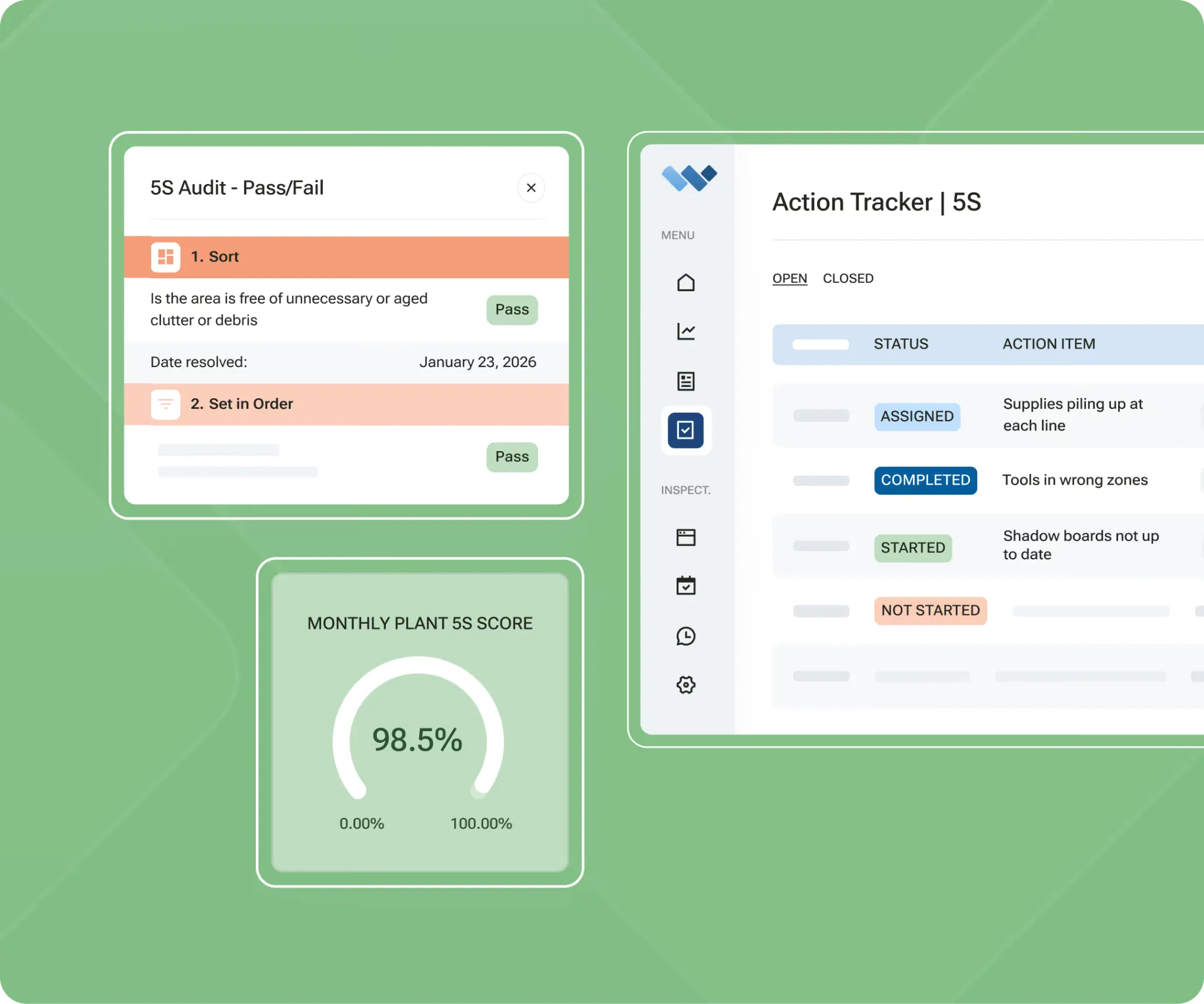
5S is the workstation discipline autonomous maintenance depends on. It stands for sort, set in order, shine, standardize, sustain. In practice it means the tools are where they should be, the area is clean enough that a leak is visible, and the standard is written down rather than held in one person's head.
This matters because you cannot inspect what you cannot see. An operator looking for early wear on a machine surrounded by clutter and coated in product residue is not inspecting. They are guessing. 5S audits, usually monthly, score each area and generate findings that have to be closed.
Weever runs 5S audits alongside autonomous maintenance for the same reason: the two share the floor and the same people.
Abnormality Management
An abnormality is anything that falls outside a machine's expected condition, such as an unusual noise, a leaking seal, excessive vibration, or a loose component.
Operators identify these problems during routine checks or while running equipment. They correct issues within their approved responsibilities and report those requiring maintenance support.
The important part is what happens after a problem is reported.
An effective abnormality management process includes three steps:
- Report the issue with its location, description, and supporting evidence where useful
- Assign responsibility to someone who can assess and resolve it
- Close the loop by recording the corrective action and informing the operator of the outcome
When reports go unresolved, operators can lose confidence in the process. Closing that loop is the single biggest factor in engaging operators in TPM and autonomous maintenance. That's one reason autonomous maintenance programs sometimes lose momentum after implementation.
When the same abnormality keeps coming back, fixing it again isn’t enough. That’s when maintenance runs a root cause analysis to understand why the fault keeps returning. Corrective action may be a repair, an equipment change, or an update to the operator’s standard to prevent recurrence.
CILs and Centerlines
If abnormality management is reactive, CILs and centerlines are the scheduled, proactive side of autonomous maintenance.
CIL stands for Clean, Inspect, Lubricate. These are scheduled events, per shift, daily or weekly, where operators work through a defined route on a machine. Clean the specified areas. Inspect the specified points for wear, leaks, looseness and deterioration. Lubricate the approved points at the approved interval with the approved lubricant. A good CIL tells the operator what correct looks like, not just what to touch. Our autonomous maintenance checklist guide includes a sample checklist by frequency, and autonomous maintenance checklist components covers what each line should specify, from lubrication maps to match marks on fasteners.
Centerlining is the settings discipline. Every process has variables such as pressure, temperature, speed, torque and fill weight, and each one has an optimal value and an acceptable range. Centerlines are those documented settings. Centerline checks confirm the machine is still running inside them.
Centerlining matters more than it sounds. A line running slightly off centerline does not stop. It produces at reduced speed, or with more give-away, or with a defect rate nobody traces back to a setting someone nudged two weeks ago. The failure is invisible in a way a breakdown never is.
Scoping these checks is where most programs go wrong, and it deserves answering properly. We cover how many centerline points a line actually needs in detail.
The seven steps of Autonomous Maintenance
Autonomous maintenance is introduced in seven steps, and each one needs to be in place before the next begins. The first three restore the equipment and set the standard. The last four build operators’ skills until they run the routine on their own:
The order matters. A plant that hands out inspection checklists before finishing the first cleaning is inspecting equipment whose real condition nobody has seen. Plants that rush the sequence to hit a date tend to end up with completed checklists and operators who haven’t built the skills, and that’s when checks start getting pencil-whipped.
We go through each step in detail in our guide to the seven steps of autonomous maintenance.
How is Autonomous Maintenance different from Preventive Maintenance?
Autonomous maintenance and preventive maintenance are designed to run together, not to compete. Operators handle daily care and early detection; technicians handle scheduled, skilled work on longer intervals.
We compare the two side by side, with how to split the work, in autonomous vs preventive maintenance: key differences.
Preventive maintenance covers scheduled technical work that operators shouldn’t do. Autonomous maintenance keeps equipment in condition between those services and catches problems a calendar can’t predict.
A plant that runs only preventive maintenance sends equipment into each service in unknown condition, and wear builds up unchecked between visits. A plant that runs only autonomous maintenance covers the basics while deeper technical work goes undone.
What the evidence says about the benefits of Autonomous Maintenance
Documented evidence on TPM and cutting reactive maintenance shows what plants gain when problems are caught early, which is the job autonomous maintenance gives to operators. Five findings make the case. These are the research findings. For the eight benefits plants see on the floor, from fewer breakdowns to safer lines, see the benefits of autonomous maintenance.
1) Less downtime and fewer defects
A NIST survey of 71 US manufacturers (Thomas and Weiss) found plants relying less on reactive maintenance reported 52.7% less downtime and 78.5% fewer defects,
The more reactive group lost 10.38% of planned production time to downtime, compared with 4.91% for the less reactive group. Defect rates were 2.03% and 0.44%, respectively.
Both measures affect overall equipment effectiveness (OEE) through availability and quality. The researchers describe the small-sample comparison as anecdotal evidence.
2) Higher maintenance spend, lower failure costs
In the same NIST survey, less reactive plants spent 81.7% more on direct maintenance relative to shipments but had 51.8% lower costs from equipment faults and failures.
These findings show why a maintenance business case should consider both investment in equipment care and the costs of unexpected failures.
3) Better equipment efficiency within three years
The US Environmental Protection Agency estimates that most companies adopting TPM can improve equipment efficiency by 15–25% within three years.
Autonomous maintenance supports this approach by making routine equipment care part of operators' daily work. The estimate applies to TPM overall, and the EPA does not provide a supporting methodology.
4) Room to improve at most plants
The US Department of Energy's Operations & Maintenance Best Practices guide reports that the average facility maintenance program is more than 55% reactive, compared with less than 10% at top-performing facilities.
These historical figures show the opportunity to shift more equipment care toward planned, preventive activities.
5) A way to cope with the skills shortage
Deloitte and The Manufacturing Institute projects that US manufacturers will need 3.8 million new employees in the next 7 years, with up to 1.9 million positions potentially going unfilled if skills gaps aren't addressed. When you cannot hire technicians, moving routine care to operators stops being an improvement initiative and becomes a staffing necessity.
For more ways to cut stops, see our guide on reducing equipment downtime in manufacturing.
What does Autonomous Maintenance look like in a food or beverage plant?
Autonomous maintenance in a food or beverage plant has to share the floor with sanitation, and that one fact changes almost everything about how it runs.
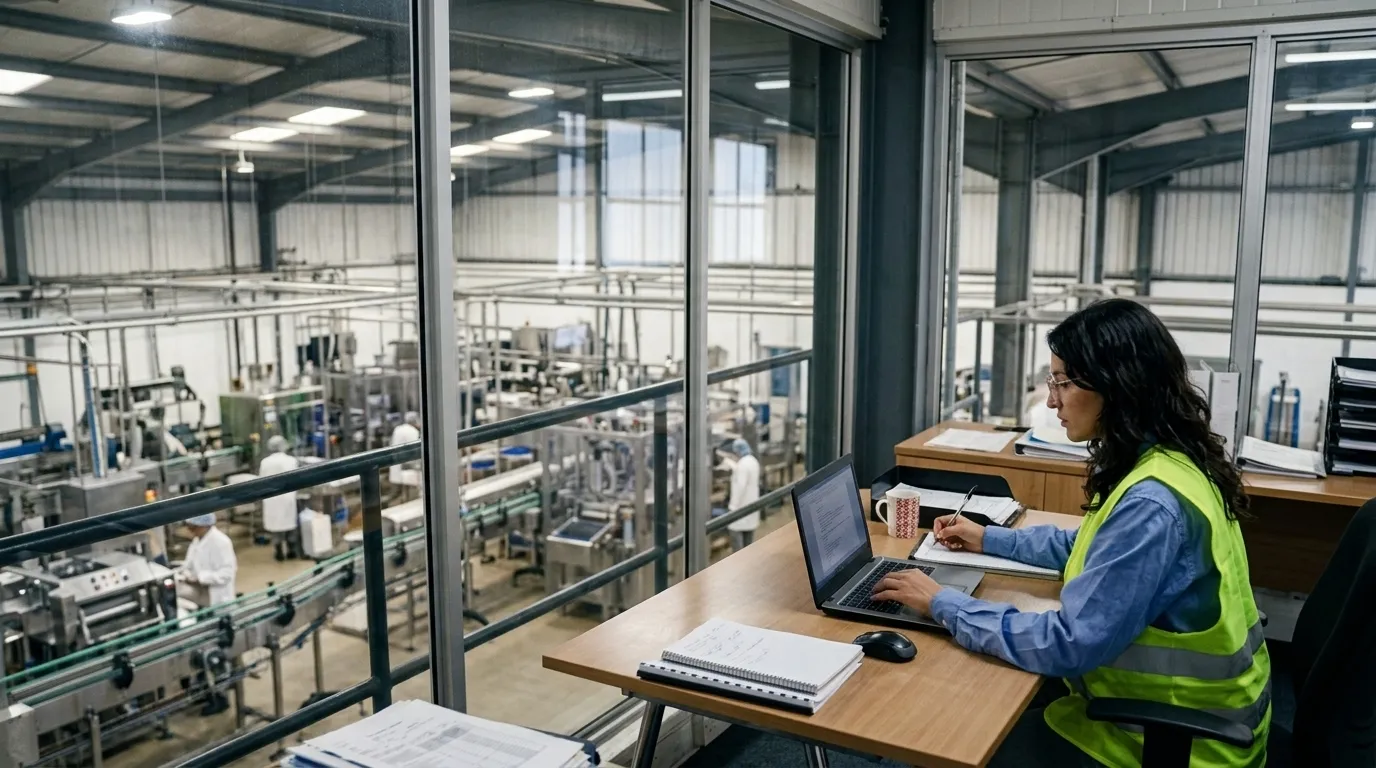
In a machine shop, cleaning a machine is a maintenance activity. On a food line, cleaning is a food safety activity governed by its own schedule, its own chemicals, its own verification and its own records. The two overlap constantly and they are not interchangeable. An operator wiping down a filler for inspection purposes is doing something different from the sanitation crew running a clean-in-place cycle, even though both involve cleaning the same equipment. Five things make food and beverage plants different:
1. Checks have to share time with sanitation
Production lines have limited downtime windows, and sanitation already occupies some of them. CIP cycles follow established schedules, while allergen and product changeovers may require additional cleaning and verification.
Operators also need time for maintenance checks. That's why Clean, Inspect, Lubricate (CIL) routines should be planned alongside sanitation schedules. Otherwise, operators may be left with too little time to complete their checks properly.
2. Hygienic design limits what "initial cleaning" can mean
The first step of a standard rollout is a deep clean that exposes the real condition of the equipment. On a food line, that step runs into product-contact surfaces, approved chemicals, allergen control and validated procedures. It is still the right step. It cannot be run the way it would be in a fabrication shop, and planning it as though it can is where food plants come unstuck in week one.
3. The evidence requirements are stricter
A food plant doesn’t just need the maintenance done. It needs to be able to prove it was done. Auditors ask who did what, when, and against which standard, and a verbal answer isn’t one. Plants running this on paper describe the same pattern repeatedly: binders, printed packets, end-of-shift verification by quality technicians, deviations logged separately in a spreadsheet, and days of preparation before every audit. AM records fall into the same trap unless the evidence is captured at the point of work, while the operator is still at the machine.
4. Changeovers compress the inspection window
Allergen and product changeovers already carry a cleaning and verification burden. Adding an inspection route on top of a changeover that is already tight is the fastest way to teach operators the check is optional.
5. Instructions have to work for every crew
Some food plants use third-party sanitation crews and employ workers who speak different first languages. A checklist written for an experienced operator may be difficult for a new contractor to follow.
Visual instructions, reference photos showing correct equipment conditions, and multilingual checklists can help workers follow the same standards across shifts and teams.
None of this makes autonomous maintenance a poor fit for food and beverage. The opposite. The cost of an unplanned stop on a high-speed packaging line, and the cost of a quality escape, both argue for catching deterioration early. It does mean designing the program around the plant's existing sanitation and changeover reality rather than dropping it on top.
How to tell if your autonomous maintenance program is working
Most plants measure autonomous maintenance by completion rate. In our experience across customer programs, it’s the one number that won’t warn you in time.
Managers tell us the same thing in their own words: “Completion numbers look fine, but we don’t trust them.”
The questions below give a better read:
How long should an autonomous maintenance check take?
An autonomous maintenance check should take no longer than the time the shift can give it. Find that time first, then build the route to fit.
Most plants build routes the other way round. Someone lists every point worth inspecting, and the route ends up longer than the time available. Operators deal with that sensibly. They check the points that matter and mark the rest as done, because an incomplete form leads to a conversation nobody has time for. That’s how pencil-whipping starts, and the cause is the route.
The fix is a shorter route, and it takes four steps:
- Time an operator doing the full route properly
- Compare that with the minutes the shift can free up
- Keep the points where catching a problem early changes the outcome
- Move the rest to a weekly route or to the maintenance team’s schedule
A short route that gets done every shift protects the line better than a long one that only gets ticked off.
How do you know an Autonomous Maintenance program is failing?
An autonomous maintenance program is failing when its completion rate holds steady while abnormality reports fall.
High completion with few findings has two possible explanations. The equipment may have stabilized, in which case downtime and repeat failures will also fall. Or operators are ticking off checks without looking. In our experience across customer sites, it’s usually the second.
Completion rate is a lagging indicator. It shows what was recorded, and it’s among the last numbers to move. Leading indicators move first, and four of them are worth tracking.
Put these four numbers on an autonomous maintenance board at the line, so the shift sees them every day, not just the manager.
Paper records make it hard to get time-to-fix and time-per-check. That’s why managers of paper-based programs tell us “we’re flying blind”, and why those programs can decline without anyone noticing.
How does your plant compare with the NIST reactive maintenance benchmark?
How reactive is your plant? You can score your own plant against the 2021 NIST survey of 71 US manufacturers in about a minute. The table shows the averages for the most reactive half of respondents and for the rest. Fill in the last column with your own numbers:
Use these as reference points for where your plant stands today, rather than industry-wide targets. If you can't fill in the last column, identifying which numbers you're missing is a useful first step.
Why Autonomous Maintenance programs stall
Autonomous maintenance programs rarely get cancelled. They fade while still looking active. The forms are still there, the schedule still issues checks, and completion still reports high, but nobody in the plant trusts the number. We see the same five causes behind it:
- The loop never closes, so operators learn that reporting changes nothing
- The route doesn’t fit the shift, so checks get ticked off without being done
- The standard is out of date because equipment was modified and nobody updated the checklist
- The program depends on one person, and it stops when that person moves on
- The data can’t answer a plant director’s questions, so leadership stops asking and the program loses its sponsor
Multi-site programs face one more. Plants tell us “standardization is difficult across multiple departments and sites”, and a program that runs differently in every plant is hard to compare or support.
None of these is a motivation problem, so pushing operators harder won’t fix them. Each one is fixed by changing the route, the standard, or the follow-up.
We go through all five causes and the four numbers that warn you early about why autonomous maintenance programs die in month four.
How digital tools support Autonomous Maintenance
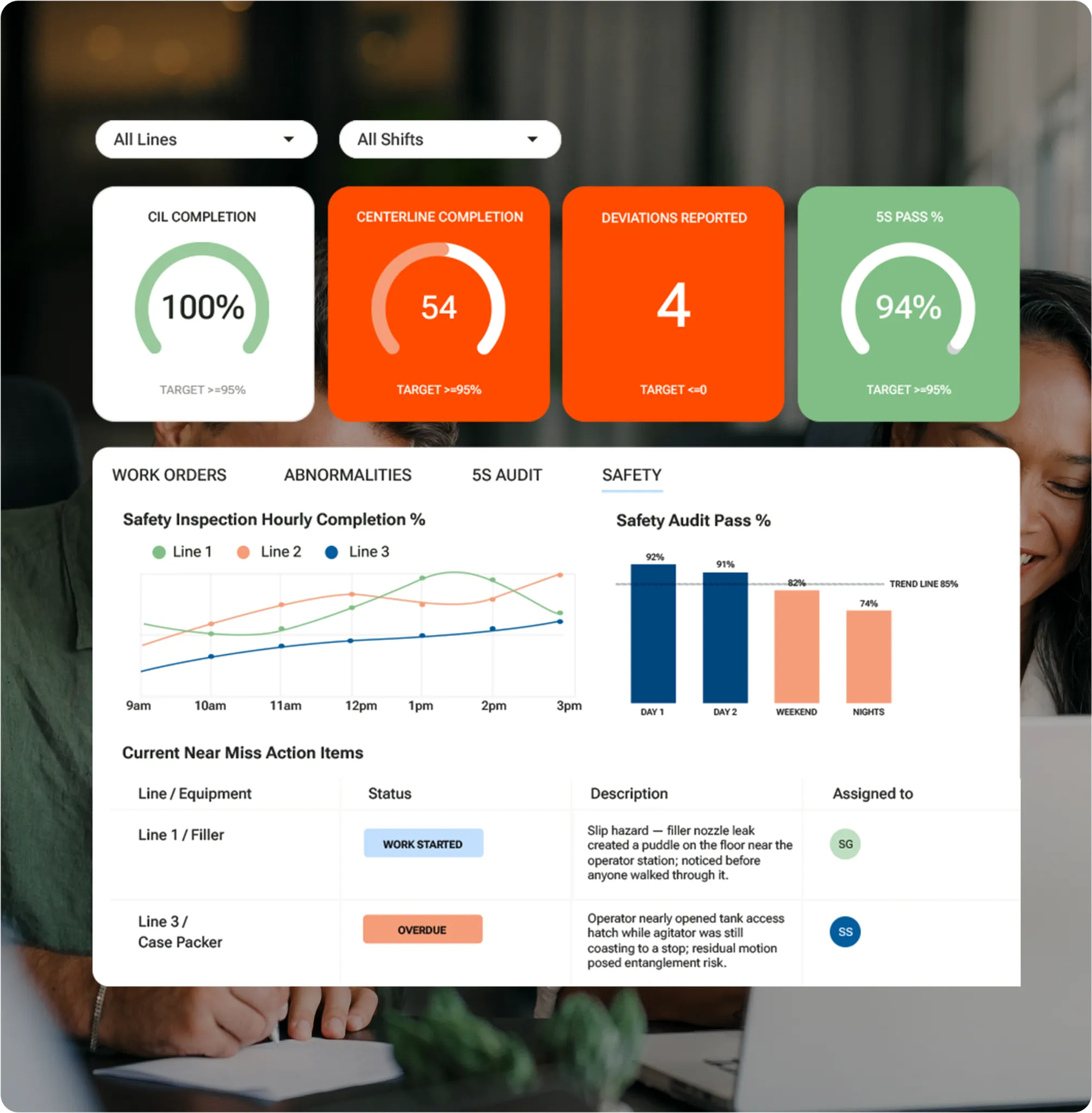
The three activities of Autonomous Maintenance
Moving autonomous maintenance from paper to digital checklists changes four things about how the program runs. Each one removes manual work from managing inspections, reporting problems, and tracking results.
i) Everyone works from the current standard
When instructions sit in binders across several lines and shifts, it can be difficult to know which version an operator is using. In a digital system, updated instructions can be shared across teams, with reference photos attached to the relevant inspection steps.
ii) Evidence is captured at the machine
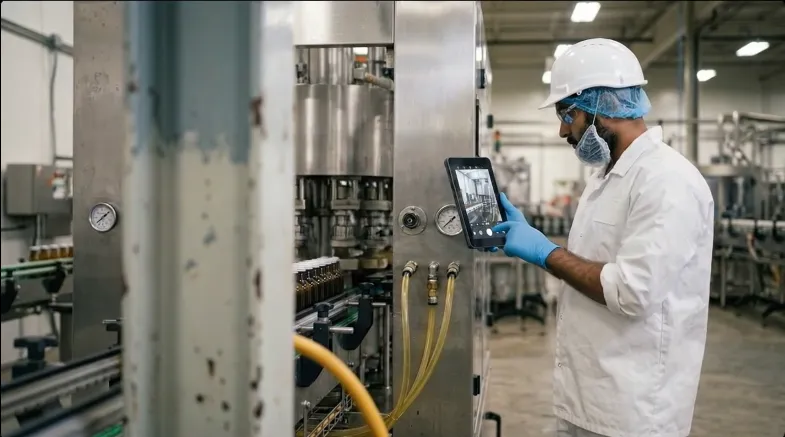
Operators can add a photo, short video, or measured value while inspecting the equipment. Maintenance teams can see what the operator found, reducing the back-and-forth needed to understand the problem.
iii) A failed check becomes assigned work
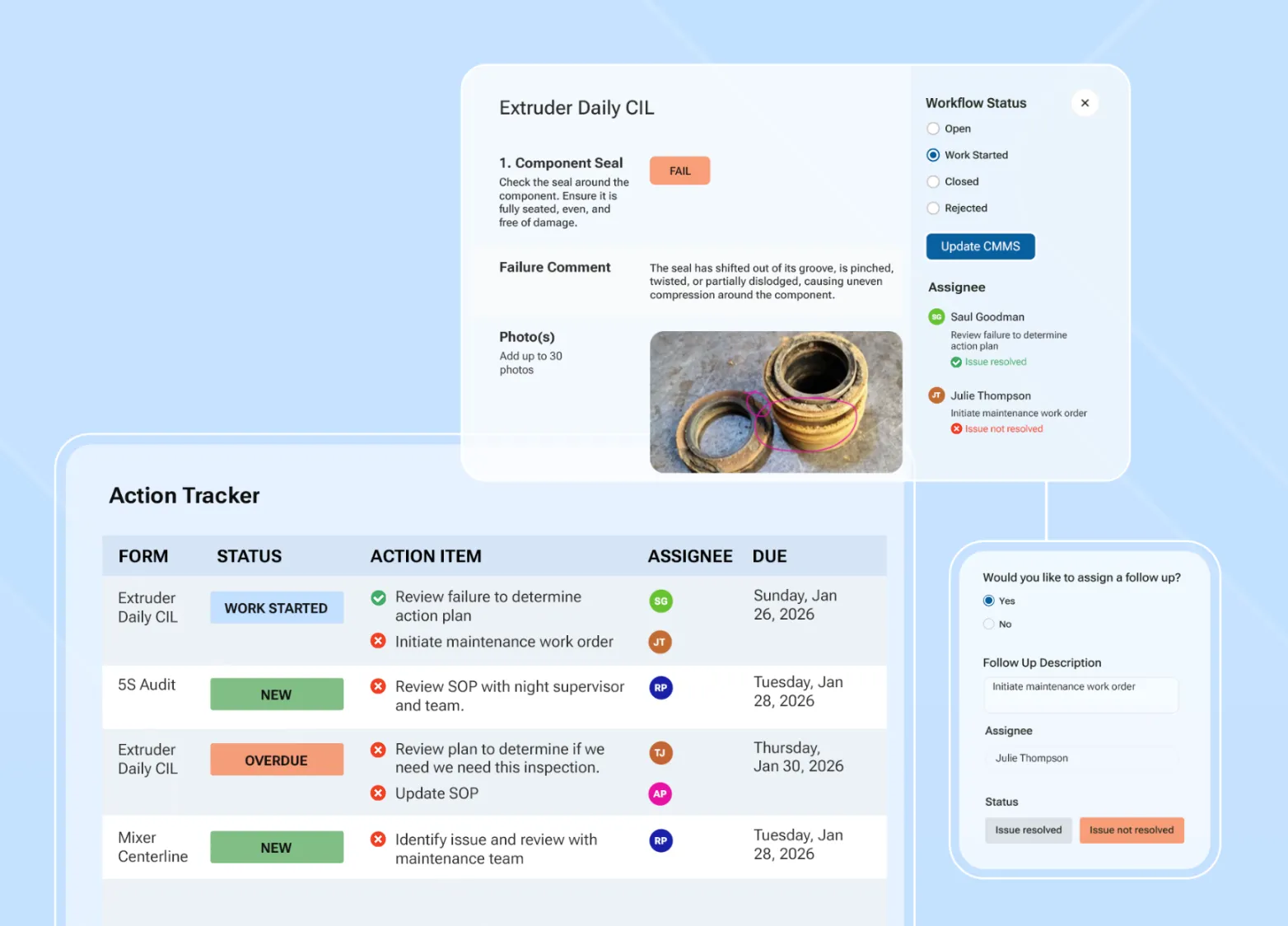
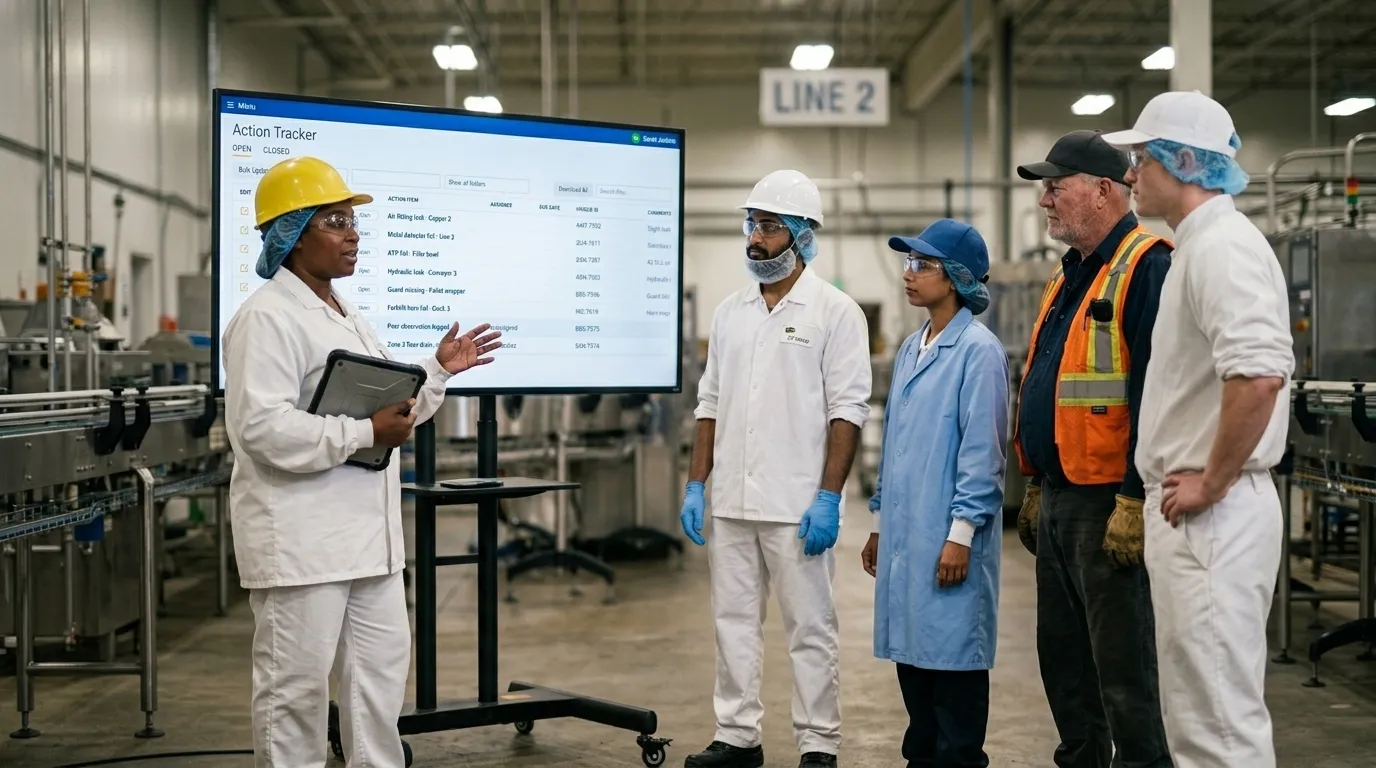
A failed check can create an action with an owner, a due date, and a status the operator can follow. When operators see their reports leading to fixes, they have more reason to keep reporting problems.
iv) Reports build themselves
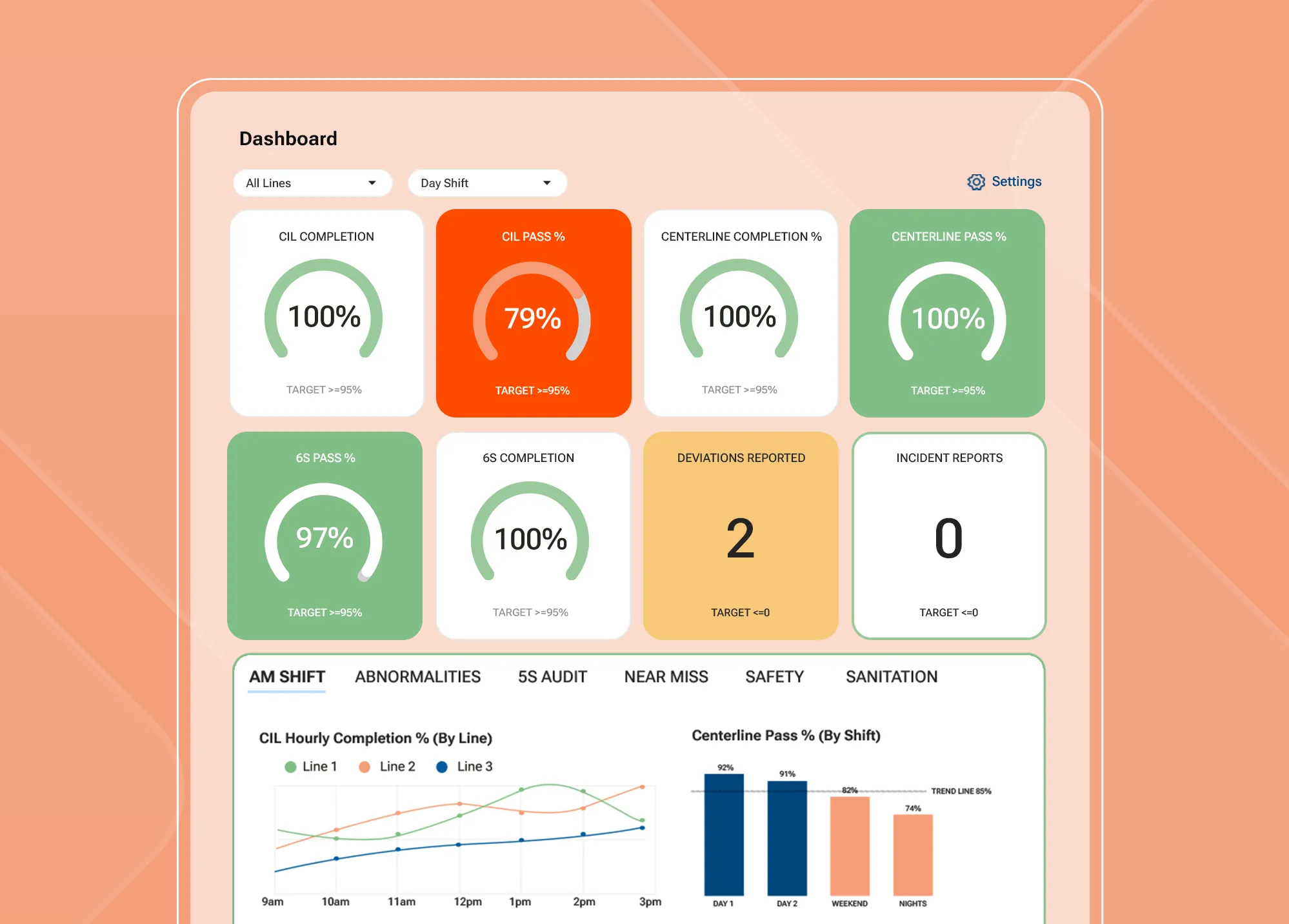
Completion rates by line and shift, time to resolve abnormalities, and repeat issues by asset can be viewed without manually compiling spreadsheets.
These improvements can make a measurable difference, especially when it comes to participation. One global CPG manufacturer running autonomous maintenance in Weever recorded a 500% increase in AM participation, with more than 3,000 CIL and centerline reports in the first eight months.
At Mars Fort Smith, 89% of abnormalities raised were addressed and corrected, which is the closure figure that determines whether reporting holds up over time. The same global CPG site recorded 30% admin time savings through automated Power BI reporting, which is time returned to the floor rather than spent assembling numbers.
A common question from plants using SAP is whether another tool will add more complexity. It's a fair concern. If defects already become SAP work orders through an existing process, a separate action tracker shouldn't duplicate that work.
Digital tools should connect with the plant's existing CMMS and reporting systems. Decide how those systems will work together before rolling out the program.
For a practical example, see our guide to optimizing an Autonomous Maintenance program.
Start with one line and a route that fits the shift
Autonomous maintenance works when three things are true:
- The task route fits the time operators have
- Every reported abnormality gets an owner and a fix
- You track abnormality reports and time to fix, not just completion rate.
If your program runs on paper today, Weever lets you move your existing CILs, centerlines, and abnormality reports into digital forms without rebuilding your standards from scratch. Operators scan a QR code at the line on a shared device to see what’s due that shift, or to raise an abnormality on the spot. Failed checks become assigned actions, and the results reach your dashboards and Power BI on their own.
See how it works on our Autonomous Maintenance solution page.
Autonomous maintenance by topic
This page is the starting point. Each guide below goes deeper on one part of running an autonomous maintenance program, from the first deep clean to keeping operators reporting a year later.
Frequently asked questions
Who performs Autonomous Maintenance?
Autonomous maintenance is performed by trained machine operators on the equipment they run. They handle cleaning, inspection, approved lubrication, and tightening. Maintenance technicians handle diagnosis, complex repairs, electrical and hydraulic work, and any task requiring formal qualification.
How many inspection points should a CIL have?
A CIL (clean, inspect, lubricate) route should have roughly 5 to 20 high-impact inspection points, which is far fewer than most plants start with. Keep the points where catching wear early changes the outcome, and size the route to the time the shift can give it. We explain how to determine how many centerline points a line needs.
How long does Autonomous Maintenance take to implement?
Implementing autonomous maintenance across a whole plant should be planned in years, starting with a pilot on one line. For example, the US Environmental Protection Agency’s estimate of TPM’s efficiency gains uses a three-year period. Each of the seven steps must hold before the next begins, so plants that rush often end up with completed checklists and untrained operators.
Does Autonomous Maintenance work alongside SAP or a CMMS?
Autonomous maintenance works alongside SAP or a CMMS, and it works best when it feeds data into them. SAP or the CMMS stays the record for assets, work orders, and maintenance history.
Autonomous maintenance adds what those systems don’t capture: what was checked, what was found, and what it looked like. Agree early which system owns which data, so a defect raised on the floor reaches a work order without re-keying.
How does Autonomous Maintenance improve OEE?
Autonomous maintenance improves overall equipment effectiveness (OEE) by improving all three parts. Catching faults early reduces unplanned stops, increasing availability. Centerline checks keep machines running at their set speeds, protecting performance. Keeping equipment in good condition reduces defects, which improves quality.
What are the 7 steps of autonomous maintenance?
Initial cleaning, eliminating sources of contamination, establishing CIL standards, general inspection, autonomous inspection, standardizing best practices, and continuous improvement. The first three restore the equipment and set the standard; the last four build operator skill until the team runs it alone. See the 7 steps of autonomous maintenance.
What should be on an autonomous maintenance checklist?
Cleaning, inspection, lubrication, tightening and centerline checks for each machine, plus a way to report anything else that isn't normal. Each line needs a clear pass standard, a reference photo and a time. See how to build an autonomous maintenance checklist.
Is autonomous maintenance the same as preventive maintenance?
No. Operators carry out autonomous maintenance every shift; technicians carry out preventive maintenance on scheduled intervals. Most plants run both. See autonomous vs preventive maintenance.
Spend Less Time on Admin. More Time Improving Operations.
See how Weever automates data entry, reporting, and action items so you can focus on improvement not admin.